
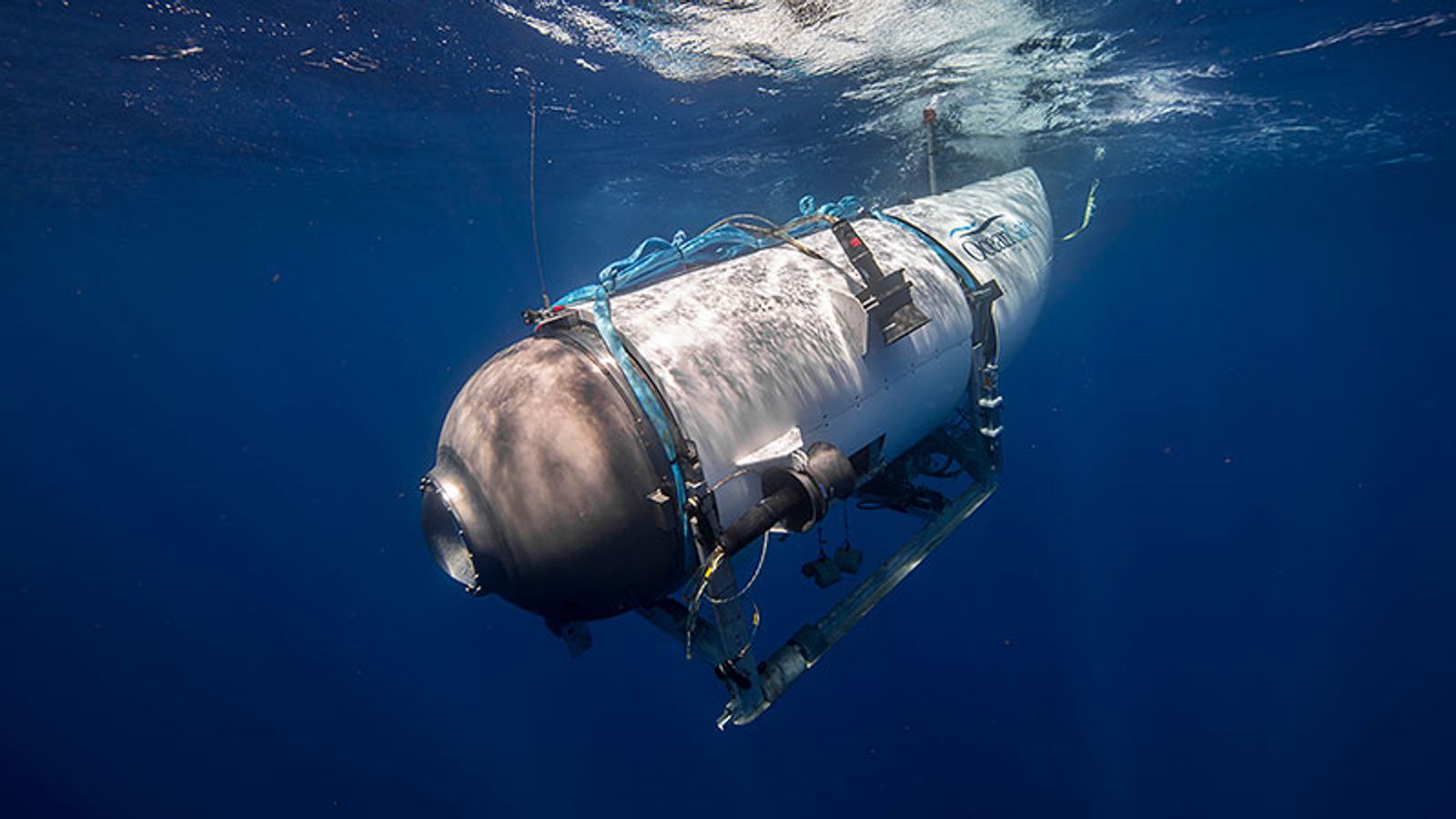
Titanic submersible rescue operation a race against time as oxygen supply dwindles

Rescuers face a race against time to find the missing submersible that lost contact near the wreck of the Titanic as its oxygen supply dwindles.
British billionaire Hamish Harding is one of five people on board the submersible craft Titan, which went missing on Sunday in the Atlantic Ocean.
It is understood from the vessel’s operator, OceanGate Expeditions, Titan has a 96-hour oxygen supply in case of emergencies – meaning only around two days of “life support” remain.
Titanic submersible missing – live updates
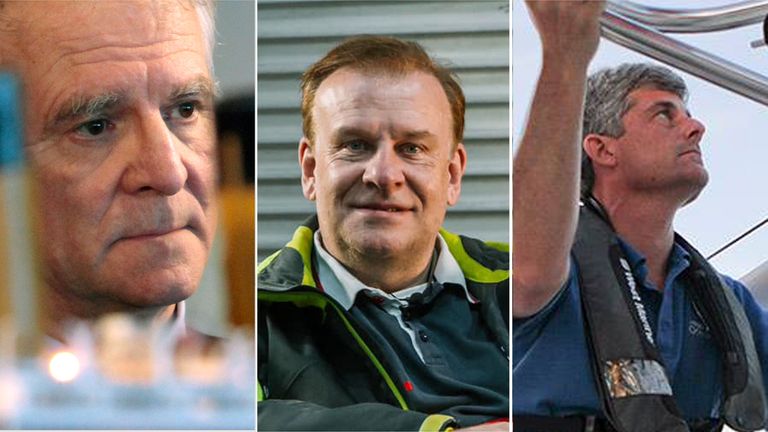
(L-R) Paul-Henry Nargeolet, Hamish Harding and Stockton Rush are on board the vessel. (Pics: AP/Facebook/OceanGate Foundation)

Shahzada Dawood
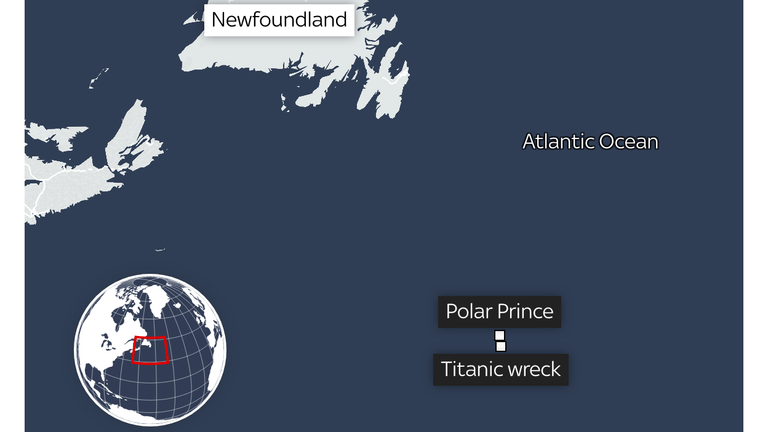
A major search and rescue operation is taking place 900 miles east of Cape Cod – led by the US Coast Guard, involving military aircraft.
It has warned the search has been “challenging” due to the remote location, some 435 miles south of Newfoundland, Canada.
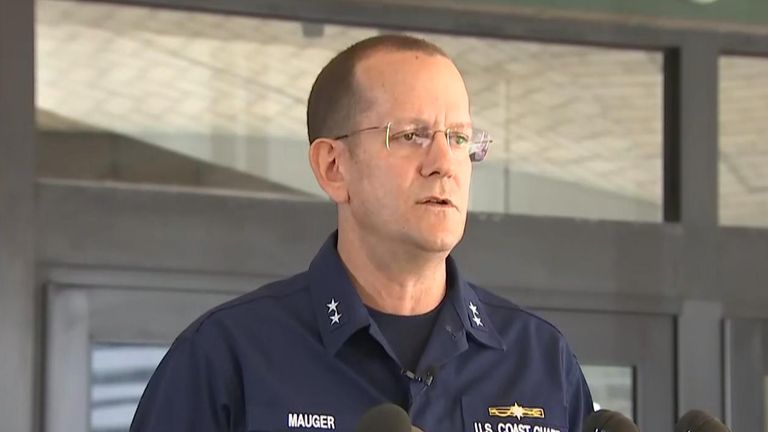
Rear Admiral John W Mauger said: “We launched a C-130 aircraft to conduct an aerial search, both visual and radar of the scene.
“We’ve subsequently coordinated with the Canadian Coast Guard and Canadian Armed Forces to deploy additional assets to the scene.
“The Canadians have had a C-130 aircraft searching as well, in addition to also having a P-8 submarine search aircraft deploy as well, and put sonar buoys in the water in attempt to listen.”
The Titan lost contact with research vessel Polar Prince about an hour and 45 minutes into the vessel’s dive on Sunday morning.
Read more:
What we know about missing Titanic sub
Why the hunt for the missing vessel is so difficult
‘Challenging’ hunt for sub
Sky News understands that alongside Mr Harding, French submersible pilot Paul-Henry Nargeolet, and chief executive and founder of OceanGate Expeditions, Stockton Rush, are on board.
Pakistani businessman Shahzada Dawood and his son, Suleman, are also on board.
In an Instagram post before the expedition, Mr Harding said a “weather window just opened up and we are going to attempt a dive tomorrow”.
He added that he was proud to announce he had joined the expedition as a “mission specialist”.
Mr Dawood’s family said in a statement: “We are very grateful for the concern being shown by our colleagues and friends and would like to request everyone to pray for their safety.”
He is the vice chairman of Engro Corporation, one of Pakistan’s largest conglomerates.
The company has urged people to avoid speculation over what has happened to the missing sub.
In a statement posted on Twitter, the company called for “prayers for the safety and privacy” of Mr Dawood’s family.
It said there is currently “limited information”, and requested “that speculation and theorisation is avoided”.

Timelapse shows marine traffic after submersible goes missing.
‘Major problem’ facing rescuers
OceanGate said in a statement that it was “exploring and mobilising all options” to bring the crew back safely.
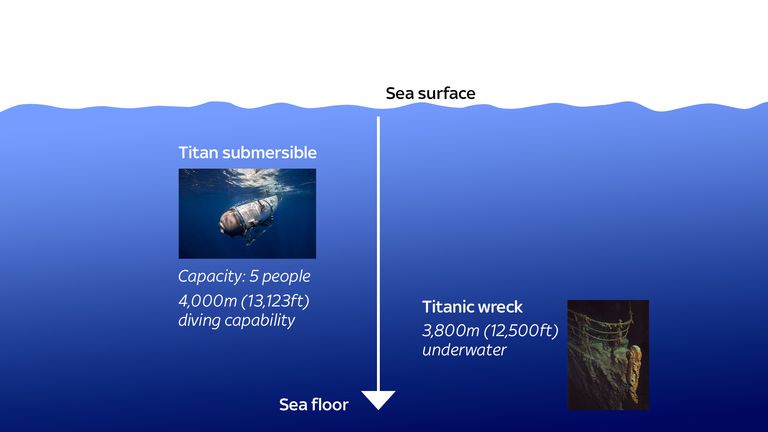
According to OceanGate, the Titan submersible is capable of diving 13,120ft “with a comfortable safety margin” and would take two hours to descend approximately 12,500ft where the Titanic wreck lies.
The vessel operates by pinging back a message every 15 minutes to signal to those ashore that it is safe. Sky News understands, however, that those pings have stopped.
The UK Ministry of Defence said it is “continuing to monitor” the situation of the missing submersible and will assist with the response “as appropriate”.
The MoD said yesterday that it had not yet been asked to help with the ongoing search and rescue operation.
The department has also indicated NATO’s submarine rescue system (NSRS) may not be able to reach the Titan vessel as “the depths of water involved greatly exceed” those at which it can safely operate.
International rescue effort underway
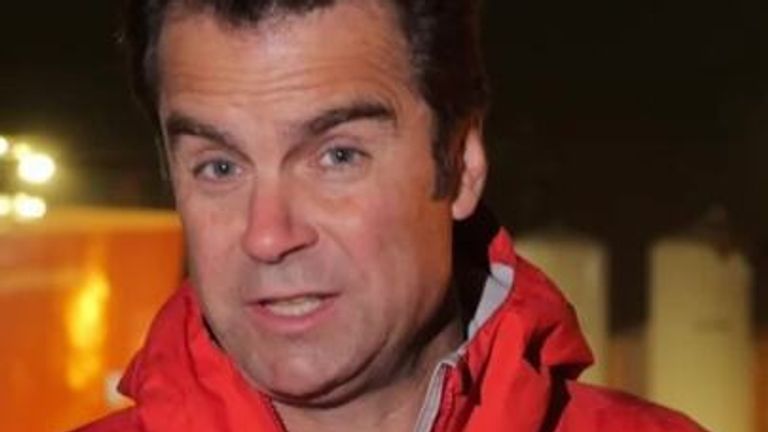
Marine operations specialist Mike Welham outlined the difficulties in the search operation, adding that “very specialised underwater vehicles” would be needed to go to the depths of the Titanic wreck.
He told Sky News: “The biggest problem they’ve got is the depth of water at the Titanic site.
“It’s about 3,800m and you need very specialised underwater vehicles to go down to that depth and they’re not really readily available. So they have a major problem if they have to search and recover this vehicle.”
Robert Blasiak, ocean researcher at the Stockholm Resilience Centre, said: “The dream scenario right now is that the submersible has managed to reach the surface and it’s just drifting at sea level and will be found by one of the passing aircraft in the coming hours. That’s what we hope for.
“The coast guard is also preparing for a more challenging scenario using sonic buoys so they are able to use sonar to detect sound in the water column in case the submersible is at depth. That becomes an entirely different story.
“We have to hope (the submersible) has already reached the surface.”
The submersible was taking part in OceanGate’s third annual voyage to monitor the decay of the ship’s wreckage, following expeditions in 2021 and 2022.
Source of fascination
The Titanic sank into the Atlantic on 15 April 1912 during its maiden voyage from Southampton to New York after hitting an iceberg, with some 1,500 people dying in the disaster.
The wreck – discovered 37 years ago – is in the Atlantic about 400 nautical miles from Newfoundland in Canada.
It has been a continued source of fascination.
OceanGate Expeditions charges $250,000 (£195,270) for a place on its eight-day expedition.
Last month, the first-ever full-sized digital replica of the Titanic was created as experts said it could be used to unlock secrets of the world’s most famous shipwreck.


Britain loves chocolate.
We’re estimated to consume 8.2kg each every year, a good chunk of it at Christmas, but the cost of that everyday luxury habit has been rising fast.
Whitakers have been making chocolate in Skipton in North Yorkshire for 135 years, but they have never experienced price pressures as extreme as those in the last five.
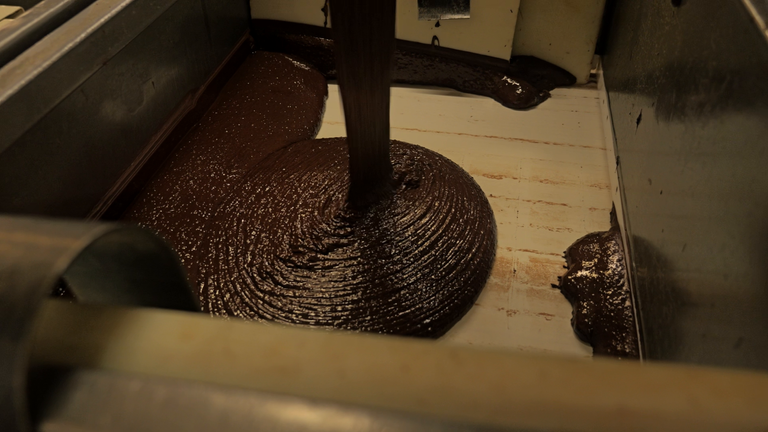
“We buy liquid chocolate and since 2023, the price of our chocolate has doubled,” explains William Whitaker, the real-life Willy Wonka and the fourth generation of the family to run the business.
William Whitaker, managing director of the company
“It could have been worse. If we hadn’t been contracted [with a supplier], it would have trebled.
“That represents a £5,000 per-tonne increase, and we use a thousand tonnes a year. And we only sell £12-£13m of product, so it’s a massive effect.”
Whitakers makes 10 million pieces of chocolate a week in a factory on the much-expanded site of the original bakery where the business began.
Automated production lines snake through the site moulding, cutting, cooling, coating and wrapping a relentless procession of fondants, cremes, crisps and pure chocolate products for customers, including own-brand retail, supermarkets, and the catering trade.

Steepest inflation in the business
All of them have faced price increases as Whitakers has grappled with some of the steepest inflation in the food business.
Cocoa prices have soared in the last two years, largely because of a succession of poor cocoa harvests in West Africa, where Ghana and the Ivory Coast produce around two-thirds of global supply.
A combination of drought and crop disease cut global output by around 14% last year, pushing consumer prices in the other direction, with chocolate inflation passing 17% in the UK in October.

Skimpflation and shrinkflation
Some major brands have responded by cutting the chocolate content of products – “skimpflation” – or charging more for less – “shrinkflation”.
Household-name brands including Penguin and Club have cut the cocoa and milk solid content so far they can no longer be classified as chocolate, and are marketed instead as “chocolate-flavour”.
Whitakers have stuck to their recipes and product sizes, choosing to pass price increases on to customers while adapting products to the new market conditions.
“Not only are major brands putting up prices over 20%, sometimes 40%, they’ve also reduced the size of their pieces and sometimes the ingredients,” says William Whitaker.
“We haven’t done any of that. We knew that long-term, the market will fall again, and that happier days will return.
“We’ve introduced new products where we’ve used chocolate as a coating rather than a solid chocolate because the centre, which is sugar-based, is cheaper than the chocolate.
“We’ve got a big product range of fondant creams, and others like gingers and Brazil nuts, where we’re using that chocolate as a coating.”

The costs are adding up
A deluge of price rises
Brazil nuts have enjoyed their own spike in price, more than doubling to £15,000 a tonne at one stage.
On top of commodity prices determined by markets beyond their control, Whitakers face the same inflationary pressures as other UK businesses.
“We’ve had the minimum wage increasing every year, we had the national insurance rise last year, and sort of hidden a little bit in this budget is a business rate increase.
“This is a small business, we turn over £12m, but our rates will go up nearly £100,000 next year before any other costs.
“If you add up all the cocoa and all the other cost increases in 2024 and 2025, it’s nearly £3m of cost increases we’ve had to bear. Some of that is returning to a little normality. It does test the relevance of what you do.”

The UK is to rejoin the European Union’s Erasmus student exchange scheme, according to reports.
The popular programme allowed Britons to spend a year studying at European universities as part of their degree, without paying extra fees, and vice versa for their European counterparts.
It ended for British students after Brexit on 1 January 2021 and was replaced by the Turing scheme.
But ministers could announce the UK will rejoin Erasmus from January 2027 as soon today, The Times and The Guardian have reported.
How did we get here?
Sir Keir Starmer promised a post-Brexit reset deal with Brussels and announced the government was working on rejoining the programme in May.
Negotiations have included work on “mutually agreed financial terms” for the UK and the EU.
The UK had pushed for a discount on membership fees, which are calculated on the basis of a country’s gross domestic product (GDP), The Times reported.
It said the EU is understood to have offered the government a 30% reduction of fees in the first year of membership.
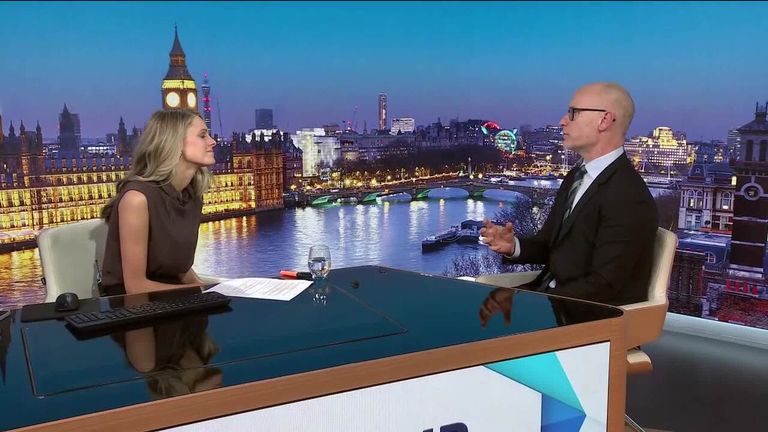
Labour MP Darren Frith told Sky News’ Politics Hub he would “welcome” such a move.
The Guardian reported that, as well as university-based study exchanges, British students will be able to participate in vocational training placements under the scheme.
Cabinet Office minister Nick Thomas-Symonds held talks with Maros Sefcovic, the European Commission’s trade lead, in Brussels last week.
A Cabinet Office spokesman said: “We are not commenting on ongoing talks.”
‘Fantastic opportunities for students’
But the UK’s universities welcomed the apparent breakthrough.
Tim Bradshaw, chief executive of the Russell Group of leading universities, said: “We’re delighted at the UK’s association to Erasmus+.
“With an even greater scope than previous programmes, Erasmus+ opens up fantastic opportunities for students, adult learners and young people to all benefit from new experiences and learning.
“It will also renew the huge contributions that EU students and staff make to life on our university campuses.”
The Lib Dems, who have been campaigning to rejoin Erasmus, welcomed the news.
Leader Sir Ed Davey said: “This is a moment of real opportunity and a clear step towards repairing the disastrous Conservative Brexit deal.”

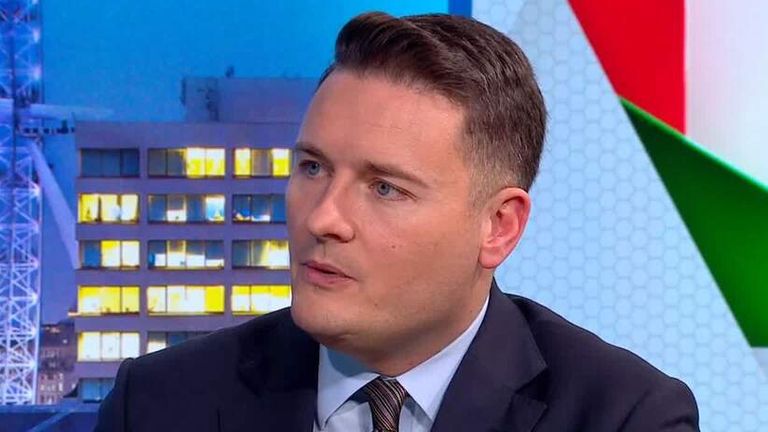
Resident doctors across England begin a five-day strike this morning over pay and jobs, marking the 14th walkout by them since March 2023.
It coincides with the record number of flu cases in England and NHS leaders warning of a “huge strain on hospitals” and strikes causing “further disruption and delays”.
Resident doctors are striking in England from 7am today until 7am on Monday 22 December.
Sir Keir Starmer called the action “irresponsible” while Health Secretary Wes Streeting has rejected the British Medical Association’s (BMA) pay demands, accusing the union of a “shocking disregard for patient safety”.
But the BMA insists its strike is “entirely avoidable” and has demanded a “credible offer” to avert “real-terms pay cuts”.
Why are resident doctors on strike?
The government says resident doctors have already received an average pay rise of 28.9% over the past three years (2023-24 to 2025-6).
But the BMA has been demanding an additional 26% pay uplift to restore what they say amounts to erosion in their earnings, once inflation is taken into account. Although there is some dispute about the extent of the real terms fall, because of the BMA’s use of the Retail Price Index (RPI) in its calculation.
Hopes that the strike could be averted were dashed on Monday when the BMA said 83% of resident doctors rejected a fresh proposal from the government.
While it did not include any extra pay, the offer included the fast expansion of specialist training posts; covering out-of-pocket expenses such as exam fees; and offering to extend the union’s strike mandate to enable any walkout to be rescheduled to January.
What if I need urgent medical care?
The Department of Health and Social Care says it is important people do not avoid seeking urgent care, and should use 999 if it is a serious or life-threatening emergency. For everything else, there is NHS 111 or the NHS App.
It adds that patients should turn up for planned appointments unless they have been told otherwise. Any appointments that need to be rescheduled will be given priority.
During strikes, there are exemptions or special arrangements, called derogations, which allow certain essential services to continue operating. It means critical services will be maintained to ensure patient safety and prevent serious harm.
How much do resident doctors earn?
There are many different types of resident doctor in England with different levels of pay. Full Fact, which has crunched the numbers, said they currently earn between £38,831 and £73,992 a year, but that does not take into account extra pay for unsociable hours.
Full Fact states that resident doctors typically get between a quarter and a third more than their basic salary from other sources.
This takes estimated average earnings (in the year ending August 2025) to between £45,846 and £81,061 (although the government claims the figures are more like £49,000 to £97,000).
Comparisons with other countries are difficult because of how doctors are categorised. Broadly, resident doctors in England earn about the same as those in Ireland and anything between 1% less and 26% more than in New Zealand.
But doctors in Australia earn somewhere between 23% and 48% more than their counterparts in England.
What has the reaction been?
The prime minister has said the strike comes “on the back of a very substantial pay increase in the last year or so”.
“I think it’s irresponsible action by the BMA,” he told MPs.
The health secretary called for doctors to ignore the strike and criticised what he called the “fantasy demand for another 26% pay rise,” adding that “it reveals the BMA’s shocking disregard for patient safety”.
Dr Jack Fletcher, chairman of the BMA’s resident doctors’ committee, said the strikes were “entirely avoidable”. He added that “we should start negotiating, and the government should stop game-playing”.
But organisations representing NHS trusts have been scathing about the walkouts. Daniel Elkeles, chief executive of NHS Providers, said: “Trust leaders and staff will be working now to minimise the impact of the strike, but sadly it will mean further disruption and delays.”
Meanwhile, Rory Deighton, acute and community care director at the NHS Confederation, said: “These strikes come at the worst possible time, with rapidly rising flu levels putting huge strain on hospitals.”
What about public support for strikes?
Public support for the strikes is low, according to a YouGov poll released last week.
The results showed 58% of those asked either somewhat or strongly opposed the industrial action, while 33% somewhat or strongly supported it.
-
 Sports2 years ago
Story injured on diving stop, exits Red Sox game
-
 Sports3 years ago
‘Storybook stuff’: Inside the night Bryce Harper sent the Phillies to the World Series
-
 Sports2 years ago
Game 1 of WS least-watched in recorded history
-
 Sports3 years ago
Button battles heat exhaustion in NASCAR debut
-
 Sports3 years ago
MLB Rank 2023: Ranking baseball’s top 100 players
-
Sports4 years ago
Team Europe easily wins 4th straight Laver Cup
-
 Environment3 years ago
Japan and South Korea have a lot at stake in a free and open South China Sea
-
 Environment1 year ago
Here are the best electric bikes you can buy at every price level in October 2024