

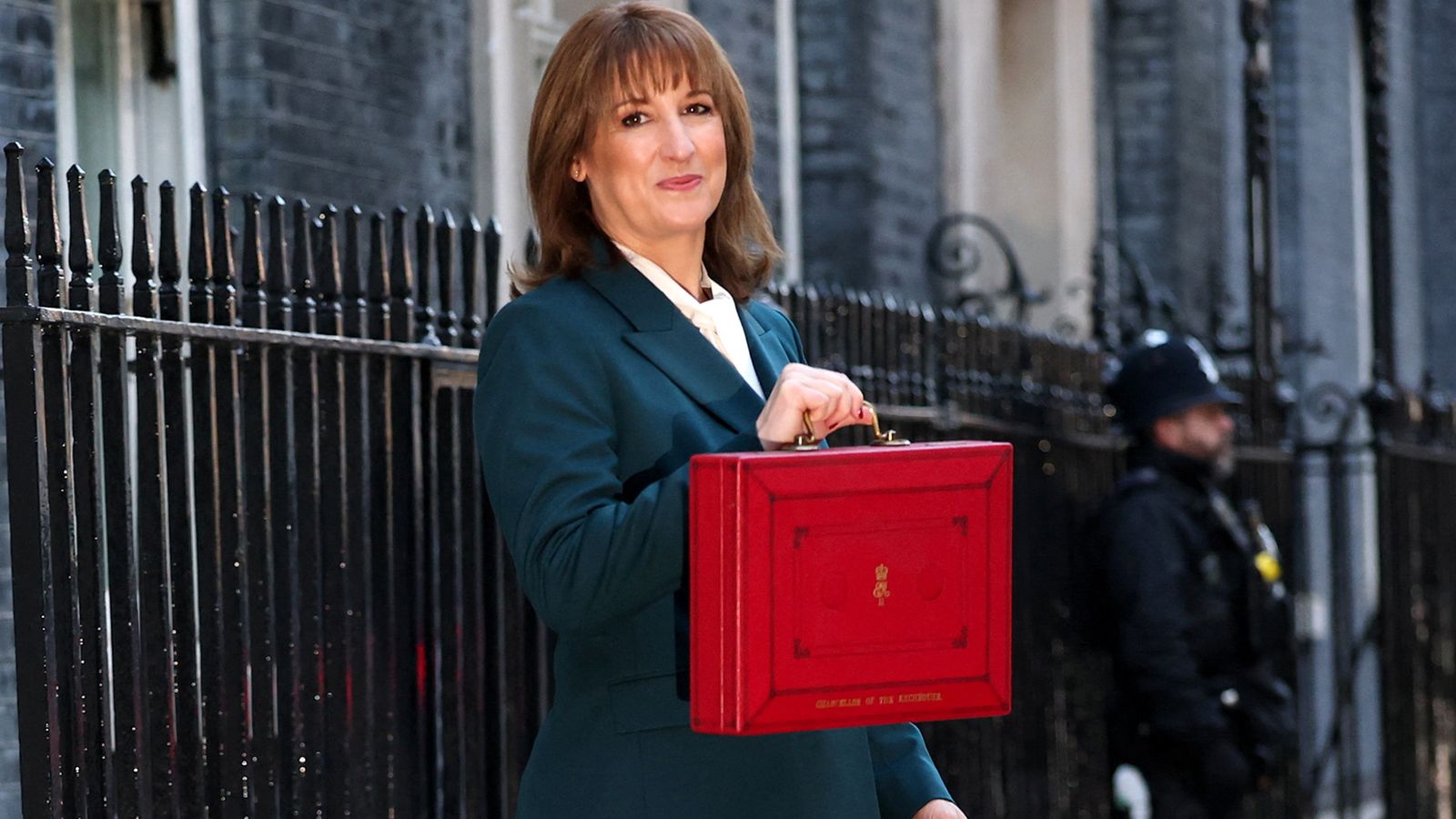
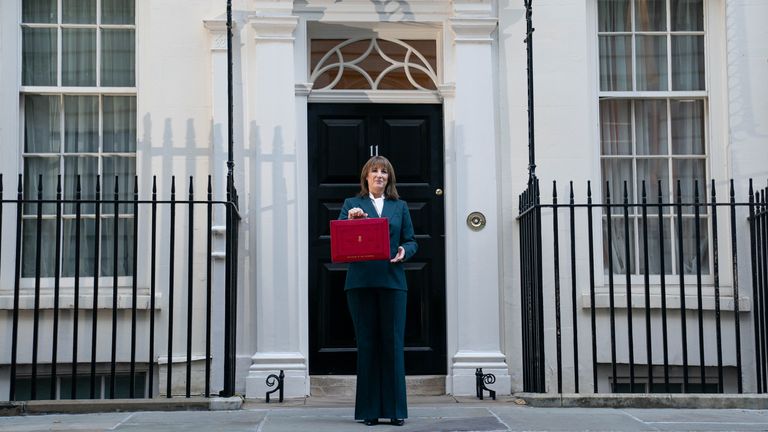
The chancellor’s spring budget will take place in March, the Treasury has announced.
Rachel Reeves will deliver the budget, known as the “spring forecast”, on 3 March 2026.
She has asked the independent budget watchdog, the Office for Budget Responsibility (OBR), to “prepare an economic and fiscal forecast” for publication on the same day.
The Treasury said the government has committed to delivering only one major fiscal event a year, at the autumn budget.
As a result, it said the spring forecast will “not make an assessment of the government’s performance against the fiscal mandate and will instead provide an interim update on the economy and public finances”.
However, the last spring statement saw the chancellor announce a series of welfare cuts, extra money for construction training and defence, and a crackdown on tax avoidance.
The 2026 spring statement is set to be another big political event, due to continuing concern over the state of the economy and the controversy in the build up to November’s budget, when Ms Reeves announced tax hikes.
Her extension to the freeze on tax thresholds last month prompted accusations of breaking Labour’s manifesto pledge not to raise taxes for working people.
She was also accused of not revealing the true state of the nation’s finances in the run-up to the budget after she repeatedly warned about a downgrade to the UK’s economic productivity forecasts.
On the day of the budget, it emerged the OBR told her in mid-September the public finances were in better shape than widely believed.
However, Ms Reeves denied misleading the public.
Read more:
Budget 2025 key points
Post-budget polling makes grim reading for Labour
She said she had been “upfront” about her decision-making, and the OBR figures were clear there had been “less fiscal space than there was”.
All eyes will also be on the OBR during the spring forecast, after it accidentally published details of Ms Reeves’ November budget nearly an hour before the chancellor stood up to deliver it.
The head of the OBR, Richard Hughes, quit over the early release. An investigation found it was due to “leadership failings” over security measures rather than a malicious cyberattack.
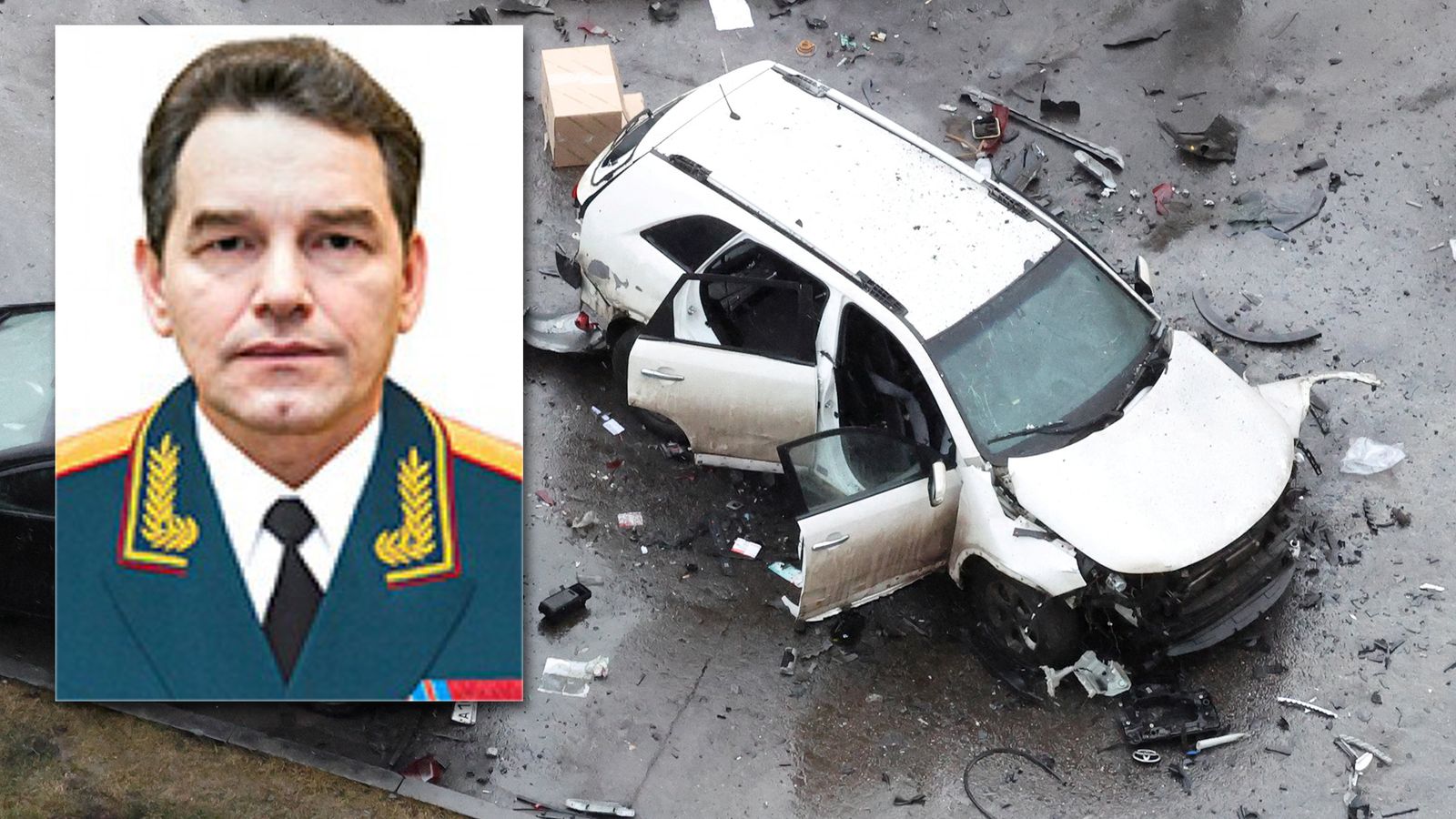

A Russian general being blown up on his own doorstep isn’t a good look for Moscow, and it seems it’s becoming increasingly common.
The latest high-profile figure to be assassinated since Russia‘s invasion of Ukraine is Lieutenant General Fanil Sarvarov.
He was killed by a car bomb that detonated outside a residential complex, little more than 10 miles from the Kremlin.
Ukraine war latest: Kremlin denies Putin plans to invade European countries
He was a senior figure. Head of the operational training directorate of the general staff, Sarvarov prepared forces for future deployment, having previously served in Chechnya and Syria.
There was no immediate claim of responsibility but Moscow believes Kyiv may have been behind it. No wonder – they’ve carried out similar attacks many times before.
This time last year, Ukraine took credit for the assassination of Lieutenant General Igor Kirillov, who Kyiv alleged had ordered chemical weapons to be used against its troops on the battlefield.
He was killed by a bomb hidden in a scooter outside his apartment block, which Vladimir Putin referred to as a “major blunder” by the security services.
Sarvarov was the least senior commander to be killed on Russia soil. Pic: Reuters

Pics: Reuters
But the attacks didn’t stop there.
In April, Lieutenant General Yaroslav Moskalik was killed after a car exploded in a town just outside Moscow. And two months ago another car bomb in Siberia killed a Russian commander accused of committing war crimes.
It’s unclear why Sarvarov was targeted – perhaps simply because his rank and apparent vulnerability.
The timing appears significant. It follows the latest peace talks between US and Russian officials in Miami over the weekend, where Kremlin envoy Kirill Dmitriev met with Steve Witkoff and Jared Kushner.
In the past, Ukraine has used these kinds of attacks to embarrass Moscow and to bring the war closer to home for Russians.
This time could be Kyiv’s way of undermining Moscow’s narrative in the negotiations.
Read more from Sky News:
Bondi suspect trained with father before attack, police say
Trump’s Greenland envoy intends to make territory ‘a part of US’
The Kremlin has been trying to persuade the White House that a Russian victory is inevitable, and that it’s futile to support Ukraine, in the hope of securing a more preferential settlement.
Ukraine has been trying to convince the Trump administration of the opposite – that it’s still full of fight – and taking out Russian generals in their own backyard is one way of doing that.
It shows Washington that the Kremlin is clearly not in total control.
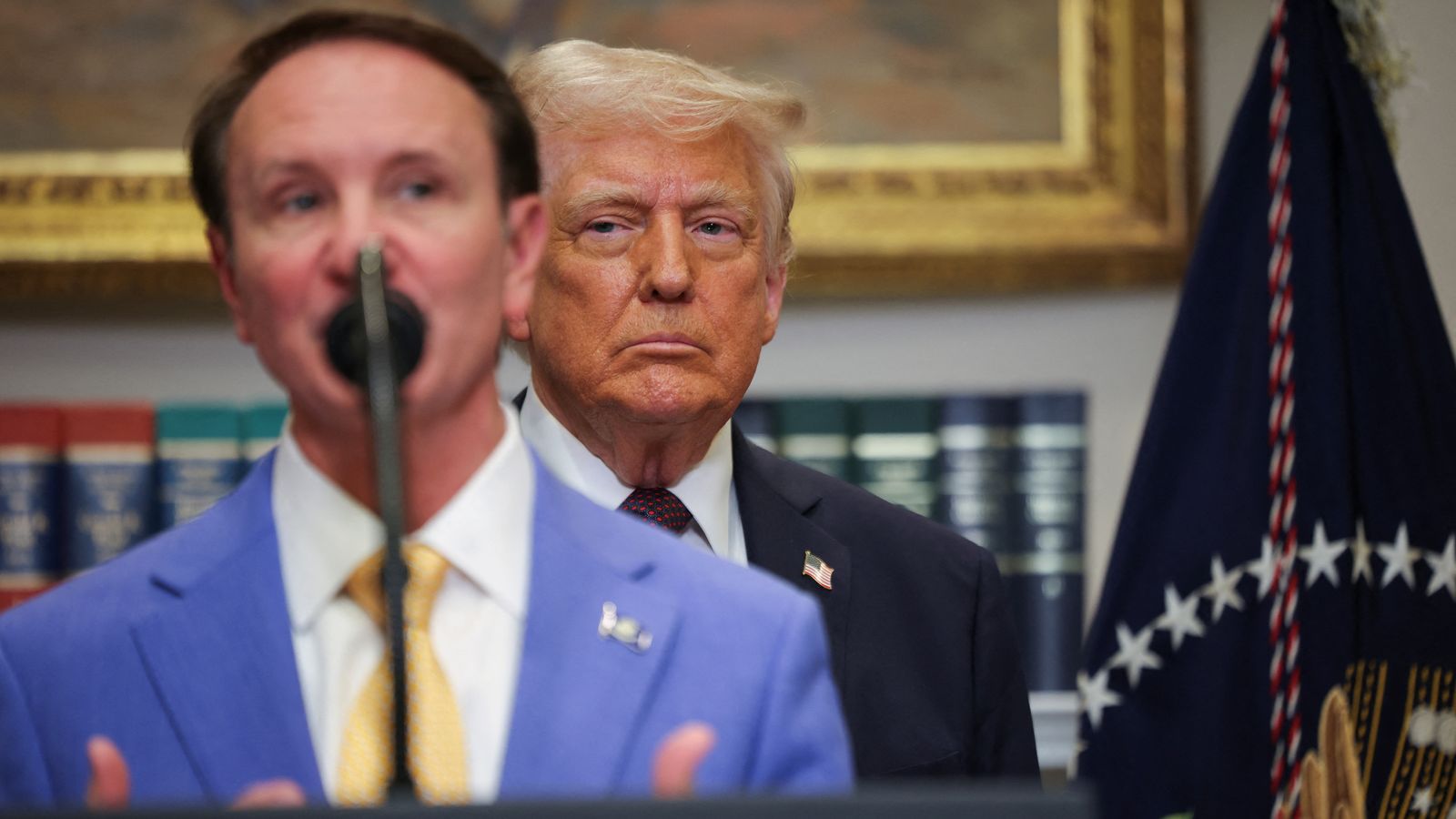
A new row over the future of Greenland has erupted between Denmark and the US after Donald Trump appointed a special envoy to the territory.
The US President announced that he had appointed Louisiana’s governor Jeff Landry to the position on Sunday, saying “Jeff understands how essential Greenland is to our National Security”.
Mr Landry then wrote on X: “It’s an honor to serve you in this volunteer position to make Greenland a part of the US.”
But Greenland is currently a semi-autonomous part of Denmark, which is unhappy about Trump’s latest move. The country has summoned the US ambassador in protest, with its foreign minister saying the move shows the US is still interested in the vast Danish territory.
Trump has repeatedly called for the US to take over over the mineral rich and strategically located Arctic island, since winning his second term, and has not ruled out using military force to achieve it.
Denmark’s foreign minister Lars Løkke Rasmussen said Landry’s comments were “completely unacceptable” and that everyone – including the US – must show respect for Denmark’s territorial integrity.

NATO allies Denmark, Norway, Sweden, Germany and France took part in military drills in Greenland, where the US has a military base, in September. Pic: Reuters
Greenland back in the headlines
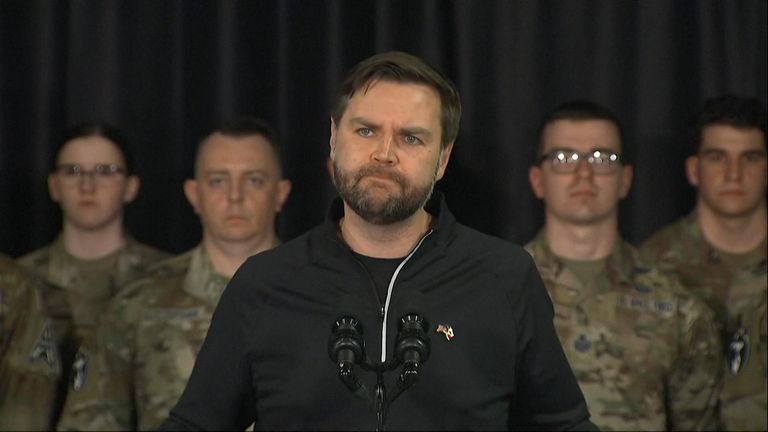
In March, US Vice President JD Vance visited a remote American military base in Greenland and accused Denmark – a NATO ally of the US – of underinvesting there.
The issue then gradually drifted out of the headlines but, in August, Danish officials again summoned the US ambassador – following a report that at least three people with connections to Trump had carried out covert influence operations in Greenland.
On Sunday, Trump said: “Jeff [Louisiana’s governor] understands how essential Greenland is to our national security and will strongly advance our country’s interests for the safety, security, and survival of our allies, and indeed, the world.”
Earlier this month, the Danish Defence Intelligence Service said in an annual report that the US was using its economic power to “assert its will” and threaten military force against friend and foe alike.
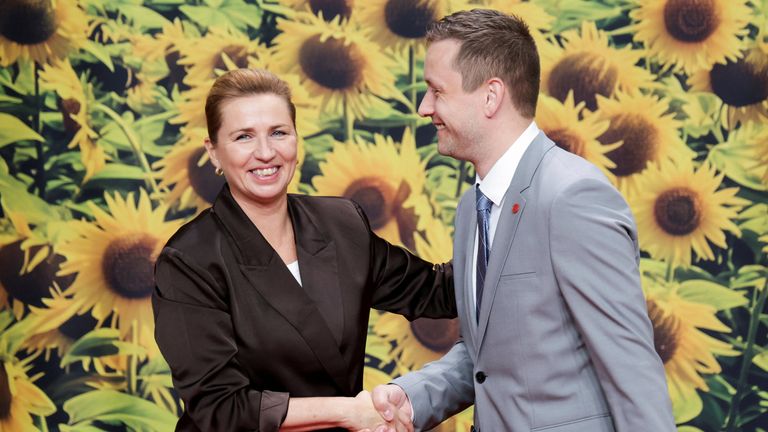
Denmark’s Prime Minister Mette Frederiksen (left) greets Greenland’s Prime Minister, Jens-Frederik Nielsen.
Read more:
Head of US Greenland base sacked after criticising JD Vance
Denmark’s PM says “you can’t spy against an ally”
The report also highlighted the rising strategic importance of the Arctic to great power countries as “conflict between Russia and the West intensifies.
It went on to say that the growing security and strategic focus on the Arctic by the US would “further accelerate these developments”.
Russian President Vladimir Putin has said Russia is worried about NATO’s activities in the Arctic and will respond by strengthening its military capability in the polar region.
-
 Sports2 years ago
Story injured on diving stop, exits Red Sox game
-
 Sports3 years ago
‘Storybook stuff’: Inside the night Bryce Harper sent the Phillies to the World Series
-
 Sports2 years ago
Game 1 of WS least-watched in recorded history
-
 Sports3 years ago
Button battles heat exhaustion in NASCAR debut
-
 Sports3 years ago
MLB Rank 2023: Ranking baseball’s top 100 players
-
Sports4 years ago
Team Europe easily wins 4th straight Laver Cup
-
 Environment3 years ago
Japan and South Korea have a lot at stake in a free and open South China Sea
-
 Environment1 year ago
Here are the best electric bikes you can buy at every price level in October 2024