
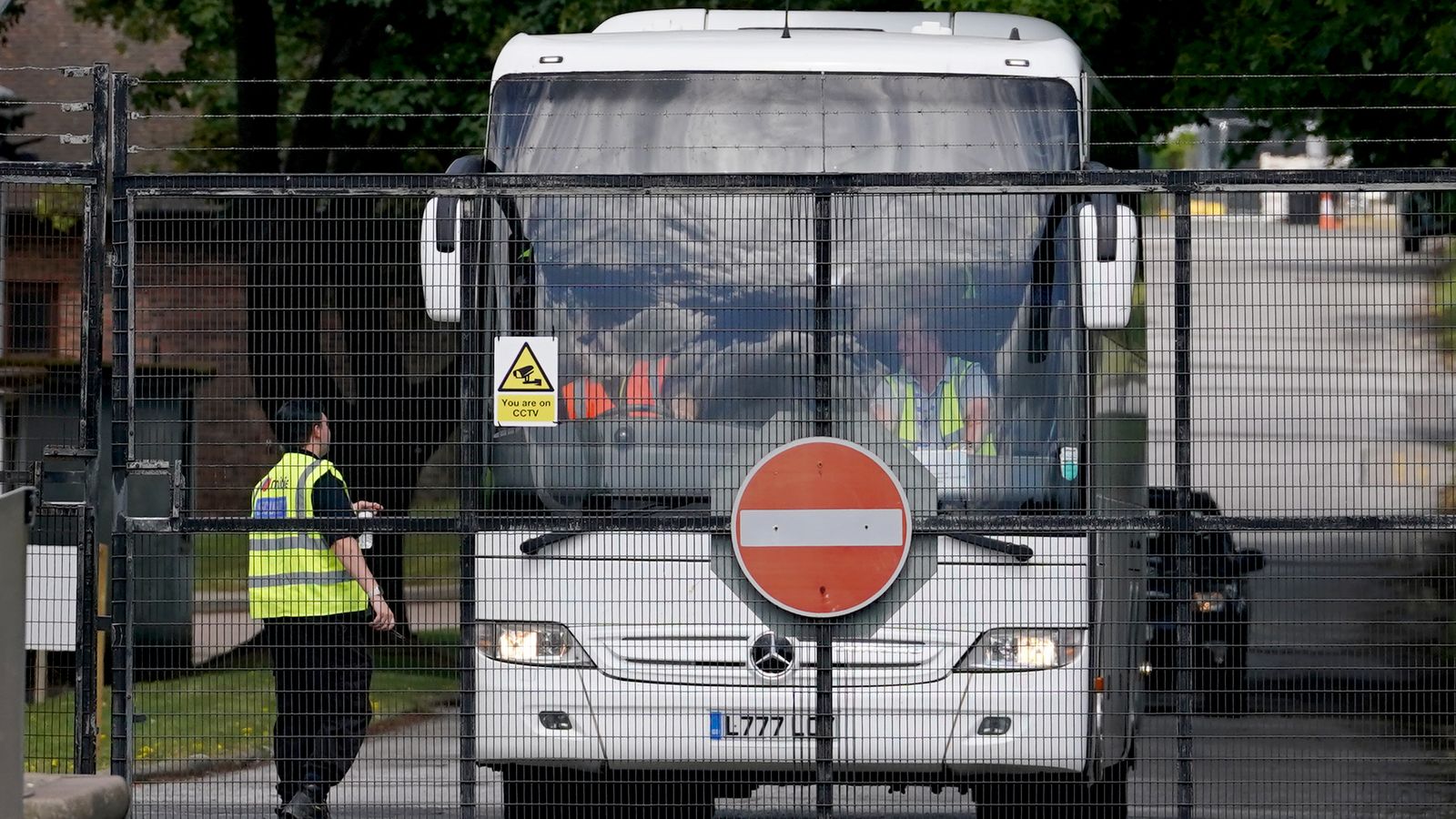
Ministers forced to change Illegal Migration Bill after 20 defeats in House of Lords


The government has been forced to announce fresh amendments to its Illegal Migration Bill after its draft legislation suffered a series of defeats in the House of Lords.
A key U-turn means the removal of migrants crossing the Channel will not apply retrospectively and will instead only apply from when the Bill receives royal assent.
The Home Office said it had introduced “safeguards” following “scrutiny” in the House of Lords – where peers inflicted 20 defeats against the “stop the boats” legislation.
Politics latest: Tories accused of ‘dragging reputation of House through mud’
However, the bans on e-entry, settlement and citizenship will still apply retrospectively to those who arrived illegally on or after the bill’s introduction on 7 March.
The Home Office said measures will be put in place to ensure the list of definitions of “serious and reversible harm” cannot be amended by secondary legislation.
Another change means the first-tier tribunal can grant immigration bail after eight days to unaccompanied children detained for the purpose of removal, down from the current proposed 28 days.
A further amendment means the government will keep the current rules on the detention of pregnant women, meaning they can only be detained for a maximum of 72 hours – though this can be extended to seven days on the authorisation of a minister.
Home Secretary Suella Braverman said: “This Bill forms a crucial part of our action to stop the boats and ensure people do not risk their lives by making illegal and unnecessary journeys to the UK.
“Today’s amendments will help this crucial legislation pass through Parliament swiftly, whilst continuing to send a clear message that the exploitation of children and vulnerable people, used by criminals and ferried across the Channel, cannot continue.”
Migrants ‘at odds with British values’
Government expected to seek to overturn changes
The upper chamber had already demanded other revisions including modern slavery safeguards, a bar on backdating deportations and asylum help for unaccompanied children.
The government is expected to seek to overturn many of the called-for changes to the Bill, which is central to Prime Minister Rishi Sunak’s “stop the boats” pledge – one of five key commitments for his leadership.
It could see a prolonged stand-off between peers and the government during so-called parliamentary ping-pong, which refers to the to-and-fro of amendments to Bills between the House of Commons and the House of Lords
Over the weekend, former home secretary Priti Patel tweeted to say: “Stopping the boats is much harder than the Govt thought it would be.”
She added: “Wrecking amendments are often the result of badly drafted legislation.”
Click to subscribe to the Sky News Daily wherever you get your podcasts
More than a thousand cross Channel in three days
It comes after Downing Street said the number of people crossing the Channel in small boats was “too large” after more than a thousand made the risky voyage in the last three days.
Some 686 were detected on Friday – the highest daily total this year – followed by 384 on Saturday and 269 on Sunday, with crossings continuing on Monday. The provisional total for 2023 so far is around 4% lower than this time last year, when around 13,200 crossings had been recorded.
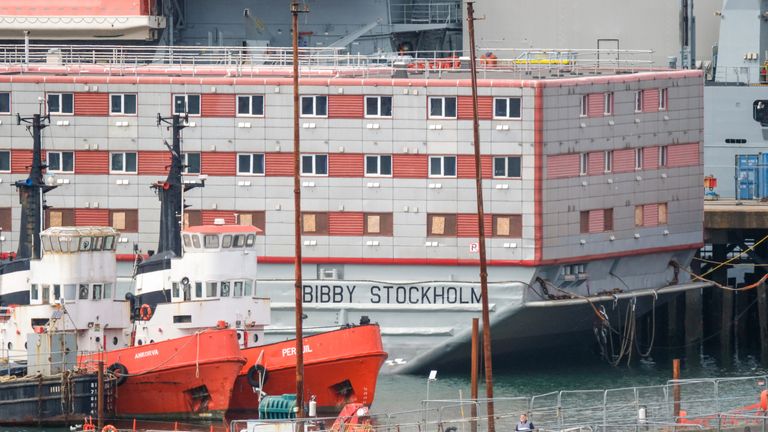
The Bibby Stockholm accommodation barge at Falmouth docks in Cornwall
Efforts to house asylum seekers on a barge in Portland, Dorset, have also been delayed, with the Bibby Stockholm vessel still in Cornwall where it had been undergoing refurbishment work.
Meanwhile, the government’s policy of sending some asylum seekers to Rwanda is the subject of a legal battle which is set to reach the Supreme Court.
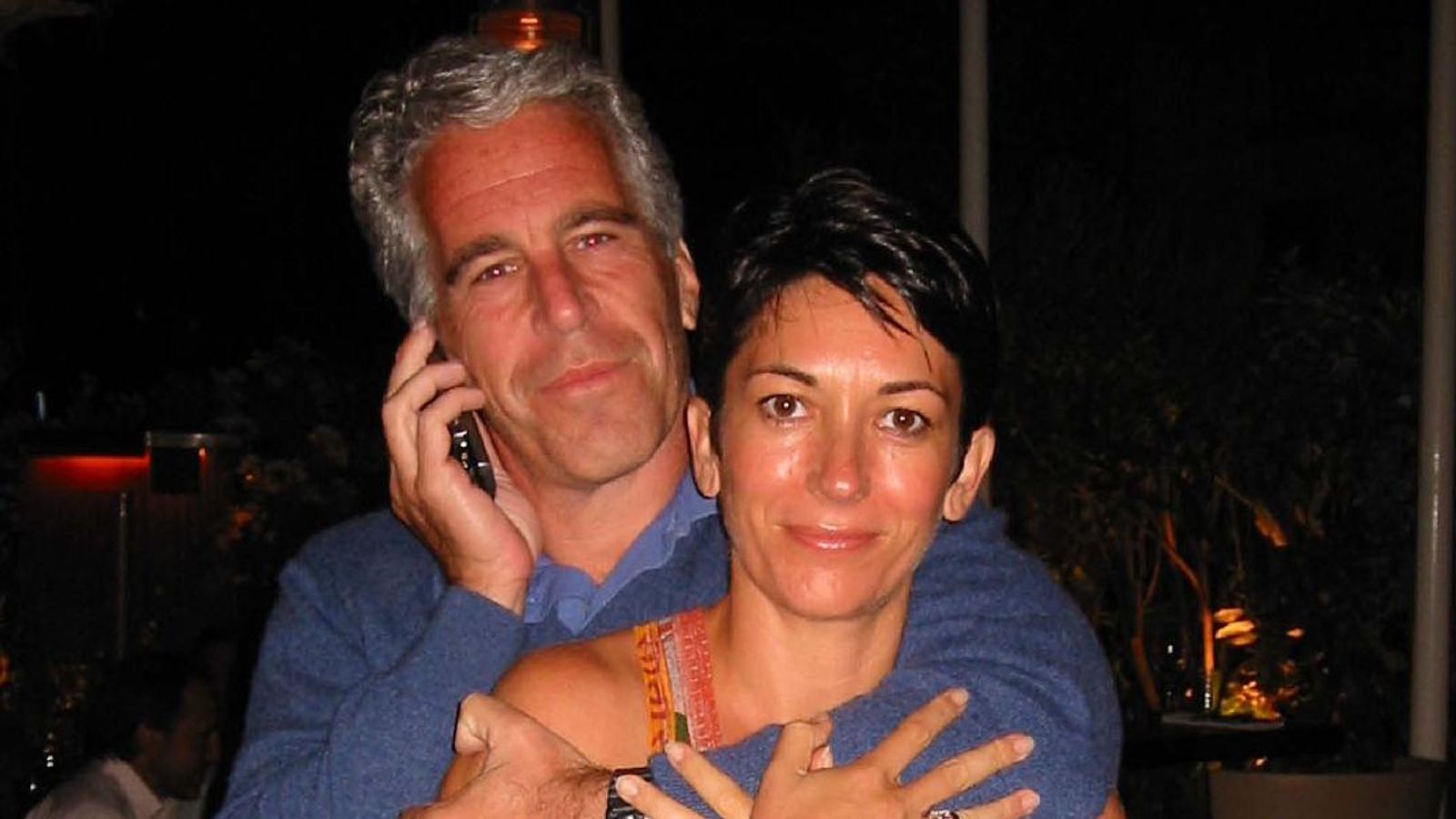

Ghislaine Maxwell has filed a petition asking a US federal judge to overturn her sex trafficking conviction and free her from prison, claiming “substantial new evidence”.
The disgraced British socialite and ex-girlfriend of the convicted paedophile Jeffrey Epstein is serving a 20-year sentence for sex trafficking.
In the petition, Maxwell’s lawyers argue that information which would have resulted in her exoneration at her 2021 trial was withheld, and that false testimony was presented to the jury.
They say the cumulative effect is a “complete miscarriage of justice.”
Read more from Sky News:
Rob Reiner’s son appears in court
White House plaques attack ex-presidents
Maxwell was jailed in 2022 for sex trafficking after recruiting young girls for Epstein during the 1990s and early 2000s.
Her latest legal bid for freedom came on Wednesday, two days ahead of the deadline for the release of the Epstein files – which include all material related to civil and criminal cases involving Epstein, who took his own life while awaiting trial on sex trafficking charges in 2019.
Ghislaine Maxwell said she would petition her conviction since August. File pic: PA/US Department of Justice
Maxwell’s lawyers have claimed that releasing the files – required after US President Donald Trump signed the Epstein Transparency Act – would harm her bid for a retrial.
The argument came in a letter from her legal team to a New York judge, which Sky News saw at the start of December. The lawyers argued the release of “grand jury materials from her case, which contain untested and unproven allegations” would “foreclose the possibility of a fair retrial”.
The letter also reveals the plan for the habeas corpus petition, filed this week.
The petition, filed in a Manhattan federal court, argues: “Since the conclusion of [Maxwell’s] trial, substantial new evidence has emerged from related civil actions, government disclosures, investigative reports, and documents demonstrating constitutional violations that undermined the fairness of her proceeding.
“In the light of the full evidentiary record, no reasonable juror would have convicted her.”
It is unclear what new material the lawyers are referring to.
In October, the US Supreme Court rejected Maxwell’s attempts to appeal against her sentence, meaning the petition or a presidential pardon from Mr Trump are her only chances at being freed before her projected release date in 2037.
Earlier in December a New York judge gave the go ahead for the US Department of Justice to publish material from Maxwell’s sex trafficking case, as part of the Epstein files release.
Democrats have released dozens of Epstein images
Several dozen photos related to Epstein have already been released by Democrats in the US, ahead of this week’s deadline for the release of the full files which are expected to include thousands of pages of material.
As it happened: Trump ‘knows nothing about’ images released
Last Friday, images of Mr Trump, Steve Bannon, former President Bill Clinton, Andrew Mountbatten-Windsor, and others were shared by the Democrats on social media.
There was no suggestion that the pictures implied any wrongdoing. The US president, Mr Bannon, Mr Clinton and the former prince have all denied any wrongdoing in relation to Epstein.
Other images included sex toys and condoms with Mr Trump’s likeness.

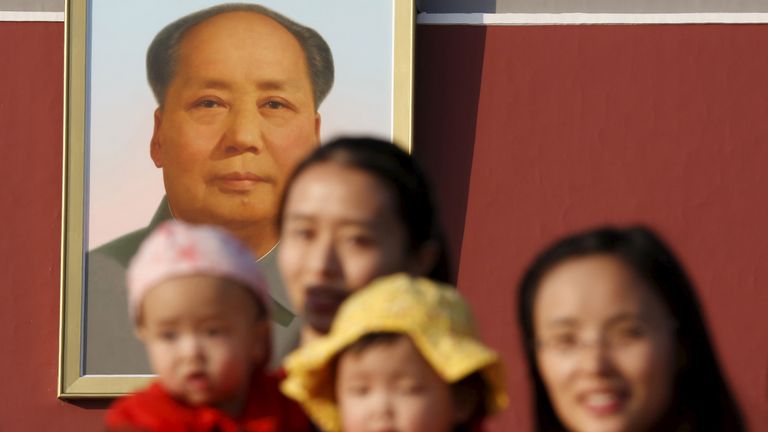
China is to tax contraception for the first time in more than three decades in a move aligned with efforts to get more families to have children.
Contraceptive drugs and products such as condoms will no longer be exempt from China’s 13% value added tax from January 1, the country’s newest tax laws have revealed.
The move comes as the country’s birth rate declines. In 2024, 9.5 million babies were born in China, about one-third fewer than the 14.7 million born in 2019, according to the National Bureau of Statistics.
China has moved on from the decades when it used a one child policy in an attempt to curb a massive population boom. Pic: Reuters.
As deaths have outpaced births in China, India overtook it as the world’s most populous country in 2023.
But the tax change has been ridiculed on on Chinese social media by people who have joked that they would be fools not to know that raising a child is more expensive than using condoms, even if they are taxed.
“That’s a really ruthless move,” said Hu Lingling, mother of a 5-year-old who said she is determined not to have another child. She said she would “lead the way in abstinence” as a rebel.
“It is also hilarious, especially compared to forced abortions during the family planning era,” she said.
More seriously, experts are raising concerns over potential increases in unplanned pregnancies and sexually transmitted diseases due to higher costs for contraceptives.
Read more:
China’s population falls for the first time in 60 years
China’s demographic sparks fears for retirement
In previous decades China’s huge population growth prompted the ruling Communist Party to ban couples from having more than one child in a rule that enforced from about 1980 until 2015, through fines and other penalties.
In some cases women underwent forced abortions and children born over the one child limit were deprived of an identification number, effectively making them non-citizens.
The government raised the birth limit to two children in 2015. Then, as China’s population began to peak and then fall, it was lifted to three children in 2021. Contraception has previously been actively encouraged and easily accessed, sometimes for free.
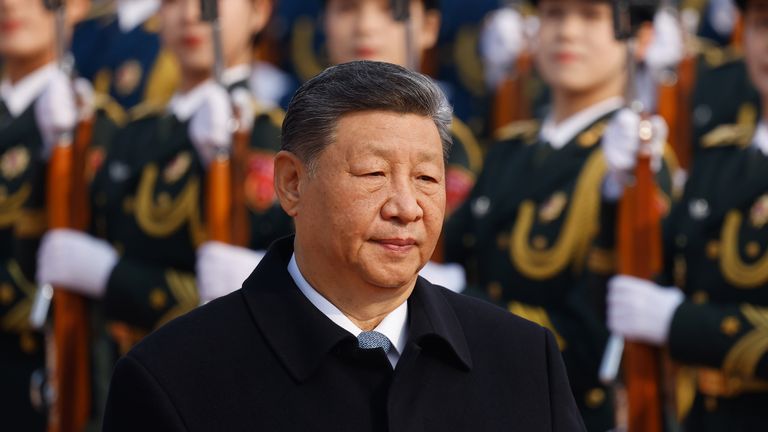
The limit was lifted to three children in 2021 under President Xi Jinping. Pic: AP
Director of the University of Virginia’s Demographics Research Group, Qian Cai said: “Higher prices may reduce access to contraceptives among economically disadvantaged populations, potentially leading to increases in unintended pregnancies and sexually transmitted infections. Those outcomes could, in turn, lead to more abortions and higher health-care costs.”
She also said the new taxes would have a “very limited” effect on reproductive decisions.
“For couples who do not want children or do not want additional children, a 13% tax on contraceptives is unlikely to influence their reproductive decisions, especially when weighed against the far higher costs of raising a child,” she said.
But University of Wisconsin-Madison senior scientist Yi Fuxian said imposing the tax was “only logical”.
“They used to control the population, but now they are encouraging people to have more babies; it is a return to normal methods to make these products ordinary commodities,” he said.
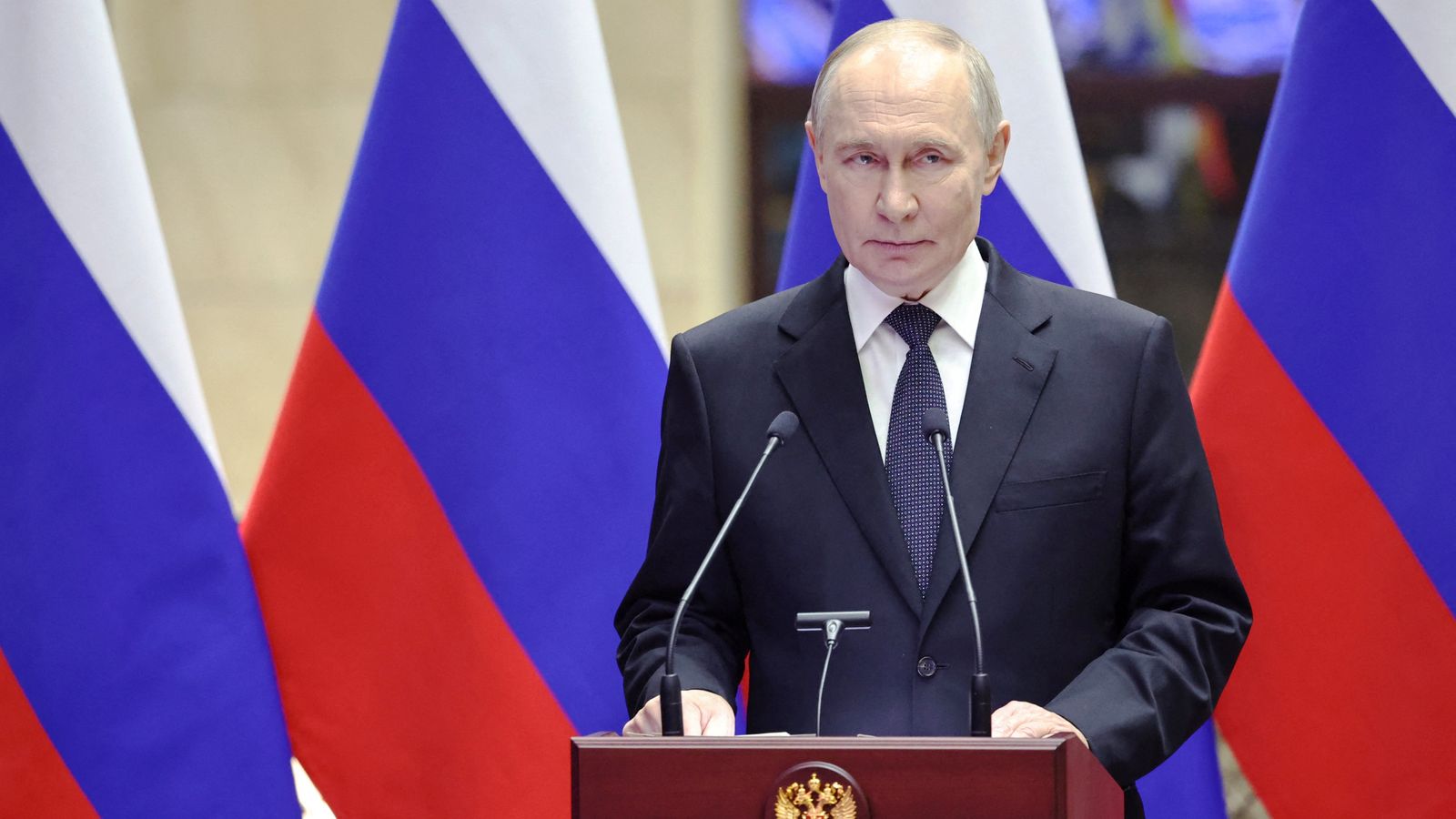
EU leaders will meet in Brussels today to try to agree the release of €210bn (£184bn) to help fund Ukraine’s war with Russia.
The money, which comes from Russian assets frozen after Moscow’s full-scale invasion of Ukraine in 2022, is mostly held in the Belgian-headquartered clearing house, Euroclear.
The money is seen as vital to Ukraine’s ability to keep fighting, because the country faces bankruptcy in early 2026 if it doesn’t receive more international assistance. That means Kyiv would no longer be able to pay soldiers, police and civil servants or buy weapons to defend itself.
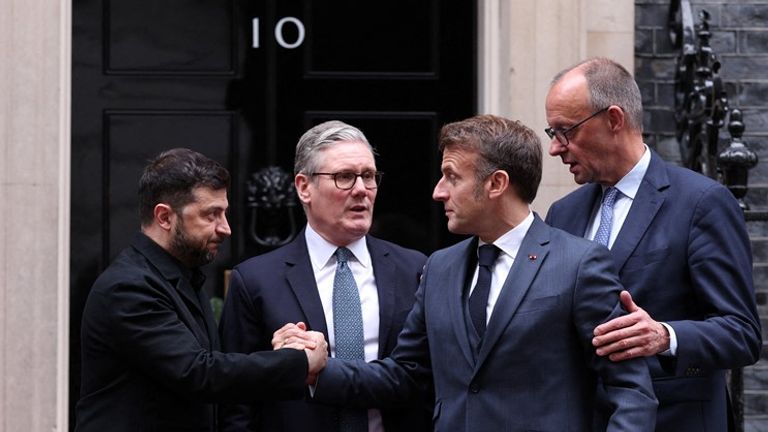
Volodymyr Zelenskyy, Sir Keir Starmer, French President Emmanuel Macron and German Chancellor Friedrich Merz. Pic: Reuters
Last night, Volodymyr Zelenskyy, who is expected to brief the EU leaders today, wrote on X: “The result Europe produces – must make Russia feel that its desire to continue the war next year is pointless, because Ukraine will have support. This rests entirely with Europe.”
The Belgian government has so far prevented the move amid fears it will expose the small country to Russian legal action in the future.
The EU is racing to find solutions to Belgium‘s concerns, including passing an emergency bill that secures the sanctions against Russia indefinitely, superseding the need to renew them every six months and thereby insulating it from veto votes from Russian-leaning EU member states like Hungary and Slovakia.
Belgium also wants guarantees that all EU members will share any financial cost of Russian action against it.
Why the push to use Russian assets?
The US, which has so far given billions of dollars to Kyiv, is losing interest under Donald Trump and can no longer be relied upon for financial support.
Previously, the EU had been giving the interest generated from the frozen assets to Ukraine, but was worried it might destabilise the Eurozone economy if it touched the assets itself.
That has changed, however, as Ukraine’s need has become more acute and fears over Russia’s wider imperialist ambitions have grown in recent months.
This unlocking of seized Russian assets is also being seen as a way to buy Brussels more leverage in peace negotiations, as well as reducing Kyiv’s dependency on Washington.
Read more:
South Africans fighting for Russia
Russia trying to ‘bully’ UK and allies

Friedrich Merz. Pic: Reuters
German Chancellor Friedrich Merz, who has been leading the campaign to release the funds, warned that “Europe would be severely damaged for years” if they fail to pass the vote and “this step is not about prolonging the war but about bringing the war to an end as soon as possible”.
In short, the consequences of using the frozen assets are now considered less risky than the consequences of not taking this action.
What’s at stake?
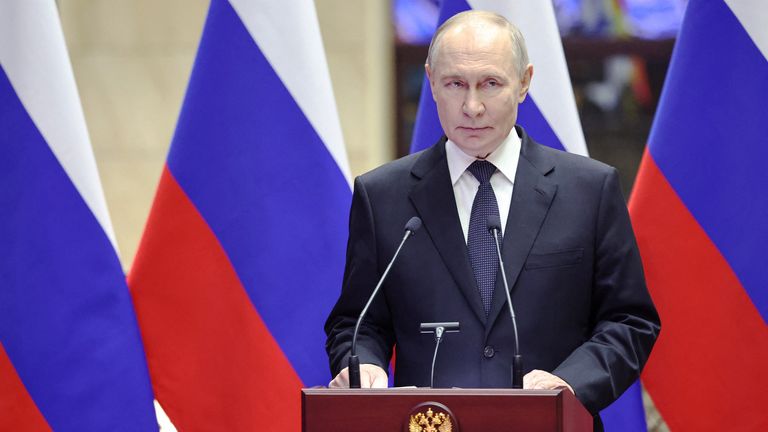
Vladimir Putin is hoping Ukraine’s allies end up divided. Pic: Sputnik/Reuters
Trump wanted the money to be invested in two US investment funds, something the EU rejects. The US president has recently been scathing of European leaders, and the EU sees Thursday’s meeting as an opportunity to show its strength and unity.
In theory, the EU could pass the policy by majority vote, thereby sidelining the Belgian government, but officials are reluctant to go down this path for fear of alienating Belgium and causing a diplomatic rift in the alliance.
Much is riding on the meeting. If the EU fails to pass the vote, its credibility will take a severe blow. It will likely become even more irrelevant in peace talks, and Vladimir Putin might look to take advantage of a divided Europe.
-
 Sports2 years ago
Story injured on diving stop, exits Red Sox game
-
 Sports3 years ago
‘Storybook stuff’: Inside the night Bryce Harper sent the Phillies to the World Series
-
 Sports2 years ago
Game 1 of WS least-watched in recorded history
-
 Sports3 years ago
Button battles heat exhaustion in NASCAR debut
-
 Sports3 years ago
MLB Rank 2023: Ranking baseball’s top 100 players
-
Sports4 years ago
Team Europe easily wins 4th straight Laver Cup
-
 Environment3 years ago
Japan and South Korea have a lot at stake in a free and open South China Sea
-
 Environment1 year ago
Here are the best electric bikes you can buy at every price level in October 2024