


The logo for Google LLC is seen at the Google Store Chelsea in Manhattan, New York City, U.S., November 17, 2021.
Andrew Kelly | Reuters
A U.S. judge on Friday finalized his decision for the consequences Google will face for its search monopoly ruling, adding new details to the decided remedies.
Last year, Google was found to hold an illegal monopoly in its core market of internet search, and in September, U.S. District Judge Amit Mehta ruled against the most severe consequences that were proposed by the Department of Justice.
That included the proposal of a forced sale of Google’s Chrome browser, which provides data that helps the company’s advertising business deliver targeted ads. Alphabet shares popped 8% in extended trading as investors celebrated what they viewed as minimal consequences from a historic defeat last year in the landmark antitrust case.
Investors largely shrugged off the ruling as non-impactful to Google. However some told CNBC it’s still a bite that could “sting.”
Mehta on Friday issued additional details for his ruling in new filings.
“The age-old saying ‘the devil is in the details’ may not have been devised with the drafting of an antitrust remedies judgment in mind, but it sure does fit,” Mehta wrote in one of the Friday filings.
Google did not immediately respond to a request for comment. The company has previously said it will appeal the remedies.
In August 2024, Mehta ruled that Google violated Section 2 of the Sherman Act and held a monopoly in search and related advertising. The antitrust trial started in September 2023.
In his September decision, Mehta said the company would be able to make payments to preload products, but it could not have exclusive contracts that condition payments or licensing. Google was also ordered to loosen its hold on search data. Mehta in September also ruled that Google would have to make available certain search index data and user interaction data, though “not ads data.”
The DOJ had asked Google to stop the practice of “compelled syndication,” which refers to the practice of making certain deals with companies to ensure its search engine remains the default choice in browsers and smartphones.
The judge’s September ruling didn’t end the practice entirely — Mehta ruled out that Google couldn’t enter into exclusive deals, which was a win for the company. Google pays Apple billions of dollars per year to be the default search engine on iPhones. It’s lucrative for Apple and a valuable way for Google to get more search volume and users.
Mehta’s new details
In the Friday filings, Mehta wrote that Google cannot enter into any deal like the one it’s had with Apple “unless the agreement terminates no more than one year after the date it is entered.”
This includes deals involving generative artificial intelligence products, including any “application, software, service, feature, tool, functionality, or product” that involve or use genAI or large-language models, Mehta wrote.
GenAI “plays a significant role in these remedies,” Mehta wrote.
The judge also reiterated the web index data it will require Google to share with certain competitors.
Google has to share some of the raw search interaction data it uses to train its ranking and AI systems, but it does not have to share the actual algorithms — just the data that feeds them.” In September, Mehta said those data sets represent a “small fraction” of Google’s overall traffic, but argued the company’s models are trained on data that contributed to Google’s edge over competitors.
The company must make this data available to qualified competitors at least twice, one of the Friday filing states. Google must share that data in a “syndication license” model whose term will be five years from the date the license is signed, the filing states.
Mehta on Friday also included requirements on the makeup of a technical committee that will determine the firms Google must share its data with.
Committee “members shall be experts in some combination of software engineering, information retrieval, artificial intelligence, economics, behavioral science, and data privacy and data security,” the filing states.
The judge went on to say that no committee member can have a conflict of interest, such as having worked for Google or any of its competitors in the six months prior to or one year after serving in the role.
Google is also required to appoint an internal compliance officer that will be responsible “for administering Google’s antitrust compliance program and helping to ensure compliance with this Final Judgment,” per one of the filings. The company must also appoint a senior business executive “whom Google shall make available to update the Court on Google’s compliance at regular status conferences or as otherwise ordered.”
This is breaking news. Check back for updates.

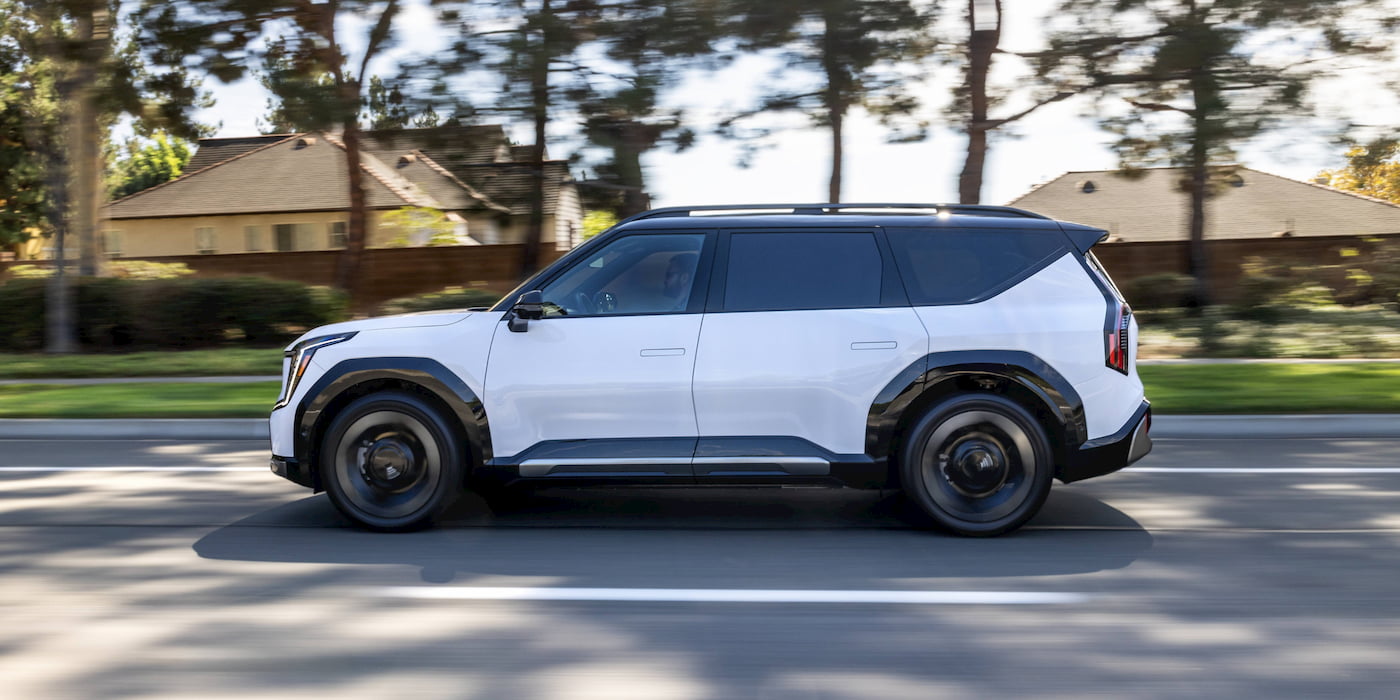
Kia is extending one of its biggest promotions yet, knocking over $10,000 off every EV in its lineup.
Kia knocks $10,000 off EV models
Who said electric vehicles would get more expensive after the $7,500 federal tax credit ended? Kia must not have gotten the memo.
Last month, Kia launched a new promotion, offering a $10,000 customer cash discount for all EVs, including the EV6, EV9, and Niro EV. The discount knocks nearly 25% off MSRP on Kia’s cheapest model, the Niro EV. On the entry-level EV6, it’s 23% off MSRP, while $10,000 off the EV9 is about an 18% discount.
The discounts ended on December 1, but Kia has extended them for at least another month. During its Season of New Tradition sales event, Kia is now offering even more savings.
The 2025 Kia EV6 and Niro EV are now eligible for up to $11,000 in customer cash, including a $10,000 cash back offer and a $1,000 retail bonus cash discount.
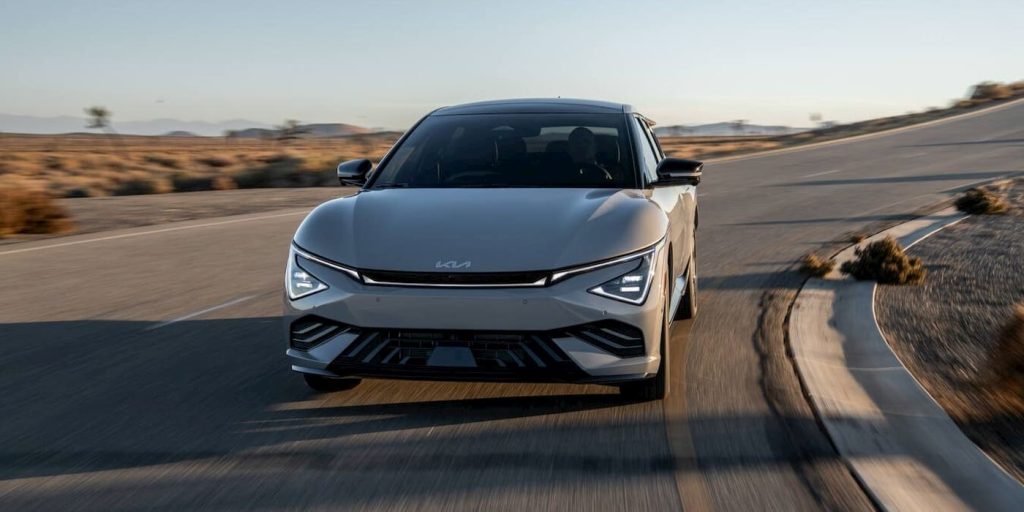
If you’re looking for something a little bigger, the 2026 EV9, Kia’s three-row electric SUV, is available with up to $10,500 in bonus cash.
If you choose to finance, Kia is offering 0% APR for up to 72 months, plus $3,500 APR Bonus Cash on the EV6 and Niro EV. The larger EV9 is available with 0% APR for up to 60 months with a $3,000 APR Bonus Cash offer.
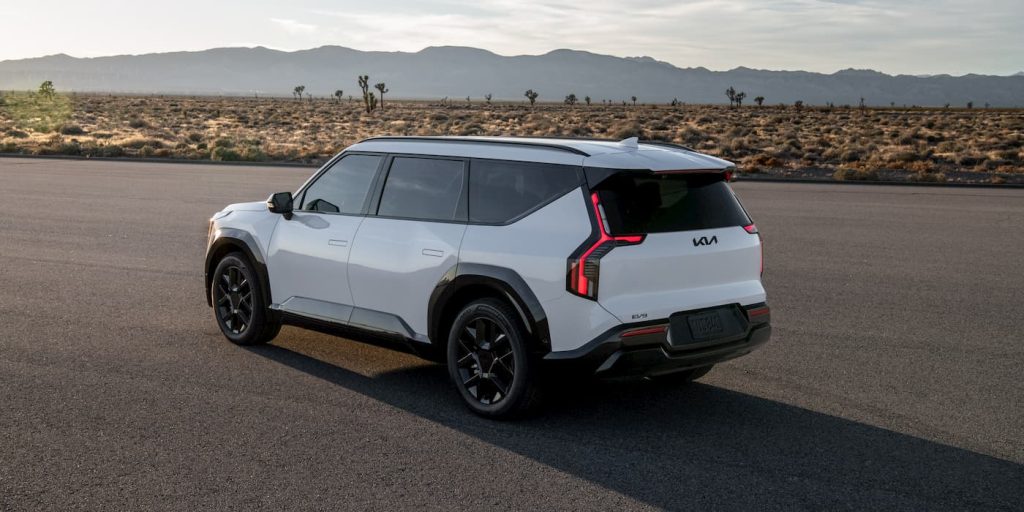
The 2025 Kia Niro EV and EV6 are available to lease, starting at $209 and $309 per month for 24 months. The 2026 EV9 is listed with monthly leases starting at $419.
The new sales event comes after Hyundai extended its EV promotions, keeping the IONIQ 5 as one of the most affordable EV leases in the US, starting at just $189 per month.
Kia’s Seasons of New Traditions sales event runs until January 2, 2026. Some deals may vary by region. You can see offers near you by using the links at the bottom.
Interested in test-driving one for yourself? We can help see what’s available in your area. Check out our links below to find Kia and Hyundai EVs near you.


FTC: We use income earning auto affiliate links. More.

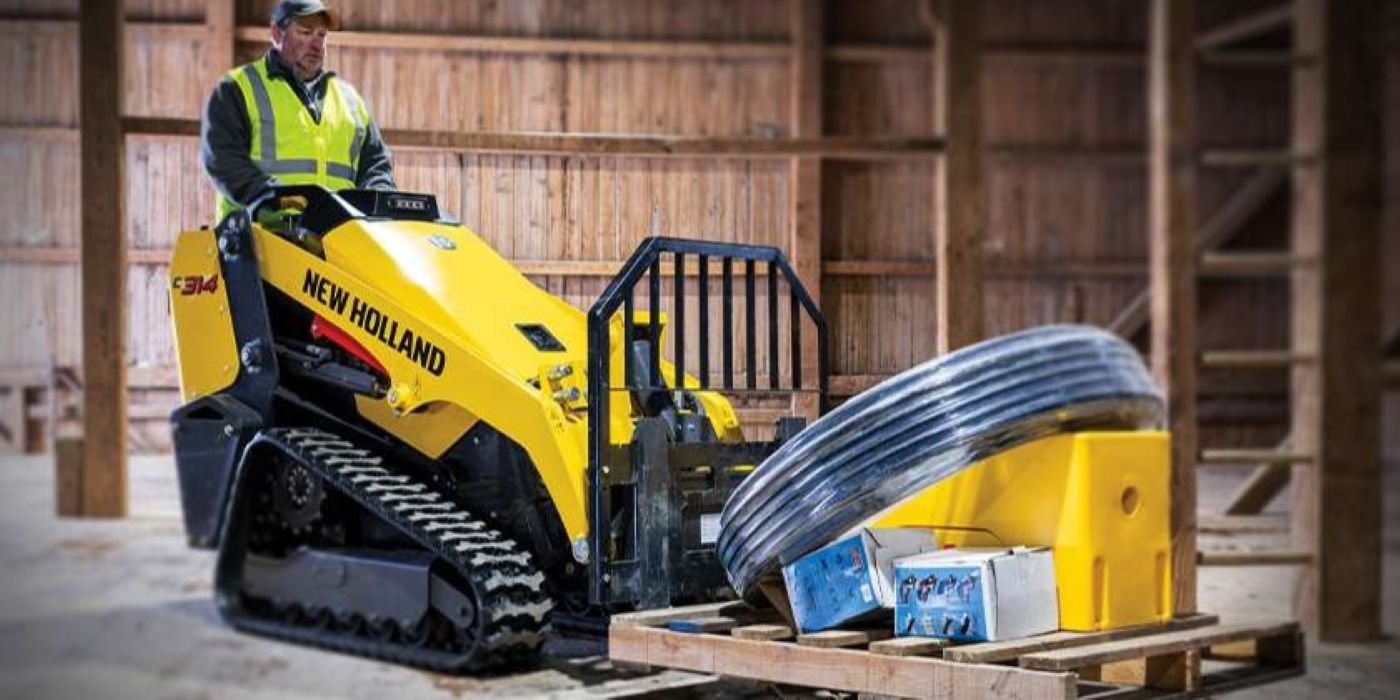
New Holland’s already excellent C314 mini track loader is even better for 2026 thanks to the debut of a new, all electric version that offers quiet, low maintenance, and emission-free running for round-the-clock operation.
State and federal governments may still be hashing out emissions laws and ZEV requirements, but it’s the municipal governments that write quiet our laws and noise ordinances, and it’s those laws that construction crews are struggling to work around as they bid for lucrative urban jobs. New Holland understands those construction customers’ needs, and its new C314X Electric mini track loader (announced at last month’s Agritechnica) is designed specifically for them.
“We launched the C314 two years ago, and it has become known for its excellent features,” says Francesca Asteggiano, Europe Construction Brands. “Today, we’re developing an electric version to meet growing demand for quieter, more compact machines — reinforcing our commitment to sustainability and innovation.”
C314X Electric
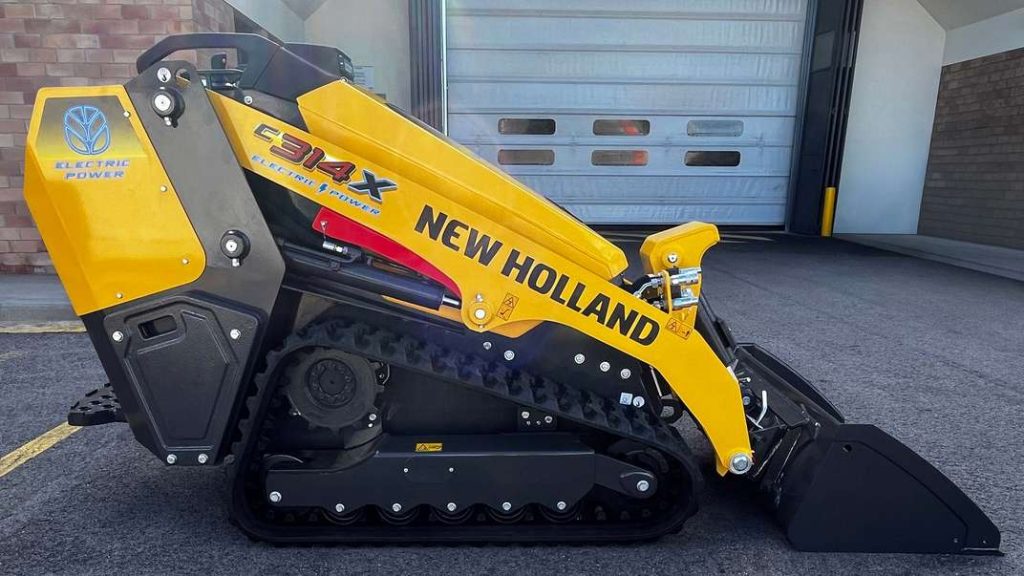
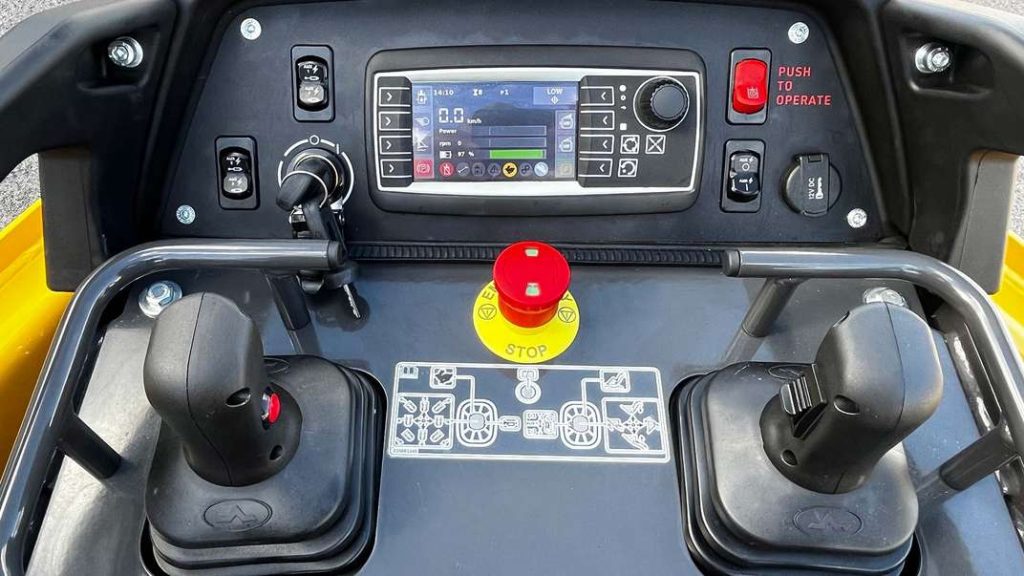
New Holland’s C314X Electric is designed and built in-house as the zero-emission evolution of the diesel-powered C314, and is powered by a 23.5 kWh li-ion battery that sends power to three electric motors — two drive motors and a single hydraulic motor for the boom.
The company says the new C314X has a rated operating capacity that matches the diesel unit at 460 kg (~1014 lbs.) and a hinge pin height of 2.2 m (~7.2 ft.).
Though still “just a prototype” at this point, CASE and New Holland products have a history of making it to production. If when it does, company reps say it will be available in two undercarriage configurations, a “narrow track” version 890 mm wide that can fit through garden gates and man doors, and wide track version 1026 mm wide for heavier duty outdoor and agricultural work.
The stand-on machine uses controls that will be familiar to any mini loader operator — especially those with experience behind the controls of the diesel C314 — and all the implements and attachments that work on the diesel version bolt up to the C314X Electric, making it ideal (the company says) for livestock and horticultural farmers, landscape contractors and residential construction operations, thanks to multiple compatible attachments to ensure full versatility to dig, load, drill, and more.
Stay tuned for pricing and availability, likely set to be announced during ConExpo 2026.
SOURCE | IMAGES: New Holland.

If you’re considering going solar, it’s always a good idea to get quotes from a few installers. To make sure you find a trusted, reliable solar installer near you that offers competitive pricing, check out EnergySage, a free service that makes it easy for you to go solar. It has hundreds of pre-vetted solar installers competing for your business, ensuring you get high-quality solutions and save 20-30% compared to going it alone. Plus, it’s free to use, and you won’t get sales calls until you select an installer and share your phone number with them.
Your personalized solar quotes are easy to compare online and you’ll get access to unbiased Energy Advisors to help you every step of the way. Get started here.
FTC: We use income earning auto affiliate links. More.
-
 Sports2 years ago
Story injured on diving stop, exits Red Sox game
-
 Sports3 years ago
‘Storybook stuff’: Inside the night Bryce Harper sent the Phillies to the World Series
-
 Sports2 years ago
Game 1 of WS least-watched in recorded history
-
 Sports3 years ago
Button battles heat exhaustion in NASCAR debut
-
 Sports3 years ago
MLB Rank 2023: Ranking baseball’s top 100 players
-
Sports4 years ago
Team Europe easily wins 4th straight Laver Cup
-
 Environment3 years ago
Japan and South Korea have a lot at stake in a free and open South China Sea
-
 Environment1 year ago
Here are the best electric bikes you can buy at every price level in October 2024