

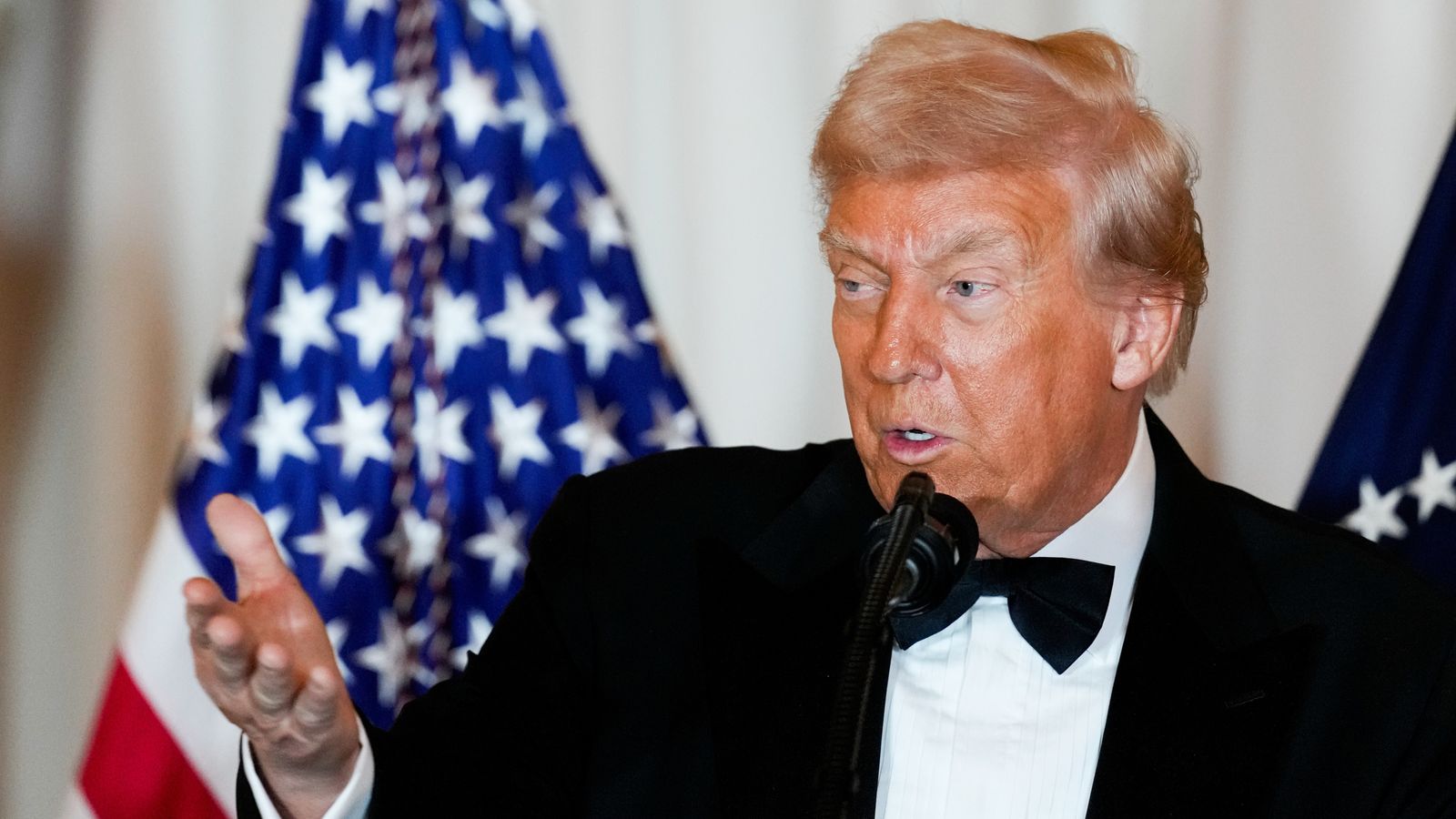

Donald Trump has said he will be “involved” in the decision on whether Netflix should be allowed to buy Warner Bros, as the $72bn (£54bn) deal attracts a media industry backlash.
The US president acknowledged in remarks to reporters there “could be a problem”, acknowledging concerns over the streaming giant’s market dominance.
Crucially, he did not say where he stood on the issue.
Money latest: The cheapest days to travel by plane
It was revealed on Friday that Netflix, already the world’s biggest streaming service by market share, had agreed to buy Warner Bros Discovery’s TV, film studios and HBO Max streaming division.
The deal aims to complete late next year after the Discovery element of the business, mainly legacy TV channels showing cartoons, news and sport, has been spun off.
But the deal has attracted cross-party criticism on competition grounds, and there is also opposition in Hollywood.
Netflix agrees $72bn takeover of Warner Bros
The Writers Guild of America said: “The world’s largest streaming company swallowing one of its biggest competitors is what antitrust laws were designed to prevent.
“The outcome would eliminate jobs, push down wages, worsen conditions for all entertainment workers, raise prices for consumers, and reduce the volume and diversity of content for all viewers.”
File pic: Reuters
Republican Senator, Roger Marshall, said in a statement: “Netflix’s attempt to buy Warner Bros would be the largest media takeover in history – and it raises serious red flags for consumers, creators, movie theaters, and local businesses alike.
“One company should not have full vertical control of the content and the distribution pipeline that delivers it. And combining two of the largest streaming platforms is a textbook horizontal Antitrust problem.
“Prices, choice, and creative freedom are at stake. Regulators need to take a hard look at this deal, and realize how harmful it would be for consumers and Western society.”
Paramount Skydance and Comcast, the parent company of Sky News, were two other bidders in the auction process that preceded the announcement.
The Reuters news agency, citing information from sources, said their bids were rejected in favour of Netflix for different reasons.
Paramount’s was seen as having funding concerns, they said, while Comcast’s was deemed not to offer so many earlier benefits.
Paramount is run by David Ellison, the son of the Oracle tech billionaire Larry Ellison, who is a close ally of Mr Trump.
The president said of the Netflix deal’s path to regulatory clearance: “I’ll be involved in that decision”.
On the likely opposition to the deal. he added: “That’s going to be for some economists to tell. But it is a big market share. There’s no question it could be a problem.”
Donald Trump has said he will be “involved” in the decision on whether Netflix should be allowed to buy Warner Bros, as the $72bn (£54bn) deal attracts a media industry backlash.
The US president acknowledged in remarks to reporters there “could be a problem”, acknowledging concerns over the streaming giant’s market dominance.
Crucially, he did not say where he stood on the issue.
Money latest: The cheapest days to travel by plane
It was revealed on Friday that Netflix, already the world’s biggest streaming service by market share, had agreed to buy Warner Bros Discovery’s TV, film studios and HBO Max streaming division.
The deal aims to complete late next year after the Discovery element of the business, mainly legacy TV channels showing cartoons, news and sport, has been spun off.
But the deal has attracted cross-party criticism on competition grounds, and there is also opposition in Hollywood.
Netflix agrees $72bn takeover of Warner Bros
The Writers Guild of America said: “The world’s largest streaming company swallowing one of its biggest competitors is what antitrust laws were designed to prevent.
“The outcome would eliminate jobs, push down wages, worsen conditions for all entertainment workers, raise prices for consumers, and reduce the volume and diversity of content for all viewers.”
File pic: Reuters
Republican Senator, Roger Marshall, said in a statement: “Netflix’s attempt to buy Warner Bros would be the largest media takeover in history – and it raises serious red flags for consumers, creators, movie theaters, and local businesses alike.
“One company should not have full vertical control of the content and the distribution pipeline that delivers it. And combining two of the largest streaming platforms is a textbook horizontal Antitrust problem.
“Prices, choice, and creative freedom are at stake. Regulators need to take a hard look at this deal, and realize how harmful it would be for consumers and Western society.”
Paramount Skydance and Comcast, the parent company of Sky News, were two other bidders in the auction process that preceded the announcement.
The Reuters news agency, citing information from sources, said their bids were rejected in favour of Netflix for different reasons.
Paramount’s was seen as having funding concerns, they said, while Comcast’s was deemed not to offer so many earlier benefits.
Paramount is run by David Ellison, the son of the Oracle tech billionaire Larry Ellison, who is a close ally of Mr Trump.
The president said of the Netflix deal’s path to regulatory clearance: “I’ll be involved in that decision”.
On the likely opposition to the deal. he added: “That’s going to be for some economists to tell. But it is a big market share. There’s no question it could be a problem.”
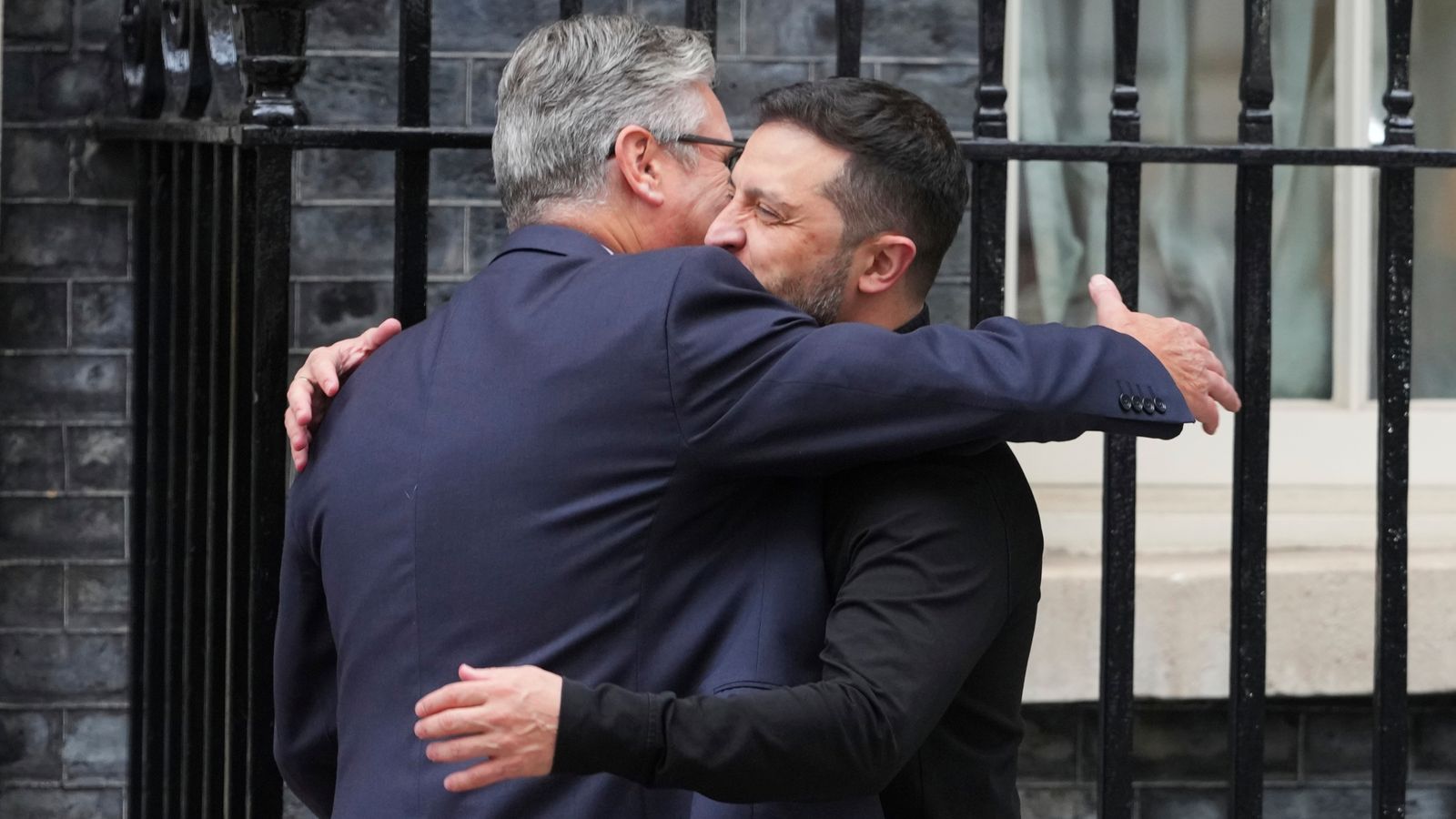
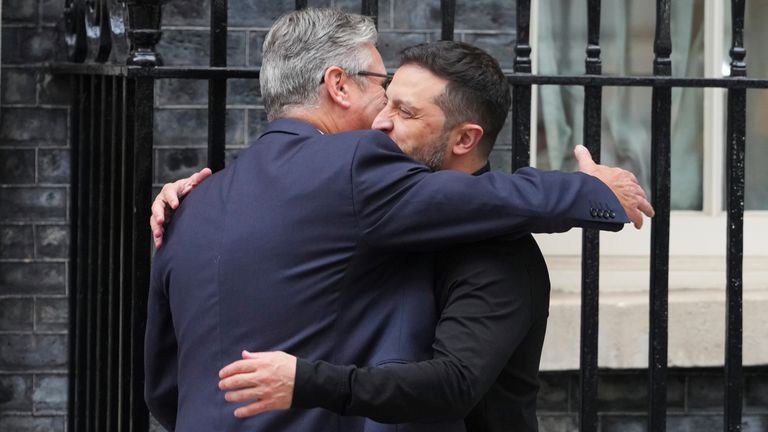
Volodymyr Zelenskyy is heading to Downing Street once again, but Prime Minister Sir Keir Starmer will be keen to make this meeting more than just a photo op.
On Monday the prime minister will welcome not only the Ukrainian president, but also E3 allies France and Germany to discuss the state of the war in Ukraine.
French President Emmanuel Macron and German Chancellor Friedrich Merz will join Sir Keir in showing solidarity and support for Ukraine and its leader, but it’s the update on the peace negotiations that will be the main focus of the meet up.
The four leaders are said to be set to not only discuss those talks between Ukraine, the US and Russia, but also to talk about next steps if a deal were to be reached and what that might look like.
Ahead of the discussions, Sir Keir spoke with the Dutch leader Dick Schoof where both leaders agreed Ukraine’s defence still needs international support, and that Ukraine’s security is vital to European security.
But while Russia’s war machine shows no signs of abating, a warm welcome and kind words won’t be enough to satisfy the embattled Ukrainian president at a time when Russian drone and missile attacks continue to bombard Kyiv.
Keir Starmer welcoming Volodymyr Zelenskyy to Downing Street during a previous visit. Pic: AP
What is the latest in negotiations?
Over the weekend, Mr Zelenskyy said he had discussed “next steps” with US President Donald Trump’s advisers and was “determined to keep working in good faith”.
“The American representatives know the basic Ukrainian positions,” Mr Zelenskyy said in his nightly video address. “The conversation was constructive, although not easy.”
But on Sunday evening, ahead of an event at the Kennedy Center, President Trump said he was “disappointed” with Mr Zelenskyy, as was asked about the next steps in Russia-Ukraine talks following negotiations.
He said: “We’ve been speaking to President Putin and we’ve been speaking to Ukrainian leaders, including Zelenskyy, President Zelenskyy.
“And I have to say that I’m a little bit disappointed that President Zelenskyy hasn’t yet read the proposal. That was as of a few hours ago.
“His people love it. But he hasn’t – Russia’s fine with it. Russia’s you know, Russia, I guess, would rather have the whole country when you think of it. But Russia is, I believe, fine with it, but I’m not sure that Zelenskyy’s fine with it. His people love it but he hasn’t read it.”
Read more:
Ukraine has become Europe’s war – so why doesn’t it act like it?
Inside a secret underground military base in eastern Ukraine
On Saturday, Keith Kellogg, Trump’s outgoing Ukraine envoy, had told the Reagan National Defence Forum that efforts to resolve the conflict were in “the last 10 metres”.
Kremlin spokesman Dmitry Peskov praised new US security strategy over the weekend, adding that Russia hopes this would lead to “further constructive cooperation with Washington on the Ukrainian settlement”.
-
 Sports2 years ago
Story injured on diving stop, exits Red Sox game
-
 Sports3 years ago
‘Storybook stuff’: Inside the night Bryce Harper sent the Phillies to the World Series
-
 Sports2 years ago
Game 1 of WS least-watched in recorded history
-
 Sports3 years ago
Button battles heat exhaustion in NASCAR debut
-
 Sports3 years ago
MLB Rank 2023: Ranking baseball’s top 100 players
-
Sports4 years ago
Team Europe easily wins 4th straight Laver Cup
-
 Environment3 years ago
Japan and South Korea have a lot at stake in a free and open South China Sea
-
 Environment1 year ago
Here are the best electric bikes you can buy at every price level in October 2024