Bankrupt crypto lender Celsius Network has posted that the company is pleased with the resolutions that it was able to reach with various United States government agencies. The announcement came after the news that the FTC has imposed a $4.7 billion fine on the company.
On July 13, the United States Federal Trade Commission (FTC) reached a settlement with Celsius. The FTC’s decision comes with a $4.7 billion fine — which is suspended to allow the company to return its remaining funds to users as it goes through bankruptcy proceedings.
In its statement, Celsius said that these resolutions will not impact the firm’s chapter 11 plan or its ability to return value to its customers.
We are pleased to have reached resolutions with the Department of Justice, the Securities and Exchange Commission, the Commodity Futures Trading Commission, and the Federal Trade Commission as we continue to pursue a successful Chapter 11 Plan.
Moreover, Celsius noted that they are committed to cooperating with regulators and government agencies.
While Celsius was pleased with the results, members of the crypto community were not. Many were incensed by Celsius’ remarks and blasted the company on Twitter.
In a tweet, Joey Hendrickson described Celsius Network’s announcement as “weird.” According to the community member, if the company “had any level of human conscience,” they would not be pleased. Hendrickson said that he would rather hear an apology for how the company “mistreated” customers.
Twitter user Amit Palaliya agreed with Hendrickson’s sentiments. The community member expressed dissatisfaction over the use of corporate and legal jargon wording as the company addressed its users. Palaliya urged the firm to just distribute the funds that are left and tell the users to move on instead of continuing to throw money into “legal pits.”
Meanwhile, another community member blasted the company as they tweeted that they were also “pleased” that the former Celsius CEO Alex Mashinsky was charged with multiple crimes. They tweeted:
And We the Users, who spent their hard earned money on your extreme risk taking lies, are pleased to see Alex Mashinsky charged with multiple crimes https://t.co/QCnjAGPFzK
— Digital Asset Updates (@DigitalAssetUpd) July 13, 2023
On July 13, the United States Securities and Exchange Commission filed a lawsuit against the crypto lender and Mashinsky. The SEC argued that the former Celsius CEO falsely promised a safe investment to users with the company’s “Earn Interest Program.”
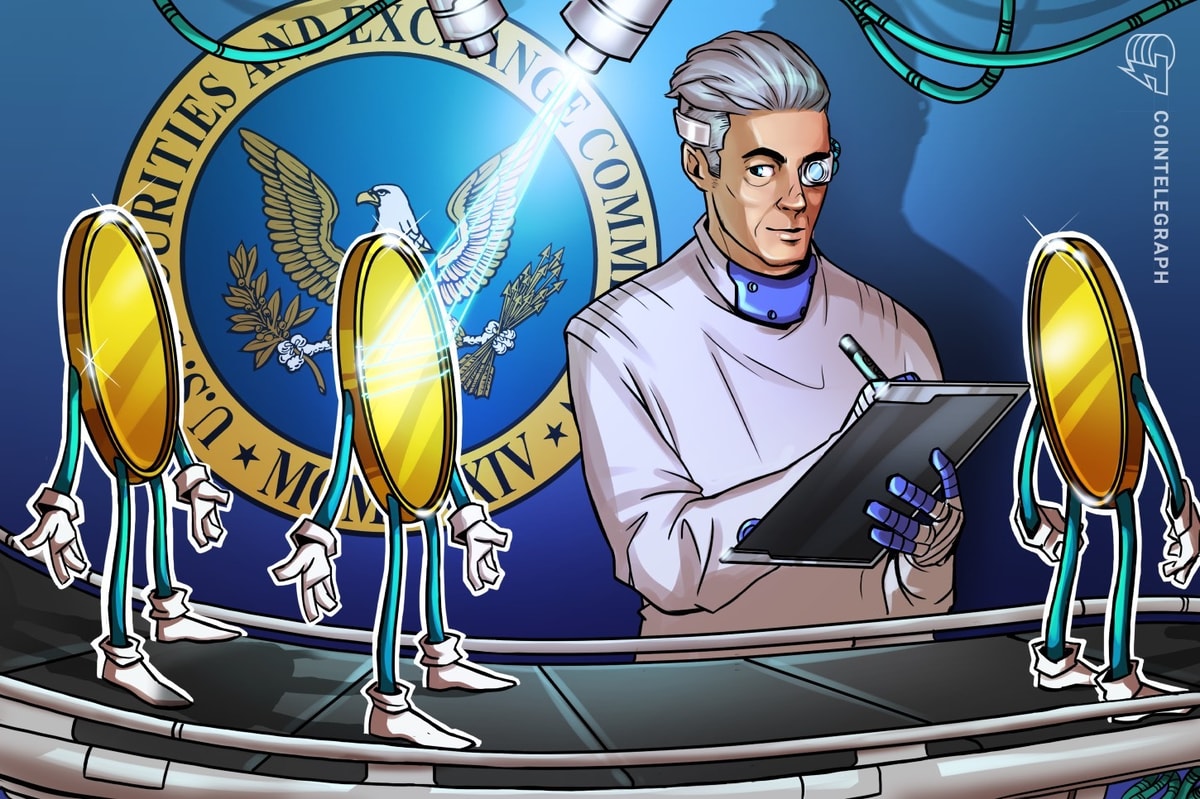
The US Securities and Exchange Commission has given a subsidiary of the Depository Trust and Clearing Corporation (DTCC) a highly coveted “no-action” letter, allowing it to offer a new securities market tokenization service.
The DTCC said on Thursday that its subsidiary, the Depository Trust Company (DTC), was given the go-ahead to launch “a new service to tokenize real-world, DTC-custodied assets in a controlled production environment.”
The DTC will tokenize a “set of highly liquid assets” including the Russell 1000 index, exchange-traded funds tracking major indexes, US Treasury bills, bonds and notes, with the service expected to roll out in the second half of 2026.
The DTCC runs crucial market infrastructure, providing clearing, settlement and trading of US securities. The SEC no-action letter gives it an important sign-off on its plan, confirming that the agency won’t take enforcement action if its proposed product operates as described.
“I want to thank the SEC for its trust in us,” said DTCC CEO Frank La Salla. “Tokenizing the US securities market has the potential to yield transformational benefits such as collateral mobility, new trading modalities, 24/7 access and programmable assets.”
In an historic milestone, DTC received a No‑Action Letter from the SEC to tokenize certain DTC‑custodied assets. By leveraging blockchain, DTCC aims to bridge TradFi and DeFi, advancing a more resilient, inclusive and efficient global financial system. https://t.co/yYNaHfvjcSpic.twitter.com/E4W47rWBIc
The DTCC said the no-action letter allows its subsidiary “to offer a tokenization service for DTC Participants and their clients on pre-approved blockchains for three years.”
“DTC will have the ability to tokenize real-world assets, with the digital version having all the same entitlements, investor protections and ownership rights as the asset in its traditional form,” it said.
The SEC rarely gives no-action letters, but SEC chair Paul Atkins, a former crypto lobbyist, has warmed to the industry and has outlined how crypto products fall under his agency’s regime.
Over the past few months, the SEC has handed out two no-action letters to decentralized physical infrastructure network (DePIN) crypto projects.
In late September, the SEC also issued a no-action letter that cleared the way for investment advisers to use state trust companies as crypto custodians.
Do Kwon, the co-founder of Terraform Labs, has been sentenced to 15 years in prison after pleading guilty to wire fraud and conspiracy to defraud.
In a Thursday hearing in the US District Court for the Southern District of New York, Judge Paul Engelmayer ordered that Kwon serve 15 years in prison for his role in the collapse of Terraform, which wiped out about $40 billion from the crypto market in 2022. He will receive credit for time served in the US and 17 months of pre-extradition custody.
Prior to making his decision on sentencing, Engelmayer heard from some of Terraform’s victims and questioned what kind of justice Kwon might face in his native South Korea, where authorities are also building a case against him.
“I would like everyone to know that I have spent all my time thinking what I could have done, and what I can do,” said Kwon prior to his sentencing, according to Inner City Press. “It’s been four years since the crash, three years since I’ve seen my family. I’d like to [do] my penance in my home country.”
Engelmayer reportedly said the 12-year recommendation US prosecutors had requested the court impose on Kwon was “unreasonable,” while the five years requested by the co-founder’s lawyers “would be so implausible it would require appellate reversal.”
“To the next Do Kwon, if you commit fraud, you will lose your liberty for a long time as you will here,” said Engelmayer, according to Inner City Press. “You have been bitten by the crypto bug, and I don’t think that’s changed. You must be incapacitated. If not for your guilty plea, my sentence would have been higher.”
The judge added, addressing Kwon:
“Your fraud was unusually serious. For four years you publicly lied to the market […] The investors were taking a risk, caveat emptor. But they were not taking the risk of being a fraud victim… What makes what you did so despicable is that you traded on trust.”
Kwon could be extradited to South Korea after serving seven and a half years, where he may complete the second half of his US sentence. He could face up to an additional 40 years in prison in his native country.
Several victims have their say during the sentencing hearing
Prosecutors said at the sentencing hearing that there were about 16,500 victims from the collapse of Terraform, according to claims in the company’s ongoing bankruptcy case. Six of them were allowed to address the court via phone before Engelmayer’s decision, describing their financial losses due to Terra.
“I sold my apartment in Moscow to invest with Do Kwon,” said Tatiana Dontsova, one of the victims, according to Inner City Press. “I moved to Tbilisi. $81,000 turned into $13 in the palm of my hand. Kwon came up with Luna 2, calling it LUNC. He is not showing any responsibility for those who invested. I am now officially homeless.”
Kwon, alleged to have had a role in the 2022 collapse of the Terra ecosystem, was handed over to US authorities in December 2024 after his extradition from Montenegro. His legal team delayed proceedings for months by presenting various challenges in the Montenegrin courts.
With Kwon expected to be in prison for years, the Terraform co-founder became the latest former high-profile cryptocurrency executive to enter a plea deal or be found guilty in US courts.
Former FTX CEO Sam Bankman-Fried is serving a 25-year sentence, former Binance CEO Changpeng Zhao served four months — though was later pardoned by US President Donald Trump — and former Celsius CEO Alex Mashinsky was sentenced to 12 years.
Update (Dec. 11 at 7:35 pm UTC): This article has been updated to include a Thursday policy announcement from Caroline Pham.
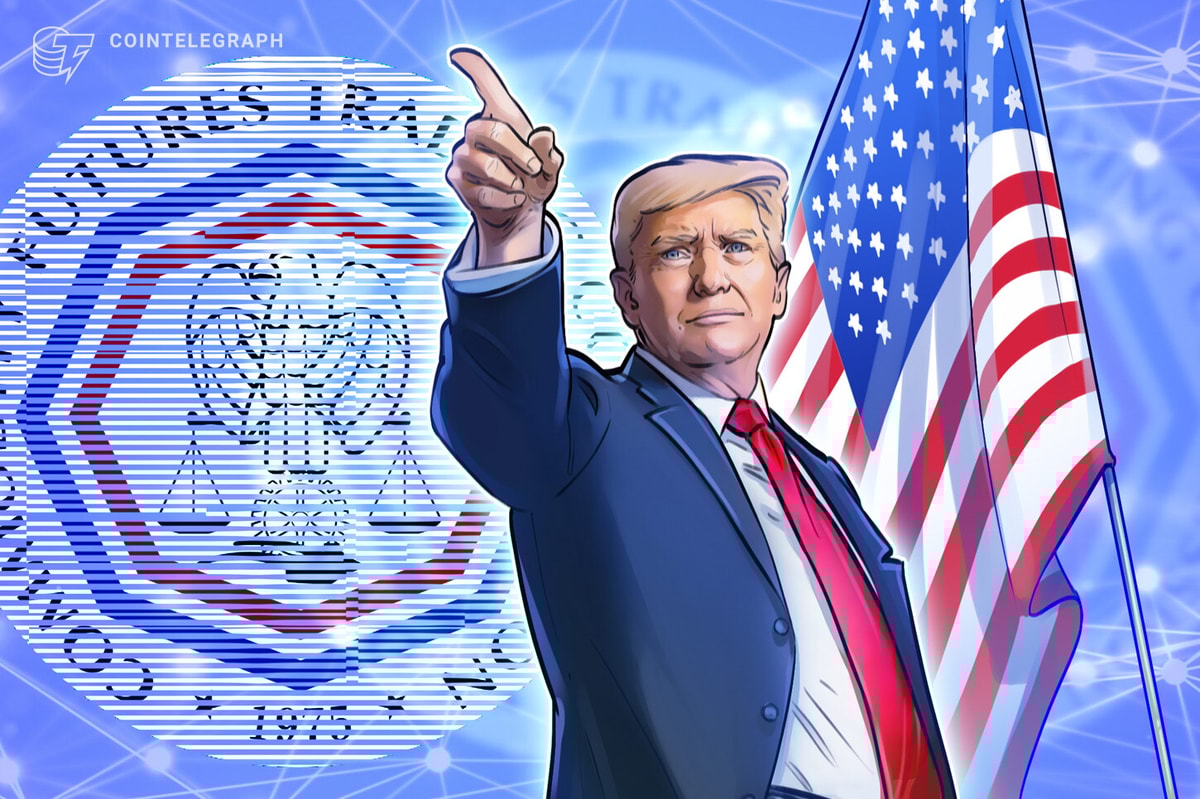
The top Republican on the Senate Agriculture Committee said the full chamber could vote on US President Donald Trump’s pick to chair the Commodity Futures Trading Commission “maybe as soon as this afternoon.”
In a prepared statement for a Thursday hearing on CFTC reauthorization, Committee Chair Glenn Thompson said the Senate could vote on Michael Selig’s nomination to chair the agency on Thursday. The potential vote would come just a few weeks after the Agriculture Committee advanced Selig’s nomination to the full chamber, along partisan lines.
According to the Senate’s calendar of business, a vote on Selig’s nomination did not appear on the schedule for Thursday. The chamber is expected to break for the holidays on Dec. 22, giving lawmakers a limited window to confirm the prospective CFTC chair.
Selig, whom Trump nominated as CFTC chair in November following the withdrawal of his former pick, Brian Quintenz, faced lawmakers in a November hearing. The prospective chair said it was “vitally important that [the CFTC] have a cop on the beat” for addressing crypto regulation and enforcement.
Acting CFTC Chair Caroline Pham has been the sole commissioner at the financial regulator for months, following the resignation or departure of every member of its leadership due to their terms expiring. Pham is also expected to leave once the Senate confirms a replacement chair, potentially leaving Selig as the sole member.
Pham is still pushing for crypto in her final days
Although it’s unclear when Pham may leave the CFTC, the acting chair has continued to push the Trump administration’s agenda on digital assets by advocating for policies that favor the industry and bringing executives in closer.
On Thursday, the acting chair said she planned to withdraw the CFTC’s “outdated” guidance on digital assets, claiming it “penalizes the crypto industry and stifles innovation.”