
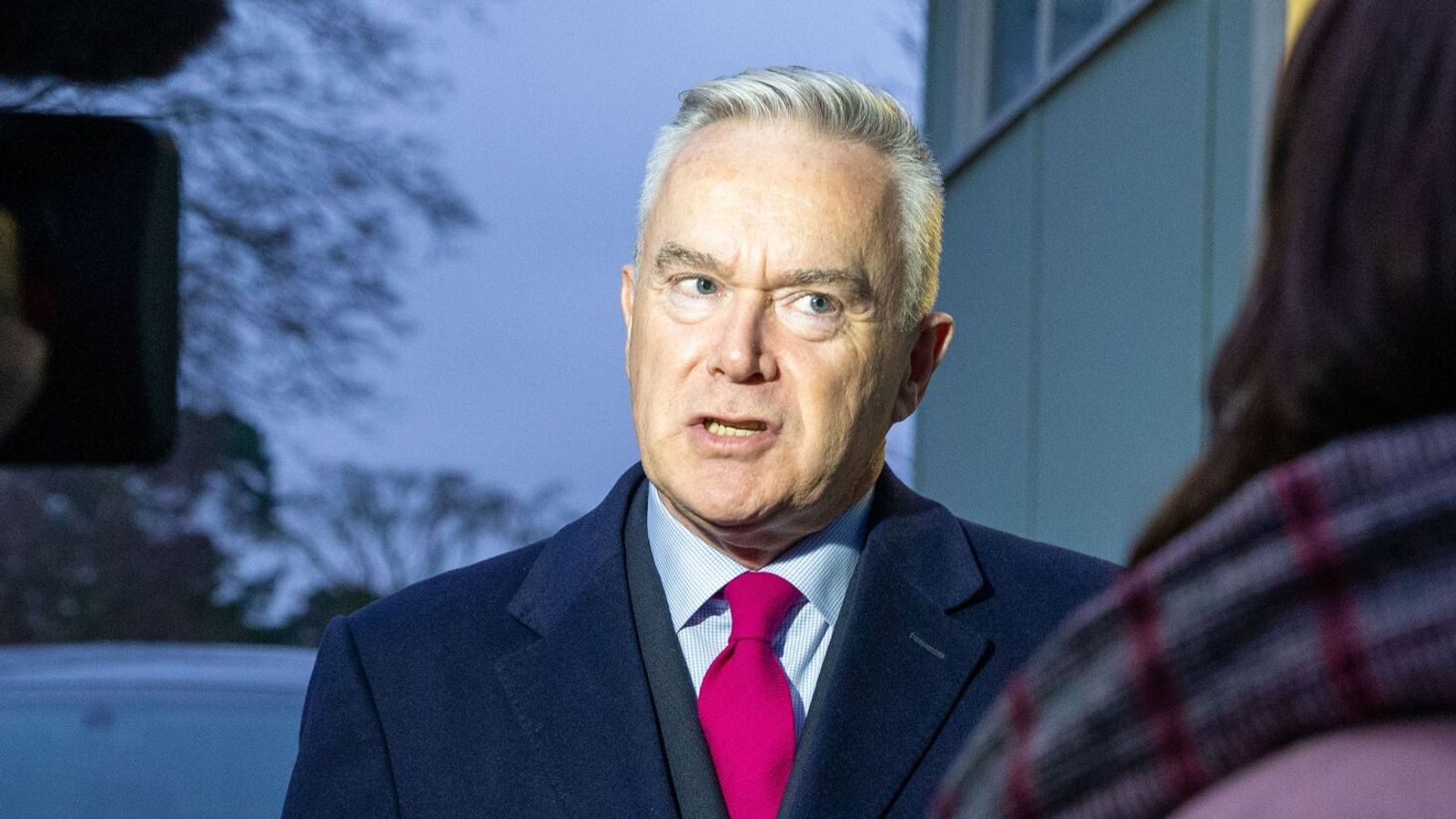
Huw Edwards scandal: BBC ‘in touch’ with family of person at centre of explicit photos allegations – corporation boss Tim Davie

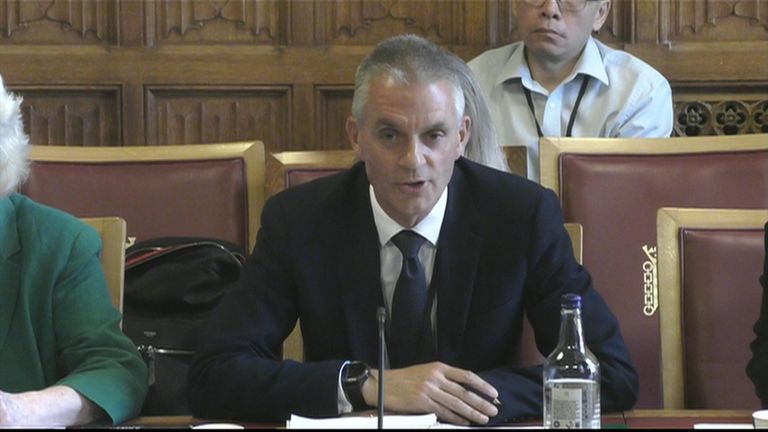
BBC boss Tim Davie says the corporation has been in touch with the family of a person at the centre of allegations surrounding Huw Edwards.
Speaking at a pre-arranged Lords Communications Committee session on Tuesday, the director-general said: “We have been in touch with the complainant, we want to be engaged and appropriately listening and understanding their concern”.
‘We have been in touch with the complainant,’ says BBC director-general
The BBC has faced accusations it did not respond quickly enough to complaints from the family of the young person, after it took seven weeks for allegations to be put to Huw Edwards.
Mr Davie was also asked about holding the BBC’s high-paid talent to account, responding: “I think the history of this industry is such that we should all be concerned and appropriately diligent around the abuse of people in powerful positions”.
He added: “You need to ensure that you’re very, very clear on what your expectations are culturally, as well as the policy.”
He went on to say he was “proud” of the corporation’s code of conduct and values, calling the whistleblowing process by which staff can confidentially report concerns to an external support at work line “a safe place”.
He also confirmed to peers that high-profile presenters at the corporation have a clause in their contract about not bringing the BBC into disrepute.
Edwards, who is the BBC’s highest-earning newsreader, was accused of paying a teenager thousands of pounds for sexually explicit photos.
‘Very wrong directions’
Acting chairwoman of the BBC Dame Elan Closs Stephens told peers despite “huge pressure” to name the presenter at the heart of the scandal, the corporation “had a duty to act with some calm and rationality in the face of lack of rationality and lack of calm”.
She said that duty of care was both to Edwards, the young person and the young person’s family involved “in this maelstrom”.
She went on: “I was on the one hand seeking to establish the right of the board to oversee what was happening, but at the same time, I was trying my best to make for a calm and rational discussion of the issue before we all got carried away in what could have been very wrong directions.”
The family of the young person had originally complained to the BBC in May, but allegations were not put to the presenter, or flagged to senior executives – including Mr Davie – until seven weeks later.
Appeal for information
Mr Davie, along with Dame Elan and policy director Clare Sumner, faced questions about the “adequacy” of the corporation’s governance arrangements and were asked to give updates on the progress of two reports, following the controversy.
The BBC is carrying out “fact-finding investigations” into Edwards, as well as a review to “assess how some complaints are red flagged up the organisation”.
Elaborating on the BBC’s general complaints process, he said a serious allegation would be passed on to its corporate investigations team where it would be assessed by “very experienced people”, and that from there “it could lead to a fact-finding and disciplinary or it might go to the authorities, or it might be dropped”.
Read more:
Who is Huw Edwards?
Was The Sun right to publish allegations?
What friends and colleagues have said about Huw Edwards
BBC chiefs are finally talking – but still avoiding accountability

Essential oils perhaps? A cooling flannel to the forehead?
If Dame Elan Closs Stephens, acting chairwoman of the BBC, has any suggestions on how we journalists chill out, calm down, get a grip – which she clearly thinks we need to do – then please do pass them on.
In truth, I think I may need some tips on stress relief. The rare occasions when bosses at the corporation speak publicly about the Huw Edwards affair are starting to become an exercise in raising one’s blood pressure.
Director-general Tim Davie and Dame Elan fielding questions in parliament, a classic example of how
well-paid guardians of BBC yet again fail to see what the fuss is all about.
For clarity, accountability is an important pillar of the BBC. And yet top bosses seem to have an almost deluded approach to why we expect them to share what goes on behind the scenes.
Yes, finally, we have a few more answers about what’s now happening. Because of their duty of care to those involved, their fact-finding investigation could take weeks or months.
We now know that contractually high-profile presenters agree not to bring the corporation into disrepute.
That, finally, they’ve spoken with the original complainant and want to be “engaged and listening”. They’ve worked out how to make a phone call then?
Forgive the sarcasm, but when Dame Elan criticised the 40 journalists she spoke to on zoom for being so preoccupied by the scandal we failed to report on how well she and her team were handling events behind the scene, it somewhat took the biscuit.
Actually, I wasn’t rubbing my hands together with glee at reporting on the downfall of a well-respected news figure. More over I was contemplating bashing my head against a brick wall out of frustration over how impossible it is to get a straight answer out of the BBC.
For the record, Dame Elan, if you had “wished governance had been more to the fore but can’t dictate how it was reported…” all you had to do was come out and talk to us.
Don’t try to now sell the few brief words you gave to press at the start of a pre-arranged briefing on your annual report as you arranging a proper briefing on the matter, because it certainly wasn’t that.
You are tasked with protecting something precious. Journalists are tasked with making sure you’re doing your job. Accountability and openness is the least required of you.
When are reports due?
Addressing fact-finding probe into Edwards, Mr Davie highlighted the “difficult concerns” involved and appealed for anyone with information to get in touch, saying: “We’re keen to receive any information because we just want to understand anything that’s out there”.
Mr Davie said the report “could take weeks or it could take a couple of months, or even longer”.
With regard to the second review of the BBC’s protocols and procedures, Mr Davie said: “We are doing that work immediately,” adding that it would be delivered in “the autumn, maybe late autumn”.
It will be led by Simon Cuerden, a forensic partner at Deloitte and Sir Nick Serota, a senior independent director at the BBC.
Original allegations
Allegations that Edwards paid a teenager more than £35,000 for sexually explicit photos were first published in The Sun on Friday 7 July. The paper did not name him at the time.
Five days later, the Metropolitan Police said they did not believe any criminal activity had taken place and would be taking no further action.
Following intense speculation over the identity of the BBC presenter, Edwards’ wife, Vicky Flind, confirmed him as the man at the centre of the allegations.
In a statement, she said he was “suffering from serious mental health issues” and was “receiving in-patient hospital care”.
The Sun – who say they never alleged criminality – say they have no plans to publish further allegations against Edwards.
The young person at the centre of the controversy has said – via their lawyer – that their mother’s claims are “rubbish,” and that “nothing inappropriate or unlawful” has taken place.
Edwards, who has since been suspended, is also facing separate allegations from several other people in their early 20s.
Click to subscribe to Backstage wherever you get your podcasts
At the weekend, Sir Tony Blair told Sky’s Sophy Ridge on Sunday that the BBC should “stand up for itself more” when asked about its response to the situation.
As the face of BBC News At 10, the 61-year-old has previously led election night coverage, and broke the news of Queen Elizabeth II’s death. He was last on air on Wednesday 5 July, covering the King’s visit to Scotland.
Some have questioned The Sun’s decision to publish the original story, and the balance between publishing in the public interest versus the right to privacy has been thrust firmly into the spotlight.

Thousands of members of actors’ trade union Equity are being asked whether they would support industrial action over artificial intelligence protections.
The organisation has launched an indicative ballot among about 7,000 members working in film and TV.
Performers are being asked whether they are prepared to refuse to be digitally scanned on set in order to secure adequate artificial intelligence protections.
It will be the first time the performing arts and entertainment trade union has asked this whole section of its membership to vote in a ballot.
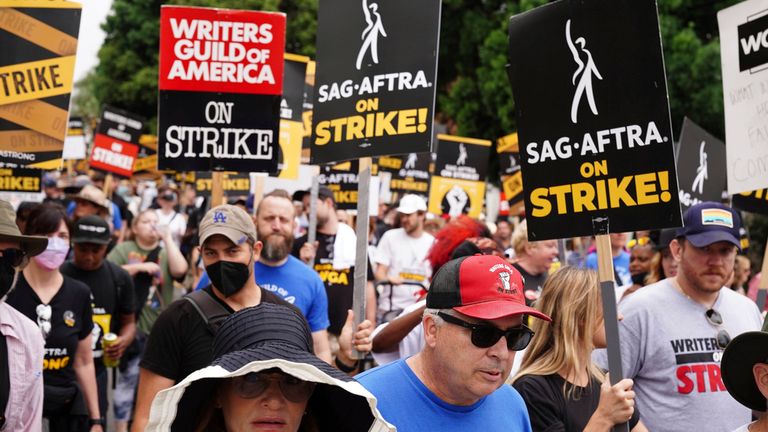
The Hollywood strikes took place in 2023. File pic: AP
The announcement follows the Hollywood strikes in 2023, when members of Equity’s sister union in the US, SAG-AFTRA, and writers, went on strike over issues including AI.
Video game actors in the US also protested over the use of AI, ending almost a year of industrial action earlier in 2025.
Equity’s ballot opens on Thursday and runs for two weeks, and will show the level of support the union has for action short of a strike.
Another statutory ballot would have to be made before any industrial action is taken.
“While tech companies get away with stealing artists’ likeness or work, and the government and decision makers fret over whether to act, unions including Equity are at the forefront of the fight to ensure working people are protected from artificial intelligence misuse,” Equity general secretary Paul W Fleming said in a statement.
“If bosses can’t ensure someone’s likeness and work won’t be used without their consent, why should performers consent to be digitally scanned in the first place?”
Mr Fleming said the ballot would give members the opportunity to “send a clear message to the industry: that it is a basic right of performers to have autonomy over their own personhood and identity”.
The union has no choice but to recommend members support industrial action, he said.
“It’s time for the bosses to step away from the brink and offer us a package, including on AI protections, which respects our members,” added Mr Fleming.
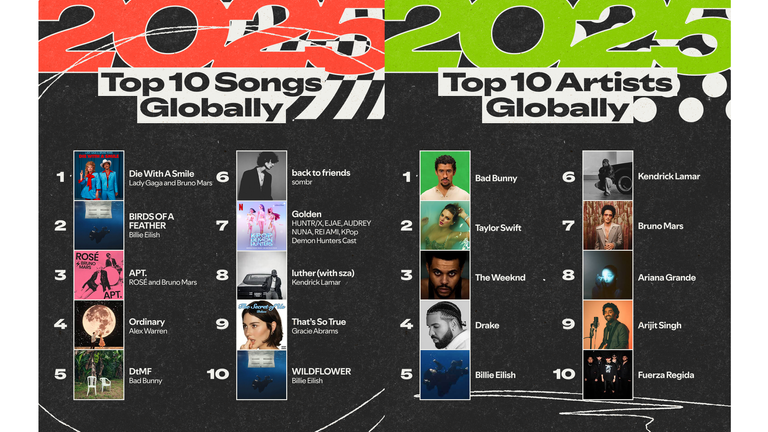
The hotly anticipated Spotify Wrapped is revealing our top tracks, artists and albums for 2025.
But how does the streaming service calculate personalised summaries of users’ listening habits and rank the UK’s hottest artists?
Here’s a look at how your data is used.
The platform describes the annual statistics as “a chance to look back on your year in sound”.
It says data is captured between January and mid-November on every account, although it mostly excludes anything streamed in private mode. (Don’t worry, your passion for the Spice Girls can be kept secret.)
Wrapped presents personalised listening statistics, which Spotify calls the “real story of your year of listening”, alongside global figures for comparison.
The streaming service says Minutes Listened reflects the actual time spent listening to audio on the platform.
Once a user streams at least 30 tracks, Spotify generates a list of Your Top Songs. Similarly, Your Top Artists ranks artists based on total minutes listening to a particular performer.
Other metrics identify the top genres users have played, as well as podcasts and audiobooks ranked by total minutes listened. And if you’ve listened to at least 70% of tracks on a record, you’ll see top albums too.
Spotify also creates Your Listening Age, a guesstimate of your age based on the era of the music “you feel most connected to”.
The streaming service says the statistic is calculated using a five-year span of music which users engaged with more than other listeners of a similar age.
Spotify has been summing up 2025’s most listened to tracks. Pic: Spotify
Swift vs Bunny
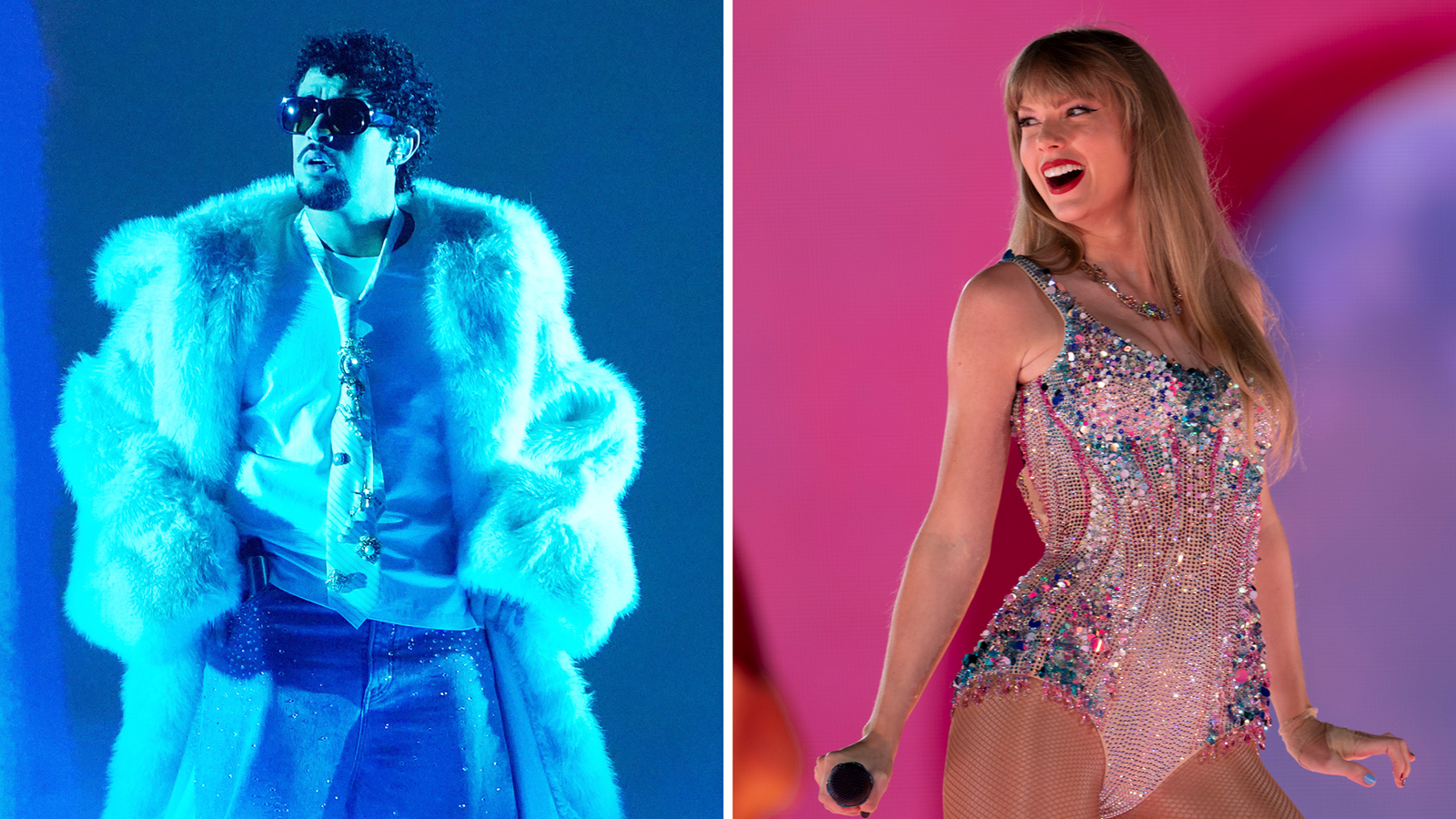
Pop superstar Taylor Swift has been named the UK’s most-streamed artist on Spotify for the third year in a row.
But she dropped out of the top spot in the global rankings, coming second to Puerto Rican superstar Bad Bunny, who secured more than 19.8 billion streams. Third were The Weeknd, followed by Drake and Billie Eilish.
Bad Bunny’s LP Debi Tirar Mas Fotos was the most listened-to album worldwide.
Read more from Sky News:
Sabrina Carpenter fury at video
Drake’s lawsuit dismissed
Spotify hikes UK prices
Spotify revealed Drake was the UK’s second most-listened to artist, followed by Sabrina Carpenter in third, The Weeknd in fourth and Billie Eilish in fifth.
Despite being the most listened-to artist, Swift failed to break into the UK’s top five most listened-to songs and albums of the year.
Alex Warren’s Ordinary was the most-streamed song, and Short ‘N’ Sweet, released by Carpenter last year, the top album.
-
 Sports2 years ago
Story injured on diving stop, exits Red Sox game
-
 Sports3 years ago
‘Storybook stuff’: Inside the night Bryce Harper sent the Phillies to the World Series
-
 Sports2 years ago
Game 1 of WS least-watched in recorded history
-
 Sports3 years ago
Button battles heat exhaustion in NASCAR debut
-
 Sports3 years ago
MLB Rank 2023: Ranking baseball’s top 100 players
-
Sports4 years ago
Team Europe easily wins 4th straight Laver Cup
-
 Environment3 years ago
Japan and South Korea have a lot at stake in a free and open South China Sea
-
 Environment1 year ago
Here are the best electric bikes you can buy at every price level in October 2024