

Toyota falters as Japan’s EV hesitancy claims second victim in China

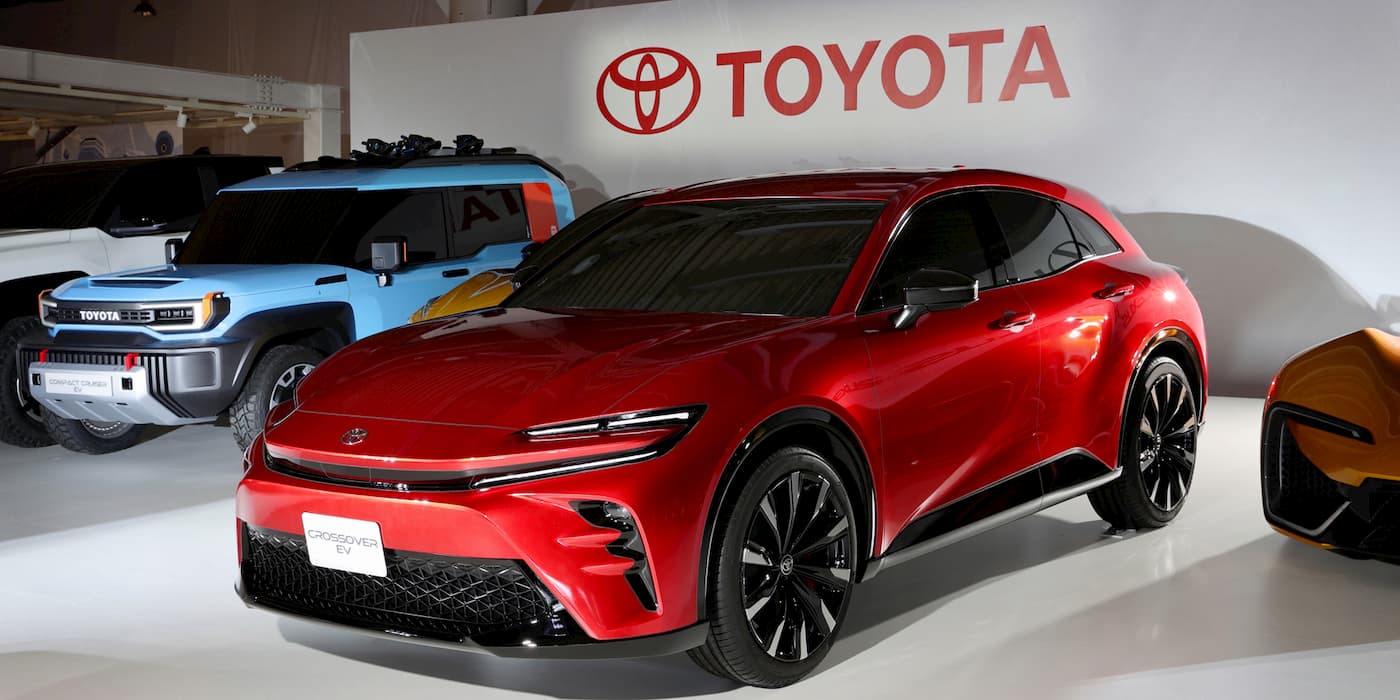
Japan’s largest automaker, Toyota Motor, is laying off workers in China as the company struggles to keep up in the world’s biggest EV market.
Toyota lays off workers amid China’s EV transition
Japanese automakers are stumbling in China’s evolving auto landscape. According to a new report from Reuters, Toyota’s joint venture with China’s Guangzhou Automobile Group (GAC) laid off workers this weekend, offering them compensation.
Three workers who were affected said the move comes as the Japanese automaker is struggling in China’s ultra-competitive auto market that’s rapidly transitioning to EVs.
The joint venture’s factory in China employs around 19,000 people, producing models such as Toyota’s first EV, the bZ4X, alongside the Camry and Levin models.
Toyota launched the bZ4X in China in October 2022 with a starting price of 199,800 yuan (around $19,000). However, after several market leaders, including BYD and Tesla, cut prices, Toyota failed to gain traction.
The Japanese automaker sold 3,844 bZ4X models in China through January, representing just 0.26% of China’s EV market.
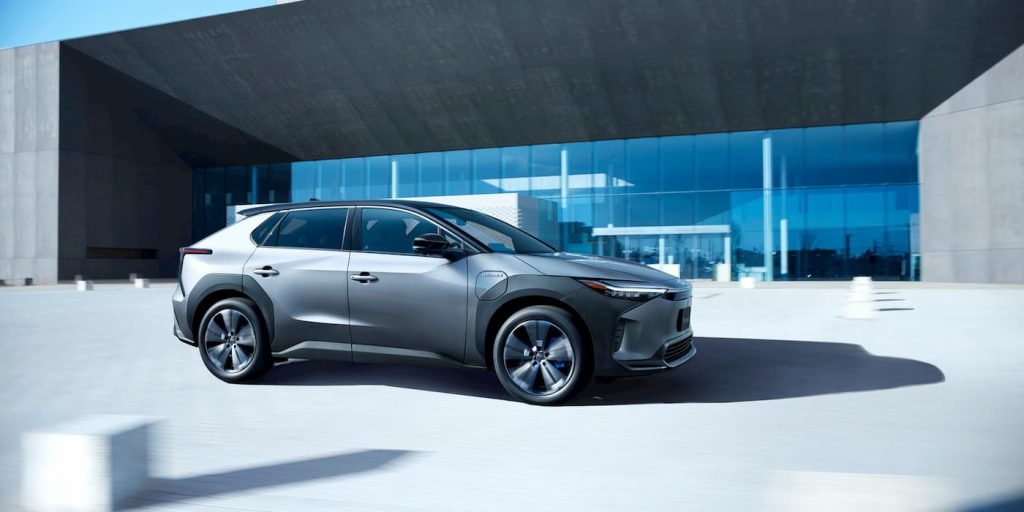
To boost sales and remain competitive, the automaker slashed prices by 15% in response earlier in February, with a new starting price of around 169,800 yuan ($24,800).
So far, the move has failed to make a difference, with EV sales falling 9% in the first six months of the year.
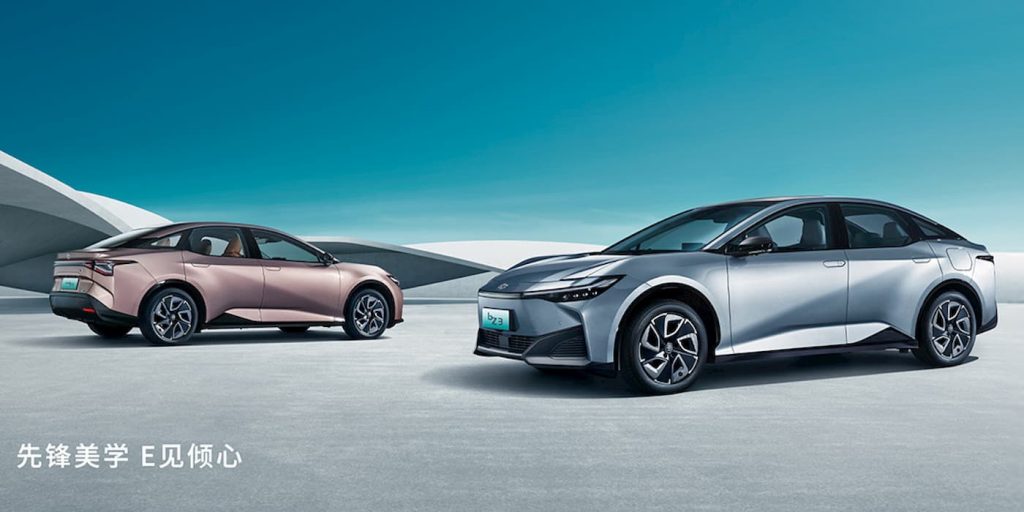
Despite launching its first electric sedan in China earlier this year, the BYD-powered bZ3 starting at 189,800 yuan ($27,000), Toyota (through FAW-Toyota) is recalling (not OTA) over 12.2K bZ3 electric sedans over defective rear door handles.
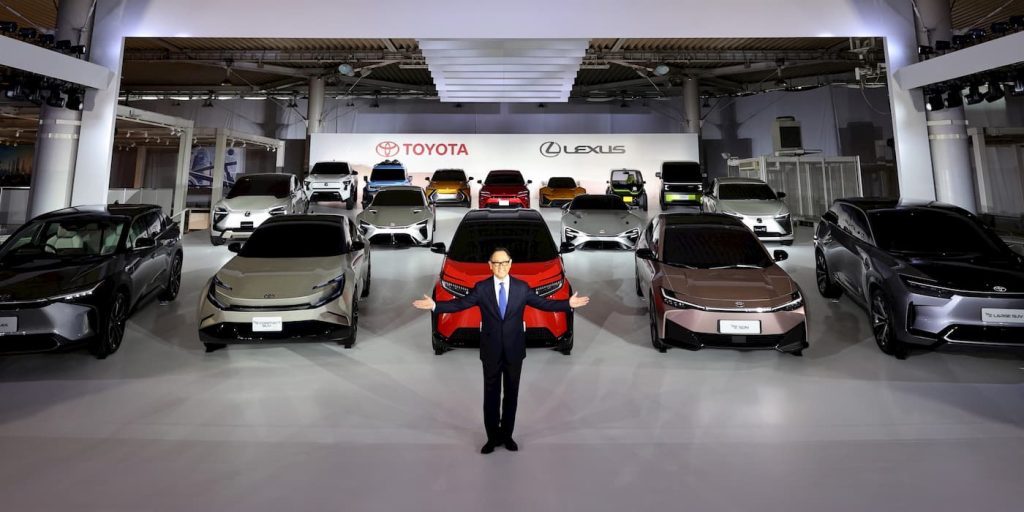
After taking over for longtime leader and grandson to the company’s founder (Akio Toyoda) in April, former Lexus branding chief officer Koji Sato said Toyota would need to act urgently to keep up in China’s EV market.
After seeing the impact of EVs at the Shanghai Auto Show, Sato explained:
We need to increase our speed and efforts to firmly meet the customer expectations in the Chinese market.
Meanwhile, Toyota is not the only Japanese automaker suffering in China amid the country’s shift to EVs.
China’s EV market takes a toll on Japanese automakers
According to the China Association of Automobile Association, Japanese automakers’ market share in the region has fallen from 20% last year to 14.9% in the first half of 2023.
Electric vehicle sales in China reached over 2 million through the first five months of the year, up 51.5% YOY as buyers continue adopting EVs at a record pace.
Japanese automakers, who have been arguably the biggest laggards in the EV market, are feeling the pinch the most.
For example, Mitsubishi Motors revealed in a memo last week it was suspending operations in China indefinitely after sales fell drastically. The memo (via Bloomberg) stated:
In the past few months, management and shareholders have tried to the best of our ability, but due to market conditions and with great reluctance and regret, we must seize the opportunity to transition to new energy vehicles. The company will resurrect after going through trials and tribulations.
After peaking at over 134K in 2019, Mitsubishi’s sales have fallen significantly, with only 34.5K vehicles sold in 2022. The decline in sales correlates with China’s booming EV market, fueled by clean energy incentives and other government initiatives.
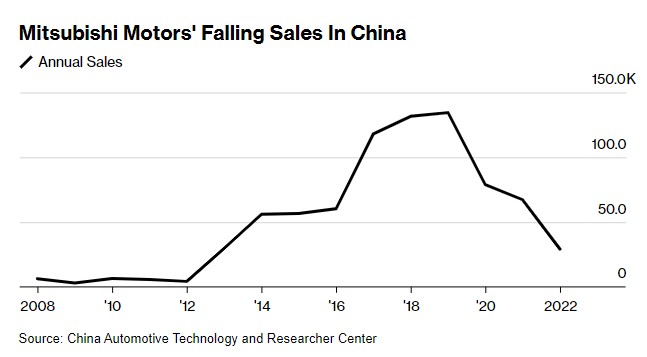
Nearly all Japanese automakers, including Honda, Mazda, and Nissan, are seeing sales fall in China due to a lack of electric vehicle models to compete with domestic automakers.
Sales of Chinese brands accounted for 53% of the market through the first half of the year as domestic EV makers like BYD, NIO, Li Auto, and XPeng continue to grab market share with unique models in essentially every segment.
Electrek’s Take
Although Electrek has been saying it for years, Japan’s reluctance to produce electric vehicles is already starting to cost them.
China is the world’s leading EV market as the industry continues to adopt electric cars at a record pace.
Last year, a Climate Group report warned Japan could risk a 14% drop in GDP if it failed to boost EV output, and it continues to look more and more apparent that’s the direction we are headed.
Japanese automakers are not the only ones feeling the heat. Volkswagen, which has been a leader in China, saw sales drop 3.6% last year and was surpassed by BYD in passenger car sales for the first half of the year.
In light of this, most automakers mentioned here have recently ramped up EV efforts, including investing in battery tech, dedicated EV platforms, and more efficient models.
Japan is increasing support to advance storage battery tech with over 330 billion yen ($2.3B) in subsidies. Toyota is set to receive nearly 120 billion yen ($847M) of it to fuel its recently revealed EV battery plans.
FTC: We use income earning auto affiliate links. More.


This week on Electrek’s Wheel-E podcast, we discuss the most popular news stories of 2025 from the world of electric bikes and other nontraditional electric vehicles. This time, that includes California’s new e-bike regulations and updated laws, Bafang’s automatic-shifting hub motor, e-bike brand shutdowns, China opting for lead-acid over lithium batteries, Honda’s upcoming low-cost electric motorcycle, and more.
The Wheel-E podcast returns every two weeks on Electrek’s YouTube channel, Facebook, Linkedin, and Twitter.
As a reminder, we’ll have an accompanying post, like this one, on the site with an embedded link to the live stream. Head to the YouTube channel to get your questions and comments in.
After the show ends, the video will be archived on YouTube and the audio on all your favorite podcast apps:
We also have a Patreon if you want to help us to avoid more ads and invest more in our content. We have some awesome gifts for our Patreons and more coming.
Here are a few of the articles that we will discuss during the Wheel-E podcast today:
Here’s the live stream for today’s episode starting at 9:00 a.m. ET (or the video after 10:00 a.m. ET):


FTC: We use income earning auto affiliate links. More.

Winter is coming and for the hardcore ebikers in cold climates, that means time to batten down the hatches. I’ve been trying some “snow ebikes” for years and have mostly landed on a Heybike that has made Husky walking a lot easier.
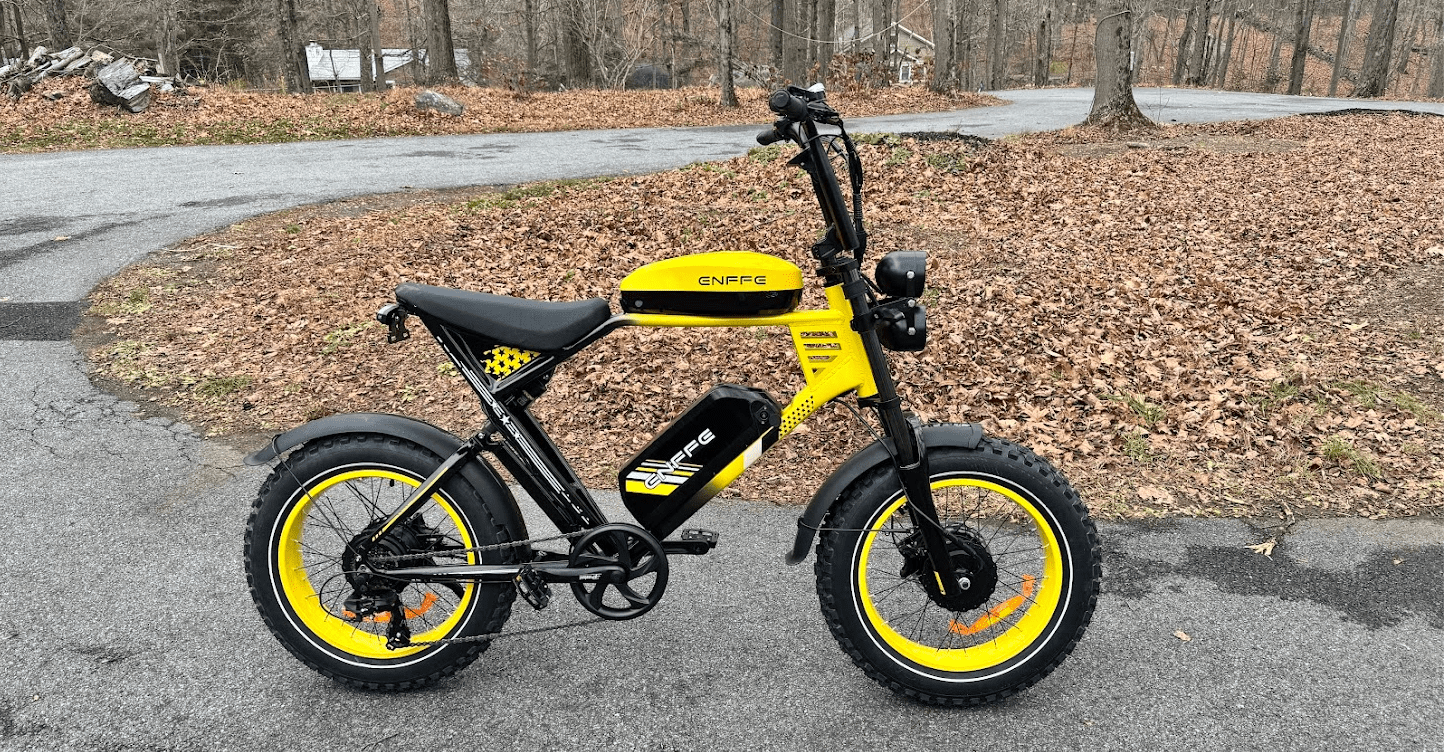
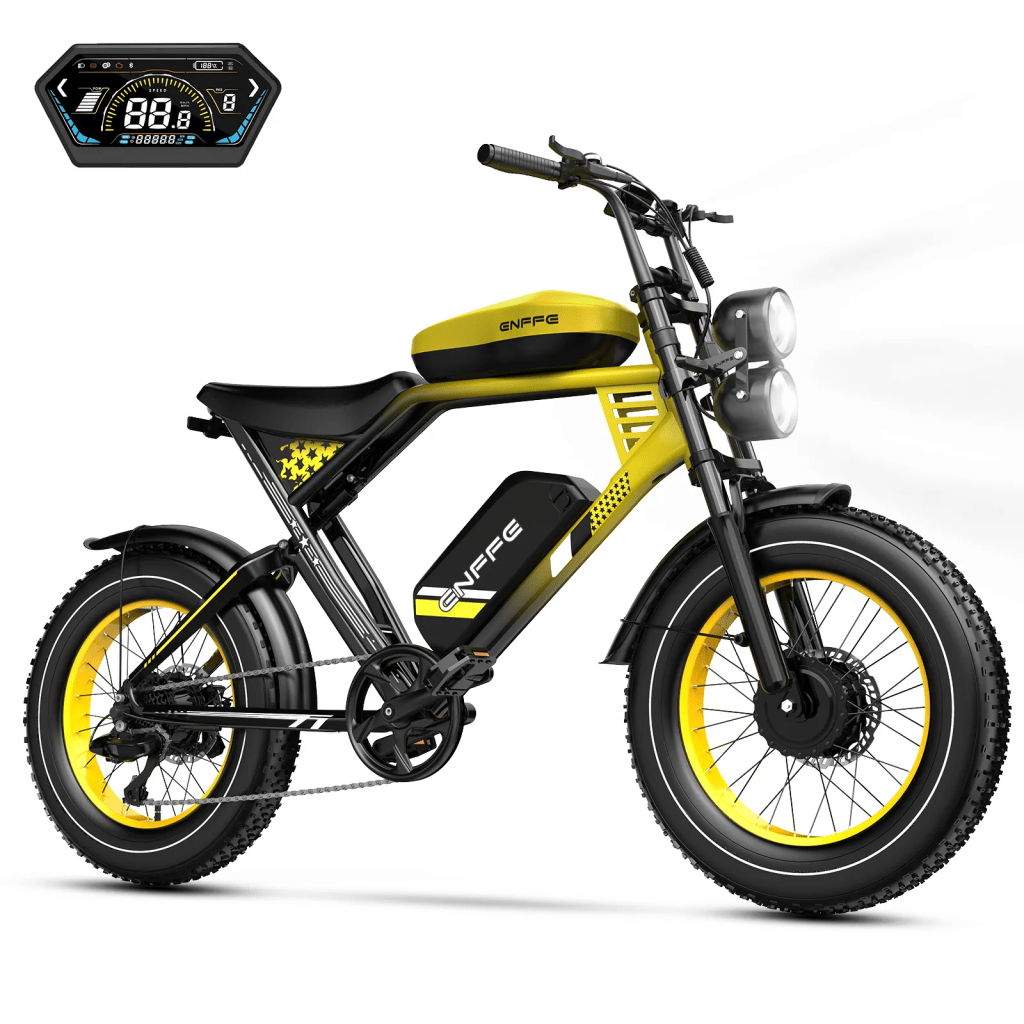
But along comes this Enffe EAES-2D Ultra bike that has AWD, lots of battery and a super unique look that might be the best thing yet for getting around in the snow…
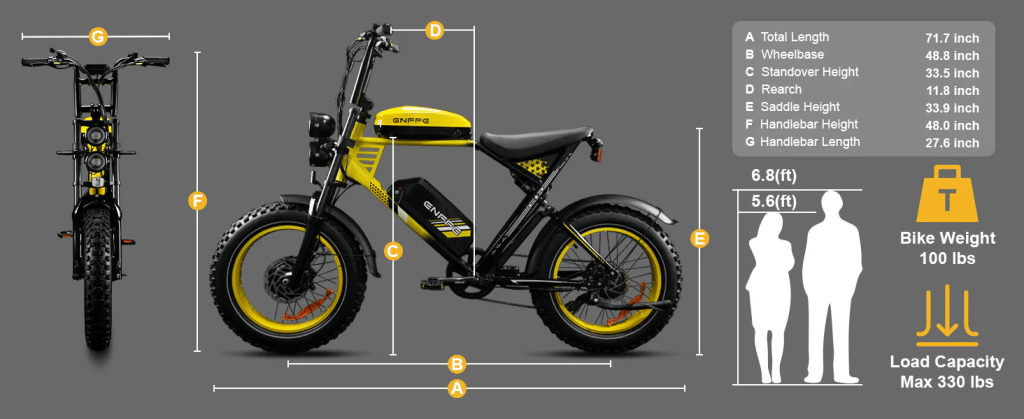
Let’s get these crazy specs out of the way first:
- 2x 48V/22.5Ah 1080Wh batteries = 2.16kWh
- 2x 1.5kW peak motors = 3kW
- 4 piston Tecktro hydraulic brakes on 180mm rotors
- 20×4-inch wheels and knobby tires.
- Charger: 48V 4A
- Top speed: 32mph
- Range: up to 200 miles (?!)
- Shimano 7 speed
- Big display and dual headlights
As you might imagine, this bike is heavy and powerful. One battery sits on the downtube like a traditional fat tire ebike while the “gas tank” battery sits much higher between the seat and handlebars. Each of the batteries is over a kWh and must be charged independently. The bike comes in Yellow/Black and Red/Black varieties, and we got the yellow head-turner for the review.
You are sitting much higher in the very comfortable seat than a typical fat tire ebike, and the handlebars are raised for comfort, not aerodynamics.
And that riding position is helpful when you punch the accelerator off the line. While this thing tops out at 32mph, it gets there a lot faster than most lesser-powered bikes. It doesn’t accelerate quite like a Sur Ron or Talaria, but in the very important 0-20mph speed curve, it will accelerate as fast as most cars.
Off-road and snow
We took this thing out to the trails and had a good time on the mild hills and turns. It is much too heavy and front-motor bulky to enjoy turns and maneuverability exercises, but for easy trails and gravel roads, this thing is fun and the mild full suspension and fat tires make the ride smoother than I was anticipating.
We only had a little snow during the review time but it handled snowy conditions amicably. The front tire acceleration does help get off the line in slippery conditions and the power is helpful when going through the deeper stuff.
That 200-mile range?
No. Sorry guys. Even if this was an efficient bike, and it is the opposite of that in every way, it would have a hard time getting to 200 miles, even out of that over 2kWh of battery. Sure you can pedal like a madman and barely use the motors and stretch it that far but zero people are going to do this. If you use this like most people which is hammering the throttle, using the pedals like pegs, and bumping up against that 32-mph speed, you will be lucky to get 50 miles of range. But that’s still respectable. I think we just need to stop being silly about the range here.
What’s nice is that you don’t have to use both batteries and you still have enough – 1kWh – for most commutes. You can leave a battery on the charger for the longer weekend adventures and have a much lighter ebike.
What made this bike noteworthy to me is all of the extras. We’ve talked about the dual motors and dual batteries but those have existed on fat tire ebikes like Ariel Grizzly before. The Enffe also has a big, beautiful display which can be locked to an NFC tag, similar to the Talaria XXX and other higher-end machines.
It also has dual headlights, which are amazing at not only lighting up the road in front of you at night , but also throwing off a safety beam to let others know you are on the road. The turn signals in the back are nice as well but going to be hard to discern from farther away.
As this is a heavy bike, I would expect nothing less than 4-piston tecktro hydraulic brakes which are table stakes when stopping a bike llike this. They do the job.
I also think this thing looks pretty unique. I’m sure it is polarizing to some but it kind of takes that Super 73 vibe to the next level.
Electrek’s take
At $1400, the Enffe EAES-2D Ultra takes the very common 20-inch fat tire ebike and throws a ton of extras onto the platform. For those looking for something a little flashier, a lot faster and a bit more premium in this popular form factor, I’m on board with this thing. Just don’t expect you’ll be able to handle your 200 mile commute.
FTC: We use income earning auto affiliate links. More.

Another company that made big claims about its ability to scale and deploy EV battery swapping stations has just gone bankrupt – and, frankly, it’s not too surprising that it has.
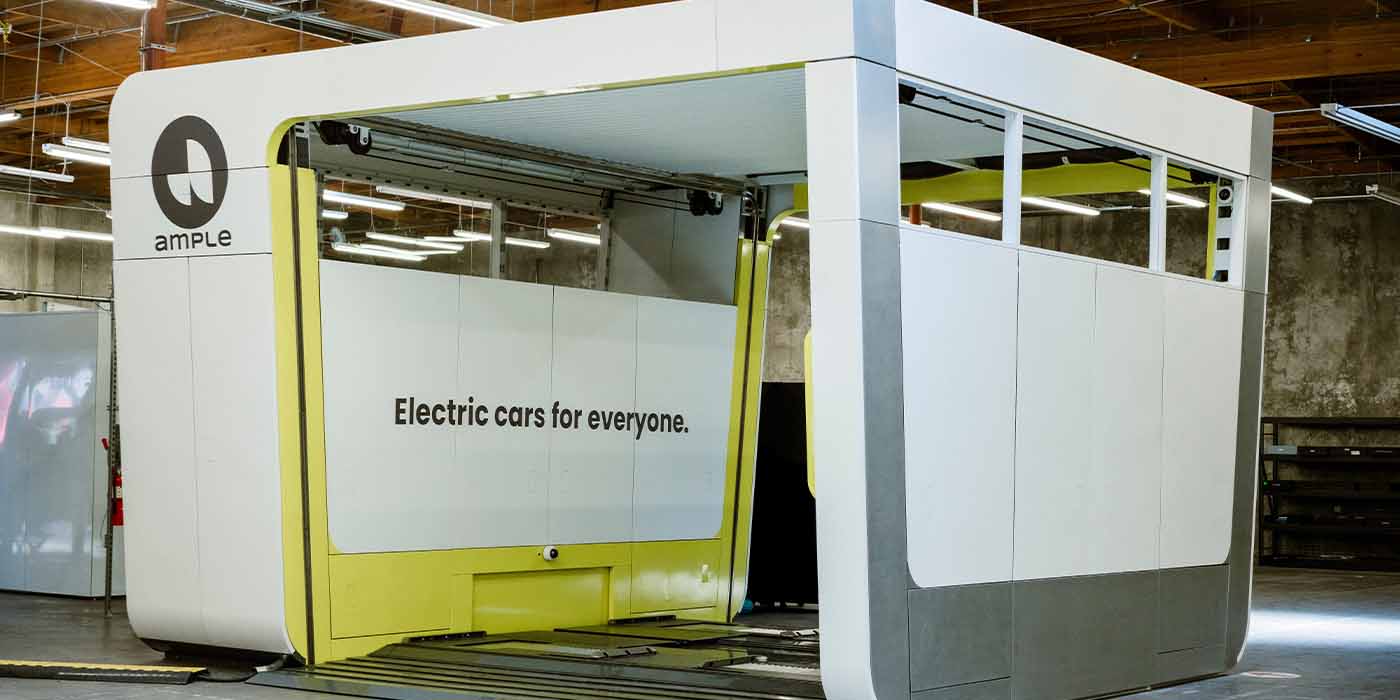
Ample is a company that made big claims about its EV battery swapping technology. It claimed to have designed autonomous battery swapping stations that would be rapidly deployable, cheap to build, and could adapt to any EV design with a modular battery which would be easy for manufacturers to use.
An Ample battery swap would take around 5 minutes and cost as little as $13, the company said.
The plan was to use this technology to scale up EV charging much faster than traditional charging stations, with the goal of getting a billion electric cars on the road.
Unfortunately, the San Francisco-based company has now filed for Chapter 11 bankruptcy in the Southern District of Texas.
Ample had raised $330 million in total over its lifetime, but shut down due to “liquidity constraints.” It was able to raise some money this year, but cited a challenging environment for renewable energy investments.
The company’s filing says it has $10-50 million in assets and $50-100million in liabilities, and is seeking $6 million in financing for working capital and to fund its bankruptcy case. Currently the company has fired all but two employees.
An anonymous tip sent to Electrek told us the employees were laid off abruptly “a few months ago,” and the company is now facing a lawsuit for violating the federal WARN act. Our tipper said the technology is real, but that the reason for the bankruptcy is regular-old poor management due to inexperience, overhyped company statements, and inefficient use of money. Take that anonymous tip with a grain of salt, but that story does sound about right for a tech startup.
Where this bankruptcy leaves Ample’s technology is unclear. Another company could snap it up and try to do something with it, if they find that the technology is real and useful. Ample had gotten investments and partnerships with Shell, Mitsubishi and Stellantis, for example, so the company wasn’t alone in touting its tech.
Or, it could just disappear, as other EV battery swapping plans have before. Both Tesla and a startup called Better Place tried and failed to set up battery swapping before. Tesla dropped the idea after a single demonstration station was built in California (both because people didn’t care to use it and because California snatched away credits which Tesla was planning to use, because they were intended for hydrogen… long story), and Better Place went bankrupt after failing to scale out of a small number of demo stations in Israel and Denmark.
That’s not to say that nobody has been successful at at implementing battery swap, though. NIO seems to be successful with its battery swapping tech in China, though the company did miss its 2025 scaling goals by a longshot. But as of yet, this is the only notable example of a successful battery swap initiative, and it was done by an automaker itself, rather than a startup claiming to work for every automaker.
Electrek’s Take
Some are covering this as a major blow to the industry, but frankly I’m not surprised.
I’m just not bullish on battery swapping as a solution in general.
Currently, the fastest-charging vehicles can charge from 10-80% in about 18 minutes. While that’s longer than 5 minutes, it’s not really a terrible amount of time to spend during most stops. I’ve done it myself on trips where I never felt like I was waiting for the car to charge, and many EV drivers can tell you the same.
Then come the power demands. While DC fast charging stations demand very high and peaky power supply, so would a fully utilized battery swap station. In fact, if cars come and go in 5 minutes instead of 18 minutes, then you’re going to have more than triple the throughput at peak utilization.
That demand could be balanced out by holding a large store of batteries in the station and charging them up at slower rates during non-peak swapping times, but then you also have to consider the additional space required to store batteries and charge them on the property. And if you don’t have enough charged batteries to give out, you need to notify people before they show up that they’ll have to wait for a battery to charge.
Ample said its swaps could be as cheap as $13, but also said that they would cost “10-20% cheaper than gas.” That’s not far off from the normal pricing of EV quick charging (and much more expensive than home charging), so there’s no real advantage there.
Then come the ownership concerns. Early on, one of the reasons Tesla drivers didn’t use Tesla’s swapping system is because after spending all that money on a Tesla Model S, much of which went to purchasing a then-quite-expensive battery pack, why would an owner want to give up their nice pristine battery pack that they’ve babied for some random pack that might have been beat up all to hell by some other owner?
There are some ways around this, like having battery health metrics or leasing and guaranteeing battery packs so people don’t feel ownership concerns. But there’s a certain pride among some of us EV nerds, especially the early ones, who understand how to be kind to batteries and want to feel ownership over how well we’ve taken care of them (my 17 year old Roadster battery still has 83% capacity).
That concern might also fade away as the industry moves to more durable battery chemistries like Lithium Iron Phosphate, but that will require a migration across the industry, and owning a startup whose main physical assets are big piles of batteries just turns that asset into a liability if everyone decides to change chemistries. Nevermind the process of trying to get everyone onto the same battery in the first place – which is why only NIO has been successful at this so far, since it’s just one company and can dictate its own battery use, whereas a small startup is going to have a hard time getting the whole industry to agree on batteries.
So as I’ve said many times before, I still think the real solution to EV charging is ubiquitous level 2 charging where people park their cars most often (apartment buildings, homes, workplaces) and then standardized DC fast charging on the road for longer trips. We don’t need to reinvent the wheel, and we don’t need to make EVs more like gas cars (they’re already better anyway). Just plug in, it’s easy (also, as a note to governments and businesses: make it easier).
The 30% federal solar tax credit is ending this year. If you’ve ever considered going solar, now’s the time to act. To make sure you find a trusted, reliable solar installer near you that offers competitive pricing, check out EnergySage, a free service that makes it easy for you to go solar. It has hundreds of pre-vetted solar installers competing for your business, ensuring you get high-quality solutions and save 20-30% compared to going it alone. Plus, it’s free to use, and you won’t get sales calls until you select an installer and share your phone number with them.
Your personalized solar quotes are easy to compare online and you’ll get access to unbiased Energy Advisors to help you every step of the way. Get started here.
FTC: We use income earning auto affiliate links. More.
-
 Sports2 years ago
Story injured on diving stop, exits Red Sox game
-
 Sports3 years ago
‘Storybook stuff’: Inside the night Bryce Harper sent the Phillies to the World Series
-
 Sports2 years ago
Game 1 of WS least-watched in recorded history
-
 Sports3 years ago
Button battles heat exhaustion in NASCAR debut
-
 Sports3 years ago
MLB Rank 2023: Ranking baseball’s top 100 players
-
Sports4 years ago
Team Europe easily wins 4th straight Laver Cup
-
 Environment3 years ago
Japan and South Korea have a lot at stake in a free and open South China Sea
-
 Environment1 year ago
Here are the best electric bikes you can buy at every price level in October 2024