

XRP court ruling marks milestone, but new crypto law could take years
Politics
Specialist teams and online investigators deployed across England and Wales to tackle ‘national emergency’ of violence against women and girls

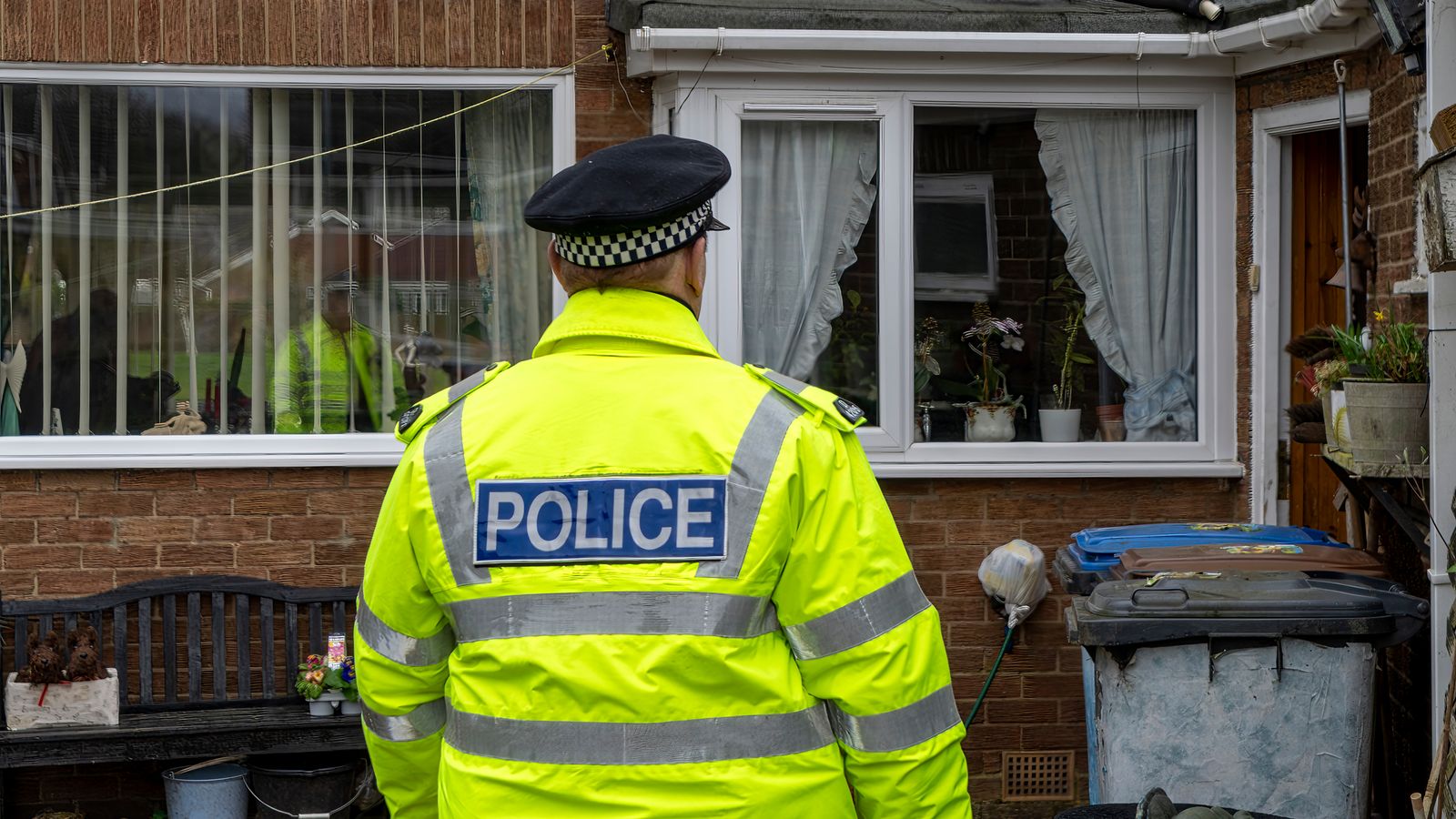
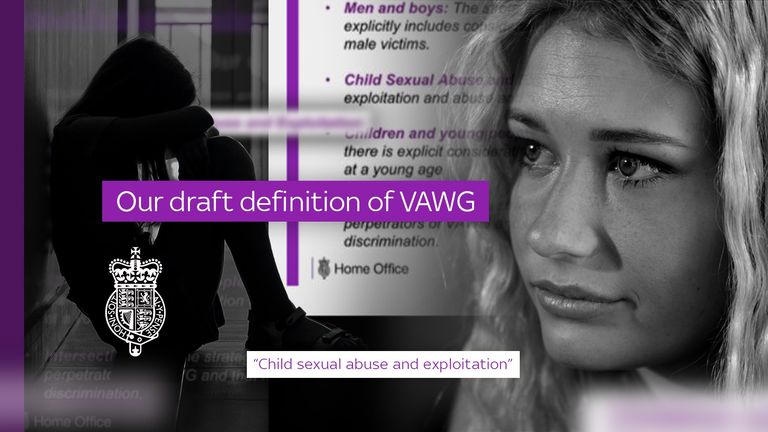
Specialist investigation teams for rape and sexual offences are to be created across England and Wales as the home secretary declares violence against women and girls a “national emergency”.
Shabana Mahmood said the dedicated units will be in place across every force by 2029 as part of Labour’s violence against women and girls (VAWG) strategy due to be launched later this week.
The use of Domestic Abuse Protection Orders (DAPOs), which had been trialled in several areas, will also be rolled out across England and Wales. They are designed to target abusers by imposing curfews, electronic tags and exclusion zones.
The orders cover all forms of domestic abuse, including economic abuse, coercive and controlling behaviour, stalking and ‘honour’-based abuse. Breaching the terms can carry a prison term of up to five years.
Govt ‘thinking again’ on abuse strategy
Nearly £2m will also be spent funding a network of officers to target offenders operating within the online space.
Teams will use covert and intelligence techniques to tackle violence against women and girls via apps and websites.
A similar undercover network funded by the Home Office to examine child sexual abuse has arrested over 1,700 perpetrators.
Abuse is ‘national emergency’
Ms Mahmood said in a statement: “This government has declared violence against women and girls a national emergency.
“For too long, these crimes have been considered a fact of life. That’s not good enough. We will halve it in a decade.
“Today, we announce a range of measures to bear down on abusers, stopping them in their tracks. Rapists, sex offenders and abusers will have nowhere to hide.”
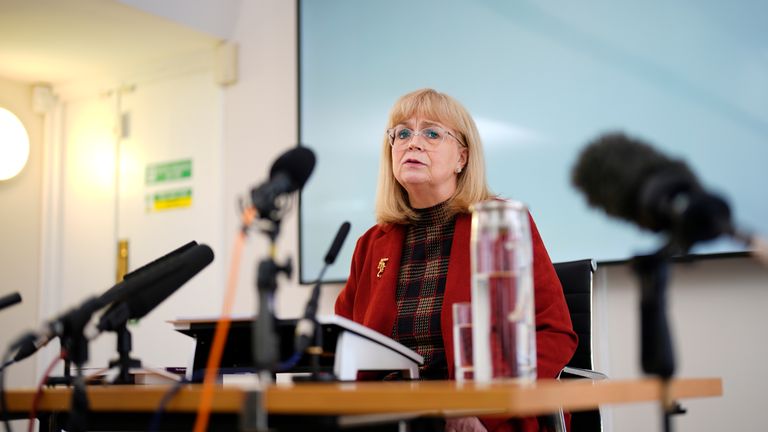
Angiolini Inquiry: Recommendations are ‘not difficult’
The target to halve violence against women and girls in a decade is a Labour manifesto pledge.
The government said the measures build on existing policy, including facial recognition technology to identify offenders, improving protections for stalking victims, making strangulation a criminal offence and establishing domestic abuse specialists in 999 control rooms.
Read more from Sky News:
Demands for violence and abuse reforms
Women still feel unsafe on streets
Minister ‘clarifies’ violence strategy
Labour has ‘failed women’
But the Conservatives said Labour had “failed women” and “broken its promises” by delaying the publication of the violence against women and girls strategy.
Shadow home secretary Chris Philp said that Labour “shrinks from uncomfortable truths, voting against tougher sentences and presiding over falling sex-offender convictions. At every turn, Labour has failed women”.
Home Secretary Shabana Mahmood will be on Sunday Morning with Trevor Phillips on Sky News this morning from 8.30am.


The United States Securities and Exchange Commission (SEC) published a crypto wallet and custody guide investor bulletin on Friday, outlining best practices and common risks of different forms of crypto storage for the investing public.
The SEC’s bulletin lists the benefits and risks of different methods of crypto custody, including self-custody versus allowing a third-party to hold digital assets on behalf of the investor.
If investors choose third-party custody, they should understand the custodian’s policies, including whether it “rehypothecates” the assets held in custody by lending them out or if the service provider is commingling client assets in a single pool instead of holding the crypto in segregated customer accounts.
Crypto wallet types were also outlined in the SEC guide, which broke down the pros and cons of hot wallets, which are connected to the internet, and offline storage in cold wallets.
Hot wallets carry the risk of hacking and other cybersecurity threats, according to the SEC, while cold wallets carry the risk of permanent loss if the offline storage fails, a storage device is stolen, or the private keys are compromised.
The SEC’s crypto custody guide highlights the sweeping regulatory change at the agency, which was hostile to digital assets and the crypto industry under former SEC Chairman Gary Gensler’s leadership.
Related: SEC sends warning letters to ETF issuers targeting untamed leverage
The crypto community celebrates the SEC guide as a transformational change in the agency
“The same agency that spent years trying to kill the industry is now teaching people how to use it,” Truth For the Commoner (TFTC) said in response to the SEC’s crypto custody guide.
The SEC is providing “huge value” to crypto investors by educating prospective crypto holders about custody and best practices, according to Jake Claver, the CEO of Digital Ascension Group, a company that provides services to family offices.

SEC regulators published the guide one day after SEC Chair Paul Atkins said that the legacy financial system is moving onchain.
On Thursday, the SEC gave the green light to the Depository Trust and Clearing Corporation (DTCC), a clearing and settlement company, to begin tokenizing financial assets, including equities, exchange-traded funds (ETFs) and government debt securities.
Magazine: Unstablecoins: Depegging, bank runs and other risks loom
Greens leader Zack Polanski has rejected claims his party would push for open borders on immigration, telling Sky News it is “not a pragmatic” solution for a world in “turmoil”.
Mr Polanski distanced himself from his party’s “long-range vision” for open borders, saying it was not in his party’s manifesto and was an “attack line used by opponents” to question his credibility.
It came as Mr Polanski, who has overseen a spike in support in the polls to double figures, refused to apologise over controversial comments he made about care workers on BBC Question Time that were criticised across the political spectrum.
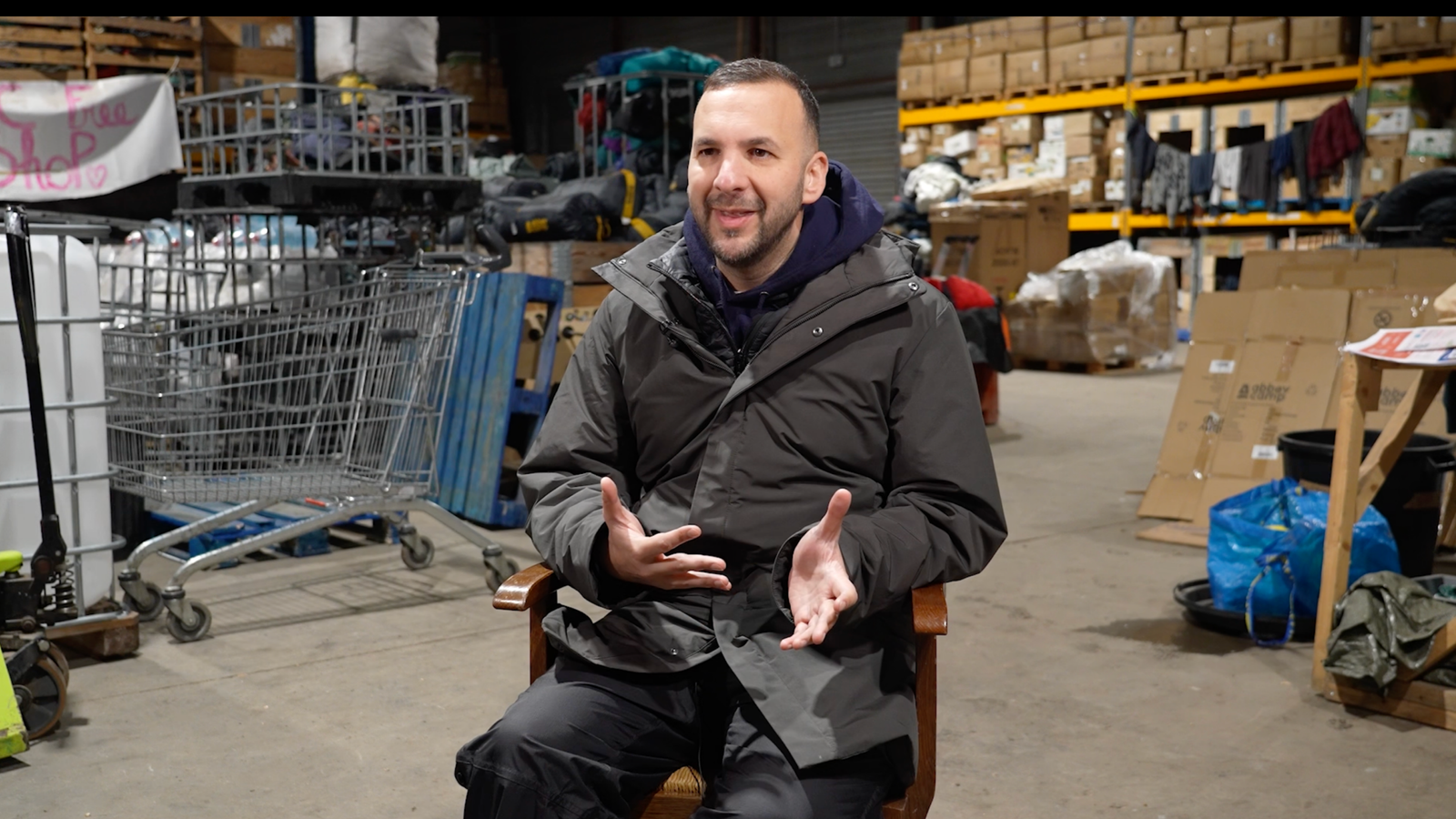
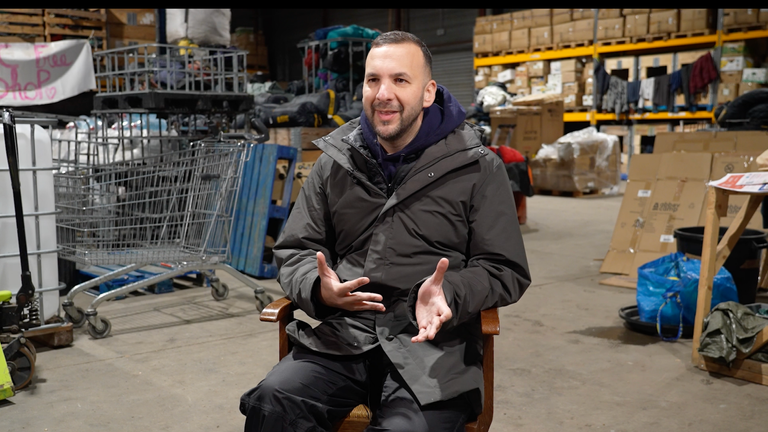
Mr Polanski was speaking to Sky News earlier this week while in Calais, where he joined volunteers and charities to witness how French police handle the arrival of migrants in the town that is used as a departure point for those wanting to make the journey to the UK.
He told Sky News he had made the journey to the French town – once home to the “Jungle” refugee camp before it was demolished in 2016 – to tackle “misinformation” about migration and to make the case for a “compassionate, fair and managed response” to the small boats crisis.
He said that “no manifesto ever said anything about open borders” and that the Greens had never stood at a general election advocating for them.
“Clearly when the world is in political turmoil and we have deep inequality, that is not a situation we can move to right now,” he said.
“That would also involve massive international agreements and cooperation. That clearly is not a pragmatic conversation to have right now. And very often the government try to push that attack line to make us look not pragmatic.”
The party’s manifesto last year did not mention open borders, but it did call for an end to the “hostile environment”, more safe and legal routes and for the Home Office to be abolished and replaced with a department of migration.
Asked why the policy of minimal restrictions on migration had been attributed to his party, Mr Polanski said open borders was part of a “long-range vision of what society could look like if there was a Green government and if we’d had a long time to fix some of the systemic problems”.
‘We should recognise the contribution migrants make’
Mr Polanski, who was elected Green Party leader in September and has been compared to Nigel Farage over his populist economic policies, said his position was one of a “fair and managed” migration system – although he did not specify whether that included a cap on numbers.
He acknowledged that there needed to be a “separate conversation” about economic migration but that he did not believe any person who boarded a small boat was in a “good situation”.
While Mr Polanski stressed that he believed asylum seekers should be able to work in Britain and pay taxes, he also said he believed in the need to train British workers in sectors such as care, where one in five are foreign nationals.
Asked what his proposals for a fair and managed migration system looked like, and whether he supported a cap on numbers, Mr Polanski said: “We have 100,000 vacancies in the National Health Service. One in five care workers in the care sector are foreign nationals.
Zack Polanski speaks to Sky News from a warehouse in Calais where charities and organisations provide migrants with essentials.
“Now, of course, that is both British workers and we should be training British workers, but we should recognise the contribution that migrants and people who come over here make.”
I’m not going to apologise’
Mr Polanski also responded to the criticism he attracted over his comments about care workers on Question Time last week, where he told the audience: “I don’t know about you, but I don’t particularly want to wipe someone’s bum” – before adding: “I’m very grateful for the people who do this work.”
His comments have been criticised by a number of Labour MPs, including Wes Streeting, the health secretary, who said: “Social care isn’t just ‘wiping someone’s bum’. It is a hard, rewarding, skilled professional job.
“This is immigration as exploitation.”
Read more:
The Greens leader who wants to be the Farage of the left
Will Farage racism allegations deter voters?
Asked whether he could understand why some care workers might feel he had talked down to them, the Greens leader replied: “I care deeply about care workers. When I made those comments, it’s important to give a full context. I said ‘I’m very grateful to people who do this important work’ and absolutely repeat that it’s vital work.”
“Of course, it is not part of the whole job, and I never pretended it was part of the whole job.”
Mr Polanski said he “totally” rejected the suggestion that he had denigrated the role of care workers in the eyes of the public and said his remarks were made in the context of a “hostile Question Time” where he had “three right-wing panellists shouting at me”.
Pressed on whether he wanted to apologise, he replied: “I’m not going to apologise for being really clear that I’m really grateful to the people who do this really vital work. And yes, we should be paying them properly, too.”
-
 Sports2 years ago
Story injured on diving stop, exits Red Sox game
-
 Sports3 years ago
‘Storybook stuff’: Inside the night Bryce Harper sent the Phillies to the World Series
-
 Sports2 years ago
Game 1 of WS least-watched in recorded history
-
 Sports3 years ago
Button battles heat exhaustion in NASCAR debut
-
 Sports3 years ago
MLB Rank 2023: Ranking baseball’s top 100 players
-
Sports4 years ago
Team Europe easily wins 4th straight Laver Cup
-
 Environment3 years ago
Japan and South Korea have a lot at stake in a free and open South China Sea
-
 Environment1 year ago
Here are the best electric bikes you can buy at every price level in October 2024