
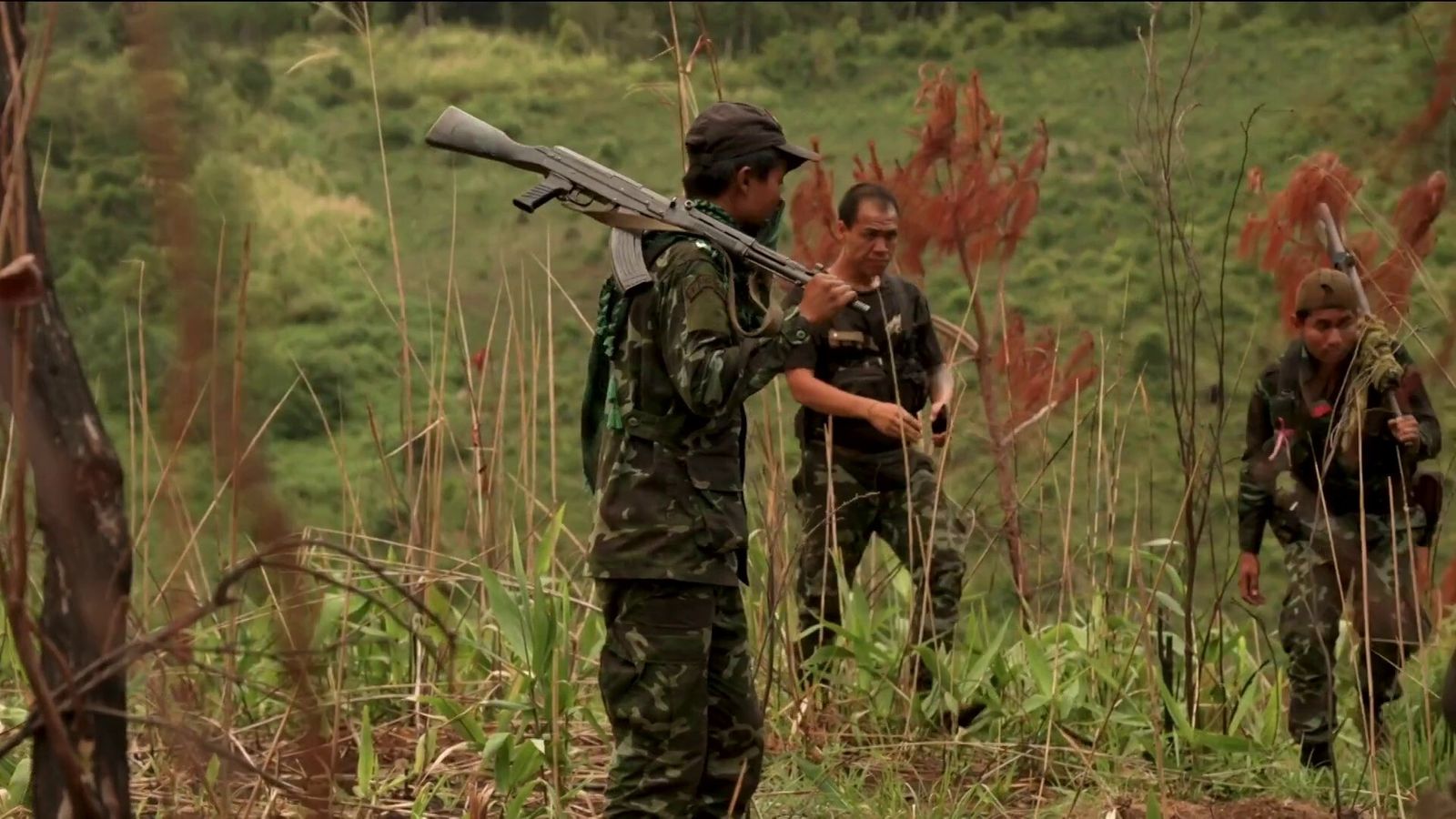
Myanmar ‘categorically rejects’ claims made by Sky News about the civil war in the country


Myanmar has said it “categorically rejects” claims made by Sky News in its undercover reporting of the civil war in the country.
The report from inside the country claims to “bring Myanmar to the world’s attention” but has been “found to be deceiving”, the country’s embassy in London has said in a statement.
It comes after Sky News’ chief correspondent Stuart Ramsay and his team went undercover deep in the jungle in Myanmar to report on the conflict that has been raging in the country since a military coup in 2021.
They spent a month in Myanmar with resistance fighters, medics and volunteers who are fighting a war the military regime claims isn’t happening.
Ramsay found the Myanmar military government has been targeting civilians as well as resistance fighters – with the regime using fighter jets to bomb targets during the civil war.
The country’s embassy has said in its statement that Ramsay’s reporting “misleads with a wrong narrative that the Myanmar government is killing its own people”.
The statement adds that Myanmar is a “responsible members of the international community”.
Read more:
The secret jungle hospital on the frontline
What evidence is there of war crimes in Myanmar?
Eyewitness: I felt at risk every day in Myanmar – but it was worth it
Special programme: Inside Myanmar
It continues: “Demonising Myanmar will create more negative implications than positive ones.
“While Myanmar anticipates to receive the understanding, and support of the international community, it remains committed to moving on with or without their support on its path to peace and prosperity.”
The plight of Myanmar’s people has been overshadowed by the war in Ukraine, with the international community failing to supply military aid or assistance to a resistance they claim to support.
Meanwhile, little foreign aid is making its way into the country and huge numbers of displaced people are now living in bamboo and tarpaulin shelters in self-built camps.
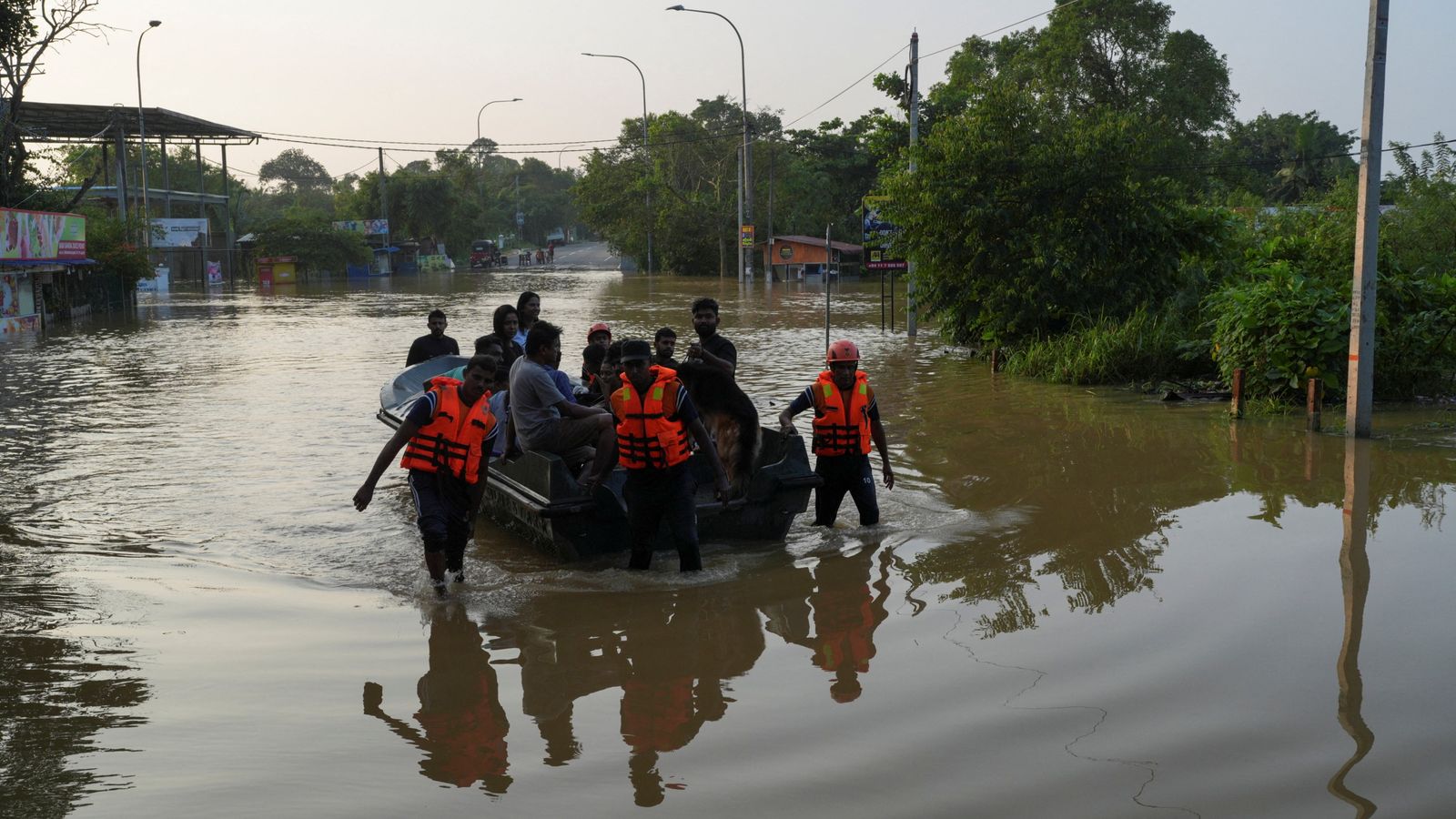
Rescue and recovery and efforts are under way in parts of South and Southeast Asia where the number of those killed in devastating floods continues to rise.
The extreme weather last week has killed at least 366 people in Sri Lanka, 604 in Indonesia, and 176 in Thailand, according to authorities.
Rescuers are searching for 464 missing people in Indonesia, and a further 367 in Sri Lanka, after a cyclone and other storms triggered flooding and landslides in the region.
In a post on X, the King and Queen Camilla said they were “deeply saddened” to hear about devastating storms and added their “heartfelt condolences” to the families of those who have died.
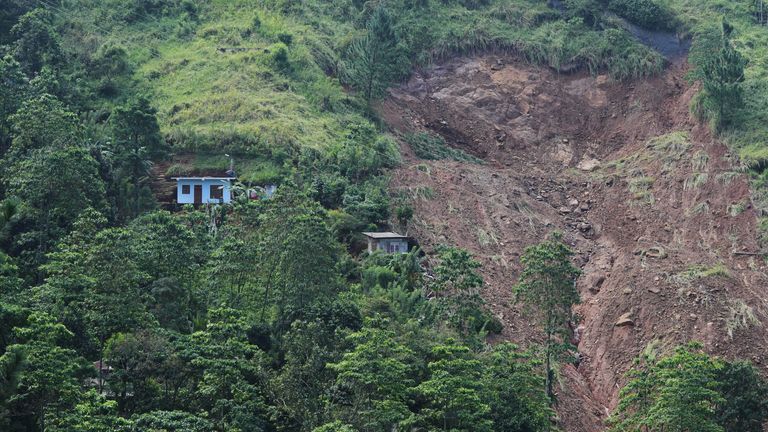
Landslides in Sarasavigama village near Kandy, Sri Lanka. Pic: AP
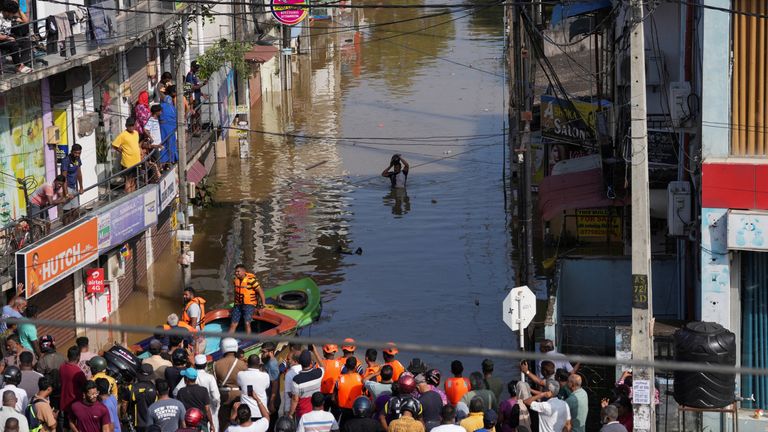
A man wades through the flooded street, following heavy rainfall in Wellampitiya, Sri Lanka. Pic: Reuters
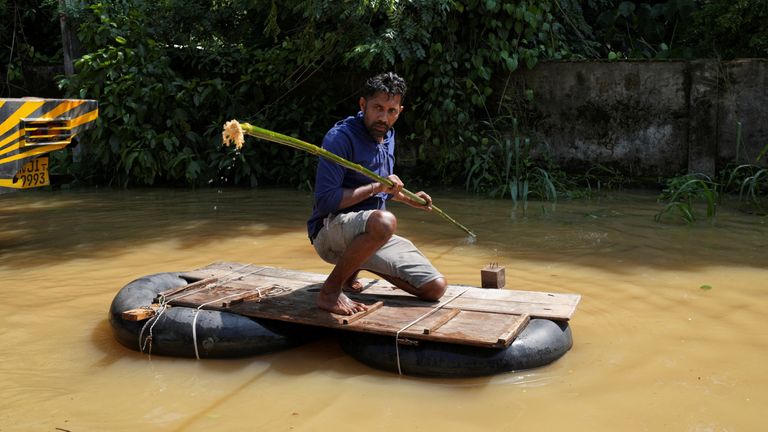
A man uses a makeshift raft at a flooded area, following Cyclone Ditwah in Kelaniya, Sri Lanka. Pic: Reuters
Hundreds of thousands in shelters in Sri Lanka
Sri Lankan authorities said about 218,000 people were in temporary shelters after downpours that triggered landslides, primarily in the tea-growing central hill country.
People were seen salvaging belongings from flooded homes along the banks of the Kelani River, near the capital Colombo on Monday.
Meanwhile, train and flight services have resumed after being disrupted last week, but schools stayed closed, officials said.
Cyclone Ditwah was the “largest and most challenging” natural disaster in Sri Lanka’s history, President Anura Kumara Dissanayake said.
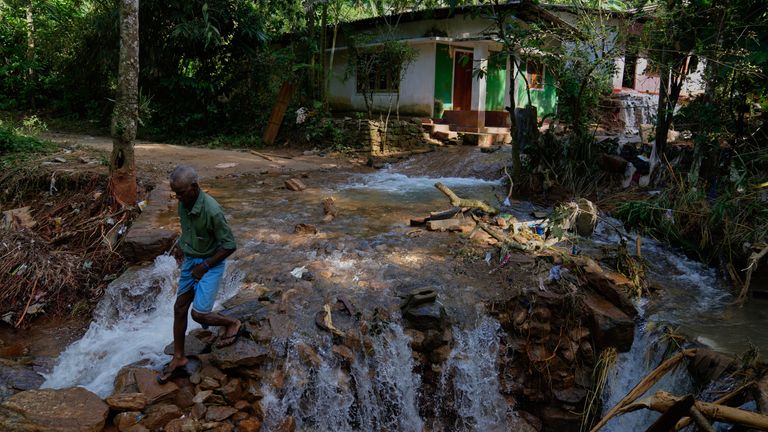
A landslide survivor crosses a section of a damaged road in Sarasavigama village near Kandy, Sri Lanka. Pic: AP
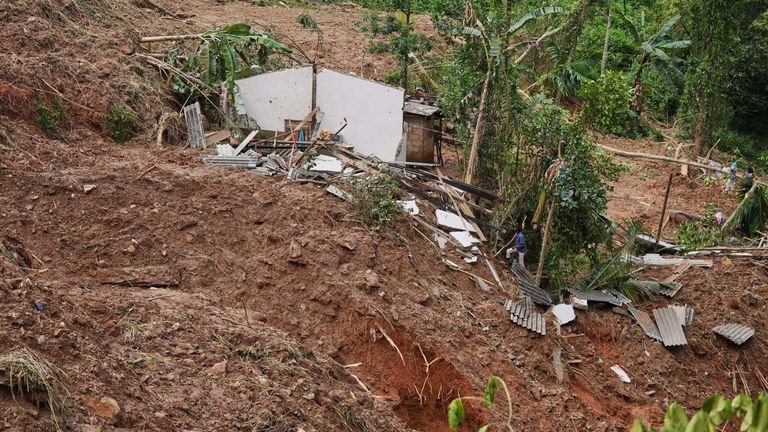
Landslide survivors salvage belongings at the site of a landslide in Sarasavigama village near Kandy, Sri Lanka. Pic: AP
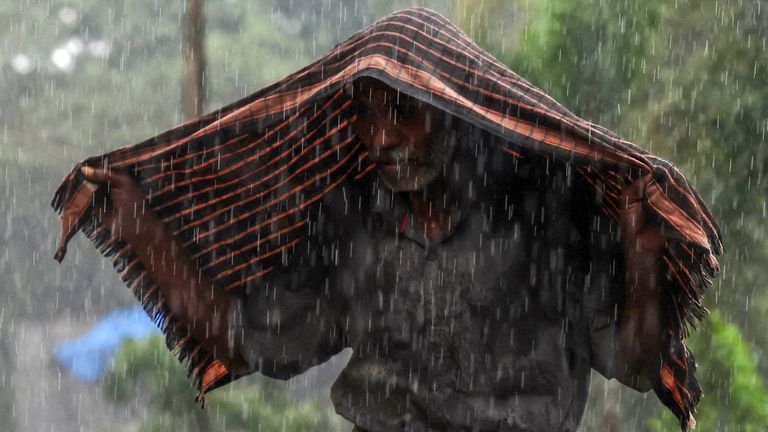
A man uses his scarf to protect himself from the rain in the aftermath of Cyclone Ditwah, in Chennai, India. Pic: Reuters
The cyclone also brought heavy rain to India’s southern state of Tamil Nadu over the weekend, with authorities saying three people were killed in rain-related incidents.
The storm, which as of 5pm UK time on Monday was about 20km (12 miles) off the coast of the state capital Chennai, has weakened into a “deep depression” and was expected to weaken further in the next few hours, weather officials said.
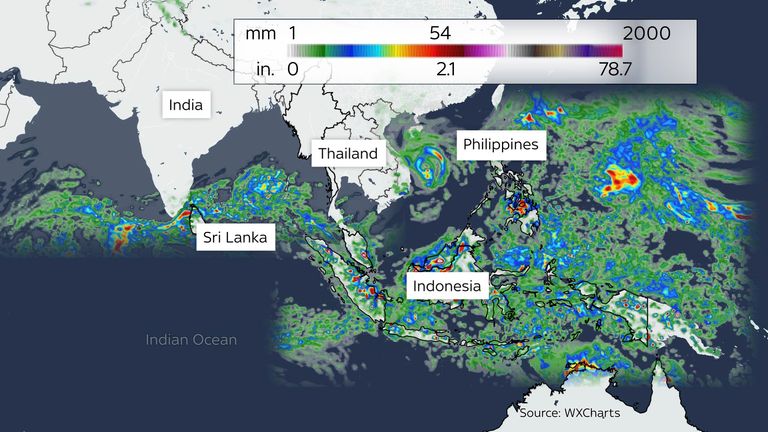
Amount of rainfall expected in South and Southeast Asia in the next 48 hours
Over a million affected in Indonesia
More than 28,000 homes have been damaged in Indonesia, with 1.4 million people affected by torrential rains following a tropical storm that formed in the Malacca Strait.
The country’s president, Prabowo Subianto, called it a catastrophe and pledged to rebuild infrastructure as he visited the three affected provinces on Monday, where nearly 300,000 people have been displaced by the flooding.
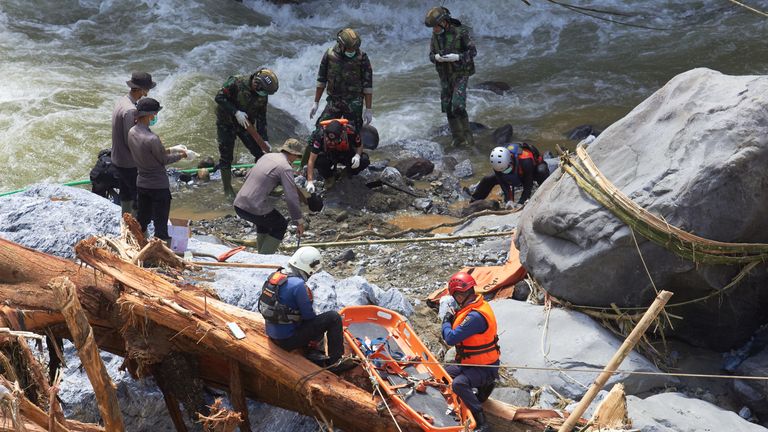
Rescuers search for flood victims in Tanah Datar, West Sumatra, Indonesia. Pic: AP
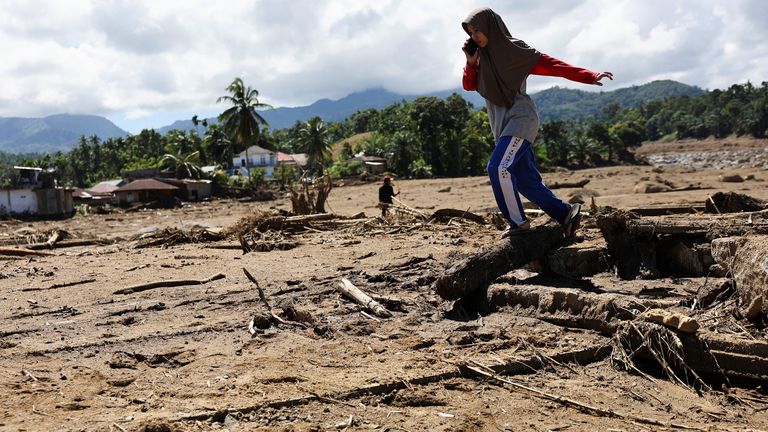
A flooded field in Indonesia’s West Sumatra province. Pic: Reuters
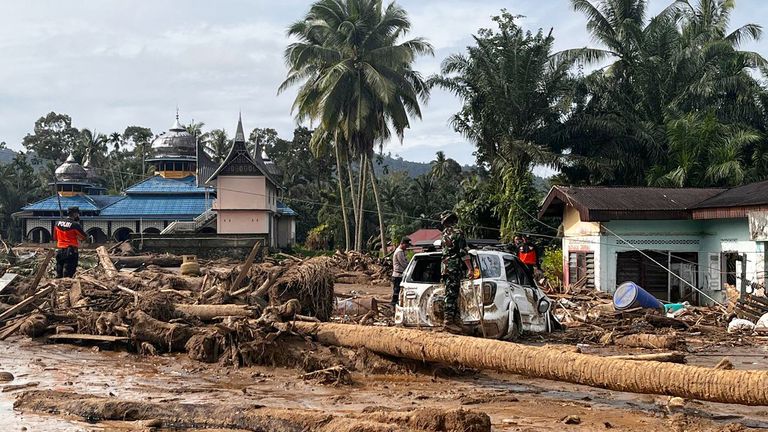
Rescuers search for victims at a village affected by flash flooding, in Agam, West Sumatra, Indonesia. Pic: AP
‘Nothing remains’
“The water just rose up into the house and we were afraid, so we fled. Then we came back on Friday, and the house was gone, destroyed,” said Afrianti, 41, who only goes by one name and lives in West Sumatra’s Padang city.
She and her family of nine have made their own tent shelter beside the single wall that remains of their home.
“My home and business are gone, the shop is gone. Nothing remains. I can only live near this one remaining wall,” she said.
Highest one-day rainfall in Thai city for 300 years
In Thailand, flooding in eight southern provinces affected about three million people and led to a major mobilisation of its military to evacuate critical patients from hospitals and reach people stuck in floodwaters for days.
In the worst-affected city of Hat Yai, a southern trading hub, 335mm (13 inches) of rain fell on 21 November, its highest single-day tally in 300 years, followed by days of unrelenting downpours.
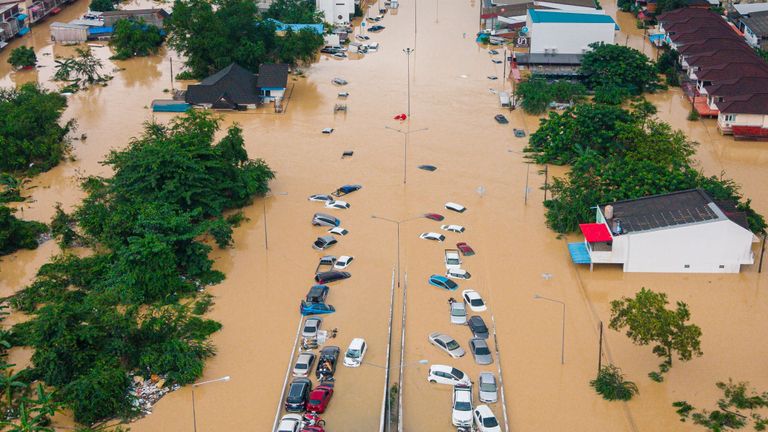
More than three million people have been impacted by floods in Thailand
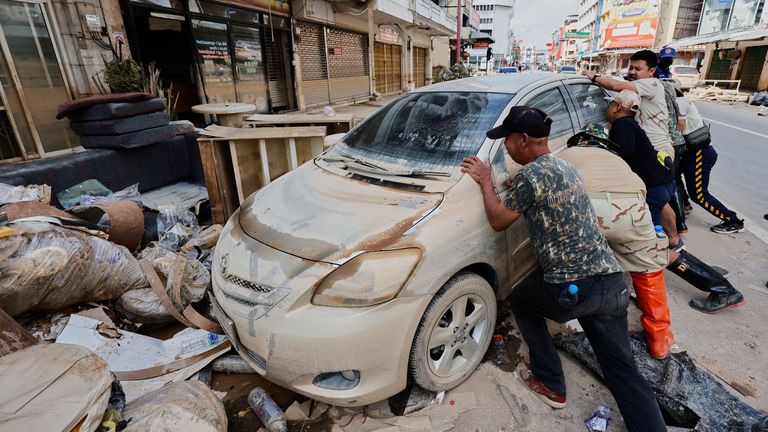
People move a car damaged by floods in Songkhla province, southern Thailand. Pic: AP
King offers ‘heartfelt condolences’
King Charles and Queen Camilla responded to the crisis in a statement posted on X and praised the work of emergency responders: “We wish to express our heartfelt condolences to the families of those who have so tragically lost their lives.
“Our thoughts and prayers are with the many whose homes have been destroyed and to all who are awaiting news of loved ones missing.
“These disasters remind us of the increasingly urgent need to restore the balance and harmony of Nature.”
Thailand’s Prime Minister Anutin Charnivirakul expects residents to be able to return home within seven days, a government spokesperson said on Monday.
Read more from Sky News:
Zelenskyy to make first official visit to Ireland
Dignitas founder dies by assisted suicide
The first batch of compensation payments was set to be distributed on Monday, starting with 239m baht (£5.6m) for 26,000 people, the spokesperson added.
In Malaysia there have been at least three deaths and authorities are still on alert for a second and third wave of flooding as 11,600 remain in evacuation centres.


Sir Keir Starmer has warned China poses “real national security threats to the United Kingdom”.
But the prime minister also described China as a “nation of immense scale, ambition and ingenuity” and a “defining force in technology, trade and global governance”.
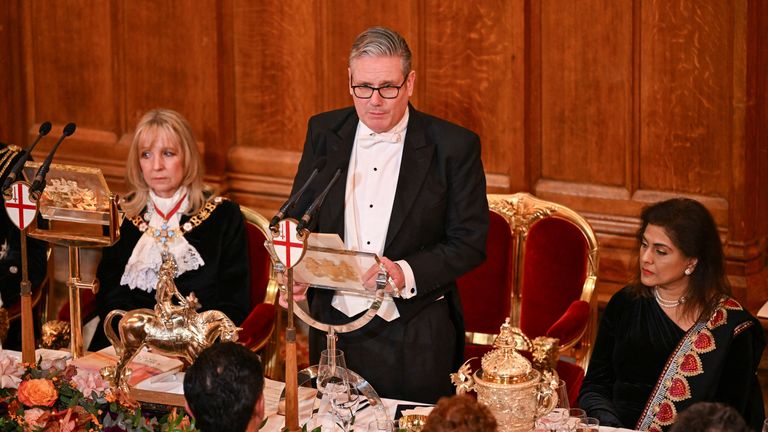
“The UK needs a China policy that recognises this reality,” he added in a speech at the Guildhall in London.
“Instead, for years we have blown hot and cold.
“So our response will not be driven by fear, nor softened by illusion. It will be grounded in strength, clarity and sober realism.”
Prime Minister Keir Starmer giving his speech. Pic: Reuters
Describing the absence of engagement with China – the world’s second-biggest economy – as “staggering” and “a dereliction of duty”, Sir Keir said: “This is not a question of balancing economic and security considerations. We don’t trade off security in one area, for a bit more economic access somewhere else.
“Protecting our security is non-negotiable – our first duty. But by taking tough steps to keep us secure, we enable ourselves to cooperate in other areas.”
Sir Keir’s remarks come after MPs and parliamentarians were warned last month of new attempts to spy on them by China.
And they follow the collapse of a prosecution of two people suspected of spying on behalf of China.
That case led to controversy over how the government under Labour responded to the Crown Prosecution Service’s requests for evidence.
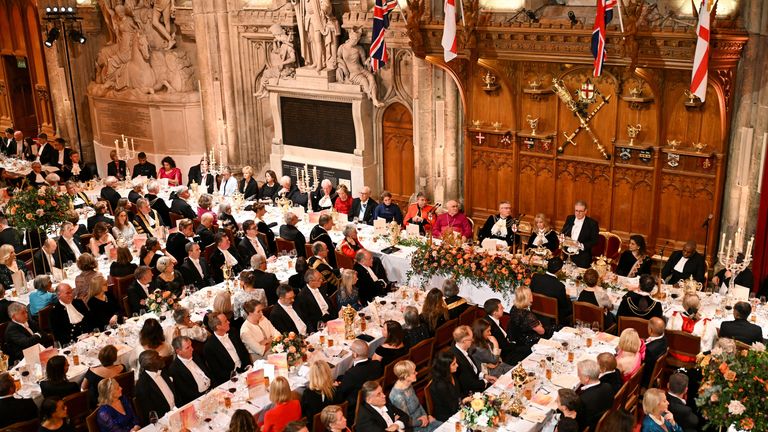
Speech at the annual Lady Mayor’s Banquet. Pic: Reuters
At the time, Sir Keir sought to blame the previous Conservative government for the issues, which centred on whether China could be designated an “enemy” under First World War-era legislation.
Meanwhile, Sky News understands the prime minister is set to approve plans for a controversial Chinese “super embassy” in central London.
Read more:
MI5 spying warning aims to send signal to China
‘Many options’ on table for Venezuela
A final decision on the planning application for the former Royal Mint site near the Tower of London is due on 10 December, after numerous previous delays.
Sir Keir is also understood to be preparing for a likely visit to China in the new year.
Since he was elected last year, Sir Keir has been active on the world stage, trumpeting deals with the US, India and the EU and leading the “coalition of the willing” in support of Ukraine.
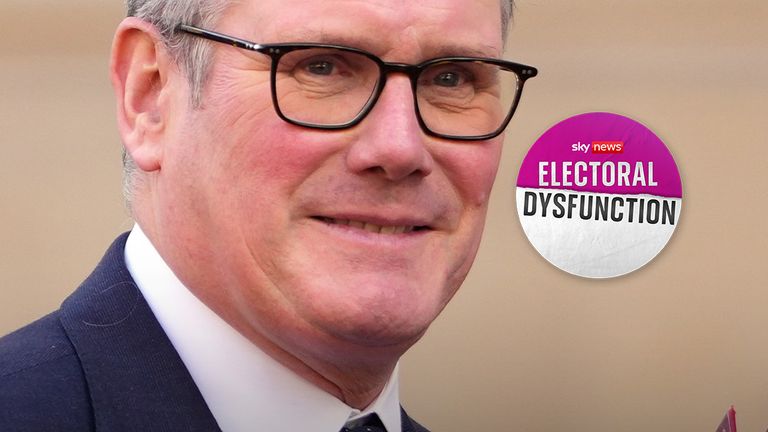
PM preparing for likely China visit
But he has also faced criticism from his opponents, who accuse him of spending too much time out of the UK attending international summits rather than focusing on domestic issues.
Sir Keir offered a defence of his approach, describing it as “the biggest shift in British foreign policy since Brexit” and “a decisive move to face outward again”.
While saying he would “always respect” the Brexit vote as a “fair, democratic expression”, he said the way the UK’s departure from the EU had been “sold and delivered” was “simply wrong”.
He said: “Wild promises were made to the British people and not fulfilled. We are still dealing with the consequences today.”
In his speech on Monday, the prime minister accused opposition politicians of offering a “corrosive, inward-looking attitude” on international affairs.
Sir Keir Starmer. Pic: Reuters
Taking aim at those who advocate leaving the European Convention on Human Rights or NATO, he said they offered “grievance rather than hope” and “a declinist vision of a lesser Britain”.
Sir Keir said: “Moreover, it is a fatal misreading of the moment, ducking the fundamental challenge posed by a chaotic world – a world which is more dangerous and unstable than at any point for a generation, where international events reach directly into our lives, whether we like it or not.”
He added: “In these times, we deliver for Britain by looking outward with renewed purpose and pride, not by shrinking back. In these times, internationalism is patriotism.”
Responding to the prime minister’s speech, shadow foreign secretary Dame Priti Patel said: “From China’s continued flouting of economic rules to transnational repression of Hong Kongers in Britain, Starmer’s ‘reset’ with Beijing is a naive one-way street, which puts Britain at risk while Beijing gets everything it wants.
“Starmer continues to kowtow to China and is captivated by half-baked promises of trade.
“Coming just days after the latest Chinese plot to interfere in our democracy was exposed, his love letter to the Chinese Communist Party is a desperate ploy to generate economic growth following his budget of lies and is completely ill-judged.
“While China poses a clear threat to Britain, China continues to back Iran and Russia, and plots to undermine our institutions. Keir Starmer has become Beijing’s useful idiot in Britain.”
-
 Sports2 years ago
Story injured on diving stop, exits Red Sox game
-
 Sports3 years ago
‘Storybook stuff’: Inside the night Bryce Harper sent the Phillies to the World Series
-
 Sports2 years ago
Game 1 of WS least-watched in recorded history
-
 Sports3 years ago
Button battles heat exhaustion in NASCAR debut
-
 Sports3 years ago
MLB Rank 2023: Ranking baseball’s top 100 players
-
Sports4 years ago
Team Europe easily wins 4th straight Laver Cup
-
 Environment3 years ago
Japan and South Korea have a lot at stake in a free and open South China Sea
-
 Environment1 year ago
Here are the best electric bikes you can buy at every price level in October 2024