
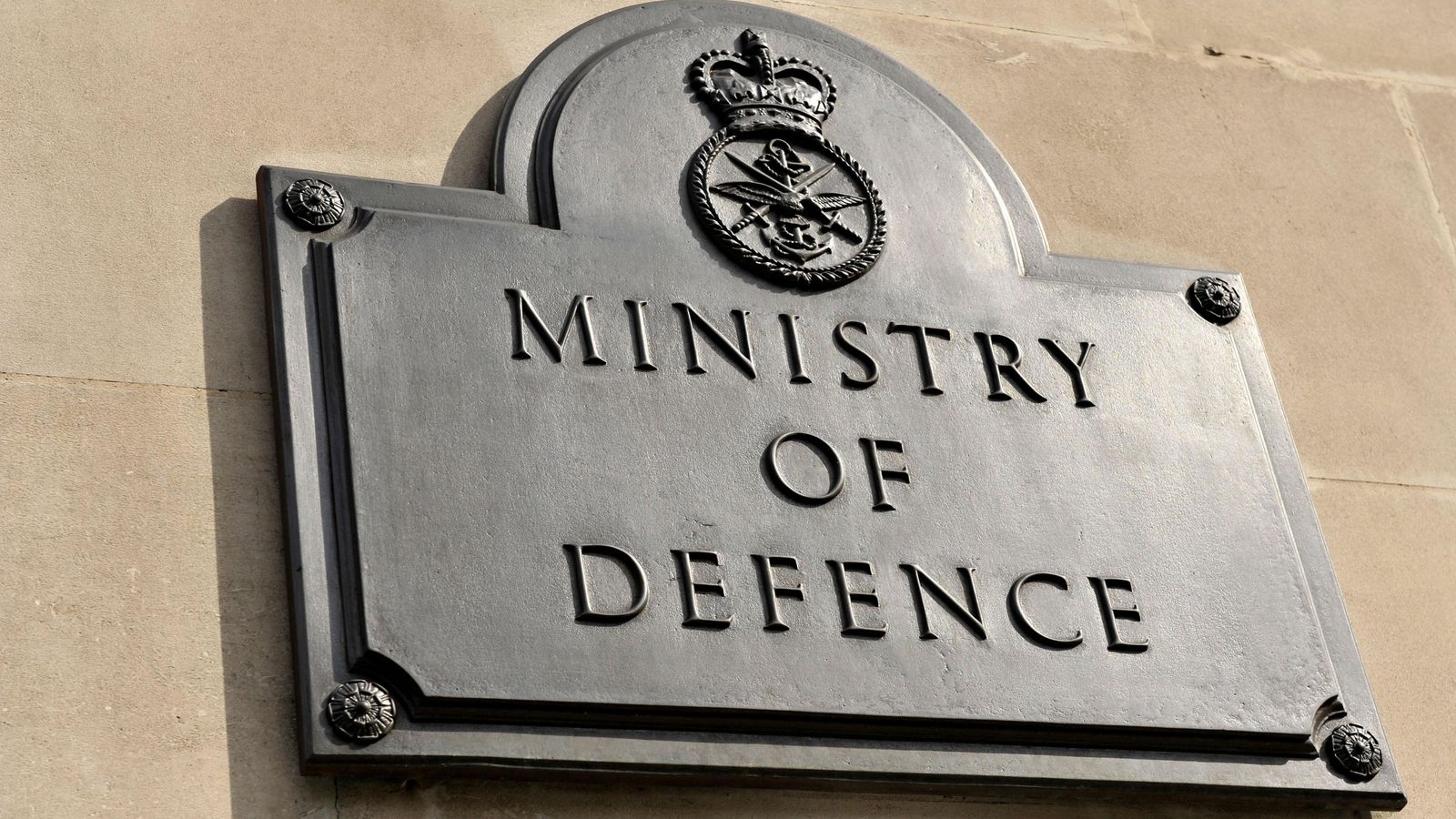
Ministry of Defence accidentally sends classified information to Kremlin ally


The Ministry of Defence has launched an investigation after officials accidentally sent emails containing classified information to a Russian allied country.
A “small number” of emails intended for the Pentagon were sent to Mali thanks to the omission of an “i” from an email address.
British officials sent the messages to an address ending with the west African country’s “.ml” domain, rather than the US military’s “.mil”.
Ukraine-Russia war latest: Wagner boss ‘pictured at same summit as Putin’
Last week it was revealed the same error in the US had resulted in millions of military emails going to Mali.
It was argued that the scale of the British mishap, first reported by The Times, was very small in comparison.
An MoD spokesman said: “We have opened an investigation after a small number of emails were mistakenly forwarded to an incorrect email domain.
“We are confident they did not contain any information that could compromise operational security or technical data.
“All sensitive information is shared on systems designed to minimise the risk of misdirection.
“The MoD constantly reviews its processes and is currently undertaking a programme of work to improve information management, data loss prevention, and the control of sensitive information.”
What is Russia’s Wagner group doing in Africa?
Read more:
UK government ‘complacent’ in countering growing risk from Wagner Group
Wagner troops leave CAR after ‘refusing contracts with Russia’
Is this where Wagner Group fighters could be based in Belarus?
Mali was among six African countries promised free grain shipments by Vladimir Putin after Russia pulled out of the Black Sea grain deal with Ukraine.
Wagner Group mercenaries have also been deployed to fight alongside the army against jihadists.


Left-wing Labour MPs are split on whether they would welcome an Angela Rayner leadership bid, as speculation continues over whether Sir Keir Starmer can survive.
Senior MPs on the left have told Sky News that the former deputy prime minister “only needs to push the button” and she would have the support to take out her old boss.
But others said it “won’t wash with the public”, given it was only a few months ago that she resigned in scandal over her tax affairs. She has also been accused of not doing enough for the left while she was in government.
Sir Keir has insisted he would face down any threat to his leadership, while Ms Rayner’s allies say she has no plan to oust him.
But many MPs have said privately – if not publicly – that a challenge to his position appears increasingly inevitable given the state of the polls.
One MP in the socialist campaign group (SCG) said “all Angela needs to do is push the button” and MPs would get behind her – citing her popularity with the Labour membership.
Another MP said: “I think she would have a healthy number of people who would back her.”
Ms Rayner, a former trade union rep, was elected by members to be deputy Labour leader in 2020. She was a longstanding member of Jeremy Corbyn’s shadow cabinet and is revered by many of her colleagues on the left for her rise from a working-class background to the top of British politics, having left school at 16, pregnant, and with no qualifications.
However one MP said while they personally “rate her a lot” she “could have done more” for the left while in government.
“Ange was the deputy leader for a long time. I have to say she went to ground for a long time and didn’t speak up. Whether she has the support of MPs or the country I don’t know.”
This view was echoed by another colleague, who said she is “complicit” in the government’s failures.
This MP, in a traditional red wall seat, said the “visceral dislike of Starmer is baked in” and they have never experienced anything like the anti-Labour sentiment they are hearing on the doorstep.
Is Andy Burnham coming for Starmer?
They said any change of leader would have to be an outsider with a radical vision “like 1945”. “It would have to be Andy”, they said, referring to the Greater Manchester metro mayor Andy Burnham.
‘Burnham is a no-brainer’
Many MPs on both the left and the so-called “soft-left” told Sky News he would be their preferred candidate, given he is not associated with the current government, he has a different vision for the country and is popular with the public.
Mr Burnham is not currently an MP but he has not ruled out standing if a seat became available.
“In a hypothetical universe where all the barriers are overcome then Burnham is a no-brainer,” said one MP from the 2024 intake.
Read more from politics:
Farage’s former school responds to claims he made racist comments
Reeves acknowledges damage of ‘too many’ budget leaks
Another MP supportive of a Burnham takeover said a Rayner return “won’t wash with the public” given she had to resign from the second most senior position in government for underpaying stamp duty in September. They said it also wouldn’t be credible for her to “suddenly” start criticising the direction of the Starmer government given she was so closely tied to it.
As another MP put it: “I’d be backing a candidate from the left of the party. Angela Rayner is not from the left of the party.”
Other runners and riders
Any challenger would need the public backing of 80 colleagues to trigger a leadership contest. May is seen as crunch date if the local elections go as badly as predicted.
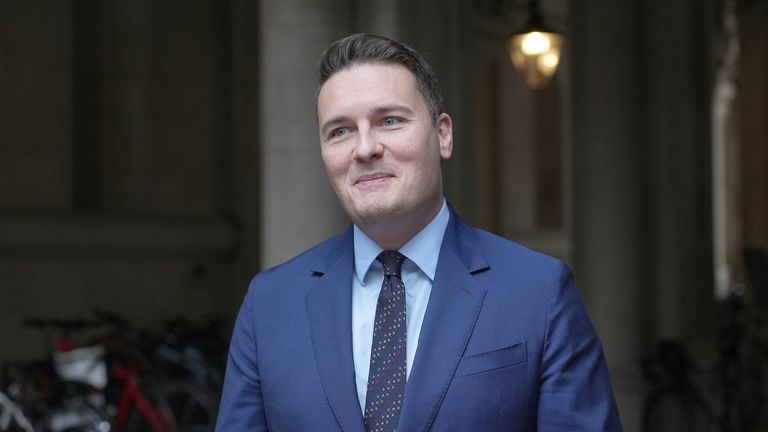
Wes Streeting. Pic: PA
Other names that have come up include Health Secretary Wes Streeting and Home Secretary Shabana Mahmood. Mr Streeting is seen as a charismatic communicator who could take on Nigel Farage and Zack Polanski, while MPs within the “blue Labour” caucus are impressed with Ms Mahmood’s hard line on immigration.
But MPs on the left feel this would only offer a temporary boost in the polls as the pair are both seen as being on the centre-right, and a change of leader would be pointless without a change of direction.
Another name that has come up is the former Labour leader Ed Miliband, but while he is more to the left he has been rejected by the public once – having lost the 2015 election.
‘No active plot’
The MPs who spoke to Sky News stressed there was no active plot, but rather a general consensus that it is looking increasingly likely Sir Keir won’t be able to turn things around.
MPs who disagree with the prime minister’s politics said they are surprised at how personally disliked he is on the doorstep as he is ultimately a “nice man”.
They fear he has lost the trust of the public by saying one thing and doing another, with the winter fuel fiasco still coming up in areas where Reform UK is making gains.
As one MP put it: “We want him [Sir Keir] to do well and do better… but you can’t go on forever if things look terrible in the opinion polls.”
👉Listen to Politics at Sam and Anne’s on your podcast app👈
‘Budget has sparked a sea-change’
MPs have recently revived the soft-left tribune group with the aim of influencing the government to take more of a progressive direction.
Ms Rayner addressed this group on Tuesday night, along with new deputy leader Lucy Powell and cabinet ministers Mr Miliband and Lisa Nandy.
One MP who spoke to Ms Rayner said she has “absolutely no plans” to launch a leadership bid “unless she is keeping it quiet”. They added that the subject of a leadership challenge didn’t come up in any of the speeches and there was an “upbeat atmosphere” following the lifting of the two-child benefit cap.
“The budget has landed well with the party,” they said. “[The meeting] felt like a sea change.”
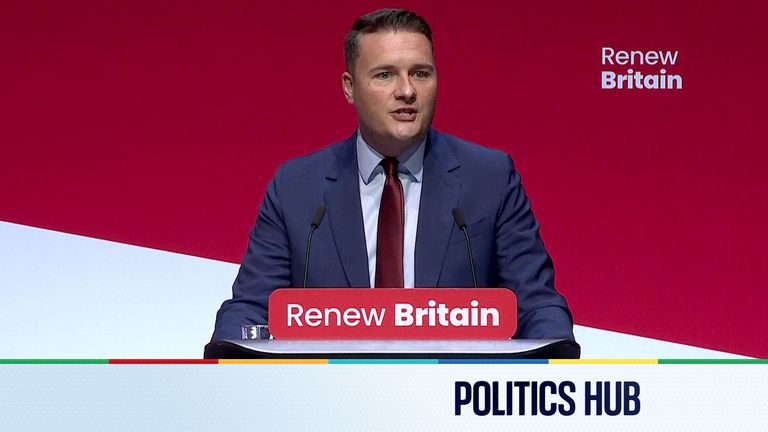
Streeting: ‘We need Rayner back’
As deputy prime minister and housing secretary, Ms Rayner introduced the Employment Rights Bill within 100 days and pushed through reforms to renters rights, the leasehold system and further devolution. She is also said to have played a crucial role in persuading Sir Keir to water down welfare cuts in the face of a major backbench rebellion.
A source close to her defended her record, saying she is “not interested in pacts and plots” and wants the government to succeed. They said she is not finished in politics but “she’s no one’s pawn, she’s her own person”.
Ms Rayner resigned after an ethics investigation found she acted in good faith, but broke the ministerial code by failing to get the correct tax advice after purchasing a flat in Brighton. She referred herself to HMRC and an investigation is ongoing.
Sir Keir has said he wants her back in cabinet, a view echoed by many senior colleagues.
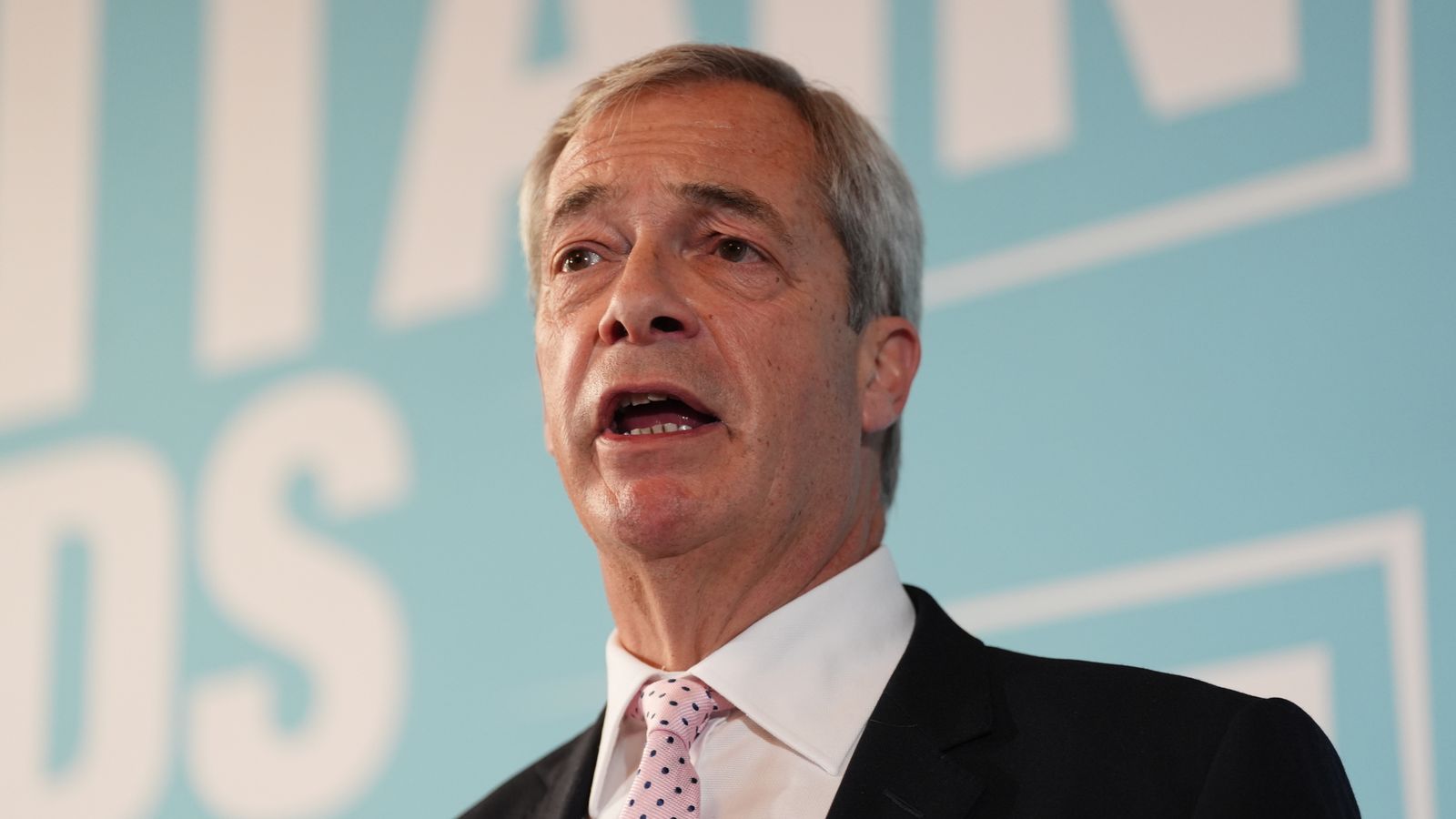
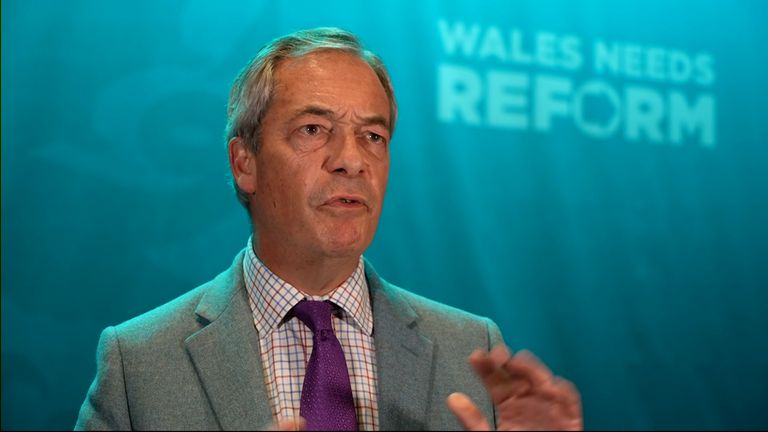
Dulwich College has said allegations that Nigel Farage made racist and antisemitic comments to fellow pupils at the school are “profoundly distressing” and “entirely at odds with the Dulwich College of today”.
In the first reported statement from the school about the accusations – which date from 1970s – current master Robert Milne wrote “such behaviour is wholly incompatible with the values the College holds”.
“What we can unequivocally state is that the behaviours described are entirely at odds with the Dulwich College of today,” he continued
The comments come in a letter to former Dulwich pupil Jean-Pierre Lihou.
Mr Lihou, 61, has alleged the current Reform UK leader sang antisemitic songs to Jewish schoolmates and “had a big issue with anyone called Patel”.
Nigel Farage has previously said he “never directly racially abused anybody”.
Mr Farage has said he “never directly racially abused anybody” at Dulwich and said there is a “strong political element” to the allegations coming out 49 years later.
Reform’s deputy leader Richard Tice has called the ex-classmates “liars”.
Nigel Farage said: “I have not met or spoken to this master. So I am surprised by his uninformed comments in response to claims from nearly 50 years ago from politically motivated actors.
“If he is interested, I can show him the many messages that I have received from fellow pupils, including Jewish ones, that entirely contradict these allegations.”
A spokesperson for Reform UK said: “This witch hunt is merely an attempt to discredit Reform and Nigel Farage.
“Instead of debating Reform on the substance of our ideas and policies, the left-wing media and deeply unpopular Labour Party are now using 50-year-old smears in a last act of desperation.
“The British public see right through it.”
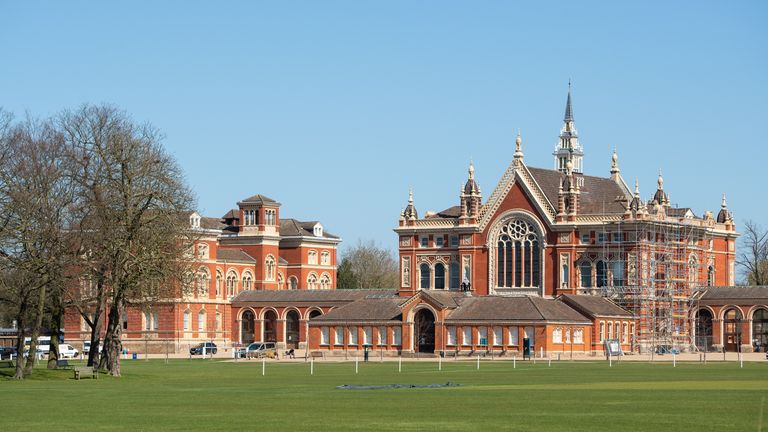
Dulwich College, pictured in 2022, has responded for the first time to claims Nigel Farage made racist comments as a student. Pic: PA
The letter also says the college has avoided making any public statements “to protect the college’s reputation in the long term”.
“This should not be interpreted as indifference: safeguarding the college’s good name and upholding its values are of paramount importance to us,” it continues.
Mr Lihou told Sky News he cautiously welcomed the letter written to him from the master and said he understands why the college wasn’t willing to unequivocally condemn the allegations against the Reform leader directly.
“Dulwich College has been clear that such accusations are very much at odds with the values of the school,” he said.
He added: “Why can Mr Farage not accept that approaching 30 people [who] have lasting memories from him as a 13-year-old to an adult that he should unreservedly apologise for?”
Sky News has contacted Dulwich College for a comment.

US Commodity Futures Trading Commission Acting Chairman Caroline Pham has scrapped “outdated guidance” on the delivery of crypto, which has been applauded for offering exchanges more flexibility.
“Eliminating outdated and overly complex guidance that penalizes the crypto industry and stifles innovation is exactly what the Administration has set out to do this year,” Pham said on Thursday.
The guidance, originally finalized in March 2020, related to when the “actual delivery” of crypto happened in a commodity transaction, but the CFTC said in a notice that it had to “reevaluate such guidance in light of further developments during the past 5 years.”
The CFTC under Pham has worked on a more crypto-friendly approach, and Pham said the guidance was withdrawn on recommendations from the president’s crypto working group, which suggested the CFTC release guidance on how crypto may be considered commodities and expand on prior guidance regarding the actual delivery of virtual assets.
More flexibility for exchanges with guidance gone
StarkWare general counsel Katherine Kirkpatrick Bos applauded the move, saying the guidance was making it harder for exchanges to offer margin or leverage unless actual delivery occurred within 28 days.

“This offers way more flexibility for exchanges,” she said. “But PSA — this isn’t law! Just guidance. All of this can be changed again should leadership change.”
The CFTC can issue guidance to clarify its interpretation of legislation and give insight into how it may enforce rules in certain situations; however, it’s not generally legally binding in the same way as formal regulation.
Garry Krugljakow, the head of Bitcoin (BTC) strategy at the Berlin-based Bitcoin treasury company aifinyo AG, speculated in an X post on Thursday that it’s a “major tell” of what’s to come.
“This move signals two things: cleaner jurisdiction for the CFTC and a regulatory path designed for scale, not hesitation,” he said.
Related: CFTC pilot opens path for crypto as collateral in derivative markets
“Actual delivery made sense in 2020. It doesn’t in a world of real custody, collateralization, and Bitcoin-backed credit,” Krugljakow said.
No guidance leaves uncertainty
Meanwhile, Todd Phillips, a fellow at the American think tank the Roosevelt Institute, said the definition of actual delivery is important, “as it decides what exchanges need to register with the CFTC and which don’t.”
“The CFTC replaced the prior guidance with nothing,” he said. “Right now, we have no idea what the CFTC thinks actual delivery means, or who has to register.”
Magazine: When privacy and AML laws conflict: Crypto projects’ impossible choice
-
 Sports2 years ago
Story injured on diving stop, exits Red Sox game
-
 Sports3 years ago
‘Storybook stuff’: Inside the night Bryce Harper sent the Phillies to the World Series
-
 Sports2 years ago
Game 1 of WS least-watched in recorded history
-
 Sports3 years ago
Button battles heat exhaustion in NASCAR debut
-
 Sports3 years ago
MLB Rank 2023: Ranking baseball’s top 100 players
-
Sports4 years ago
Team Europe easily wins 4th straight Laver Cup
-
 Environment3 years ago
Japan and South Korea have a lot at stake in a free and open South China Sea
-
 Environment1 year ago
Here are the best electric bikes you can buy at every price level in October 2024