
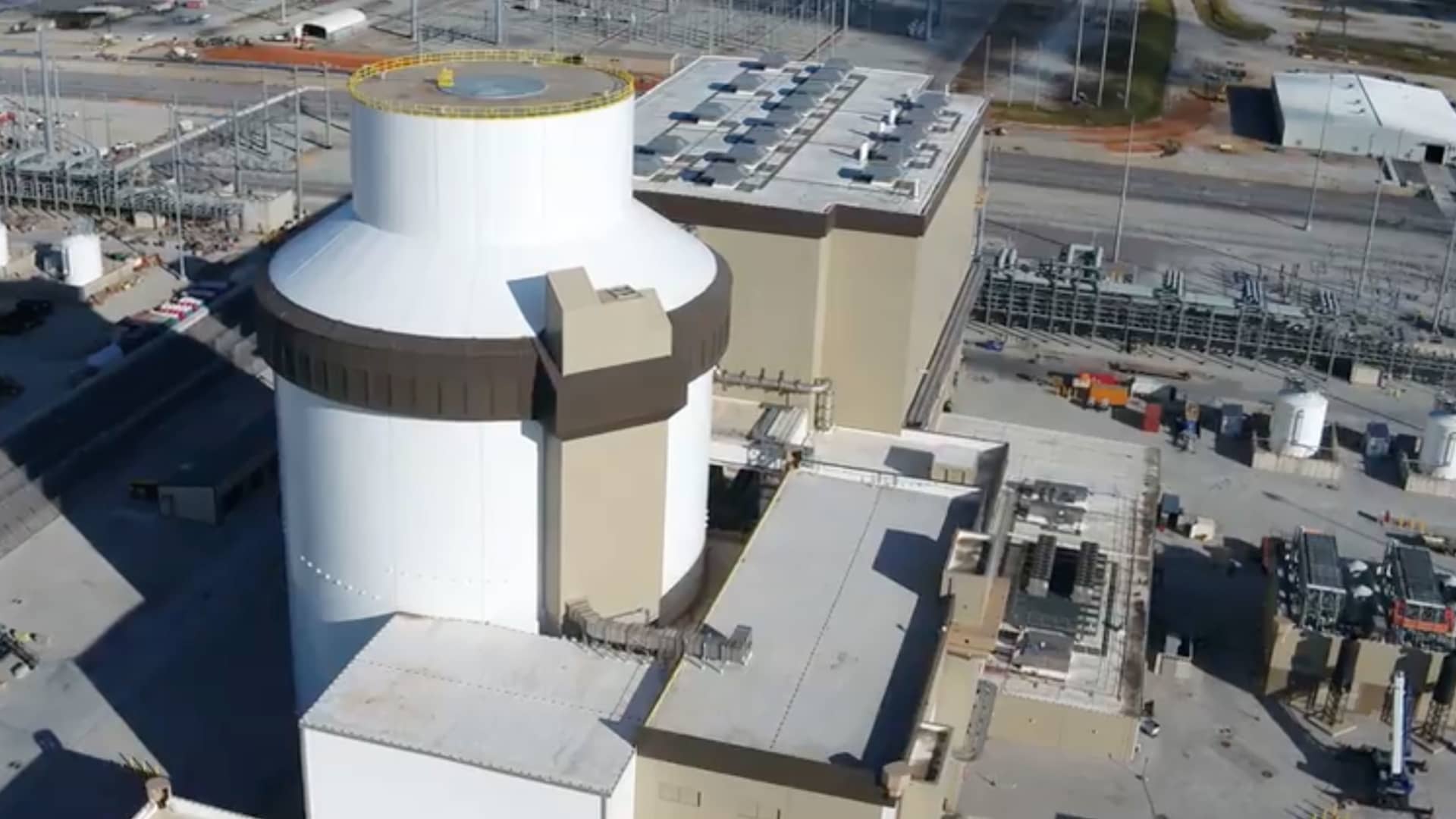
America’s first new nuclear reactor in nearly seven years starts operations

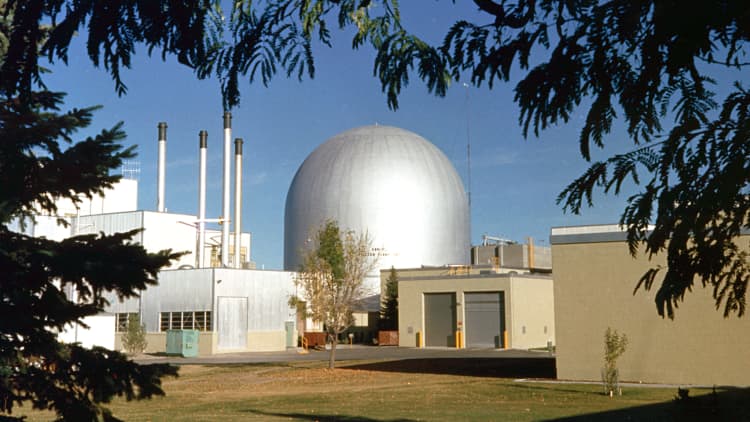
Vogtle nuclear reactor 3
Source: Georgia Power
Monday marked the first time a new nuclear reactor has begun delivering power to the electric grid in the United States in nearly seven years. Nuclear energy does not generate the greenhouse gas emissions that cause climate change.
The unit 3 reactor at Plant Vogtle near Waynesboro, Georgia, has started commercial operation, primary owner Georgia Power said on Monday. This follows preliminary tests in March.
The reactor, an Westinghouse AP1000, is generating approximately 1,110 megawatts of energy, which can power an estimated 500,000 homes and businesses, Georgia Power said.
The last time a nuclear reactor started delivering energy to the power grid was in October 2016, when the Tennessee Valley Authority began commercial operation of its Watts Bar Unit 2 near Spring City, Tenn., according to Scott Burnell, a spokesperson for the Nuclear Regulatory Commission. Prior to that, there hadn’t been a new nuclear reactor turned on since Watts Bar 1 in May 1996.
The unit 3 power reactor at Vogtle will deliver electricity to customers for the next 60 to 80 years, Georgia Power CEO Kim Greene said in a statement.
Reactors for Unit 3 and 4 sit at Georgia Power’s Plant Vogtle nuclear power plant on Jan. 20, 2023, in Waynesboro, Ga., with the cooling towers of older Units 1 and 2 billowing steam in the background.
John Bazemore | AP
The nuclear industry is celebrating the milestone.
“The commercial operation of Vogtle Unit 3 marks a significant achievement for the U.S. nuclear energy industry and a milestone in advancing global clean and reliable energy solutions,” Maria Korsnick, the CEO of the Nuclear Energy Institute, a nuclear industry advocacy group, said in a statement. “We are thrilled to witness the successful deployment of this Westinghouse AP1000 advanced reactor, which is helping to shape the energy landscape of the future.”
Over budget and late
Building one of these reactors is a massive project.
Construction on Vogtle 3 and 4 began in June 2009, took much longer than expected to complete, and was much more expensive than initially forecast, as detailed in a piece published Monday by nuclear energy scholars at Columbia University.
Initial cost estimates for both reactors were $14 billion, and they were expected to power up in 2016 and 2017. but the costs have ballooned to $30 billion so far, and unit 4 is still not turned on, nuclear energy experts Matt Bowen, Rama T. Ponangi, and Andrew Evans from Columbia said.
Some of the delays came because construction began before the design was completed, among other problems, the Columbia energy analysts say. New builds of the AP1000 will not face that struggle.
Regardless, the construction timeline and budget woes at Vogtle have been a drag for the nuclear industry, which is actively trying to reinvent itself after a decades-long slump.
Most of the nuclear energy in the United States came online in the 1970s and 1980s. Sentiment around nuclear energy nosedived in the United States after the nuclear reactor accident at Three Mile Island in 1979. “The nuclear construction industry went into the doldrums for two decades,” the industry trade group, the World Nuclear Association says.
But interest in nuclear energy has been increasing significantly in recent years as the sense of urgency in responding to climate change has pushed demand for clean energy. Nuclear energy contributed 47% of America’s carbon-free electricity in 2022, according to the DOE, and has contributed about 20% of the nation’s overall energy since the 1990s.
Unit 4 of the Vogtle Plant is expected to go into service during the late fourth quarter 2023 or the first quarter of 2024, Georgia Power said on Monday. Georgia Power owns 45.7% of the Vogtle Power Plant, the Oglethorpe Power Corporation owns 30%, the Municipal Electric Authority of Georgia owns 22.7%. and Dalton Utilities owns 1.6%.
![Fortescue Infinity Train gets 14.5 MWh battery that never needs charging [update]](https://i0.wp.com/electrek.co/wp-content/uploads/sites/3/2025/06/1765412623796.jpg?resize=1200,628&quality=82&strip=all&ssl=1)
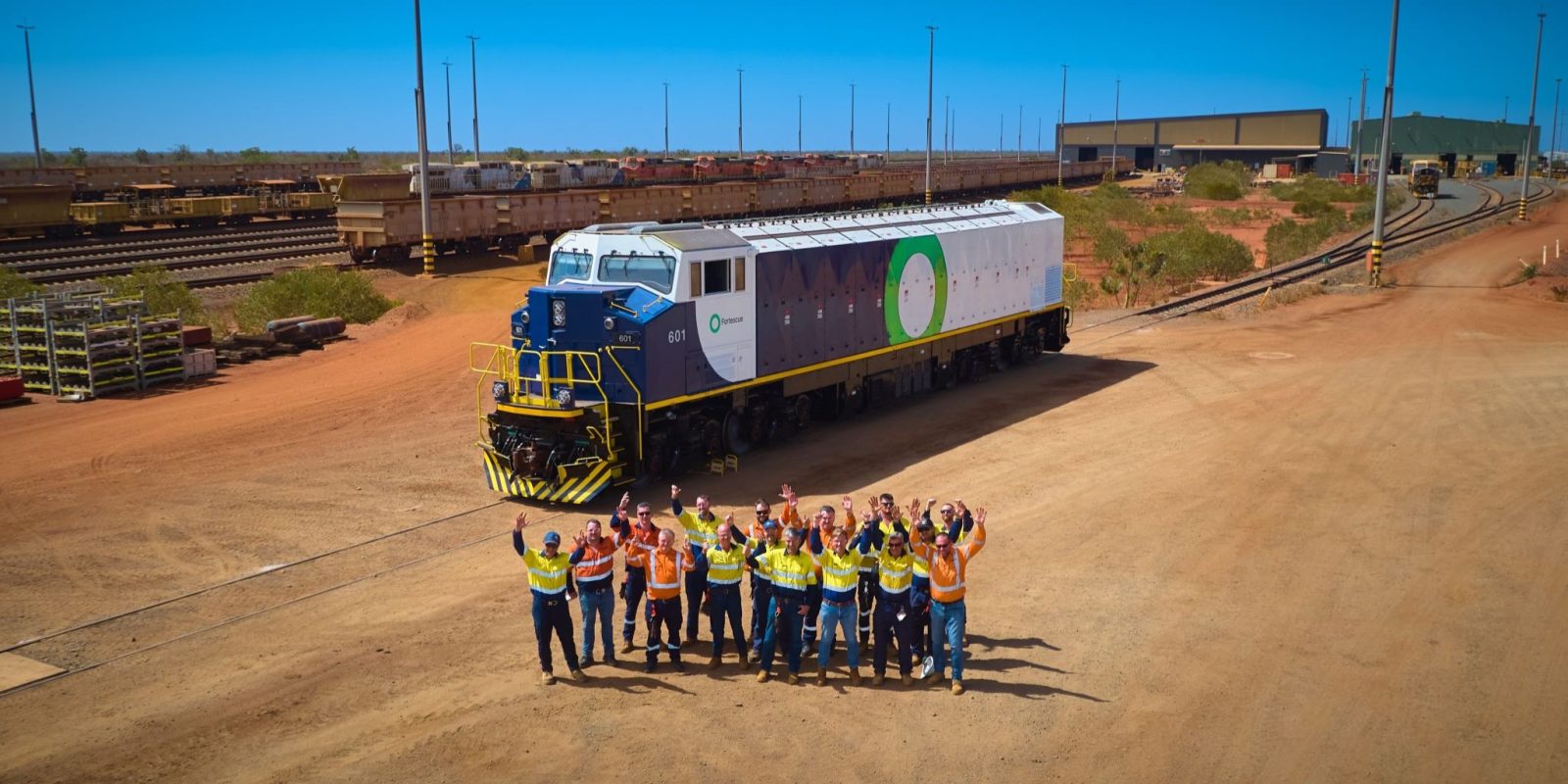
Fortescue has taken the wraps off a prototype of its proposed “Infinity Train” electric locomotive, making the 1,100 km (about 685 miles) trip from Perth to the Pilbara and marking a major milestone in the decarbonization of the company’s heavy haul operations.
UPDATE 15DEC2025: now there are two!
This week, two of Fortescue battery-electric locomotives began operating at the company’s Pilbara mines in Australia, where the so-called Infinity Trains (co-developed with Caterpillar’s Progress Rail division) began regular duty.
“It’s not every day you welcome not just one, but two of the world’s largest battery-electric locomotives into your operations,” said Fortescue Metals CEO, Dino Otranto, on LinkedIn. “[I] can’t wait to see these in motion soon!”
The two new trains are now fully operational assets, packing almost unimaginably massive 14.5 MWh battery packs that were charged once with grid power upon deployment, and which will (in theory) remain at a usable state of charge indefinitely thanks to a cleverly applied combination of gravity, regenerative braking, and human intelligence.
You can read the original article about the Infinity Train prototype completing its first 1,100 km (~685 miles) trip across the Pilbara, below, then let us know what you think of Fortescue’s latest fuel-saving efforts in the comments section at the bottom of the page.
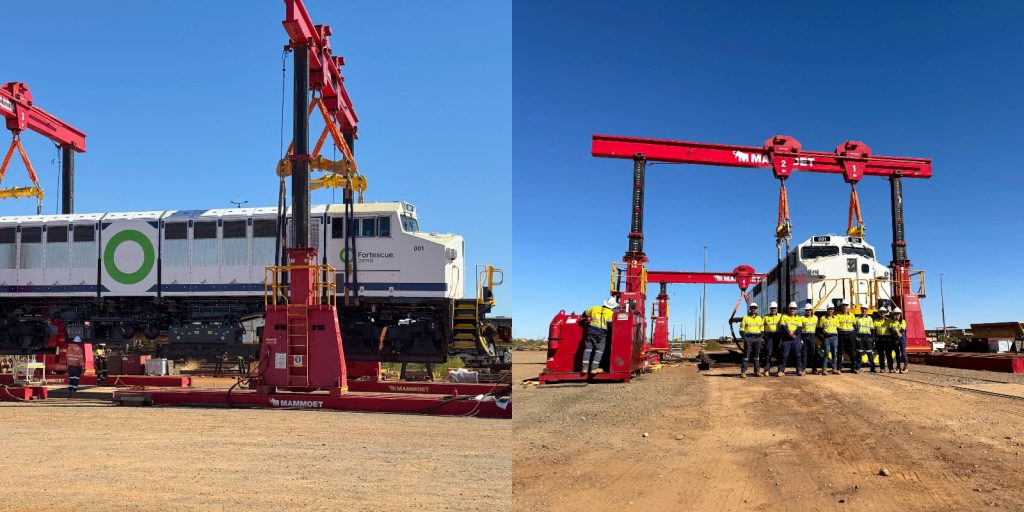
Co-developed with the locomotive experts at Downer Group, Fortescue revealed its concept for a battery electric “Infinity Train” back in March of 2022. At the time, the company promised a “world’s first” iron ore train capable of fully charging its batteries through regenerative braking. The two companies claimed the clever technology would create a self-sustaining, zero-emission rail system powered entirely by the force of gravity during the train’s loaded downhill travels.
This week, the concept went from the drawing board to the real world, completing an 1,100 km trip across Australia and proving itself to be up to the task of handling the grueling demands of Fortescue’s massive mining operations.
“We’re thrilled to see our battery electric locomotive prototype arrive in the Pilbara,” said Ellie Coates, CEO of Fortescue Zero. She added that the achievement, using zero fossil fuels, “represent(s) a major step in Fortescue’s journey to Real Zero.”
The Fortescue Infinity Train uses the energy produced by slowing the loaded train on downhill sections of the company’s 385 mile private, heavy-haul rail network to recharge its battery systems. That energy is enough to bring the unloaded train back to the mine, eliminating the need for external charging infrastructure or additional renewable energy sources, making the train almost entirely self-sufficient.
Fortescue says the deployment of the Infinity Train concept at its mines will eliminate more than 82 million liters of diesel fuel consumption (about 21 million gallons, which ChatGPT tells me amounts to about 235,200 tons of CO₂ emissions).
That change alone would eliminate about 11% of Scope 1 emissions annually for Fortescue all on its own, putting it well on its way to its stated goal of achieving “Real Zero” emissions-free operations.
Electrek’s Take

Using gravity to charge up heavily-laden mining vehicles on downhill runs is an idea that’s been put into practice for years, with great success wherever the topography allows (since 2017, at least). Combining that clever use of gravity, traction braking, and battery storage for use on a rail system like this just seems smart, and it makes me think we’re just scratching the surface of all the clever ways electrification and battery storage will eventually get put to use.
I wonder what would happen if you threw some battery electric rail cars into the mix, as well!? You guys are smart, head down to the comments and let me know (and, while you’re there, help me check ChatGPT’s math on those carbon emissions).
SOURCE | IMAGES: Fortescue, via LinkedIn.

If you’re considering going solar, it’s always a good idea to get quotes from a few installers. To make sure you find a trusted, reliable solar installer near you that offers competitive pricing, check out EnergySage, a free service that makes it easy for you to go solar. It has hundreds of pre-vetted solar installers competing for your business, ensuring you get high-quality solutions and save 20-30% compared to going it alone. Plus, it’s free to use, and you won’t get sales calls until you select an installer and share your phone number with them.
Your personalized solar quotes are easy to compare online and you’ll get access to unbiased Energy Advisors to help you every step of the way. Get started here.


FTC: We use income earning auto affiliate links. More.


Develon is kicking off the holidays with seven new or updated electric excavators, led by its seriously impressive flagship offering: the new 25‑ton DX250LCE-7 battery-electric crawler excavator developed by HD Hyundai.
When Hyundai acquired the Doosan Infracore equipment division back in 2023, it rebranded the orange machines as “Develon” in a move that signaled a new era of forward-looking thinking for the Korean company — and, last week, we got some of the first tangible results of that new thinking debuted with the launch of seven new or updated electric excavators, including the flagship DX250LCE-7 25-ton model shown here.
Develon says its new electric machines offer identical performance to their diesel counterparts, while delivering significant reductions in emissions, noise, and vibration — and that the breadth and scope of the brand’s new, zero-emission lineup underscores its continued commitment to sustainable innovation in the heavy equipment space.
“Moving forward, Hyundai Infracore is focusing on innovation and smart technology, as well as productivity and fuel efficiency. I think the timing very good for us, with exciting new technologies on the market,” Young-cheul Cho, President and CEO of Develon parent company HD Hyundai Infracore, told Construction Europe at last summer’s Intermat construction show. “Our next generation machines will use AI and have sensors that will be reliable in all environments and all weathers, which will improve safety.”
The new Develon DX250LCE-7 brings Cho’s Intermat vision to life with specs that meet or beat the diesel-powered DX255LC-7’s capabilities in a quiet, zero-emission package.
Starting with horsepower, the DX250LCE-7’s electric motors pot out about 200 hp (comparable to the diesel) while tipping the scales at a ~26 metric ton operating weight. Bucket capacity matches the diesel at 1.4 cubic meters, too — but the Develon’s standout feature is its oversized battery pack, offering up to 12 hours of continuous runtime on a single charge under typical conditions (kWh capacity hasn’t been released), with DC fast-charging options that can get it back in action at full capacity in under two hours — making it ideal for a full-day of moving dirt.
North American pricing and availability should be released in Q1.
Electrek’s Take
As demand for low-emission solutions rises throughout Europe and SE Asia, the latest electric excavators from Develon and parent company Hyundai provide an ideal balance between eco-friendly operation and real-world job site requirements – especially when fitted with articulating buckets and other versatile implements.
Regardless of who is in power in the US, the fact is that these electric machines deliver quiet, efficient performance in challenging environments, cutting both emissions and noise while maintaining productivity and improving both operators’ safety and working conditions. They’re winners all the way.
SOURCE | IMAGES: Develon; via ELM Group.
If you’re considering going solar, it’s always a good idea to get quotes from a few installers. To make sure you find a trusted, reliable solar installer near you that offers competitive pricing, check out EnergySage, a free service that makes it easy for you to go solar. It has hundreds of pre-vetted solar installers competing for your business, ensuring you get high-quality solutions and save 20-30% compared to going it alone. Plus, it’s free to use, and you won’t get sales calls until you select an installer and share your phone number with them.
Your personalized solar quotes are easy to compare online and you’ll get access to unbiased Energy Advisors to help you every step of the way. Get started here.
FTC: We use income earning auto affiliate links. More.

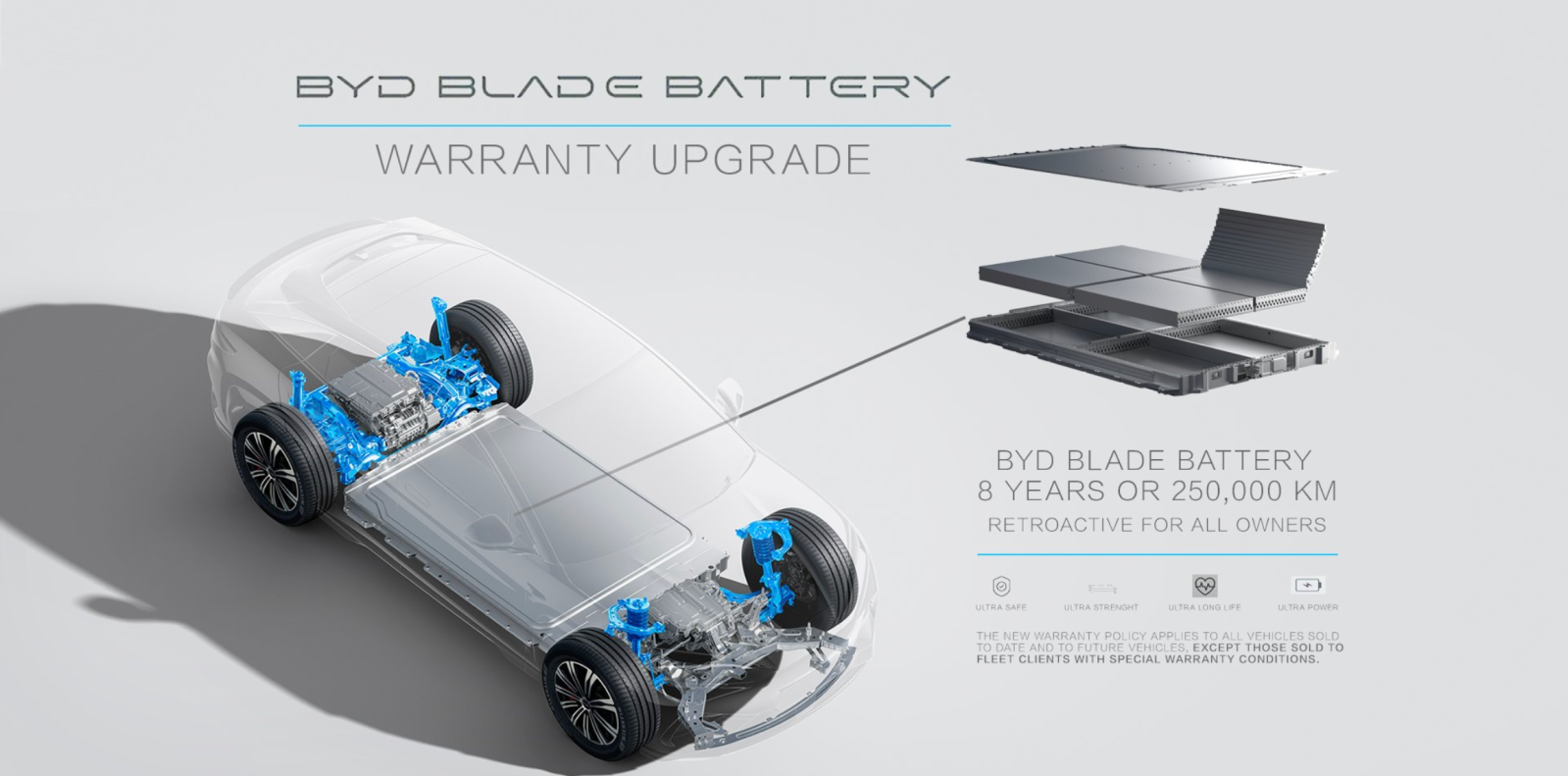
BYD is making a significant move to boost confidence in its electric vehicles in Europe. The Chinese automaker has announced a major update to its warranty terms, extending the battery coverage to 8 years or 250,000 km (approx. 155,000 miles), whichever comes first.
This new policy significantly outpaces the industry standard and puts pressure on competitors like Tesla and Volkswagen to follow suit.
The announcement was made via BYD Europe’s official channels today, confirming that the new warranty terms apply to its lineup of “New Energy Vehicles” (NEVs) in the region:
Previously, BYD offered a warranty that was more in line with the industry average, typically around 8 years or 160,000 km (100,000 miles), with some variations like 200,000 km in specific markets. This bump to 250,000 km is a massive increase in mileage coverage, effectively targeting high-mileage drivers, taxi fleets, and Uber drivers who might be wary of long-term degradation.
For context, here is how the new BYD warranty stacks up against the main competition in Europe:
- BYD (New): 8 years / 250,000 km
- Tesla (Model 3/Y RWD): 8 years / 160,000 km
- Tesla (Long Range/Perf): 8 years / 192,000 km
- Volkswagen (ID. Series): 8 years / 160,000 km
- Hyundai/Kia: 8 years / 160,000 km
As you can see, BYD is now offering nearly 60% more mileage coverage than the standard warranty provided by Volkswagen and the base Tesla models. Even compared to Tesla’s Long Range battery warranty, BYD offers an additional 58,000 km of protection.
The move is enabled by BYD’s confidence in its Blade Battery technology, which is interestingly used by competitors, such as Tesla.
The Blade Battery uses Lithium Iron Phosphate (LFP) chemistry, which is known for having a longer cycle life than the Nickel Cobalt Manganese (NCM) cells traditionally used in long-range EVs.
BYD has often claimed that the Blade Battery can sustain over 3,000 charge cycles while maintaining reasonable capacity. Even when accounting for linear degradation to 70% capacity over that lifespan, 3,000 cycles on a vehicle with a 400 km starting range would still result in roughly 1 million kilometers of total service life. Consequently, a 250,000 km warranty remains quite conservative for the chemistry, even if it is aggressive for the market.
This comes as BYD continues to expand aggressively in Europe, having recently launched the Sealion 7 and updated versions of the Seal and Atto 3.
Electrek’s Take
This is exactly the kind of competition we like to see.
It’s great to see BYD using the inherent durability of LFP cells to offer a tangible benefit to consumers rather than just cutting costs.
I’m looking at Tesla here. Tesla has been a pioneer in battery longevity, and we know their packs can last a very long time, especially the LFP packs in the standard range Model 3 and Y.
In fact, Tesla even used BYD’s blade batteries in some of the vehicles it sells in Europe.
It would be great to see Tesla follow BYD here.
FTC: We use income earning auto affiliate links. More.
-
 Sports2 years ago
Story injured on diving stop, exits Red Sox game
-
 Sports3 years ago
‘Storybook stuff’: Inside the night Bryce Harper sent the Phillies to the World Series
-
 Sports2 years ago
Game 1 of WS least-watched in recorded history
-
 Sports3 years ago
Button battles heat exhaustion in NASCAR debut
-
 Sports3 years ago
MLB Rank 2023: Ranking baseball’s top 100 players
-
Sports4 years ago
Team Europe easily wins 4th straight Laver Cup
-
 Environment3 years ago
Japan and South Korea have a lot at stake in a free and open South China Sea
-
 Environment1 year ago
Here are the best electric bikes you can buy at every price level in October 2024