
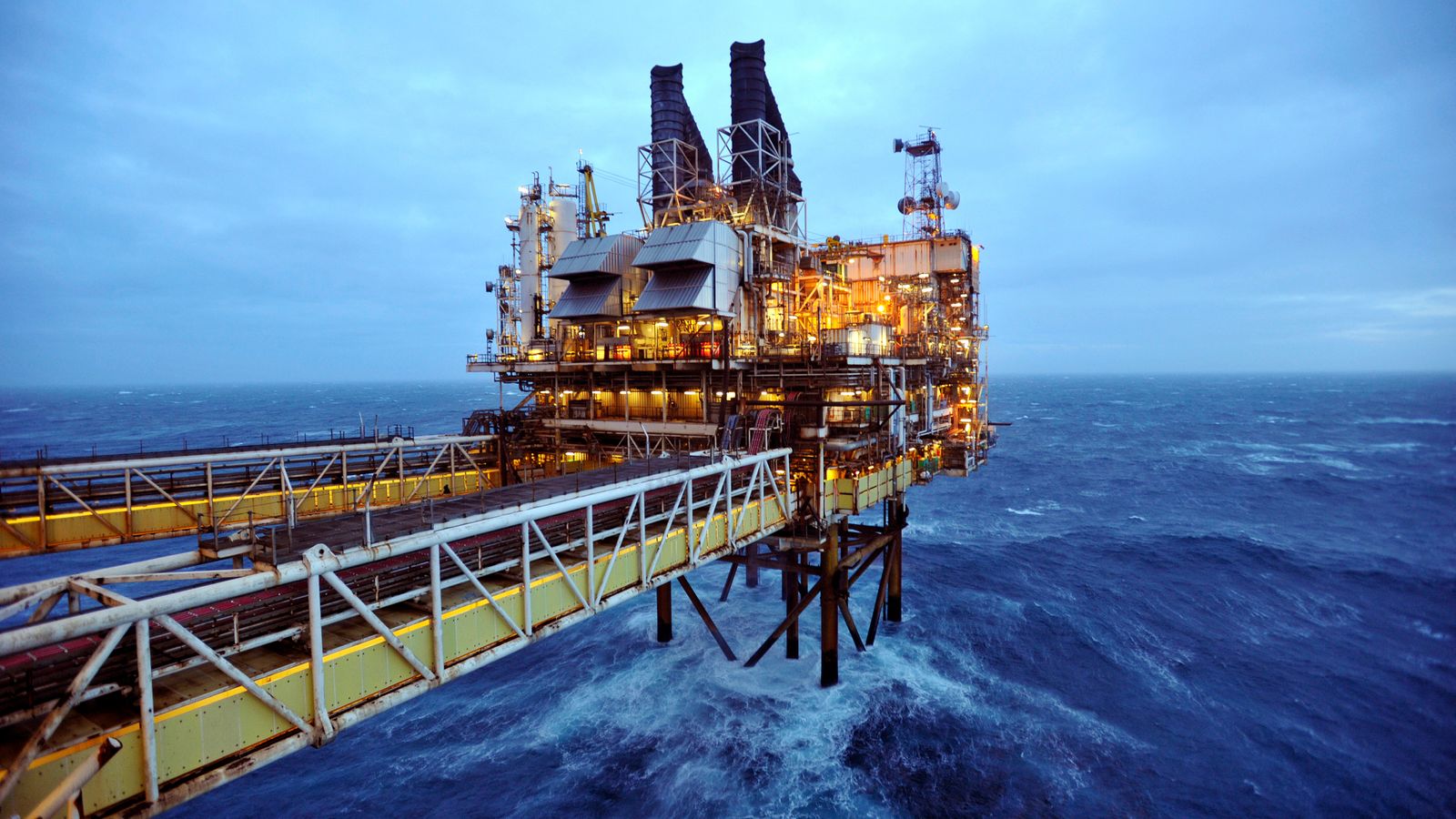
Plan to expand North Sea oil drilling announced – as critics slam Rishi Sunak’s ‘culture war on climate’


The prime minister has announced an expansion of oil and gas drilling in the North Sea amid ongoing rows in his party over the future of its climate commitments.
Number 10 said hundreds of new oil and gas licences will be granted off the coast of Scotland to “boost British energy independence” and “reduce reliance on hostile states”.
The move puts down a marker between the government and Labour, which has proposed a block on all domestic new oil and gas drilling as part of its strategy to achieve zero-carbon electricity by 2030.
Shadow climate change secretary Ed Miliband accused Rishi Sunak of lurching towards “a culture war on climate” to make up for “13 years of failed Tory energy policy”.
Politics live: PM dodges electioneering question in awkward interview
But Mr Sunak and his ministers have stressed the need to use North Sea fossil fuel resources, especially since the Russian invasion of Ukraine.
The North Sea Transition Authority (NSTA), which is responsible for regulating the oil, gas and carbon storage industries, is currently running the 33rd offshore oil and gas licensing round, and they expect to award more than 100 new licenses in the autumn.
But such moves have prompted alarm from climate campaigners, with the government already facing opposition to any development of Rosebank, 80 miles northwest of Shetland.
The head of Oxfam Scotland, Jamie Livingstone, called the new licensing rounds a “short-sighted and selfish decision by the UK government” which “flies in the face of climate science and common sense”.
He added: “The UN has made clear that we must end our global addiction to fossil fuels, so this decision sends a wrecking ball through the UK’s climate commitments.”
Government needs to pursue net zero targets – Lord Deben
The prime minister has also confirmed locations for two new carbon capture usage and storage clusters ahead of a visit to Aberdeenshire today – where he is expected to announce multi-million pound funding for the schemes.
Carbon capture sees polluting fumes collected to either be used elsewhere or stored underground instead of going into the air, and is seen as an increasingly important tool in achieving net zero.
The Acorn carbon capture project in North East Scotland – a joint venture between Shell and other firms – and the Viking project in the Humber will be “vital to driving forward and investing in clean technologies that we need to realise our net zero target”, Downing Street said.
But while ministers predict the move could support up to 50,000 jobs, the target for the two new sites to be up and running isn’t until 2030.
‘We’re choosing to power up Britain’
Ahead of his visit to Scotland, Mr Sunak said: “We have all witnessed how Putin has manipulated and weaponised energy – disrupting supply and stalling growth in countries around the world.
“Now more than ever, it’s vital that we bolster our energy security and capitalise on that independence to deliver more affordable, clean energy to British homes and businesses.
“Even when we’ve reached net zero in 2050, a quarter of our energy needs will come from oil and gas.
“But there are those who would rather that it come from hostile states than from the supplies we have here at home.
“We’re choosing to power up Britain from Britain and invest in crucial industries such as carbon capture and storage, rather than depend on more carbon-intensive gas imports from overseas – which will support thousands of skilled jobs, unlock further opportunities for green technologies and grow the economy.”
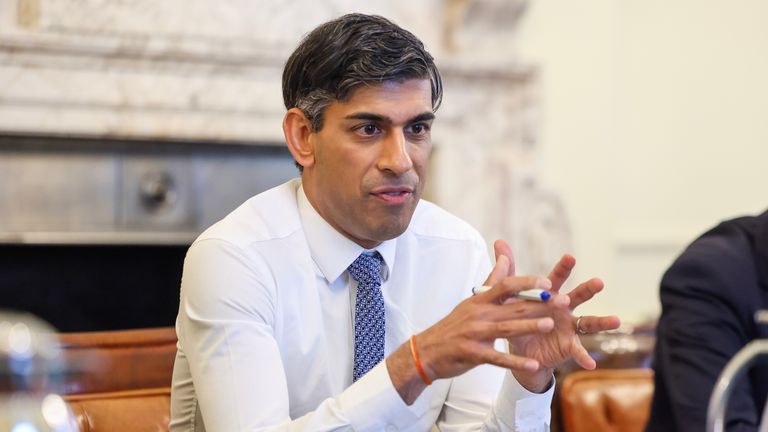
Mr Sunak will meet energy industry leaders during Monday’s trip. Pic: No 10
SNP Westminster leader Stephen Flynn said it was right to be “conscious of energy security” and keeping the large oil and gas workforce in Scotland employed, calling it a “silly position” to end all drilling.
But speaking to Sky News, he did not give his full support to the new licenses, saying Tory plans to “take every single drop” from the North Sea was “a little bit morally bankrupt”.
He added: “We need to be conscious of the fact that every single drop of oil or indeed a molecule of gas that we take out of the North Sea will have a concurrent impact on climate change.”
Mr Flynn called for “robust climate compatibility checkpoints” to be put in place for any new licenses.
Meanwhile, Labour’s Mr Miliband questioned whether the prime minister was the right person to make the decisions over future energy security.
“Every family and business is paying the price, in higher energy bills,” he said. “It is absurd that having left this country so exposed, the Conservative Party is asking the public to believe they can fix it.
“And it’s telling that while Labour focuses on lower bills and good jobs, Rishi Sunak lurches desperately towards a culture war on climate to appease his split party, losing track of what he believes from day to day, depending on which faction he’s met with.
“It’s no way to govern and it’s costing working people.”
Click to subscribe to the Sky News Daily wherever you get your podcasts
A new green dividing line in politics?
The move comes as both main parties continue to argue over their commitment to key net zero policies and environmental promises.
The Conservatives’ narrow victory in the Uxbridge and South Ruislip by-election opened a can of worms within Labour over London Mayor Sadiq Khan’s plan to expand the Ultra Low Emission Zone (ULEZ) to outer boroughs – something Sir Keir Starmer blamed for the loss.
The Labour leader and Mr Khan are continuing to hold discussions over the extension, with Sir Keir calling on his colleague to “reflect” on the impact on voters.
But Mr Khan has stood by the decision on the basis it will improve air quality for five million people in London.
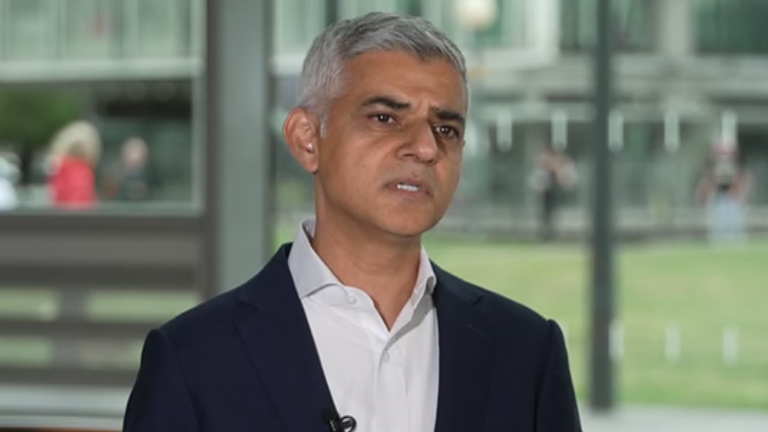
Sadiq Khan: ULEZ decision ‘good news for London’
Meanwhile, MPs on the right of the Conservative Party are appealing to the PM to rethink the government’s net zero commitments in light of the win, with calls for delays to a number of targets – including putting back the ban on the sale of petrol and diesel cars from 2030 to 2035.
Former Tory leader Sir Iain Duncan Smith – who was among 43 signatories to a letter urging Mr Sunak to look again at the plan – told Sky News the date was “plucked out of nowhere”, adding: “If you want to get them to clean emissions, you’ve got to do it in a way that still keeps our industry going in the UK.”
The prime minister insisted on Sunday the 2030 deadline would remain, but did announce plans for a review of low traffic neighbourhoods (LTNs), saying he was on the side of drivers.
Downing Street has confirmed ministers are scrutinising existing pledges “in light of some of the cost of living challenges”, as the prime minister promised a “proportionate and pragmatic” approach to net zero.
Read more:
Is carbon capture a fossil fuel industry fig leaf or vital for net zero?
What are the Tories’ green policies – and what could be scrapped?
The prime minister is also set to meet industry leaders and workers while in Scotland.
The government pledged that, along with energy authorities, it would “go further than before in announcing continued decisive action to boost the capability of the North Sea industry to transition towards net zero, strengthen the foundations of the UK’s future energy mix and create the next generation of highly skilled green jobs”.
Grant Shapps, the energy security secretary, is also expected to meet figures from the oil and gas, renewable and nuclear industries over the coming week as the Conservatives focus their campaign on the topic.
Mr Shapps said: “In the wake of Putin’s barbaric invasion of Ukraine, our energy security is more important than ever.
“The North Sea is at the heart of our plan to power up Britain from Britain so that tyrants like Putin can never again use energy as a weapon to blackmail us.
“Today’s commitment to power ahead with new oil and gas licences will drive forward our energy independence and our economy for generations.”
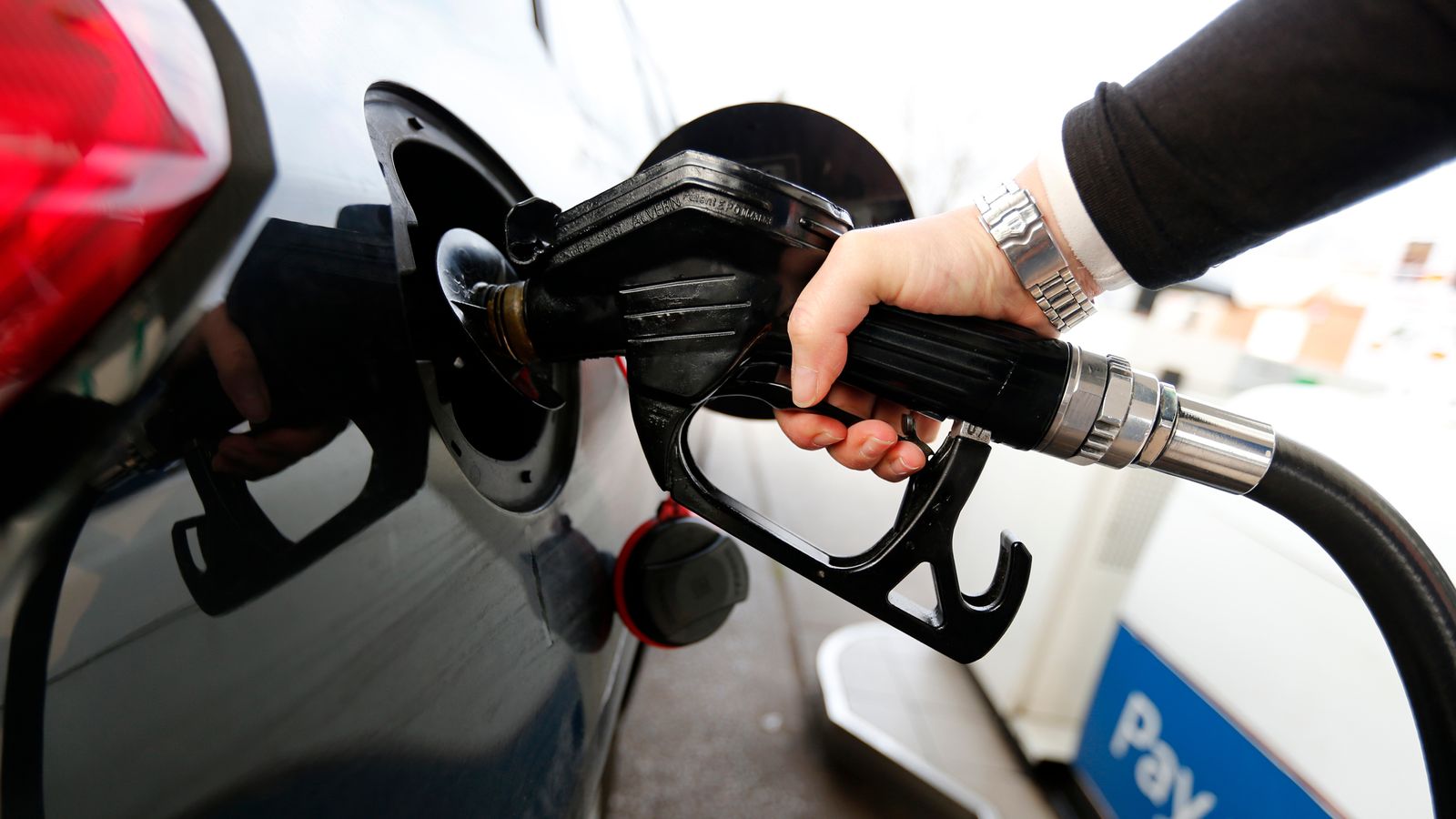
It’s a debate that has raged since the end of the COVID pandemic but, despite regulatory scrutiny, it’s fair to say there’s been no clear answer to accusations that UK drivers pay over the odds for fuel.
What was once a promotional loss leader for supermarkets desperate for drivers to fill their car boots with groceries, unleaded and diesel costs have been unusually high for years.
Fuel retailers say there is a simple explanation: rising costs being passed on to motorists.
But critics argue there is a reason why the Competition and Markets Authority (CMA) has consistently found that we’re paying more than we should be – and that the disparity between wholesale costs and pump prices has got worse in recent months.
So: who’s right?
What the oil data tells us
Oil prices are well down on levels seen in January (between $75 and $82 a barrel) but fuel prices are clearly not.
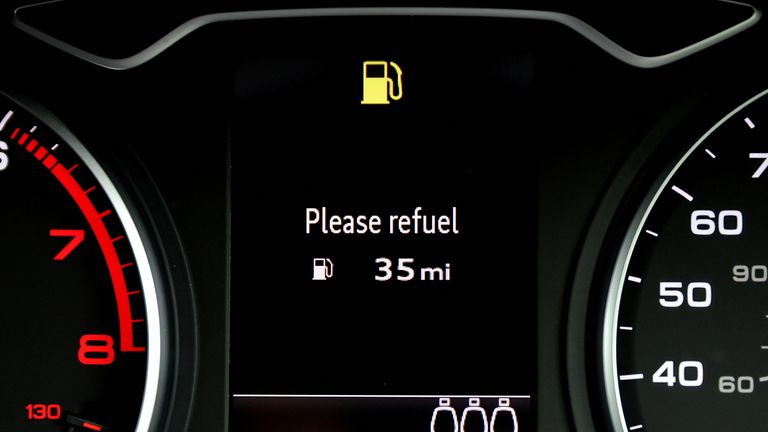
In recent weeks, Brent crude has traded in the range of $62 to $64 per barrel and yet drivers are currently, on average, paying £1.37 a litre for petrol and £1.46 for diesel.
The average pumps costs in January stood at £1.39 and £1.45 – despite the significantly higher oil costs seen at the time.
Prices can be affected by all sorts of factors including the value of the pound versus the oil-priced dollar, but that disparity is notable.
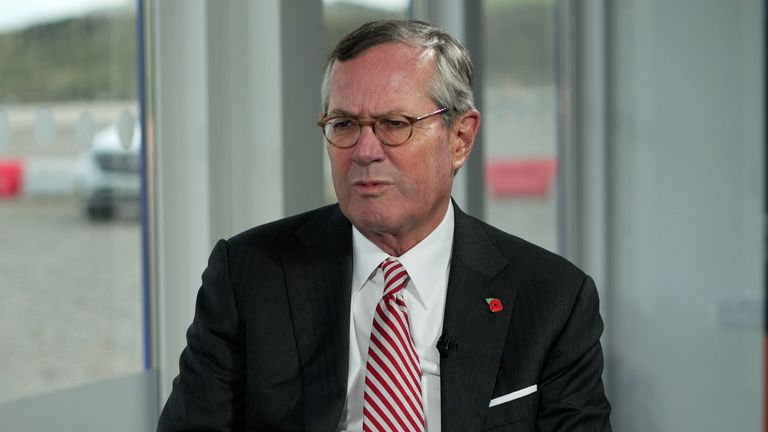
Trump’s ambassador tells UK to drill for oil
There is another, emerging, factor to consider
It might surprise you to learn that the UK now has only four operational refineries to produce petrol and diesel after two major sites shut this year.
The decline has sparked an industry warning of a crisis due to high UK carbon charges, imposed by the government, that have made domestic fuel producers uncompetitive versus imports.
The loss of the refinery at Grangemouth this spring has been particularly acute as it left Scotland without domestic production and at the mercy of a more complicated and expensive delivery structure.
Fuel retailers say the impact has been minimal so far, mainly due to remaining UK refineries raising production.
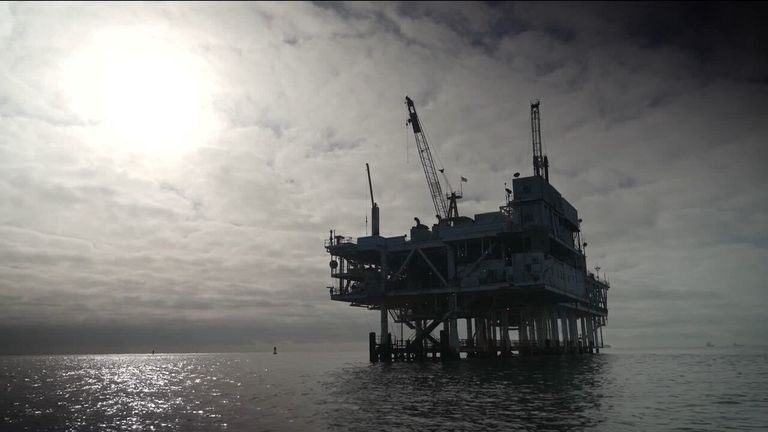
‘Drill baby drill’
The case for the prosecution
Quite simply, fuel price campaigners and motoring groups have long accused the industry of raising its profit margins.
Supermarkets focused price investment elsewhere as the cost of living crisis took hold but the days of Asda (before it was bought by the fuel-focused Issa brothers and private equity) leading a sector-wide fuel price war are long gone.
Reports by both the AA and RAC this week highlight price spikes despite a 5p slump in wholesale costs a fortnight ago.
The AA said: “At the height of the spike, it matched what had been seen in mid June. Then, the petrol pump average reached a maximum of 135.8p by late July.
It said that government data had since shown pump prices at levels not seen since March.
The body questioned the reasons behind that disparity and also pointed towards, what it called, a postcode lottery for pump costs with gaps of up to 9p a litre between towns only 10 miles apart.
The RAC declared on Thursday that pump prices rose at their fastest pace in 18 months during November, with diesel at a 15-month high.
The critics have also included regulators as monitoring of fuel retailers by the CMA since its original market study has consistently found that drivers have been excessively charged.

‘It’s either keep warm or eat’
What’s the fuel industry’s position?
It pleads “not guilty”.
The bodies representing retailers make the point that the CMA and its wider critics fail to take into account huge rises in costs they have faced over the past four years – costs which are being/have been passed on across the economy.
These include those for energy, business rates, minimum wage, employer national insurance costs and record sums arising from forecourt crime.
The Petrol Retailers’ Association (PRA), which represents the majority of forecourts, told Sky News that average margins across the sector are the same today as they were a year ago at between 3% to 4% after costs.
It suggests no fuel for the fire surrounding those profiteering allegations but that rising costs have been passed on in full.
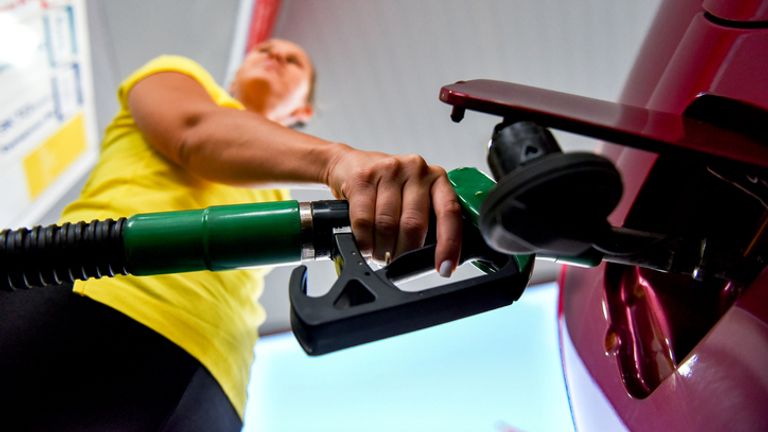
Pic: iStock
What has the regulator done?
The CMA’s road fuel market study committed to monitor the market and recommended a compulsory fuel finder scheme to help bolster competition. That was two-and-a-half years ago.
Limited data has been widely available via motoring apps ahead of the start of the official scheme, expected in spring next year, which will bring real-time pricing into a driver’s view for the first time.
The CMA hopes that by forcing each retailer to divulge their prices in real time, customers will vote with their feet.
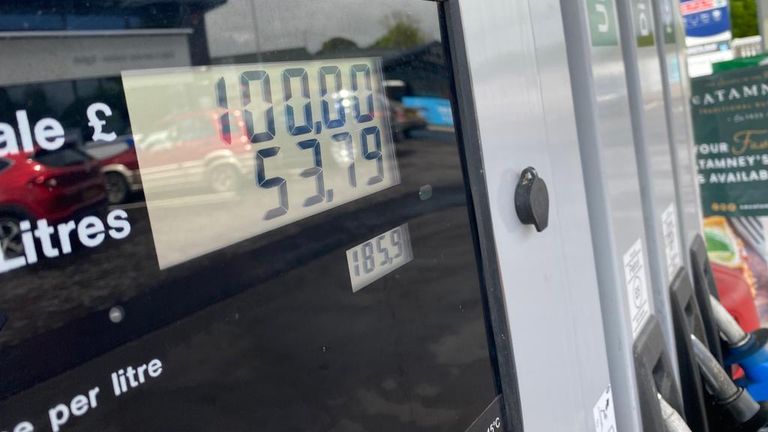
In the regulator’s defence
The CMA could argue that government has dragged its heels in implementing its fuel finder recommendation.
While the Conservatives accepted it, Labour is now pushing it through parliament.
The regulator can only act within the powers it has been given. It would say that it can’t threaten or hand out fines until its recommendations are in play and they have been clearly flouted.

What next for the UK economy?
So who’s right?
This is a debate all about transparency but we clearly don’t have a full view on the complicated, and shifting, supply chain which can influence pump prices.
The CMA hopes that postcode lotteries for pump costs will ease once more drivers are aware of the ability to compare and shop around.
But the main reason why this issue remains unresolved is that the CMA’s findings have been incomplete to date.
Its determinations that pump costs have been excessive have all been made without taking retailers’ operating costs into full account.
Pic: Reuters
Why we are closer to an answer
The CMA’s next market update is expected within weeks and will, for the first time, take more extensive cost data into account.
A spokesperson told Sky News: “We recommended the Fuel Finder scheme to help drivers avoid paying more than they should at the pump, and the government intends to launch it by spring 2026.
“The scheme will give drivers real-time price information, helping them find the cheapest fuel and putting pressure on retailers to compete.
“We looked closely at operating costs during our review of the market, and they formed a key part of our final report in 2023.
“As we confirmed in June, we’ve been examining claims that these costs have risen and will set out our assessment in our annual report later this month.”
The hope must be that both sides involved can accept the report’s findings for the first time, to bring this bitter debate to an end once and for all.”
The UK has come a “step closer” to having direct, high-speed rail connections to Germany, the Department for Transport has said.
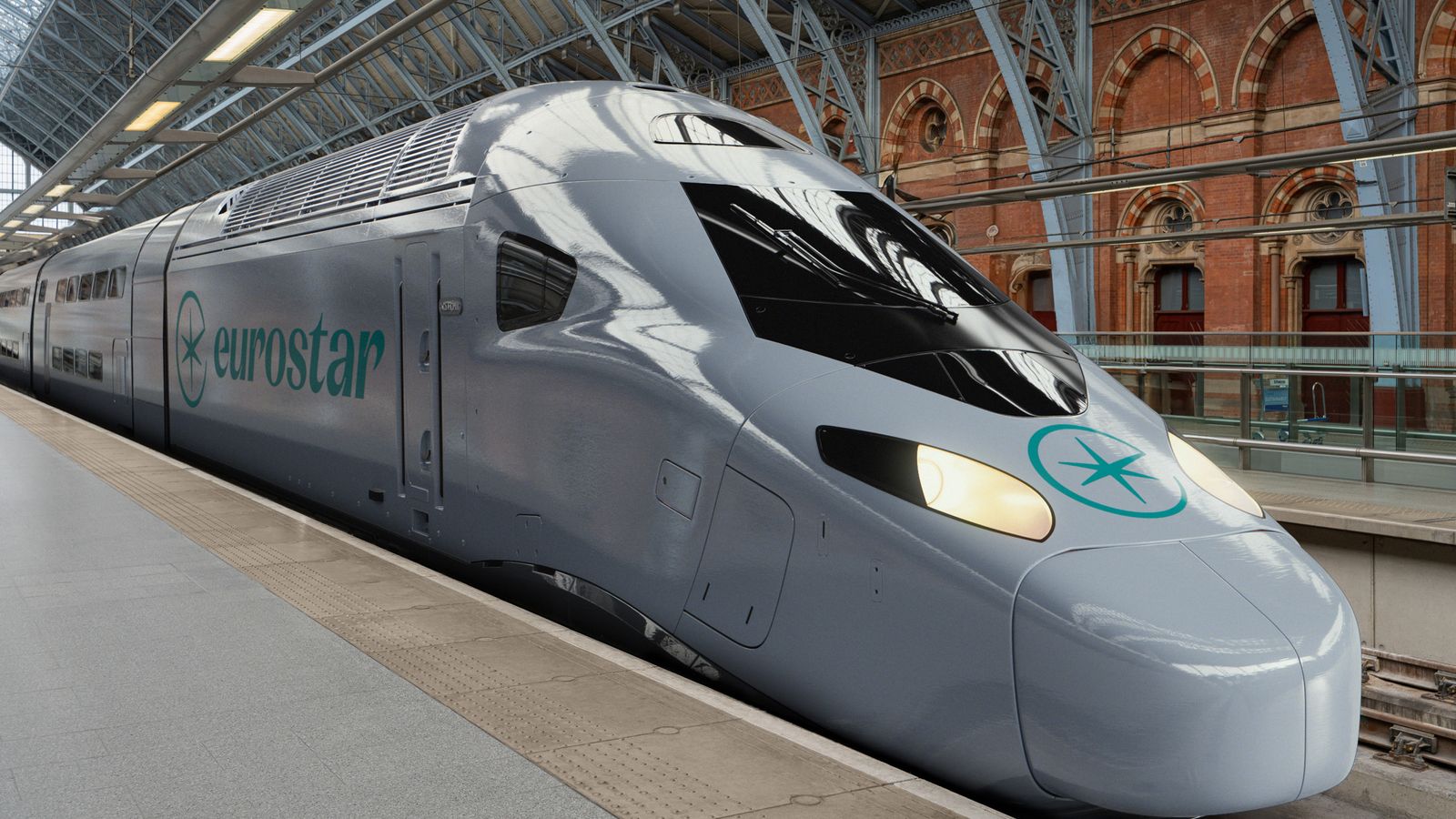
A partnership between international train operator Eurostar and German national rail company Deutsche Bahn (DB) has “set the foundation” for a fast rail connection between Britain and Europe’s largest economy, the businesses announced on Thursday.
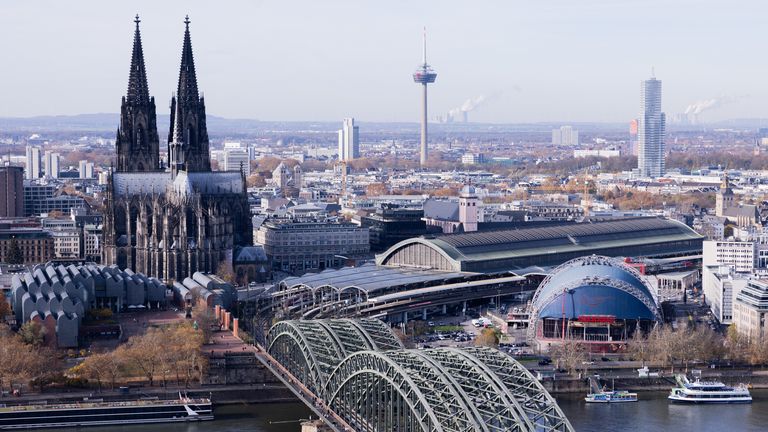
It means the companies are exploring options to offer direct services between London and Cologne and Frankfurt.
Money blog: Major airport increasing drop-off charge
Such direct services would mean reaching Cologne in four hours, and Frankfurt in less than five from the capital city.
At present, rail passengers have to change trains in Brussels to reach those cities. It takes at least five-and-a-half hours to reach Frankfurt, and four-and-a-quarter hours to arrive in Cologne.
Cologne Central Station could soon be served by trains from the UK. Pic: AP
The proposed services would use existing lines and infrastructure. Passengers would board a double-decker Eurostar in London, and be spared a change of trains on the continent.
The ambition to create such links had already been announced, as had a plan to allow direct rail travel from London to Geneva, but the partnership between DB and Eurostar had not.
Will it definitely happen?
Details and technicalities are yet to be worked out, with the German train company highlighting that any services are contingent upon “the necessary technical, operational, and legal prerequisites being met”.
“Implementation by individual railway companies is considered extremely difficult,” DB said.
“Joint partnerships are therefore crucial.”
What about Berlin?
Nothing was announced for a direct service to Berlin on Thursday, despite Transport Secretary Heidi Alexander singling out the benefits and prospect of journeys from London to the German capital in July.
“The Brandenburg Gate, the Berlin Wall and Checkpoint Charlie – in just a matter of years, rail passengers in the UK could be able to visit these iconic sights direct from the comfort of a train, thanks to a direct connection linking London and Berlin,” she said at the time.
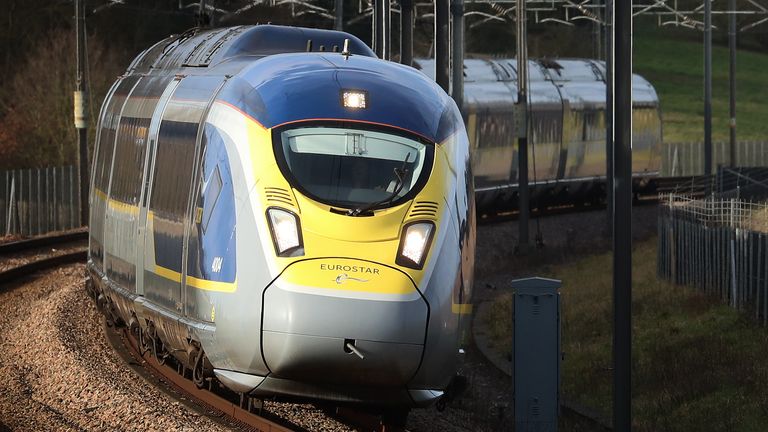
A high-speed Eurostar train heading towards France. File pic: PA
Shorter journeys, like those to Frankfurt and Cologne, are seen as more commercially viable than the current 10-hour train journey time to Berlin.
Market studies conducted by Eurostar found travellers are comfortable with international rail journeys of up to six hours.
“Our research indicates that many would choose rail over air for trips within this timeframe,” Eurostar told Sky News. “This, combined with strong business and leisure demand on this route, is why we have prioritised London to Frankfurt.”
Read more from Sky News:
Petrofac administrators eye North Sea sale by Christmas
Submarine hunting pact signed by UK amid Russian threat
The Department for Transport said the focus on the two German cities was a commercial decision by Eurostar and DB, and the UK-Germany rail taskforce, established over the summer, could pave the way for further route announcements.
-
 Sports2 years ago
Story injured on diving stop, exits Red Sox game
-
 Sports3 years ago
‘Storybook stuff’: Inside the night Bryce Harper sent the Phillies to the World Series
-
 Sports2 years ago
Game 1 of WS least-watched in recorded history
-
 Sports3 years ago
Button battles heat exhaustion in NASCAR debut
-
 Sports3 years ago
MLB Rank 2023: Ranking baseball’s top 100 players
-
Sports4 years ago
Team Europe easily wins 4th straight Laver Cup
-
 Environment3 years ago
Japan and South Korea have a lot at stake in a free and open South China Sea
-
 Environment1 year ago
Here are the best electric bikes you can buy at every price level in October 2024