Connect with us

Published

on

Reviewed by Lily Ramsey, LLM Aug 4 2023

Indiana University researcher Daniella Chusyd is studying human aging in an unlikely way: through elephants.

Humans and elephants have similar lifespans, with elephants capable of living into their early 70s. Chusyd wants to determine how different elephant species live so long without the benefit of medicine and science. Her research also aims to better understand the impact human activities can have on elephant health and aging, which can inform strategies and policies that allow humans and elephants to coexist.

Elephants and humans are similar in some key characteristics, such as lifespan and sociality, but they took very different evolutionary paths. If we can identify some of the unique strategies that have evolved in elephants, we can better understand healthy human aging, too."

Daniella Chusyd, Assistant Professor, School of Public Health-Bloomington, Indiana University

Elephants have approximately 20 copies of the TP53 gene -; also known as the "guardian of the genome" -; when most other mammals, including humans, have just one. This makes them more sensitive to detecting DNA damage and less likely to grow tumors or develop cancer. The gene is also involved in general aging processes, so understanding its role is helpful to Chusyd.

Over the past six years, including during her time as a postdoctoral researcher at IU, Chusyd's research has taken her to Africa -; specifically Zambia, Republic of Congo and Uganda. She studies the factors that have impacted elephants' health and aging, such as early-life trauma, pollutants and the role of human activities. Her work focuses on both species of African elephants, savanna and forest.

Illegal poaching and human-elephant conflict have long plagued elephant populations, but the lasting implications of experiencing such trauma is not known. In Zambia, Chusyd is comparing orphaned elephants to those living in intact families to determine the long-term health and behavioral effects of experiencing early-life trauma. This research is funded by the National Institute on Aging and in collaboration with Game Rangers International.

"We know children who experience early-life adversity are, on average, at increased risk for later-life diseases and a shorter lifespan," Chusyd said. "Elephant calves are similar to children in that they rely on their family for stability, support, reassurance, learning and all the things needed to be a successful elephant. They are highly social, display a range of emotions and have exceptional long-term memory, so we want to know whether there are similar long-term implications in elephants who experience traumatic events early in life as well."

Chusyd and her team investigate this through a natural experiment, where some elephants randomly became orphans while others did not. Orphaned elephants do not have the intergenerational transfer of trauma that is often observed in other mammal populations, specifically humans. This helps the researchers untangle the impacts of traumatic events on health outcomes, pace of aging and behavior.

In addition to studying the orphaned elephants, many of which are still under human care due to age, GPS collars have also been placed on 10 non-orphaned elephants. An app on Chusyd's phone allows her to monitor their location in real time. Her team films each elephant's actions to gather behavioral data; collects dung and urine samples for hormone analyses, parasite load and microbiome; and collects small skin samples to test for DNA methylation and gene expression. Combined, the data gives Chusyd a holistic view of each elephant's health. Related StoriesUVA researchers discover key driver of chronic inflammation that accelerates agingDealcoholized muscadine wine may improve skin elasticityResearchers develop a chemical approach to reverse aging

Chusyd also works out of the Makerere University Biological Field Station in Uganda's Kibale National Park. The Ugandan Albertine Rift is the largest known hybrid zone, where African forest and savanna elephants crossbreed. Hybridization is a widespread phenomenon and can have important evolutionary and ecological consequences. Chusyd and her team are investigating how hybridization contributes to elephant physiology, and they hope to ultimately understand whether a more diverse genetic makeup increases physiological or behavioral flexibility in the elephants' rapidly changing environment.

Alec Iruri-Tucker, a graduate student in the IU School of Public Health-Bloomington, is in Uganda through August collecting elephant dung to assess the prevalence of microplastics and the presence of antibiotic-resistant pathogens.

"Seeing elephants, either in the forest or in the savanna, is something that never loses its charm," Iruri-Tucker said. "While the process may sound less charming, a lot can be learned from collecting their dung.

"Through analysis, we can gain insight into their health, as well as the ways that humans are impacting their environment, such as the presence of microplastics or pollutants that elephants may have ingested. This is important for understanding the relationship that humans have with the environment and the health outcomes for both humans and animals."

Through the years, human populations and activities have severely reduced forest elephant distribution and abundance. Central Africa is the major remaining habitat for forest elephants, but on the periphery of protected areas, human populations are rapidly expanding and relying on agriculture. This has led to increased occurrences of elephants eating farmers' crops, known as crop raiding. In Congo, Chusyd is collaborating with the Wildlife Conservation Society to understand the conditions that drive elephant crop raiding and get the buy-in of people living with and among elephants.

Here, her team can visually identify over 500 elephants and track their movements in various ways -; including by footprint, mucus drops and transference of mud from their body to a tree -;to find and collect their dung, which can be used for further testing.

Recently, Chusyd began studying various pollutants that exist in Zambia to gain insight on how pollutants move within the environment through the elephants. She hopes to better understand whether certain elephants -; because of species, early-life adversity, age or sex -; are more capable of tolerating and handling environmental pollutants than others.

Chusyd hopes her research can also help advise conservation policy in Africa. The GPS collars, for example, show where "elephant highways" exist, which can inform decisions about area infrastructure improvements. Her research on pollutants can demonstrate what humans may also be ingesting, affecting their health.

"If we can gain a better understanding of how elephants are using their space and what they are getting from it, we can look at smarter ways to build or use the environment such that everyone can coexist in the best way possible," Chusyd said. "My intention is that this research can help inform policies and decisions that impact all individuals -; people, elephants and other species -; who use the land."

Chusyd is looking at ways to expand her research in Africa, and she plans to return later this year to train field and research assistants in new methodologies. But what she looks most forward to is returning to the elephants and watching them thrive in their natural habitat.

"There aren't many things that can top watching 100 or 200 elephants all in one place at the same time interacting with one another -; from little babies playing and chasing off birds to the adults," Chusyd said. "It is such an incredible experience to be a fly on the wall in their world, and I'm unbelievably grateful for the opportunities my research has allowed." Source:

Indiana University

Continue Reading

US

Images of Trump among documents removed from latest Epstein files release

Published

on

By

Images of Trump among documents removed from latest Epstein files release

Pictures of Donald Trump are included among at least 16 documents that have disappeared from the Epstein files released by the Department of Justice (DOJ).

The Democrats from the House Oversight Committee drew attention to the apparent removal of an image showing two printed pictures of Mr Trump in a desk draw.

One picture has Mr Trump standing surrounded by women in bathing suits, while the second appears to be an already known picture – partly obscured – of him, his wife Melania, Ghislaine Maxwell and Jeffrey Epstein.

After the Democrats flagged the missing image on Saturday, Sky News went back to the files online and confirmed that it did appear to be missing, despite the fact they downloaded it when the files were initially released on Friday.

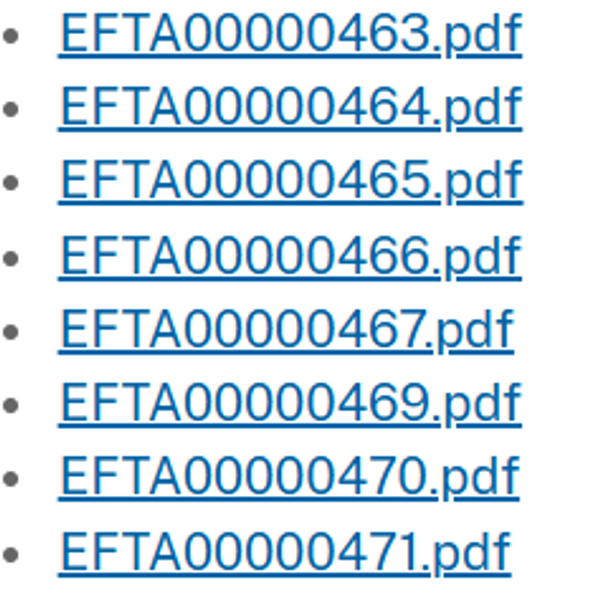
List of documents online now shows a gap where the file ending '468' was on Friday
Image:
List of documents online now shows a gap where the file ending ‘468’ was on Friday
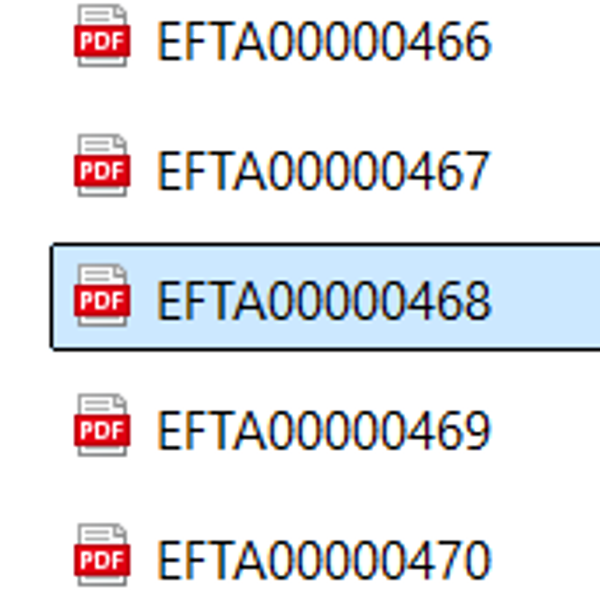
The file ending '468' seen in Sky News's downloads from Friday
Image:
The file ending ‘468’ seen in Sky News’s downloads from Friday

The other photos removed from the trove of documents were almost all nude paintings of women in Epstein’s home.

Mr Trump has not commented on the release of the files and has not been accused of wrongdoing in connection with Epstein’s case.

Sky News has contacted the DOJ for comment.

Questions over heavy redactions

Pic: New York State Division of Criminal Justice Services/Handout via Reuters
Image:
Pic: New York State Division of Criminal Justice Services/Handout via Reuters

Thousands of documents relating to the dead paedophile financier were made public by the DOJ on Friday – hours before a legal deadline following the passing of the Epstein Files Transparency Act.

Many of the pages were either partially or fully redacted, which the DOJ says is to protect the more than 1,200 victims and their families identified in them.

Some of Epstein’s victims, legal experts and members of the public have questioned whether this is the sole reason for the redactions, while the Oversight Democrats have claimed: “This is a White House cover-up.”

Ashley Rubright, who was abused for several years after meeting Epstein in Palm Beach when she was 15, told Sky News: “Seeing […] completely redacted pages, there’s no way that that’s just to protect the victims’ identities, and there better be a good reason. I just don’t know if we’ll ever know what that is.”


Epstein ‘was a monster’: Survivors speak to Sky News

Gloria Allred, a lawyer who has represented some of Epstein’s victims, says she has been told that despite the heavy redactions, some compromising pictures of survivors and their names were left in the files released on Friday.

“We have had to notify the Department of Justice about names that should have been redacted that weren’t redacted,” she told Sky News.

“So this is further trauma to survivors, and apparently also some of the images of some of the survivors appear not to have been redacted, and they are nude or not completely dressed.

“This is a major concern because the law clearly indicates, and the judges have indicated, that the names and any identifying information of the survivors must be redacted.”

Read more:
Epstein victims react to partial release of files
Links between Epstein and the UK revealed in new files

In a letter to the judges overseeing the Epstein and Ghislaine Maxwell cases, US attorney for the Southern District of New York Jay Clayton acknowledged that a review “of this size and scope is vulnerable to machine error [or] instances of human error”.

He also said the DOJ had opted to redact the faces of women in photographs with Epstein “even where not all the women are known to be victims,” as it was not viewed as practical for the DOJ to identify every person in all the photos.

The methodology has led to some confusion and misled speculation online.
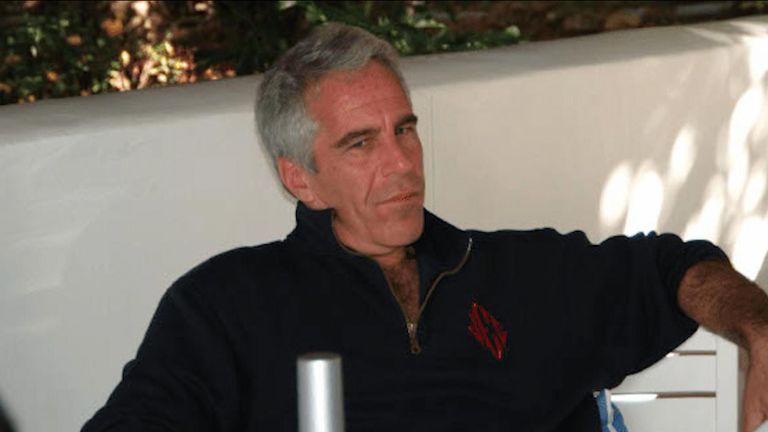
Epstein died in prison in 2019 while awaiting trial on federal sex trafficking charges
Image:
Epstein died in prison in 2019 while awaiting trial on federal sex trafficking charges

Many celebrities and public figures appear with Epstein in the photos published by the DOJ, often included without context.

There is no suggestion that these pictures imply anyone has done anything wrong, and many of those featured in them have denied any wrongdoing in relation to Epstein.

Through its release, the Trump administration has claimed to be the most transparent in history, despite the fact Congress forced their hand by voting to make the files public by 19 December.

But some have been held back, with Todd Blanche, deputy attorney general and a former personal lawyer for Donald Trump, saying more would follow in the coming weeks.

Many Democrats and some Republicans have criticised the partial release as failing to “comply with law,” as have lawyers including Ms Allred.

“So clearly, the law has been violated. And it’s the Department of Justice letting down the survivors once again,” she said.

She labelled the incomplete release of the files a “distraction”, adding: “This is not over, and it won’t be over until we get the truth and transparency for the survivors.”

Continue Reading

Technology

AI was behind over 50,000 layoffs in 2025 — here are the top firms to cite it for job cuts

Published

on

By

AI was behind over 50,000 layoffs in 2025 — here are the top firms to cite it for job cuts

Sad female worker carrying her belongings while leaving the office after being fired

Isbjorn | Istock | Getty Images

Layoffs have been a defining feature of the job market in 2025, with several major companies announcing thousands of job cuts driven by artificial intelligence.

In fact, AI was responsible for almost 55,000 layoffs in the U.S. this year, according to consulting firm Challenger, Gray & Christmas.

There were in total 1.17 million job cuts through 2025, the highest level since the Covid-19 pandemic in 2020 when there were 2.2 million layoffs announced by the end of the year.

In October, U.S. employers announced 153,000 job cuts, and there were over 71,000 job cuts in November, with AI being cited for over 6,000 for the month, per Challenger.

At a time when inflation bites, tariffs are adding to expenses, and firms are looking to carry out cost-cutting measures, AI has presented an attractive, short-term solution to the problem.

The Massachusetts Institute of Technology released a study in November showing that AI can already do the job of 11.7% of the U.S. labor market and save as much as $1.2 trillion in wages across finance, healthcare, and other professional services.

Not everyone is convinced that AI is the real reason behind the dramatic job cuts, as Fabian Stephany, assistant professor of AI and work at the Oxford Internet Institute, previously told CNBC, that it might be an excuse.

Stephany said many companies that performed well during the pandemic “significantly overhired” and the recent layoffs might just be a “market clearance.”

“It’s to some extent firing people that for whom there had not been a sustainable long term perspective and instead of saying ‘we miscalculated this two, three years ago, they can now come to the scapegoating, and that is saying ‘it’s because of AI though,'” he added.

Here are the top firms that cited AI as part of their layoff and restructuring strategy in 2025.

Amazon

Amazon CEO Andy Jassy speaks during a keynote address at AWS re:Invent 2024, a conference hosted by Amazon Web Services, at The Venetian Las Vegas on December 3, 2024 in Las Vegas, Nevada.

Noah Berger | Getty Images

In October, Amazon announced the largest ever round of layoffs in its history, slashing 14,000 corporate roles, as it looks to invest in its “biggest bets” which includes AI.

“This generation of AI is the most transformative technology we’ve seen since the Internet, and it’s enabling companies to innovate much faster than ever before… we’re convinced that we need to be organized more leanly, with fewer layers and more ownership, to move as quickly as possible for our customers and business,” Beth Galetti, senior vice president of people experience and technology at Amazon, wrote in a blog post.

Amazon CEO Andy Jassy warned of the cuts earlier this year, telling employees that AI will shrink the company’s workforce and that the tech giant will need “fewer people doing some of the jobs that are being done today, and more people doing other types of jobs.”

Microsoft

Microsoft CEO Satya Nadella appears at the CES event in Las Vegas on Jan. 9, 2024. The event typically doubles as a preview of how tech giants and startups will market their wares in the coming year and if early announcements are any indication, AI-branded products will become the new “smart” gadgets of 2024.

David Paul Morris | Bloomberg | Getty Images

Microsoft has cut a total of around 15,000 jobs through 2025, and its most recent announcement in July saw 9,000 roles on the chopping block.

CEO Satya Nadella wrote in a memo to employees that the company needed to “reimagine” its “mission for a new era,” and went on to tout the significance of AI to the company.

“What does empowerment look like in the era of AI? It’s not just about building tools for specific roles or tasks. It’s about building tools that empower everyone to create their own tools. That’s the shift we are driving — from a software factory to an intelligence engine empowering every person and organization to build whatever they need to achieve,” Nadella said.

Salesforce

Marc Benioff, chief executive officer of Salesforce Inc., during the US-Saudi Investment Forum at the Kennedy Center in Washington, DC, US, on Wednesday, Nov. 19, 2025.

Stefani Reynolds | Bloomberg | Getty Images

IBM

CEO of IBM Arvind Krishna looks on during a roundtable discussion hosted by U.S. President Donald Trump in the Roosevelt Room at the White House on Dec. 10, 2025 in Washington, DC.

Alex Wong | Getty Images

Global tech giant IBM’s CEO Arvind Krishna told the Wall Street Journal in May that AI chatbots had taken over the jobs of a few hundred human resources workers.

However, unlike other companies that had cited AI in job cuts, Krishna admitted that the firm had increased hiring in other areas that required more critical thinking, such as software engineering, sales, and marketing.

In November, the company announced a 1% global cut, which could impact nearly 3,000 employees.

Crowdstrike

Founder and CEO of CrowdStrike George Kurtz speaks during the Live Keynote Pregame during the Nvidia GTC (GPU Technology Conference) in Washington, DC, on Oct. 28, 2025.

Jim Watson | AFP | Getty Images

Cybersecurity software maker CrowdStrike said in May that it’s laying off 5% of its workforce or 500 employees, and directly attributed the cuts to AI.

“AI has always been foundational to how we operate,” co-founder and CEO George Kurtz wrote in a memo included in a securities filing. “AI flattens our hiring curve, and helps us innovate from idea to product faster. It streamlines go-to-market, improves customer outcomes, and drives efficiencies across both the front and back office. AI is a force multiplier throughout the business.”

Workday

Carl Eschenbach, CEO of Workday speaks on CNBC’s Squawk Box outside the World Economic Forum in Davos, Switzerland on Jan. 23, 2025.

Gerry Miller | CNBC 

In February, HR platform Workday was one of the first companies this year to say its cutting 8.5% of its workforce, amounting to around 1,750 jobs, as the company invests more in AI.

Workday CEO Carl Eschenbach said the layoffs were needed to prioritize AI investment and to free up resources.

Continue Reading

Politics

US lawmakers propose tax break for small stablecoin payments, staking rewards

Published

on

By

US lawmakers propose tax break for small stablecoin payments, staking rewards

US lawmakers have introduced a discussion draft that would ease the tax burden on everyday crypto users by exempting small stablecoin transactions from capital gains taxes and offering a new deferral option for staking and mining rewards.

The proposal, introduced by Representatives Max Miller of Ohio and Steven Horsford of Nevada, seeks to amend the Internal Revenue Code to reflect the growing use of digital assets in payments. The draft is set “to eliminate low-value gain recognition arising from routine consumer payment use of regulated payment stablecoins,” per the draft.

Under the draft, users would not be required to recognize gains or losses on stablecoin transactions of up to $200, provided the asset is issued by a permitted issuer under the GENIUS Act, pegged to the US dollar and maintains a tight trading range around $1.

The bill includes safeguards to prevent abuse. The exemption would not apply if a stablecoin trades outside a narrow price band, and brokers or dealers would be excluded from the benefit. Treasury would also retain authority to issue anti-abuse rules and reporting requirements.

Draft bill explains the reasoning behind tax breaks. Source: House

Related: Crypto Biz: Bank stablecoins get a rulebook; Bitcoin gets a land grab

US bill defers taxes on crypto staking rewards

Beyond payments, the proposal addresses long-standing concerns around “phantom income” from staking and mining. Taxpayers would be allowed to elect to defer income recognition on staking or mining rewards for up to five years, rather than being taxed immediately upon receipt.

“This provision is intended to reflect a necessary compromise between immediate taxation upon dominion & control and full deferral until disposition,” the draft said.

The draft also extends existing securities lending tax treatment to certain digital asset lending arrangements, applies wash sale rules to actively traded crypto assets, and allows traders and dealers to elect mark-to-market accounting for digital assets.

Related: Galaxy predicts stablecoins will overtake ACH transaction volume in 2026

Crypto groups urge Senate to rethink stablecoin rewards ban

Last week, the Blockchain Association sent a letter to the US Senate Banking Committee, signed by more than 125 crypto companies and industry groups, opposing efforts to extend restrictions on stablecoin rewards to third-party platforms.