
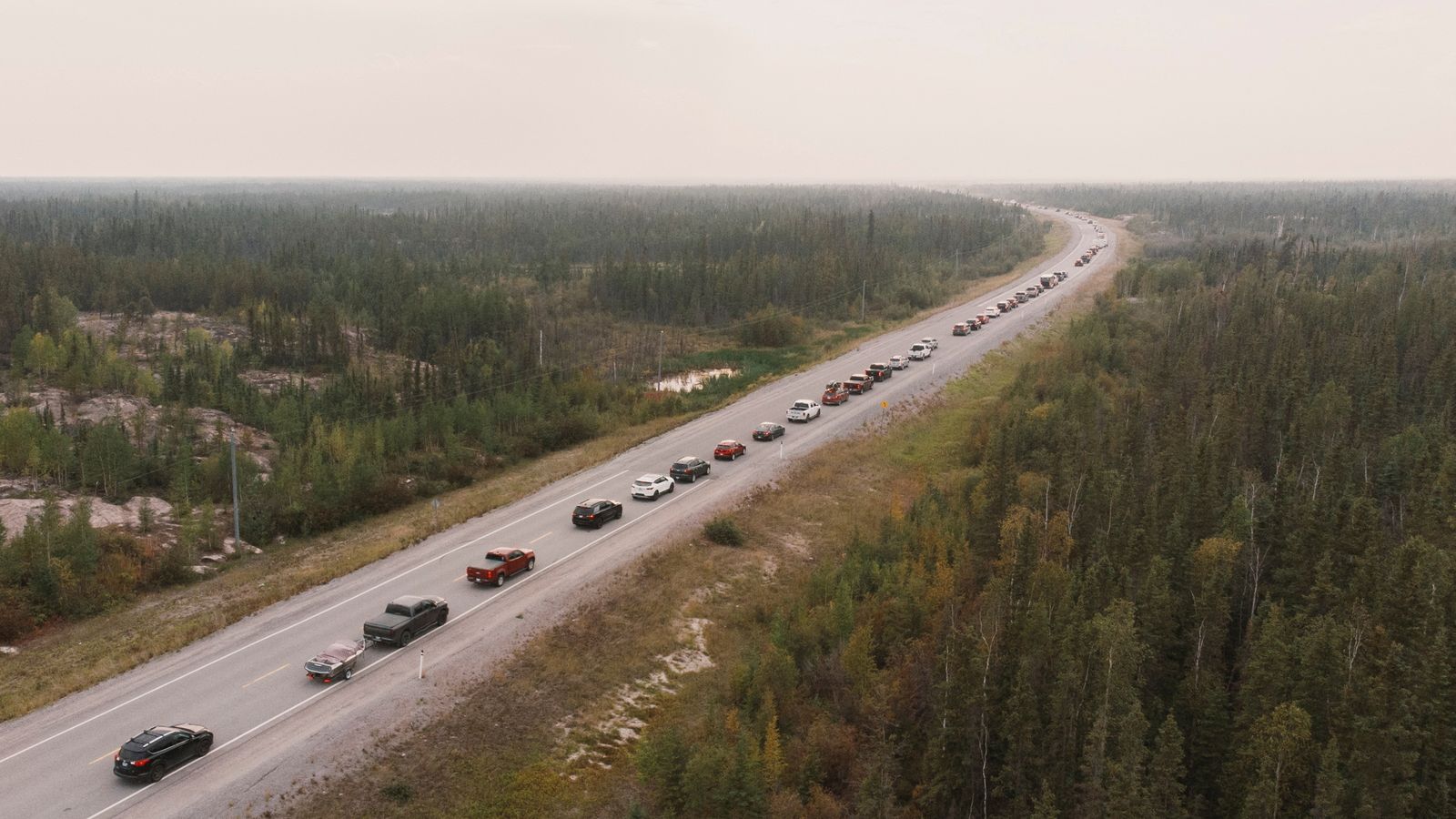
Canada wildfires: Thousands urged to evacuate by road and air as blaze nears country’s most northern city

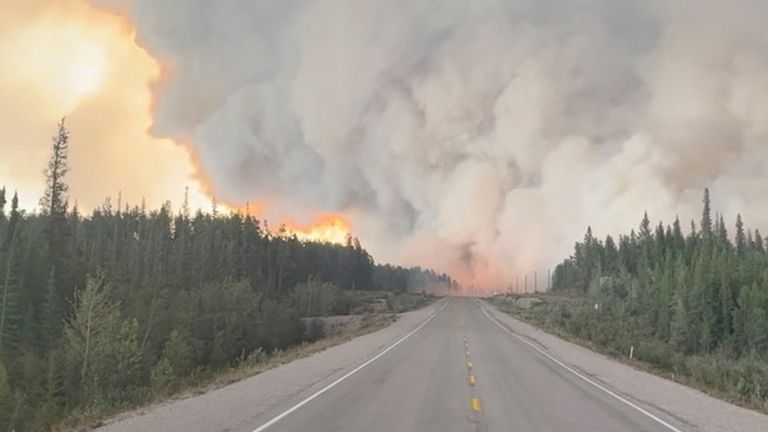
Thousands of people are being urged to leave a major city in Canada’s Northwest Territories as a huge wildfire approaches.
Air evacuations for the most vulnerable are beginning on Thursday, and officials say there is a “safe window” for everyone else to leave Yellowknife by road.
The capital has a population of 20,000 people – and without rain, forecasts suggest the wildfire could reach the city’s outskirts by the weekend.
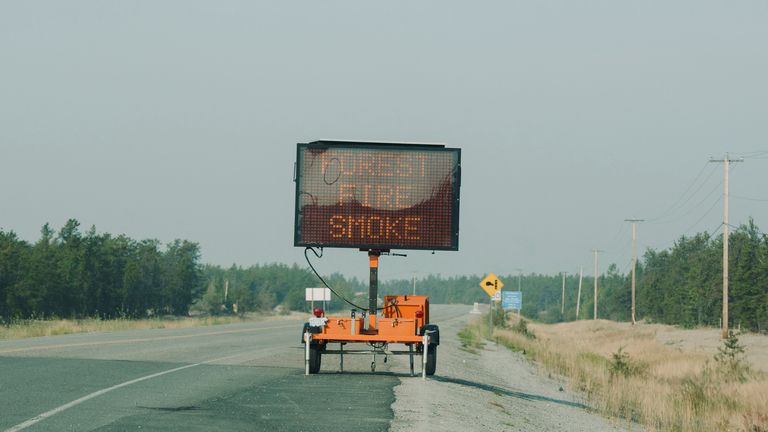
Canada is enduring a record number of wildfires, with over 1,000 active blazes burning across more than 8,000 miles of the country.
As of late last night, one of those fires is burning within 11 miles (17km) of Yellowknife. Authorities have warned that today it’s likely to reach Highway 3, the only main road connecting the city to the rest of Canada.
Residents have been given until noon on Friday to leave.
The Territories have declared a state of emergency and the Canadian military has been mobilised to help tackle the blazes.
“I want to be clear that the city is not in immediate danger and there’s a safe window for residents to leave the city by road and by air,” environment minister Shane Thompson said.
“Without rain, it is possible it will reach the city outskirts by this weekend.”
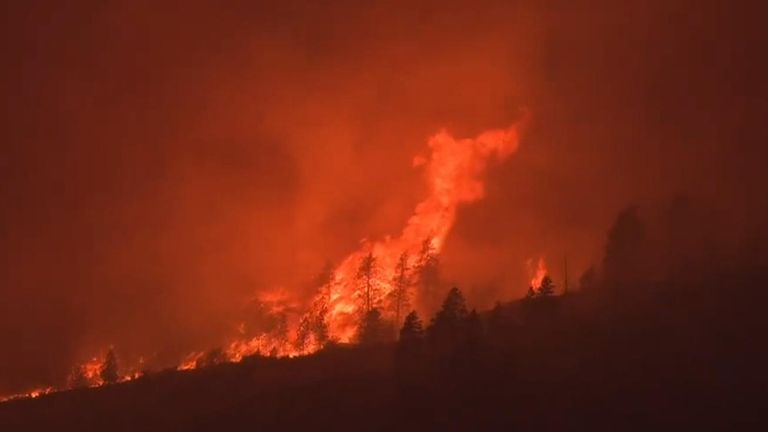
More than 1,000 active wildfires are burning across Canada
More than 200 wildfires have already burned a widespread area of the Northwest Territories, forcing nearly 6,800 people to flee their homes.
Premier Caroline Cochrane urged people to remain calm and warned that highways could close suddenly because of increased fire risk.
“I’ve never seen so many vehicles leaving town,” she said.
“There’s all kinds of rumours out there, but be ready and evacuate if necessary. Be calm. Do not panic.”
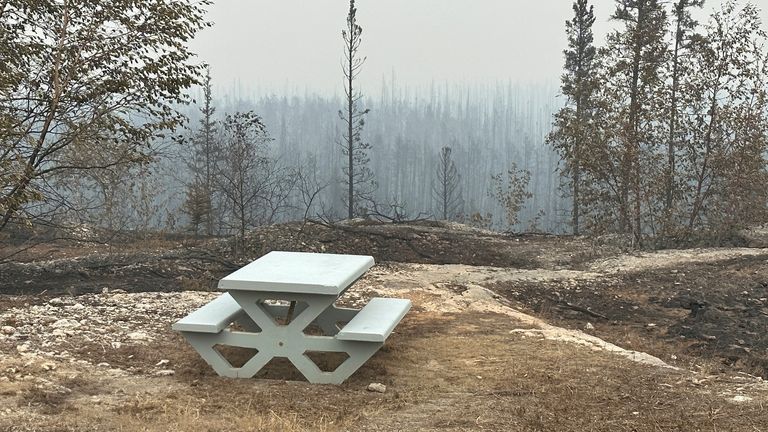
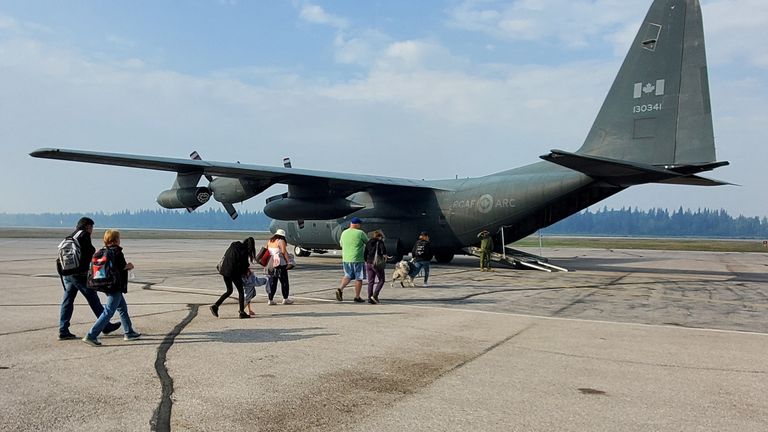
Another fire is threatening the community of Hay River. Teams are working to evacuate 3,000 people by bus and plane as the blaze approaches.
Western Canada is suffering a heat wave that saw 19 daily heat records broken on Tuesday and is fuelling hundreds of out-of-control wildfires.
Blazes have engulfed nearly all 13 of the country’s provinces and territories this year, forcing home evacuations, disrupting oil and gas production, and drawing in federal as well as international firefighting resources.

Up to 8,000 holidaying British citizens are in Jamaica as it is battered by one of the strongest Atlantic hurricanes in history.
People have been ordered to stay indoors as Hurricane Melissa sweeps over the Caribbean island, which is also home to 50,000 dual nationals.
And tourists are locked down in hotels as Jamaica is hit by 185 mph winds.
Follow latest updates on Hurricane Melissa
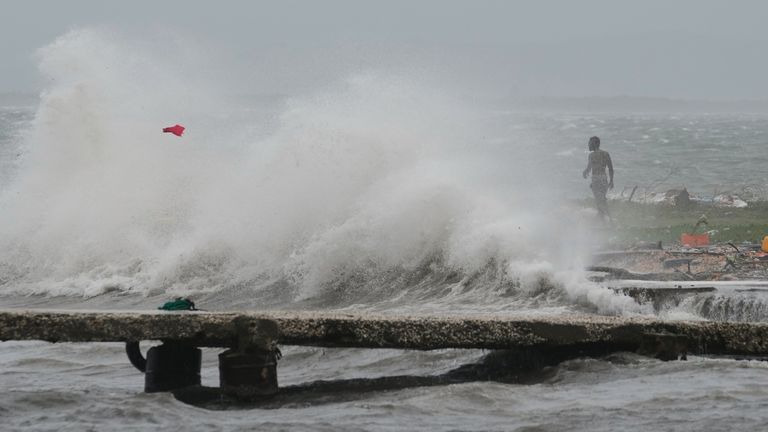
Waves splash in Kingston, Jamaica, as Hurricane Melissa hits. Pic: AP
Andrew Tracey had been due to fly home to the UK on Monday, but his flight was cancelled.
Mr Tracey told Sky News that food packages were being delivered to guests at his hotel. Deck chairs have been removed from the beach, and the swimming pools have been drained, at the Negril hotel where he is staying.
“The balcony and walls do feel as though they are vibrating just due to the strength of the wind,” said Mr Tracey.
“I’m very nervous, it’s hard to comprehend what we are likely to expect.”
The US National Hurricane Centre in Miami said that Melissa was “one of the most powerful hurricane landfalls on record in the Atlantic basin” as it hit southwestern Jamaica near New Hope.
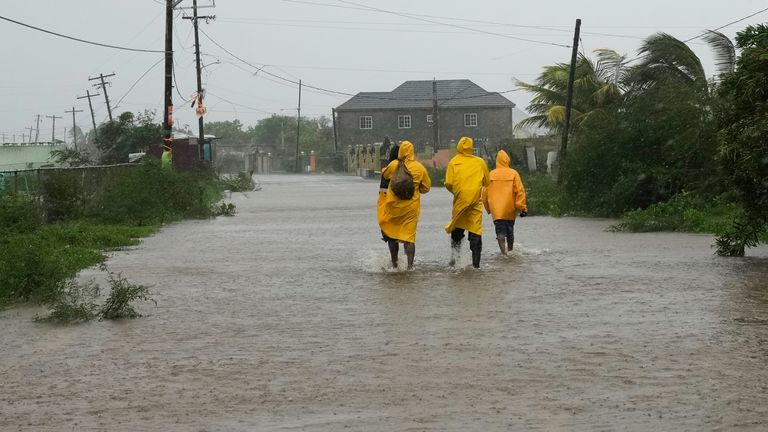
People walk along a road during the passing of Hurricane Melissa in Rocky Point, Jamaica, on Tuesday. Pic: AP
In a social media post, the centre warned that it is an “extremely dangerous and life-threatening situation” – and told those in the area not to leave their shelter as the eye of the storm passes over.
‘It is a bit scary, but we’ve got each other’
A British-Jamaican couple who are sheltering inside as the storm passes over the island spoke to Sky News about their ordeal.
Shantell Nova Rochester and her Jamaican fiance Denva Wray are due to get married on the island next month.
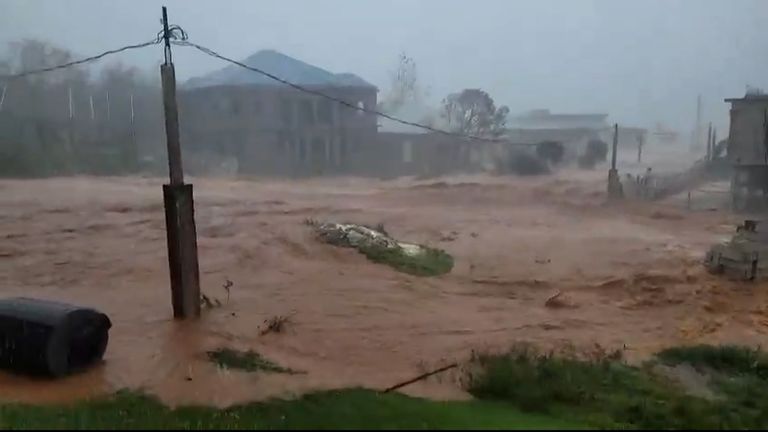
Floods tear through parts of Jamaica
They spoke of broken windows and water coming in where they are staying, but the couple believe they are “as safe as they can possibly be” in St Elizabeth.
Mr Wray said: “Where we are is quite strong, sturdy, but you can hear a lot of wind. It is a bit scary, but we’ve got each other, so we are strong.”
Asked about the wedding, Ms Rochester said: “We’re just worried about getting through tomorrow, but that’s a worry in the back of our heads.
“Where we’re plan to get married is flooded at this time.”
Government action ‘too late’ – British tourist
One British man who paid £3,500 for last-minute flights so he and his family could return home before the hurricane hit the island said that he felt “completely let down” by the government’s response.
David Rowe and his family, from Hertfordshire, had spent 10 days in Jamaica before deciding to fly back to the UK on Saturday.
Mr Rowe, 47, was critical of the response of the Foreign, Commonwealth and Development Office (FCDO).
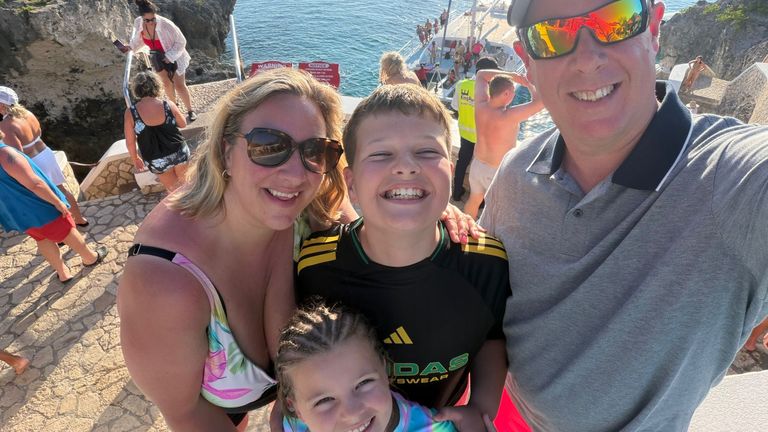
David Rowe with his wife Abby, daughter Cora, eight, and son Ethan, 12, during their holiday in Jamaica. Pic: PA/handout
Speaking to the PA news agency, IT manager Mr Rowe said: “It’s all too late, their reaction and their response to the storm has been too late – after the fact.
“The advice should have been last week, like on the Saturday – don’t travel – because a lot of the travel companies use the FCDO guidance on travel (for) all their planning and what decisions they make as an organisation.
“There should have been something done much sooner than this. A lot of the UK nationals, and people on holiday there, they are stranded.
“This could have been prevented with with better action from the UK government.”
Read more:
Hurricane Melissa: What we know
‘Storm of century’ makes landfall
Mr Rowe added that he and his wife had felt “very anxious” before they flew home – and “very sad” for those left in the country.
A Foreign Office spokesperson said: “We understand how worrying developments in Jamaica are for British nationals and their families.
“Our travel advice includes information about hurricane season, which runs from June to November. Last Thursday we updated our travel advice for Jamaica to include a warning about Tropical Storm Melissa and that it was expected to intensify over the coming days.
“The safety and security of British nationals is our top priority, and that is why we are urging any British nationals in Jamaica to follow the guidance of the local authorities and register their presence with us to receive updates.”
World
Blasts reported after Benjamin Netanyahu orders Israeli military to carry out ‘powerful’ strikes in Gaza
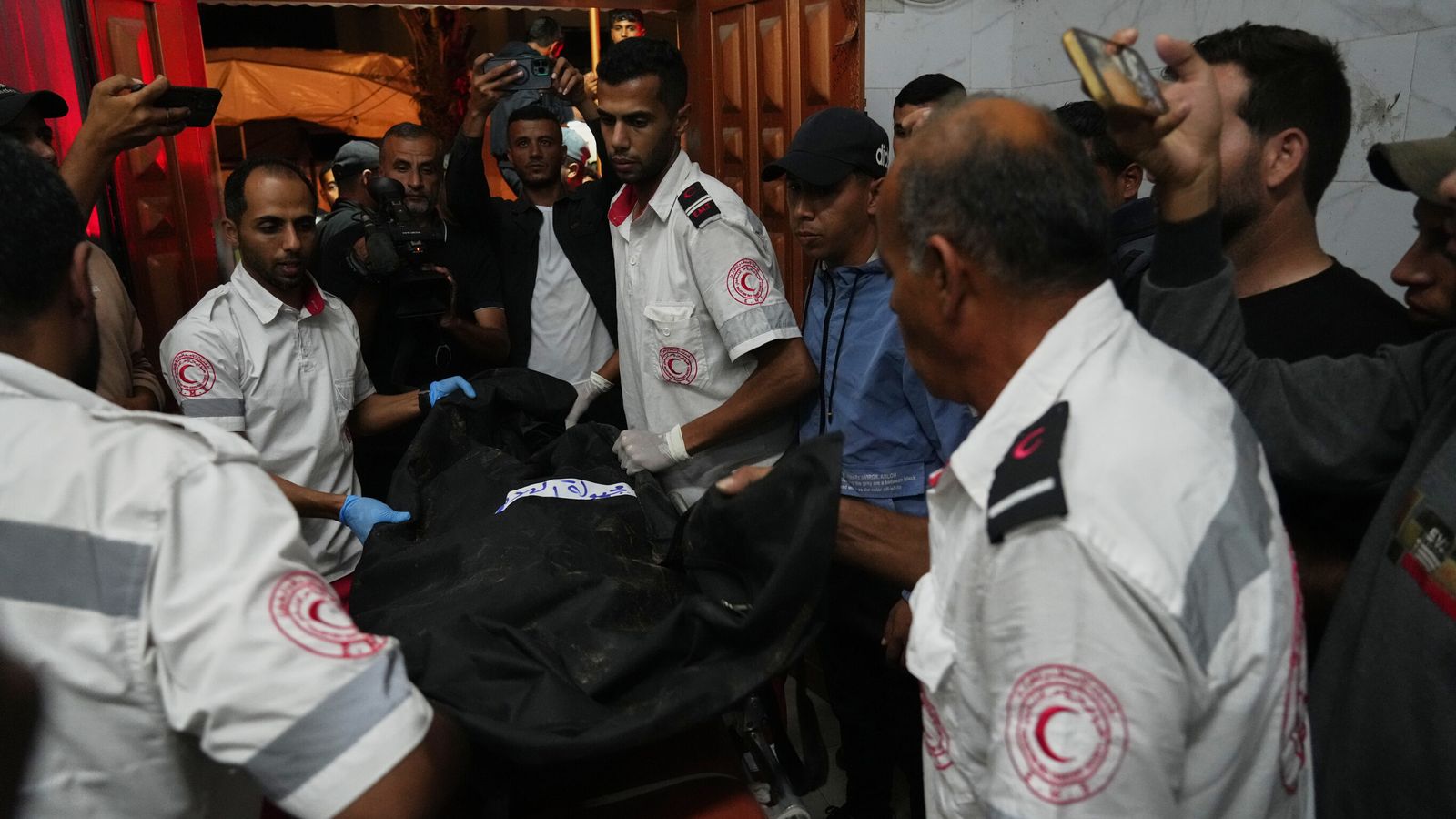
Blasts have been reported in Gaza after Israel’s prime minister Benjamin Netanyahu ordered his military to carry out “powerful” air strikes.
Witnesses said they saw explosions and heard tank fire in Gaza City and Deir al Balah.
An Associated Press reporter in Deir al Balah heard tanks firing from an area controlled by the Israeli army, and, in Gaza City, two health officials reported strikes, including near the Shifa hospital.
At least two people were killed, and four others wounded, by a strike on a neighbourhood south of Gaza City, according to Gaza’s Civil Defence.
The announcement of strikes came shortly after Israel said that Hamas had opened fire on its forces in southern Gaza on Tuesday.
Hamas has denied involvement in the attack in the city of Rafah. The militant Palestinian group also said in a statement that it remained committed to the US-backed ceasefire deal.
Mr Netanyahu had also accused Hamas of violating the three-week-old ceasefire in the territory by handing over remains that were of an Israeli hostage who was already recovered.
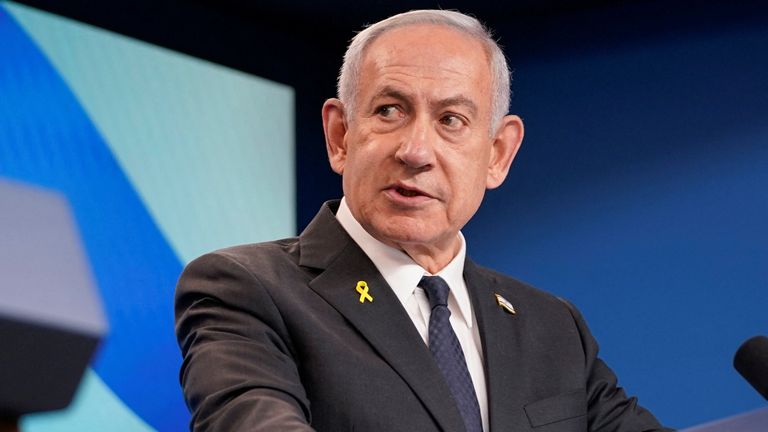
Israeli prime minister Benjamin Netanyahu ordered his military to carry out air strikes on Gaza. Pic: Reuters
A statement from the prime minister’s office said: “Following the security consultations, Prime Minister Netanyahu instructed the military echelon to carry out powerful strikes in the Gaza Strip immediately.”
US Vice President JD Vance said the ceasefire, which began on 10 October, was holding, telling reporters: “That doesn’t mean there aren’t going to be little skirmishes here and there.
“We know that Hamas or somebody else within Gaza attacked an (Israeli military) soldier. We expect the Israelis are going to respond, but I think the president’s peace is going to hold despite that.”
Hamas on Tuesday said that it would postpone the planned handover of a body of a hostage it had recovered, claiming violations of the ceasefire by Israel.
In a sign of the fragility of the ceasefire, Israeli troops were shot at in Rafah, and returned fire, according to an Israeli military official.

Analysis: Two events combine to threaten a fragile ceasefire
An Israeli military official told Sky’s Middle East correspondent Adam Parsons that Hamas have “shown their true face”.
The official told him: “Hamas violated the ceasefire once again, carrying out an attack against IDF forces east to the yellow line, an area under Israeli control.
“This is yet another blatant violation of the ceasefire. This comes after Hamas has also shown their true face and the fact that are pretending to not know where the remaining hostages are.”
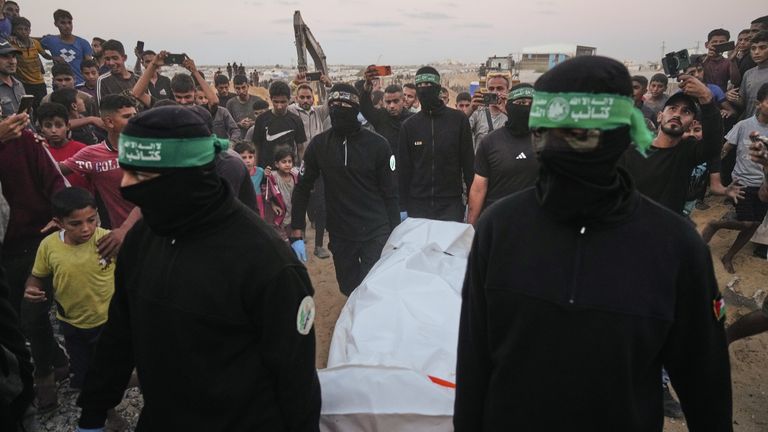
Hamas militants carry a white bag believed to contain a body retrieved from a tunnel in southern Gaza on Tuesday. Pic: AP
Hamas said on the Telegram messaging app that any Israeli escalation of attacks in Gaza would hinder search and recovery operations, and delay the return of the bodies of Israeli soldiers.
There are thought to be 13 bodies of hostages still in Gaza.
Read more:
Red Cross and Egyptian teams allowed into Gaza
Israel backing armed groups despite Gaza ceasefire
Speaking to Sky News, Israeli government spokesman David Mencer said: “The first line of this agreement is that all of our hostages should have been returned on the first day of this agreement.
“They were supposed to give back all of our hostages, and there was supposed to be a ceasefire. There are still 13 of our murdered hostages (in Gaza).
“And secondly, Hamas are firing on our troops. That is not a ceasefire.”
After the ceasefire took effect, all 20 living hostages were freed in exchange for almost 2,000 Palestinian prisoners, but the remains of the dead have been slow to be repatriated.
Hamas has said there are problems finding them due to a lack of equipment to sift through the devastation and rubble in Gaza.
The search for hostage bodies had been stepped up over the past few days after the arrival of heavy machinery from Egypt.
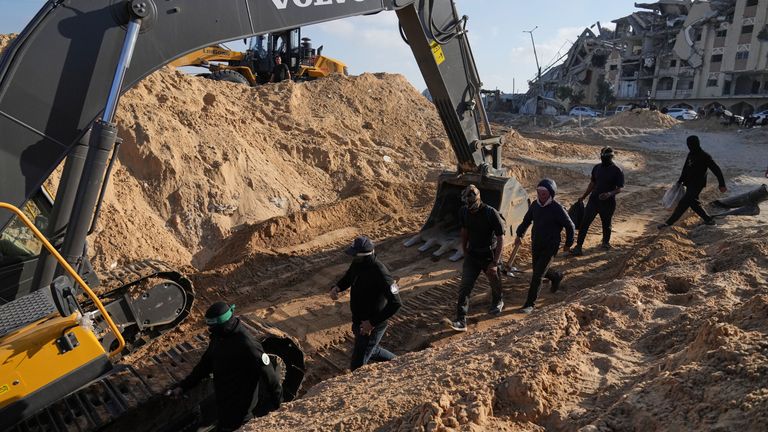
Hamas members and Egyptian workers search for the bodies of hostages in the southern Gaza Strip on Tuesday. Pic: AP
Bulldozers were working in Khan Younis, and further north in Nuseirat, with Hamas fighters deployed around them.
Some of the bodies are believed to be in Hamas’ network of tunnels below Gaza.
Eleven people have been killed after a plane carrying tourists to a Kenyan safari reserve crashed.
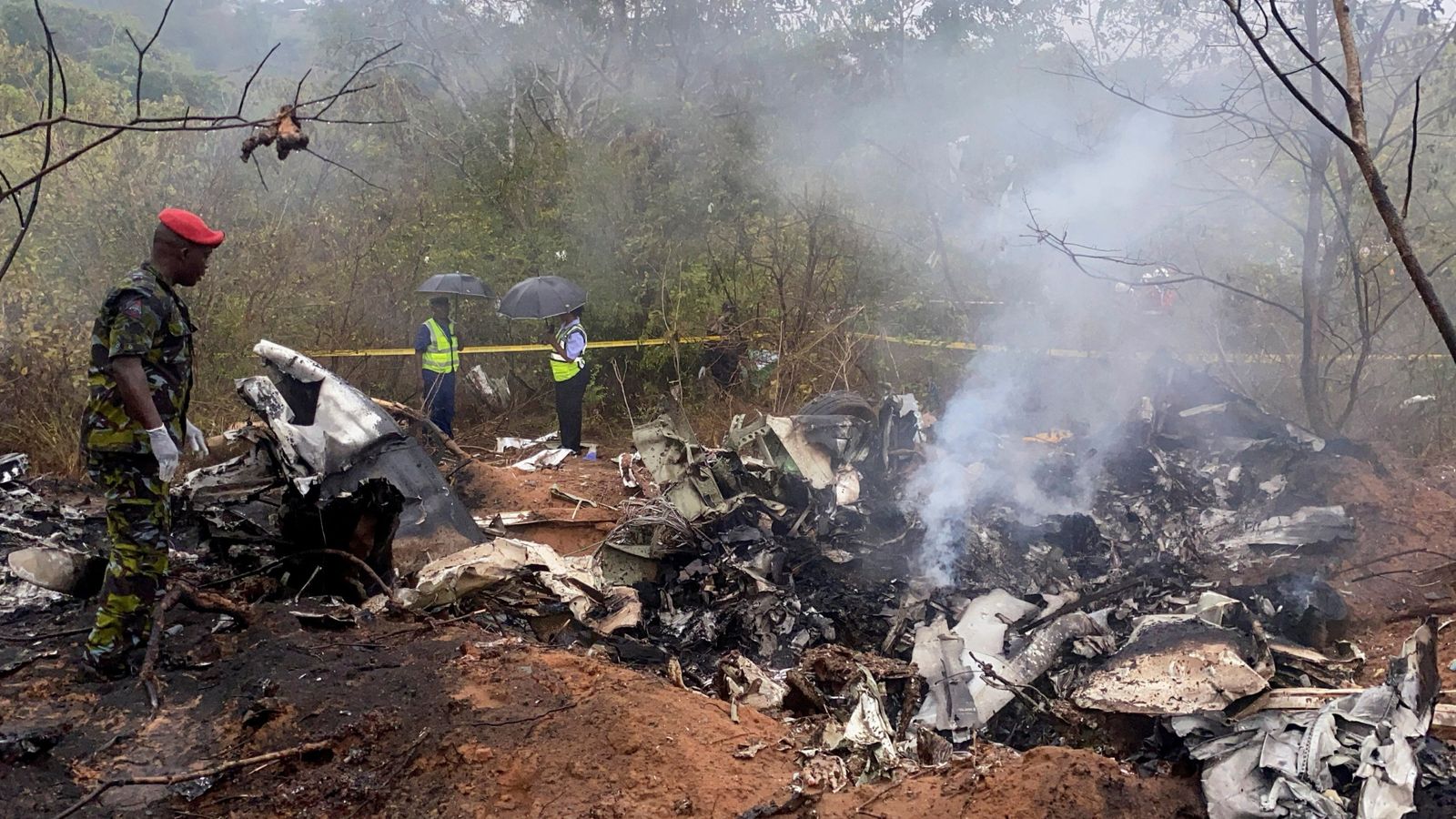
According to officials, the aircraft burst into flames and was reduced to charred wreckage at the hilly and forested area in which it crashed.
The plane had been travelling from Diani Airport, on the coast, to the Maasai Mara National Reserve.
The dead included eight Hungarian passengers, two Germans and the Kenyan pilot. There were no survivors.
Authorities initially said the crash happened at 5:30am local time. Later, the Kenyan transport minister gave the time of the incident as 8:35am.
Kenyan officials inspect the scene of a plane crash near Diani, Kenya. Pic: AP
Kenya’s ministry of roads and transport said the aircraft was destroyed by the impact of the crash and an ensuing fire.
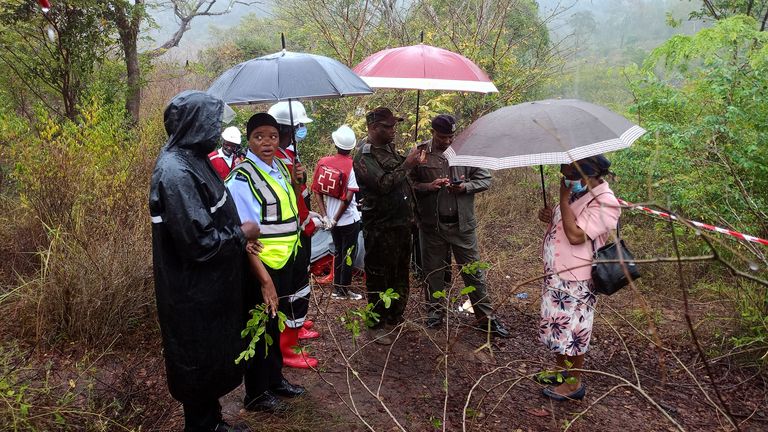
Investigators from the country’s aircraft accident investigation department have been deployed to the site to begin an inquiry, they said.
The department added that the Kenyan government’s “highest priority” remains aviation safety.
In a statement, John Cleave, the chairman of Mombasa Air Safari, said “our hearts and prayers” were with all those affected by the crash.
He wrote that the company had activated its emergency response team and was “fully cooperating” with the relevant authorities, who have already begun investigating.
Read more:
British soldiers fathered children in Kenya
Former Kenyan prime minister dies
“Our primary focus right now is on providing all possible support to the families affected,” Mr Cleave continued, adding that a family assistance team had been established to offer counselling, logistical coordination and any required assistance to the relatives of the victims.
The Maasai Mara National Reserve is a two-hour direct flight from Diani, a popular coastal town known for its sandy beaches.
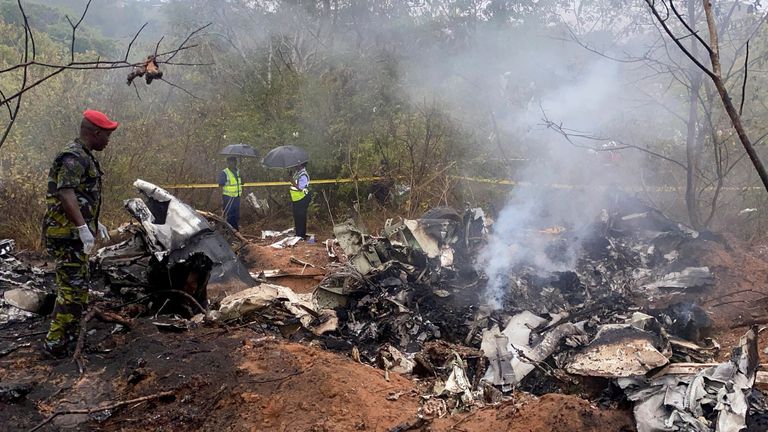
Kenyan security officials secure the wreckage of an aircraft which crashed with 11 people onboard. Pic: Reuters
The reserve attracts a large number of tourists as it features the annual wildebeest migration from the Serengeti in Tanzania.
Hungarian Prime Minister Viktor Orbán wrote on social media on Tuesday that his foreign ministry had been in contact with authorities in Kenya concerning the Hungarian victims of the plane crash.
He said: “What a tragedy! Our sincere condolences to families of the Hungarians who died in the plane crash in Kenya.”
-
 Sports2 years ago
Story injured on diving stop, exits Red Sox game
-
 Sports3 years ago
‘Storybook stuff’: Inside the night Bryce Harper sent the Phillies to the World Series
-
 Sports2 years ago
Game 1 of WS least-watched in recorded history
-
 Sports3 years ago
Button battles heat exhaustion in NASCAR debut
-
 Sports3 years ago
MLB Rank 2023: Ranking baseball’s top 100 players
-
Sports4 years ago
Team Europe easily wins 4th straight Laver Cup
-
 Environment2 years ago
Japan and South Korea have a lot at stake in a free and open South China Sea
-
 Environment1 year ago
Here are the best electric bikes you can buy at every price level in October 2024