
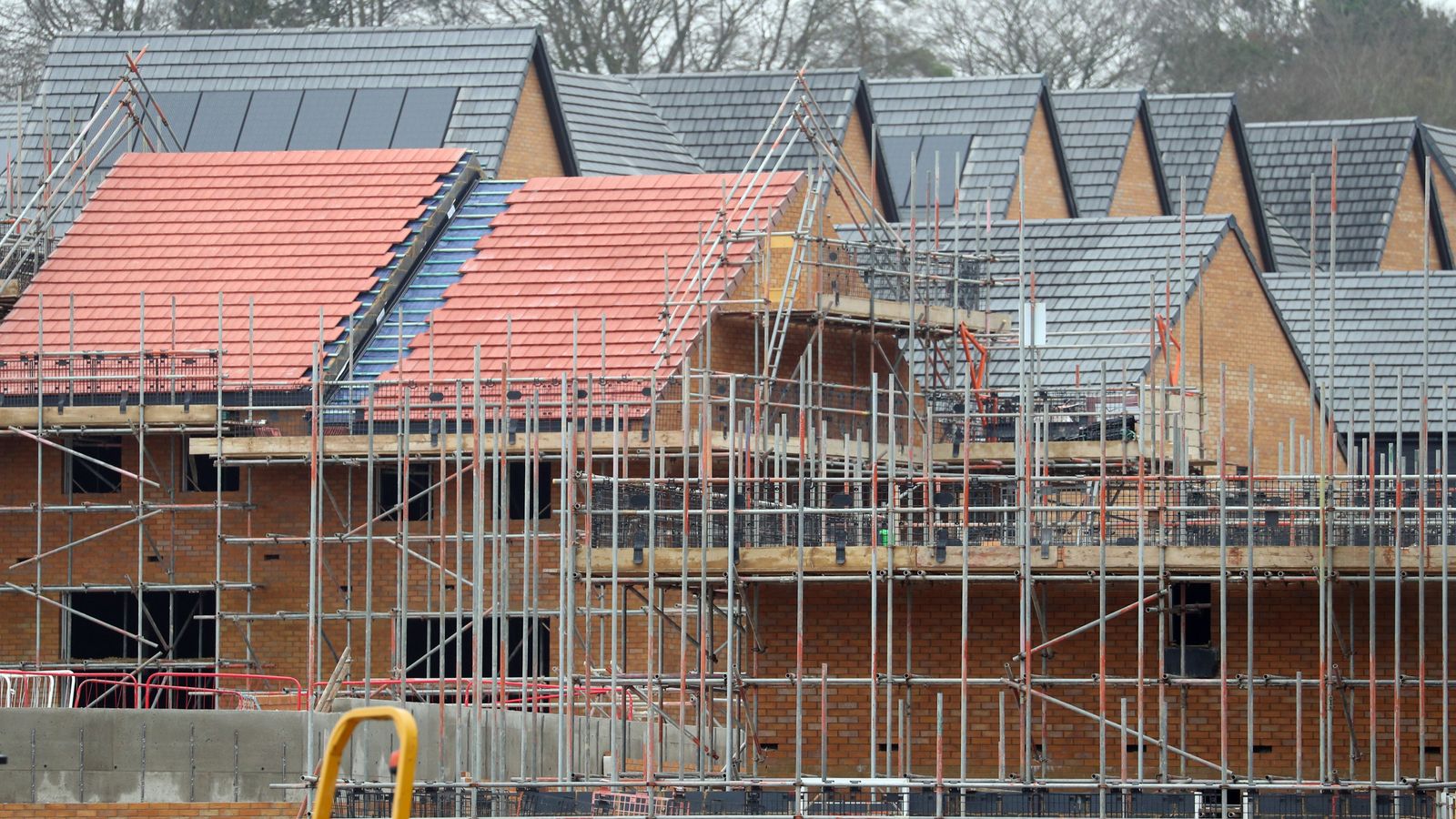
Builders plunge as housing market alarm bells intensify

Shares in UK housebuilders have taken a fresh hit on the latest woes to hit the sector including a profit warning from a major player.
Crest Nicholson shares plunged almost 15% at the start of Monday’s trading after it slashed adjusted pre-tax profit expectations for the year to October by more than 40% to £50m.
The Chertsey-based firm, which has lost more than a quarter of its market value in the year to date, blamed slowing sales as buyers battle high interest rates and inflation.
Larger rivals saw their stocks come under pressure too.
Taylor Wimpey, Barratt Developments, Berkeley and Persimmon were the biggest fallers on the FTSE 100, with declines of more than 3% seen.
The market reaction also followed a Rightmove report showing a sharp fall in asking prices due to the twin squeeze on consumers.
It said average asking prices fell by 1.9% over the past month, the biggest fall for August since 2018 and twice as steep as the typical summer holiday decline.
Rising mortgage costs caused sellers to lower their expectations of what they can get for their properties, the property website added.
‘I’m cutting everything out just to survive’
Nationwide Building Society had reported earlier this month that annual property values had declined by 3.8% in July, the sharpest fall since July 2009.
Data from Moneyfacts showed the average two-year fixed residential mortgage rate stood at 6.76% on Friday.
The five-year rate stood at 6.24%. Both were unchanged from the previous day.
They are linked to the funding costs faced by lenders as the Bank of England raises its key interest rate to battle inflation.
Financial markets believe it still has work to do, with Bank rate currently forecast to peak next year at 6% from the current 5.25%.
For its part, Crest Nicholson said transaction levels across the industry had weakened further, particularly in recent weeks, as mortgage borrowing turned more expensive.
“The group does not therefore expect to see a material improvement in trading conditions before its year end at 31 October,” it said.
Weekly sales volumes over the seven weeks to 18 Aug were at half the level the company had anticipated for the second half of the financial year.
The company had posted a profit of £137.8m in its 2022 fiscal year.
AJ Bell investment director Russ Mould said of the market reaction: “Weak house price data is hardly a surprise.
“Economic uncertainty is elevated, mortgage costs have gone through the roof and the Help to Buy scheme has come to an end.
“However, Crest Nicholson’s profit warning has laid bare the scale of the impact of a housing slowdown on the housebuilding sector.
“Sales of new homes have plunged alarmingly and, while not all developers in the space are created equal, the news, allied to Rightmove’s latest reading on the property market, has had a knock-on effect on share prices in the rest of the sector this morning.
“The £7,000 drop in the average asking price observed by Rightmove in the last month, allied to a big drop in transaction volumes, is the kind of statistic to make estate agents distinctly uneasy.”
“The scale of Crest Nicholson’s warning may come as a shock to investors given it reported its first half results just a couple of months ago and this hints at the speed and scale of the deterioration in the market.
“The one compensation for shareholders is Crest Nicholson is at least sticking with its planned full year dividend payment for now. However, its gloomy update will have set the market on alert for further warnings from its industry peers.”
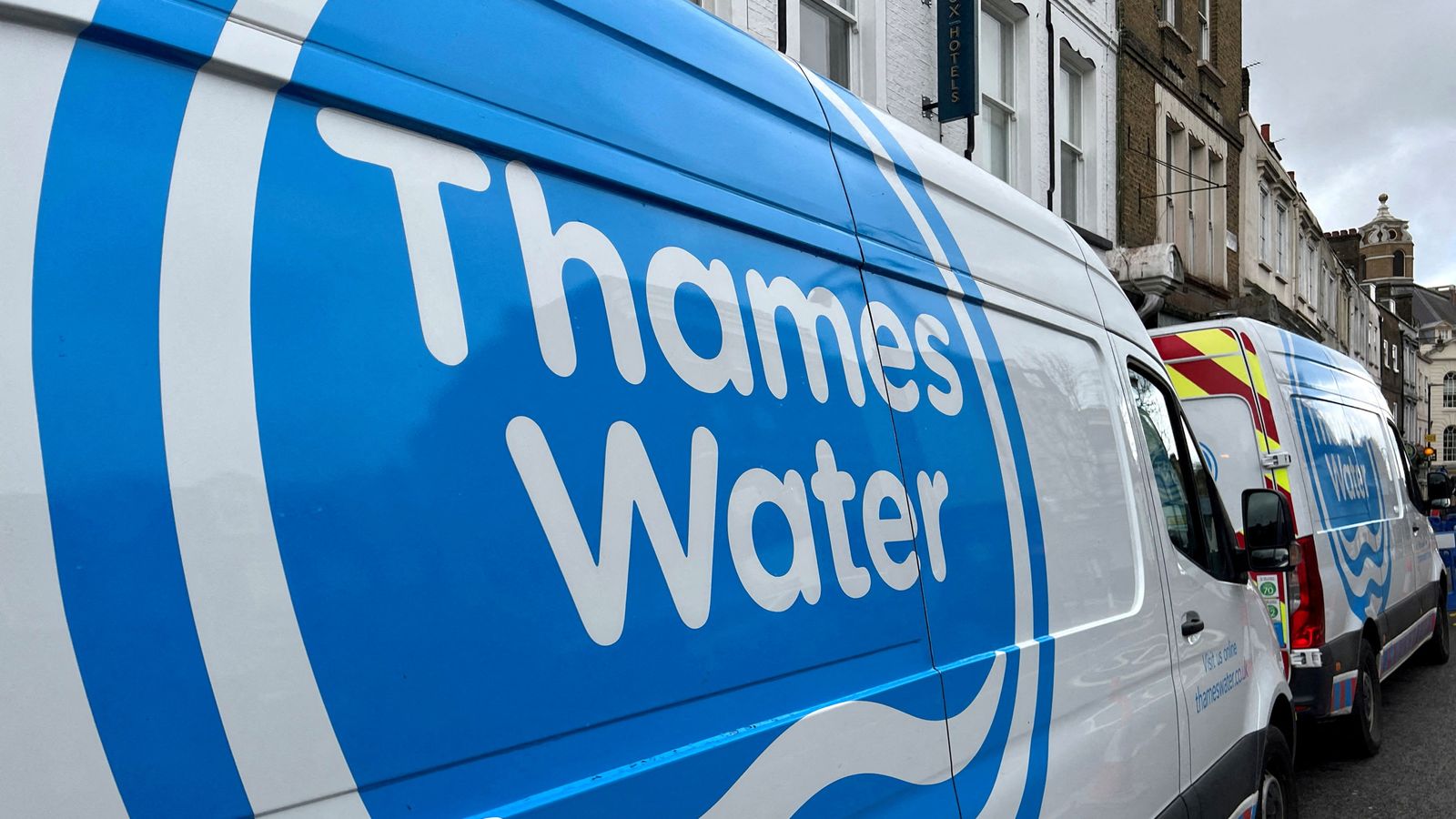
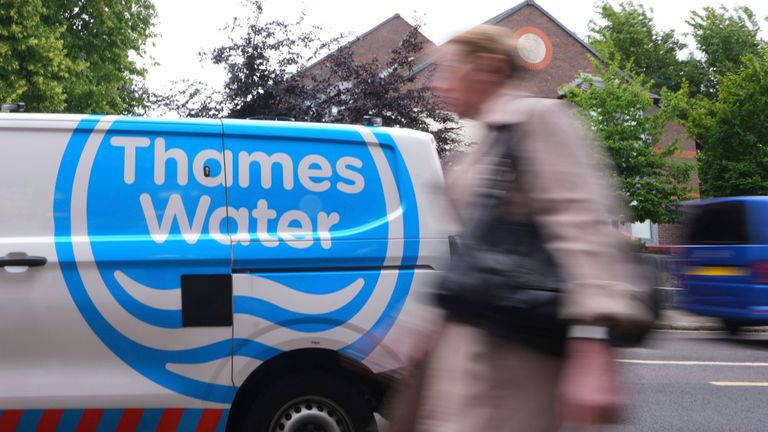
Cash-strapped Thames Water has revealed a further rise in its debt pile while recording a return to profit on the back of inflation-busting hikes to bills.
The UK’s largest supplier said the 31% rise to customer bills since April had allowed it to increase capital investment by 22% to £1.3bn amid demands it improve performance in preventing sewage spills and stopping leaks.
Thames Water said it recorded a 20% drop in pollution incidents over the six months to the end of September, and leakage performance was holding steady despite the “extremely dry summer”.
Money latest: How much is a fair restaurant tip?
While waste complaints dipped by 11%, according to the company, there was a 42% surge in the number of customers complaining about the hike to bills.
Thames Water revenue rose 42% on the same period last year to £1.9bn, helping a return to profit after tax of £328m on the back of a £190m loss during April-September 2024.
The company said profitability was damaged by higher debt serving costs.
Its debt pile was recorded at £17.6bn – a rise of 5%.
The results were released against the backdrop of continuing talks involving the government and regulators over a proposed rescue deal by major Thames Water creditors.
Their consortium is known as London & Valley Water.
It effectively already owns Thames Water under the terms of a financial restructuring agreed early in the summer but regulator Ofwat is yet to give its verdict on whether the consortium can run the company, averting the prospect of it being placed in a special administration regime.
Without a deal the consortium, which includes investment heavyweights Elliott Management and BlackRock, would be wiped out.
August: Is Thames Water a step closer to nationalisation?
Ofwat, which is to be scrapped under a shake-up of industry oversight, has been leading scrutiny of London & Valley’s operational plan and proposed capital structure.
The prospective deal would write off billions of pounds of the company’s debt and inject billions in fresh equity, in return for an adjustment in the regulator’s approach to future financial penalties.
Thames sees the creditors’ proposal as the only viable solution.
Despite huge hikes to household bills – allowed across England and Wales to bolster aging infrastructure including storm overflows – the company says its financial turnaround has been hampered by record fines for things like sewage leaks and bonuses to retain key staff.
Sky News revealed on Tuesday that its remuneration committee will meet next week to decide whether to proceed with nearly £2.5m in retention payments to 21 senior managers.
Read more from Sky News:
Reeves hit by Labour rebellion
The Bank of England’s take on ‘elevated’ risks
Thames Water chief executive Chris Weston said the company had made good progress on its operational and transformation targets.
“This progress has all been achieved as we also manage the recapitalisation of the business. We continue to work closely with stakeholders to secure a market-led solution that we believe is in the best interests of our customers and the environment.
“This in turn will allow the transformation of Thames to continue, a programme that will take at least a decade to complete and will restore the infrastructure and operations of the company.”


FIFA has backed away from using dynamic pricing for all 2026 World Cup tickets amid concerns about the cost of attending the tournament in North America.
The organisers insisted they always planned to ring-fence tickets at set prices to follow your own team.
But the announcement comes just days ahead of Friday’s tournament draw in Washington DC, which Donald Trump plans to attend.
Fans will have to wait until Saturday to know exactly where and when their teams will be playing in next summer’s tournament.
Scotland will be one of the teams in the tournament, held in North America and Mexico
Variable pricing – fluctuating based on demand – has never been used at a World Cup before, raising concerns about affordability.
England and Scotland fans have been sharing images in recent days of ticket website images highlighting cost worries.
But world football’s governing body said in a statement to Sky News: “FIFA can confirm ringfenced allocations are being set aside for specific fan categories, as has been the case at previous FIFA World Cups. These allocations will be set at a fixed price for the duration of the next ticket sales phase.
“The ringfenced allocations include tickets reserved for supporters of the Participating Member Associations (PMAs), who will be allocated 8% of the tickets for each match in which they take part, including all conditional knockout stage matches.”
FIFA says the cheapest tickets are from $60 (£45) in the group stage. But the most expensive tickets for the final are $6,730 (£5,094).
There will also be a sales window after the draw from 11 December to 13 January when ticket applications will be based on a fixed price for those buying in the random selection draw.
It is the biggest World Cup with 104 matches after the event was expanded from 32 to 48 teams. There are also three host nations for the first time – with Canada and Mexico the junior partners.

The tournament mascots as seen in Mexico in October. Pic: Reuters
Read more from Sky News:
Pope urges Trump not to oust Venezuelan president by force
Government delays Chinese ‘super embassy’ decision
FIFA defended using fluctuating pricing.
“The pricing model adopted for FIFA World Cup 26 reflects the existing market practice for major entertainment and sporting events within our hosts on a daily basis, soccer included,” FIFA’s statement continued.
“This is also a reflection of the treatment of the secondary market for tickets, which has a distinct legal treatment than in many other parts of the world. We are focused on ensuring fair access to our game for existing but also prospective fans.”
The statement addressed the concerns being raised about fans being priced out of attending.
FIFA said: “Stadium category maps do not reflect the number of tickets available in a given category but rather present default seating locations.
“FIFA resale fees are aligned with North American industry trends across various sports and entertainment sectors.”
Ireland, Northern Ireland and Wales could also still qualify.
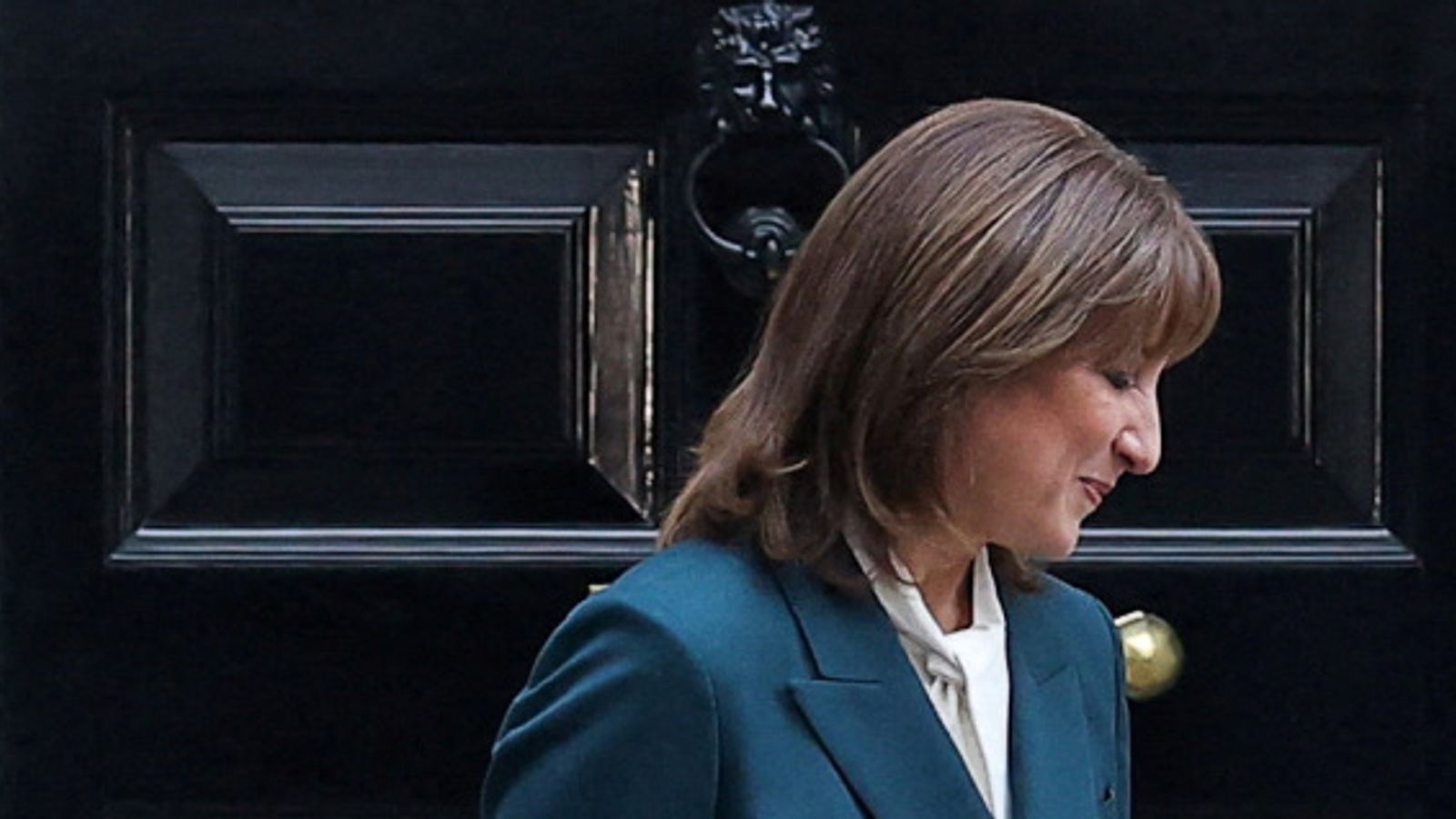
Chancellor Rachel Reeves has suffered another budget blow with a rebellion by rural Labour MPs over inheritance tax on farmers.
Speaking during the final day of the Commons debate on the budget, Labour backbenchers demanded a U-turn on the controversial proposals.
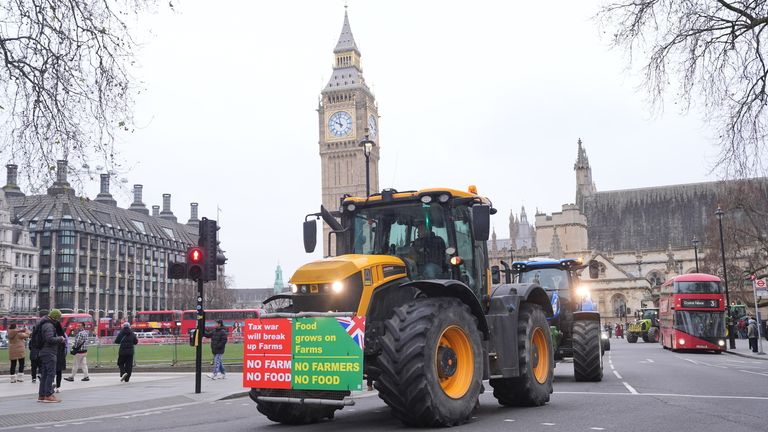
Plans to introduce a 20% tax on farm estates worth more than £1m from April have drawn protesters to London in their tens of thousands, with many fearing huge tax bills that would force small farms to sell up for good.
Farmers have staged numerous protests against the tax in Westminster. Pic: PA
MPs voted on the so-called “family farms tax” just after 8pm on Tuesday, with dozens of Labour MPs appearing to have abstained, and one backbencher – borders MP Markus Campbell-Savours – voting against, alongside Conservative members.
In the vote, the fifth out of seven at the end of the budget debate, Labour’s vote slumped from 371 in the first vote on tax changes, down by 44 votes to 327.
‘Time to stand up for farmers’
The mini-mutiny followed a plea to Labour MPs from the National Farmers Union to abstain.
“To Labour MPs: We ask you to abstain on Budget Resolution 50,” the NFU urged.
“With your help, we can show the government there is still time to get it right on the family farm tax. A policy with such cruel human costs demands change. Now is the time to stand up for the farmers you represent.”
After the vote, NFU president Tom Bradshaw said: “The MPs who have shown their support are the rural representatives of the Labour Party. They represent the working people of the countryside and have spoken up on behalf of their constituents.
“It is vital that the chancellor and prime minister listen to the clear message they have delivered this evening. The next step in the fight against the family farm tax is removing the impact of this unjust and unfair policy on the most vulnerable members of our community.”
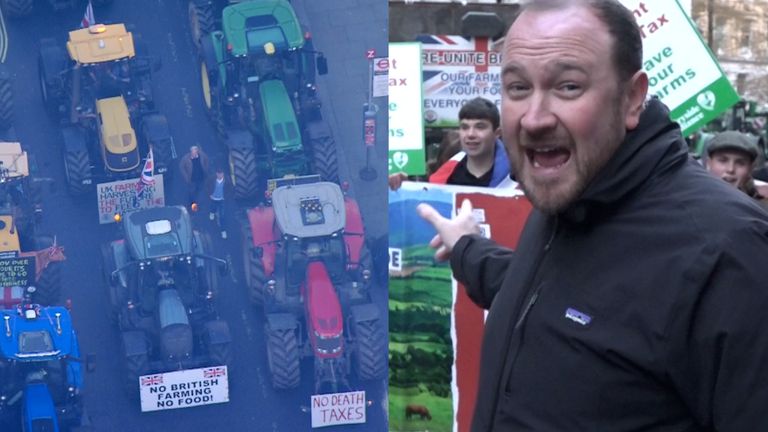
Farmers defy police ban in budget day protest in Westminster.
The government comfortably won the vote by 327-182, a majority of 145. But the mini-mutiny served notice to the chancellor and Sir Keir Starmer that newly elected Labour MPs from the shires are prepared to rebel.
Speaking in the debate earlier, Mr Campbell-Savours said: “There remain deep concerns about the proposed changes to agricultural property relief (APR).
“Changes which leave many, not least elderly farmers, yet to make arrangements to transfer assets, devastated at the impact on their family farms.”
Samantha Niblett, Labour MP for South Derbyshire abstained after telling MPs: “I do plead with the government to look again at APR inheritance tax.
“Most farmers are not wealthy land barons, they live hand to mouth on tiny, sometimes non-existent profit margins. Many were explicitly advised not to hand over their farm to children, (but) now face enormous, unexpected tax bills.
“We must acknowledge a difficult truth: we have lost the trust of our farmers, and they deserve our utmost respect, our honesty and our unwavering support.”

UK ‘criminally’ unprepared to feed itself in crisis, says farmers’ union.
Labour MPs from rural constituencies who did not vote included Tonia Antoniazzi (Gower), Julia Buckley (Shrewsbury), Torquil Crichton (Western Isles), Jonathan Davies (Mid Derbyshire), Maya Ellis (Ribble Valley), and Anna Gelderd (South East Cornwall), Ben Goldsborough (South Norfolk), Alison Hume (Scarborough and Whitby), Terry Jermy (South West Norfolk), Jayne Kirkham (Truro and Falmouth), Noah Law (St Austell and Newquay), Perran Moon, (Camborne and Redruth), Samantha Niblett (South Derbyshire), Jenny Riddell-Carpenter (Suffolk Coastal), Henry Tufnell (Mid and South Pembrokeshire), John Whitby (Derbyshire Dales) and Steve Witherden (Montgomeryshire and Glyndwr).
-
 Sports2 years ago
Story injured on diving stop, exits Red Sox game
-
 Sports3 years ago
‘Storybook stuff’: Inside the night Bryce Harper sent the Phillies to the World Series
-
 Sports2 years ago
Game 1 of WS least-watched in recorded history
-
 Sports3 years ago
Button battles heat exhaustion in NASCAR debut
-
 Sports3 years ago
MLB Rank 2023: Ranking baseball’s top 100 players
-
Sports4 years ago
Team Europe easily wins 4th straight Laver Cup
-
 Environment3 years ago
Japan and South Korea have a lot at stake in a free and open South China Sea
-
 Environment1 year ago
Here are the best electric bikes you can buy at every price level in October 2024