
Connect with us

Published

on

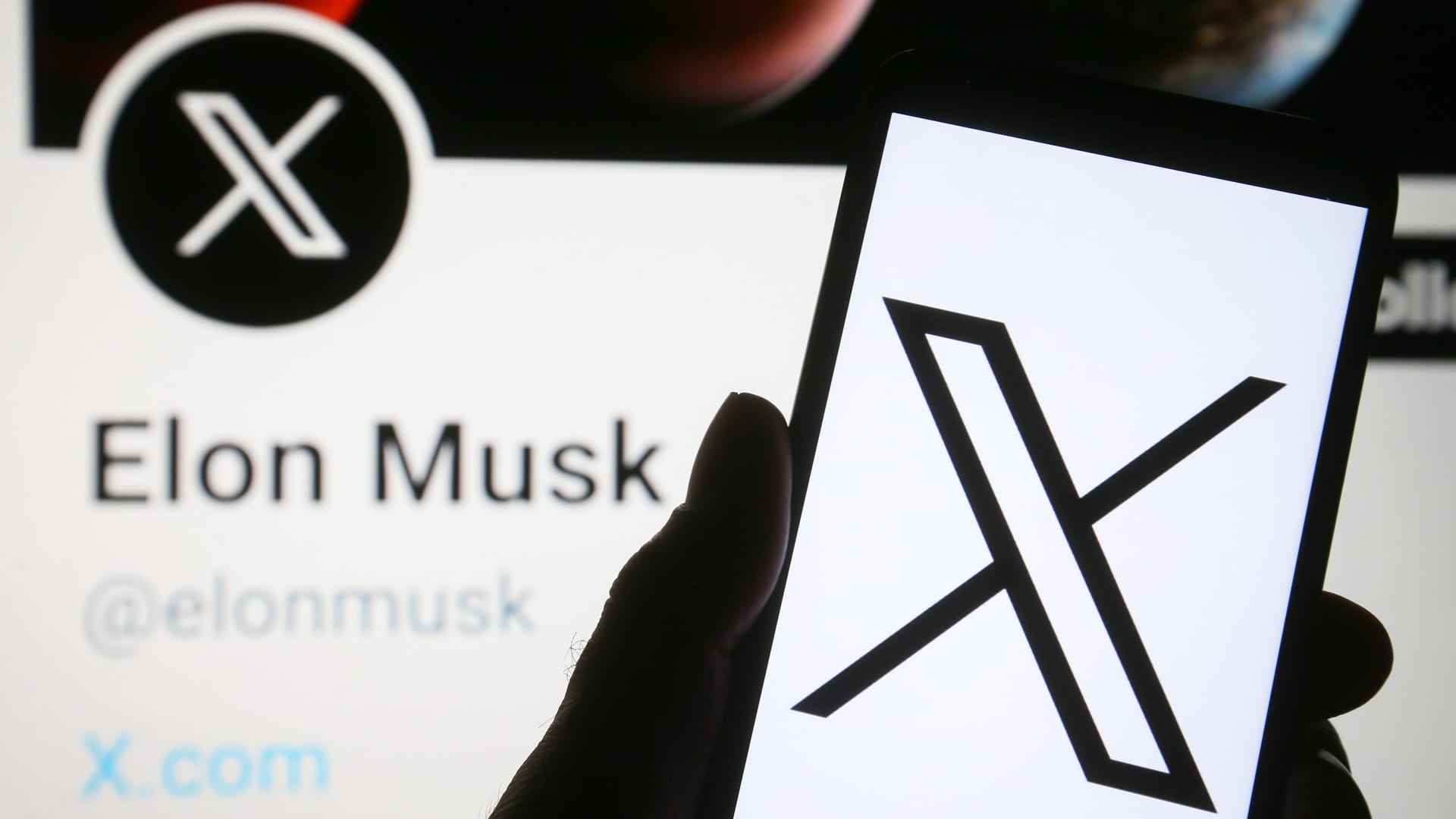
In this photo illustration, the new Twitter logo rebranded as X (X Corp.) is seen on a smartphone and Elon Musk Twitter account with the new X logo on a pc screen.

Pavlo Gonchar | Lightrocket | Getty Images

The X social media platform formerly known as Twitter will start collecting the biometric and employment information of its users, according to a Thursday update to the company’s privacy policy.

X said the changes have not currently been implemented and will come into effect on Sept. 29.

The firm’s recently updated privacy policy, which details how it collects and processes user information, now says that the company may store and use biometric data “for safety, security, and identification purposes.”

It is not clear how X plans to use the biometric information of users.

Platforms tend to rely on biometrics, such as fingerprints and facial scans, to authenticate people when they sign in, or, in the case of a bank or payment company, when users make a transaction.

X could theoretically collect biometric information from users through their photos or video, by requesting that they turn on their camera. It has not, however, explained how the system would work yet.

The company says it may also collect and use data on people’s employment history and preferences to recommend jobs, potentially putting the app on course to compete with Microsoft-owned LinkedIn.

“We may collect and use your personal information (such as your employment history, educational history, employment preferences, skills and abilities, job search activity and engagement, and so on) to recommend potential jobs for you, to share with potential employers when you apply for a job, to enable employers to find potential candidates, and to show you more relevant advertising,” X said in its updated privacy policy.

X was not immediately available for comment when contacted by CNBC.

Under Musk, X has sought to expand its reach beyond social media, messaging and audio content into areas such as financial services and recruitment.

The company last year reportedly purchased Laskie, a job recruitment tool, according to Bloomberg News. It marked the first acquisition under Musk since the tech tycoon bought Twitter for $44 billion in 2022.

Musk is no longer the CEO of X — he handed over the role to former NBC Universal Chairman of Advertising and Partnerships Linda Yaccarino in June.

In April, X signed a deal with Israeli stock trading app eToro to allow users to view and trade stocks via eToro’s web and mobile apps. EToro recently said it is looking to expand the partnership.

X has been snapping up money transmitter licenses in a number of U.S. states, too, in a bid to launch its own payment features. Musk is a co-founder of PayPal, which emerged from a merger between software company Confinity and X.com, an early online bank also started by the billionaire.

Continue Reading

Technology

Zillow shares are getting crushed. Here’s why

Published

on

By

Zillow shares are getting crushed. Here's why

The stock market graphic of Zillow Group is displayed on a smartphone with the logo of Zillow in the background on Feb. 21, 2021.

Sopa Images | Lightrocket | Getty Images

Zillow shares plunged more than 9% on Monday on worries that the online real estate platform could have a big new competitor: Google Search.

Google appears to be running tests on putting real estate sale listings into its search results. Over the weekend, real estate tech strategist Mike DelPrete published mobile phone screenshots of Google Search results showing real estate listings, which appeared to be powered by real estate data company “HouseCanary.”

The listings allowed users to view the full details of a property’s page, request a tour and contact an agent — similar to the functions offered on Zillow.com’s online marketplace portal. Google’s home searches appear to work only in select markets and on mobile devices as testing is underway.

The decline in Zillow signals investors are bracing for the eventual impact of Google’s foray into the real estate market. The stock was down at least 11% at one point during Monday’s session.

However, Wall Street analysts were quick to point out that Zillow’s exposure to organic search is fairly small, limiting potential downside at least in the near term as more details around Google’s product come to light.

Wells Fargo analyst Alec Brondolo, who has an equal weight rating on Zillow, said he would not “expect a meaningful financial impact from listings on Google shifting from organic to paid” — given that Zillow is not overly dependent on organic search results for traffic.

“The listings product appears similar to Google Hotel Metasearch results; introduction could increase traffic cost to Zillow, but disintermediation unlikely,” Brondolo said in a Monday note to clients. “In the hotel category, Google merchandises hotel rooms in search results as a metasearch ad product for OTAs. We would expect a similar approach in real estate, with Zillow, Homes.com, Realtor.com, etc. bidding for home listing ad units rather than Google attempting to monetize directly with an ad product sold to agents.”

Stock Chart IconStock chart icon

hide content

Zillow stock over the past year.

But some analysts see Google’s testing as a longer-term headwind to Zillow and other online real estate portals.

Goldman Sachs’ Michael Ng wrote in a note to clients that he believes the search engine’s real estate listings, which he said are an advertising format for buy-side agents, directly compete with Zillow’s Premier Agent program by “facilitating lead generation” for agents from prospective buyers.

“While we don’t expect a direct near-term impact on Zillow’s business, given that most of Zillow’s traffic is direct (e.g., Zillow.com, StreetEasy.com, mobile apps) and Google’s new product is currently limited to select markets and mobile browsers, we view this development as a long-term risk for real estate portals like Zillow,” Ng, who remains neutral on Zillow, wrote in a note to clients.

Jason Helfstein of Oppenheimer said that Google’s expansion into real estate could impact the number of consumers going to Zillow.com — which was 228 million in the third quarter — and therefore could take a hit on the company’s ability to monetize its platform. “The impact would likely take years to play out and would need to be rolled out across the US to meaningfully impact real estate portal traffic,” Helfstein said in a recent note, to be sure.

Zillow shares are down more than 8% year to date.

Neither Google nor Zillow responded immediately to CNBC’s request for comment.

How Zillow became the most popular real estate app in the U.S.

Continue Reading

Technology

Trump admin to hire 1,000 specialists for ‘Tech Force’ to build AI, finance projects

Published

on

By

Trump admin to hire 1,000 specialists for 'Tech Force' to build AI, finance projects

The Trump administration on Monday unveiled a new initiative dubbed the “U.S. Tech Force,” comprising about 1,000 engineers and other specialists who will work on artificial intelligence infrastructure and other technology projects throughout the federal government.

Participants will commit to a two-year employment program working with teams that report directly to agency leaders in “collaboration with leading technology companies,” according to an official government website.

Those “private sector partners” include Amazon Web Services, Apple, Google Public Sector, Dell Technologies, Microsoft, Nvidia, OpenAI, Oracle, Palantir, Salesforce and numerous others, the website says.

The Tech Force shows the Trump administration increasing its focus on developing America’s AI infrastructure as it competes with China for dominance in the rapidly growing industry.

The initiative was announced four days after President Donald Trump signed an executive order aimed at establishing a national AI policy framework — a priority for industry leaders who opposed states crafting their own regulations.

Once Tech Force members complete their two terms, they can seek full-time jobs with those companies, who have committed to consider the programs’ alumni for employment. The private partners can also nominate their employees to do stints of government service.

Annual salaries will likely fall in the range of $150,000 to $200,000, plus benefits.

“We’re trying to reshape the workforce to make sure we have the right talent on the right problems,” U.S. Office of Personnel Management Director Scott Kupor told CNBC’s “Squawk Box” on Monday morning.

The engineering corps will be working on “high-impact technology initiatives including AI implementation, application development, data modernization, and digital service delivery across federal agencies,” the site says.

Continue Reading

Technology

From puppies to superheroes, Chinese AI toys are bringing hugs — and hesitation

Published

on

By

From puppies to superheroes, Chinese AI toys are bringing hugs — and hesitation

Haivivi Bubblepal, an AI toy.

Courtesy: Haivivi

It seems everyone is talking about artificial intelligence these days — even Ultraman. 

When asked if investors should be worried about an AI bubble, the new second-generation CocoMate AI-powered plush toy by Chinese company Haivivi warned about the dangers of speculation in AI stocks.

“The AI market has been on a wild ride lately,” the toy based on the Ultraman character cautioned. “If investors pour too much money into unproven ideas without solid fundamentals, it could lead to a bubble burst!”

China has long been a dominant manufacturer in the global toy industry. So pushing into AI playthings is a natural step, analysts say. The Xi Jinping administration, on a campaign to turn China into an AI powerhouse, has been directing companies and consumers to integrate AI into their businesses and lives. 

Haivivi is one of 1,500 companies in China’s $4 billion dollar AI toy industry. 

Another is Chengdu-based startup Chongker, which invented an AI cat as a comfort animal. The artificial feline uses voice recognition and banked memories in the cloud to adjust its behavior to its owner’s needs.

“Some people like the cat to be more, maybe noisy or naughty, right? And some people just need the quiet one. So it will learn what kind of thing you like,” Sean Xu, director of AI products with Chongker, told CNBC. 

Xu said the company added a special feature it believes will help the pet build a strong bond with its owner— a simulated heartbeat.

The electronic pulse is triggered after holding the AI pet tightly for 10 seconds. Xu says the feeling makes one “calm down.”

If a potential shopper prefers a high-energy toy, Loona the AI puppy by Keyi Tech uses cameras and lasers to zip around its new home.

The AI helps Loona figure out the layout of its owner’s pad. The robot pet can also recognize up to five family members and respond to each one individually.

Despite the fascination with the intelligent toys, the gadgets come with risks, especially when it comes to impressionable young minds. 

The AI pet robot plush toy Ropet showcased at the Global AI Player Carnival & West Bund International Tech Consumer Carnival in Shanghai, Oct. 27, 2025.

CFOTO | Future Publishing | Getty Images

New research by U.S. consumer safety-focused non-profit Public Interest Research Group suggests the effects of AI toys on young children are still far from understood. PIRG’s studies found some toys shared inappropriate and dangerous information with users, and the group raised concerns about privacy. 

“A lot of these toys are using large language models,” Beijing-based tech consultant Tom van Dillen said. “Sometimes the models can hallucinate. Now toy manufacturers are doing a lot to create guardrails.”

For Haivivi’s CocoMate plush toys, including Ultraman, parents can access a transcript of their children’s conversations with the AI toy on their phone. 

When asked by CNBC if succumbing to pressure by other students at school to do drugs is a good idea, Ultraman played parent.

“Oh no … it’s a TERRIBLE idea!” the toy responded. “If they keep bothering you, tell your teachers or parents.”

Continue Reading

Trending





