

-
Jorge Castillo
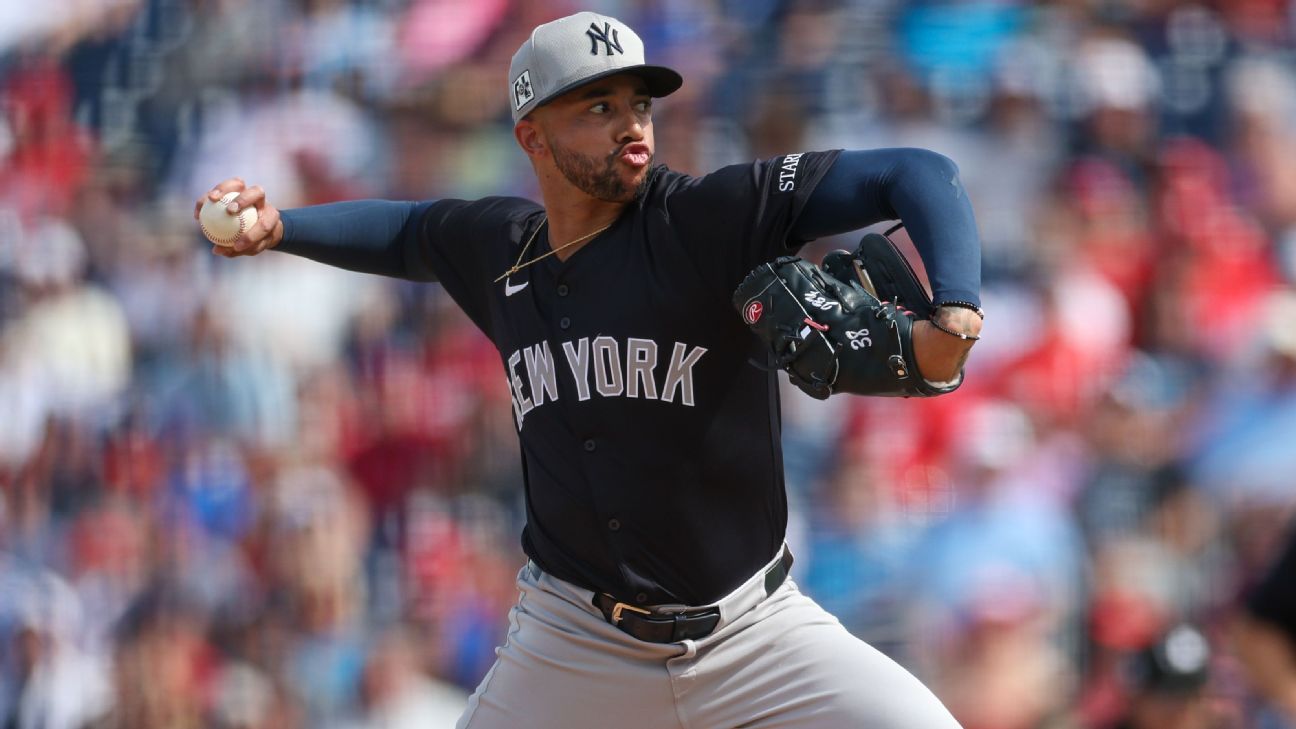
The New York Mets and reliever Devin Williams agreed to a three-year, $51 million deal, league sources told ESPN’s Jeff Passan on Monday night, giving the club a replacement for Edwin Diaz should the All-Star closer sign elsewhere.
The contract has no opt-outs or options but includes a $6 million signing bonus spread over the three seasons.
Williams will bolster the back end of a bullpen that the Mets are determined to substantially improve this winter. The question is whether he will be used as a setup man or a closer.
Williams’ role depends on whether the Mets re-sign Diaz, who opted out of his contract last month and is considered the top free agent reliever this offseason. The addition of Williams does not erase the possibility of a reunion with Diaz, and the Mets remain interested in bringing him back, sources told Passan.
Williams, 31, hit free agency after his lone season with the New York Yankees. Acquired last December from the Milwaukee Brewers for pitcher Nestor Cortes and National League Rookie of the Year finalist Caleb Durbin, Williams struggled to a career-worst 4.79 ERA over 67 appearances for New York. But underlying metrics — including a 2.68 FIP, a .195 expected batting average against, and elite strikeout, whiff and chase rates — suggest the bloated ERA is misleading.
He saved 18 games in 22 chances for the Yankees, but despite entering the season as the designated closer, he shared the role for most of the season after his rough start to 2025. Williams recorded four scoreless outings during the Yankees’ postseason run, but David Bednar earned both of New York’s playoff saves.
Before joining the Yankees, Williams was a premier back-of-the-bullpen pitcher during his six seasons with Milwaukee, first as a setup reliever for star closer Josh Hader and then as Hader’s replacement in the role.
After winning the NL Rookie of the Year in 2020 — when he posted a 0.33 ERA over 22 outings — Williams was named to two NL All-Star teams. During the three seasons before being dealt to the Yankees, Williams went 15-7 with 65 saves and a minuscule 1.66 ERA.
Williams has had an unorthodox style as a closer. Despite a fastball velocity below the big league average, he flourished thanks to one of the game’s best changeups, an offering so distinct that it acquired a nickname — “The Airbender.”
Now, Williams will be reunited with Mets president of baseball operations David Stearns, who was in that role for the Brewers for Williams’ first four seasons in Milwaukee.
Williams’ agreement with the Mets was first reported by The Athletic.
ESPN MLB Writer Bradford Doolittle contributed to this report.


The Orioles signed closer Ryan Helsley to a two-year contract Monday, continuing the remaking of their beleaguered pitching staff with one of the most sought-after relievers on the free agent market.
Sources told ESPN’s Jeff Passan that the deal is for $28 million and includes an opt-out after the first season.
While multiple teams sought to sign Helsley as a starter, the 31-year-old right-hander chose to remain in the role that made him a two-time All-Star and will hand him the ninth inning for the Orioles while retaining the ability to reach the open market after 2026.
Helsley, whose deal is pending a physical, is the second bullpen addition of the winter for Baltimore, which reacquired right-hander Andrew Kittredge from the Cubs after dealing him to Chicago at the trade deadline. With a moribund pitching staff, the Orioles went 75-87 and finished in last place in the American League East after consecutive postseason berths.
Orioles president of baseball operations Mike Elias trawled the free agent market for a late-inning option and landed on Helsley, who over his seven-year career has a 2.96 ERA in 319⅔ innings with 377 strikeouts, 133 walks and 105 saves.
Among the lowest points were the final two months of Helsley’s 2025 season, when, following a deadline deal from St. Louis to the New York Mets, he posted a 7.20 ERA and allowed 36 baserunners in 20 innings. Coming off an All-Star showing for St. Louis in 2024, which included a National League-leading 49 saves and a 2.04 ERA, Helsley saved 21 games with a solid 3.00 ERA for the Cardinals before the deadline, when he was sent to the Mets for three prospects.
Acquired to deepen a New York bullpen anchored by closer and fellow free agent Edwin Diaz, Helsley struggled badly during his time with the Mets. He blew saves in three straight appearances in mid-August and spent most of the past month working in low-leverage situations as New York collapsed down the stretch and missed the postseason.
Baltimore saw more noise than signal in Helsley’s downturn and is banking on Helsley’s stuff — which pitch-quality metrics rate as some of the best in the game — returning him to dominance. Helsley deploys one of baseball’s hardest fastballs, which averaged 99.3 mph in 2025, according to Statcast, ranking in the 99th percentile of all pitchers.
With incumbent closer Felix Bautista expected to miss the 2026 seasons following rotator cuff and labrum surgeries in August, the Orioles entered the winter with only right-hander Yennier Cano and left-hander Keegan Akin as veteran bullpen options. Beyond Helsley and Kittredge, Baltimore could add another reliever, sources said. The Orioles’ need for pitching help isn’t limited to their bullpen, either. Following the trade of Grayson Rodriguez to the Los Angeles Angels for left fielder Taylor Ward, Baltimore continues to pursue starting-pitching options to join left-hander Trevor Rogers and right-hander Kyle Bradish at the top of their rotation, sources said.
A fifth-round pick out of Northeastern State in Oklahoma, Helsley was a full-time starter throughout the minor leagues until he joined the Cardinals’ big league roster. From 2022 to ’24, he was arguably the most valuable reliever in the NL, alongside right-hander Devin Williams, a free agent with whom the Orioles spoke as well.
ESPN’s Bradford Doolittle contributed to this report.
UK
Sex offences against women not given same response as other high-priority crimes, inquiry after Sarah Everard murder finds

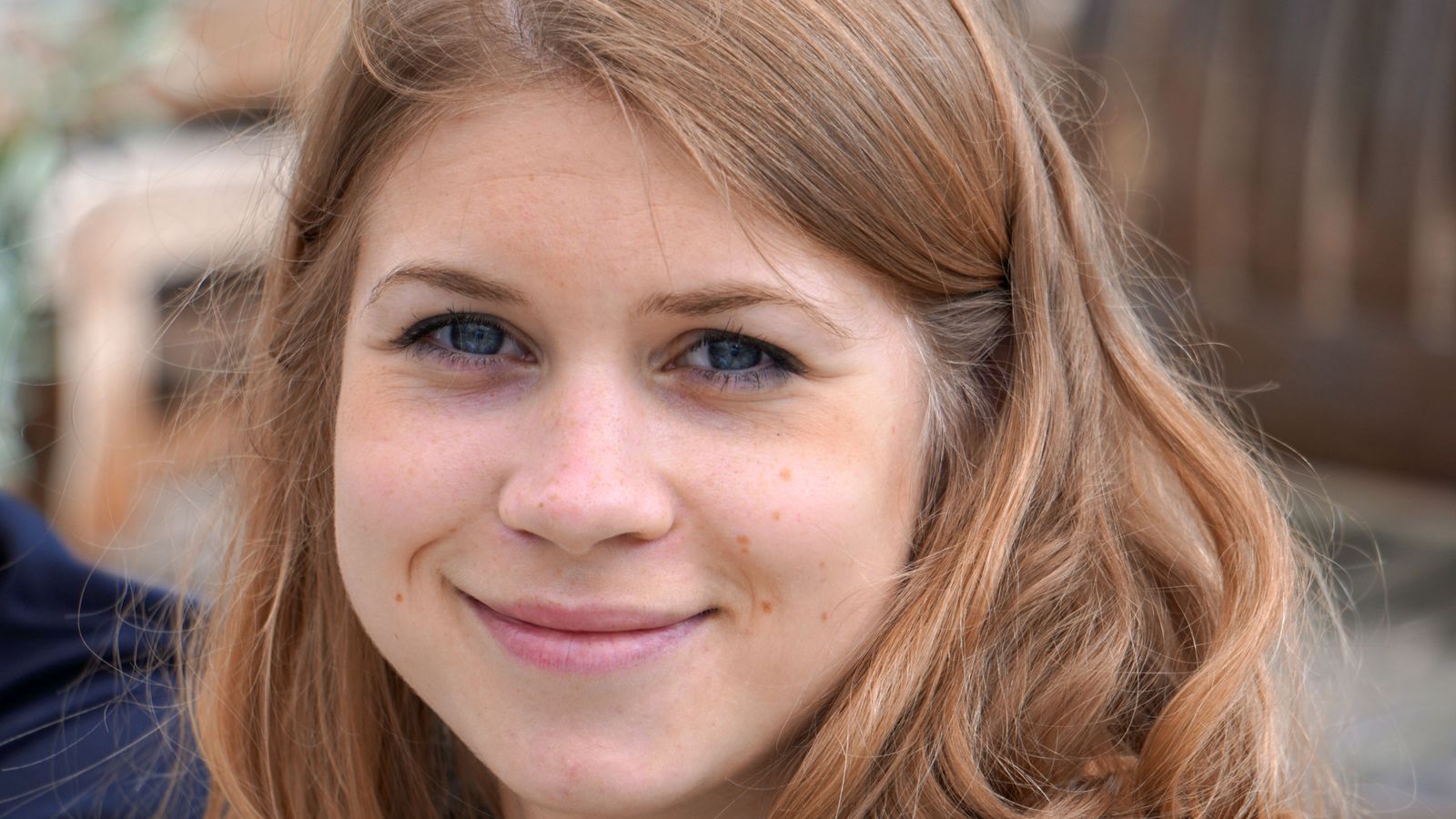
Sexually motivated crimes against women in public are not afforded the same response as other high-priority crimes, an inquiry into the rape and murder of Sarah Everard by off-duty police officer Wayne Couzens has found.
The inquiry was launched after Ms Everard’s death to investigate how Couzens was able to carry out his crimes, and look at wider issues within policing and women’s safety.
Ms Everard’s mother told the inquiry of her unrelenting grief, saying she was going “through a turmoil of emotions – sadness, rage, panic, guilt and numbness”.
Sarah Everard. Pic: PA
“After four years the shock of Sarah’s death has diminished but we are left with an overwhelming sense of loss and of what might have been,” Susan Everard said.
“All the happy ordinary things of life have been stolen from Sarah and from us – there will be no wedding, no grandchildren, no family celebrations with everyone there.
“Sarah will always be missing and I will always long for her.”
She added: “I am not yet at the point where happy memories of Sarah come to the fore. When I think of her, I can’t get past the horror of her last hours. I am still tormented by the thought of what she endured.”
Ms Everard, a 33-year-old marketing executive, was abducted by Couzens as she walked home from a friend’s house in south London in March 2021.
He had used his status as a police officer to trick Ms Everard into thinking he could arrest her for breaking lockdown rules.
‘No better time to act’
Publishing her findings on Tuesday, Lady Elish Angiolini, a former solicitor general for Scotland, said: “There is no better time to act than now. I want leaders to, quite simply, get a move on. There are lives at stake.”
The second part of the independent inquiry is split into two reports, with the first focusing on the prevention of sexually motivated crimes against women in public spaces.
Despite violence against women and girls being described as a “national threat” in the 2023 strategic policing requirement and it being mentioned as a high priority for the current government, Lady Elish found the “response overall lacks what is afforded to other high-priority crimes”.
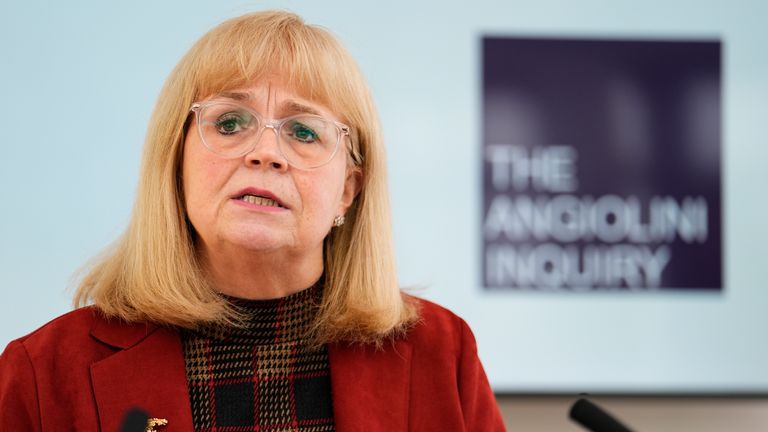
Lady Elish Angiolini announcing her findings. Pic: PA
She said her recommendation in the first part of the inquiry, that those with convictions and/or cautions for sexual offences should be barred from policing, has not yet been implemented.
Additionally, 26% of police forces have yet to implement basic policies for investigating sexual offences, including indecent exposure.
Lady Elish said: “Prevention in this space remains just words. Until this disparity is addressed, violence against women and girls cannot credibly be called a ‘national priority’.”
‘Women deserve to feel safer’
The inquiry chair said with a greater spotlight on the safety of women in public, women should feel safer – “but many do not”.
“Women change their travel plans, their routines, and their lives out of fears for their safety in public, while far too many perpetrators continue to roam freely,” Lady Elish said after her report was published.
“Women deserve to feel safer. They deserve to be safer.”
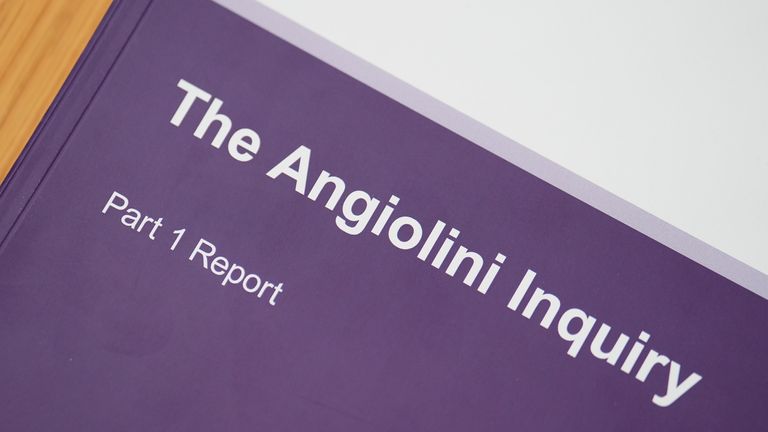
The cover of The Angiolini Inquiry, Part 1 Report, on a desk at the Chartered Institute of Arbitrators.
Pic: PA
The report found that there was a lack of data on sexually motivated crimes against women in public spaces, with Lady Elish calling it a “critical failure” that data on these offences is “difficult to obtain, patchy and incomplete”.
In the inquiry’s public survey of 2,000 people, 76% of women aged 18 to 24 reported feeling unsafe in public because of the actions or behaviour of a man or men.
A similar study for UN Women UK in 2021 found that 71% of women in the UK had experienced some form of sexual harassment in public, with higher rates of 86% for younger women aged 18 to 24.
‘No silver bullet’
She said sexually motivated crimes against women in public spaces are a whole society issue that requires a whole society response, involving government, police and other agencies working together to fix an “unacceptable” and “deeply disappointing” level of inconsistency in responses.
Recognising sexually motivated crime against women as a public health matter as well as a criminal matter was crucial, as these crimes were “not inevitable”.
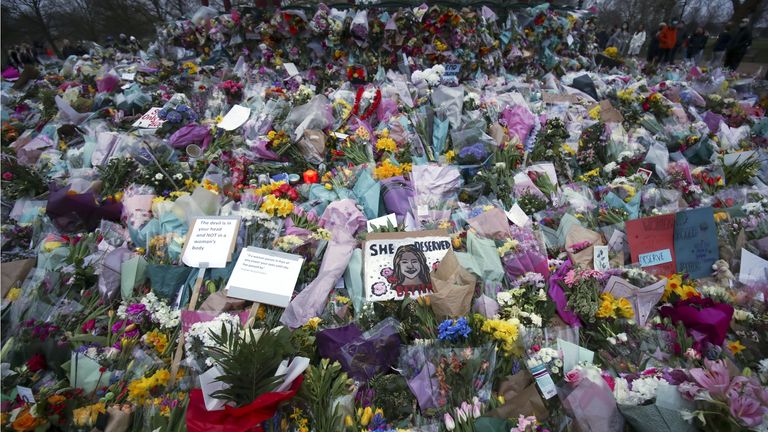
Floral tributes and a drawing of Sarah Everard were left at the Bandstand on Clapham Common, London. Pic: PA
The inquiry considers that “there is not one silver bullet” in tackling these crimes, instead calling for a “long-term commitment, cross-party agreement and a steady course in preventing these crimes – through education, thorough investigations and swift arrests – always with an unswerving focus on the perpetrators”.
Lady Elish’s 13 recommendations include:
• Focus on better collection and sharing of data at a national level
• Better and more consistent targeted messaging around the issues, which is to be managed centrally
• An information and intervention programme for men and boys – to be coordinated between the departments of education and social care as well as the Home Office – to create a culture of positive masculinity
• Improving the investigation of sexually motivated crimes against women and girls – recommending that the home secretary mandates police forces to follow particular procedures
‘Justice cannot only respond after harm’
Zara Aleena, a 35-year-old law graduate, was killed as she walked home from a night out in east London.
Her killer, Jordan McSweeney, was freed from prison nine days before he attacked Ms Aleena as she walked home in Ilford on 26 June 2022.
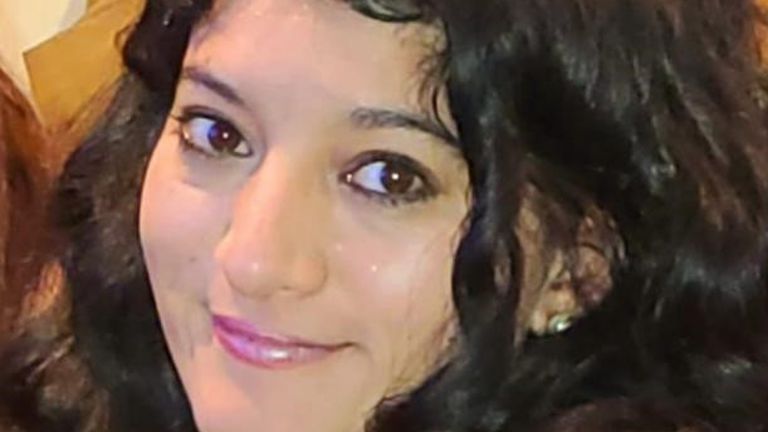
Zara Aleena. Pic: PA
Her aunt Farah Naz said after Lady Elish’s second report was published: “My niece, Zara Aleena, was walking home. That is all she was doing. Her death, like Sarah’s, was preventable.
“It occured because warnings were missed, risks were overlooked, and systems intended to safeguard the public did not function as they should. Zara’s case reflects the wider patterns identified so clearly in this report: systemic failure rather than isolated tragedy.”
She added: “Sarah’s death exposed a system compromised from within. Zara’s death shows that the gaps persisted – with fatal consequences.
“Sarah deserved safety. Zara deserved safety. Every woman deserves safety. Justice cannot only respond after harm – it must prevent harm.”
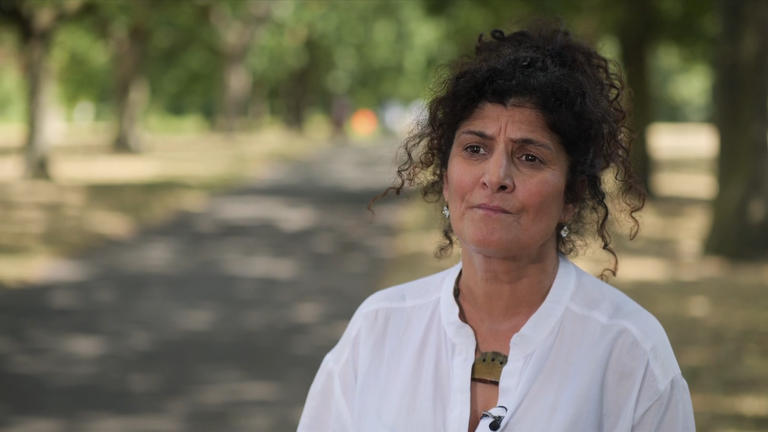
Farah Naz said Sarah Everard and her niece Zara Aleena ‘deserved safety’
‘Women can’t trust a system failing to change’
End Violence Against Women director Andrea Simon: “It is deeply concerning that, nearly two years on, policing has still not implemented basic reforms such as a ban on officers with sexual offence histories.”
“Women cannot be expected to trust a system that resists naming misogyny and racism and continually fails to change,” she added.
Deputy Assistant Commissioner Helen Millichap, director of the National Centre for Violence Against Women and Girls and Public Protection (NCVPP), said that the centre was already working “proactively to recognise, intervene and interrupt predatory behaviour in public spaces”.
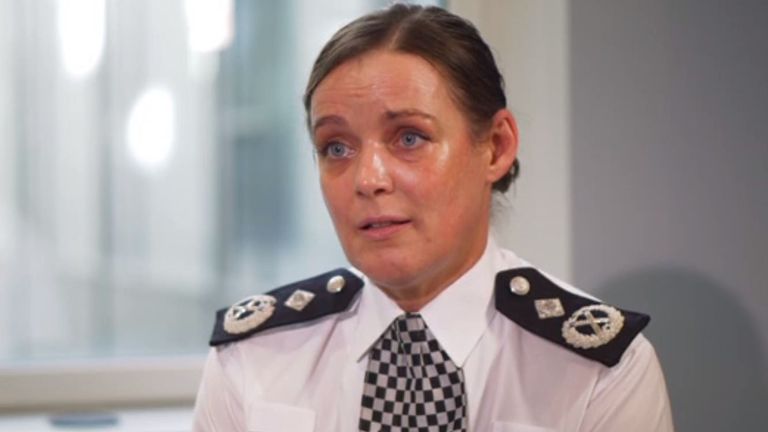
Deputy Assistant Commissioner Helen Millichap
“We should not wait for a crime to be reported to act and we have seen some very effective joint operations with partners that target the right places and work together to make them safer,” she said.
“We want this to feel consistent across policing and we know that sometimes it doesn’t. This report rightly challenges us to create that consistency, implementing what works and the NCVPP will play a critical role in setting national standards.”
Responding to the latest Angiolini Inquiry report, Home Secretary Shabana Mahmood said the report made it clear that women do not feel safe going about their lives today.
“This is utterly unacceptable and must change. A new £13.1 million centre will strengthen the police response to these crimes and drive real change, but more needs to be done,” she said, adding that the government would “carefully” the inquiry’s recommendations.
Stop ‘another Couzens’
The first part of the inquiry, published in February 2024, investigated how Couzens was able to abduct, rape and murder Ms Everard.
The report found Couzens should never have been a police officer, stressing there needs to be a “radical overhaul” of police recruitment to stop “another Couzens operating in plain sight”.
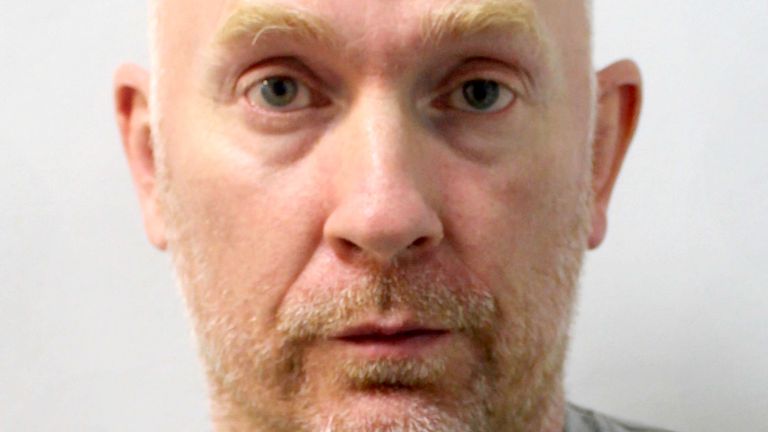
Wayne Couzens. Pic: PA
It examined Couzens’ career and highlighted how major red flags about him were “repeatedly ignored” by police vetting and investigations.
After the publication of the second report, Ms Everard’s family said in a statement that the report “shows how much work there is to do in preventing sexually motivated crimes against women in public spaces”.
They added: “Sarah is always in our thoughts, of course, and we feel the inquiry continues to honour her memory.
“So too does it speak for all women who have been the victim of sexually motivated crimes in a public space and all those at risk.”
Read more:
Women still feel unsafe on Britain’s streets
How Sarah Everard’s killer was caught
Timeline: Wayne Couzen’s behaviour and crimes
The second report of Part 2 of the inquiry will investigate police culture in regards to misogynistic and predatory attitudes and behaviours.
Following the sentencing of former Met Police officer David Carrick in February 2023, Part 3 of the inquiry was established to examine Carrick’s career and conduct.
Last month, Carrick was handed his 37th life sentence with a minimum term of 30 years to run concurrently after he was found guilty of molesting a 12-year-old girl and raping a former partner.
-
 Sports2 years ago
Story injured on diving stop, exits Red Sox game
-
 Sports3 years ago
‘Storybook stuff’: Inside the night Bryce Harper sent the Phillies to the World Series
-
 Sports2 years ago
Game 1 of WS least-watched in recorded history
-
 Sports3 years ago
Button battles heat exhaustion in NASCAR debut
-
 Sports3 years ago
MLB Rank 2023: Ranking baseball’s top 100 players
-
Sports4 years ago
Team Europe easily wins 4th straight Laver Cup
-
 Environment3 years ago
Japan and South Korea have a lot at stake in a free and open South China Sea
-
 Environment1 year ago
Here are the best electric bikes you can buy at every price level in October 2024