
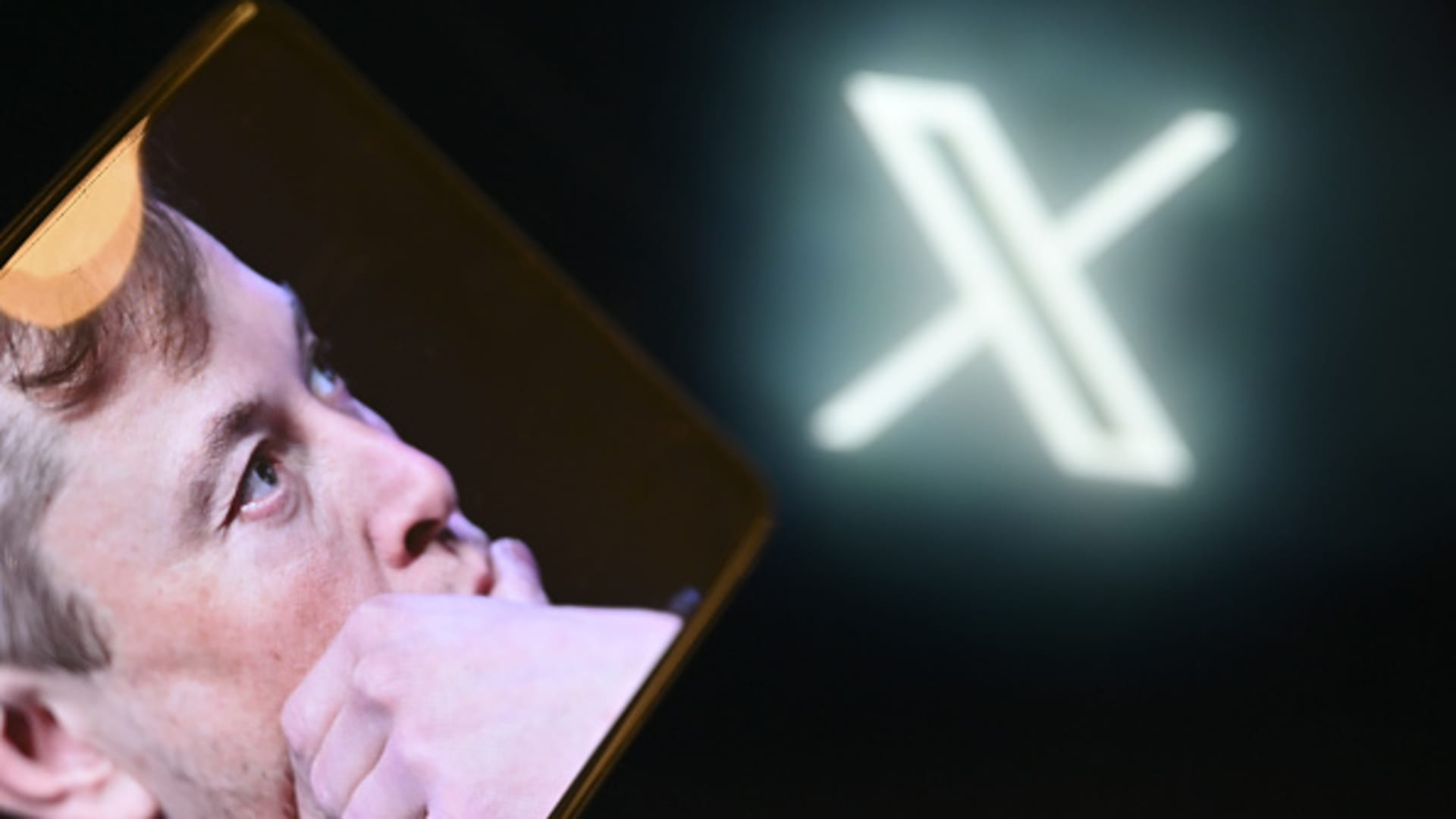
ADL CEO says Elon Musk’s insinuation to sue over defamation is merely a ‘threat of a frivolous lawsuit’

Harun Ozalp | Anadolu Agency | Getty Images
Elon Musk’s recent comments insinuating that the real-time messaging service formerly known as Twitter could file a defamation lawsuit against the Anti-Defamation League is merely a “threat of a frivolous lawsuit,” the nonprofit’s CEO Jonathan Greenblatt said Tuesday.
In a statement shared with CNBC, Greenblatt dismissed allegations Musk made over the Labor Day weekend, in which he claimed the ADL was “trying to kill this platform by falsely accusing it & me of being anti-Semitic.” The nonprofit’s CEO added that Musk’s “behavior is not just alarming nor reckless.”
“It is flat out dangerous and deeply irresponsible,” Greenblatt said. “We need responsible leaders to lead, to stop inflaming hatred and to step back from the brink before it’s too late.”
The ADL chief’s comments come after Musk claimed on Monday that the ADL was responsible for putting “pressure on advertisers” that led to a 60% drop in X’s advertising revenue. Musk alleged that the ADL “has been trying to kill this platform by falsely accusing it & me of being anti-Semitic,” ever since he bought the messaging service last fall in a deal worth roughly $44 billion.
Musk said X, the company formerly known as Twitter, would have “no choice but to file a defamation lawsuit” if the ADL continues to allegedly pressure advertisers.
Multiple civil rights groups and researchers have documented a rise in hate speech, racist comments and other inflammatory posts on X after Musk gained control of the messaging app last fall.
The Center for Countering Digital Hate nonprofit, for instance, published a report in June that claimed X failed to take action against several subscribers of Twitter Blue, now referred to as X Premium, when they posted inflammatory content.
In August, X sued the CCDH in federal court alleging that the nonprofit illegally obtained data from X using methods like data scraping to “falsely claim it had statistical support showing the platform is overwhelmed with harmful content.” X’s attorneys alleged that the CCDH’s studies were based upon “flawed methodologies” and caused advertisers to stop running promotional campaigns on the messaging service, thus damaging X’s business.
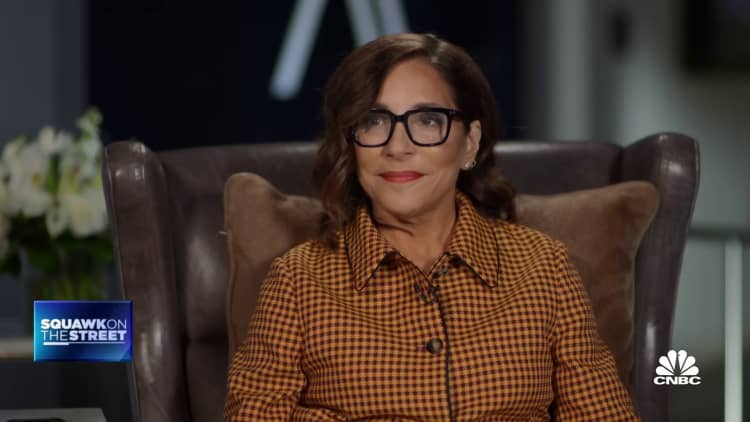
Last week, Greenblatt said in an X post that he had a “very frank + productive conversation” with newly appointed X CEO Linda Yaccarino on how “to address hate effectively on the platform,” adding that he “appreciated her reaching out and I’m hopeful the service will improve.”
Greenblatt said he would give both the former global advertising chief at NBCUniversal and Musk “credit if the service gets better… and reserve the right to call them out until it does.”
Shortly after Greenblatt commented about his conversation, #BanTheADL began trending on X as some users called for the nonprofit to be banned from the messaging platform. For instance, Nick Fuentes, a far-right livestreamer who has previously made antisemitic comments, urged his viewers to contribute to the #BanTheADL campaign.
Musk then began engaging with some of the anti-ADL posts on X, liking some of the comments and even responding to them.
“ADL has tried very hard to strangle X/Twitter,” Musk said, replying to the YouTube streamer Keith Woods, who the ADL has previously said has produced antisemitic content.
“It is profoundly disturbing that Elon Musk spent the weekend engaging with a highly toxic, antisemitic campaign on his platform — a campaign started by an unrepentant bigot that then was heavily promoted by individuals such as white supremacist Nick Fuentes, Christian nationalist Andrew Torba, conspiracy theorist Alex Jones and others,” Greenblatt said. “Finally, we saw the campaign manifest in the real world when masked men marched in Florida on Saturday brazenly waving flags adorned with swastikas and chanting ‘Ban the ADL.'”
X did not immediately respond to CNBC’s request for comment.
Disclosure: NBCUniversal is the parent company of CNBC.
Watch: X Corp. CEO Yaccarino: We’re keeping an eye on everything that Threads is doing.


Direxion signage at the New York Stock Exchange (NYSE) in New York, US, on Monday, Dec. 22, 2025. The holiday-shortened week started with gains in stocks amid a broad advance that saw a continuation of the bullish momentum on Wall Street.
Michael Nagle | Bloomberg | Getty Images
Motive, a company with software for managing corporate trucks and drivers, on Tuesday filed for an initial public offering on the New York Stock Exchange under the symbol “MTVE.”
The paperwork puts Motive among a fast-growing group of tech companies looking to go public in 2026. Anthropic, OpenAI and SpaceX have all reportedly considered making their shares widely available for trading next year.
Motive is smaller, reporting a $62.7 million net loss on $115.8 million in revenue in the third quarter. The loss widened from $41.3 million in the same quarter of 2024, while revenue grew about 23% year over year. The company had almost 100,000 clients at the end of September.
Ryan Johns, Obaid Khan and Shoaib Makani started Motive in 2013, originally under the name Keep Truckin. Makani, the CEO, is Khan’s brother-in-law.
Investors include Alphabet’s GV, Base10 Partners, Greenoaks, Index Ventures, Kleiner Perkins and Scale Venture Partners.
Motive’s AI Dashcam device for detecting unsafe driving “has prevented 170,000 collisions and saved 1,500 lives on our roads,” Makani wrote in a letter to investors. Most revenue comes from subscriptions, although Motive does sell replacement hardware and professional services.
The San Francisco company changed its name to Motive in 2022, and as of Sept. 30, it employed 4,508 people. Motive employs 400 full-time data annotators who apply labels that are meant to enhance artificial intelligence models.
Motive has ongoing patent-infringement litigation with competitor Samsara, which went public in 2021 and today has a $22 billion market capitalization.
WATCH: AI IPO boom next year? The changing 2026 IPO landscape
Technology
Why an analyst sees Meta shares getting back to record highs – plus, another tariff reprieve


A silicon wafer with chips etched into is seen as U.S. Vice President Kamala Harris tours a site where Applied Materials plans to build a research facility, in Sunnyvale, California, U.S., May 22, 2023.
Pool | Reuters
The U.S. will increase tariffs on Chinese semiconductor imports in June 2027, at a rate to be determined at least a month in advance, the Trump administration said in a Federal Register filing on Tuesday.
But in the meantime, the initial tariff rate on semiconductor imports from China will be zero for 18 months, according to the filing from the Office of the U.S. Trade Representative.
As part of an investigation that kicked off a year ago, the agency found that China is engaging in unfair trade practices in the industry.
“For decades, China has targeted the semiconductor industry for dominance and has employed increasingly aggressive and sweeping non-market policies and practices in pursuing dominance of the sector,” the office said in the filing.
The decision to delay new tariffs for at least 18 months signals that the Trump administration is seeking to cool any trade hostilities between the U.S. and China.
Additional tariffs could also become a bargaining chip if future talks break down.
U.S. President Donald Trump and Chinese President Xi Jinping reached a truce in the so-called trade war in October, as part of a deal that included the U.S. slashing some tariffs and China allowing exports of rare earth metals.
The USTR’s Tuesday filing states that tariffs will increase on June 23, 2027.
The notice is the next step in a process focusing on older chips that started during the Biden administration under Section 301 of the Trade Act.
The new 2027 date gives clarity to American firms that have said they are closely watching how U.S. tariffs could affect their businesses or supply chains.
The tariffs are separate from other duties threatened by the Trump administration on Chinese chip imports under Section 232 of the law.
-
 Sports2 years ago
Story injured on diving stop, exits Red Sox game
-
 Sports3 years ago
‘Storybook stuff’: Inside the night Bryce Harper sent the Phillies to the World Series
-
 Sports2 years ago
Game 1 of WS least-watched in recorded history
-
 Sports3 years ago
Button battles heat exhaustion in NASCAR debut
-
 Sports3 years ago
MLB Rank 2023: Ranking baseball’s top 100 players
-
Sports4 years ago
Team Europe easily wins 4th straight Laver Cup
-
 Environment3 years ago
Japan and South Korea have a lot at stake in a free and open South China Sea
-
 Environment1 year ago
Here are the best electric bikes you can buy at every price level in October 2024