
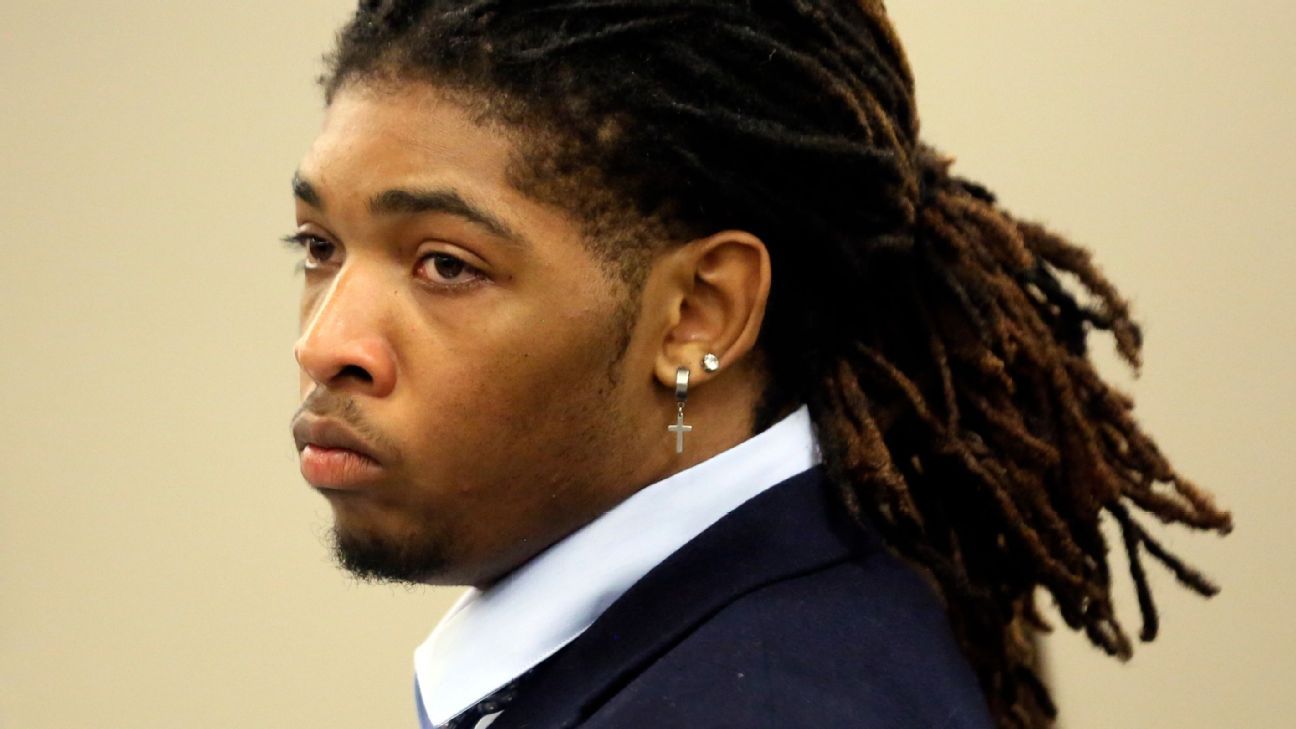
A football player, a killing and the elusive search for justice


-
David Hale, ESPN Staff Writer
Warning: This story contains graphic descriptions of violence.
THE DOOR SWUNG open before he could knock, just as it had the first time Isimemen “Isi” Etute visited Apartment 207. That time, Etute had come for sex. Now, he wanted answers.
It was May 31, 2021, just after 10 p.m., and the apartment above Hokie Mart on North Main Street in Blacksburg, Virginia, was dark, save for a hint of light sneaking through a kitchen window. Etute, with his phone’s flashlight on and stuffed in his pocket, walked inside, leaving two of his Virginia Tech football teammates in the hallway.
Above, on a half-flight of stairs, Etute could just barely make out the slight shape of Angie Renee, whom he had met on Tinder in early April. He was an 18-year-old freshman linebacker. According to her profile, she was a 28-year-old physician at a family health clinic. Before their first meeting, she had told Etute that, because of her job, discretion was paramount so she kept the apartment dark. Etute didn’t question the explanation, and even if he had tried to flick on the overhead light, it wouldn’t have mattered. The bulb was unscrewed.
From the staircase, Angie motioned for Etute to follow, leading him to the bedroom, where she asked him to sit on the left side of the bed, just as he had during their first encounter. That time, she had performed oral sex in a pitch-black room, and afterward, Etute’s teammates taunted and teased him, suggesting she might not have been who she claimed. Now, Etute told her to bend over the side of the bed so they could have sex. He wanted to “feel around and see if it felt like a normal woman.” She did as he asked, pulling her tights down, then grabbing Etute’s hand and moving it between her legs. It didn’t feel right.
With his left hand, Etute pulled the phone from his pocket and ripped the hood from Angie’s head. The light revealed what appeared to be a man with short dark hair and stubble.
Etute stepped back from the bed, dazed.
“Why didn’t you tell me you was a [man]?” Etute asked.
Angie spun around on the bed, looked up and smiled.
“I’m not,” Angie said in a soft voice, reaching for Etute’s pants.
Etute slapped Angie’s hand away and delivered a punch to the jaw, knocking Angie to the floor.
Etute punched again, then again and again. As Angie lay prone on the floor, Etute kicked Angie twice and ran for the door, leaving a trail of bloody footprints behind.
THE DOOR TO Apartment 207 was still open when John Smith and his son arrived on the night of June 1, 2021.
John had called his brother, Jerry, that morning and gotten no answer. That was strange, because Jerry typically picked up on the first ring. John tried back a few hours later. Still nothing.
Concerned, John made the short drive from Newport, Virginia, to Jerry’s apartment on Main Street in Blacksburg.
John walked inside and called for his brother while his son waited near the door. A bathroom light was on downstairs, but upstairs, it was dark, save the light from the alleyway that shone through the kitchen window. John climbed the half-flight of stairs, then turned left to face the bedroom. There, on the floor, was 40-year-old Jerry Smith, covered in blood, his broken glasses next to him. He was wearing a dark sweatshirt emblazoned with the words “Blacksburg Rescue Squad” and a pair of tights pulled down to his thighs.
John nudged his brother’s shoulder with his foot. The body was stiff. He pulled his phone from his pocket and dialed 911.
Jerry Smith had maintained numerous accounts on Tinder, Twitter, Facebook and other social media sites, posing as a 28-year-old woman named Angie Renee to lure straight men to his apartment, an investigation later showed. The photos he used were stolen from a former Virginia Tech student he had never met.
In reality, Smith was tall and thin, a middle-aged white man who had lived as openly gay for most of his adult life. During the previous two decades he had been charged with crimes ranging from fraud to sexual battery, and in the aftermath of Etute’s arrest, a litany of witnesses came forward accusing Smith of harassment, fraud and assault.
Etute, 18, was an early enrollee at Virginia Tech whose high school classmates had just celebrated their prom. He was 6-foot-3 and more than 220 pounds at the time, quiet, close with a handful of teammates but still new to a place where he had dreamed of football glory.
Months earlier, Jerry had complained to the building manager when security cameras were installed in the hallway, suggesting it was an invasion of privacy. Now, footage from those cameras showed three men outside Smith’s apartment on the night of May 31. They were identified as Virginia Tech football players Isi Etute, Jordan Brunson and Jalen Hampton. Only Etute went inside, staying less than three minutes. Eight bloody footprints traced his path back down the hallway to the exit.
Police arrested Etute two days later and charged him with second-degree murder, which carried a possible prison sentence of up to 40 years.
The particulars of the case were never in question. Prosecutors admitted Smith had used a fraudulent account to lure Etute to his apartment. Etute admitted inflicting the injuries that led to Smith’s death. But as the details of their relationship became public, the notion of justice became more complicated. There was the unsympathetic victim, the defendant portrayed as a naive teenager duped into a sexual liaison, and a knife hidden beneath Smith’s mattress — a weapon Etute didn’t know existed, but one that offered an opening to a self-defense claim at trial.
ESPN spoke with more than two dozen people — including Etute, his family, and Smith’s friends and neighbors — interviewed catfishing and cybercrime experts, reviewed security footage, and examined hundreds of pages of correspondence, police reports and trial transcripts to understand how two divergent lives intersected with such violence, and after the jury’s verdict, whether anyone felt justice had been served.
As the jury deliberated, John Smith stood on a veranda on the third floor of the courthouse. He shook his head, staring across the hallway at Etute and his crowd of supporters, and he wondered aloud whether his brother’s dreams would be the only ones that disappeared that night.
“Do you think,” John Smith asked, “he’ll get to play football again?”
JERRY PAUL SMITH was born May 18, 1981, and grew up in Giles County, Virginia, just a few miles from the Virginia Tech campus. Smith’s father, also named Jerry, worked at a local textile plant, and was killed in an industrial accident there when Jerry was 9. Jerry’s relationship with his mother, Sandy, was strained, and he had little in common with his older brother, John, according to Vicki Tickle, who moved next door to the Smith family in 1987.
Jerry had seizures when he was young, and the medication he took to treat them made his hands shake. He was self-conscious, shy and timid, Tickle said.
“Growing up,” she said, “he really had a hard life.”
Chelsea Keating, who was Smith’s classmate at Giles County High School, remembers him as an outsider, tall and lanky with a big heart and a twisted sense of humor.
“He was just a skinny kid with these big ears,” Keating said.
Tickle remembers Sandy Smith calling one afternoon when Jerry was in high school. She asked her to come by the house for a visit. When Tickle arrived, Sandy was sitting at the kitchen table. It was clear she’d been crying. Sandy made coffee, and her hands shook as she sipped from the mug. Finally she blurted out the reason for the visit: Jerry had told her he was gay.
“She didn’t take it well,” Tickle said.
Sandy told Tickle she loved her son, but she was concerned.
“I’m scared,” Tickle recounted Sandy saying, “that somebody’s going to hurt him.”
Giles County is a rural mountain community nestled in the Appalachian Highlands. It is a deeply conservative place, said Justin Callahan, who attended high school with Smith. It was, Callahan said, a miserable place for a teenager struggling to understand their identity.
“I was bullied relentlessly throughout elementary school and high school because people, I guess, perceived I was gay,” Callahan said. “I consider it nothing short of a miracle that I made it out of that alive.”
Finley Hartley moved to Giles County when she was a high school sophomore, and she immediately knew she didn’t belong. In Smith, she found a kindred spirit. She wore vintage men’s pants she had purchased at thrift stores. He spoke with a lilting, feminine, Southern twang, she said.
“What I remember is our shared goofiness, and, perhaps, a touch of shared nonconformity,” she said. “He wasn’t pretending to be macho, and I wasn’t pretending to be feminine.”
Smith took Hartley to his senior prom. It was nothing romantic, she said — “I truly didn’t yet know what queer was” — but for Hartley, it felt magical. She wore a dress. He wore a nice suit. For one night, she said, they belonged.
A few weeks later, Smith graduated. The last time Hartley saw him was a year or so later. Smith was visiting their high school, and she remembered rushing to the hallway to hug him.
“I credit [Smith] as a kind soul who befriended an outcast,” she said.
His former classmate Keating said he could be funny and outgoing, but Smith also had a reputation as a fabulist, frequently exaggerating his own accomplishments.
Keating heard about Smith telling classmates he had been accepted at Duke University. In reality, he enrolled at New River Community College in Dublin, Virginia, in the fall of 2001. He studied forensic science but didn’t receive a degree.
Keating hadn’t seen her old classmate in years when, in the spring of 2021, she read a news story about a man who was killed by a Virginia Tech football player in an apartment in Blacksburg. His name was Jerry Smith, but Keating couldn’t believe it was her Jerry — until she saw the photo that accompanied the story.
“Those were his ears,” she said. “That was Jerry Paul.”
ON THE OPPOSITE side of Virginia, Isi Etute was born Dec. 6, 2002, the third of David and Nichelle Etute’s four children. David met Nichelle in the late 1990s after immigrating to the U.S. from Nigeria. The pair settled near her family in the busy tourist haven of Virginia Beach.
Isi grew tall, with broad shoulders and an athletic build, a far closer resemblance to his mother than his father, but he remembers, as a kid, eating meals in front of the TV with David so the two could watch football.
Isi began playing when he was 6, and he was immensely competitive. Nichelle remembers a time when her son was 9 and he was kicked with a cleat during a flag football game, forcing him to the sideline with an injury. It was all she could do to keep him from running back onto the field.
At Frank W. Cox High School, Etute excelled playing receiver, linebacker and safety. His football career became central to his family — an army of aunts and uncles and grandparents invading stadiums every Friday to see him play. At the center of the fanfare was always his younger sister, who has Down syndrome along with several severe health issues that require around-the-clock care. Still, she never missed a game, showing up with a nurse in tow, cheering on her big brother.
Etute had a knack for connecting with people, his friend Natalie Jones said. He wasn’t always the best student, but he was quick with a joke and moved easily between cliques.
“I liked everyone to feel included,” Etute told ESPN in fall 2022.
Etute’s football career blossomed, and he earned scholarship offers from a number of high-profile colleges, including NC State, West Virginia and Wake Forest, but he was determined to play in his home state. He visited Virginia Tech once, on a trip with his older brother, Ehis, and he fell in love.
“He was pretty quiet,” coach Justin Fuente remembered, “but he was really excited to be there.”
Etute enrolled at Virginia Tech in January 2021, five months before the rest of his high school class graduated. He made the 300-mile drive along US-460 from Virginia Beach to Blacksburg with his mom and dad. It would be his first time alone, away from his close-knit family and the world he had known growing up.
At trial, Etute’s lawyer asked him whether his parents had offered any parting advice as they delivered him to college that day.
“They just told me to stay focused in school and to not get involved with drugs or alcohol,” Etute testified. “And to just watch who I hang around with.”
ETUTE ARRIVED AT Virginia Tech as death rates from the COVID-19 pandemic peaked in the U.S. An early exposure meant Etute spent his first few weeks in Blacksburg in isolation, and by the time spring practice arrived, he had met few people outside the team.
On Tinder, however, it was easy for a new arrival on campus to meet people.
Etute swiped right on Angie Renee on April 10, 2021, and sent the first message at 9:37 a.m.: “Yo.”
Etute had heard stories of catfishing before, but he found little to be wary of, as many of his friends and teammates had used Tinder without issue. Nearly everyone he knew used the app to find dates. A 2020 study by Pew Research found that more than half of college students use some sort of dating app. For athletes, Etute said, it wasn’t uncommon for women to come across as particularly forward.
Etute and Angie exchanged several messages before she offered an invitation to her apartment. Etute was initially concerned about the meeting and asked to bring a friend. Angie agreed, messaging that she would have sex with both of them. That night, Etute and teammate Da’Shawn Elder rode scooters to Angie’s apartment, arriving around 9:45 p.m. It was raining, and Etute’s cellphone battery was nearly dead.
The men entered through a door that faced a side alleyway, walked up a flight of stairs then down a long hallway to Apartment 207. The door opened as they approached.
“I was scared instantly,” Elder testified. “It was just dark, and I didn’t really like the whole atmosphere.”
Angie led both men into the bedroom and motioned toward the left side of the bed, but Elder refused to follow and instead turned to leave. Etute chased his teammate down the stairs and asked him to return, but Elder wouldn’t. He picked up his scooter and rode away.
Undeterred, Etute went back to the apartment and asked Angie to charge his cellphone. Etute then followed her to the bedroom and sat on the left side of the bed. Angie pulled off Etute’s pants and performed oral sex for “probably seven or eight minutes,” according to Etute.
Elder had called several teammates and explained the situation, and they insisted he return to the apartment and force Etute to leave. So he circled back, climbed the stairs, walked down the long hallway and opened the door to Apartment 207.
“I was scared for my life,” Elder testified, “but I was scared for his because he went back.”
Etute testified that, when he heard Elder at the door, he told Angie to stop and he pulled up his pants. Before he left, Angie handed him $50. He grabbed the cash and his phone, then met Elder at the door. When they reached the street, Etute looked at his phone. He had a text from Angie that she had sent the first time he left the apartment, when his phone battery was nearly dead.
“I’ll pay you $50,” it read. “I’ll be your sugar momma. I want you to keep coming back.”
MONTHS BEFORE ETUTE arrived at Virginia Tech, Fred Jones was relaxing in his Blacksburg apartment when a Facebook message popped up from a woman he didn’t know.
“Hey, sexy,” it read.
Her name was Angie Renee. She said she had recently graduated from Duke. Her profile included photos of a young, white brunette, and she shared additional pictures of herself out with friends.
Jones, who is straight, Black and was 31 at the time, wrote back, offering little information. He worried he was being scammed, but he was curious.
Angie’s responses quickly became graphic. She sent Jones several images of a woman’s genitals, and invited him to her apartment. But due to her job, she said, she couldn’t let him see her face.
“I live above Hokie Mart also I am doctor so I must be discreet,” read one message Jones shared with ESPN, which was followed by an offer of oral sex.
Jones was among the more than three dozen people who reached out to police or defense attorneys in the aftermath of Etute’s arrest and alleged similar interactions with Jerry Smith, some dating back nearly a decade.
Smith’s first known arrest came four months before Etute was born. He was training to become an EMT in August 2002, when his bunkmate at the Read Mountain fire house in Roanoke told police that, while he was sleeping, Smith reached into his boxer shorts and touched his genitals. Police reports show Smith, then 21, was booked into Botetourt County jail, but sentencing records were destroyed after the standard 10-year period.
According to police records and background checks compiled by Etute’s defense team, Smith was cited, arrested or involved in at least 36 criminal incidents in Virginia — ranging from charges of felony larceny and felony embezzlement to a conviction for computer trespass. None resulted in more than a few days of jail time.
In Blacksburg, Smith worked for a number of restaurants while claiming to be the vice president of the Roanoke Regional Restaurant Group, a company he had founded that used his apartment as its corporate address and had no other employees. He founded an LGBTQ+ advocacy group as well, but the nonprofit had no online presence, physical office or other employees.
It’s unclear exactly when Smith began to impersonate women on the internet, but a police report filed in Roanoke suggests he’d been using the “Angie” alias since at least 2015, when a mother discovered sexually explicit Facebook messages between her underage son and a person named Angie. She hired a private investigator, who ultimately tracked the account back to Smith. No charges were filed.
Liz Tabulous lived with Smith off and on for three years in the mid-2010s, and she said Smith routinely announced he was expecting a date, then would turn off the lights in the apartment and request Tabulous keep her distance. Over time, she grew suspicious. Nearly all of the dates were Black men, she said, and most appeared to be young.
Smith and Tabulous were sharing an apartment in Roanoke on Dec. 26, 2014, when Tabulous told police she awoke to a Black man rummaging through her purse around 2 a.m. She’d been out for drinks with Smith that night, then returned to the apartment to sleep. According to police reports, Smith had been pushed to the ground by one man, while another said Smith had given him permission to take money from her purse. The building and apartment both had safety code locks on the doors. Smith denied knowing how the suspects had entered.
In May 2016, Smith was living in Roanoke when he called police to say he woke up to a Black male choking him. He said he fought the suspect off, sustaining minor injuries, including scratches on his neck, ear and back, before running to the local fire department for help. Police noted nothing was missing. There is no record of any subsequent arrests.
After Smith’s death, police received additional reports covering the three previous years, recounting incidents of young, straight men receiving unprompted messages on social media from a woman named Angie Renee, or matching with her on dating sites, frequently followed by an invitation to an apartment above the Hokie Mart.
Angie Renee’s profile had been reported to Tinder as a potential fake several times, but a Tinder spokesperson said the account holder was always able to respond to the automated verification request and prove the account was not a bot. At the time, Tinder offered users an option to have a verified symbol on their profile by uploading a selfie that the app then used to verify that the pictures on the account were of the user. The profile of Angie Renee did not have this verification badge. Tinder has since made this step required.
Fred Jones saw too many red flags in his 2020 interaction with Angie Renee. He texted details to a friend, who responded that Angie Renee had reached out to him, too. Neither went to the apartment.
It was only after he read details of Etute’s arrest that Jones realized he’d been trading messages with Jerry Smith. Days later, he called Etute’s defense team and offered to help.
THE STORY OF Etute’s encounter made the rounds among his teammates. Several of his friends, including Elder, teased him, suggesting Etute could’ve gotten a sexually transmitted disease and wondering whether Angie “could have been a dude,” according to testimony. Etute said he was tested for STDs but brushed off the suggestion that Angie was a man as a “joke.”
“I was still sure it was a female, but it was possible,” Etute testified when asked whether he thought Angie was a male.
Angie continued to text Etute, asking him several times to return to the apartment. Now wary of the situation, Etute testified that he blocked the number but that she soon began to text from other numbers, too.
As the semester drew to a close, Etute was still bothered by the encounter. He had gone home to Virginia Beach after classes ended in May and had recounted the incident to a friend, who advised Etute to reconnect with Angie to learn the truth.
Etute was back near campus on May 31, 2021, attending a girls’ high school soccer game in Roanoke when he got a call from teammate Jalen Hampton, who said he, too, had matched with Angie Renee.
Hampton’s introduction to Angie followed a similar script to Etute’s. They had connected on Tinder, and, after an initial exchange of messages, Angie invited Hampton to meet for sex.
Hampton spoke with Angie on the phone that afternoon and, although he found the conversation “sketchy,” he still went to the apartment.
The door opened before he knocked. It was dark, but he could make out the silhouette of a tall, slender figure. Hampton stood in the doorway, worried he might be robbed.
Over text, Angie had explained that she worked at a hospital and discretion was critical so she kept the apartment dark. But after he arrived, Hampton asked to see her face.
“I already told you,” she said, “you can’t.”
Hampton spent just a few minutes in the apartment, attempting to make small talk to ease his discomfort, but he couldn’t shake the feeling he was being set up, so he left.
Less than a minute later, Hampton’s phone began to ping. Angie sent a slew of texts, saying that he was “annoying” and that if he had concerns, he should talk to his teammate, Isi Etute.
“Do you think it could be a man?” Etute asked Hampton.
“Yeah,” Hampton said. “It could have been.”
Etute asked Hampton to return to the apartment to find out, but Hampton refused to go alone. Then, Etute’s phone pinged with a message from Angie: “Put in a good word with Jalen.”
Nearly two months after his first visit, Etute would return to the apartment with Hampton and another teammate, Jordan Brunson. If Angie was a man, they would run, Etute testified. If Angie was a woman, another sexual liaison might occur. Either way, he’d have closure.
At 9:45 p.m., Etute texted Angie that he was coming to the apartment.
Shortly before 10 p.m., Jerry Smith FaceTimed his brother, John. Jerry was in bed, and he spoke briefly with his 13-year-old nephew.
At 10:07 p.m., Etute, Hampton and Brunson arrived at the door to Apartment 207. Before Etute could knock, it opened.
THREE MINUTES LATER, Etute rushed out into the hallway, breathing heavily and crying. He pulled off a blood-spattered Virginia Tech sweatshirt as he darted toward the stairwell. Elder and Brunson, who had both waited in the hallway outside, followed.
Etute retreated to the curb, his knuckles bloodied, and refused to speak.
“He seemed broken,” Elder said, “like everything that was in him just shattered.”
They did not call 911 or report the incident to police. Despite the bloody footprints he had left on his way out of the building, Etute testified that he had seen only a small amount of blood on Smith’s face and that he did not believe he had seriously hurt him.
The three men departed the scene, and Etute drove Brunson to an off-campus apartment. During the car ride, Brunson testified, Etute said just four words: “It was a guy.”
Etute then drove back to the house where he’d been staying between semesters and phoned his older brother, Ehis.
He cried as he shared details of the incident, ignoring repeated calls from Elder and Brunson, who now worried their teammate might be suicidal.
“I wouldn’t even say [I was] angry,” Etute later testified. “I was destroyed. … I just felt violated and lied to and just tricked into doing sexual acts.”
The next morning, Etute attended football drills, but he said it was mostly a blur. When practice ended, he drove his BMW into the mountains along Highway 460, past the Smith homestead. He found a place he could pull off and park. He sat on the hood of the car and stared out over the vast expanse of rolling hills.
“It was a feeling like I escaped from reality,” Etute said. “I was just there, alone, and not worrying about anything else.”
ETUTE SAID HE had slept for less than two hours from the time he left Smith’s apartment on May 31 to the moment police arrived at his door shortly before 6 a.m. on June 2.
“I already know what this is about,” he told them.
The night before, police had found the nearly unrecognizable body of Jerry Smith. He had injuries to his eyes, cheeks and lips. At least four teeth were knocked out. At trial, the commonwealth’s medical examiner said frothing around Smith’s mouth suggested he had inhaled blood from his facial injuries, and although she could not estimate how long it took Smith to die, she said it was possible he had lain on his floor for hours before taking his final breath.
In an interrogation room at the Blacksburg police station, Etute answered questions from lead detective Ryan Hite for nearly an hour. He spoke nervously as he recounted his time in Smith’s apartment, and when Hite pressed him about his mental state, Etute said he was upset, “because he got his dick sucked by a dude,” according to Hite’s testimony.
During questioning, Etute told detectives he believed he had punched Smith five times and kicked him once. Although police never specifically asked Etute whether he had acted in self-defense, he did not suggest he had feared for his life, nor did he say Smith had reached for the mattress, where police later discovered the knife. The only defense Smith offered during the fight, Etute said, was a swatting motion, which he demonstrated for police.
Near the conclusion of the questioning, police told Etute that Smith was dead.
Etute broke down. He later testified that he pictured his future evaporating as Hite’s words hung in the air.
“I was in a state of shock,” Etute told ESPN. “I froze up. This was serious. I was panicking.”
Hampton, Elder and Brunson were also questioned by police, and all were released. It was clear from security camera footage that none had entered Smith’s apartment.
Etute was arrested and booked on a charge of second-degree murder.
It was only after police completed their search of Smith’s apartment, hours after interviewing Etute, that they discovered a knife between the mattress and box spring. It was a standard kitchen knife with a serrated edge and a black handle, the blade less than 6 inches long. It was found on the left side of the bed, where Etute had twice been instructed to sit. The handle pointed out an inch or two from the edge of the box spring.
The weapon would become the cornerstone of Etute’s self-defense claim.
ETUTE’S TRIAL BEGAN in the Montgomery County Courthouse in Christiansburg, Virginia, almost a year to the day after Smith’s death. The jury — nine women and four men — was tasked with determining whether Etute was guilty of second-degree murder, which carried with it a possible 40-year prison sentence, guilty of the lesser count of voluntary manslaughter or not guilty by reason of self-defense.
Defense attorney Jimmy Turk told the jury Etute had been lured into a liaison by “nothing less than a sexual predator,” who preyed predominantly on young Black men “for his own sexual gratification, not caring about any consequences that it had on his young victims.”
Two years after he had traded messages with Angie Renee on Facebook, Fred Jones sat on a wooden bench outside the courtroom, hoping to testify on Etute’s behalf. For three days, Jones waited. He was never called. Nearly all of Smith’s history of catfishing was barred from the trial, save his online interactions with Etute and Hampton, because Etute had been unaware of it at the time of Smith’s death.
Turk showcased Smith’s interactions with his client with poster-sized screen shots of the Angie Renee Tinder profile and the graphic text exchanges Angie had with Etute.
The prosecution, led by assistant commonwealth’s attorneys Patrick Jensen and Jason Morgan, focused on the details of the incident. Of the eight witnesses called by the commonwealth, only Smith’s brother, John, knew him when he was alive, yet his testimony rarely veered into the personal, beyond an acknowledgement of Jerry’s sexuality during Turk’s cross-examination.
Turk: “You knew he was posing as a straight female, correct?”
John Smith: “No. … I didn’t approve of being gay, so I wasn’t [aware].”
Smith’s autopsy showed nearly every bone in his face had been broken — his nose, his right eye, both cheekbones, the bone over the upper lip and his upper jaw. Images of Smith’s battered face flickered on a screen in the courtroom as the medical examiner explained that Smith had suffered multiple hemorrhages in the right frontal part of his brain, which caused his brain to swell. The medical examiner said Etute had kicked Smith in the face at least twice — the first covering Etute’s sandal in blood, and a second one that left a bloody imprint of the Tommy Hilfiger logo and tread pattern on Smith’s cheek. There were no defensive wounds on Smith’s arms or hands. The medical examiner ruled Smith had died of blunt force trauma.
“There is not a lot to unpack in this case,” Morgan told the jury, acknowledging the lie that initially brought Etute to Smith’s apartment. “And Mr. Etute had every right to be angry at the situation. But Jerry Paul Smith did not deserve to die.”
Turk suggested there was far less certainty and introduced “the reach” — the moment when Etute said he saw Smith reach toward the left side of the bed. Before Etute entered the apartment, Brunson warned him to be careful, noting Angie could have a gun hidden somewhere. When Smith reached back toward the bed, Turk argued, Etute’s first thought was of a gun. He believed running from the apartment would leave him vulnerable.
That Etute was unaware of the knife stashed beneath the mattress was immaterial, Turk said. Its existence offered ample proof that Smith was dangerous and that Etute was right to be afraid.
Turk cast Smith as the monster, pushing police on whether Smith, himself, would have been charged with a crime for sexual assault by ruse. He portrayed Etute as “a typical teenager” with a bright future who had never before been charged with a crime.
During his testimony, Etute was so soft-spoken that jurors repeatedly asked him to speak louder or for the court to provide a microphone. Etute appeared embarrassed when reading aloud the explicit text messages Smith sent him.
“I was destroyed,” he testified. “I would never intentionally try to harm anyone, especially to the point of death, ever. I’ve never gotten into a fight my whole life, and those were not my intentions at all.”
In his closing argument, Turk pleaded with the jury to see Etute as a victim, breaking down in tears as he described his relationship with his client.
“I’ve got three daughters,” Turk told the jury, “and here is a young man sitting over there that, if I had a son, that’s exactly who I would want to have.”
In Jensen’s closing argument, he implored the jury to dismiss the notion of self-defense and, at the very least, find Etute guilty of voluntary manslaughter.
“I cannot explain to you why Jerry Smith created a profile on Tinder stating that he was a female wanting to meet or hook up or match with young males,” Jensen said in his closing argument. “I can’t explain it to you. I wish I could. There is one person who could have explained it, and that was Jerry Smith. We’ll never get that answer because the defendant killed Jerry Smith.”
AS THE JURY deliberated, friends and family of Smith and Etute stood in the promenade outside the courtroom.
John Smith, surrounded by family who had insisted from the outset that Jerry Smith was no predator, glared at Etute from across a long hallway. During preliminary hearings, family members had told TV reporters that Smith “would never hurt a fly” and wore matching T-shirts that read “Justice for Jerry.”
A few feet away, Etute’s family hugged and cried. Brunson, Hampton and Elder took turns wrapping their arms around their former teammate. Etute said he had felt “numb” through much of the trial, and it was only as the jury deliberated that he fully grasped what was at stake.
“It was a lot of emotions,” Etute said. “I was sweating. I was trying to keep everything together, but seeing my folks crying in front of me, I broke down.”
After three hours of deliberations, court resumed. Etute sat silently next to Turk with his head bowed. The jury filed back with a verdict, which the clerk read aloud: “We the jury find the defendant, Isi David Etute, not guilty.”
A gasp arose from the audience.
Etute fell to his knees and slumped under the defense table, remaining there as a celebration erupted around him.
John Smith smacked the bench in front of him, a thud echoing through the courtroom, before Jerry Smith’s cousins, uncles and aunts, friends and neighbors left the courtroom.
“We couldn’t believe it,” said neighbor Vicki Tickle, who attended the trial. “I was shocked.”
Dave Gittings, the Virginia Tech team chaplain, led Etute’s legal team and family in a prayer — one of thanks, he said, and for forgiveness.
“It was an opportunity, yes, to celebrate,” Gittings said, “but also to be reminded that a life is gone. Part of my prayer was gratitude and relief and thankfulness, but the other part was just sincere humility after such a tragic thing.”
JOHN SMITH STILL lives in Giles County with his two sons, where he owns a trucking company that bears the family name. Jerry’s death and the jury’s verdict, Tickle said, have left a hole in the family.
John Smith declined to speak for this story, although he told ESPN at the trial that he believed Etute met with Jerry willingly and that his brother was not a predator. He vehemently disagreed with the verdict.
“I saw pain in him that I’d never seen before,” Tickle said of John. “That was his brother. And his sons thought the sun rose and set with Jerry.”
Blacksburg today retains barely a hint of Jerry Smith. A few remnants of his work in local restaurants remain — an old local news clip where he discusses the impact of the pandemic on small businesses, lapsed LLCs.
At the D.P. Dough restaurant where Smith worked, a manager denied knowledge of Smith’s activities. She had known him, she said, but she wasn’t interested in talking. She wanted the story to go away.
Blacksburg Police and the commonwealth’s attorney’s office both declined ESPN’s request for comment on the case and the jury’s verdict.
Etute’s arrest had initially been followed by a flurry of concern from local and national LGBTQ+ groups who wondered whether Smith’s death had been a hate crime, but after the verdict, ESPN asked for comment from nearly a dozen advocacy groups around Virginia, including several affiliated with Virginia Tech, and none replied.
“I don’t know that Jerry’s life meant as much to people as it should have,” said former classmate Justin Callahan.
Smith’s high school friend Chelsea Keating still lives in Blacksburg, and she said many of her friends and neighbors — people she had grown up with who had known Smith as a boy — shrugged off his death and cheered the verdict.
“Everybody is sort of justifying [Smith’s] murder because of all these things that came out,” Keating said. “But Etute didn’t know that. It’s not like he was being a vigilante. I’m not saying what Jerry did was OK, but he didn’t deserve to be stomped to death.”
Tickle gets emotional now thinking about the sweet kid who used to walk to her house and ask her for help tying his necktie because he could never quite learn to do it on his own.
He had wanted to be a paramedic, she said, and she remembers a time when her husband, Bill, was bedridden in 2007, in the late stages of cancer. In a failed attempt to climb from his bed, he had ripped out his catheter. The house was in chaos, with Tickle’s children yelling, “Daddy’s bleeding!” Tickle called her neighbor.
Jerry Smith ran to her house, called for medical assistance and draped a blanket over Bill. Then he pulled up a chair and sat next to him, patting his head and smoothing his hair to keep him calm until medics arrived.
The Jerry Smith she knew was so much better than any of the stories he had created.
“I told him so many times to just be himself, to be honest and kind, and not to worry about trying to impress anyone with lies,” Tickle said. “People would love him a lot more for just being Jerry, but he just wanted to be thought of as more.”
IT HAS BEEN more than two years since Etute darted from the apartment above Hokie Mart. He’s 20 now. He insists he has grown.
“[My mother] is helping me along the journey getting closer to God, too,” Etute said. “It changed the way I think about everything, really.”
There are lots of days when Etute thinks back on all that has happened and wishes things were different, wishes he had never met Jerry Smith. Things happen for a reason, though, he said. That’s one of those lessons his mother has preached.
“The only thing that I could take from it is just, at least they’re not going to be able to do this to anyone else,” Etute told ESPN after the trial. “If, let’s say, I was even locked up right now, I’d just still be thinking, ‘At least he’s not doing this to more people and just messing up people’s lives.'”
After the trial, Etute reached out to a number of coaches who had recruited him out of high school, but none was willing to offer a roster spot. The trial had ended well past the time in which most schools were still adding transfers, and Etute, who had been suspended from Virginia Tech’s football team upon his arrest, had now missed a year of training and practice. But more than that, there was a stigma attached to his name, as one coach who had originally recruited Etute told ESPN. A jury found him not guilty, but he had killed someone.
Brunson, Elder and Hampton all transferred from Virginia Tech as well. None found a scholarship at another Power 5 school. Brunson landed at Miami (Ohio), Elder at Middle Tennessee and Hampton at Elon. All declined to talk to ESPN, but Elder’s mother wondered whether her son was seen as a pariah for his role in the events leading up to Smith’s death.
Although Etute said few people from Virginia Tech stayed in touch after his arrest, his former coach was the one who found him a new place to play. Justin Fuente was fired midway through the 2021 season — less than six months after Etute’s arrest — but he felt compelled to help.
Fuente reached out to Iowa Western Junior College and facilitated an offer.
“I felt like I owed it to him,” Fuente said. “Every part of this is just a tragedy, but I didn’t want his life to be ruined because of it.”
Iowa Western athletic director Shane Larson said the school had numerous conversations with Etute, his family and coaches before bringing Etute to campus.
In August 2022, Etute moved to Council Bluffs, Iowa, a small town on the edge of the Missouri River, where he’s a general studies major and hopes to become a physical therapist. His brother, Ehis, enrolled at Iowa Western, too, and he spent the 2022-23 academic year living in a dorm room next to Isi’s.
Iowa Western won the 2022 junior college national championship, finishing with a 10-2 record. Etute didn’t play a snap. He lost more than 30 pounds during his time under house arrest, and he used the year to train with the team and get back into playing shape.
It was time, too, to come to terms with all that has happened in his life and begin to script a new path forward. That’s his focus now, he said.
With a little more than two minutes left in the first quarter of Iowa Western Community College’s 2023 opener, Etute jogged onto the field for his first official snap of football in nearly three years.
There were only a few dozen fans on the visiting side of the bleachers in Dodge City, Kansas. He had no family in attendance, and there were no news cameras there to chronicle the moment. He wore a white Reivers jersey with the No. 35 on the back and no nameplate.
On his third snap of the game, Etute came off the edge and helped wrap up the ball carrier in the backfield. There was no fanfare, no celebration, no obvious sign of all that had come before.
When Etute was first arrested, he said he believed he might never see the outside of a prison cell again. After the verdict was delivered, and Etute was officially set free, he said he felt as if he was “walking on eggshells” for weeks.
Now on a football field 1,200 miles from Virginia Tech, Etute was mostly reserved on the sideline, always on the periphery of a scrum of players celebrating a turnover or recapping a play, but he was in a place that felt good.
Turk’s family has remained close with Etute. They still text weekly, and in the summer, Etute visits Turk’s lake house.
“He’s in a good spot now,” Turk said. “His head is on straight. He’s had time to reflect.”
Etute wants to believe in a future beyond Jerry Smith, one where his life is defined by his friends and family and his success on the field. But he can’t forget.
“I never would’ve thought I’d be responsible for taking a life,” Etute said. “I always feel bad about it, but at the same time, I try to just move forward. I ask for forgiveness every day.”
Etute’s history isn’t common fodder in Council Bluffs, but occasionally, he said, a teammate inquires about how he landed at Iowa Western. Sometimes he recounts it all. Other times he tells them they can go read about it. The story is out there.
Tonya Simpson contributed to this story.


-
Andrea Adelson
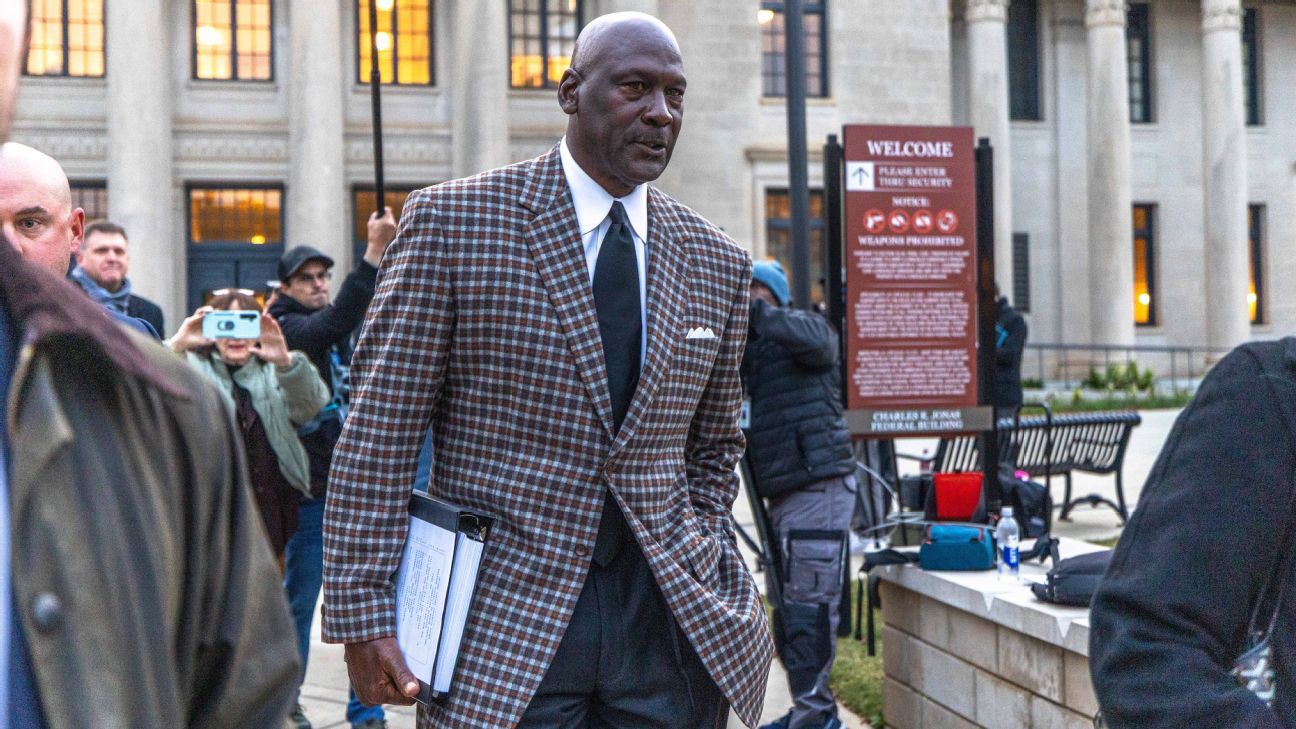
THE JOKES ARE easy enough to make between “old man” Haynes King and his position coach, the oldest man to ever win the Heisman Trophy.
Twenty-five years ago, when Chris Weinke took home the award as a 28-year-old senior, his age became a nonstop topic of conversation. Today, older quarterbacks dot the college football landscape, their advanced ages met with a collective shrug.
“Sometimes I try and mess with him and say, ‘I couldn’t quite catch you on the age, but I tried. I gave it my all,” the 24-year-old King said of Weinke, his quarterbacks coach at Georgia Tech.
Older players have been normalized, thanks to the transfer portal and the pandemic, which granted freshmen an extra year of eligibility if they wanted it. Nearly 40 quarterbacks from the 2020 class came back this year for one more season at the FBS level. Plus, with NIL and revenue sharing, some quarterbacks are opting to stay in college as opposed to leaving school for the NFL draft. And sixth-year quarterbacks like King and Vanderbilt’s Diego Pavia entered the Heisman conversation this year. (Pavia was named a finalist.) Still, if more quarterbacks are 24 years old these days, nobody is quite as aged as Weinke was when he played.
“The landscape of college football has obviously changed,” Weinke says. “But that was a point of contention when I won it. When I walked into the room that evening when they were making the Heisman announcement, I didn’t think I was going to win it, because there was so much chatter that I didn’t deserve to win it because I was older.
“But I’ve got it now, and they can’t take it away.”
Perhaps the conversation around what Weinke did in 2000 at Florida State should be reframed. What made that season so remarkable had nothing to do with age, and everything to do with how he turned himself into a star after his college football career nearly ended. Twice.
FLORIDA STATE OFFENSIVE coordinator Mark Richt was sitting in his office in 1996, when then-coach Bobby Bowden came in with some news. At the time, Richt was closing in on getting a commitment from the top quarterback prospect in the country, Drew Henson. That is, until Bowden told him about a promise he had made to Weinke six years earlier.
Weinke had initially signed with the Seminoles in 1990, joining a quarterback room that included Brad Johnson, Casey Weldon and fellow freshman Charlie Ward. But he also had a lucrative offer to play baseball with the Toronto Blue Jays organization, after being selected in the second round of the MLB draft. Weinke had until classes started in late August to decide which sport he was going to play, so he opted to begin fall practice with Florida State while weighing his options.
He went through fall two-a-days, and with decision day closing in, Richt remembers one quarterback meeting in particular. To make sure his quarterbacks understood what he was teaching them, he would ask them questions.
Richt turned to Weinke as they watched tape and asked, “What coverage is this on this play?”
“Cover 3?” Weinke guessed.
“No.”
“Cover 1?
“No. It’s quarters coverage,” Richt said.
Weinke responded: “Whatever.”
“That was the day before school started,” Richt said. “I said, ‘I got a feeling this kid is going to leave and play pro baseball.'”
Sure enough, Weinke left. But Bowden told him if he ever decided to return to football, he would have a spot waiting for him at Florida State.
After six years of bouncing around the minor leagues and getting as high as Triple-A, Weinke decided to give up on baseball, but not playing sports entirely. He wanted to go back to football. Richt reminded Bowden that if they took Weinke, they would lose Henson.
“Well, I promised him if ever wanted to play football again, I’d let him come back,” Bowden told Richt.
Richt asked to speak with Weinke first.
“I was telling him all the rules and regs, I was telling him about [quarterback] Dan Kendra already on campus and when I’m done giving him my spiel to try to get him not to come, he says, ‘Hey coach, let me ask you one question. If I’m the best guy, will I play?’ I said, ‘Of course.’ He goes, ‘I’m coming.’ We lost the other quarterback to Michigan. I guess we came out OK with Weinke.”
Nobody quite knew what to expect when he arrived on campus as a 25-year-old freshman in 1997, but he quickly became one of the guys, in part because he had a large house off campus and threw his fair share of parties where all were invited.
The larger issue was that he arrived as a baseball player. Weinke had not picked up a football in six years.
Getting his form back would take time and reps. Lots and lots of reps. Former teammates and coaches described Weinke’s competitiveness, work ethic and relentless demeanor as driving forces. He would never settle for anything less than his best effort; and he expected the same from his teammates.
That is why he woke up before class started and went to watch tape with Richt. Why he organized every voluntary 7-on-7 workout and essentially made them mandatory. Because if someone failed to show up, he would go and find them and bring them out to the practice field. He developed such a great rapport with his receivers that he would be able to anticipate where they would be at any given time on the field.
“Our chemistry was like none other,” said Marvin “Snoop” Minnis, his leading receiver in 2000. “He knew what I was going to do before I did. He would have the ball to me before I even got out of my break, and as a receiver, you love that so you can react and make the move you need to make on the defender.”
Weinke played sparingly in 1997 but won the starting job in 1998. Things started well enough in the opener. Then in his second career start, at NC State, Weinke threw a school-record six interceptions, and the criticism began.
“I remember getting back to the house, we had an answering machine back then. The most brutal messages you could imagine, cursing and threats, and ‘You don’t need to play quarterback,'” said Jeff Purinton, who was working in the Florida State media relations department at the time and was one of Weinke’s roommates. “Even going to the store, people would talk trash. Chris just weathered it and used that as an opportunity to learn.”
Weinke rebounded from there, helping Florida State reel off eight straight wins. That last win, against Virginia, was nearly the last time he saw the field.
TOWARD THE END of the first half, Weinke got sacked and felt pain in his right arm. He initially thought he had a shoulder injury. Weinke went into the locker room at halftime, and as trainers began to lift off his shoulder pads, he had a sharp pain in his neck. He was fitted with a brace and underwent further testing.
When the doctor walked in to deliver the results, Weinke remembers asking, “Before you share any news, I just want to know one thing. Am I ever going to play college football again?”
“Well,” the doctor said. “Do you want the good news or the bad news?”
The doctor said Weinke needed surgery to insert a titanium plate into his neck after X-rays showed a chipped bone lodged against a nerve in a vertebra, ligament damage and a ruptured disc.
“Maybe the better news,” the doctor said. “You were a centimeter away from being paralyzed from the neck down.”
“Mom hears that, and dad hears that. They’re not real excited about me getting back out on the field,” Weinke says. “But they knew that burning desire inside of me that wanted to get back out there and be a part of the team. The doctors told me that I’d be stronger with a titanium plate in my neck, so I was going to do whatever it took. But those were probably the hardest seven months of my life.”
Weinke initially had complications post-surgery and had to be in bed for five weeks. He lost 30 pounds, and his throwing arm atrophied so severely that it became impossible for him to even lift a football. He had to teach himself again how to throw, starting first with a tennis ball. Throwing it 5 yards was a huge accomplishment. Seven hours a day, day after day, he rehabbed, steadily progressing, all the while unsure whether he would make it all the way back.
Then, there he was in the season opener against Louisiana Tech, completing 63% of his passes, throwing for 242 yards and two touchdowns. That was the start of an undefeated national championship-winning season in 1999, as Florida State went wire to wire as the No. 1 team in the nation.
Weinke opted to return for one more season, because he wanted to get Bowden another national championship. After throwing for 3,432 yards, 29 touchdowns and 15 interceptions as a junior and winning the title, Weinke became one of the Heisman front-runners headed into 2000.
TWENTY-FIVE YEARS LATER, there is one play from that season that remains a part of Seminoles lore: Weinke to Minnis, 98 yards, in a 54-7 blowout win over Clemson in mid-November.
On the second series of the game, backed up near the goal line, Florida State ran what Bowden referred to as a “gym play” — one that was never practiced on the field, but rather behind closed doors inside the gym away from prying eyes. “Or spies,” Richt said.
Weinke dropped back deep into the end zone and faked a handoff to Jeff Chaney, turning his back to the defense and tucking the ball as if he no longer had it. Minnis had gone in motion and made the safety think he was blocking for a handoff, then took off down the middle. By the time Weinke delivered the ball, Minnis was wide open. Easy touchdown. Easy 54-7 win.
“He was so ice cold in that moment,” Minnis said. “The confidence that he had in the O-line to just stand there, then turn around and hit me for the touchdown. For him to make that fake as beautiful as he did and then put that ball on a dime just tells you how great Chris Weinke was and how deserving he was of that Heisman Trophy.”
There was another game that added to his legend: The regular-season final against the rival Gators. Weinke had missed the 1998 game in Gainesville because of his neck injury. Nothing would keep him from playing them in The Swamp in 2000. Not even the flu.
Weinke was so sick the night before the game, he stayed at the home of team doctor Kris Stowers so he would not be around the rest of the team in the team hotel. He rode with Stowers to the game on Saturday, and walked through all the tailgate lots on the way to the locker room. Trainers gave him an IV before the game started, and Weinke proceeded to throw for 353 yards and three touchdowns in the 30-7 win.
Florida State was well positioned to make it back to the national title game, and Weinke was also well positioned in the Heisman Trophy race. But as the weeks drew closer to the announcement of the Heisman finalists, critics waged a campaign against Weinke — saying his age should disqualify him from consideration. That angered his teammates.
“He dominated that year, and it had nothing to do with age,” Minnis said. Added running back Travis Minor: “When he got there, he wasn’t looking like a Heisman Trophy candidate or winner. He really put the work in. You saw the difference from when he first got there to when he had that Heisman Trophy season. He earned everything that he won.”
Florida State knew it had to start working on messaging with Heisman voters as the debate over his age raged on. Ultimately, school officials came back to one main point: It was hard to argue with the stats. Weinke had led the nation with 4,167 yards passing and 33 touchdowns and had the Seminoles playing in a third straight national championship game.
“He was playing baseball for six years. It wasn’t like he was throwing the football every day and training to be a starting college quarterback,” Purinton said. “The other part is he could have died when he broke his neck. There were two points in time where he had to go back and start football over again.”
Weinke said the narrative taking shape around his age “pissed me off.”
“I was playing college football, so if I’m playing college football, then I should be eligible to win any award that they’re giving out in college football,” Weinke said. “That was just a little motivating factor for me.”
Weinke ultimately made it to New York with fellow finalists Josh Heupel, LaDainian Tomlinson and Drew Brees. His teammates watched on television screens from the team banquet Florida State had scheduled for that night.
“Sitting in the Downtown Athletic Club coming out of a commercial break and them announcing your name will ring in my head till the day I die,” Weinke said.
Weinke beat out Heupel in one of the closest votes in Heisman history, taking a 76-point margin of victory. His teammates whooped and hollered for him back home. Weinke took the stage and said, “With apologies to Lou Gehrig, I feel like I’m the luckiest man in the world.”
WEINKE BEGAN COACHING 10 years after he won the Heisman. He first came to know King while working as an assistant at Tennessee in 2020. When King hit the portal in 2022, Weinke had moved on to Georgia Tech. His first call was to King.
“Playing quarterback is kind of tricky,” King says. “The stars have to align, whether it’s people around you and or how you’re playing. Even in my class, there were guys like Bryce Young and Anthony Richardson and C.J. Stroud, already in the league, and I’m still in college like Chandler Morris, Diego Pavia, Carson Beck. Everybody’s timeline is different.”
While the debate over his age has been left to the dustbin of history, what Weinke did that year may never be replicated. In an era of sport and position specialization, quarterbacks rarely play multiple sports at elite levels — let alone leave football behind for six years before coming back to it. In the 25 years since Weinke won the Heisman, Brandon Weeden at Oklahoma State is perhaps the only notable quarterback to play baseball and then stick around in college football into his late 20s.
“To go through the things that I went through was clearly the road less traveled,” Weinke said. “Being an older guy and not playing football for seven years, then fulfilling a dream of playing for Coach Bowden, then breaking my neck, and coming back and giving Coach Bowden his first undefeated season, and ultimately having my name called for the Heisman Trophy, I just felt blessed.”

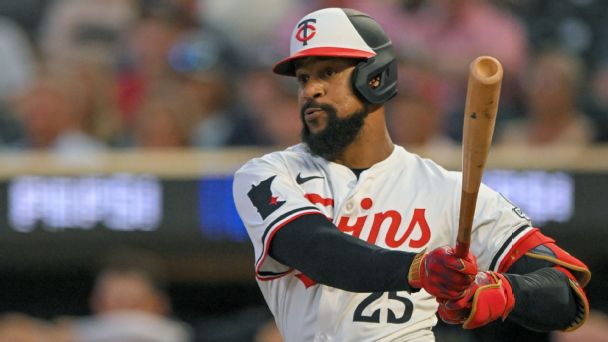
The MLB winter meetings have come and gone, and though there’s always a hope that there will be plenty of action, that’s not always the case. The 2025 meetings didn’t have a $700-plus million deal like last year, but there were still a number of impactful free agent signings, although no groundbreaking trades.
Veteran slugger Kyle Schwarber chose to return to the Philadelphia Phillies on a five-year deal in the first major splash of the meetings. The Los Angeles Dodgers added to an already star-studded roster by signing closer Edwin Diaz to a three-year, $69 million contract that sets a record in AAV for a reliever. The Baltimore Orioles then joined the fun by adding a veteran slugger on a five-year deal of their own in Pete Alonso.
We asked our MLB experts who were on the scene in Orlando, Florida, to break down everything that happened this week. Which moves most impressed them — and which most confused them? Who were the biggest winners and losers? What should we make of the trade market? And what can we expect next?
What is the most interesting thing you heard this week in Orlando?
Jorge Castillo: That a Tarik Skubal trade is likely. Here’s what we know: Detroit Tigers president of baseball operations Scott Harris can shut down speculation by simply saying he is not trading Skubal and he has not done that. Instead, he noted this week that there aren’t any “untouchables” on his roster. Trading the best pitcher in baseball when you’re trying to compete would upset the fan base, but the Tigers, knowing re-signing Skubal next winter is unlikely, appear open to it.
Bradford Doolittle: Managers’ responses to questions about how they plan to handle the new ABS system were interesting. No one seems fixed on a protocol just yet, but what had not occurred to me is that catchers are likely to be the triggers for challenges for the defense. So instead of the possible reality in which catcher value was undermined by a full-blown automated system, this structure actually will enhance it — and we’ll have a new set of statistics to track.
Alden Gonzalez: Tyler Glasnow‘s name has come up in conversations, and the Dodgers would not be opposed to moving him. He’s poised to make a combined $60 million over the next two years, with either a $30 million club option or a $21.6 million player option in 2028. But the quality of his stuff continues to tantalize executives throughout the industry, and there are certainly a fair share of teams that will bank on him staying healthy enough to make it worthwhile. Maybe he’s part of the package that brings Tarik Skubal to L.A. A longshot, perhaps, but wilder things have happened.
Jeff Passan: The Texas Rangers are in listening mode on star shortstop Corey Seager, which doesn’t mean the two-time World Series MVP is by any means going to be moved but reflects the Rangers’ willingness to overhaul the team beyond their trade of Marcus Semien. To be abundantly clear: Texas isn’t looking to shed the remaining $186 million on his contract. The return would need to overwhelm the Rangers. But they are facing a payroll crunch, and with Pete Alonso landing a $155 million deal and Kyle Schwarber reaping $150 million, Seager’s deal is quite appealing. He’s only 31, he plays an excellent shortstop and of all the position players ostensibly available via trade or free agency, he is the best.
Jesse Rogers: Simply put, that deals for many of the major free agent pitchers aren’t close to being finalized. It almost feels like the beginning of the offseason for starting pitchers, who are meeting with teams to try to ignite their market. There has been a steady pace of signings for relievers — especially at the high end — but other than Dylan Cease, starting pitchers have been slow to agree to deals. That will change — at least in part — because Japanese starter Tatsuya Imai has a deadline of Jan. 2 to sign, but even that is still several weeks away.
What was your favorite move of the offseason so far?
Doolittle: I’m not too excited about any of them so far — not that I think they’re all bad, just nothing tickles my fancy. So the bar is pretty low. I’ll go with the Toronto Blue Jays going big on Cease. Keep that crest wave Toronto is on rolling.
Gonzalez: As a general rule, any free agent deal this time of year tends to be an overpay. And that’s what makes the Dodgers’ deal for star closer Diaz so appealing. Diaz received the highest annual value ever for a reliever, but they were able to get him for only three years (and, as they so often do, defer some of the payments). The Dodgers capitalized on the New York Mets‘ signing of Devin Williams — which opened the door for Diaz’s departure — and addressed their own biggest need with the type of short-term, high-AAV contract that is always their preference.
Rogers: I love Baltimore going for it, agreeing to a deal with Alonso. The Orioles had a bad season in 2025 and are doing everything they can to change their fortunes for next season — even if there are some inherent doubts about acquiring an aging first baseman for big money. The bottom line is Alonso is going to mash in Baltimore and perhaps bring some leadership to a team that needs a veteran presence. I love the big swing here — pun intended.
Which team’s actions (or lack thereof) had you scratching your head?
Doolittle: It’s probably too early to judge any particular team for its offseason in total, but the most perplexing move for me was Baltimore dealing Grayson Rodriguez to the Los Angeles Angels for one year of Taylor Ward. That definitely makes my head itch.
Castillo: The Orioles prioritizing a slugger after acquiring Ward from the Angels was unexpected. Baltimore does not have a shortage of young position player talent. Starting pitching, not offense, was their pressing need — especially after trading Rodriguez for Ward. But the Orioles offered Schwarber a five-year, $150 million and quickly pivoted to Alonso when Schwarber chose the Phillies, landing the former Mets first baseman with a five-year, $155 million deal that surpassed industry projections. The pressure remains on Orioles president of baseball operations Mike Elias to acquire a frontline starter, which he has plainly stated is an offseason priority.
Passan: What the New York Mets did over a 24-hour period to end the meetings — miss out on slugger Schwarber, lose closer Díaz to the two-time defending World Series champion Dodgers and lose Alonso, their franchise home run leader, to the Orioles — felt like a bloodletting.
Collapses like the Mets’ have consequences, and president of baseball operations David Stearns is reshaping them to his liking. Defensive liabilities are a no-no. Record-setting deals for relief pitchers are verboten. How the Mets proceed is anyone’s best guess, but let’s not forget: Steve Cohen is still the richest owner in baseball, and that opens a world of possibilities. But if this period of inaction isn’t remedied through decisive moves — an influx of talent either through free agency or trades — the Mets’ playoff hopes will end before they’ve begun.
After a lot of buzz ahead of the meetings, it was pretty quiet on the trade front. What is one big deal you think could go down from here?
Gonzalez: The Miami Marlins have been engaged in trade conversations around Edward Cabrera, a 27-year-old starting pitcher with three controllable years remaining. And the Orioles have emerged as a front-runner, as first reported by The Athletic. There are a number of starting pitchers available at the moment. Sonny Gray has already gone from St. Louis to Boston, and Cabrera could be next to move.
Passan: A second baseman is going to move. Maybe multiple. There is too much interest in Ketel Marte, Brendan Donovan and Brandon Lowe for a deal not to be consummated. It’s not just them, either. Jake Cronenworth is available. The Yankees have listened on Jazz Chisholm Jr. The Mets’ overhaul could include moving Jeff McNeil.
Marte and Donovan are the clear prizes, with Arizona’s and St. Louis’ respective asking prices exceptionally high. Which is where, at this point on the calendar, they should be. Especially with all of the teams that could use a second baseman (Boston, Pittsburgh, San Francisco, Seattle, New York Mets) or that would be willing to replace theirs.
Rogers: Where there is smoke, there is fire, meaning Washington Nationals starting pitcher MacKenzie Gore will be moved. His name came up a lot in Orlando and there are enough motivated teams in part because he’s good and affordable. An American League East team, such as the New York Yankees or Orioles, fits for Gore — especially the latter, which might have an extra hitter or two to spare after signing Alonso. Gore fits in Baltimore on several levels.
Who was the biggest winner — and loser — of the week?
Castillo: The Mets were the biggest loser. Losing Diaz and Alonso on consecutive days two weeks after trading Brandon Nimmo is a staggering sequence not just because they are all All-Star-caliber players, but because they were so integral to the franchise and beloved by the fan base. This doesn’t mean the Mets can’t emerge as winners this season. President of baseball operations David Stearns & Co. have time to rebound. They certainly have moves to make. But this was an ugly week for Mets fans, one they’ll never forget.
Passan: The Dodgers were the biggest winner, filling their clearest need with one of the best closers in baseball, Díaz. Cincinnati, in the meantime, is the biggest loser.
Free agents of Schwarber’s ilk rarely entertain the idea of going to small-market teams, but the Reds had a built-in advantage: He was from there. Considering the scarcity of such possibilities, the Reds– one big bat away from being a real threat to win the NL Central — needed to treat Schwarber’s potential arrival with urgency and embrace their inner spendthrift. They had the money to place the largest bid. They chose not to. And they missed, a true shame considering the strength of their rotation and the likelihood that similar opportunities won’t find them again anytime soon.
Rogers: The Phillies were the biggest winner. Where would they be without Schwarber? Perhaps it was fait accompli he would be returning, but until he signed on the dotted line, some doubt had to exist. His power simply can’t be replaced, meaning the Phillies’ whole trajectory this offseason would have changed had he left. Now, they can keep moving forward on other important decisions, such as what to do at catcher and if Nick Castellanos still fits their roster. Checking the Schwarber box removes a major potential headache for the franchise. Conversely, even if it was a long shot, the Cincinnati Reds losing out on Schwarber has to hurt. As important as he is to the Phillies, his impact in Cincinnati could have been even more meaningful. He instantly would have elevated the Reds on and off the field.
Which team is under the most pressure to do something big after the meetings?
Castillo: The Mets for the reasons I stated above. Stearns obviously believed he needed to make changes to the roster after such a disappointing season. But this is a major, major overhaul that goes beyond on-field performance. Diaz, Alonso, and Nimmo were beloved core Mets and key to the franchise’s fabric. The pressure is on Stearns to ensure the jarring changes will produce success.
Doolittle: Cincinnati. The Reds muffed the Schwarber situation in a major way. I’m not sure what their actual chances were of signing him, but they should have at least matched what the Phillies offered. The fit between the player and what he’d add to the city and the clubhouse culture while addressing the roster’s biggest need in an emphatic fashion was a set of alignments hard to replicate. There is no suitable pivot from here. But the Reds need to do something — and they need to stop making excuses for why they don’t.
Gonzalez: The Mets. Their decision to not pay a premium for cornerstone players prompted Diaz to leave for L.A., Alonso to depart for Baltimore and their fans, understandably, to be up in arms. Now, they must react. They still have needs to address in their rotation, but they have to get aggressive with their lineup before all of the premium bats come off the board. Going after Cody Bellinger, and potentially stealing him from their crosstown rivals, feels like the natural pivot.
Passan: The Blue Jays have a chance to seize control of the AL East even more than they did in winning the division this year. Whether that means signing Tucker, Bo Bichette or both, they’re spending in the sort of fashion the Yankees and Red Sox used to — and taking advantage of the window of opportunity that presents is imperative.
Toronto, long mocked for its failures in free agency, is now a destination for players enthralled by the brand of baseball the Blue Jays play as well as the deep pockets of ownership. If you’re going to spend $210 million on Cease, that’s a sign: It’s all-in time, and opportunistic maneuvering would pay huge dividends for Toronto.
Rogers: The Yankees. For once, they are the team that needs to respond after the Blue Jays beat them on the field and now so far in the offseason. Toronto keeps adding while New York should try to at least maintain what it has — meaning Bellinger, or perhaps Tucker, should be in Yankees pinstripes as soon as possible. If the Yankees can add Imai, they’ll match Toronto’s addition of Cease. That would be a good thing. The two teams aren’t that far apart in talent, but Yankees general manager Brian Cashman can’t take his foot off the gas. The pressure is on in New York again.
-
 Sports2 years ago
Story injured on diving stop, exits Red Sox game
-
 Sports3 years ago
‘Storybook stuff’: Inside the night Bryce Harper sent the Phillies to the World Series
-
 Sports2 years ago
Game 1 of WS least-watched in recorded history
-
 Sports3 years ago
Button battles heat exhaustion in NASCAR debut
-
 Sports3 years ago
MLB Rank 2023: Ranking baseball’s top 100 players
-
Sports4 years ago
Team Europe easily wins 4th straight Laver Cup
-
 Environment3 years ago
Japan and South Korea have a lot at stake in a free and open South China Sea
-
 Environment1 year ago
Here are the best electric bikes you can buy at every price level in October 2024