

Earth is exceeding ‘safe operating space for humanity’, study says


Earth is exceeding its “safe operating space for humanity” in six of nine key measurements of its health, and two of the remaining three are heading in the wrong direction, a new study has said.
The planet’s climate, biodiversity, land, freshwater, nutrient pollution and “novel” chemicals (human-made compounds like microplastics and nuclear waste) are all off-kilter, according to a group of international scientists.
Only the acidity of the oceans, the health of the air and the ozone layer are within the boundaries considered safe, and both ocean and air pollution are heading in the wrong direction, the study in the journal Science Advances found.
“We are in very bad shape,” said study co-author Johan Rockstrom, director of the Potsdam Institute for Climate Impact Research in Germany.
“We show in this analysis that the planet is losing resilience and the patient is sick.”
In 2009, Professor Rockstrom and other researchers created nine different broad boundary areas and used scientific measurements to judge Earth’s overall health.
The paper revealed on Wednesday was an update from 2015 and it added a sixth factor to the unsafe category.
Water went from “barely safe” to the “out-of-bounds” category because of worsening river run-off, better measurements and understanding of the problem, Professor Rockstrom said.
These boundaries “determine the fate of the planet”, he said, adding that nine factors have been “scientifically well established” by numerous outside studies.
Click to subscribe to ClimateCast with Tom Heap wherever you get your podcasts
“If Earth can manage these nine factors, Earth could be relatively safe. But it’s not,” he said.
The nine factors are intermingled. When the team used computer simulations, they found that making one factor worse, like the climate or biodiversity, made other Earth environmental issues degrade, while fixing one helped others.
The simulations showed “that one of the most powerful means that humanity has at its disposal to combat climate change” is cleaning up its land and saving forests, the study said.
Read more:
One city in the Himalayas shows why climate change is a top priority
Boost for onshore wind with government to relax planning rules
Climate summit host country UAE misses own clean power target
Returning forests to late 20th-century levels would provide substantial natural sinks to store carbon dioxide instead of the air, where it traps heat, the study said.
Biodiversity – the amount and different types of species of life – is in some of the most worrying shape and it does not get as much attention as other issues, like climate change, according to Professor Rockstrom.
India’s destructive climate crisis
“Biodiversity is fundamental to keeping the carbon cycle and the water cycle intact,” he said. “The biggest headache we have today is the climate crisis and biodiversity crisis.”
Some biodiversity scientists, such as Duke University’s Stuart Pimm, have long disputed Professor Rockstrom’s methods and measurements, saying it makes the results not worth much.
But Carnegie Mellon University environmental engineering professor Granger Morgan, who wasn’t part of the study, said, “I’ve often said if we don’t quickly cut back on how we are stressing the Earth, we’re toast. This paper says it’s more likely that we’re burnt toast.”
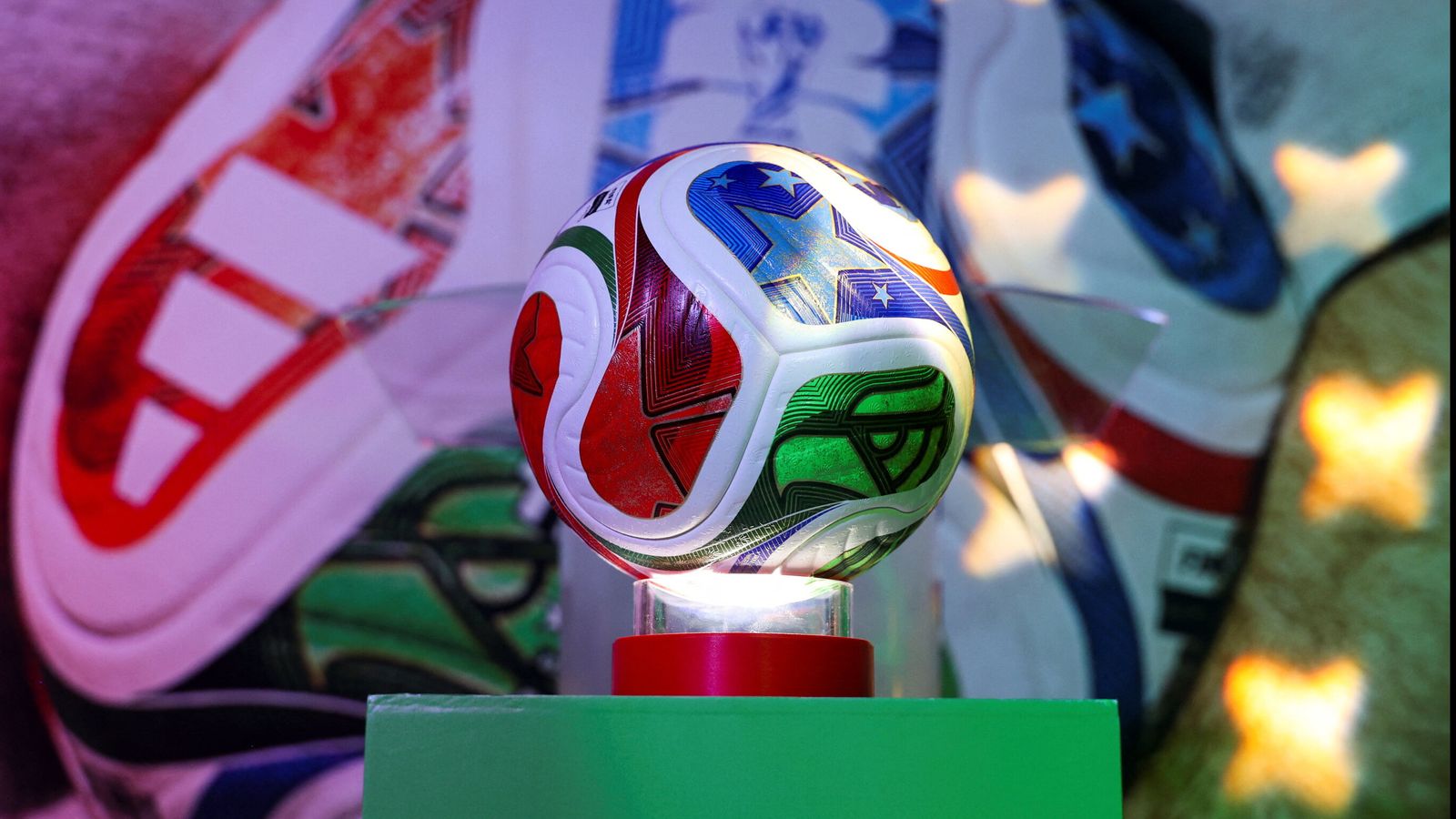

FIFA has backed away from using dynamic pricing for all 2026 World Cup tickets amid concerns about the cost of attending the tournament in North America.
The organisers insisted they always planned to ring-fence tickets at set prices to follow your own team.
But the announcement comes just days ahead of Friday’s tournament draw in Washington DC, which Donald Trump plans to attend.
Fans will have to wait until Saturday to know exactly where and when their teams will be playing in next summer’s tournament.
Scotland will be one of the teams in the tournament, held in North America and Mexico
Variable pricing – fluctuating based on demand – has never been used at a World Cup before, raising concerns about affordability.
England and Scotland fans have been sharing images in recent days of ticket website images highlighting cost worries.
But world football’s governing body said in a statement to Sky News: “FIFA can confirm ringfenced allocations are being set aside for specific fan categories, as has been the case at previous FIFA World Cups. These allocations will be set at a fixed price for the duration of the next ticket sales phase.
“The ringfenced allocations include tickets reserved for supporters of the Participating Member Associations (PMAs), who will be allocated 8% of the tickets for each match in which they take part, including all conditional knockout stage matches.”
FIFA says the cheapest tickets are from $60 (£45) in the group stage. But the most expensive tickets for the final are $6,730 (£5,094).
There will also be a sales window after the draw from 11 December to 13 January when ticket applications will be based on a fixed price for those buying in the random selection draw.
It is the biggest World Cup with 104 matches after the event was expanded from 32 to 48 teams. There are also three host nations for the first time – with Canada and Mexico the junior partners.

The tournament mascots as seen in Mexico in October. Pic: Reuters
Read more from Sky News:
Pope urges Trump not to oust Venezuelan president by force
Government delays Chinese ‘super embassy’ decision
FIFA defended using fluctuating pricing.
“The pricing model adopted for FIFA World Cup 26 reflects the existing market practice for major entertainment and sporting events within our hosts on a daily basis, soccer included,” FIFA’s statement continued.
“This is also a reflection of the treatment of the secondary market for tickets, which has a distinct legal treatment than in many other parts of the world. We are focused on ensuring fair access to our game for existing but also prospective fans.”
The statement addressed the concerns being raised about fans being priced out of attending.
FIFA said: “Stadium category maps do not reflect the number of tickets available in a given category but rather present default seating locations.
“FIFA resale fees are aligned with North American industry trends across various sports and entertainment sectors.”
Ireland, Northern Ireland and Wales could also still qualify.
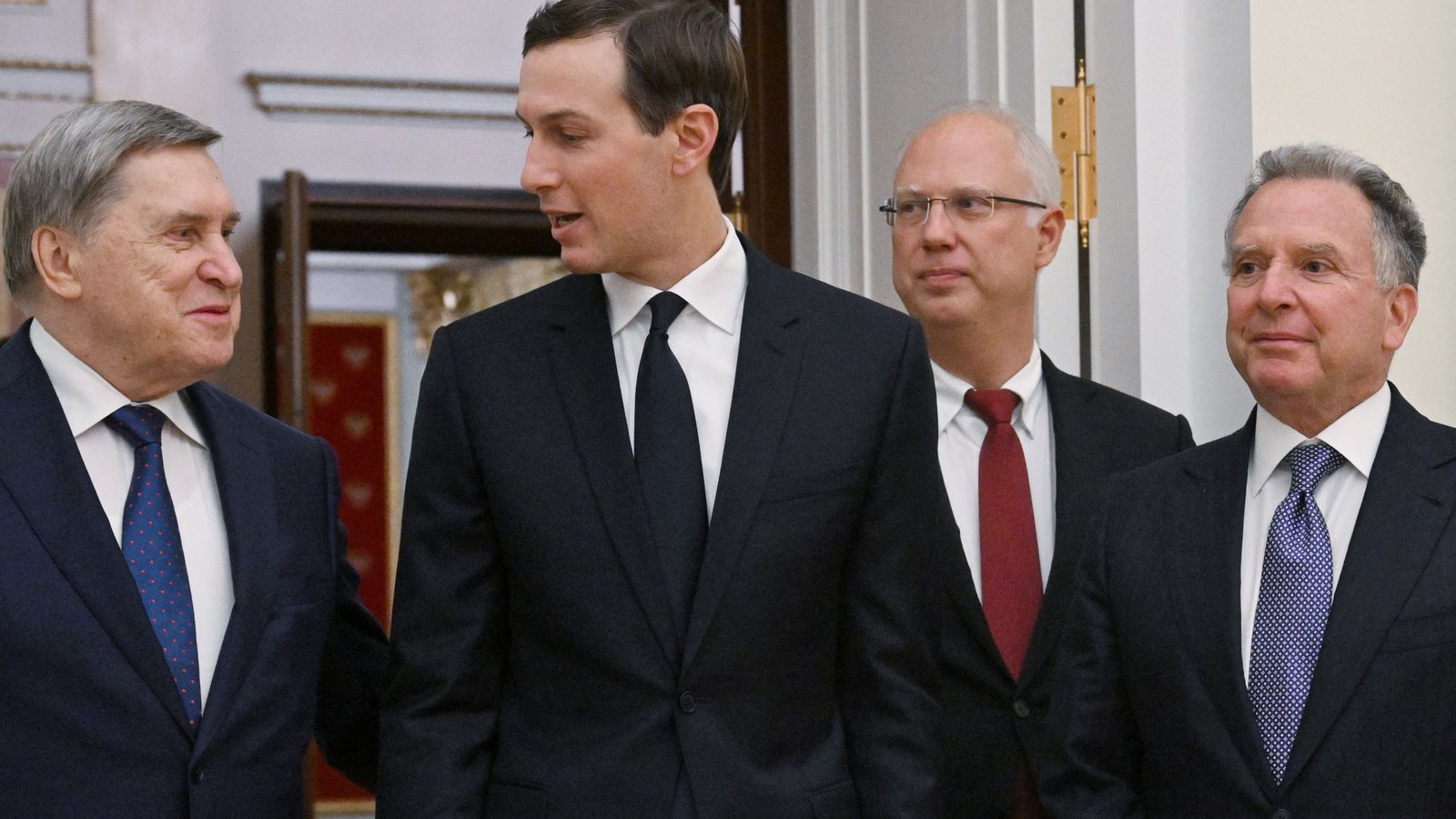
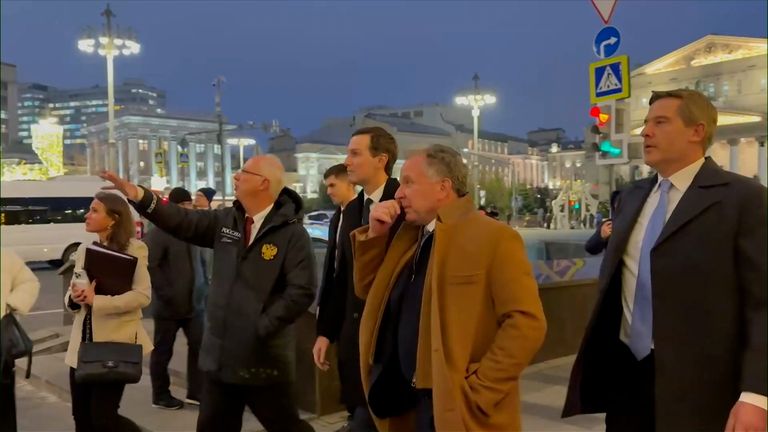
The Americans were given the full VIP treatment on their visit to Moscow.
There was a motorcade from the airport, lunch at a Michelin-starred restaurant, and even a stroll around Red Square.
It felt like Steve Witkoff and Jared Kushner were on more of a tourist trail than the path to peace.
Trump’s envoys walk around Moscow
They finally got down to business in the Kremlin more than six hours after arriving in Russia. And by that point, it was already clear that the one thing they had come to Moscow for wasn’t on offer: Russia’s agreement to their latest peace plan.
According to Vladimir Putin, it’s all Europe’s fault. While his guests were having lunch, he was busy accusing Ukraine’s allies of blocking the peace process by imposing demands that are unacceptable to Russia.
The Europeans, of course, would say it’s the other way round.
But where there was hostility to Europe, only hospitality to the Americans – part of Russia’s strategy to distance the US from its NATO allies, and bring them back to Moscow’s side.
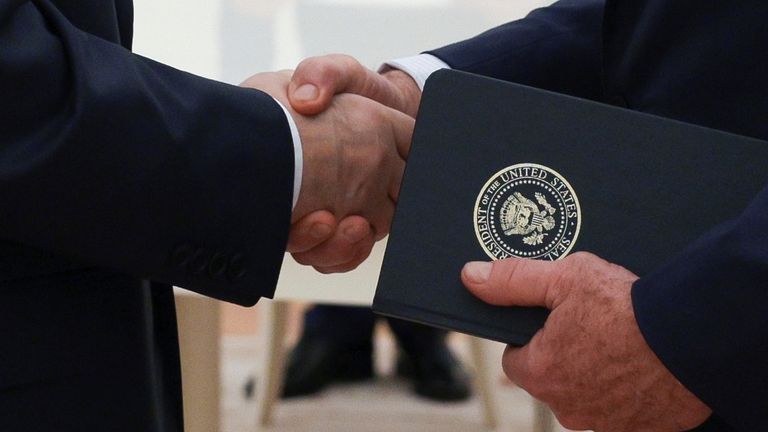
Vladimir Putin and Steve Witkoff shaking hands in August. AP file pic
Putin thinks he’s winning…
Russia wants to return to the 28-point plan that caved in to its demands. And it believes it has the right to because of what’s happening on the battlefield.
It’s no coincidence that on the eve of the US delegation’s visit to Moscow, Russia announced the apparent capture of Pokrovsk, a key strategic target in the Donetsk region.
It was a message designed to assert Russian dominance, and by extension, reinforce its demands rather than dilute them.
Read more:
Michael Clarke answers your Ukraine war questions
‘Thousands’ of Westerners applying to live in Russia

‘Everyone must be on this side of peace’
…and believes US-Russian interests are aligned
The other reason I think Vladimir Putin doesn’t feel the need to compromise is because he believes Moscow and Washington want the same thing: closer US-Russia relations, which can only come after the war is over.
It’s easy to see why. Time and again in this process, the US has defaulted to a position that favours Moscow. The way these negotiations are being conducted is merely the latest example.
With Kyiv, the Americans force the Ukrainians to come to them – first in Geneva, then Florida.
As for Moscow, it’s the other way around. Witkoff is happy to make the long overnight journey, and then endure the long wait ahead of any audience with Putin.
It all gives the impression that when it comes to Russia, the US prefers to placate rather than pressure.
According to the Kremlin, both Russia and the US have agreed not to disclose the details of yesterday’s talks in Moscow.
I doubt Volodymyr Zelenskyy is filled with hope.
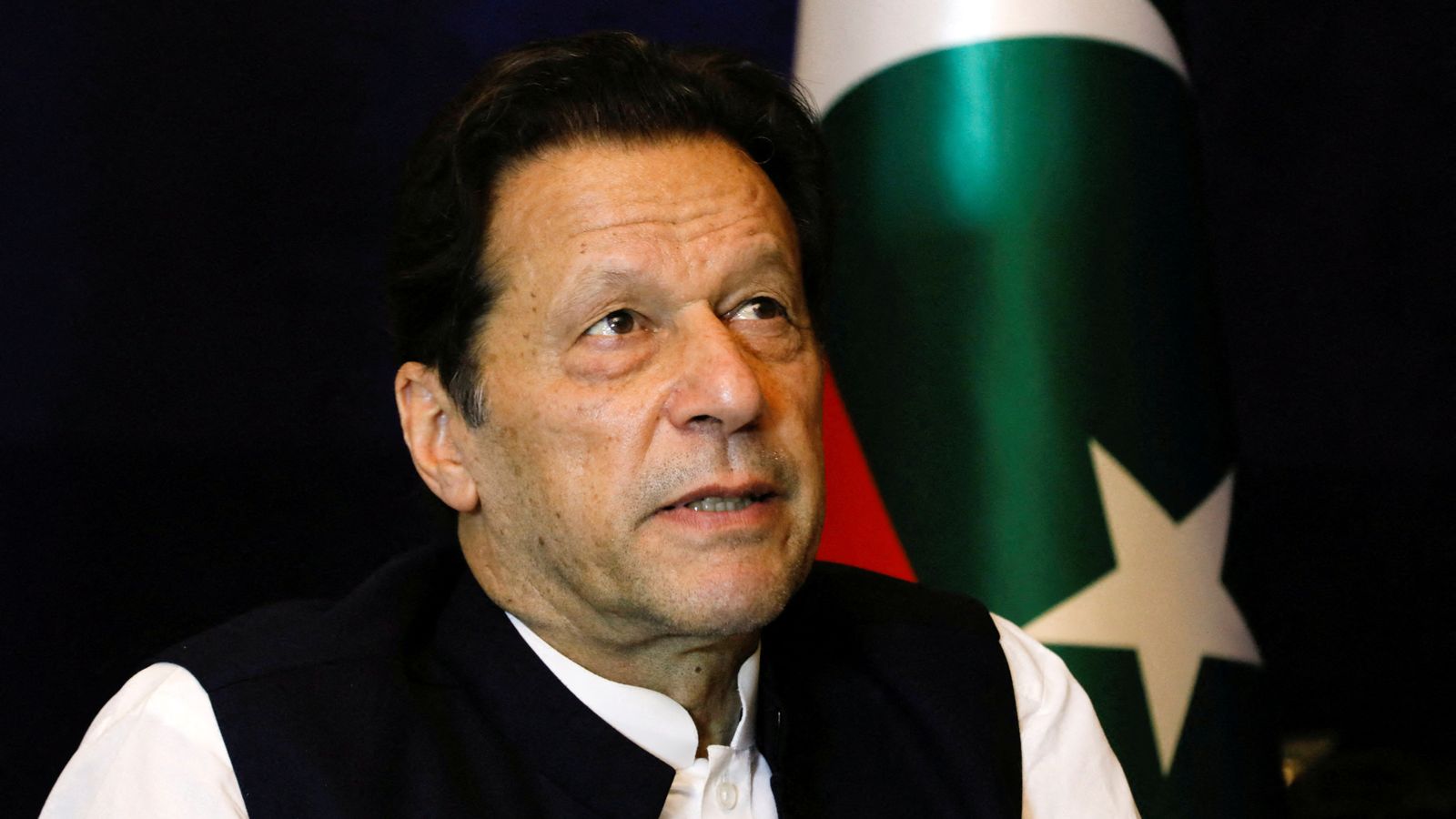
Imran Khan is suffering from isolation after weeks of being denied access to relatives, his family have said.
Khan has been in jail since his August 2023 arrest after he was handed a three-year prison term for illegally selling state gifts.
Now two of his three sisters have spoken out about the former Pakistani prime minister’s plight.
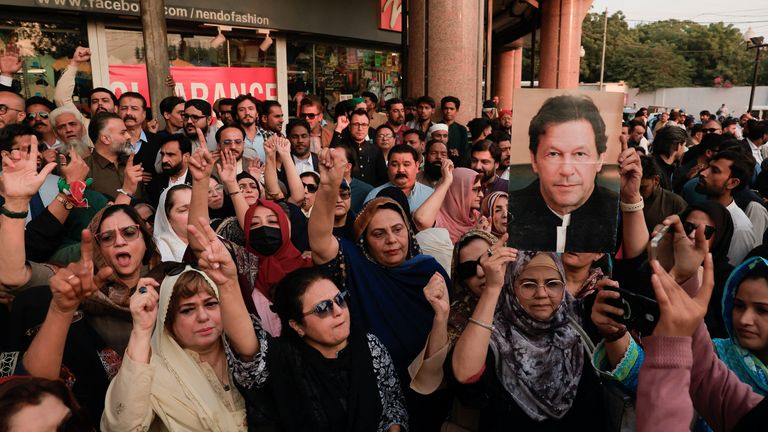
Uzma Khanum was the only family member permitted to meet him in Adiala jail, Rawalpindi, where supporters of his Pakistan Tehreek-e-Insaf (PTI) party had gathered to protest against the conditions of the 73-year-old’s detention.
Supporters of jailed Imran Khan protest in Karachi over concerns about the former Parkistan prime minister’s health. Pic: Reuters
Ms Khanum said that Khan, a former cricketer, is facing isolation and psychological strain in prison following weeks in which his family said access had been blocked.
“He’s physically well,” said Ms Khanum. “But he’s kept inside all the time, and only goes out for a short while. There’s no contact with anybody.”
The meeting took place under strict supervision, said Ms Khanum, though she declined to provide further details.
PTI says routine prison visits have been blocked for weeks despite court orders, fuelling rumours about his condition and possible prison transfers.
‘Suppressing the people’
One of Khan’s other sisters Aleema Khan told The World with Yalda Hakim that she believes Pakistani authorities were isolating him as an attempt to “suppress the people of Pakistan”.
“I think they are operating out of fear. He represents 90% of this country. How can you put a person who represents 90% of the country in jail?
“They basically want to suppress the people of Pakistan. They don’t want their voice to be heard and they are standing behind Imran Khan. They thought if they isolated [him] people will forget him.”
Authorities deny any mistreatment, and say that Khan is receiving all entitlements available to prisoners.
Ahmed Hassan Al-Arabi, an advisor to Pakistan’s Ministry of Information, told Sky News: “The jails are there as a punishment. They are there for the criminals to stop the evil from the criminals emanating into the society.
“If it has to become a political hub, there is no point of jail. Imran Khan’s sisters have been given access [to him].
“There is no distinction between politicians and Imran Khan’s family members, unfortunately“.
Read more from Sky News:
More than 1,200 confirmed dead in Asia floods
El Chapo’s son pleads guilty to drug charges
Khan served as prime minister from 2018 to 2022.
He has claimed that the charges against him are politically motivated – and aimed at blocking his political career.
Khan’s wife, Bushra Bibi, is serving time in the same prison over corruption, but they are not allowed to see each other except when they appear in court, his supporters have said.
-
 Sports2 years ago
Story injured on diving stop, exits Red Sox game
-
 Sports3 years ago
‘Storybook stuff’: Inside the night Bryce Harper sent the Phillies to the World Series
-
 Sports2 years ago
Game 1 of WS least-watched in recorded history
-
 Sports3 years ago
Button battles heat exhaustion in NASCAR debut
-
 Sports3 years ago
MLB Rank 2023: Ranking baseball’s top 100 players
-
Sports4 years ago
Team Europe easily wins 4th straight Laver Cup
-
 Environment3 years ago
Japan and South Korea have a lot at stake in a free and open South China Sea
-
 Environment1 year ago
Here are the best electric bikes you can buy at every price level in October 2024