
Entertainment
Sabrina Carpenter hits out at ‘evil and disgusting’ White House video featuring her song



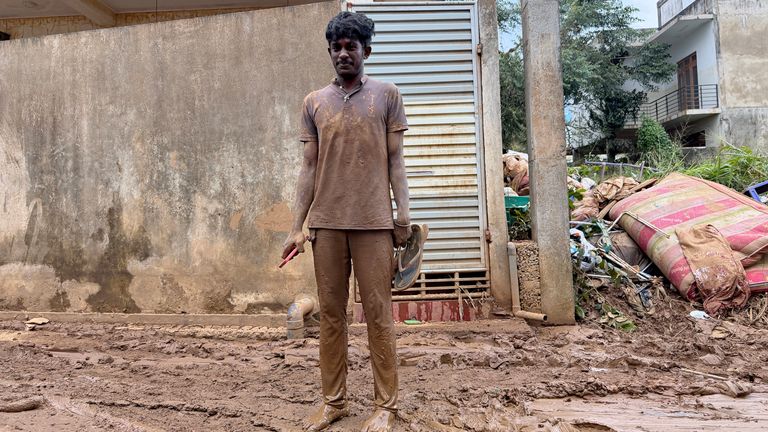
This community in Sri Lanka’s Kandy District is a mass of mud and loss.
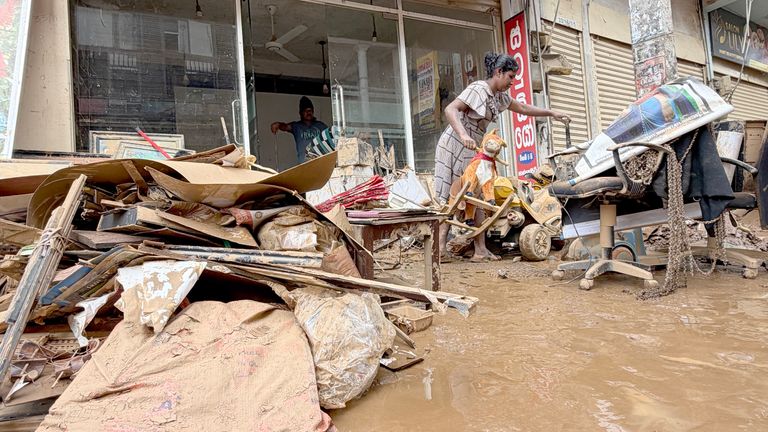
The narrow, filthy streets in Gampola are filled with broken furniture, sodden toys and soiled mattresses. A torrent of floodwater ripped through this neighbourhood and many people had no time to escape.
Trying to reach their now destroyed homes is like wading through treacle – the mud knee-deep.
Many locals say they were not warned about the threat Cyclone Ditwah posed here before it struck last Friday, and weren’t told to evacuate. They say they’ve received very little help since.
Resourceful neighbours were left to try to help rescue survivors. But some had to carry the bodies of the dead, too. Mohamed Fairoos was one of them.
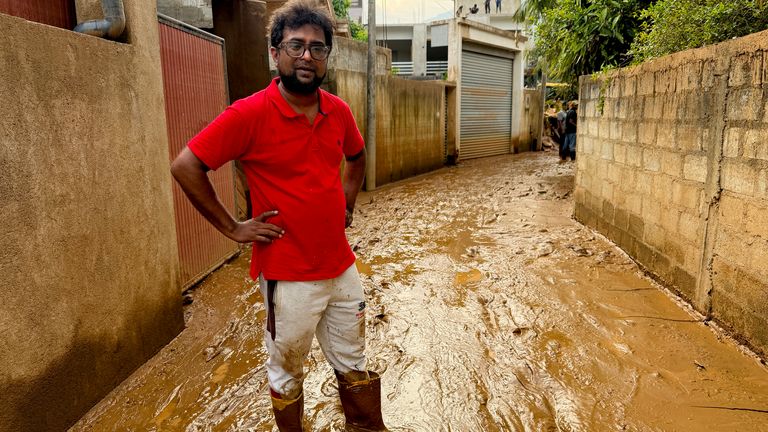
Fairoos Mohamed
“We took five bodies from here,” he says, gesturing to a house full of debris, where mattresses hang drying over the balcony.
“We took nine bodies in total and handed them over to the hospital.” He appears both shocked and exasperated at the lack of support this community received.
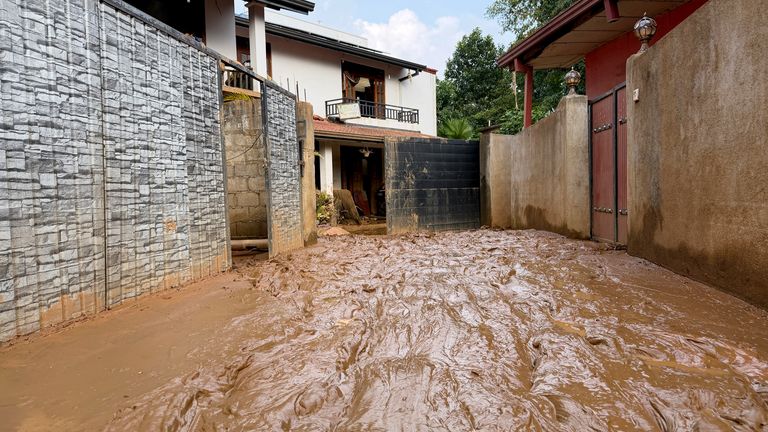
The house where Fairoos pulled the bodies from
“When I took the bodies, the police, the navy, no one sent for us.” He tells me he even posted a video online appealing for boats, hoping it might help.
I ask him if he thinks the government has done enough. “No,” he says forcefully. “No one called for us. No one helped us. No one gave us any boats.”
Read more: Families count the cost of devastating floods

Kumudu Wijekon and her husband Kumar Premachandra
‘Five people were killed here’
Just a few doors down, a group of volunteers have come to clear another home filled with floodwater. “Five people were killed here,” one of them tells me.
Five of them came from one family: a mother, father, their two daughters and son. Kumudu Wijekon tells me she was friends with them and they’d fled here to a friend’s house, hoping to escape the threat.
“There was heavy rain, but they didn’t think there would be flooding. They left their own home to save themselves from landslides. If they had stayed, they would have survived.”

Chamilaka Dilrukshi
‘We don’t have a single rupee’
A short drive away, Chamilaka Dilrukshi is sobbing inside the photography studio she shares with her husband Ananda. They have two children aged four and 11.
Chamilaka is clutching a bag of rice – she says it’s been donated by a friend and it’s all they have to eat.
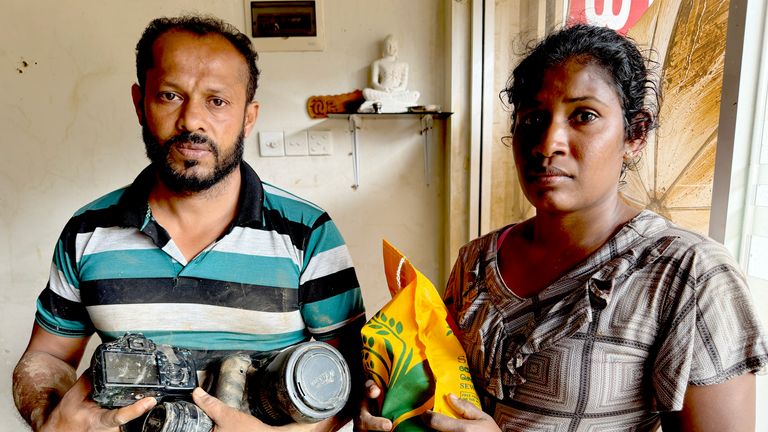
Ananda Wijebandara and his wife Chamilaka Dilrukshi
Everything in the shop is wrecked – expensive cameras and lighting equipment covered in thick layers of mud, and outside, rows of broken frames and ripped pictures.
They think they’ve lost nearly £2,500 and their home is severely damaged. She weeps as she tells us: “We don’t have a single rupee to start our business again. We spent all of our savings on trying to build our house.”
Like Mohamed, she believed they should have been warned. “We didn’t know anything. If we did, we would have taken our cameras and our computers out. We just didn’t know it was coming.”
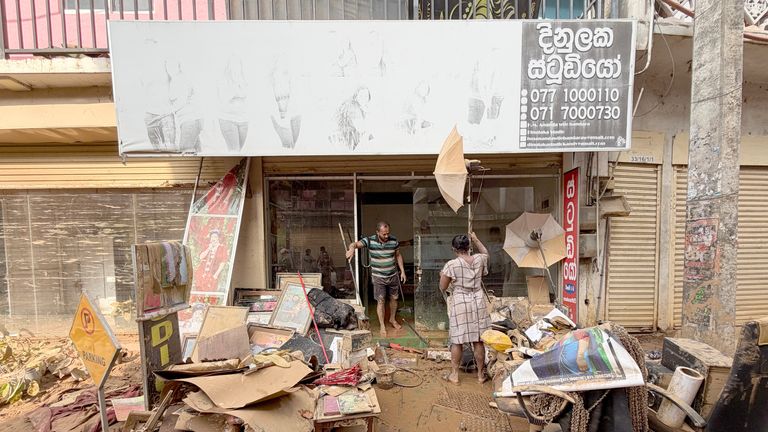
The studio was caked in mud
Anger at government’s perceived failings
Sri Lankan president Anura Kumara Dissanayake has declared a state of emergency to deal with the aftermath of the cyclone, and international aid has arrived.
But many people are angry at the government’s perceived failings. It’s been criticised for not taking the warnings from meteorologists seriously two weeks before the cyclone made landfall, as well as for not communicating enough messages in the Tamil language.
It is going to take places like Gampola a long time to rebuild, repair and restore trust. And in a country still recovering from an economic collapse, nothing is guaranteed.


.jpg)
The White House formally announced its plan to hike US fuel costs by $23 billion today, in the form of a new proposed rule cutting fuel efficiency requirements.
Update 12/3: This article has been updated to reflect the formal announcement of the proposed rule.
Since the beginning of this year, the occupants of the White House have been on a mission to raise costs for Americans.
This mission has encompassed many different moves, most notably through unwise tariffs.
But another effort has focused on changing policy in a way that will raise fuel costs for Americans, adding to already-high energy prices.
The specific rollback today focuses on a rule passed under President Biden which would save Americans $23 billion in fuel costs by requiring higher fuel economy from auto manufacturers. By making cars use less fuel on average, Americans would not only save money on fuel, but reduce fuel demand which means that prices would go down overall.
The effort to roll back this rule was initially announced on the first day that Sean Duffy started squatting in the head office of the Department of Transportation. Duffy notably earned his transportation expertise by being a contestant on Road Rules: All Stars, a reality TV travel game show.
Then in June, Duffy formally reinterpreted the Corporate Average Fuel Economy (CAFE) standard, claiming falsely that his department does not have authority to regulate fuel economy.
Republicans in Congress even got into effort to raise your fuel costs, as part of their ~$4 trillion giveaway to wealthy elites included a measure to make CAFE rules irrelevant by setting penalties for violating them to $0. In addition, it eliminated a number of other energy efficiency and domestic advanced manufacturing incentives.
Duffy’s department then told automakers that they would not face any fines retroactively to 2022, which saved the automakers (mostly Stellantis) a few hundred million dollars and cost American consumers billions in fuel costs.
Today, Duffy formally announced the proposed changes to the CAFE rules, lowering the required fuel economy for 2022-2031 model year vehicles, even despite all of the other changes in trying to make the rules unenforceable. The theory behind this would be to make it harder to later enforce the rules, and to allow automakers to get off with more pollution, and to increase fuel demand and fuel prices for longer until a real government returns to power and starts doing its job to regulate pollution.
Specifically, the announcement changes the planned 2031 50.5 mpg target to 34.5 mpg, cutting vehicle efficiency by nearly a third, which will lead to a commensurate increase in your fuel costs.
CAFE targets have been in place since the 1970s. In the last two decades, they helped drive a 30% improvement in average fuel economy, saving an average of $7,000 over the lifetime of an average vehicle – and they did this without increasing vehicle prices.
Rollback supported by auto CEOs who want to increase your costs
Today’s announcement was praised by the CEOs of the Big Three American automakers – GM, Ford, and Stellantis (formerly Chrysler). Ford CEO Jim Farley and Stellantis CEO Antonio Filosa attended the announcement at the White House, along with a manager from GM, though Barra signaled her support while speaking at another event.
Despite both Barra and Farley recently making statements claiming their support for electric vehicles, both cravenly supported the rollback in fuel economy standards that will cost you more money at the pump.
Barra said today that “I’m always going to advocate for one national standard and making sure regulatory requirements don’t get in front of the consumer,” despite the fact that GM lobbied against the single national standard that had been agreed to between Obama and California, and that today’s move only increases the gulf between the federal government and California on auto standards.
And Farley, despite acknowledging that the Chinese are trouncing us on EVs, said today that “we can make real progress on carbon emissions and energy efficiency while still giving customers choice and affordability,” which is detached from reality given that today’s moves will reduce affordability and efficiency and increase carbon emissions.
Their support suggests that their prior commitments to energy efficiency and electrification were not serious, as they are now joining in an effort to increase your fuel costs, just to save themselves a few engineering dollars on having to provide something other than the disgusting, deadly land yachts that are a blight on the nation’s roads and are murdering pedestrians at a 50-year high.
This isn’t the only way the White House is trying to raise your costs
Today’s announcement is just one many efforts currently being undertaken by executive departments to try to raise your fuel costs.
One of the largest is the EPA’s attempt to delete the “Endangerment Finding,” the government’s recognition of the scientific fact that climate change is dangerous to humans. The EPA is undertaking this effort so that it can then eliminate other rules intended to reduce pollution, with the goal of making you more beholden to fossil fuels.
Even the Energy Department’s own numbers, signed off on by oil shill Chris Wright, say that changes sought by the White House will increase gas prices by $.76/gal.
Like most other governmental changes, today’s change will likely go up for public comment, as required by the Administrative Procedures Act. We’ll let you know when it does.
The 30% federal solar tax credit is ending this year. If you’ve ever considered going solar, now’s the time to act. To make sure you find a trusted, reliable solar installer near you that offers competitive pricing, check out EnergySage, a free service that makes it easy for you to go solar. It has hundreds of pre-vetted solar installers competing for your business, ensuring you get high-quality solutions and save 20-30% compared to going it alone. Plus, it’s free to use, and you won’t get sales calls until you select an installer and share your phone number with them.
Your personalized solar quotes are easy to compare online and you’ll get access to unbiased Energy Advisors to help you every step of the way. Get started here.


FTC: We use income earning auto affiliate links. More.
-
 Sports2 years ago
Story injured on diving stop, exits Red Sox game
-
 Sports3 years ago
‘Storybook stuff’: Inside the night Bryce Harper sent the Phillies to the World Series
-
 Sports2 years ago
Game 1 of WS least-watched in recorded history
-
 Sports3 years ago
Button battles heat exhaustion in NASCAR debut
-
 Sports3 years ago
MLB Rank 2023: Ranking baseball’s top 100 players
-
Sports4 years ago
Team Europe easily wins 4th straight Laver Cup
-
 Environment3 years ago
Japan and South Korea have a lot at stake in a free and open South China Sea
-
 Environment1 year ago
Here are the best electric bikes you can buy at every price level in October 2024