

New petition calls for GM to stand by $30K Chevy Equinox EV starting price

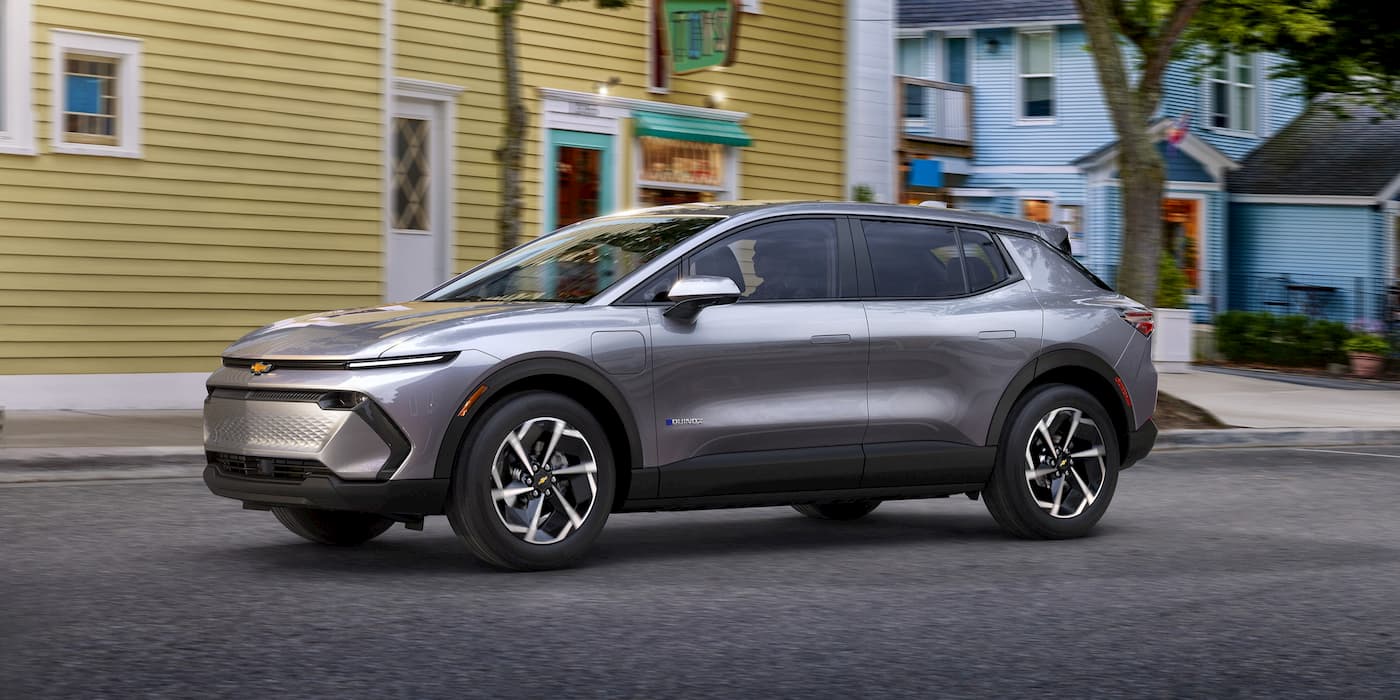
A new petition calls for General Motors to stand by its promise of launching the Chevy Equinox EV with a starting price of “around $30,000.”
Calls for GM to keep Equinox EV price around $30K
GM is touting its strategy of building “EVs for everyone” with SUVs, trucks, sedans, luxury cars, and more, but who is included in everyone?
The American automaker currently sells one electric vehicle priced below $56,715 – the Chevy Bolt. The Bolt EV and EUV start at $26,500 and $27,800, respectively, but these models are being discontinued.
GM’s CEO Mary Barra revealed the company was planning to end Chevy Bolt EV production at the end of the year to focus on scaling its Ultium-based models.
Although a successor has been confirmed, GM has yet to reveal a timeline for when you can expect it to hit the market.
More recently, GM’s latest electric SUV, the Blazer EV, began rolling off the assembly line, with customer deliveries starting soon.
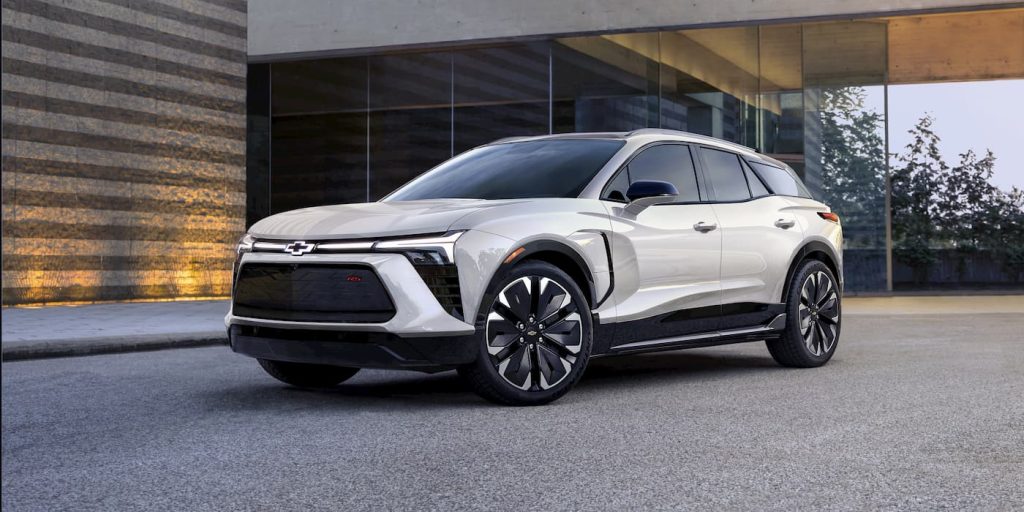
Although the Blazer EV was initially expected to launch with an entry-level 1LT trim for around $45K, GM abandoned the cheaper model.
After order requests opened last week, the 2024 Blazer EV models available include the 2LT AWD (MSRP: $56,715) and the RS AWD (MSRP: $60,215).
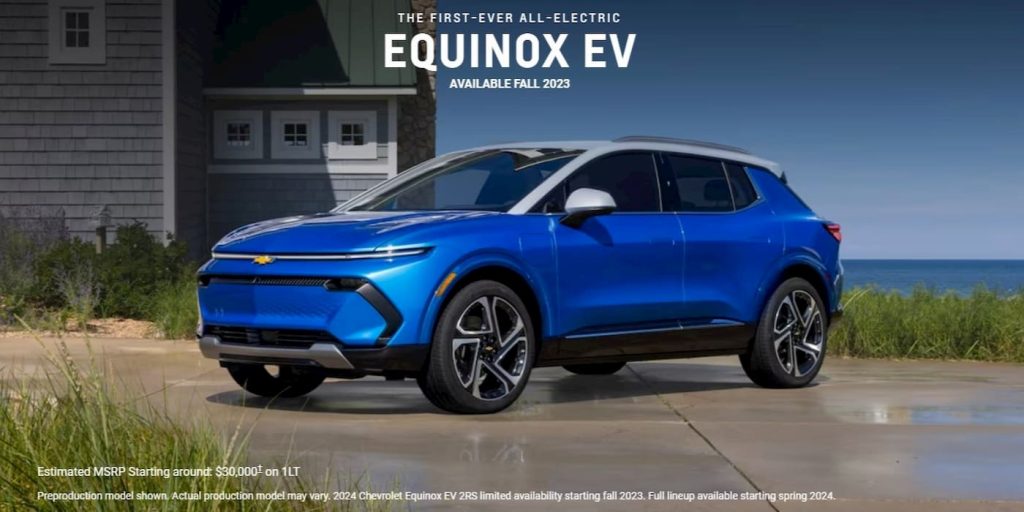
To ensure that doesn’t happen with the upcoming Equinox EV, the Electric Vehicle Association has created a petition to hold GM accountable by urging them to stand by its starting price of “around $30,000” for the 1LT model.
The organization educates and advocates for the adoption of zero-emission EVs. But, to ensure everyone has access, affordable models will play a key role. GM knows this, with Bolt EV sales accounting for nearly 90% of GM’s all-electric sales in the second quarter.
GM’s upcoming Chevy Equinox EV was spotted rolling off the assembly line at the company’s Ramos Arizpe plant in Mexico, with availability expected this fall.
Electrek’s Take
GM has been careful thus far in saying the Equinox EV will launch with an estimated starting price of “around $30,000.” The automaker has never actually committed to a $30,000 final price.
By doing so, the automaker is giving itself some leeway. We could easily see the Equinox EV start at around $33K to $35K. Furthermore, this is the estimated price for the 1LT trim, which was already discontinued in the Blazer EV.
We will find out soon how GM plans to approach pricing for its upcoming Equinox EV, with availability expected to begin this fall. The full lineup will be available starting next spring.
FTC: We use income earning auto affiliate links. More.
Environment
Tesla US sales drop to under 40,000 units following tax credit expiration, lowest in years

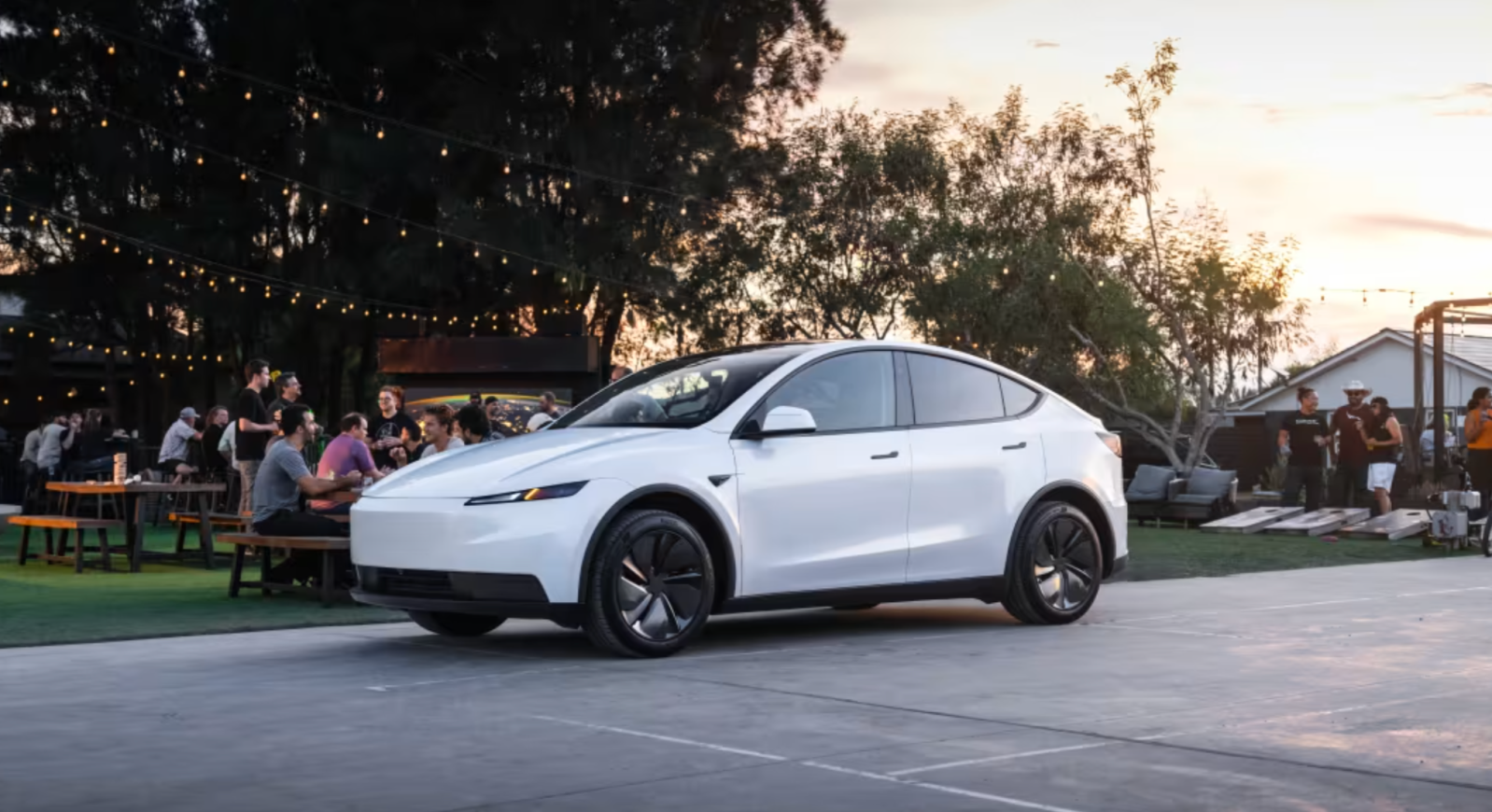
Tesla’s US sales have taken a significant hit in November, dropping to just 39,800 units according to new data. This comes as the market adjusts to the expiration of the federal tax credit, despite Tesla’s attempt to mitigate the blow with more discounts.
Since the federal EV tax credit expired at the end of September, the US electric vehicle market has been in a bit of a turmoil. We expected a hangover period after the rush to buy in Q3, but the numbers for November are stark.
According to new estimates from Cox Automotive (via Reuters), Tesla sold approximately 39,800 vehicles in the US in November.
That represents a roughly 23% drop compared to the 51,513 vehicles delivered in November 2024. It is also reportedly Tesla’s lowest monthly sales volume in the US since January 2022.
It’s important to note that Tesla doesn’t release monthly sales numbers and therefore, those are estimates based on data collected by Cox.
The drop comes despite Tesla’s best efforts to stimulate demand. Following the expiration of the $7,500 federal tax credit, the automaker launched new “Standard” range versions of the Model 3 and Model Y in October, priced roughly $5,000 lower than the previous base models to offset the loss of the incentive.
Those vehicles are expected to start more meaningfully contributing to sales next year.
However, Cox Automotive suggests this strategy could have a minimal impact. Stephanie Valdez Streaty, Cox’s director of industry insights, noted:
“The drop certainly shows there is not enough demand for the Standard variants that were supposed to boost sales after the tax credit expiry. What’s also happening is Standard sales are cannibalizing into sales of Premium versions, especially the Model 3.”
While a 23% drop looks bad on paper, it is worth noting that Tesla is actually weathering the storm better than the rest of the EV market.
Overall US EV sales reportedly plummeted by over 41% in November. Because Tesla’s decline was less severe than its competitors, the company actually saw its market share increase to 56.7%, up from 43.1% a year ago.
Most other automakers relied heavily on the tax credit to move their electric inventory, and without it, they are seeing demand evaporate much faster than Tesla.
Electrek’s Take
It’s sad to see. Elon Musk, Tesla’s CEO, pushed for this to happen, and he always said that he believed Tesla would fare better than other automakers without the tax credit. He was right. The sad part is that it goes completely against Tesla’s mission to accelerate the advent of electric transportation.
Tesla used US incentives as a ladder to reach volume production, and as soon as it did, it pulled the ladder behind it so others couldn’t use it.
What a shame.
And all for what? To be a bigger fish in a smaller pond? Because that’s only going to work in the US. In Europe and China, Tesla’s sales are declining, while other automakers’ EV sales are surging.


FTC: We use income earning auto affiliate links. More.
Environment
India’s inflation rises to 0.71% in November as decline in food, fuel prices loses steam


EV and battery supply chain research specialists Benchmark Mineral Intelligence reports that 2.0 million electric vehicles were sold globally in November 2025, bringing global EV sales to 18.5 million units year-to-date. That’s a 21% increase compared to the same period in 2024.
Europe was the clear growth leader in November, while North America continued to lag following the expiration of US EV tax credits. China, meanwhile, remains the world’s largest EV market by a wide margin.
Europe leads global growth
Europe’s EV market jumped 36% year-over-year in November 2025, with BEV sales up 35% and plug-in hybrid (PHEV) sales rising 39%. That brings Europe’s total EV sales to 3.8 million units for the year so far, up 33% compared to January–November 2024.
France finally returned to year-to-date growth in November, edging up 1% after spending most of 2025 in the red following earlier subsidy cuts. The rebound was led by OEMs such as the Volkswagen Group and Renault, a wider selection of EV models, and France’s “leasing social” program, aimed at helping lower-income households switch to EVs.
Italy also posted a standout month, logging record EV sales of just under 25,000 units in November. The surge followed the launch of a new incentive program designed to replace older ICE vehicles. The program earmarks €597.3 million (about $700 million) in funding for the replacement of around 39,000 gas cars.
The UK expanded access to its full £3,750 ($4,400) EV subsidy by adding five more eligible models: the Nissan Leaf (built in Sunderland, with deliveries starting in early 2026), the MINI Countryman, Renault 4, Renault 5, and Alpine A290.
US market slows after federal tax credit’s premature death
In North America, EV sales in the US did tick up month-over-month in November, following a sharp October drop after federal tax credits expired on September 30, 2025. Brands including Kia (up 30%), Hyundai (up 20%), Honda (up 11%), and Subaru (232 Solterra sales versus just 13 the month before) all saw gains, but overall volumes remain below levels when the federal tax credit was still available.
Policy changes aren’t helping. In early December, Trump formally “reset” US Corporate Average Fuel Economy (CAFE) standards, lowering the required fleetwide average to about 34.5 mpg by 2031. That’s a steep drop from the roughly 50.4 mpg target under the previous rule. Automakers can now meet the standard largely through gas vehicles, reducing pressure to scale BEVs and PHEVs.
Those loosened rules are already reflected in investment decisions, such as Stellantis’ $13 billion plan to expand US production by 50%, with a heavy focus on ICE vehicles. Earlier this year, Trump’s big bill set fines for missing CAFE targets to $0, further weakening the incentive for OEMs to electrify.
That’s some foolish policymaking, considering the world reached peak gas car sales in 2017. The US under Trump will be left behind, just as it will be with its attempts to revive the coal industry.
China still dominates, exports surge
China remains the backbone of global EV sales, even as growth slows. The Chinese market grew 3% year-over-year and 4% month-over-month in November. Year-to-date, EV sales in China are up 19%, with 11.6 million units sold.
One of the biggest headlines out of China is exports. BYD reported a record 131,935 EV exports in November, blowing past its previous high of around 90,000 units set in June. BYD sales in Europe have jumped more than fourfold this year to around 200,000 vehicles, doubled in Southeast Asia, and climbed by more than 50% in South America.
Global snapshot
Global EV sales from January to November 2025 vs January to November 2024, YTD %:
- Global: 18.5 million, +21%
- China: 11.6 million, +19%
- Europe: 3.8 million, +33%
- North America: 1.7 million, -1%
- Rest of World: 1.5 million, +48%
The takeaway: EV demand continues to grow worldwide, but policy support – or the lack thereof – is increasingly shaping where this growth shows up.
“Overall, EV demand remains resilient, supported by expanding model ranges and sustained policy incentives worldwide,” said Rho Motion data manager Charles Lester.
Read more: EV sales *still* have not fallen, cooled, slowed or slumped. Media is lying to you.

If you’re looking to replace your old HVAC equipment, it’s always a good idea to get quotes from a few installers. To make sure you’re finding a trusted, reliable HVAC installer near you that offers competitive pricing on heat pumps, check out EnergySage. EnergySage is a free service that makes it easy for you to get a heat pump. They have pre-vetted heat pump installers competing for your business, ensuring you get high quality solutions. Plus, it’s free to use!
Your personalized heat pump quotes are easy to compare online and you’ll get access to unbiased Energy Advisors to help you every step of the way. Get started here. – *ad
FTC: We use income earning auto affiliate links. More.
-
 Sports2 years ago
Story injured on diving stop, exits Red Sox game
-
 Sports3 years ago
‘Storybook stuff’: Inside the night Bryce Harper sent the Phillies to the World Series
-
 Sports2 years ago
Game 1 of WS least-watched in recorded history
-
 Sports3 years ago
Button battles heat exhaustion in NASCAR debut
-
 Sports3 years ago
MLB Rank 2023: Ranking baseball’s top 100 players
-
Sports4 years ago
Team Europe easily wins 4th straight Laver Cup
-
 Environment3 years ago
Japan and South Korea have a lot at stake in a free and open South China Sea
-
 Environment1 year ago
Here are the best electric bikes you can buy at every price level in October 2024