

Binance CEO responds to rumors, says US executive is ‘taking a deserved break’



US President Donald Trump says he will review the case of convicted Samourai Wallet developer Keonne Rodriguez, hinting he will explore the possibility of a pardon.
Samourai Wallet co-founders Rodriguez and William Lonergan Hill were sentenced on Nov. 19 to five and four years in prison on charges stemming from their involvement in the crypto mixing protocol.
“I’ve heard about it, I’ll look at it,” Trump said when asked about the case at a press conference about the Mexican border at the White House on Monday.
“Okay, let’s take a look at it. You know, you’ll have to tell me. I don’t know anything about it, but we’ll take a look,” he added.
Privacy advocates and crypto users have long been advocating for Rodriguez and Hill, along with Tornado Cash co-founder Roman Storm, arguing they shouldn’t be held responsible for the actions of third parties using their software.
Samourai co-founder says “noise is working”
Rodriguez, who is due to start his time behind bars this week, said in an X post on Monday that the “continued noise” from supporters is working. “Thank you to everyone pushing Donald Trump to pardon Bill and me. Let’s get this over the line.”
In an interview with Bitcoin educator Natalie Brunell on Friday, Rodriguez said he thought there was a chance of receiving a pardon if the case were presented to Trump and the top officials in the administration.
I appreciate @keonne taking some tough questions on the Samourai Wallet case. No topic was off limits.
Keonne is getting ready to report to prison on December 19th but there is an active movement to #PardonSamourai, and Keonne hopes President Trump hears his story.
If you care… pic.twitter.com/iXg3BXr8iq
— Natalie Brunell ⚡️ (@natbrunell) December 12, 2025
“Because President Trump has been touched by a DOJ that was weaponized against him, I think when he sees the facts laid out on the table, he will know exactly what’s going on,” Rodriguez said.
Conventional appeal is unlikely
Rodriguez also said it’s his understanding he waived his right to appeal the sentence when he took the plea deal, adding that he’s not “100% on that, but my understanding is appeal is pretty unlikely.”
Rodriguez and Hill initially pleaded not guilty but then agreed to plead guilty to one charge of operating an illegal money transmitter in July.
They faced at least 25 years in prison on charges of conspiracy to commit money laundering, which carries a maximum prison sentence of 20 years, and operating an unlicensed money-transmitting business, which carries a sentence of up to five years.
Up until the sentencing hearing, Rodriguez said he regretted pleading guilty but feared the judge wouldn’t allow key evidence to be used in his defense, such as receiving legal advice before launching Samourai Wallet.
Related: After Samourai, DOJ’s money-transmitter theory now looms over crypto mixers
After crunching the numbers, he also found a “conviction means 25 years, even if you appeal, that you’re sitting in prison for five years waiting for your appeal, your appeal is going to cost you another $7 million on top of the four and a half million you’ve already spent to get to this point. So the numbers just didn’t make any sense.”
Trump pardoned Changpeng Zhao, Ross Ulbricht
Since taking office, Trump pardoned Binance founder Changpeng “CZ” Zhao in October, after he pleaded guilty in November 2023 to failing to maintain an effective Anti–Money Laundering program at Binance, in violation of the Bank Secrecy Act.
Ross Ulbricht, the founder of the defunct darknet marketplace the Silk Road, was also granted a presidential pardon on his life sentence in January.
Magazine: Do Kwon sentenced to 15 years, Bitcoin’s ‘choppy dance’: Hodler’s Digest, Dec. 7 – 13
Politics
Angela Rayner calls on MPs to sit ‘through the night’ to get workers’ rights bill through parliament

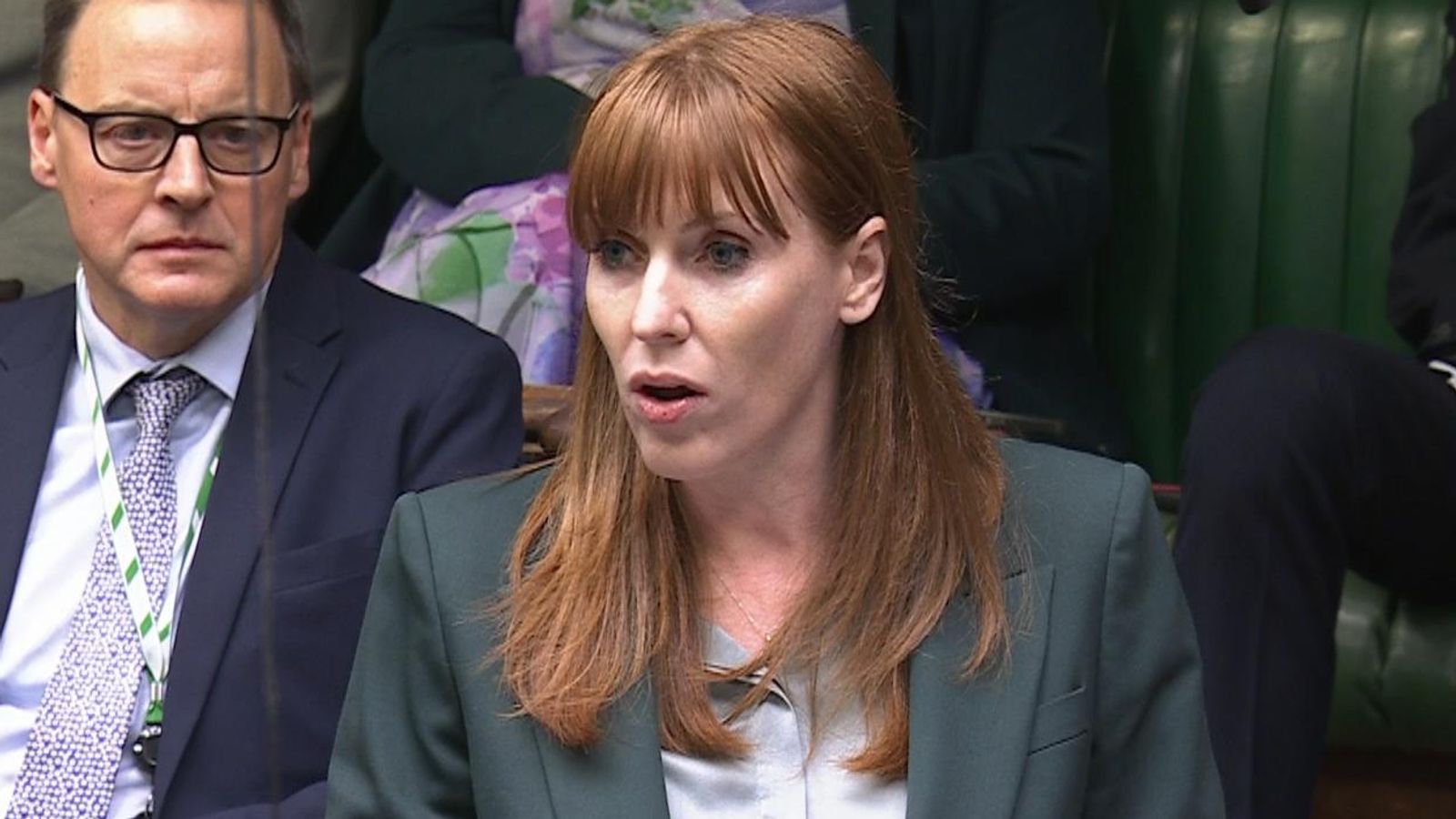

Angela Rayner has issued an angry call to MPs to sit “through the night” to stop hereditary peers delaying her flagship employment rights bill.
In an outburst at the start of the latest “ping pong” between the Lords and Commons, she said: “What’s wrong with protecting people from unfair dismissal?”
The former deputy prime minister hit out at the delaying tactics of the House of Lords, with the clock ticking only days before parliament’s Christmas recess.
The bill now goes back to the Lords on Tuesday, when ministers hope peers will drop their opposition so the bill can receive royal assent by the time parliament rises on Thursday.
Ms Rayner’s attack on hereditary peers followed a government defeat in the Lords by 24 votes last week, just days before Sir Keir Starmer created 25 new Labour peers.
“What message does this send to the British public, when 33 hereditary peers have tried to defeat the government by 24 votes on a manifesto promise on sick pay, for example, which will miss the deadline for April for some of the lowest earners from some of the wealthiest?” she declared.
“Shouldn’t we get on, go through the night if we have to, and get this bill passed?”
And employment minister Kate Dearden told MPs: “We have been in ping pong for far too long, and further delay is not in anyone’s best interest.”
Rayner makes speech on Employment Rights Bill
At the end of an hour-long debate, MPs voted by 311 votes to 96, a majority of 215, to remove a cap on unfair dismissal compensation, overturning a vote in the Lords last week.
In its attempts to get the bill through the Lords, ministers have abandoned day one protection against unfair dismissal and, after a deal with trade unions, replaced it with a six-month qualifying period.
But at the same time the government introduced an 11th hour measure to scrap compensation caps for unfair dismissal, which is currently 52 weeks’ pay or £118,223, whichever is lower.
Read more: Starmer insists budget leaks and leadership speculation did not come from him
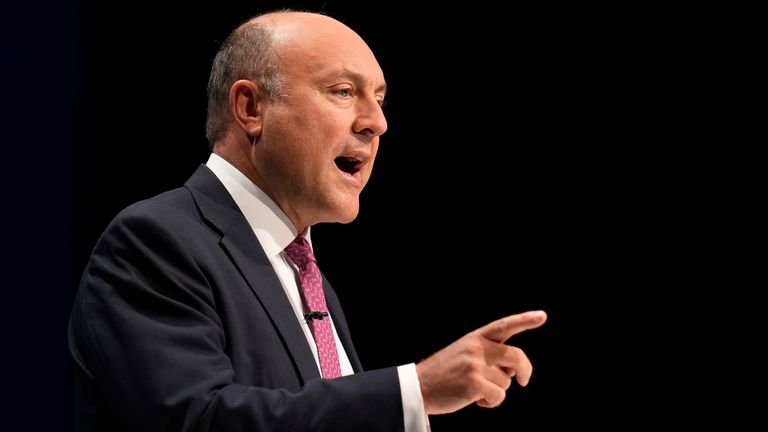
Tory MP Andrew Griffith attacked plans to lift a compensation cap. Pic: PA
Shadow business secretary Andrew Griffith, who has led Tory opposition to the bill, attacked the removal of a cap.
“It wasn’t in the manifesto, it wasn’t in the bill, it wasn’t in the impact assessment,” he protested.
Earlier, in a boost for the government, six business groups urged peers to back down and end the parliamentary “ping pong” between the Commons and the Lords.
The groups, including the Confederation of British Industry (CBI) and the British Chamber of Commerce (BCC), fear the six-month unfair dismissal compromise agreed with the unions could be at risk.
“To avoid losing the six-month qualifying period, we therefore believe that now is the time for parliament to pass the bill,” they urged in a letter to Business Secretary Peter Kyle.
Mr Kyle said “all parties… have made difficult but necessary compromises to bring this bill forward” and urged “everyone” to recognise business groups and trade unions want it passed “without further delay”.
-
 Sports2 years ago
Story injured on diving stop, exits Red Sox game
-
 Sports3 years ago
‘Storybook stuff’: Inside the night Bryce Harper sent the Phillies to the World Series
-
 Sports2 years ago
Game 1 of WS least-watched in recorded history
-
 Sports3 years ago
Button battles heat exhaustion in NASCAR debut
-
 Sports3 years ago
MLB Rank 2023: Ranking baseball’s top 100 players
-
Sports4 years ago
Team Europe easily wins 4th straight Laver Cup
-
 Environment3 years ago
Japan and South Korea have a lot at stake in a free and open South China Sea
-
 Environment1 year ago
Here are the best electric bikes you can buy at every price level in October 2024