
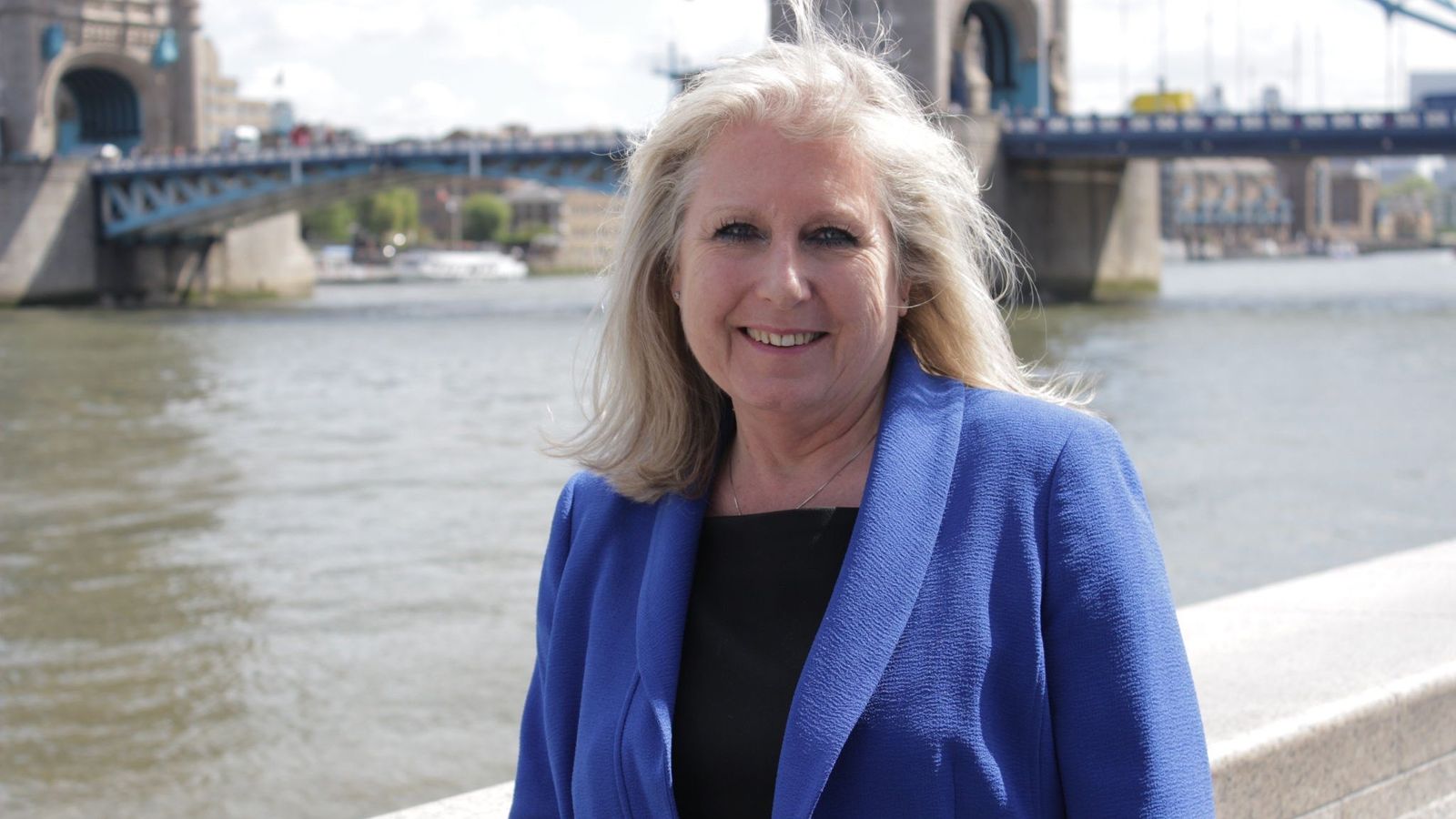
Susan Hall: Tory London mayoral candidate liked tweets praising Enoch Powell

Susan Hall, the Conservative candidate for London mayor, is reported to have liked tweets praising controversial former minister Enoch Powell.
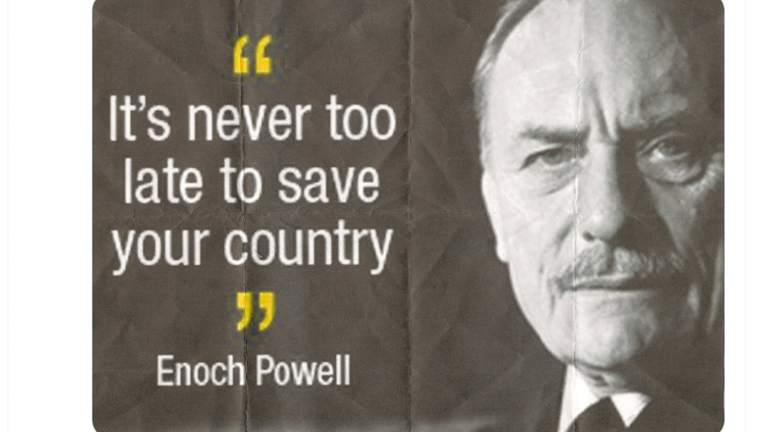
Ms Hall, who will go up against Labour’s Sadiq Khan in the mayoral election next May, liked a message in February 2020 quoting the far-right, anti-immigration politician as saying: “It’s never too late to save your country,” according Hope Not Hate.
The tweet, uncovered by the campaign group, also included the phrase: “It’s never too late to get London back!”
Read more: Who is Susan Hall?
The Tory candidate is also said to have liked tweets calling Mr Khan a “traitor rat” and “our nipple height mayor of Londonistan”.
Others appears to suggest the London mayor would endorse electoral corruption, with one alleging Mr Khan is “begging for Londoners to do a Tower Hamlets postal vote for May next year and we all know how that works”.
The tweet liked by Susan Hall. Credit: Hope Not Hate
In response, Mr Khan told ITV News that the views of his Conservative rival are “questionable”.
He said: “I don’t think Londoners want somebody who supports Enoch Powell or Donald Trump,” he said.
“I personally don’t like Enoch Powell or Donald Trump’s views. The fact that this Tory does, speaks volumes.”
Read more:
Tory conference set to be disrupted for second year running
Labour promises to end use of hotels for asylum seekers
Powell was a highly controversial figure of his time, particularly for his notorious “Rivers of Blood” speech in 1968, which warned of the perceived dangers of immigration.
Ms Hall, a London Assembly member, was chosen by the Conservatives to take on Mr Khan in next year’s mayoral election – a decision which surprised many due to her low profile and far-right views.
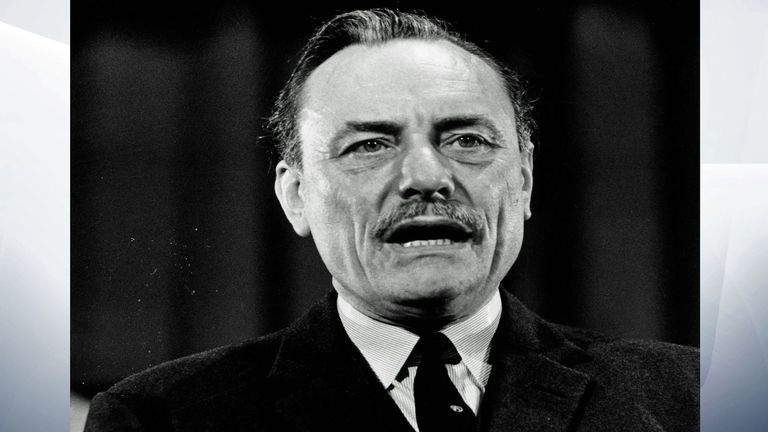
Enoch Powell pictured in 1969, the year after his famous ‘Rivers of Blood’ speech
Her account on X – previously known as Twitter – also contains apparent endorsements of Donald Trump, including his claim that he lost the presidential election in 2020 to Joe Biden because of voter fraud.
A spokesperson for Ms Hall’s campaign told Sky News that the mayoral candidate “engages with many people on Twitter without endorsing them”.
“Londoners want a mayor who listens to people and deals with the bread-and-butter issues that matter to them – making our streets safer and putting more money back in people’s pockets,” the spokesperson said.
“As mayor, Susan will deliver that.”
Ms Hall was chosen by London Conservative party members to challenge Mr Khan in next year’s London mayoral election in July.
As a member of the London Assembly for five years, she is no stranger to City Hall and has regularly faced off against the current leader at Mayor’s Question Time.
Her tagline is “Safer with Susan” and during the selection race, she called herself “the candidate Sadiq Khan fears the most”.
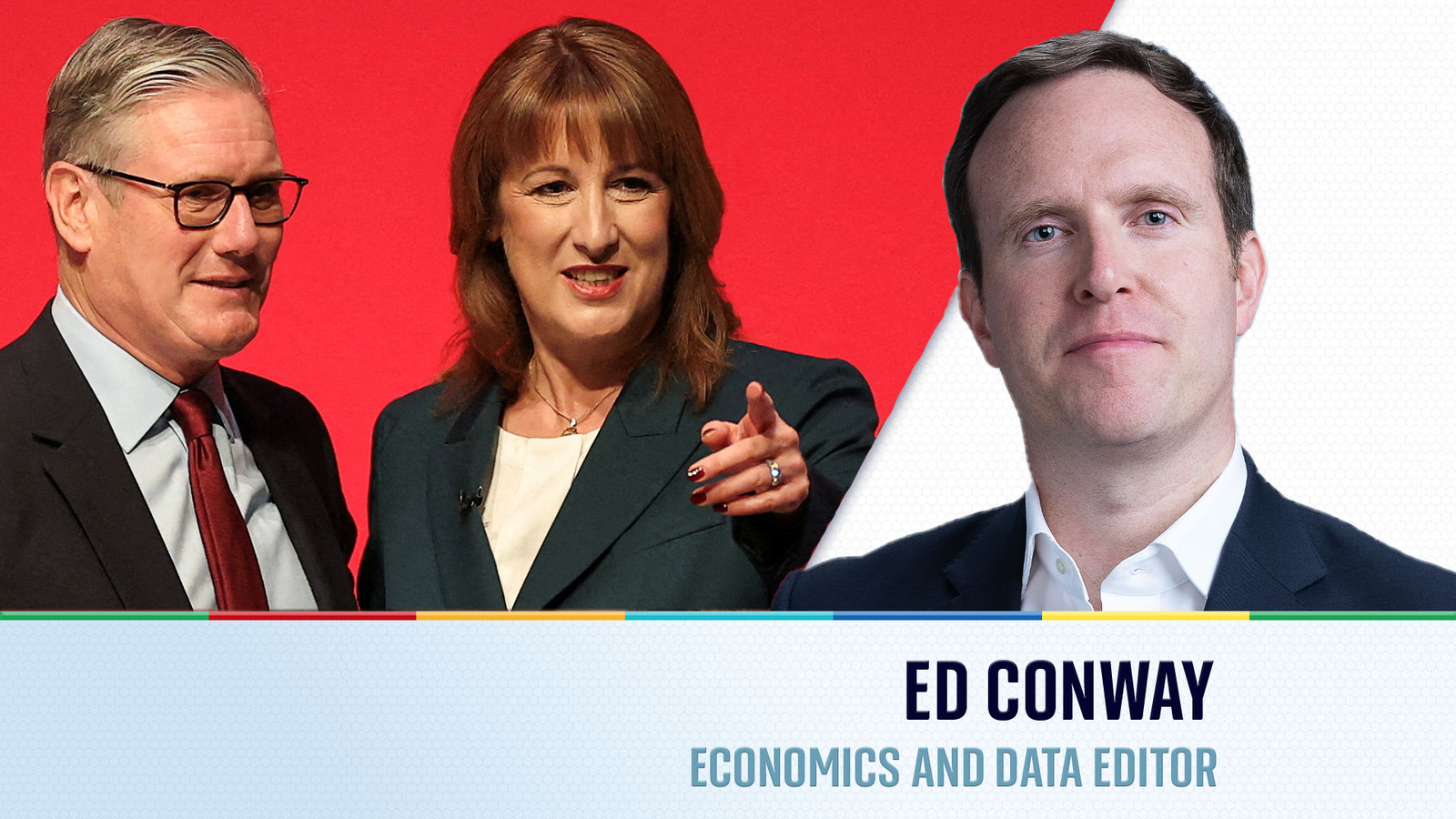

Did the chancellor mislead the public, and her own cabinet, before the budget?
It’s a good question, and we’ll come to it in a second, but let’s begin with an even bigger one: is the prime minister continuing to mislead the public over the budget?
The details are a bit complex but ultimately this all comes back to a rather simple question: why did the government raise taxes in last week’s budget? To judge from the prime minister’s responses at a news conference just this morning, you might have judged that the answer is: “because we had to”.
“There was an OBR productivity review,” he explained to one journalist. “The result of that was there was £16bn less than we might otherwise have had. That’s a difficult starting point for any budget.”
Politics latest: OBR boss resigns over budget leak
Beth Rigby asks Keir Starmer if he misled the public
Time and time again throughout the news conference, he repeated the same point: the Office for Budget Responsibility had revised its forecasts for the UK economy and the upshot of that was that the government had a £16bn hole in its accounts. Keep that figure in your head for a bit, because it’s not without significance.
But for the time being, let’s take a step back and recall that budgets are mostly about the difference between two numbers: revenues and expenditure; tax and spending. This government has set itself a fiscal rule – that it needs, within a few years, to ensure that, after netting out investment, the tax bar needs to be higher than the spending bar.
At the time of the last budget, taxes were indeed higher than current spending, once the economic cycle is taken account of or, to put it in economists’ language, there was a surplus in the cyclically adjusted current budget. The chancellor had met her fiscal rule, by £9.9bn.
Pic: Reuters
This, it’s worth saying, is not a very large margin by which to meet your fiscal rule. A typical budget can see revisions and changes that would swamp that in one fell swoop. And part of the explanation for why there has been so much speculation about tax rises over the summer is that the chancellor left herself so little “headroom” against the rule. And since everyone could see debt interest costs were going up, it seemed quite plausible that the government would have to raise taxes.
Then, over the summer, the OBR, whose job it is to make the official government forecasts, and to mark its fiscal homework, told the government it was also doing something else: reviewing the state of Britain’s productivity. This set alarm bells ringing in Downing Street – and understandably. The weaker productivity growth is, the less income we’re all earning, and the less income we’re earning, the less tax revenues there are going into the exchequer.
The early signs were that the productivity review would knock tens of billions of pounds off the chancellor’s “headroom” – that it could, in one fell swoop, wipe off that £9.9bn and send it into the red.
Read more:
Main budget announcements – at a glance
Enter your salary to see how the budget affects you
That is why stories began to brew through the summer that the chancellor was considering raising taxes. The Treasury was preparing itself for some grisly news. But here’s the interesting thing: when the bad news (that productivity review) did eventually arrive, it was far less grisly than expected.
True: the one-off productivity “hit” to the public finances was £16bn. But – and this is crucial – that was offset by a lot of other, much better news (at least from the exchequer’s perspective). Higher wage inflation meant higher expected tax revenues, not to mention a host of other impacts. All told, when everything was totted up, the hit to the public finances wasn’t £16bn but somewhere between £5bn and £6bn.
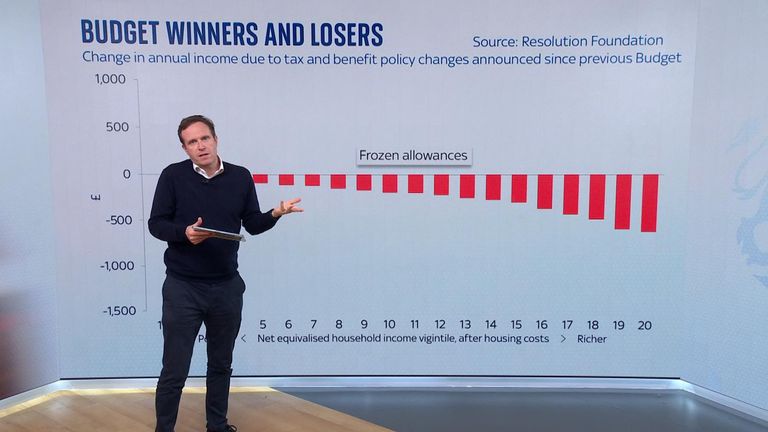
Budget winners and losers
Why is that number significant? Because it’s short of the chancellor’s existing £9.9bn headroom. Or, to put it another way, the OBR’s forecasting exercise was not enough to force her to raise taxes.
The decision to raise taxes, in other words, came down to something else. It came down to the fact that the government U-turned on a number of its welfare reforms over the summer. It came down to the fact that they wanted to axe the two-child benefits cap. And, on top of this, it came down to the fact that they wanted to raise their “headroom” against the fiscal rules from £9.9bn to over £20bn.
These are all perfectly logical reasons to raise tax – though some will disagree on their wisdom. But here’s the key thing: they are the chancellor and prime minister’s decisions. They are not knee-jerk responses to someone else’s bad news.
Yet when the prime minister explained his budget decisions, he focused mostly on that OBR report. In fact, worse, he selectively quoted the £16bn number from the productivity review without acknowledging that it was only one part of the story. That seems pretty misleading to me.


Prediction markets Polymarket and Kalshi view Kevin Hassett, US President Donald Trump’s National Economic Council director, as the favorite to replace Jerome Powell as the next Federal Reserve chair.
The odds of Hassett filling the seat have spiked to 66% on Polymarket and 74% on Kalshi at the time of writing. Hassett is widely viewed as crypto‑friendly thanks to his past role on Coinbase’s advisory council, a disclosed seven‑figure stake in the exchange and his leadership of the White House digital asset working group.
Founder and CEO of Wyoming-based Custodia Bank, and a prominent advocate for crypto-friendly regulations, Caitlin Long, commented on X:
“If this comes true & Hassett does become Fed chairman, anti-#crypto people at the Fed who still hold positions of power will finally be out (well, most of them anyway). BIG changes will be coming to the Fed.”

Related: Crypto-friendly Trump adviser Hassett top pick for Fed chair: Report
Kevin Hassett’s crypto credentials
Hassett is a long-time Republican policy economist who returned to Washington as Trump’s top economic adviser and has now emerged as the market-implied frontrunner to lead the Fed.
His financial disclosure reveals at least a seven‑figure Coinbase stake and compensation for serving on the exchange’s Academic and Regulatory Advisory Council, placing him unusually close to the crypto industry for a potential Fed chair.
Still, crypto has been burned before by reading too much into “crypto‑literate” resumes. Gary Gensler arrived at the Securities and Exchange Commission with MIT blockchain courses under his belt, but went on to preside over a wave of high‑profile enforcement actions, some of which critics branded as “Operation Chokepoint 2.0.”
A Hassett-led Fed might be more open to experimentation and less reflexively hostile to bank‑crypto activity. Still, the institution’s mandate on financial stability means markets should not assume a one‑way bet on deregulation.
Related: Caitlin Long’s crypto bank loses appeal over Fed master account
Supervision pushback inside the Fed
The Hassett odds have jumped just as the Fed’s own approach to bank supervision has received pushback from veterans like Fed Governor Michael Barr, who earned his reputation as one of Operation Chokepoint 2.0’s key architects.
According to Caitlin Long, while he Barr “was Vice Chairman of Supervision & Regulation he did Warren’s bidding,” and he “has made it clear he will oppose changes made by Trump & his appointees.”
On Nov. 18, the Fed released new Supervisory Operating Principles that shift examiners toward a “risk‑first” framework, directing staff to focus on material safety‑and‑soundness risks rather than procedural or documentation issues.
In a speech the same day, Barr warned that narrowing oversight, weakening ratings frameworks and making it harder to issue enforcement actions or matters requiring attention could leave supervisors slower to act on emerging risks, arguing that gutting those tools may repeat pre‑crisis mistakes.
Days later, in Consumer Affairs Letter 25‑1, the Fed clarified that the new Supervisory Operating Principles do not apply to its Consumer Affairs supervision program (an area under Barr’s committee as a governor).
If prediction markets are right and a crypto‑friendly Hassett inherits this landscape, his Fed would not be writing on a blank slate but stepping into an institution already mid‑pivot on how hard (and where) it leans on banks.
Magazine: EU’s privacy-killing Chat Control bill delayed — but fight isn’t over
-
 Sports2 years ago
Story injured on diving stop, exits Red Sox game
-
 Sports3 years ago
‘Storybook stuff’: Inside the night Bryce Harper sent the Phillies to the World Series
-
 Sports2 years ago
Game 1 of WS least-watched in recorded history
-
 Sports3 years ago
Button battles heat exhaustion in NASCAR debut
-
 Sports3 years ago
MLB Rank 2023: Ranking baseball’s top 100 players
-
Sports4 years ago
Team Europe easily wins 4th straight Laver Cup
-
 Environment3 years ago
Japan and South Korea have a lot at stake in a free and open South China Sea
-
 Environment1 year ago
Here are the best electric bikes you can buy at every price level in October 2024