

Jill Dando: TV presenter’s brother Nigel Dando gives his theory on star’s unsolved murder 24 years on


The brother of murdered TV presenter Jill Dando says despite the case remaining unsolved 24 years, he has a theory about who could be behind her death.
The execution style killing of one of Britain’s best-loved broadcasters in broad daylight on her own doorstep in April 1999 shocked the nation, leaving the press, public and police united in disbelief.
One of the biggest homicide investigations in British history – finally resulting in a conviction one year after her murder, only to be overturned seven years on – remains unsolved to this day.
Her brother, Nigel Dando, has told Sky News he believes it was “a random killing” carried out by a stranger, and that the presenter “was just in the wrong place at the wrong time”.
Speaking ahead of a new Netflix documentary, looking into the murder and resulting police investigation, Mr Dando said that even all these years after his sister’s death, he is hopeful “the killer is out there watching” and could “come forward… to confess what they’ve done and get it off their chest”.
(R-L): Jill Dando, with her father Jack and brother Nigel
‘It’s a heck of a story’
Receiving news of the death of a loved one is hard – and all the more so when that death is sudden and violent.
Mr Dando says he hadn’t seen Jill for around three weeks before her death, but then received a phone call telling him his sister had been killed.
He says: “Within a couple of minutes, really, of hearing that Jill had died, half of my brain wanted to grieve for her loss and be close to my dad… He was in his eighties and not in the best of health. So, you had the family side of things.”
However, as a fellow journalist, Mr Dando also had a second part of his mind clicking into gear.
He goes on: “But, you know, one of the leading TV celebrities in this country gunned down on her own doorstep. It’s going to… It’s a heck of a story. And you kind of knew what was going to come down the line.
“I was trying to prepare myself to deal with that, knowing that you had to deal with the media. But trying to protect my dad from any excesses of it.”
It is of course that same power of the story that attracted true crime producer Emma Cooper to the case, and she would go on to spend over a year heading up the three-part documentary.
She explains: “An act that violent with a gun happening in an area of London, that would be outlandish now in 2023. So, to look back at that happening at that time is extraordinary.”
But she says it was also key to remember the person at the heart of the story: “It was very important to all of us that Jill was very present in the series and that we reminded people who knew her and remember her. And also [it was important] we brought it to a new audience of young people who don’t necessarily know about Jill and don’t necessarily know what happened to her and what a huge part she was in all of our lives.”
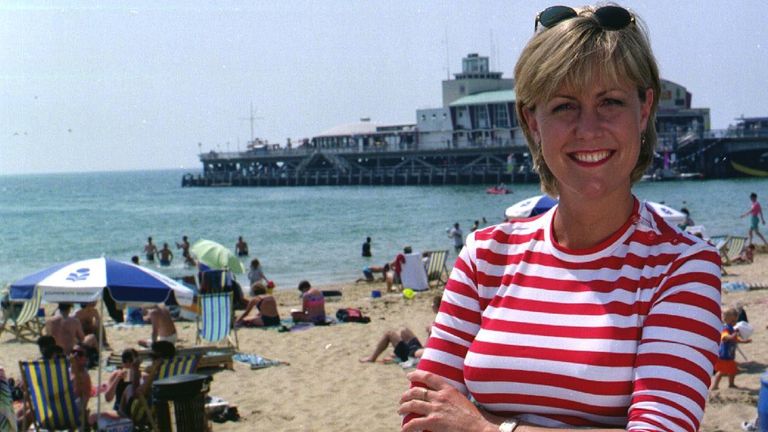
Pic: South Coast Press/Shutterstock
Who was Jill Dando?
Born in the seaside resort of Weston-super-Mare in Somerset, Dando’s first job was as a trainee with her local weekly newspaper, the Weston Mercury, where her father and brother also worked.
Quickly progressing from print journalism to television, her talent paired with a girl-next-door persona saw her rise through the ranks of regional shows to national TV, going on to present Holiday, the Six O’ Clock News and Crimewatch.
Just two years before her death, she was voted BBC personality of the year.
On 26 April 1999 she was shot dead outside her home in Gowan Avenue, Fulham, southwest London. She had been due to present the Six O’ Clock News the following evening.

Pic: Nick Scott Archive/Alamy
The many theories about Jill’s killer
One of the theories of a possible motive behind her killing, was that her presenting role on Crimewatch had made her vulnerable to criminals who might bear a grudge against her for her part in bringing them down.
Another was that a Serbian assassin could have killed her, in revenge for NATO bombing, after seeing her front an appeal for aid for Kosovar Albanian refugees.
However, Mr Dando doesn’t believe such theories stand up to robust investigation, calling them “interesting lines of inquiry” but which “never went anywhere”.
Of the Crimewatch connection he says “there was no evidence, it was just someone jumping on the bandwagon”.
And of the theory of links to Serbian mafia – Mr Dando says there was “no real evidence of a Serbian hitman”.
But he does have his own thoughts about who could have been behind his sister’s death.
“My theory before this happened and that’s been reinforced since by watching this documentary, is that Jill was just in the wrong place at the wrong time, and that somebody walking down the street, holding a gun for whatever reason, spotted her, either knowing her or not knowing who she was, and shot her dead.”
Mr Dando adds that some of the “theories would make great stories in fiction, but… There’s no line that really holds a huge amount of water apart from you know, a random killing, which I think it was.”
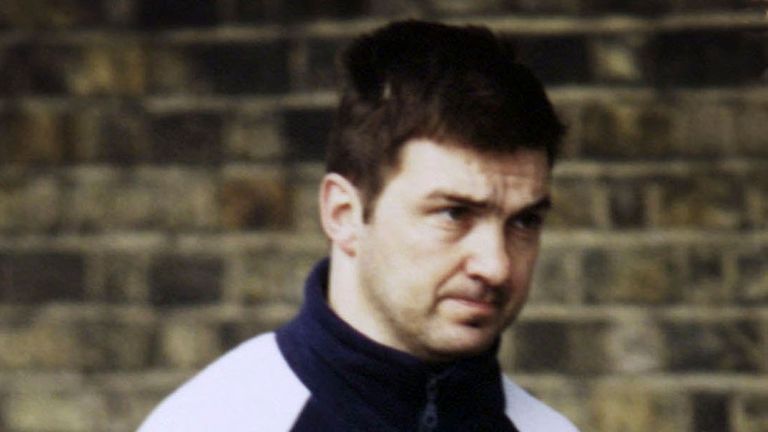
Barry George. Pic: Undated police handout
Who is Barry George, and how does he fit into the case?
Local man, Barry George, who had previous convictions and a history of stalking women, was arrested for Jill’s murder almost a year after her death, and later convicted and sentenced to life imprisonment.
Mr George spent seven years in jail, but was later acquitted due to unreliable forensic evidence, leaving the case again unsolved.
Speaking about Mr George’s original conviction, Mr Dando says: “At the time I thought that the police had got the right person, and a jury agreed with that sentiment because he was obviously found guilty and jailed for life. But the legal system moves on.”
But Mr Dando does have one concern – that Mr George chose not to give evidence, at either his trial or re-trial.
Mr Dando says: “I would just liked to have seen him tell a jury exactly what he was doing on that day, because he’s never actually explained where he was. It’s all a bit jumbled up. It would have been interesting to have heard him explain where he was, and for him to have been cross-examined about his movements on that day.”
While the conviction against Mr George was quashed, he has been unsuccessful in his attempts to gain compensation for wrongful imprisonment.
Mr George is also a contributor to the Netflix documentary.
Executive producer Emma Cooper says she felt it was vital to have Mr George’s side of the story in the film, to present “as clear of a rounded picture of all the events as possible from as many different perspectives as possible”.
In the documentary, she asks Mr George outright, “Did you kill Jill Dando,” to which Mr George answers, “No”.
She says: “I thought it was important to ask, I thought that the audience would expect that of us to ask him a straight question. And so, we did.”
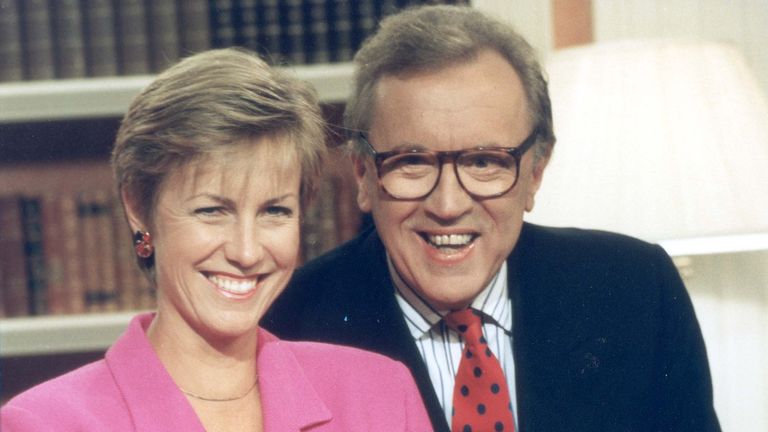
Pic: Michael Fresco/Evening Standard/Shutterstock
One of the biggest homicide investigations in British history
Mr Dando says he bears no anger towards the police over the lack of a conviction, calling the investigation “a difficult job” and adding: “I don’t have any negative feelings towards the police at all with their inquiries. I didn’t at the time, and as the years have gone on, I don’t.”
As the documentary shows, while Dando’s fame ensured that news of her murder travelled far and wide, it also played a part in hindering the investigation.
Mr Dando says officers were inundated with people trying to “do the right thing” by offering up information, and the result was an avalanche of tips “overwhelming all the potential lines of inquiry that came in”.
While the investigation was moved into “an inactive phase” nine years ago, Met Police told Sky News detectives “would consider any new information provided” in a bid “to determine whether it represented a new and realistic line of enquiry”.
Offering further information around the combined reward of £250,000 which was initially offered for information leading to an arrest, the Met told Sky News, “Any discussion about any reward would have to take place in the event that new information came to light.”
Jill’s legacy
Mr Dando says he is still approached in public – in the supermarket, at the carpet shop – by people “wanting to talk about Jill” and “how they remembered her”.
Jill was just 37 when she died, and five months away from getting married to her fiance, Alan Farthing.
Mr Dando says: “She was on an upward trajectory… Whether family life would have taken over from her broadcasting career or whether she could have juggled the two. Who knows what would have happened, where she would have been today.”
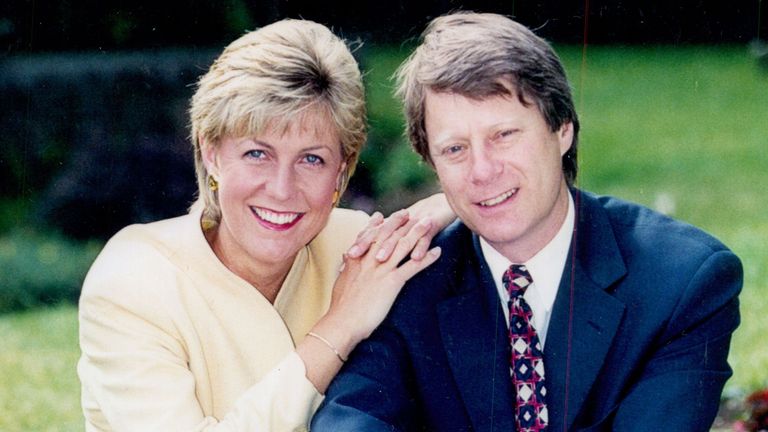
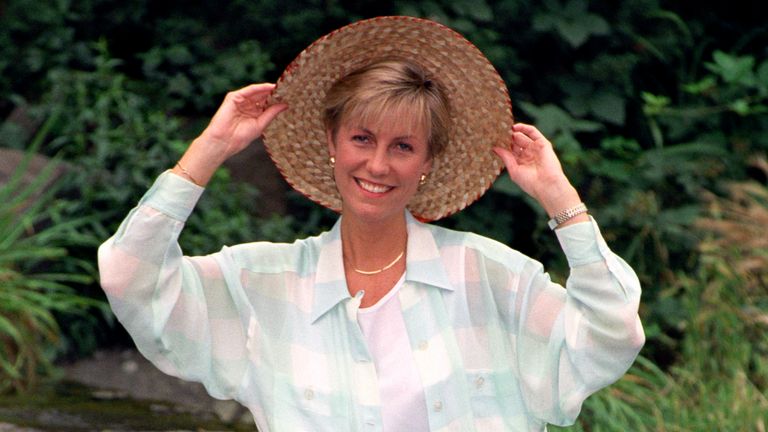
Jill with fellow Crimewatch presenter Nick Ross. Pic: ANL/Shutterstock
Will we ever get an answer?
Ms Cooper says: “It’s really important for a shared audience to look back at that and for new people to discover what happened. And for older people to be reminded about it and to be reminded of the fact that it is still unsolved.”
The film documents aspects of the investigation that most – including some of Jill’s family – have never heard about before.
Other contributors to the film include Dando’s ex-partner, television producer Bob Wheaton, her agent Jon Roseman, and former detective chief inspector Hamish Campbell who headed up the murder case.
Ms Cooper says: “If somebody could see something that could jog a memory that has been unclaimed for 20 years, that would be an amazing outcome for all of us.”
Mr Dando too, has hopes – even if they are vanishingly slim – that the documentary could lead to some sort of answer for himself, and all those who loved and knew Jill.
He says: “We’ve lived for 24 years not knowing who did it, but maybe more importantly, why they did it. Why would you go up to a stranger and do what you did? I just don’t know. So, it would be nice to have some closure from that point of view to know why that person pulled the trigger.”
He goes on: “Maybe even the killer is out there watching this documentary and their conscience, even after all these years may be pricked and it may just encourage them to come forward to confess what they’ve done and get it off their chest.”
Who Killed Jill Dando? is released on Netflix on Tuesday 26 September.

Thousands of members of actors’ trade union Equity are being asked whether they would support industrial action over artificial intelligence protections.
The organisation has launched an indicative ballot among about 7,000 members working in film and TV.
Performers are being asked whether they are prepared to refuse to be digitally scanned on set in order to secure adequate artificial intelligence protections.
It will be the first time the performing arts and entertainment trade union has asked this whole section of its membership to vote in a ballot.
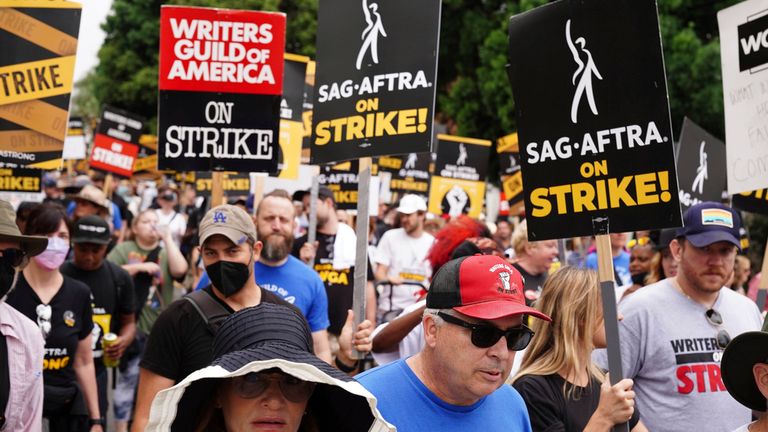
The Hollywood strikes took place in 2023. File pic: AP
The announcement follows the Hollywood strikes in 2023, when members of Equity’s sister union in the US, SAG-AFTRA, and writers, went on strike over issues including AI.
Video game actors in the US also protested over the use of AI, ending almost a year of industrial action earlier in 2025.
Equity’s ballot opens on Thursday and runs for two weeks, and will show the level of support the union has for action short of a strike.
Another statutory ballot would have to be made before any industrial action is taken.
“While tech companies get away with stealing artists’ likeness or work, and the government and decision makers fret over whether to act, unions including Equity are at the forefront of the fight to ensure working people are protected from artificial intelligence misuse,” Equity general secretary Paul W Fleming said in a statement.
“If bosses can’t ensure someone’s likeness and work won’t be used without their consent, why should performers consent to be digitally scanned in the first place?”
Mr Fleming said the ballot would give members the opportunity to “send a clear message to the industry: that it is a basic right of performers to have autonomy over their own personhood and identity”.
The union has no choice but to recommend members support industrial action, he said.
“It’s time for the bosses to step away from the brink and offer us a package, including on AI protections, which respects our members,” added Mr Fleming.
The hotly anticipated Spotify Wrapped is revealing our top tracks, artists and albums for 2025.
But how does the streaming service calculate personalised summaries of users’ listening habits and rank the UK’s hottest artists?
Here’s a look at how your data is used.
The platform describes the annual statistics as “a chance to look back on your year in sound”.
It says data is captured between January and mid-November on every account, although it mostly excludes anything streamed in private mode. (Don’t worry, your passion for the Spice Girls can be kept secret.)
Wrapped presents personalised listening statistics, which Spotify calls the “real story of your year of listening”, alongside global figures for comparison.
The streaming service says Minutes Listened reflects the actual time spent listening to audio on the platform.
Once a user streams at least 30 tracks, Spotify generates a list of Your Top Songs. Similarly, Your Top Artists ranks artists based on total minutes listening to a particular performer.
Other metrics identify the top genres users have played, as well as podcasts and audiobooks ranked by total minutes listened. And if you’ve listened to at least 70% of tracks on a record, you’ll see top albums too.
Spotify also creates Your Listening Age, a guesstimate of your age based on the era of the music “you feel most connected to”.
The streaming service says the statistic is calculated using a five-year span of music which users engaged with more than other listeners of a similar age.
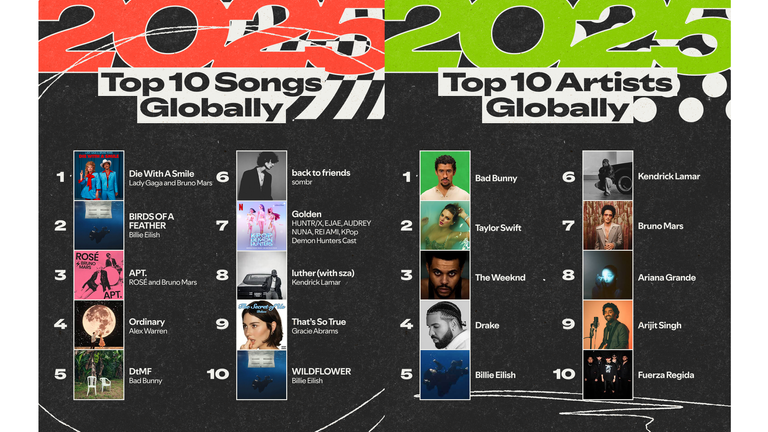
Spotify has been summing up 2025’s most listened to tracks. Pic: Spotify
Swift vs Bunny
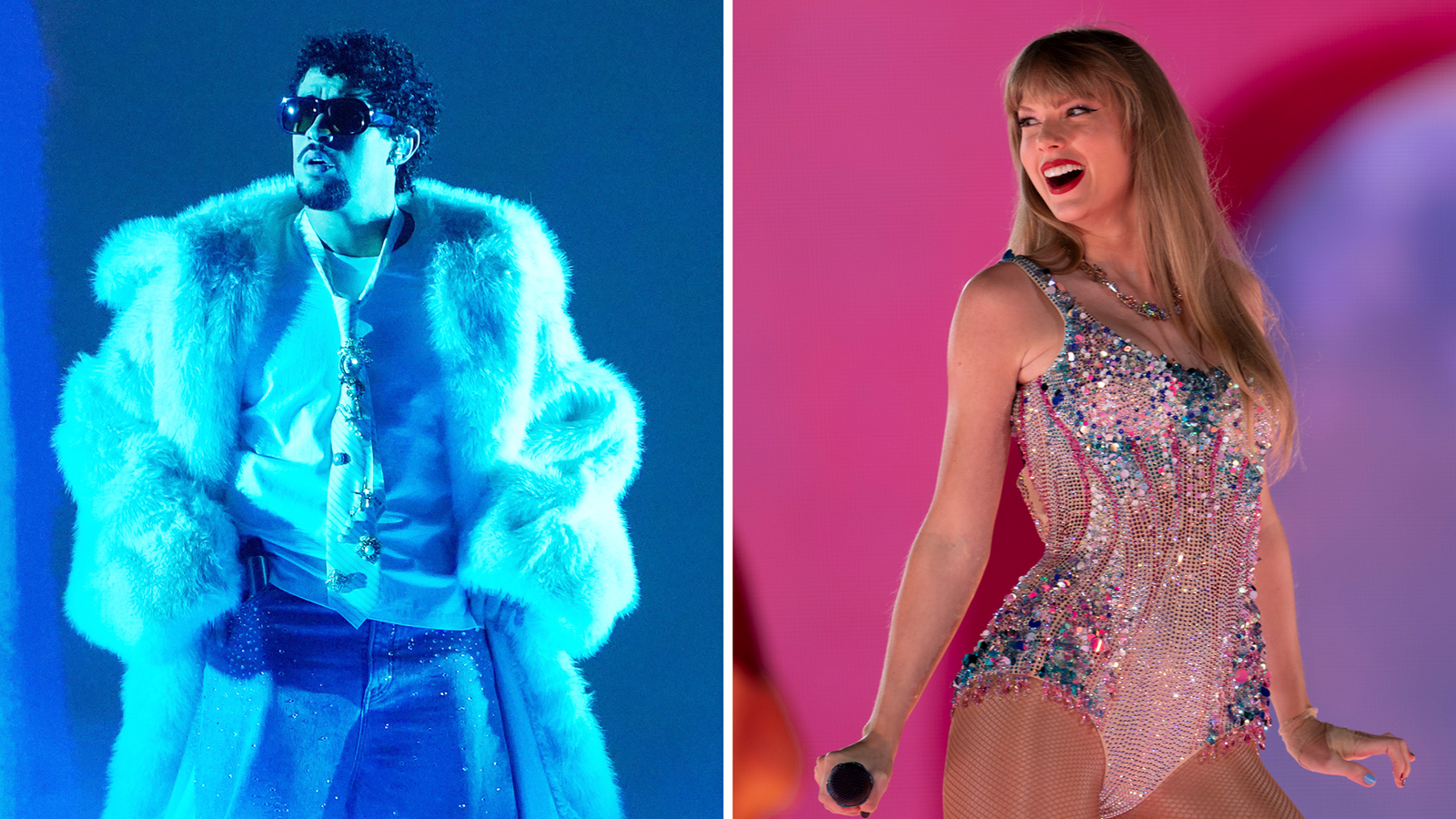
Pop superstar Taylor Swift has been named the UK’s most-streamed artist on Spotify for the third year in a row.
But she dropped out of the top spot in the global rankings, coming second to Puerto Rican superstar Bad Bunny, who secured more than 19.8 billion streams. Third were The Weeknd, followed by Drake and Billie Eilish.
Bad Bunny’s LP Debi Tirar Mas Fotos was the most listened-to album worldwide.
Read more from Sky News:
Sabrina Carpenter fury at video
Drake’s lawsuit dismissed
Spotify hikes UK prices
Spotify revealed Drake was the UK’s second most-listened to artist, followed by Sabrina Carpenter in third, The Weeknd in fourth and Billie Eilish in fifth.
Despite being the most listened-to artist, Swift failed to break into the UK’s top five most listened-to songs and albums of the year.
Alex Warren’s Ordinary was the most-streamed song, and Short ‘N’ Sweet, released by Carpenter last year, the top album.
-
 Sports2 years ago
Story injured on diving stop, exits Red Sox game
-
 Sports3 years ago
‘Storybook stuff’: Inside the night Bryce Harper sent the Phillies to the World Series
-
 Sports2 years ago
Game 1 of WS least-watched in recorded history
-
 Sports3 years ago
Button battles heat exhaustion in NASCAR debut
-
 Sports3 years ago
MLB Rank 2023: Ranking baseball’s top 100 players
-
Sports4 years ago
Team Europe easily wins 4th straight Laver Cup
-
 Environment3 years ago
Japan and South Korea have a lot at stake in a free and open South China Sea
-
 Environment1 year ago
Here are the best electric bikes you can buy at every price level in October 2024