

Connect with us

Published

on

Share Tweet By Billy Hallowell Editor
October 2, 2023

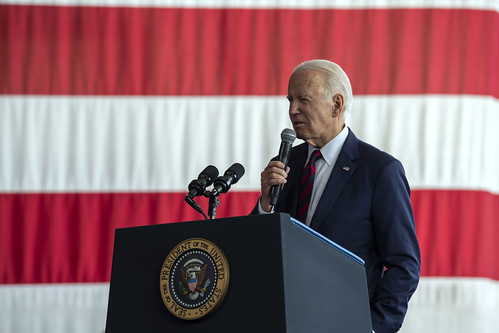
Dr. Elyse Semerdjian, a scholar on the Armenian genocide who is on staff at Clark University, believes “the Biden administration has blood on its hands” over its handling of the crisis in Nagorno-Karabakh.

Listen to the latest episode of CBNs Quick Start podcast ?

“Joe Biden courted the Armenian community under the pretext that he was going to acknowledge the Armenian genocide, which he promptly did,” she said. “But, as a scholar of genocide, I have to ask: what good is that if this genocide is also happening under his watch?”

The conversation then delved into the question of whether the situation in Nagorno-Karabakh could be classified as genocide a term some seem remiss to use, despite the horrors unfolding.

Dr. Semerdjian, drawing from her expertise in the field of genocide studies, explained historical patterns of deprivation and related tactics have been used as tools of genocide in the past.

With that in mind, the international community’s reluctance to use the legal label of genocide raised concerns about the lack of accountability, tough stances, and necessary action to halt such acts.

Semerdjian said she believes a “green light” is being sent to continue the “genocidal conditions” being perpetuated at the hands of Azerbaijan, the nation that overtook Nagorno-Karabakh after nine months of an imposed blockade of the Lachin corridor.

This blockage prevented ethnic Armenians living in the region from receiving food, medicines, and resources. Semerdjian has joined other experts in critiquing the West’s refusal to stop Azerbaijan from taking these actions and essentially invading the area.

Now, most residents of Nagorno-Karabakh have fled, pouring into Armenia and sparking questions about what comes next and how the refugee crisis will further devolve.

Semerdjian said the situation might not end here, either, as some fear Armenia will be conquered next, allowing for a “corridor to Turkey” to take form; Turkey has sided with Azerbaijan in the dispute.

“As long as there is no accountability or pushback from the international community, especially the United States, we’re going to see more of this and it’s happening under [Biden’s] watch,” she said.

In terms of potential solutions, Semerdjian called for international efforts to assist Armenians seeking safe passage out of the conflict zone. She also stressed the need for guarantees of Armenian sovereignty and territorial integrity, given the potential threats to Armenia itself.

Joel Veldkamp, head of international communications for Christian Solidarity International, also recently spoke with CBN Digital about the crisis.

Its our worst nightmare come to life right before our eyes, Veldkamp said. We saw it coming, we warned people it was coming, the Armenians warned people that it was coming, and we tried to amplify their voices as much as we could.

Please continue to pray for the situation in Nagorno-Karabakh and Armenians more broadly.

***As the number of voices facing big-tech censorship continues to grow, please sign up for Faithwires daily newsletter and download the CBN News app, developed by our parent company, to stay up-to-date with the latest news from a distinctly Christian perspective.***

Continue Reading

Science

Scientists Warn Southern Ocean Could ‘Burp’ Stored Heat, Delaying Global Cooling for 100 Years

Published

on

By

New modelling suggests the Southern Ocean could one day release the vast heat it has stored from greenhouse gas pollution. If CO₂ levels were pushed to net-negative, deep convection may trigger a sudden “thermal burp” that warms the planet for decades. Though idealised, the study shows how Antarctica’s surrounding seas could shape long-term climate outcomes.

Continue Reading

Business

Is Starmer continuing to mislead public over the budget?

Published

on

By

Is Starmer continuing to mislead public over the budget?

Did the chancellor mislead the public, and her own cabinet, before the budget?

It’s a good question, and we’ll come to it in a second, but let’s begin with an even bigger one: is the prime minister continuing to mislead the public over the budget?

The details are a bit complex but ultimately this all comes back to a rather simple question: why did the government raise taxes in last week’s budget? To judge from the prime minister’s responses at a news conference just this morning, you might have judged that the answer is: “because we had to”.

“There was an OBR productivity review,” he explained to one journalist. “The result of that was there was £16bn less than we might otherwise have had. That’s a difficult starting point for any budget.”

Politics latest: OBR boss resigns over budget leak

Please use Chrome browser for a more accessible video player

Beth Rigby asks Keir Starmer if he misled the public

Time and time again throughout the news conference, he repeated the same point: the Office for Budget Responsibility had revised its forecasts for the UK economy and the upshot of that was that the government had a £16bn hole in its accounts. Keep that figure in your head for a bit, because it’s not without significance.

But for the time being, let’s take a step back and recall that budgets are mostly about the difference between two numbers: revenues and expenditure; tax and spending. This government has set itself a fiscal rule – that it needs, within a few years, to ensure that, after netting out investment, the tax bar needs to be higher than the spending bar.

At the time of the last budget, taxes were indeed higher than current spending, once the economic cycle is taken account of or, to put it in economists’ language, there was a surplus in the cyclically adjusted current budget. The chancellor had met her fiscal rule, by £9.9bn.

Pic: Reuters
Image:
Pic: Reuters

This, it’s worth saying, is not a very large margin by which to meet your fiscal rule. A typical budget can see revisions and changes that would swamp that in one fell swoop. And part of the explanation for why there has been so much speculation about tax rises over the summer is that the chancellor left herself so little “headroom” against the rule. And since everyone could see debt interest costs were going up, it seemed quite plausible that the government would have to raise taxes.

Then, over the summer, the OBR, whose job it is to make the official government forecasts, and to mark its fiscal homework, told the government it was also doing something else: reviewing the state of Britain’s productivity. This set alarm bells ringing in Downing Street – and understandably. The weaker productivity growth is, the less income we’re all earning, and the less income we’re earning, the less tax revenues there are going into the exchequer.

The early signs were that the productivity review would knock tens of billions of pounds off the chancellor’s “headroom” – that it could, in one fell swoop, wipe off that £9.9bn and send it into the red.

Read more:
Main budget announcements – at a glance
Enter your salary to see how the budget affects you

That is why stories began to brew through the summer that the chancellor was considering raising taxes. The Treasury was preparing itself for some grisly news. But here’s the interesting thing: when the bad news (that productivity review) did eventually arrive, it was far less grisly than expected.

True: the one-off productivity “hit” to the public finances was £16bn. But – and this is crucial – that was offset by a lot of other, much better news (at least from the exchequer’s perspective). Higher wage inflation meant higher expected tax revenues, not to mention a host of other impacts. All told, when everything was totted up, the hit to the public finances wasn’t £16bn but somewhere between £5bn and £6bn.

Please use Chrome browser for a more accessible video player

Budget winners and losers

Why is that number significant? Because it’s short of the chancellor’s existing £9.9bn headroom. Or, to put it another way, the OBR’s forecasting exercise was not enough to force her to raise taxes.

The decision to raise taxes, in other words, came down to something else. It came down to the fact that the government U-turned on a number of its welfare reforms over the summer. It came down to the fact that they wanted to axe the two-child benefits cap. And, on top of this, it came down to the fact that they wanted to raise their “headroom” against the fiscal rules from £9.9bn to over £20bn.

These are all perfectly logical reasons to raise tax – though some will disagree on their wisdom. But here’s the key thing: they are the chancellor and prime minister’s decisions. They are not knee-jerk responses to someone else’s bad news.

Yet when the prime minister explained his budget decisions, he focused mostly on that OBR report. In fact, worse, he selectively quoted the £16bn number from the productivity review without acknowledging that it was only one part of the story. That seems pretty misleading to me.

Continue Reading

Politics

Is Starmer continuing to mislead public over the budget?

Published

on

By

Is Starmer continuing to mislead public over the budget?

Did the chancellor mislead the public, and her own cabinet, before the budget?

It’s a good question, and we’ll come to it in a second, but let’s begin with an even bigger one: is the prime minister continuing to mislead the public over the budget?

The details are a bit complex but ultimately this all comes back to a rather simple question: why did the government raise taxes in last week’s budget? To judge from the prime minister’s responses at a news conference just this morning, you might have judged that the answer is: “because we had to”.

“There was an OBR productivity review,” he explained to one journalist. “The result of that was there was £16bn less than we might otherwise have had. That’s a difficult starting point for any budget.”

Politics latest: OBR boss resigns over budget leak

Please use Chrome browser for a more accessible video player

Beth Rigby asks Keir Starmer if he misled the public

Time and time again throughout the news conference, he repeated the same point: the Office for Budget Responsibility had revised its forecasts for the UK economy and the upshot of that was that the government had a £16bn hole in its accounts. Keep that figure in your head for a bit, because it’s not without significance.

But for the time being, let’s take a step back and recall that budgets are mostly about the difference between two numbers: revenues and expenditure; tax and spending. This government has set itself a fiscal rule – that it needs, within a few years, to ensure that, after netting out investment, the tax bar needs to be higher than the spending bar.

At the time of the last budget, taxes were indeed higher than current spending, once the economic cycle is taken account of or, to put it in economists’ language, there was a surplus in the cyclically adjusted current budget. The chancellor had met her fiscal rule, by £9.9bn.

Pic: Reuters
Image:
Pic: Reuters

This, it’s worth saying, is not a very large margin by which to meet your fiscal rule. A typical budget can see revisions and changes that would swamp that in one fell swoop. And part of the explanation for why there has been so much speculation about tax rises over the summer is that the chancellor left herself so little “headroom” against the rule. And since everyone could see debt interest costs were going up, it seemed quite plausible that the government would have to raise taxes.

Then, over the summer, the OBR, whose job it is to make the official government forecasts, and to mark its fiscal homework, told the government it was also doing something else: reviewing the state of Britain’s productivity. This set alarm bells ringing in Downing Street – and understandably. The weaker productivity growth is, the less income we’re all earning, and the less income we’re earning, the less tax revenues there are going into the exchequer.

The early signs were that the productivity review would knock tens of billions of pounds off the chancellor’s “headroom” – that it could, in one fell swoop, wipe off that £9.9bn and send it into the red.

Read more:
Main budget announcements – at a glance
Enter your salary to see how the budget affects you

That is why stories began to brew through the summer that the chancellor was considering raising taxes. The Treasury was preparing itself for some grisly news. But here’s the interesting thing: when the bad news (that productivity review) did eventually arrive, it was far less grisly than expected.

True: the one-off productivity “hit” to the public finances was £16bn. But – and this is crucial – that was offset by a lot of other, much better news (at least from the exchequer’s perspective). Higher wage inflation meant higher expected tax revenues, not to mention a host of other impacts. All told, when everything was totted up, the hit to the public finances wasn’t £16bn but somewhere between £5bn and £6bn.

Please use Chrome browser for a more accessible video player

Budget winners and losers

Why is that number significant? Because it’s short of the chancellor’s existing £9.9bn headroom. Or, to put it another way, the OBR’s forecasting exercise was not enough to force her to raise taxes.

The decision to raise taxes, in other words, came down to something else. It came down to the fact that the government U-turned on a number of its welfare reforms over the summer. It came down to the fact that they wanted to axe the two-child benefits cap. And, on top of this, it came down to the fact that they wanted to raise their “headroom” against the fiscal rules from £9.9bn to over £20bn.

These are all perfectly logical reasons to raise tax – though some will disagree on their wisdom. But here’s the key thing: they are the chancellor and prime minister’s decisions. They are not knee-jerk responses to someone else’s bad news.

Yet when the prime minister explained his budget decisions, he focused mostly on that OBR report. In fact, worse, he selectively quoted the £16bn number from the productivity review without acknowledging that it was only one part of the story. That seems pretty misleading to me.

Continue Reading

Trending