

Kia EV9 reservations are opening in the US this month, here’s what to expect

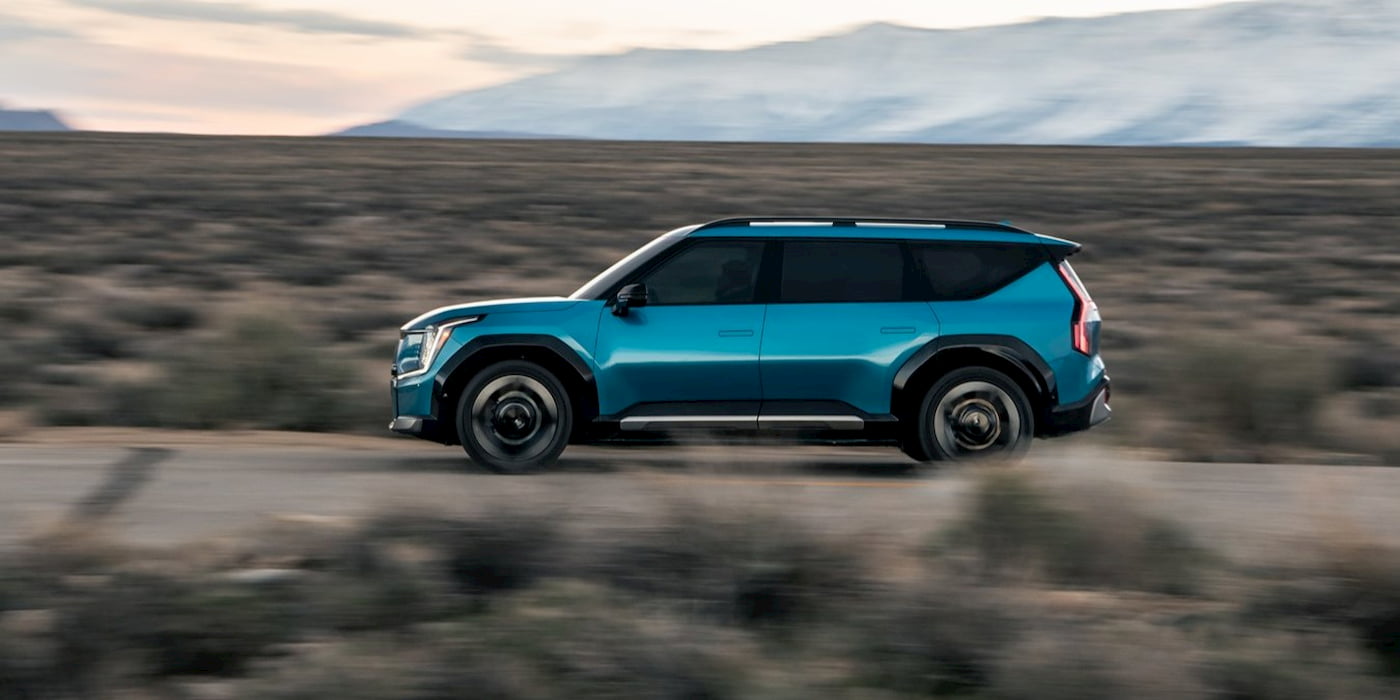
Kia is opening reservations for its eagerly awaited flagship EV9 electric SUV in the US on October 16th. The EV9 is expected to attract significant interest as Kia’s first three-row electric SUV.
Kia is opening EV9 reservations on October 16th
“The Kia EV9 represents the future of sustainable mobility, and this reservation program will allow interested customers to be among the first in line for one of the most highly anticipated new vehicles to hit the U.S. market in years,” Steven Center, COO and EVP at Kia America explained this week.
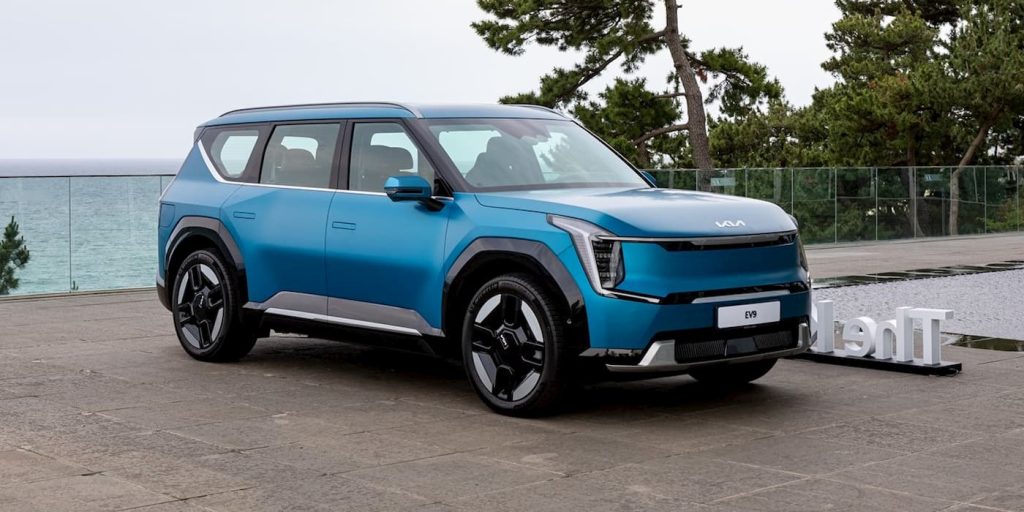
Kia unveiled its largest electric SUV in March, previewing the automaker’s vision of the future with a trailblazing new design and premium tech features.
The EV9 will start at $54,900 (not including destination) and will be available in four trims: Light Long Range RWD, Wind AWD, Land AWD, and a sporty GT-Line AWD.
Reservations are expected to open within the next two weeks. Starting October 16 at 10 a.m. PST, those interested will have the opportunity to reserve Kia’s first three electric SUV.
If you reserve the EV9 before November 27th, you will be eligible for a “suite of gifts,” including a Webasto Go Dual Voltage Portable EV Charger ($549 value), a complimentary three-year Kia maintenance plan, and one-year of available digital features and services.
The deal is good for purchases and leasing. In addition, all customers will receive a credit for 1,000 kWh of charging at Electrify America.
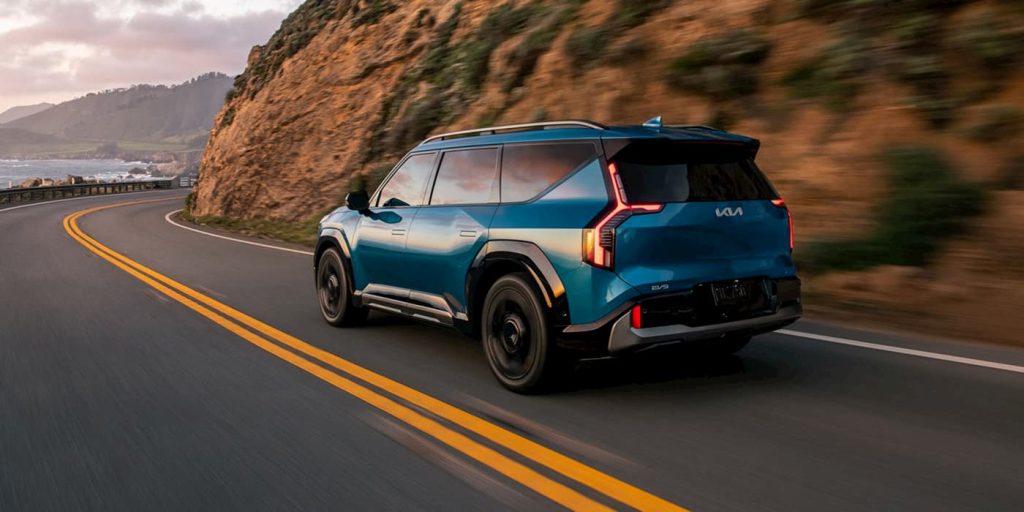
Kia says it expects “significant interest” in its EV9, and the reservation program is a way of celebrating early adopters.
If interested, you can visit Kia.com to design and reserve your EV9 with a $750 fully refundable payment placed with participating Kia dealers.
What to expect from Kia’s first three-row electric SUV
The EV9 “will deliver sought-after features packed into one powerhouse EV SUV,” according to the Kia.
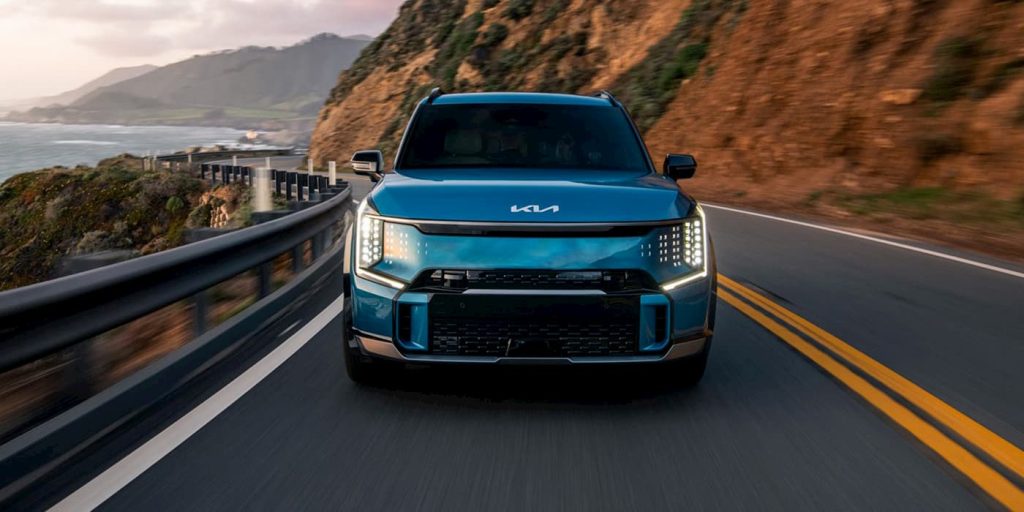
Powered by Hyundai’s E-GMP platform (the same used for the IONIQ 5), the EV9 is the first model to use its fourth-generation battery tech. The 800V platform enables DC fast charging from 10% to 80% in under 25 minutes.
Kia included “true SUV capabilities,” like up to 5,000 lbs towing, 7.8 of ground clearance, and over 81 cu ft of cargo space behind the first row.
The EV9 is slightly longer than the Kia Telluride at 197.2″ in length, while they are nearly the same height (up to 70.1″) and width (77.9″). Even with its rugged, boxy design, the electric SUV features a drag coefficient of 0.28, beating out the Volvo EX90 at 0.29.
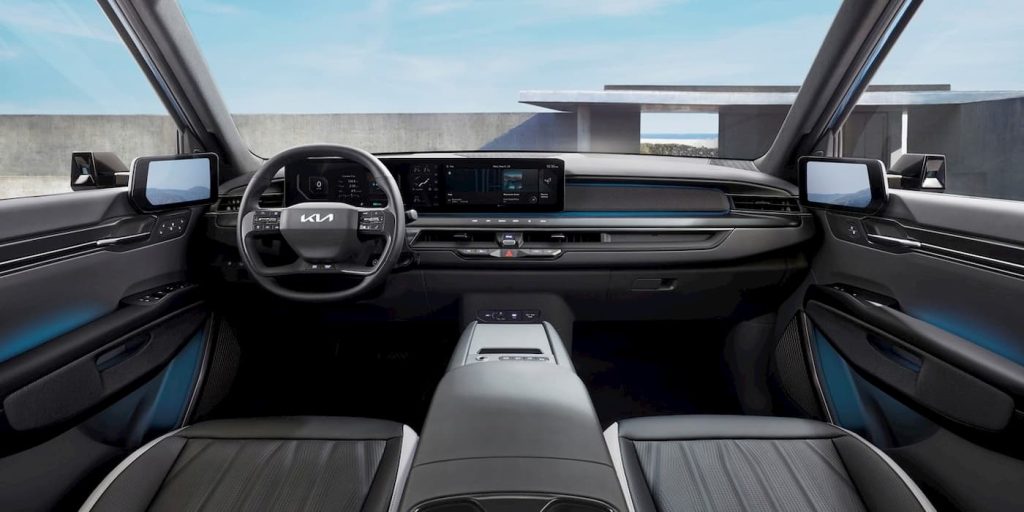
Kia included the latest in-vehicle tech, including its sixth-generation Connected Car Navigation Cockpit (ccNC) system. The new infotainment includes faster processing, easy accessibility, OTA updates, Wireless Apple CarPlay and Android Auto.
At the center of the new system is an elliptical-shaped dash with a modern “floating” effect. A wide, single-panel panoramic display is featured on top with dual 12.3″ screens and a 5″ HVAC screen.
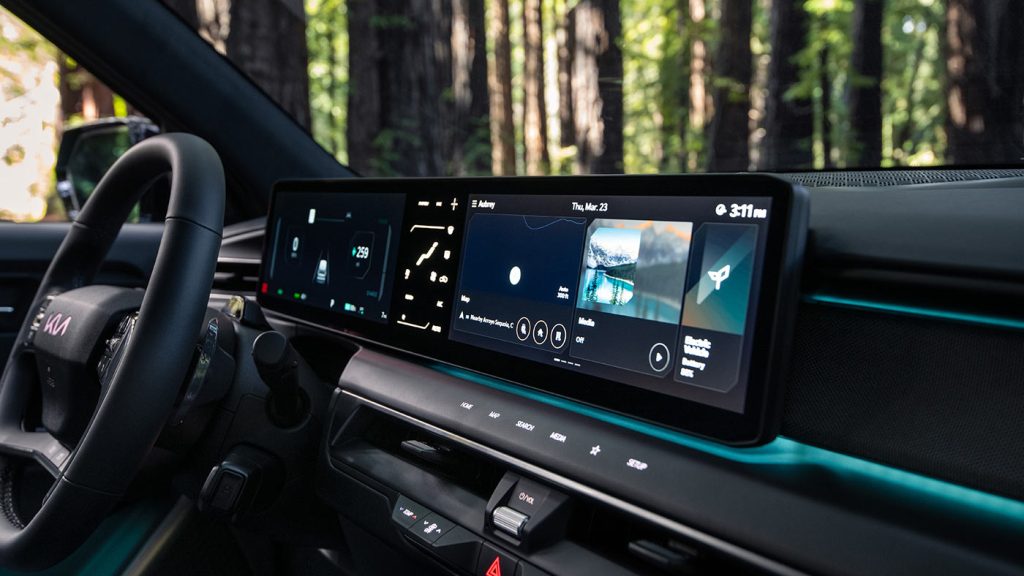
Underneath the screen are hidden switches for infotainment features. Meanwhile, physical buttons for volume, temperature, and fan speed are added for practicality.
Kia included over 20 ADAS features as standard, including an updated Forward-Avoidance Assist.
The EV9 will initially be built in South Korea and shipped to the US, with 2024 models expected to hit showrooms by the end of the year. Next year, Kia will move production to its West Point, Georgia, facility to take advantage of the EV tax credit provided by the IRA.
FTC: We use income earning auto affiliate links. More.

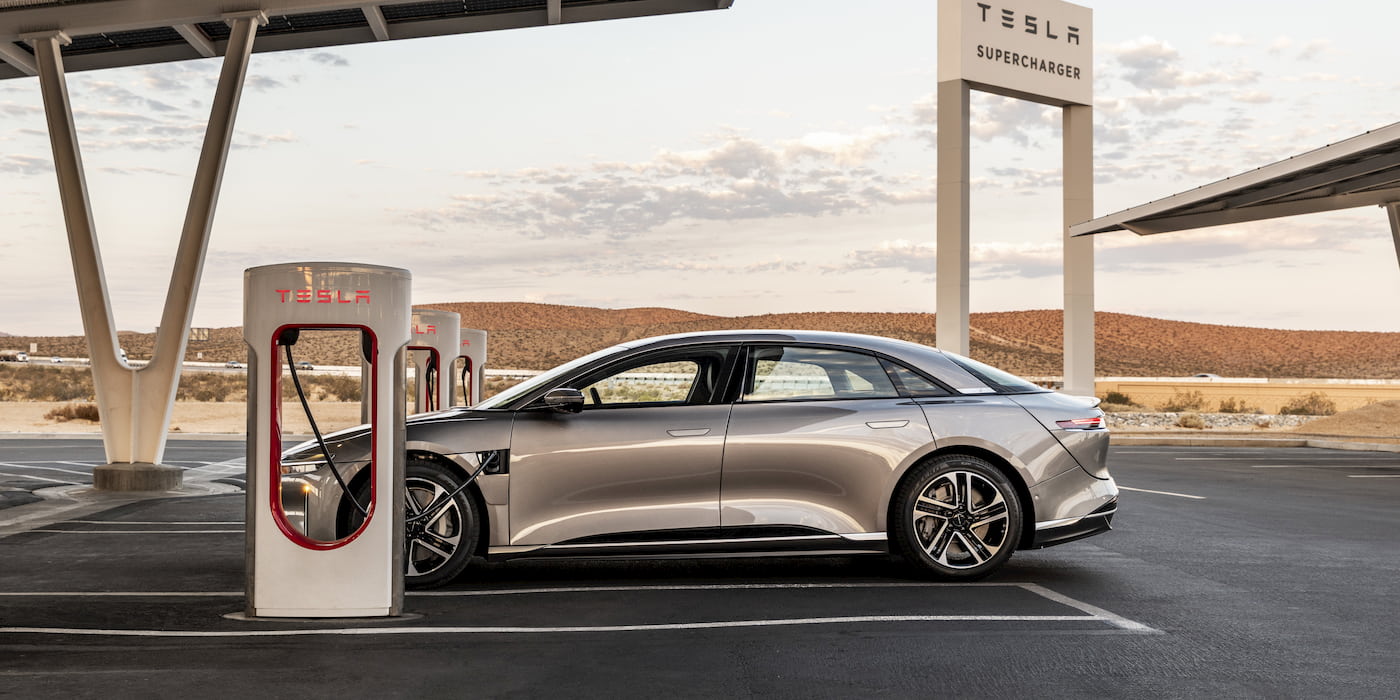
Lucid Motors (LCID) is calling out the competition after the 2026 Air remains the most efficient EV in the US according to new EPA rankings.
2026 Lucid Air remains most efficient EV in EPA rankings
It has been 9 years since Lucid introduced the +400-mile-range Air, its first luxury electric sedan. Since then, the California-based EV maker has come a long way, introducing its first electric SUV, the Gravity, and plans to launch a series of more affordable midsize vehicles, starting later next year.
Lucid’s former CEO, Peter Rawlinson, who was a top engineer at Tesla before joining the luxury EV startup in 2013, promised the company’s innovations would be “the key to unlocking greater efficiency,” and ultimately, more affordable vehicles.
Rawlinson was not kidding. The 2024 Lucid Air Pure was deemed the “world’s most efficient car” with a record 5 miles of range per kWh and a 146 MPGe rating, the highest rating ever given to an EV by the EPA.
Even with a slate of new EVs hitting the market, many claiming next-level efficiency, the Lucid Air is still ahead of the pack.
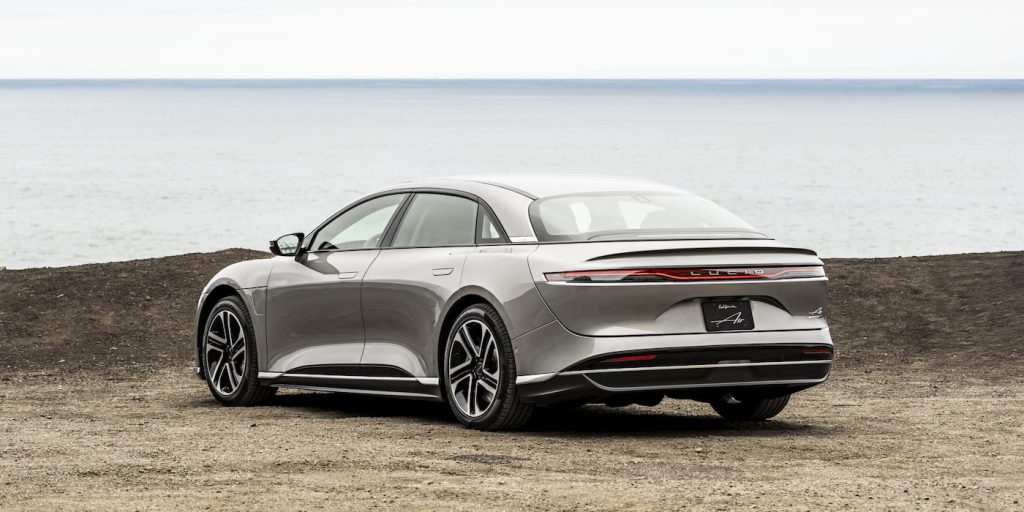
According to new EPA rankings, the 2026 Lucid Air Pure RWD (with 19″ wheels) remains the most efficient EV in the US with a 146 MPGe rating.
The Air beat out the 2026 Tesla Model Y Standard RWD (138 MPGe), 2026 Tesla Model 3 Premium RWD (137 MPGe), 2026 Toyota bZ (131 MPGe), and the 2026 Mercedes-Benz CLA250 Plus EV (126 MPGe).
Other automakers often tout EV range using lenient WLTP or CLTC test cycles, masking efficiency gaps and inflating expectations. Now that official U.S. EPA numbers are out, the story changes. Lucid Air delivers S-Class size with unmatched efficiency, going farther on less energy… pic.twitter.com/yqYHMgF4tm
— Nick Twork (@ntwork) November 25, 2025
Lucid’s communications boss, Nick Twork, shared the news on social media, saying the Air “delivers “S-Class size with unmatched efficiency.”
While many automakers tout EV range using more lenient WLTP or CLTC test cycles, Twork said Lucid’s advantage “comes from a holistic engineering approach” that was designed years ago and “still ahead of any passenger car sold today.”
Electrek’s Take
By developing electric vehicle components from the ground up, including the powertrain, battery systems, and software, Lucid has an advantage over many legacy automakers that rely on third parties to outsource.
For one, Lucid’s innovations are already driving down costs. The first Lucid Air Dream Edition, launched in 2021, started at $169,000. Today, you can snag the Lucid Air for as low as $70,900.
Lucid is now ramping production of its first electric SUV, the Gravity. Last month, it launched the lower-priced Gravity Touring trim, starting at $79,900.
Starting later next year, Lucid will begin production of its midsize platform, which will spawn at least three “top hats” priced around $50,000. The first will be a midsize crossover SUV, followed by a more rugged SUV that will share design clues from the Gravity X concept. Although it’s yet to be confirmed, the third is expected to be a midsize sedan that could go head-to-head with the Tesla Model 3.
Rawlinson previously said Lucid’s midsize vehicles are aimed “right in the heart of Tesla Model 3, Model Y territory.”
After reporting Q3 earnings last month, Lucid said it had enough liquidity to fund it through the first half of 2027 and confirmed it’s on track to begin production of the midsize platform in late 2026.
Ready to test Lucid’s luxury EVs for yourself? Lucid is running a Cyber Monday Special, offering $2,000 toward an Air or $3,000 toward a Gravity. Check out the links below to find Lucid Air and Gravity models in your area.


FTC: We use income earning auto affiliate links. More.


Hyundai Motor and Kia are racing past US rivals, scoring their largest market-share jump since the pandemic. The Korean auto giants’ market share reached a record 10.9% in October.
Hyundai and Kia capture record US market share
Hyundai and Kia’s big bet on the US is paying off. Despite the new tariffs on imported vehicles and loss of the $7,500 federal EV tax credit, the Korean automaker is outpacing the competition.
Thanks to strong demand for electrified vehicles, especially SUVs, Hyundai and Kia captured a record 10.9% share of the US market in October.
Hyundai Motor, including Genesis and Kia, saw its combined US market share rise 3.4% from 7.5% in 2019. According to The Korean Economic Daily, this was the largest gain among major OEMs, including the “Big 3” GM, Ford, and Stellantis.
The growth is primarily due to its expanding lineup of hybrid SUVs, including the Tucson, Sorento, Telluride, Santa Fe, and Palisade.
Since 2020, Hyundai and Kia’s US hybrid market share has surged from just 5% to 14% this year. Through October, the Korean automaker sold 257,340 hybrids, already topping the roughly 222,500 it handed over in 2024.
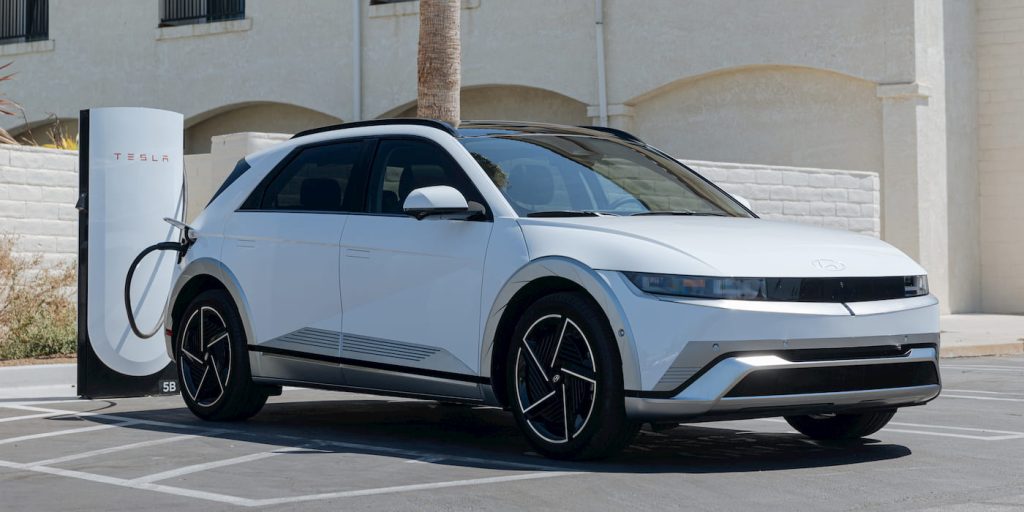
Although hybrid sales surged, Hyundai and Kia’s EV sales dropped in October following the loss of the $7,500 federal tax credit.
Hyundai sold just 1,642 IONIQ 5s last month, a 63% decrease from October 2024 and significantly fewer than the over 8,400 sold in September.
Kia didn’t fare much better with just 666 EV9s and 508 EV6s sold in October, a stark contrast from the 1,941 and 1,732 sold in October 2024.
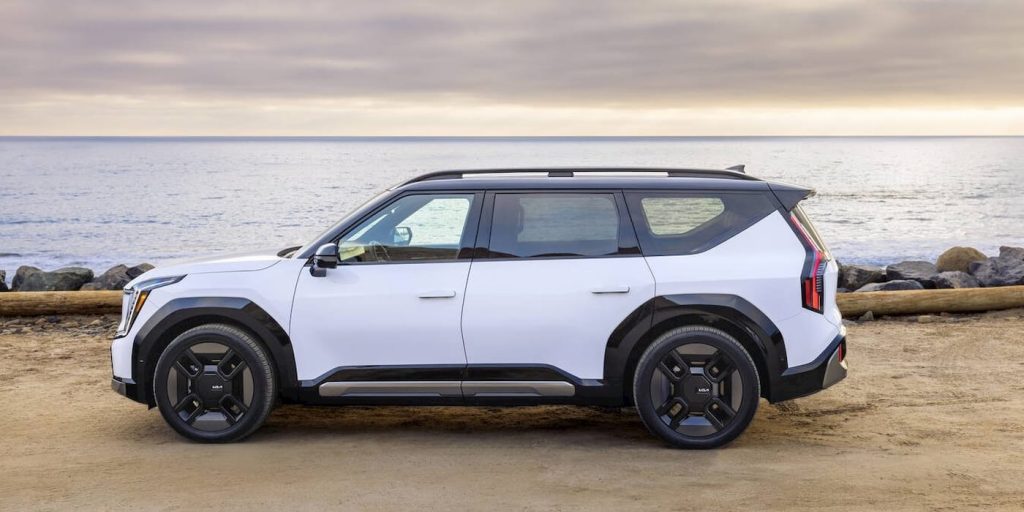
The policy changes caused Kia to delay the launch of several new EVs, including the EV4, its first electric sedan, and the high-performance EV9.
Hyundai Motors North America CEO, Randy Parker, said the policy changes have “temporarily disrupted the market,” but the company is confident it will reset over the next few months.
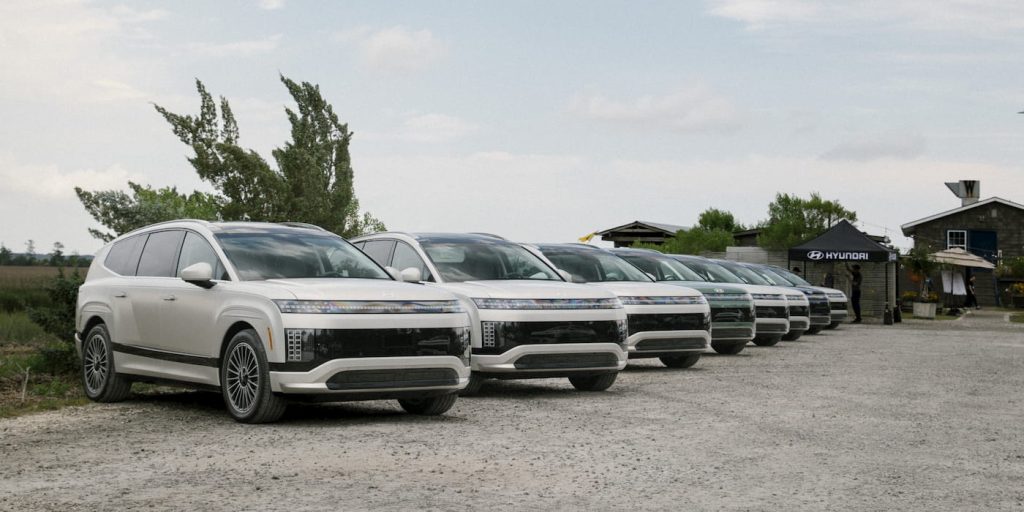
After the US and South Korea agreed to lower tariffs from 25% to 15% last month, Hyundai and Kia are now on par with Japanese automakers, including Toyota. Japan reached a similar deal with the US in September.
With local production picking up at Hyundai Motor Group’s Metaplant America and Kia’s West Point plant in Georgia, the Korean automakers expect to carry the momentum into 2026.
Hyundai and Kia have been pushing some of the strongest promotions to make up for the loss of the federal tax credit. Kia introduced a $10,000 customer cash discount across its entire EV lineup last month. Meanwhile, Hyundai is still offering IONIQ 5 leases as low as $189 per month, which is about as low a payment you’ll find for an all-electric vehicle.
Interested in testing one for yourself? We can help you get started. You can use our links below to find Hyundai, Kia, and Genesis vehicles near you.
Electric Vehicles:
Hybrid vehicles:
FTC: We use income earning auto affiliate links. More.

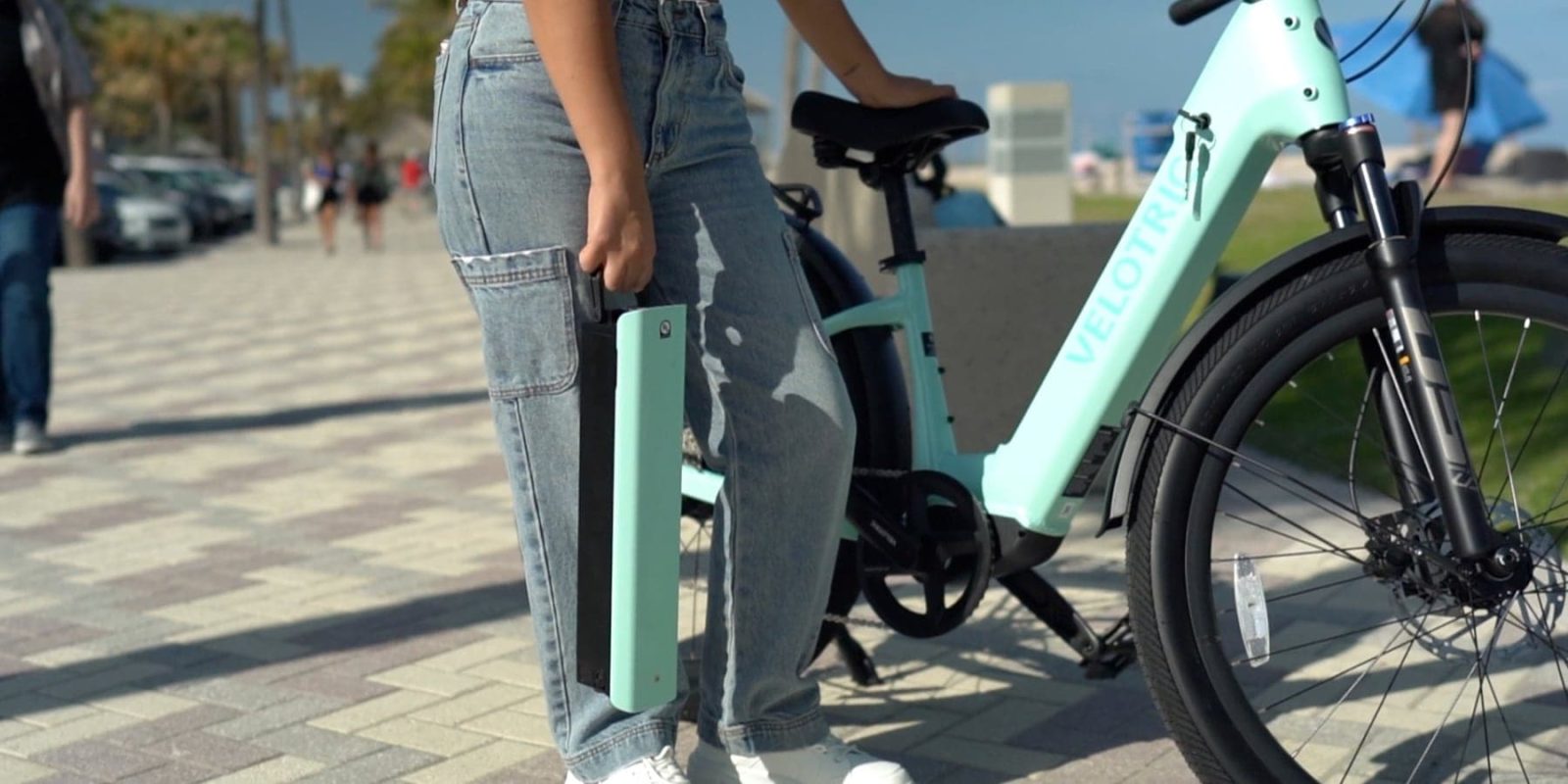
If you ask the average American which country is doing the most to improve e-bike battery safety, most people probably wouldn’t guess China. But that’s exactly where the world’s strongest, most comprehensive lithium-ion safety rules are coming from – and the latest round just went into effect today.
Beginning December 1, China has officially banned the sale of all e-bikes built to the older national standard, replacing them with a new, far stricter rule set known as GB 17761-2024. Under the announcement from the State Administration for Market Regulation, any e-bike sold in China from today forward must carry a valid CCC certification under this brand-new standard. Older certificates are now invalid, and retailers caught selling non-compliant bikes face enforcement from local regulators.
The new rules go far beyond what most countries require. They tighten fire-resistance requirements, restrict the amount of plastic allowed on an e-bike, cap total vehicle weight, and mandate improved electrical safety. The regulations also work hand-in-hand with a second standard, the already-implemented GB 43854-2024, which sets some of the toughest lithium-ion battery testing requirements in the world, including mandatory over-charge protection, thermal abuse tests, puncture tests, and a ban on repurposed or second-hand cells, a major cause of past fires.
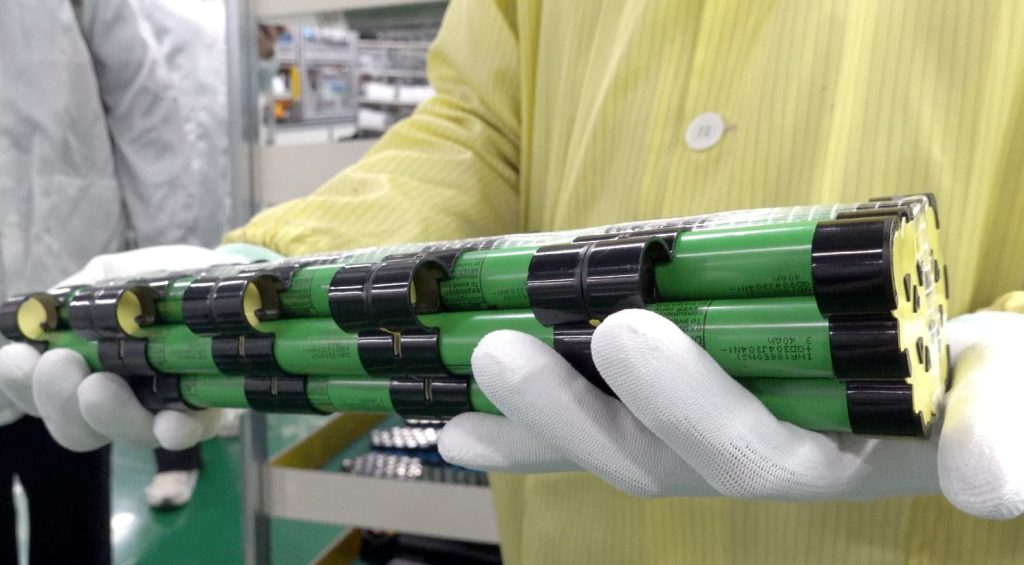
Balancing safety and convenience for existing owners, Chinese regulators also built in consumer protections. Bikes that were already purchased and registered under the old rules won’t be forced off the road. And companies are required to support repairs and spare parts for at least the next five years. But unregistered “old-standard” bikes must have been formally plated already, or they’ll no longer be legal to operate.
For a country often stereotyped as producing unsafe batteries, the reality is almost the opposite. China is now setting the global pace on e-bike safety – aggressively tightening standards, sharply reducing fire risks, and pushing manufacturers to meet levels of testing that most of Europe and the US still haven’t matched.
via: ITHOME
FTC: We use income earning auto affiliate links. More.
-
 Sports2 years ago
Story injured on diving stop, exits Red Sox game
-
 Sports3 years ago
‘Storybook stuff’: Inside the night Bryce Harper sent the Phillies to the World Series
-
 Sports2 years ago
Game 1 of WS least-watched in recorded history
-
 Sports3 years ago
Button battles heat exhaustion in NASCAR debut
-
 Sports3 years ago
MLB Rank 2023: Ranking baseball’s top 100 players
-
Sports4 years ago
Team Europe easily wins 4th straight Laver Cup
-
 Environment3 years ago
Japan and South Korea have a lot at stake in a free and open South China Sea
-
 Environment1 year ago
Here are the best electric bikes you can buy at every price level in October 2024