
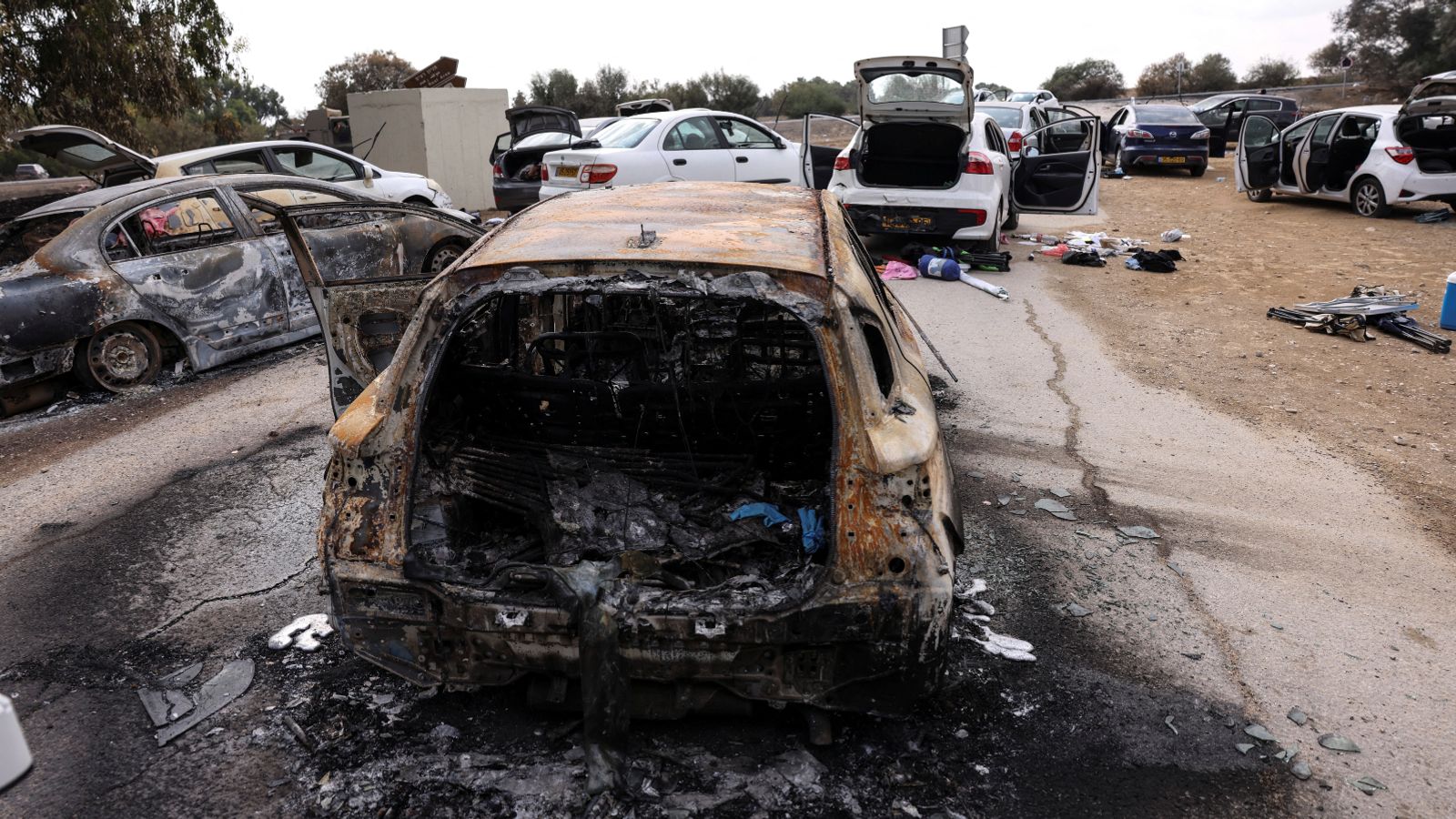
Israel-Hamas war: 17 British nationals feared dead or missing, including children

Seventeen British nationals, including children, are feared dead or missing in Israel after an attack by Hamas, Sky News understands.
Three Britons are already confirmed to have died in the weekend’s attack, which has so far claimed at least 2,100 lives in total.
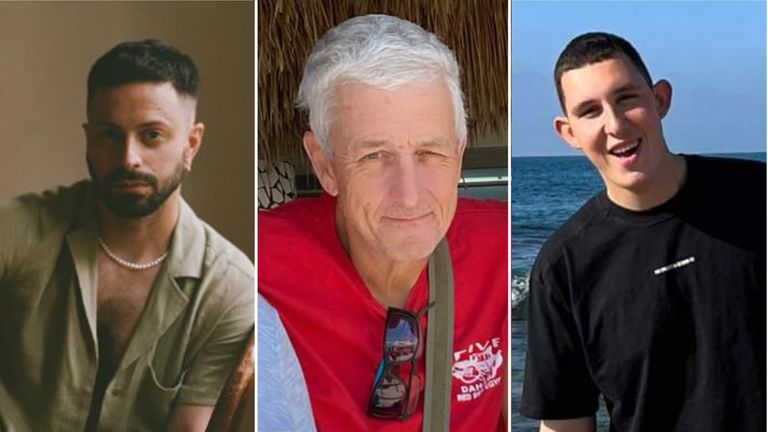
Among those known to have died is 20-year-old Nathanel Young, who was serving in the Israeli army when he was killed during Hamas’s charge.
Bernard Cowan, who grew up around Glasgow, also died while Jack Marlowe, 26, who went to the same London school as Mr Young, is believed to be missing.
Photographer Dan Darlington was confirmed to have died after a post from his sister, Shelley, on social media said he was “murdered” at Nir Oz, in southern Israel.
To outline the UK’s support for Israel, foreign secretary James Cleverly arrived in the country, where he will also meet survivors on Wednesday afternoon.
Israel-Gaza latest: Israel vows to ‘wipe out’ Hamas after boys ‘beheaded’
Danny Darlington, Bernard Cowan and Nathanel Young
At least 1,200 Israelis are dead and more than 2,700 have been wounded, according to the latest figures supplied by the IDF (Israel Defence Forces).
The latest information from Gaza’s Health Ministry said that at least 1,055 Palestinians have been killed and 5,184 wounded in Israeli strikes, with authorities claiming two-thirds of those injured are women and children.
Israeli warplanes hammered the Gaza Strip through the night into Wednesday morning, reducing buildings to rubble and reportedly striking over 450 targets.
Its air force has also targeted southern Lebanon, with Israel claiming to have struck a Hezbollah lookout position in retaliation for cross-border fire.
Meanwhile, Israel has stopped entry of food, fuel and medicines into Gaza, and the sole remaining access from Egypt shut down on Tuesday after airstrikes hit near the border crossing, with the violence expected to escalate further.
Israel vows to ‘wipe out’ Hamas
To many of the 2.3 million residents in the Gaza Strip, the mobilisation and intense bombardment raise fears of a ground invasion that may surpass Israel’s incursions in 2008 and 2014.
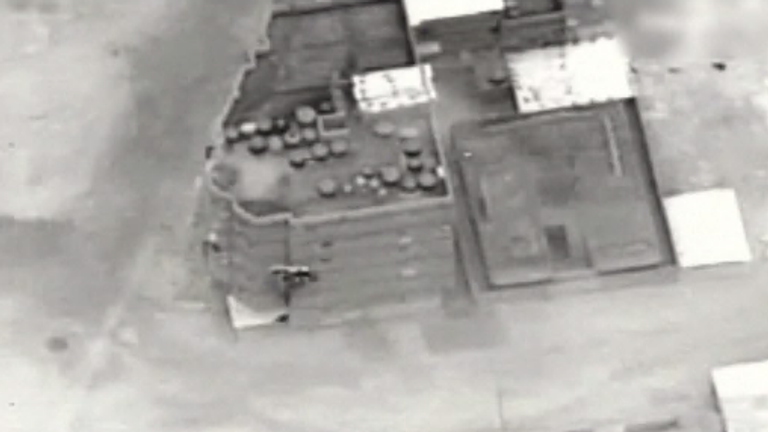
This video released by the Israeli Army shows strikes on what Israel says are Hamas targets.
One Israeli security source said a ground offensive now looked inevitable, while Sky News military analyst Michael Clarke believes Israel would prefer a multi-pronged attack into Gaza, probably from the land and sea simultaneously.
It comes as Israel vowed to “wipe out” Hamas after claiming children were burnt alive, beheaded and shot in the head, a government minister from the country told Sky News.
Israel’s economics minister Nir Barkat said its military operation would continue until there was a “clear white flag” and there was a “more moderate” replacement for the militant group that rules in the Gaza Strip.
“Just now, we have heard of 40 young boys, some of them were burnt alive, some were beheaded, some were shot in the head,” the minister told Sky’s Mark Austin – although the IDF has not confirmed this.
Sky News’ chief correspondent, Stuart Ramsey, spoke to two IDF majors – neither or whom mentioned children or babies beheaded, though it’s clear there was a “horrific attack” in Kfar Aza, one of the first places attacked by Hamas.
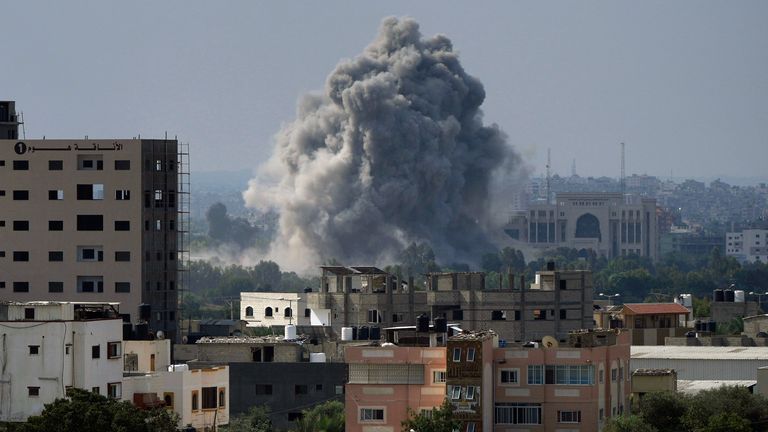
The air strikes on Gaza have been widespread. Pic: AP
Mr Barkat added: “The whole country is united to take Hamas out of this world, to take them out. All the militants, all the infrastructure, the people supporting Hamas. We will wipe them out.
“We’re coming in to kill the militants, and any civilians [should] move aside. If you do not move aside and you’re giving cover to the Hamas militants, you’re risking your life.
“We do not want to hurt innocent people.”
Many Palestinians in the Gaza Strip have no way of escaping, with the Egyptian border still closed in the south.
Gaza ‘running out of power’
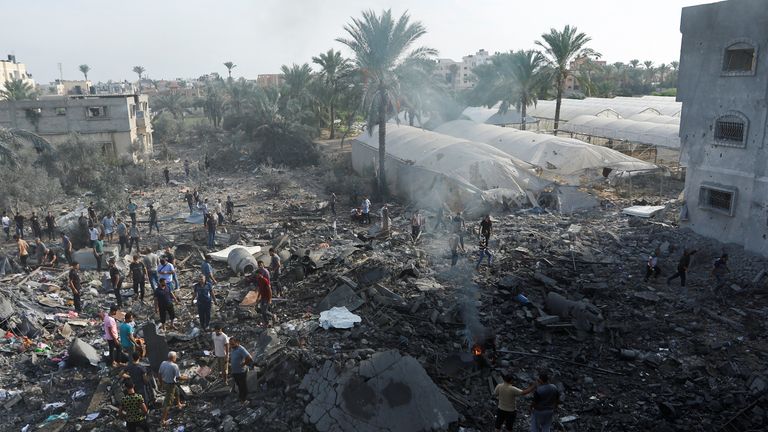
People gather near fire burning on rubble in the aftermath of Israeli strikes in Khan Younis in the southern Gaza Strip
A ground offensive carries risks for Israel, notably to the hostages held in the narrow and densely populated Gaza Strip, with Hamas threatening to execute a captive for each home hit without warning.
As violence escalates, residents in Gaza are facing an imminent loss of electricity as fuel supplies run dangerously low, while hospitals struggle with dwindling medical supplies.
Jalal Ismail, from Gaza’s energy authority, had said power will run out in the city by midday, which has now passed.
“The power plant will stop working completely today at 2pm (12pm UK time), due to the exhaustion of the amount of fuel needed to operate it,” he said.
Israel withdrew troops from Gaza in 2005 after 38 years of occupation, with Hamas seizing power in 2007.
Since then, Israel has kept it under blockade, creating conditions Palestinians say are intolerable.
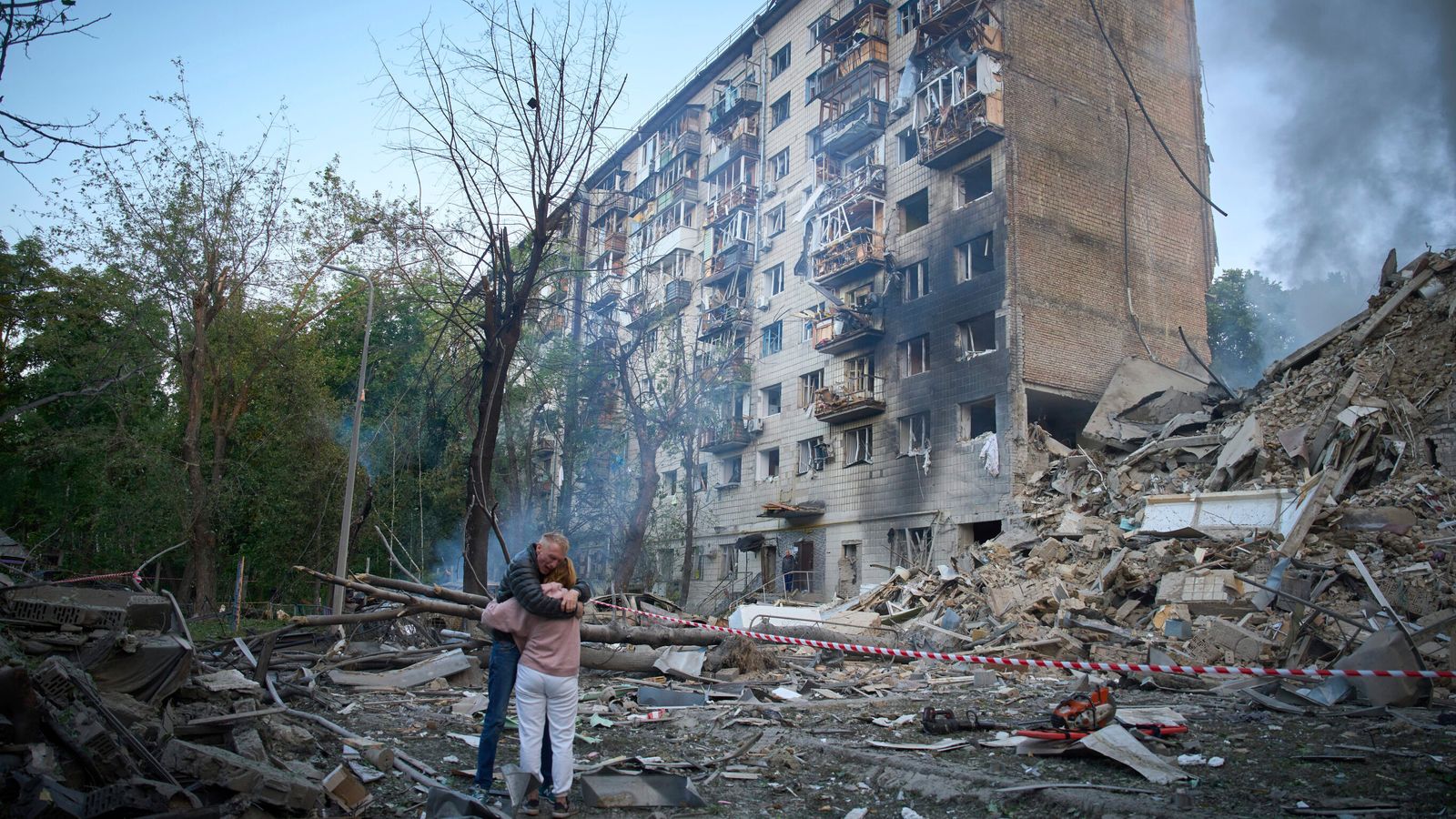
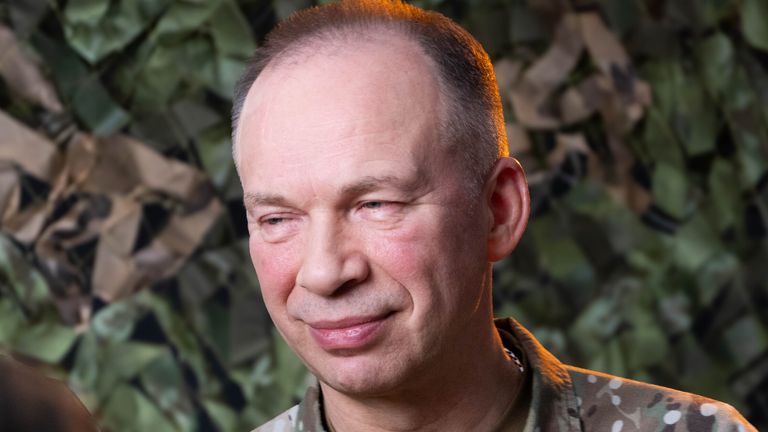
It would be “unacceptable” for Ukraine to “simply give up territory” in any peace deal with Russia, the head of the Ukrainian armed forces has told Sky News.
General Oleksandr Syrskyi said a “just peace” can only be achieved if fighting is halted along current frontlines and then for negotiations to take place.
Signalling a complete lack of trust in claims by the Kremlin that it wants to end its war, he accused Vladimir Putin of using an attempt by Donald Trump to broker peace talks as “cover” while Russian troops try to capture more land by force on the battlefield.
General Oleksandr Syrskyi said Russia is using peace talks as ‘cover’ to grab more Ukrainian territory
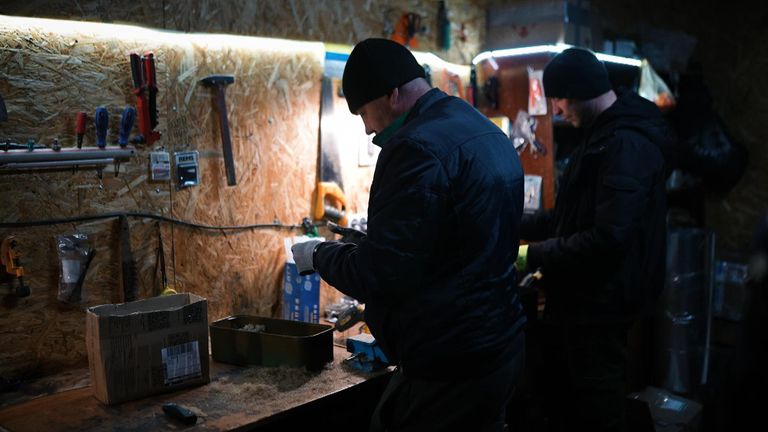
What Ukrainian troops think about giving up Donbas
The rare intervention offers the clearest indication yet of the Ukrainian military’s red lines as Washington tries to negotiate a settlement that – according to an initial draft – would require Kyiv to surrender the whole of the Donbas region in the east of the country to Moscow.
President Volodymyr Zelenskyy, backed by the UK and other European allies, has been trying on the diplomatic front to strengthen Ukraine’s position.
But President Putin has said Russia would either seize the Donbas militarily or Ukrainian troops would have to withdraw.
Europe’s fate at stake
Speaking frankly, General Syrskyi, commander-in-chief of the armed forces of Ukraine, signalled that his country’s soldiers would fight on if diplomacy fails – and he warned that the fate of the whole of Europe is at stake.
In an exclusive interview in the basement of a building in eastern Ukraine – the location of which we are not disclosing for security reasons – he said Ukraine’s main mission “is to defend our land, our country, and our population”.
“Naturally, for us it is unacceptable to simply give up territory. What does it even mean – to hand over our land? This is precisely why we are fighting; so we do not give up our territory.”
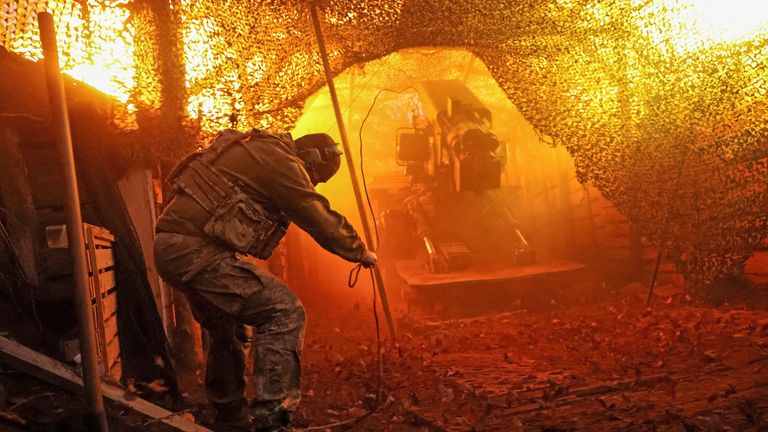
A Ukrainian soldier fires a self-propelled howitzer in Kostiantynivka in Donetsk. Pic: Reuters
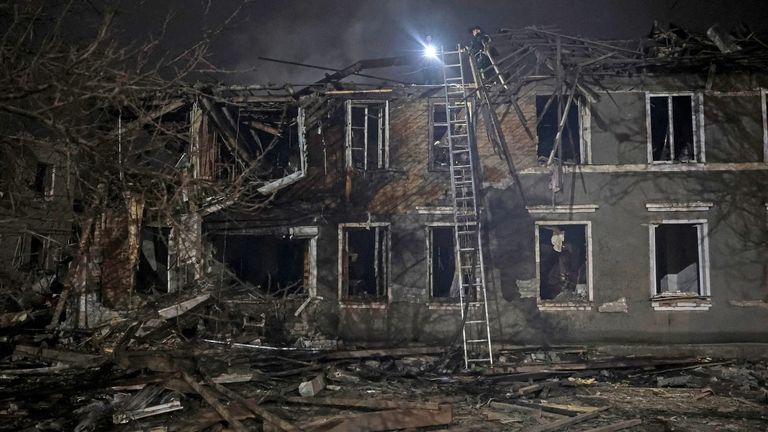
Rescuers work at the site of apartment buildings hit by a Russian airstrike in Sloviansk, Ukraine. Pic: Reuters
Many troops have died fighting for Ukraine since Russia first seized the peninsula of Crimea and attacked the regions of Donetsk and Luhansk, which comprise the Donbas, in 2014.
Hundreds of thousands of Ukrainian civilians were then mobilised to fight alongside professional soldiers following Putin’s full-scale invasion in February 2022.
Russia well short of original goal
Nearly four years on, Russia occupies almost a fifth of Ukraine, including large parts of the Donbas, but well short of an original goal of imposing a pro-Kremlin government in Kyiv.
Asked whether the sacrifice of those people who gave their lives defending their country would be in vain if Ukraine is forced to hand over the land it still controls in the Donbas to Moscow, General Syrskyi, speaking in Ukrainian through a translator, said: “You know, I do not even allow myself to consider such a scenario.
“All wars eventually end, and of course we hope ours will end as well. And when it does, a just peace must be established.
“In my understanding, a just peace is peace without preconditions, without giving up territory. It means stopping along the current line of contact.”

Ukrainians not surprised about lack of progress in peace talks
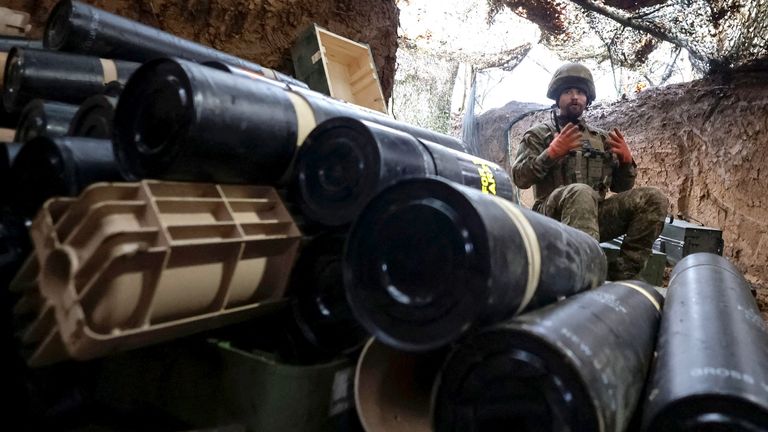
Pic: Reuters
The commander then broke into English to say that this means: “Stop. A ceasefire. And after that negotiations, without any conditions.”
Switching back into Ukrainian, he said: “Any other format would be an unjust peace, and for us it is unacceptable.”
Ukraine’s contingency plans
While Ukraine’s will and ability to fight are key in confronting Russia’s much larger army, so too is the supply of weapons, ammunition and other assistance from Kyiv’s allies, most significantly the US.
But, with the White House under Donald Trump, becoming less predictable, the Ukrainian military appears to be considering contingency plans in case US aid stops.
Asked whether Ukraine would be able to continue fighting if President Trump did halt support, General Syrskyi said: “We are very grateful to our American partners and all our allies who have been supporting us throughout this war with weapons and equipment.
“We hope they will continue providing full support. But we also hope that our European partners and allies, if necessary, will be ready to provide everything required for our just war against the aggressor.
“Because right now we are defending not only ourselves, but all of Europe. And it is crucial for all Europeans that we continue doing so, because if we are not here, others will be forced to fight in Europe.”
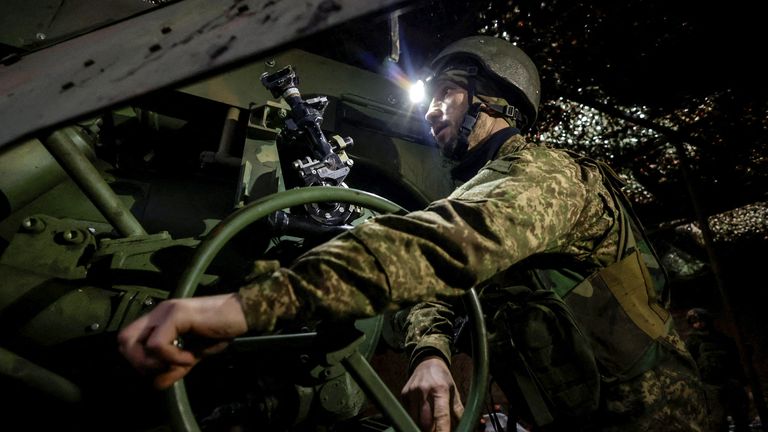
Pic: Reuters
General’s assessment of fighting on ground
A decorated commander, with the call sign “snow leopard”, General Syrskyi has been conducting combat operations against Russia’s invasion for more than a decade.
He was made military chief in February 2024 after President Volodymyr Zelenskyy sacked the previous top commander. General Valerii Zaluzhnyi is now Kyiv’s ambassador to London.
General Syrskyi offered his assessment of the fight on the ground, saying:
• Ukrainian troops still control the northern part of the fortress city of Pokrovsk in the Donbas and will keep battling to retake the rest of it, contrary to Russian claims to have captured what has been a key target for Moscow for the past 16 months.
• Russia is firing between 4,000 to 5,000 one-way attack drones at Ukrainian positions along the frontline every day as well as 1,500 to 2,000 drones that drop bombs. But Ukraine is firing the same volume – and even more – back. “In terms of drones, there is roughly parity. At the moment, we are deploying slightly more FPV [first person view] drones than the Russians.”
• Russia’s armed forces still have double the volume of artillery rounds of Ukraine’s, but the range and lethality of drone warfare mean it is harder to use artillery effectively. Now, 60% of strikes are carried out by drones.
• More than 710,000 Russian soldiers are deployed along a frontline that stretches some 780 miles (1,255km), with the Russian side losing around 1,000 to 1,100 soldiers a day, killed or wounded “and a majority are killed”.
The Russian army is currently “attempting to advance along virtually the entire frontline,” General Syrskyi said.
Where are the harshest battles?
The fiercest battles are around Pokrovsk, as well as the northeastern city of Kupiansk, in Kharkiv region, the Lyman area, also in the Donbas, and near a small city called Huliaipole, in the Zaporizhzhia region of southeastern Ukraine.
“The Ukrainian army is conducting a strategic defensive operation, aiming to contain the enemy’s advance, prevent them from breaking deeper, inflict maximum losses, and carry out counter-offensive actions in those sectors where we see the enemy is vulnerable,” the commander said.
“Our strategy is to exhaust the Russian army as much as possible, prevent its advance, hold our territory, while simultaneously striking the enemy in the near rear, the operational depth, and… into Russia itself, with the aim of undermining its defence capability and industrial capacity.”
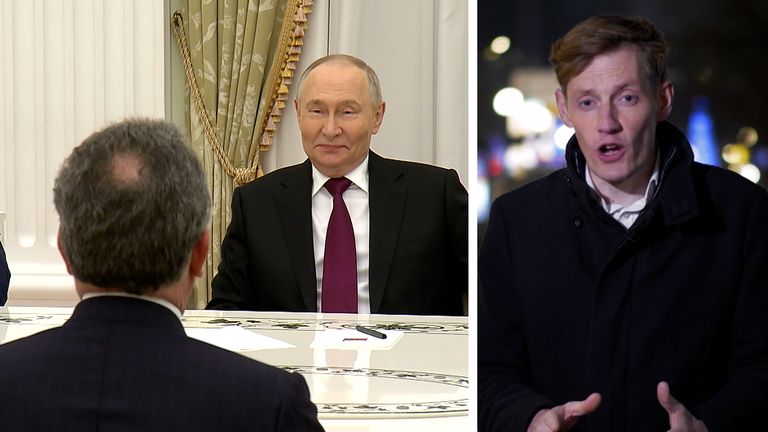
Peace deal: Russia ‘in no mood to compromise’
He is referring to a capability Ukraine has developed to launch long-range drones, laden with explosives, deep into Russia to strike military targets as well as oil refineries.
The operation is aimed at destroying fuel for the tanks, warships and jets that are attacking Ukraine and – crucially – reducing oil revenues that help to fund Russia’s war machine.
Sea drones crash into Russia’s warships
The Ukrainian military is also deploying explosive sea drones that are smashed into Russian warships as well as tankers used to transport sanctioned Russian oil.
Asked if his forces were ready – and had sufficient manpower – to keep fighting if necessary, General Syrskyi said: “We have the resources to continue conducting military operations.”
Yet Ukraine is suffering from a shortage of troops on the frontline.
Soldiers and wider society are also exhausted and facing another winter of war.
No sign of Moscow winding down war effort
President Putin has an advantage when it comes to troop numbers and firepower over time, which makes continued support to Kyiv from its allies more vital than ever.
General Syrskyi cautioned that Moscow showed no sign of winding down its war effort despite the Russian leader telling President Trump he is prepared to negotiate.
Read more on Sky News:
Hugs ahead of India-Russia talks
New Russia sanctions ‘pointless’
“So we do everything so that if the enemy continues the war, and you can see that although we want peace, a fair peace, the enemy continues its offensive, using these peace talks as cover,” he said.
“There are no pauses, no delays in their operations. They keep pushing their troops forward to seize as much of our territory as possible under the cover of negotiations.”
He added: “So we are just forced to wage this war… protecting our people, our cities and towns, and our land.”
The commander said this is what motivates his soldiers.
“If we do not do this, we can see clearly what the Russian army leaves behind, only ruins, only deaths.”
As for whether the UK and other European nations should be preparing their people for the possibility of a wider war with Russia, the general said: “Of course, the armed forces of every country ensure reliable protection of their citizens, their children, and their territory.
“With the existence of aggressive states, above all the Russian Federation and its allies, this issue is extremely urgent.
“Everything must be done to ensure the capability to maintain a level of defence, and armed forces modern enough to repel aggression, both individually and in support of the allies.”
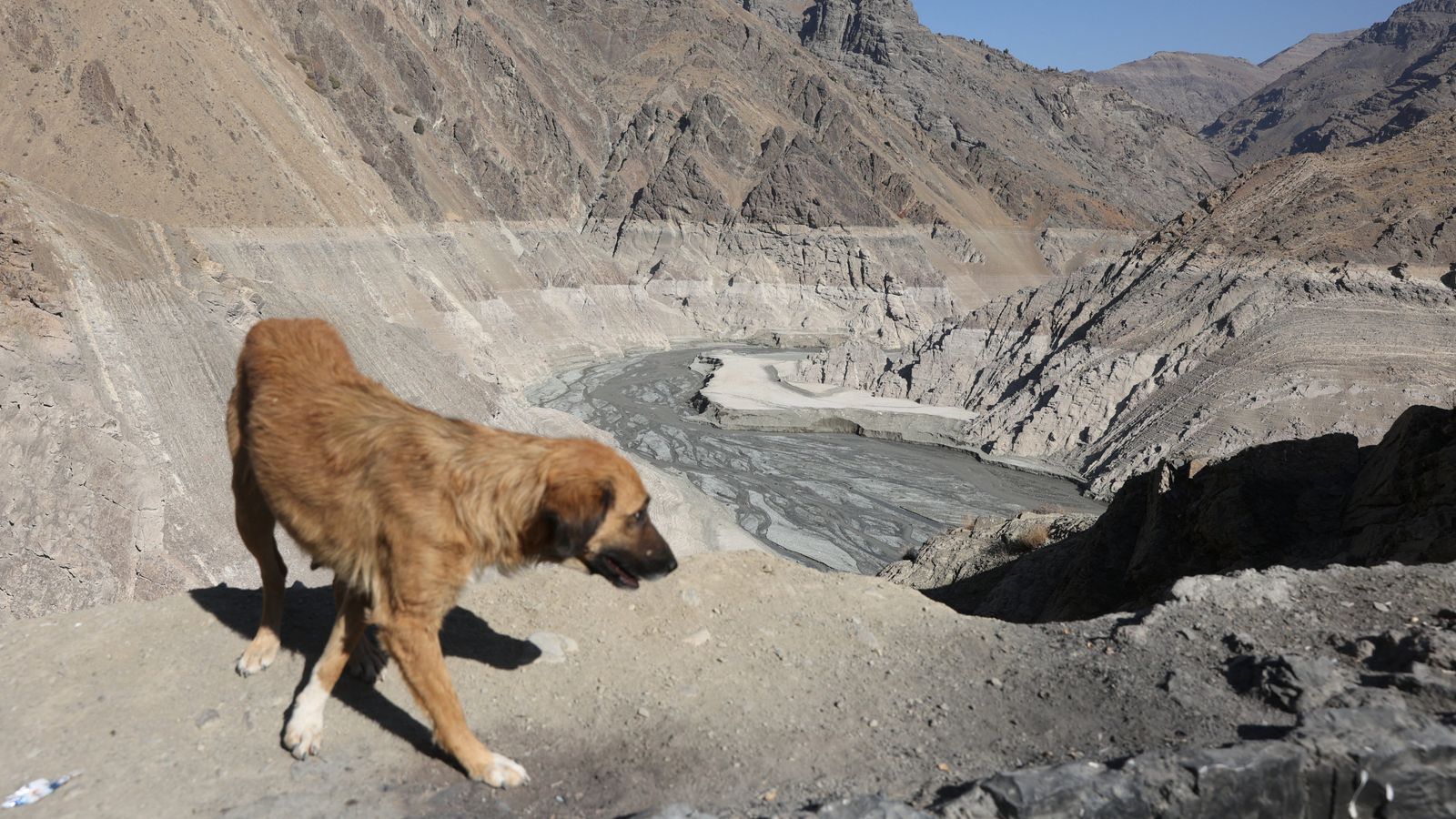
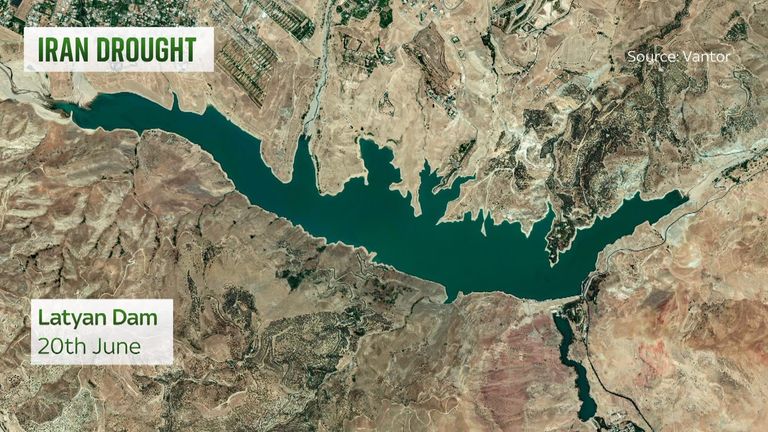
Iran’s capital is counting down to “day zero” – the day the water runs out and the taps run dry.
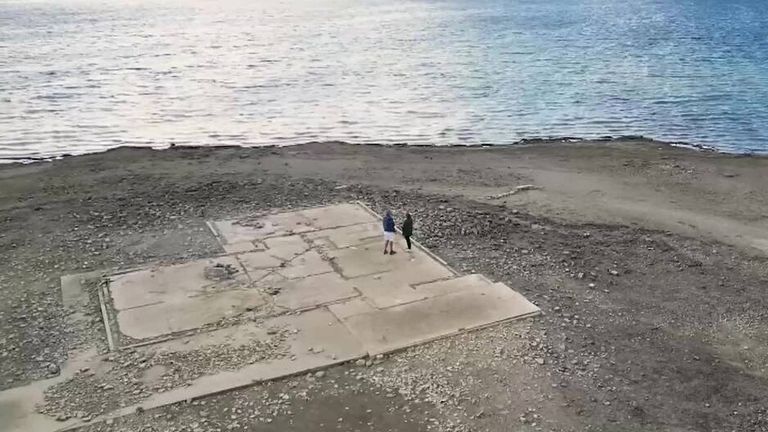
Reservoirs that supply Tehran’s 15 million residents are almost empty.
The Karaj dam, which supplies a quarter of the city’s drinking water, is just 8% full.
Water rationing has begun in some areas, with the flow from taps reduced or even stopped altogether overnight.
President Masoud Pezeshkian has urged people to use water sparingly – or the city, or at least parts of it, may even have to evacuate.
So what’s going on?
Rain should start falling in the autumn after Iran’s hot dry summer.
But according to the country’s National Weather Forecasting Centre, this has been the driest September to November period in half a century, with rainfall 89% below the long-term average.
The combination of low rainfall and high heat has lasted for more than five years, leaving the country parched.
But the weather – and the shadow of climate change – aren’t the only factors in Tehran’s water crisis.
According to the Centre for Strategic and International Studies, the population of the city has almost doubled from 4.9 million in 1979 to 9.7 million today.
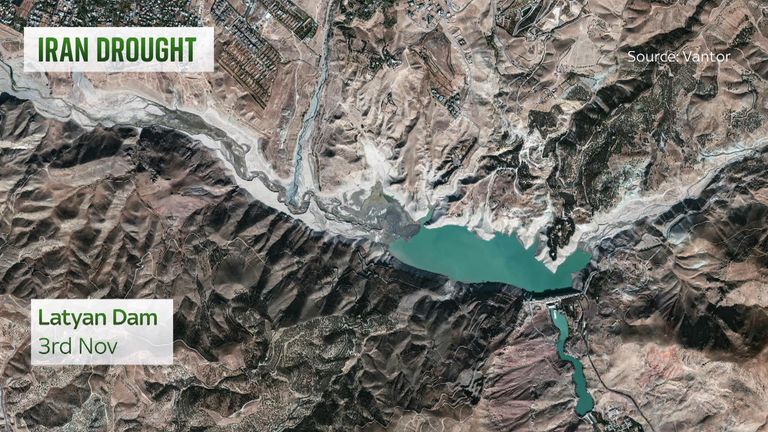
But water consumption has risen even faster, quadrupling from 346 million cubic metres in 1976 to 1.2 billion cubic metres now. Increasing wealth has allowed more people to buy washing machines and dishwashers.
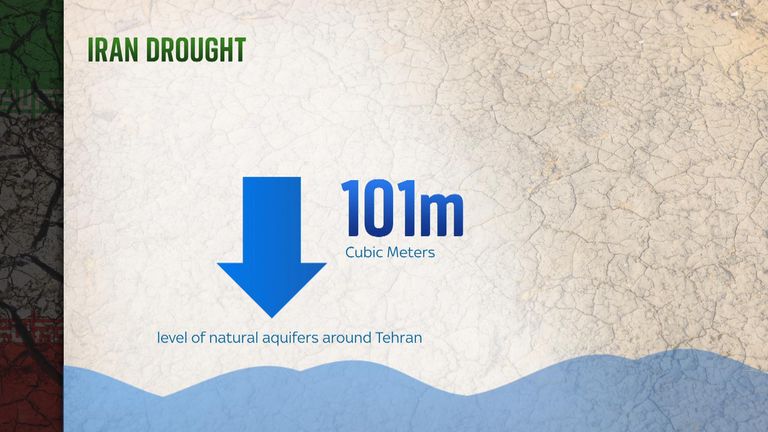
To supplement supplies from reservoirs, Tehran has had to turn to natural aquifers underground, which provide between 30% and 60% of its tap water in recent years.
But that puts the city in direct competition with farmers who draw on the water to irrigate crops.
Levels are falling by 101 million cubic metres a year around Tehran, according to analysis in the journal Science Advances. That’s water that has accumulated from many decades of rain – and will take at least as long to replenish.
Read more from Sky News:
Could a volcanic eruption have spread the Black Death?
The words you have mispronounced all year – and how to say them
Professor Kaveh Madani, the former deputy head of Iran’s environment department and now director of the United Nations University Institute for Water, Environment and Health, said chronic mismanagement of natural resources has led to what he calls water bankruptcy.
He told Sky News: “These things were not created overnight.
“They’re the product of decades of bad management, lack of foresight, overreliance and false confidence in how much infrastructure and engineering projects can do in a country that is relatively water short.”
Government ministers blame the water shortage on climate change, water leaks from pipes and the 12-day war with Israel.
Whatever the reason, it underlines the threat of water scarcity to global cities. Tehran is not alone.
Water crisis: Will Britain’s taps run dry?
Cape Town in South Africa narrowly avoided taps running dry eight years ago after a city-wide effort to save water.
Even London, known for its rain, is at risk. Supplies haven’t kept up with population growth and booming demand.
As Tehran has found, droughts that are being made more likely and more severe with climate change can expose the fragility of water supply.

England and other qualified teams are finally set to find out who they’ll be facing in the group stages of the 2026 FIFA men’s World Cup today.
It’s guaranteed to be the biggest World Cup ever, with 48 teams competing instead of the usual 32.
Here’s everything you need to know.
When is the World Cup draw?
The draw, which determines which teams face which in the group stages, will take place on in Washington DC from 12pm local time, or 5pm UK time tonight.
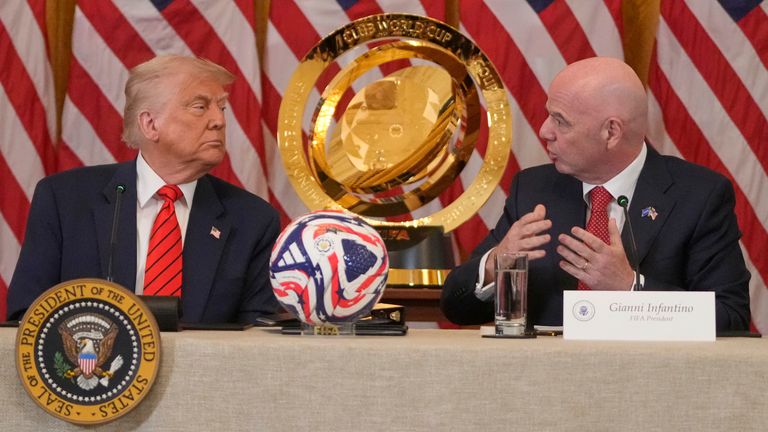
US President Donald Trump will join FIFA’s Gianni Infantino at the John F Kennedy Center – a performing arts venue where Mr Trump is chairman – to decide the fixtures.
Donald Trump and FIFA president Gianni Infantino. Pic: AP
Due to the increased number of countries taking part in the tournament, the format of the group stages has changed slightly. Instead of 32 teams being divided into eight groups, this year will see 12 groups of four.
The top two teams in each group, plus the eight best third-placed teams, will advance to a round of 32.
For the draw, Spain, Argentina, France and England – the four highest ranked teams – will be placed in the same pot for the draw, and are guaranteed not to meet each other until the semi-finals.
The three host nations are also guaranteed not to meet early, having been put in Pot 1 with the top teams.
The draw seedings are as follows:
Pot 1: Spain, Argentina, France, England, Brazil, Portugal, Netherlands, Belgium, Germany, United States, Mexico, Canada.
Pot 2: Croatia, Morocco, Colombia, Uruguay, Switzerland, Japan, Senegal, Iran, South Korea, Ecuador, Austria, Australia.
Pot 3: Norway, Panama, Egypt, Algeria, Scotland, Paraguay, Tunisia, Ivory Coast, Uzbekistan, Qatar, Saudi Arabia, South Africa.
Pot 4: Jordan, Cape Verde, Ghana, Curacao, Haiti, New Zealand, European playoff winner 1, European playoff winner 2, European playoff winner 3, European playoff winner 4, Intercontinental playoff winner 1, Intercontinental playoff winner 2.
You’ll be able to watch the ceremony via FIFA’s website or YouTube channel, while the BBC and BBC iPlayer will also be showing the draw.
Sky Sports will be offering live coverage of the draw, including analysis and reaction as the groups and fixtures are revealed.
FIFA says the draw is scheduled to take about 45 minutes during a show lasting about an hour and a half.
On 6 December at 5pm UK time, FIFA will put out another broadcast in which it will reveal all match venues and kick-off times.
Could Trump be getting a prize?
In November, FIFA revealed it had created a new worldwide peace prize, and that it would hand it out for the first time during the draw ceremony.
It said it would be given to “individuals who have taken exceptional and extraordinary actions for peace” – with no indication that potential recipients were limited to the world of sports.
It has prompted speculation the award will go to Donald Trump, who has long campaigned for a Nobel Peace Prize.
Mr Infantino, who has built up a strong relationship with the US president, backed him for the Nobel prize, writing on Instagram in October that Mr Trump “definitely deserves” the award for his efforts toward a peace deal in Gaza.
The award ultimately went to Venezuela’s opposition leader Maria Corina Machado.
When asked later if Mr Trump would get FIFA’s award, Mr Infantino laughed and said: “On the 5th of December, you will see.”
When and where is the World Cup?
The tournament runs from 11 June to 19 July 2026 and will be played at 11 sites in America, three in Mexico and two in Canada.
A total of 48 countries will be involved – up from 32 in 2022 – and 104 games will be played overall – up from 64.
The host nations automatically qualify and will play all three of their group stage matches on home soil.
The final will take place at the New York New Jersey (MetLife) Stadium – home of the New York Giants and New York Jets.
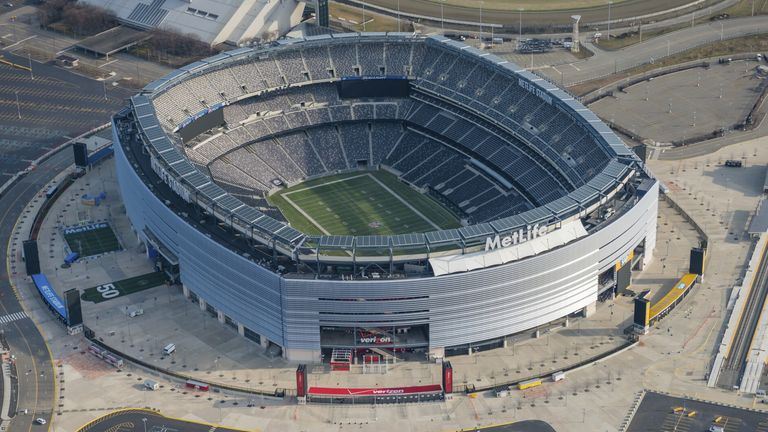
Aerial view of Metlife Stadium, where the final will be played. Pic: AP
All stadiums where games will be played include:
America:
• Atlanta Stadium
• Boston Stadium
• Dallas Stadium
• Houston Stadium
• Kansas City Stadium
• Los Angeles Stadium
• Miami Stadium
• New York New Jersey Stadium
• Philadelphia Stadium
• San Francisco Bay Area Stadium
• Seattle Stadium
Mexico:
• Estadio Azteca Mexico City
• Estadio Guadalajara
• Estadio Monterrey
Canada:
• Toronto Stadium
• BC Place Vancouver Stadium
Trump threatening to change host cities
Despite the stadiums already being selected, Donald Trump has threatened to remove Democrat-run city of Los Angeles from hosting, along with the Boston area.
Boston itself is not a host area, but the home of the NFL’s New England Patriots is being used by FIFA for seven matches, 30 miles away in Foxborough, Massachusetts.

Could Trump move World Cup matches?
“If we think there’s going to be a sign of any trouble, I would ask Gianni [Infantino] to move that to a different city,” Mr Trump said in November, as protests against his government have taken place in both cities.
FIFA has told Sky News the US government does have the right to determine if cities are safe for the World Cup.
In a statement, FIFA said: “Safety and security are the top priorities at all FIFA events worldwide.
“Safety and security are obviously the governments’ responsibility, and they decide what is in the best interest for public safety.
“We hope every one of our 16 host cities will be ready to successfully host and fulfil all necessary requirements.”
Scott LeTellier, who was managing director of the 1994 World Cup in America, suggested the cities in question shouldn’t worry about Mr Trump’s threats, as changing the stadiums would require “some kind of national emergency that would give the government the authority to cancel an event”.
“I don’t see even a remote chance of that happening,” he said.
What teams could still qualify?
Out of an available 48 spots, 42 teams have already qualified.
The line-up automatically includes the three host nations, America, Mexico and Canada. While 16 of the spots are reserved for European teams – made up of the 12 UEFA qualifying group winners and the other four coming via play-offs.
Remaining qualifying spots are divided between the other confederations:
• CONMEBOL (South America) gets a minimum of six
• CONCACAF (North/Central America and Caribbean) gets a minimum of six
• AFC (Asia) gets eight
• CAF (Africa) gets nine
• OFC (Oceania) is guaranteed one spot.
For the first time since 1998, Scotland have bagged themselves a place through qualifying while Jordan, Curacao, Cape Verde and Uzbekistan will all make their World Cup debuts.
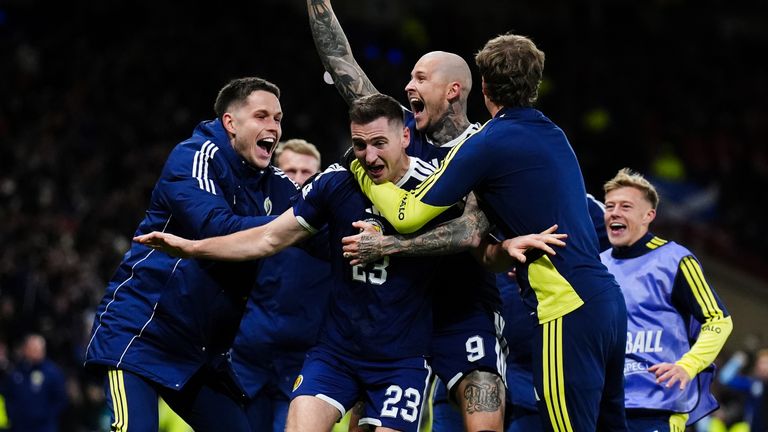
Scotland qualify for World Cup
The final slots at the tournament will be decided through play-offs.
On one side, a new inter-confederation tournament will see two teams from CONCACAF and one team each from CONMEBOL, AFC, CAF and OFC to battle it out for two spots in the World Cup.
The six teams that have qualified for these play-offs are: Bolivia, Congo DR, Iraq, Jamaica, New Caledonia and Suriname.
European, or UEFA, play-offs work slightly differently, with 16 teams battling it out for four available spaces.
This tournament is made up of the 12 runners-up from the European Qualifiers groups and the four best-ranked group winners of the 2024/25 UEFA Nations League that did not finish their group stage in first or second place.
On 20 November, a draw to determine who is set to play who in the eight semi-final matches on 26 March 2026 was made by FIFA. The winners will advance to the four final-stage matches on 31 March.
Should Wales and Northern Ireland both win their first-round games, they will then face each other, putting two home nations up against one another.
Will there be a half-time show?
Following in the footsteps of the NFL’s Superbowl, FIFA has confirmed that a half-time show will be performed during the World Cup final on 19 July.
Despite other finals having had musical acts before, this will be the first half-time show.
Earlier this year, FIFA’s Mr Infantino said British band Coldplay is behind the decision-making on multiple artists who will perform – none have been confirmed so far.
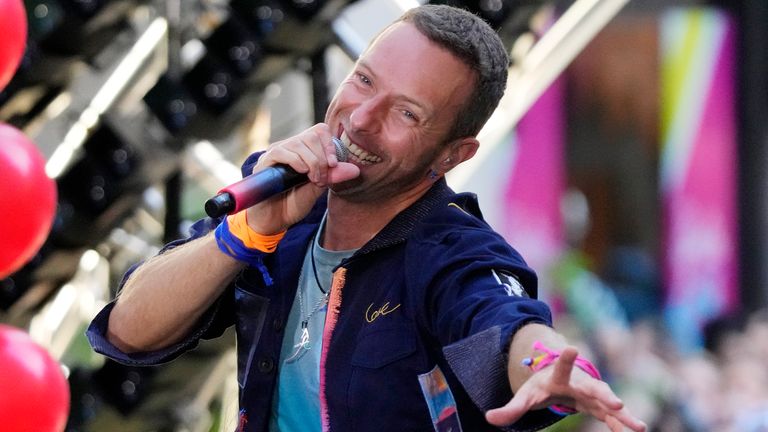
Coldplay’s Chris Martin will help decide who will perform at the World Cup half-time show. Pic: Charles Sykes/Invision/AP
Meet the mascots – and the ball
As there are three host nations, this year’s World Cup also comes with three mascots.
Maple the moose, Zayu the jaguar and Clutch the bald eagle will represent host countries Canada, Mexico and America respectively.
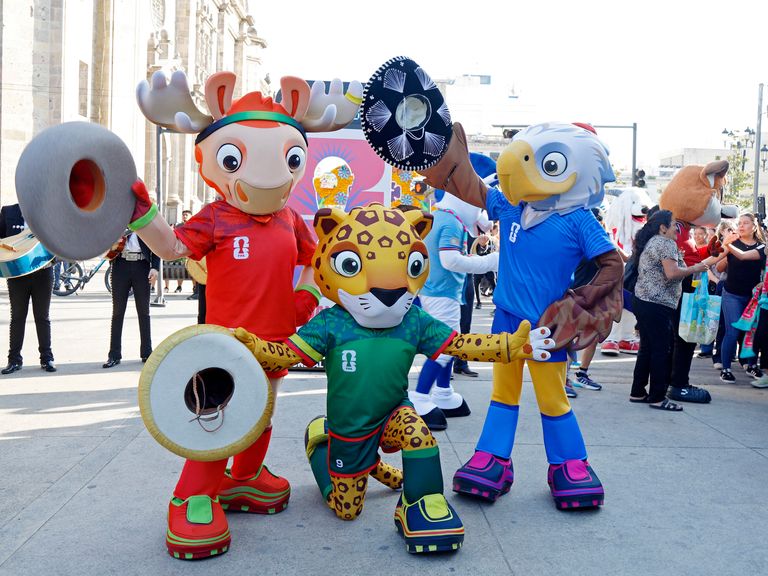
Pic: Reuters
Also reflecting the three co-hosts is the official World Cup match ball – Trionda – which means three waves in Spanish.
The ball features a swirled pattern incorporating red, green and blue, with each section representing a host nation.
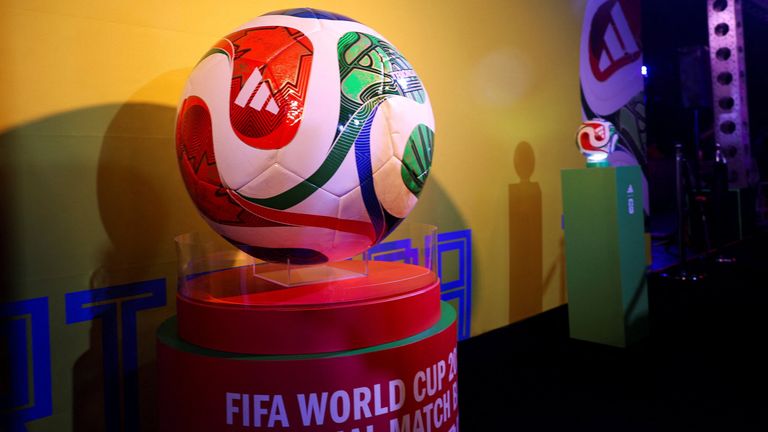
The official ball of the 2026 FIFA World Cup named Trionda. Pic: Reuters
How much are tickets?
FIFA says the cheapest tickets are from $60 (£45) in the group stage. But the most expensive tickets for the final are $6,730 (£5,094).
Initially, FIFA suggested tickets would be sold using dynamic pricing, meaning fans would pay different prices according to demand.
Variable pricing – fluctuating based on demand – had never been used at a World Cup before, raising concerns about affordability.
FIFA has now backed away from it, saying allocations would be set at a fixed price for the duration of the next ticket sales phase.
How you can get tickets
Tickets for the World Cup have been released in three phases, each with slightly different rules on who can buy the tickets and how.
Phase one was a Visa Presale Draw for people with a valid, unexpired Visa debit card, credit card, or reloadable prepaid card enabled with 3D Secure. This phase has now closed.
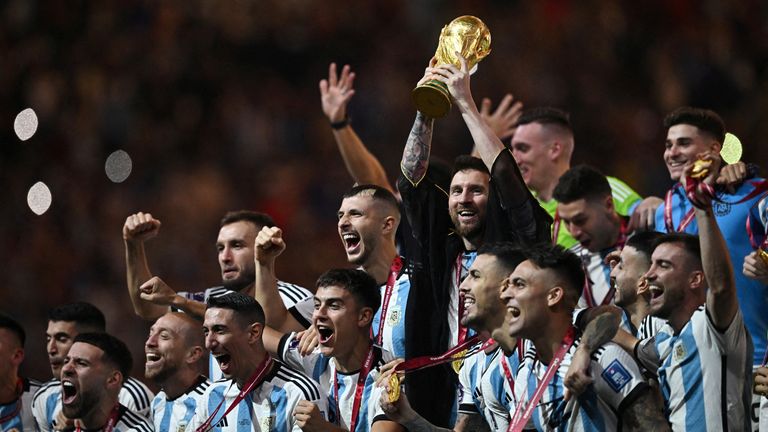
Argentina are reigning World Cup champions. Pic: Reuters
Phase two ran from 27 to 31 October, and saw registered individuals allocated time slots to purchase tickets from 12 November to early December.
Read more: Everything you need to know about buying tickets
The third phase, called a random selection draw, will start after the final draw determines the World Cup schedule.
It starts on 11 December, with the entry period for fans open until 13 January.
Those wanting tickets will need to have a FIFA ID in advance, which can be made via FIFA.com/tickets.
It’s from this same site that entries to the random selection draw will begin on 11 December, at 4pm UK time.
-
 Sports2 years ago
Story injured on diving stop, exits Red Sox game
-
 Sports3 years ago
‘Storybook stuff’: Inside the night Bryce Harper sent the Phillies to the World Series
-
 Sports2 years ago
Game 1 of WS least-watched in recorded history
-
 Sports3 years ago
Button battles heat exhaustion in NASCAR debut
-
 Sports3 years ago
MLB Rank 2023: Ranking baseball’s top 100 players
-
Sports4 years ago
Team Europe easily wins 4th straight Laver Cup
-
 Environment3 years ago
Japan and South Korea have a lot at stake in a free and open South China Sea
-
 Environment1 year ago
Here are the best electric bikes you can buy at every price level in October 2024