

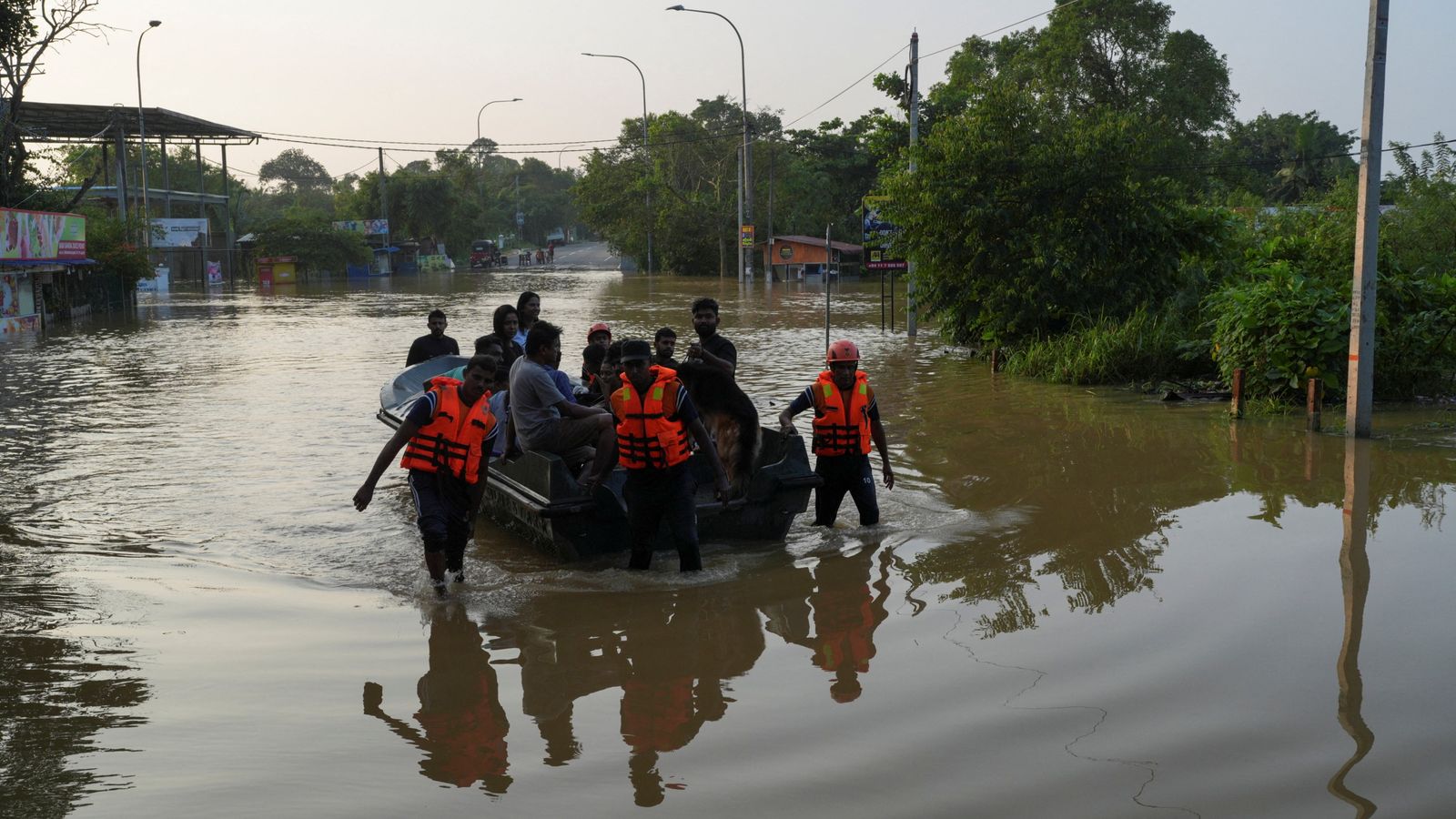
Rescue and recovery and efforts are under way in parts of South and Southeast Asia where the number of those killed in devastating floods continues to rise.
The extreme weather last week has killed at least 366 people in Sri Lanka, 604 in Indonesia, and 176 in Thailand, according to authorities.
Rescuers are searching for 464 missing people in Indonesia, and a further 367 in Sri Lanka, after a cyclone and other storms triggered flooding and landslides in the region.
In a post on X, the King and Queen Camilla said they were “deeply saddened” to hear about devastating storms and added their “heartfelt condolences” to the families of those who have died.
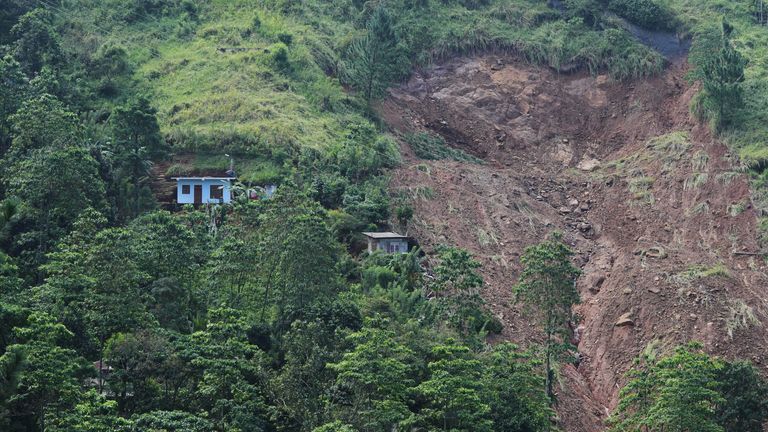
Landslides in Sarasavigama village near Kandy, Sri Lanka. Pic: AP
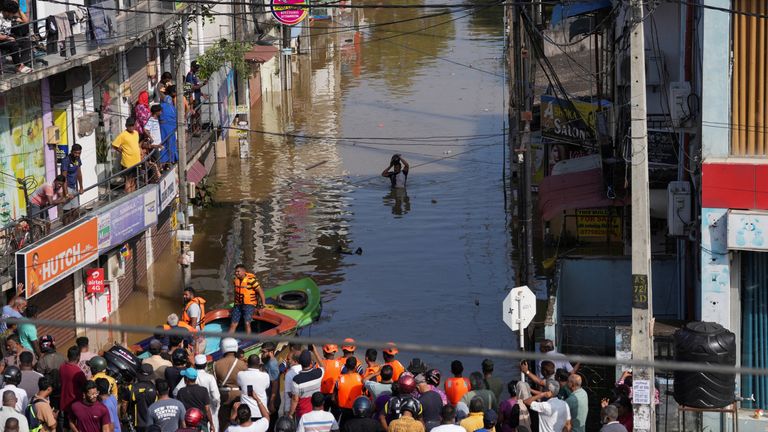
A man wades through the flooded street, following heavy rainfall in Wellampitiya, Sri Lanka. Pic: Reuters
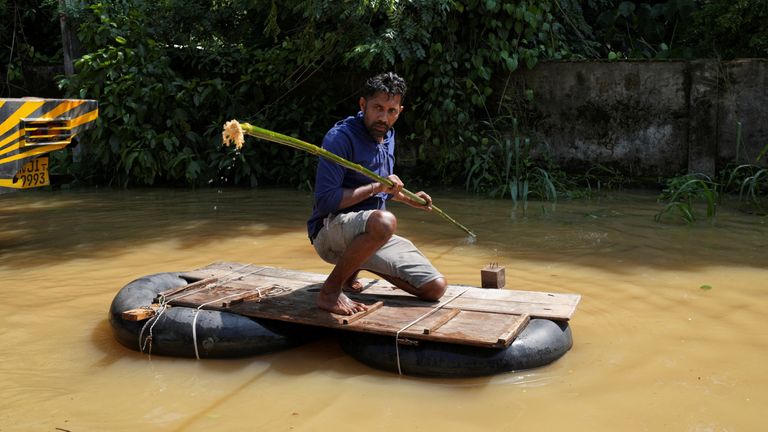
A man uses a makeshift raft at a flooded area, following Cyclone Ditwah in Kelaniya, Sri Lanka. Pic: Reuters
Hundreds of thousands in shelters in Sri Lanka
Sri Lankan authorities said about 218,000 people were in temporary shelters after downpours that triggered landslides, primarily in the tea-growing central hill country.
People were seen salvaging belongings from flooded homes along the banks of the Kelani River, near the capital Colombo on Monday.
Meanwhile, train and flight services have resumed after being disrupted last week, but schools stayed closed, officials said.
Cyclone Ditwah was the “largest and most challenging” natural disaster in Sri Lanka’s history, President Anura Kumara Dissanayake said.
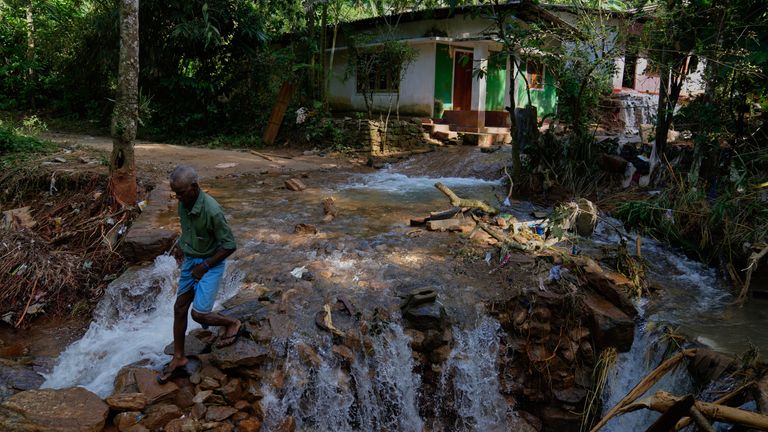
A landslide survivor crosses a section of a damaged road in Sarasavigama village near Kandy, Sri Lanka. Pic: AP
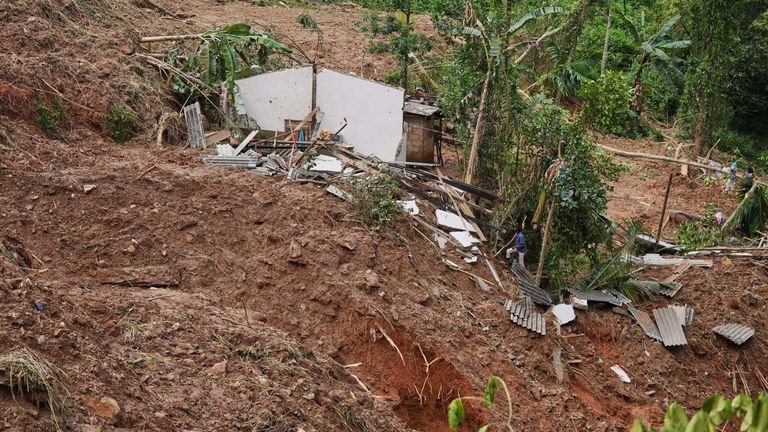
Landslide survivors salvage belongings at the site of a landslide in Sarasavigama village near Kandy, Sri Lanka. Pic: AP
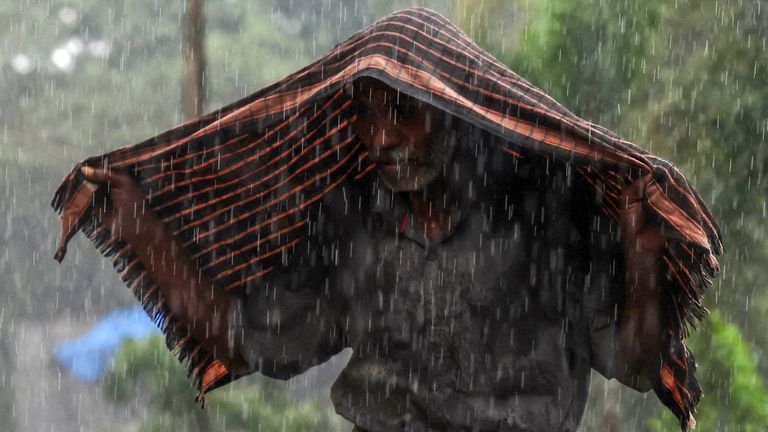
A man uses his scarf to protect himself from the rain in the aftermath of Cyclone Ditwah, in Chennai, India. Pic: Reuters
The cyclone also brought heavy rain to India’s southern state of Tamil Nadu over the weekend, with authorities saying three people were killed in rain-related incidents.
The storm, which as of 5pm UK time on Monday was about 50km (30 miles) off the coast of the state capital Chennai, has weakened into a “deep depression” and is expected to weaken further in the next few hours, weather officials said.
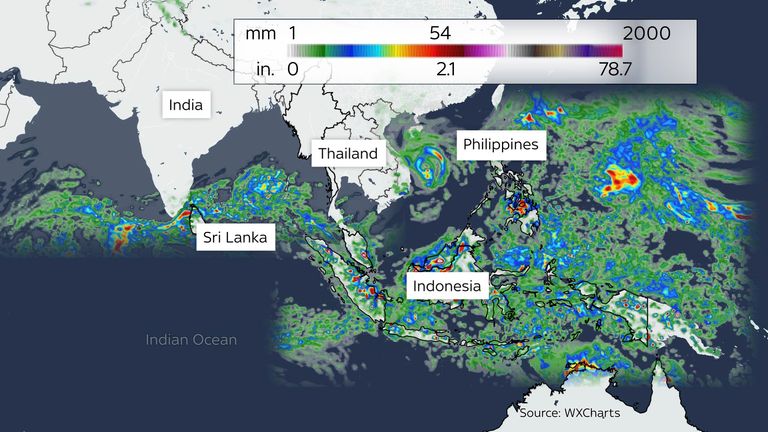
Amount of rainfall expected in South and Southeast Asia in the next 48 hours
Over a million affected in Indonesia
More than 28,000 homes have been damaged in Indonesia, with 1.4 million people affected according to the country’s disaster management centre.
The country’s president, Prabowo Subianto, called it a catastrophe and pledged to rebuild infrastructure as he visited the three affected provinces on Monday, where nearly 300,000 people have been displaced by the flooding.
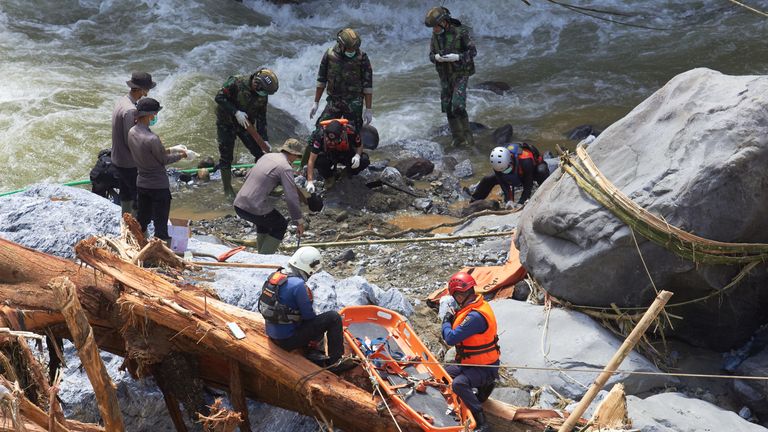
Rescuers search for flood victims in Tanah Datar, West Sumatra, Indonesia. Pic: AP
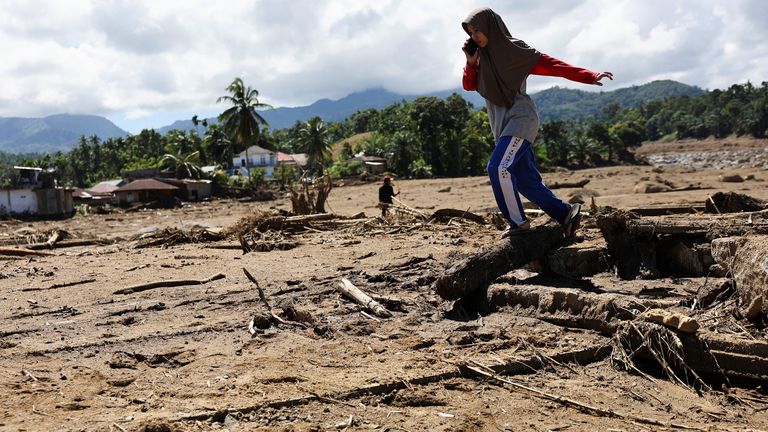
A flooded field in Indonesia’s West Sumatra province. Pic: Reuters
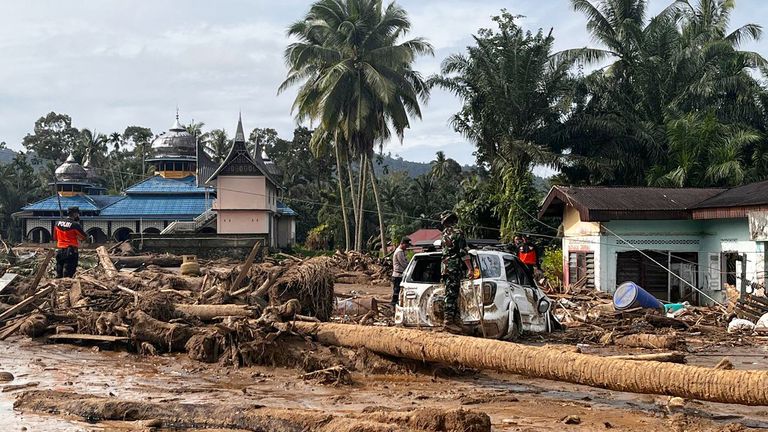
Rescuers search for victims at a village affected by flash flooding, in Agam, West Sumatra, Indonesia. Pic: AP
‘Nothing remains’
“The water just rose up into the house and we were afraid, so we fled. Then we came back on Friday, and the house was gone, destroyed,” said Afrianti, 41, who only goes by one name and lives in West Sumatra’s Padang city.
She and her family of nine have made their own tent shelter beside the single wall that remains of their home.
“My home and business are gone, the shop is gone. Nothing remains. I can only live near this one remaining wall,” she said.
Highest one-day rainfall in Thai city for 300 years
In Thailand, flooding in eight southern provinces affected about three million people and led to a major mobilisation of its military to evacuate critical patients from hospitals and reach people stuck in floodwaters for days.
In the worst-affected city of Hat Yai, a southern trading hub, 335mm (13 inches) of rain fell on 21 November, its highest single-day tally in 300 years, followed by days of unrelenting downpours.
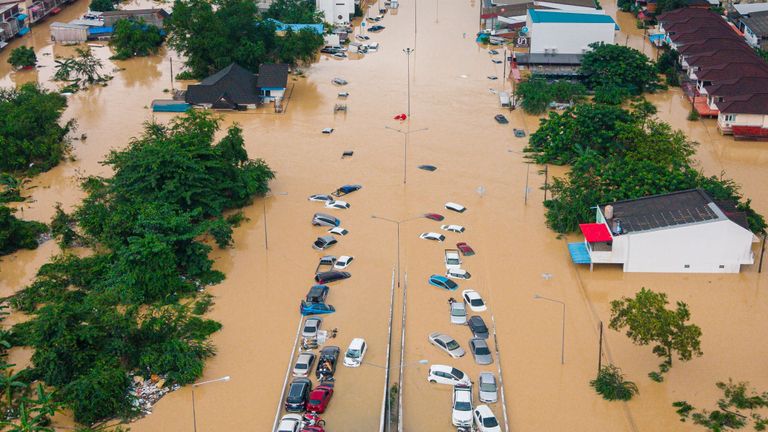
At least 82 people have died and more than three million people have been impacted by floods in 12 southern Thai provinces.
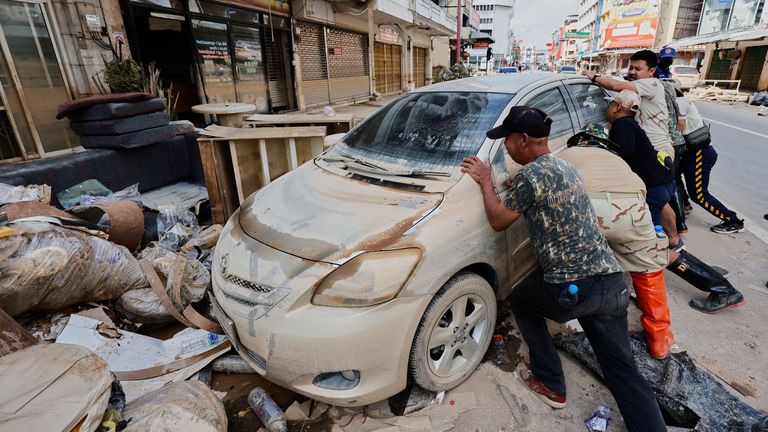
People move a car damaged by floods in Songkhla province, southern Thailand. Pic: AP
King offers ‘heartfelt condolences’
King Charles and Queen Camilla responded to the crisis in a statement posted on X and praised the work of emergency responders: “We wish to express our heartfelt condolences to the families of those who have so tragically lost their lives.
“Our thoughts and prayers are with the many whose homes have been destroyed and to all who are awaiting news of loved ones missing.
“These disasters remind us of the increasingly urgent need to restore the balance and harmony of Nature.”
Thailand’s Prime Minister Anutin Charnivirakul expects residents to be able to return home within seven days, a government spokesperson said on Monday.
Read more from Sky News:
Zelenskyy to make first official visit to Ireland
Dignitas founder dies by assisted suicide
The first batch of compensation payments is set to be distributed on Monday, starting with 239m baht (£5.6m) for 26,000 people, the spokesperson added.
In Malaysia there have been at least three deaths and authorities are still on alert for a second and third wave of flooding as 11,600 remain in evacuation centres.
The US has agreed to spare the UK from threatened trade tariffs on pharmaceutical products.
The announcement was made following months of uncertainty over whether exports from the UK, and elsewhere across Europe, would be subject to steep charges.
Via the policy update, the UK has become the only country in the world to secure a zero per cent tariff on pharmaceuticals exported to the US. Tariffs are taxes imposed on imports into a country.
In return, the UK has agreed to increase the baseline threshold used to assess if medicines can be used by the NHS.
Money latest: The earners most affected by £2k salary sacrifice cap
The National Institute for Health and Care Excellence (NICE) will increase the base threshold by 25%: from £20,000-£30,000 to £25,000-£35,000.
It means NICE will be able to approve medicines that deliver significant health improvements but might have been declined purely on cost-effectiveness grounds, the government said.
This could include breakthrough cancer treatments, therapies for rare diseases, and innovative approaches to conditions that have long been difficult to treat, it added.
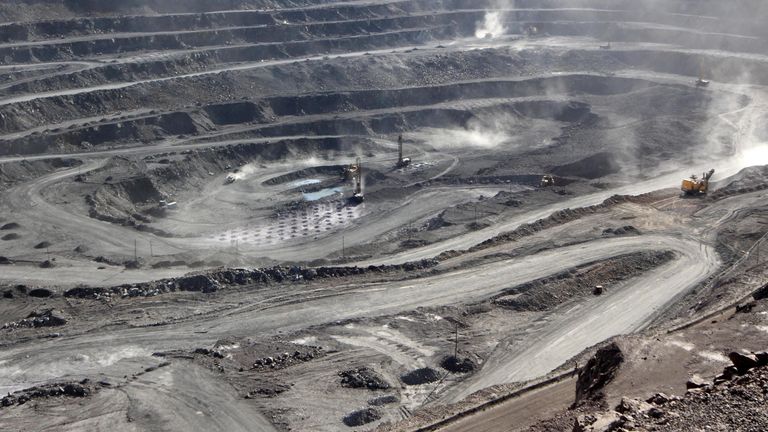
Many items require rare earth materials for manufacture and China has an abundance.
This will give NICE the opportunity to approve more new medicines and allow a greater number of patients to benefit from them, the Association of the British Pharmaceutical Industry (ABPI) said.
It pointed out that NICE’s baseline cost-effectiveness threshold has not been increased for over 20 years.
Read more:
Virgin Media fined £24m for disconnecting vulnerable customers
Starmer denies misleading public and cabinet ahead of budget
A US government statement said the UK will “reverse the decade-long trend of declining National Health Service (NHS) expenditures on innovative, life-saving medicines, and increase the net price it pays for new medicines by 25%”.
US trade representative Jamieson Greer said the US “will work to ensure that UK citizens have access to latest pharmaceutical breakthroughs”.
The background
US President Donald Trump has long complained that Europe does not pay enough for US drugs.
America and the UK agreed in May to seek a deal on the proviso that firms secured a better operating environment in Britain.
Criticism includes the concern that firms lose out on revenue due to a pricing regime which prioritises low costs for the NHS over incentives to invest.
In October, the science minister Patrick Vallance told MPs, as talks with the US continued, that many drugs available in the UK would see an “inevitable” price increase.

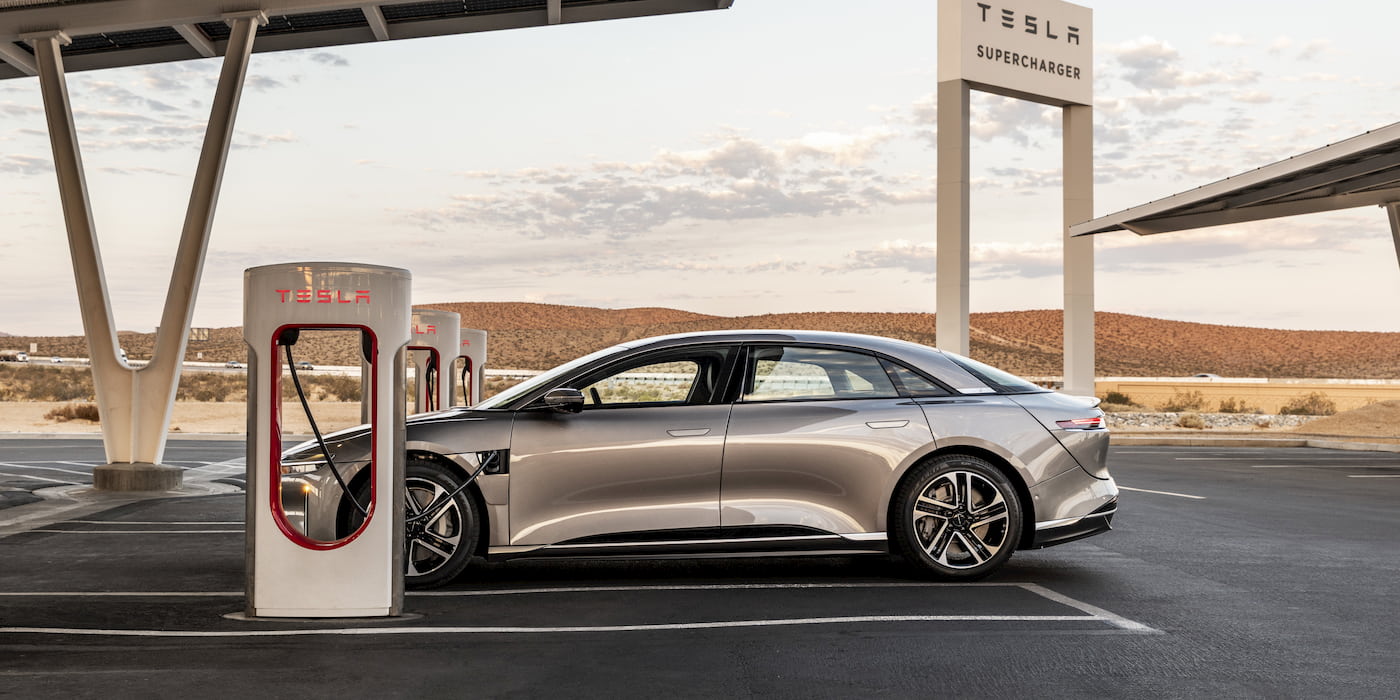
Lucid Motors (LCID) is calling out the competition after the 2026 Air remains the most efficient EV in the US according to new EPA rankings.
2026 Lucid Air remains most efficient EV in EPA rankings
It has been 9 years since Lucid introduced the +400-mile-range Air, its first luxury electric sedan. Since then, the California-based EV maker has come a long way, introducing its first electric SUV, the Gravity, and plans to launch a series of more affordable midsize vehicles, starting later next year.
Lucid’s former CEO, Peter Rawlinson, who was a top engineer at Tesla before joining the luxury EV startup in 2013, promised the company’s innovations would be “the key to unlocking greater efficiency,” and ultimately, more affordable vehicles.
Rawlinson was not kidding. The 2024 Lucid Air Pure was deemed the “world’s most efficient car” with a record 5 miles of range per kWh and a 146 MPGe rating, the highest rating ever given to an EV by the EPA.
Even with a slate of new EVs hitting the market, many claiming next-level efficiency, the Lucid Air is still ahead of the pack.
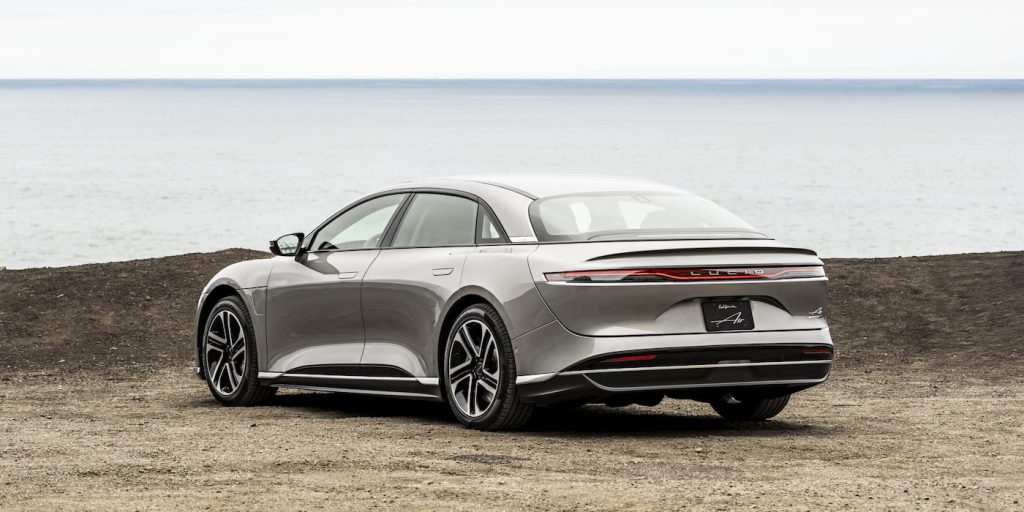
According to new EPA rankings, the 2026 Lucid Air Pure RWD (with 19″ wheels) remains the most efficient EV in the US with a 146 MPGe rating.
The Air beat out the 2026 Tesla Model Y Standard RWD (138 MPGe), 2026 Tesla Model 3 Premium RWD (137 MPGe), 2026 Toyota bZ (131 MPGe), and the 2026 Mercedes-Benz CLA250 Plus EV (126 MPGe).
Other automakers often tout EV range using lenient WLTP or CLTC test cycles, masking efficiency gaps and inflating expectations. Now that official U.S. EPA numbers are out, the story changes. Lucid Air delivers S-Class size with unmatched efficiency, going farther on less energy… pic.twitter.com/yqYHMgF4tm
— Nick Twork (@ntwork) November 25, 2025
Lucid’s communications boss, Nick Twork, shared the news on social media, saying the Air “delivers “S-Class size with unmatched efficiency.”
While many automakers tout EV range using more lenient WLTP or CLTC test cycles, Twork said Lucid’s advantage “comes from a holistic engineering approach” that was designed years ago and “still ahead of any passenger car sold today.”
Electrek’s Take
By developing electric vehicle components from the ground up, including the powertrain, battery systems, and software, Lucid has an advantage over many legacy automakers that rely on third parties to outsource.
For one, Lucid’s innovations are already driving down costs. The first Lucid Air Dream Edition, launched in 2021, started at $169,000. Today, you can snag the Lucid Air for as low as $70,900.
Lucid is now ramping production of its first electric SUV, the Gravity. Last month, it launched the lower-priced Gravity Touring trim, starting at $79,900.
Starting later next year, Lucid will begin production of its midsize platform, which will spawn at least three “top hats” priced around $50,000. The first will be a midsize crossover SUV, followed by a more rugged SUV that will share design clues from the Gravity X concept. Although it’s yet to be confirmed, the third is expected to be a midsize sedan that could go head-to-head with the Tesla Model 3.
Rawlinson previously said Lucid’s midsize vehicles are aimed “right in the heart of Tesla Model 3, Model Y territory.”
After reporting Q3 earnings last month, Lucid said it had enough liquidity to fund it through the first half of 2027 and confirmed it’s on track to begin production of the midsize platform in late 2026.
Ready to test Lucid’s luxury EVs for yourself? Lucid is running a Cyber Monday Special, offering $2,000 toward an Air or $3,000 toward a Gravity. Check out the links below to find Lucid Air and Gravity models in your area.


FTC: We use income earning auto affiliate links. More.
-
 Sports2 years ago
Story injured on diving stop, exits Red Sox game
-
 Sports3 years ago
‘Storybook stuff’: Inside the night Bryce Harper sent the Phillies to the World Series
-
 Sports2 years ago
Game 1 of WS least-watched in recorded history
-
 Sports3 years ago
Button battles heat exhaustion in NASCAR debut
-
 Sports3 years ago
MLB Rank 2023: Ranking baseball’s top 100 players
-
Sports4 years ago
Team Europe easily wins 4th straight Laver Cup
-
 Environment3 years ago
Japan and South Korea have a lot at stake in a free and open South China Sea
-
 Environment1 year ago
Here are the best electric bikes you can buy at every price level in October 2024