

Volvo expects EV momentum to continue with three new electric models rolling out

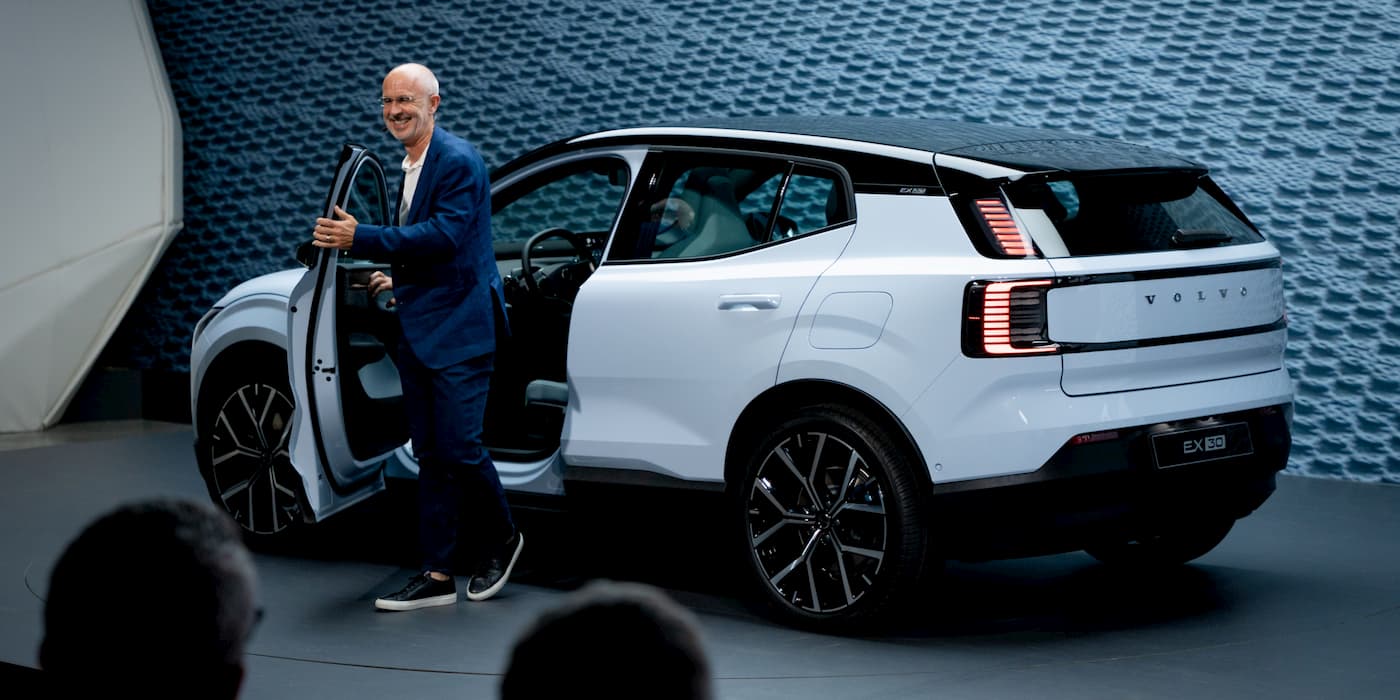
Despite recent warnings from other automakers, Volvo expects EV momentum to ramp up with three new electric models launching.
Volvo Cars released its third-quarter earnings Thursday, showing vehicle sales, revenue, and profit growth.
Volvo’s retail sales have increased for 13 straight quarters despite many key auto markets slowing down. The growth comes amid Volvo’s rapid transition to an all-electric future.
After Volvo was one of the first legacy automakers to commit to an all-EV future by 2030, the results are showing.
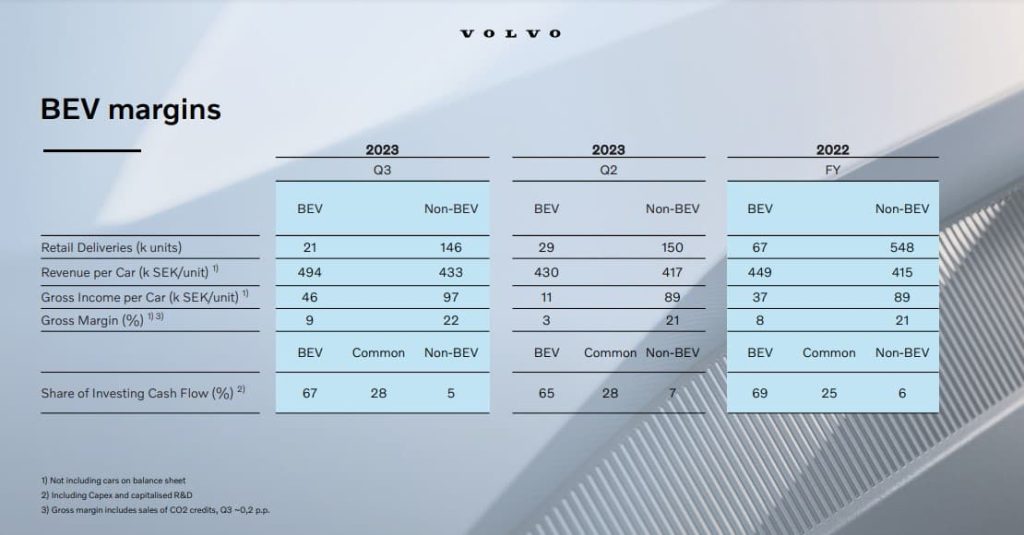
The automaker’s pure EV sales share reached 13% in Q3, up 111% compared to last year. Volvo says, “This underlines how Volvo cars is well on its way to becoming one of the fastest transformers in the industry.”
Volvo expects the competitively priced EX30 electric SUV launch to strengthen its position further. The EX30 will be Volvo’s most affordable EV, starting at around $35,000.

Volvo expects EV momentum to pick up with new models
The automaker significantly improved EV margins in the quarter, reaching 9%, up from 3% last quarter.
However, CEO Jim Rowan believes the company can do even better in the fourth quarter. Rowan said he expects EV margins to increase in Q4 due to lower raw material prices.
The company also expects that once the EX30 (see our review) begins shipping, it will “further boost Volvo Cars’ profitable growth in fully electric cars.”
Volvo said last quarter it expects the EX30 to boost the company’s gross margins into the 15-20% range.
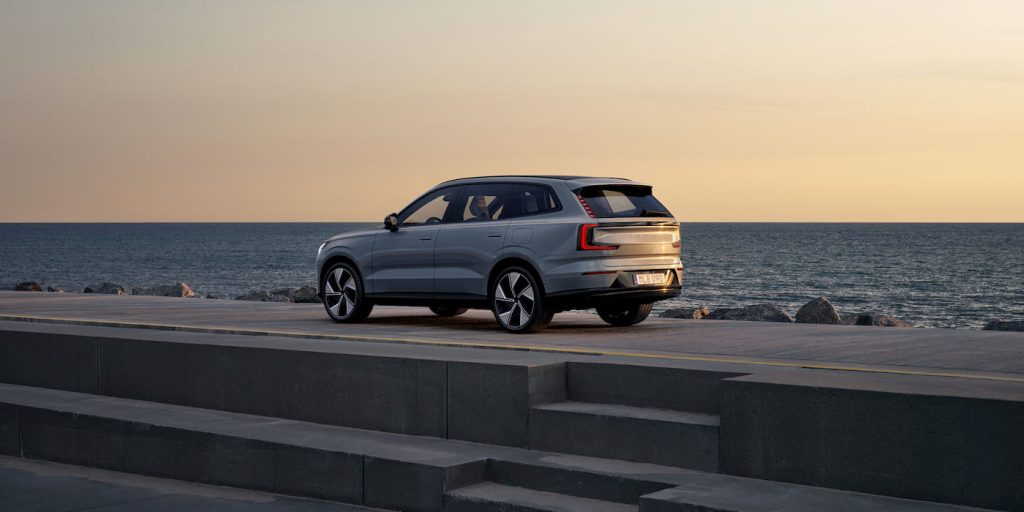
Deliveries of the EX30 are starting soon. Meanwhile, Volvo will reveal its first electric minivan, the EM90, on November 12. On top of the flagship EX90 unveiled last year, Volvo has three new EVs in major segments.
Volvo said its order book remains stable while retail deliveries are on track for solid double-digit growth this year.
Although Volvo’s EV sales share is down from earlier this year, the company expects new launches to turn that around next year quickly. The company aims to reach 50% electric vehicle sales share by 2050 as it works to become an all-electric automaker by 2030.
Electrek’s Take
Volvo’s comments drastically differ from other automakers, such as Ford and GM, which are pushing back EV targets to focus on profits now.
The company is prioritizing the transition to EVs now despite the uncertainty over the next few quarters. Despite the near-term outlook, electric vehicle adoption will continue building momentum over the next several years.
Volvo’s commitment now is paving the way for a profitable future while others continue to delay.
FTC: We use income earning auto affiliate links. More.

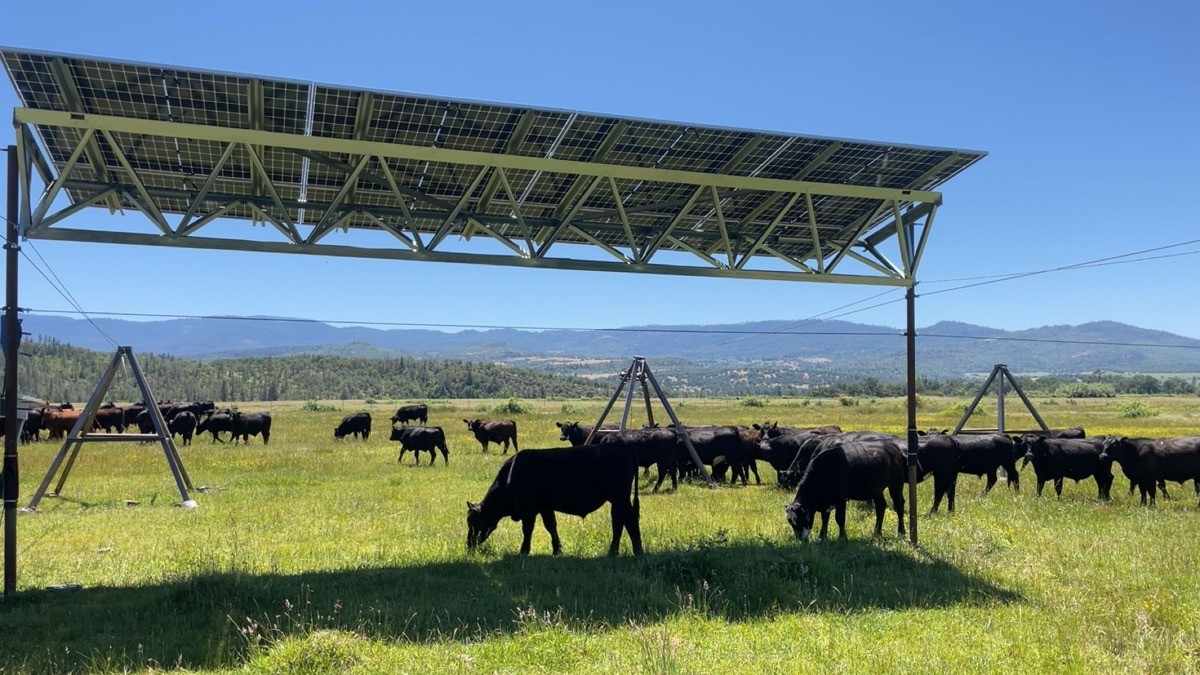
An Angus ranch in southern Oregon has become the test case for a new kind of cattle-friendly solar, hosting RUTE SunTracker’s first commercial project.
The one‑acre, 120‑kilowatt array is the first real‑world installation of RUTE’s patented, cable‑stayed solar tracker designed specifically to coexist with grazing cattle. RUTE supplies the hardware and is also acting as the developer for its first regional cattle‑plus‑solar demonstrations.
What makes the setup different is the clearance. The tracker system provides about 10 feet of headroom, with panel heights reaching up to 16 feet across the array. That gives cattle full access to the pasture underneath while allowing ranchers to keep managing the land as usual. The project is interconnected to Pacific Power’s grid in Jackson County, Oregon.
Projects like this are getting more attention as the solar industry runs into land‑use limits. In the US alone, about 30 gigawatts of new solar capacity installed last year covered roughly 150,000 acres. Meanwhile, the country has close to 120 million acres of cattle pasture, much of it facing rising heat and water stress.
That’s where agrivoltaics come in. By adding solar to working pastureland, ranchers can create a second revenue stream while improving growing conditions for forage through partial shade.
“Within weeks of installing the RUTE canopy, the crew observed leafier forage and increased legume presence inside the array compared to outside,” RUTE president Doug Krause said. “Even on irrigated pasture, direct summer sun can be too intense.”
RUTE’s work has been supported by grants from the US Department of Energy’s American‑Made Solar Prize and the US Department of Agriculture. In October, Oregon State University’s Agrivoltaics Program began quantitative studies at the site to measure pasture production, adding hard data to what ranchers are already seeing on the ground.
Next, RUTE plans to take the project on the road. This winter, the company will present at cattlemen’s association meetings as it looks for ranch partners with onsite electric loads, such as irrigation pivot systems.
“In the near term, our focus is on regional, behind‑the‑meter installations so ranchers and power producers can see the equipment operating in real conditions,” Krause said. “While interconnection timelines are long, these projects allow us to build momentum as we connect with developers and ranches on utility‑scale pipeline.”
Read more: Sunrun + NRG launch a virtual power plant to ease Texas power demand
If you’re looking to replace your old HVAC equipment, it’s always a good idea to get quotes from a few installers. To make sure you’re finding a trusted, reliable HVAC installer near you that offers competitive pricing on heat pumps, check out EnergySage. EnergySage is a free service that makes it easy for you to get a heat pump. They have pre-vetted heat pump installers competing for your business, ensuring you get high quality solutions. Plus, it’s free to use!
Your personalized heat pump quotes are easy to compare online and you’ll get access to unbiased Energy Advisors to help you every step of the way. Get started here. – *ad


FTC: We use income earning auto affiliate links. More.
Environment
Tesla rental fleet that bought into Elon Musk’s self-driving lies goes bankrupt due to depreciation

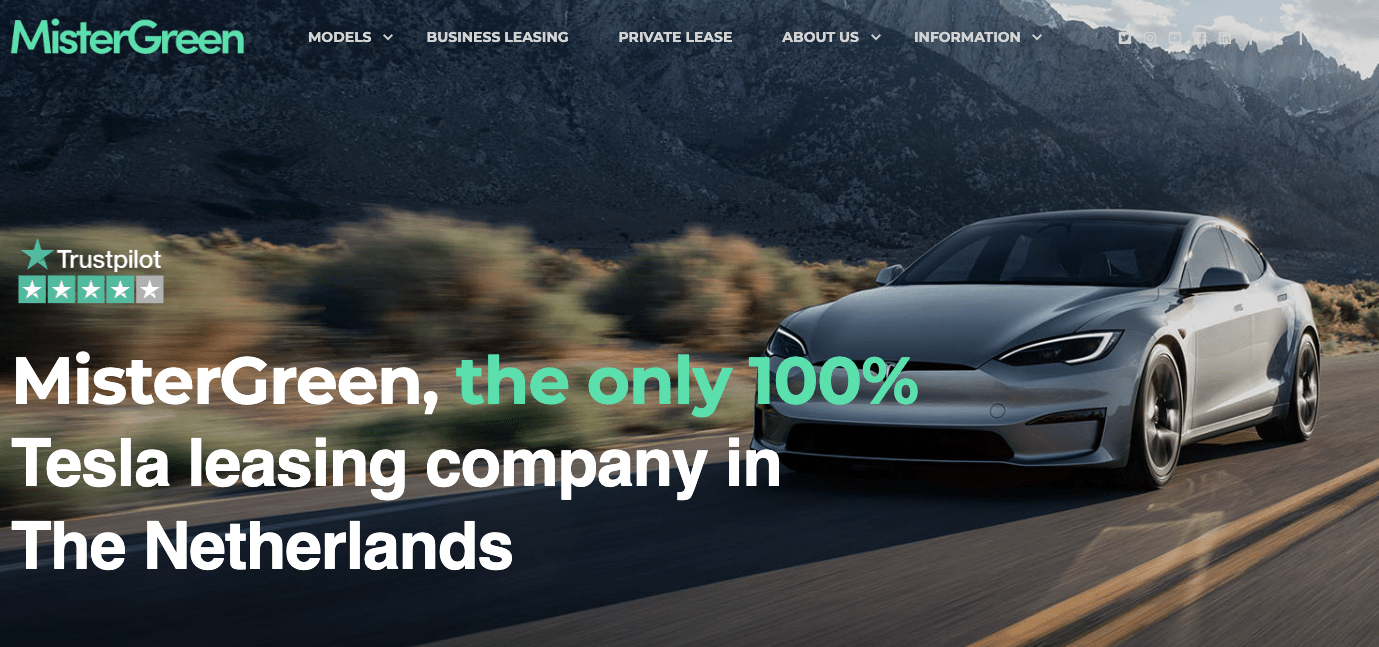
Dutch leasing company Mistergreen, known for its “Tesla only” fleet and bold bets on a future of autonomous robotaxis, is reportedly facing bankruptcy. The company’s financial collapse highlights the danger of buying into Elon Musk’s claims that Tesla vehicles would become “appreciating assets”—a prediction that has faced a harsh reality check in the used EV market.
According to reports from Europe, the Dutch Tesla-only car rental firm Mistergreen has wiped out its bondholders and is selling off its operations.
Mistergreen had built its entire business model around the premise of operating a fleet of Tesla vehicles that would not only hold their value but eventually generate revenue as robotaxis.
Instead, the company has been forced to write down millions in fleet value as Tesla aggressively cut new car prices over the last two years, pulling the rug out from under used EV prices, and never delivered on its promise of consumer vehicles becoming robotaxis.
Back in 2019, Elon Musk famously claimed that Tesla vehicles were now “appreciating assets” because of their Full Self-Driving (FSD) capability. He stated:
“I think the most profound thing is that if you buy a Tesla today, I believe you are buying an appreciating asset – not a depreciating asset.”
He even went so far as to suggest that a Tesla Model 3 could be worth $100,000 to $200,000 as a revenue-generating robotaxi. Mistergreen bought into that claim and was essentially a leveraged bet on this exact scenario.
They wrote their annual report in 2022:
Our focus is driven by the fact that Tesla’s electric vehicles are currently the highest quality electric vehicles on the market (in terms of battery quality, software updates, efficiency and range, charging network and speed), their hardware and software are prepared for future self-driving cars, and the quality and range of the Tesla (supercharger) charging network is superior. As a result, there is a significant market demand for Tesla’s and we anticipate that Tesla’s will have better residual value in the future due to the good quality of the Tesla’s currently on the market.
However, as we discussed in an article earlier this year about Elon Musk’s biggest lie, the reality has been the exact opposite. Tesla vehicles have depreciated faster than the industry average, exacerbated by Tesla’s own decision to slash prices to maintain demand and by the fact that it never delivered on its promise that software updates would make its consumer vehicles autonomous without supervision.
At its peak, Mistergreen had a fleet of over 4,000 Tesla vehicles, which is impressive, but it meant that it was hit even harder by the depreciation.
For buyers, a cheaper Tesla is great news. For owners or leasing companies holding thousands of them on their books, with high residual-value guarantees, it’s a death sentence.
Mistergreen had issued bonds to buy the Tesla vehicles, but it hasn’t been able to repay them since last year. It’s unclear how much of investors’ money has been wiped out by the bet, but it is in the tens of millions of dollars.
A couple of Dutch, Belgian, and German leasing companies will purchase the remaining fleet.
Electrek reached out to CEO Florian Minderop and co-founder Mark Schreurs for comments, but we didn’t hear back by the time of publishing.
Electrek’s Take
They believed Elon and they lost tens of millions of dollars worth of investors’ money for it.
We have been saying for years that while FSD is impressive, there’s no evidence that it can reach level 4 autonomy in consumer vehicles. Banking on it turning cars into appreciating robotaxis in the near term is financial suicide.
Musk has been promising “1 million robotaxis by the end of the year” since 2020. It’s now late 2025, and while we have seen progress, we only have a small pilot program in a geo-fenced area in Texas under constant supervision, and certainly don’t have a fleet of appreciating assets.
If you bought a Tesla for $50,000 in 2022 expecting it to be worth $100,000 today, you are likely disappointed. If you bought 4,000 of them with borrowed money, you are Mistergreen.
FTC: We use income earning auto affiliate links. More.

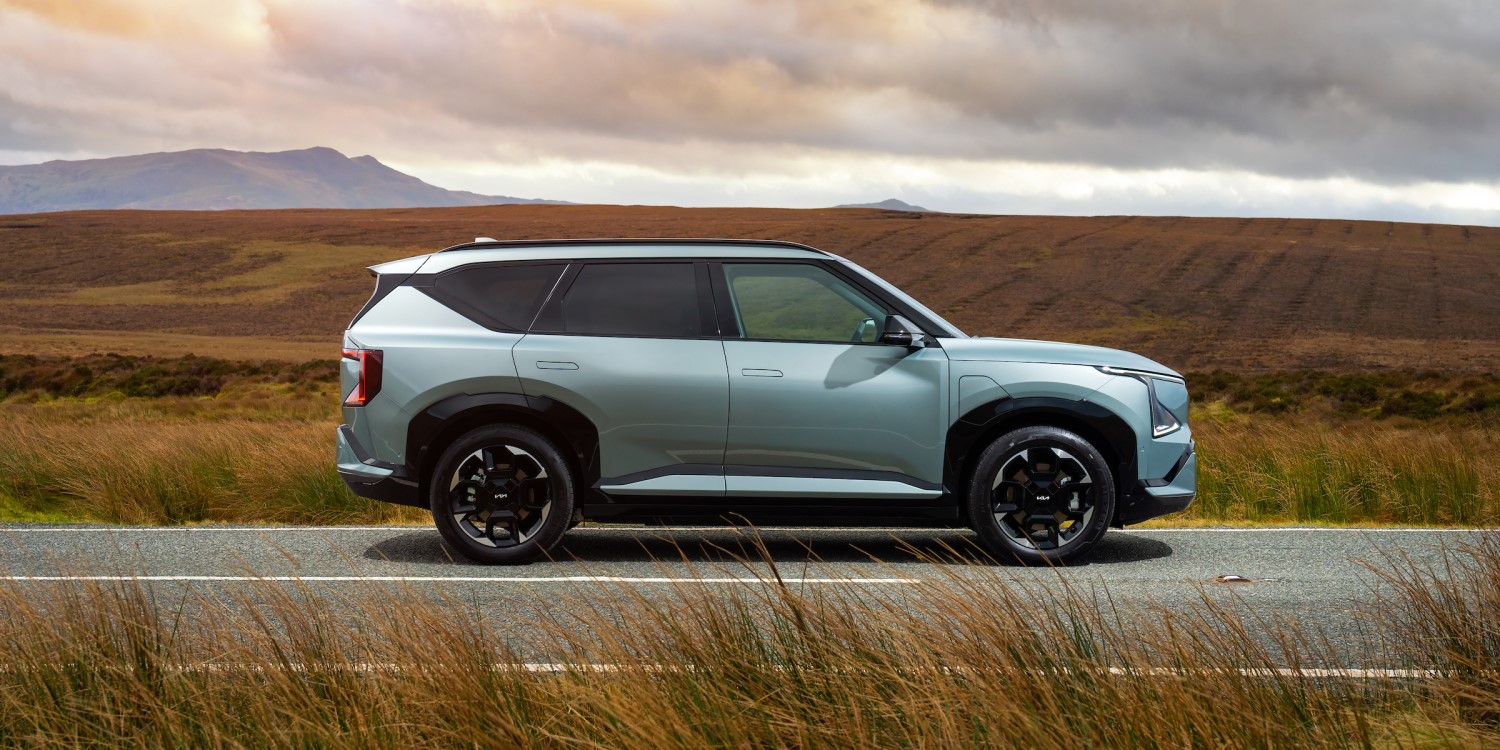
Kia is offering generous discounts on its EVs with low finance rates and thousands in savings across its entire lineup.
What deals is Kia currently running on its EVs?
After launching a promotion in the US offering over $10,000 off the EV6, EV9, and Niro EV this month, Kia is now extending the savings overseas.
Kia introduced a New Year’s offer in the UK on Tuesday, offering savings across its entire range, including electric vehicles.
The new deal offers generous finance deposit contributions (FDC) of up to £3,000 ($4,000) toward all EV3 models, plus the EV4 GT-Line and GT-Line S trims. A £1,500 ($2,000) FDC is available toward the EV4 Fastback (sedan), EV5, EV6, EV6 GT, EV9, and EV9 GT. The EV4 Air grade is available with a £1,000 ($1,300) FDC.
Kia is also offering a low 3.9% APR across its entire EV lineup, considerably lower than the 5.9% APR for the new Sportage and the 7.9% APR for the Picanto, K4, Niro PHEV, and Sorento.
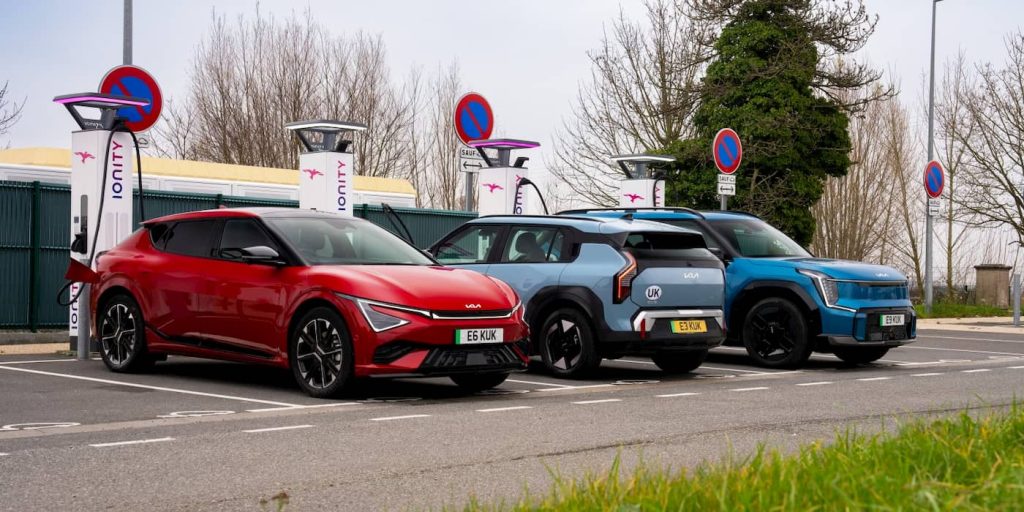
And that’s not all. Current Kia drivers looking to upgrade can save an extra £1,000 ($1,300) with the “Kia EV Finance Upgrade” loyalty incentive.
The New Year’s EV deals run from December 17, 2025, to March 31, 2026. Kia is also offering two years of free service on all electric models through its “Discover Your Kia EV” campaign, available on all EV3, EV4, EV4 Fastback, EV5, EV6, EV9, and PV5 Passenger grades and variants.
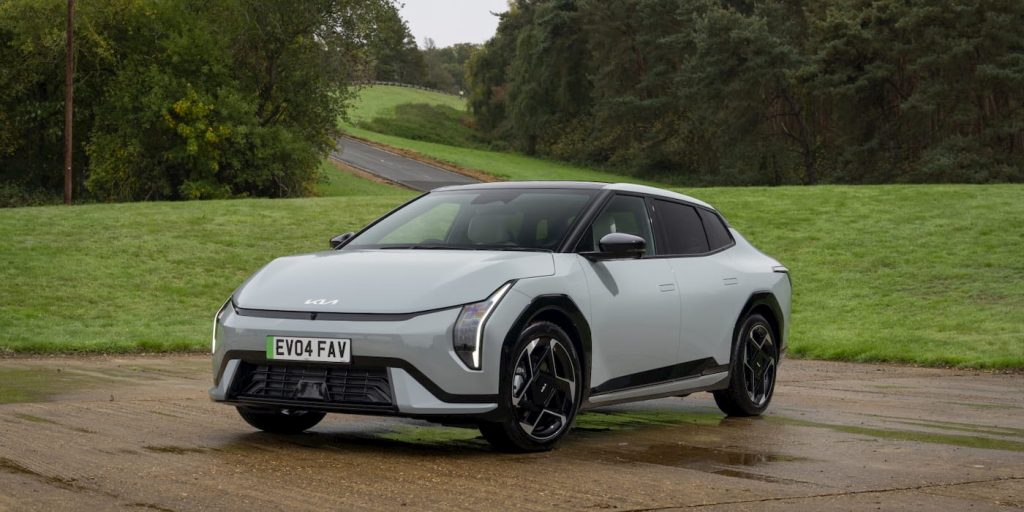
On Friday, the EV4 and PV5 Passenger became the brand’s first vehicle eligible for the UK’s Electric Car Grant. Buyers can now earn £1,500 ($2,000) off the on-the-road purchase price for the EV4 Air and PV5 Passenger Essential and Plus trims.
Although not exactly a promotion, Kia launched the EV4 as Canada’s most affordable EV this week. Starting at under $40,000, Kia’s electric sedan (fastback) is even cheaper than the tiny Fiat 500e.
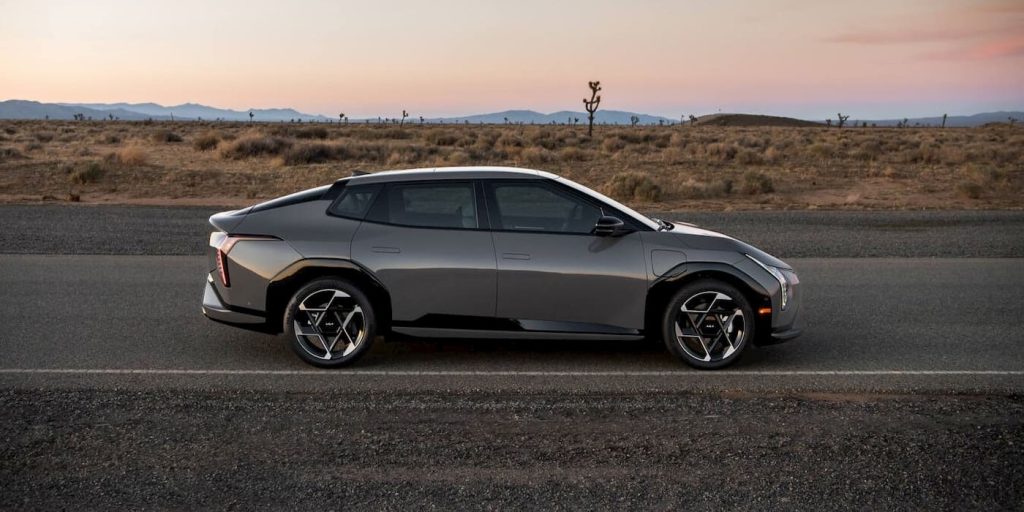
For those in the US, don’t worry, Kia is offering some pretty great year-end deals, including over $10,000 in savings across its entire EV lineup.
The 2025 Kia EV6 and Niro EV are available with up to $11,000 in customer cash, while the larger EV9 is listed with $10,500 in customer cash.

If you’re looking to finance, Kia is offering 0% APR for up to 72 months, plus $3,500 APR Bonus Cash on the EV6 and Niro EV. The three-row Kia EV9 is available with 0% APR for up to 60 months and a $3,000 APR Bonus Cash offer. In the US, Kia’s “New Traditions” sales event runs until January 2, 2026.
Kia’s deals are generous, but its sister company, Hyundai, may have it beat. You can lease a Hyundai IONIQ 5 right now for as low as $189 per month. That’s about as cheap as EV leases get right now.
If you’re wondering what deals are available in your area, you can find local offers using the links below.
FTC: We use income earning auto affiliate links. More.
-
 Sports2 years ago
Story injured on diving stop, exits Red Sox game
-
 Sports3 years ago
‘Storybook stuff’: Inside the night Bryce Harper sent the Phillies to the World Series
-
 Sports2 years ago
Game 1 of WS least-watched in recorded history
-
 Sports3 years ago
Button battles heat exhaustion in NASCAR debut
-
 Sports3 years ago
MLB Rank 2023: Ranking baseball’s top 100 players
-
Sports4 years ago
Team Europe easily wins 4th straight Laver Cup
-
 Environment3 years ago
Japan and South Korea have a lot at stake in a free and open South China Sea
-
 Environment1 year ago
Here are the best electric bikes you can buy at every price level in October 2024