
Connect with us

Published

on

Mailsonpignata / 500Px | 500Px | Getty Images

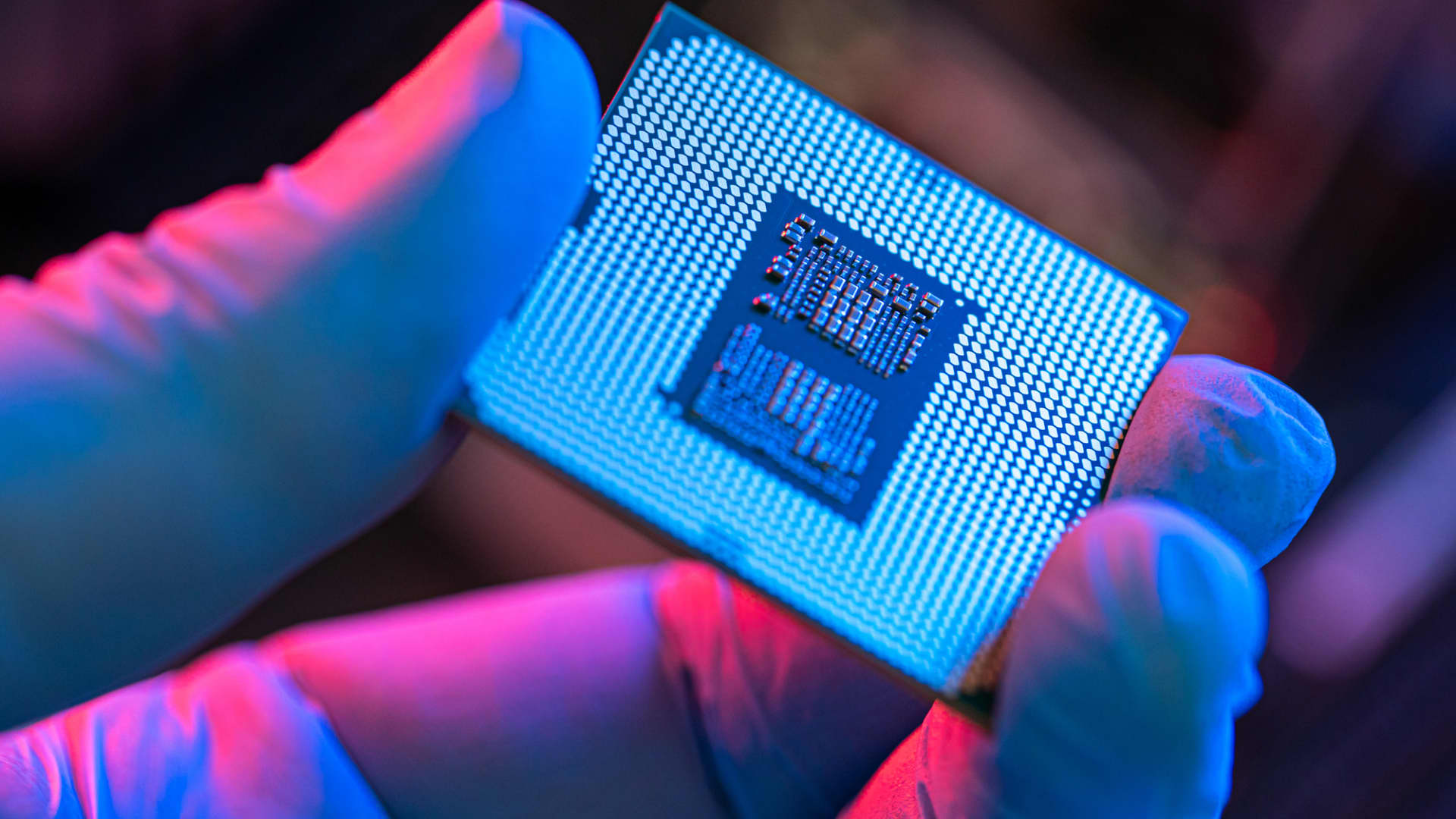
Taiwan’s Powerchip Semiconductor Manufacturing Corporation (PSMC) and Japanese financial conglomerate SBI Holdings have chosen a site in northern Japan for an 800 billion yen ($5.3 billion) chip manufacturing plant, the two firms said Tuesday.

The first phase of the project in the Miyagi Prefecture north of the capital Tokyo, will require a 420 billion yen investment. PSMC and SBI Holdings will pay for half of the cost of the foundry, with the rest coming from foreign and domestic investors, bank loans and government subsidies, the companies said.

Japan has been looking to boost its domestic semiconductor industry and manufacturing of chips and the massive plant underscores the government’s push in this area.

That comes as the U.S. continues to ramp up export restrictions on key semiconductors and tools to China while trying to increase domestic manufacturing of these components, which go in everything from smartphones to cars.

As demand for semiconductors rises and the technology is increasingly seen as strategically important, other countries, including Japan, are trying to raise their capabilities across the board.

The PSMC and SBI factory will manufacture semiconductors in the 28 nanometer, 40 nanometer and 55 nanometer categories. They are not the cutting-edge chips that go into smartphones, but are key for automotive applications. Japan is home to some of the world’s biggest carmakers such as Toyota and Honda.

The companies did not release information on the construction timeline and when the factory will be operational, but said those details will come when they become more “concrete”.

Japan has been offering subsidies for companies to set up manufacturing facilities in the country.

U.S. memory chipmaker Micron announced in May that it would invest up to 500 billion yen in Japan over the next few years, including into manufacturing.

Meanwhile, Japan has been trying to double down on areas of the semiconductor supply chain where it has had strength in the past. In June, a fund backed by the Japanese government proposed a 903.9 billion yen acquisition of semiconductor materials giant JSR.

Continue Reading

Technology

Nvidia’s new software could help trace where its AI chips end up

Published

on

By

Nvidia’s new software could help trace where its AI chips end up

Cfoto | Future Publishing | Getty Images

Nvidia is developing software that could provide location verification for its AI graphics processing units (GPUs), a move that comes as Washington ramps up efforts to prevent restricted chips from being used in countries like China.

The opt-in service uses a client software agent that Nvidia chip customers can install to monitor the health of their AI GPUs, the company said in a blog post on Wednesday

Nvidia also said that customers “will be able to visualize their GPU fleet utilization in a dashboard, globally or by compute zones — groups of nodes enrolled in the same physical or cloud locations.”

However, Nvidia told CNBC in a statement that the latest software does not give the company or outside actors the ability to disable its chips.

“There is no kill switch,” it added. “For GPU health, there are no features that allow NVIDIA to remotely control or take action on registered systems. It is readonly telemetry sent to NVIDIA.”

Telemetry is the automated process of collecting and transmitting data from remote or inaccessible sources to a central location for monitoring, analysis and optimization.

The ability to locate a device depends on the type of sensor data collected and transmitted, such as IP-based network information, timestamps, or other system-level signals that can be mapped to physical or cloud locations.

A screenshot of the software posted on Nvidia’s blog showed details such as the machine’s IP address and location.

A screenshot of the software posted on Nvidia’s blog showed details such as the machine’s IP address and location.

Nvidia blog screenshot | Opt-In NVIDIA Software Enables Data Center Fleet Management

Lukasz Olejnik, a senior research fellow at the Department of War Studies, King’s College London, said that while Nvidia indicated that its GPUs do not have hardware tracking technology, the blog did not specify if the data “uses customer input, network data, cloud provider metadata, or other methods.”

“In principle, also, the sent data contains metadata like network address, which may enable location in practice,” Olejnik, who is also an independent consultant, told CNBC.

The software could also detect any unexpected usage patterns that differ from what was declared, he added.

The latest features from Nvidia follow calls by lawmakers in Washington for the company to outfit its chips with tracking software that could help enforce export controls. 

Those rules bar Nvidia from selling its more advanced AI chips to companies in China and other prohibited locations without a special license. While Trump has recently said he plans to roll back some of these export restrictions, those on Nvidia’s cutting-edge chips will remain in place.  

In May, Senator Tom Cotton and a bipartisan group of eight lawmakers introduced the Chip Security Act, which, if passed, would mandate security mechanisms and location verification in advanced AI chips. 

“Firms affected by U.S. export controls or China-related restrictions could use the system to verify and prove their GPU fleets remain in approved locations and state, and demonstrate compliant usage to regulators,” Olejn noted.

“That could actually help in compliance and indirectly on investment outlook positively.”

Pressure on Nvidia has intensified after Justice Department investigations into alleged smuggling rings that moved over $160 million in Nvidia chips to China.

However, Chinese officials have pushed back, warning Nvidia against equipping its chips with tracking features, as well as “potential backdoors and vulnerabilities.” 

Following a national security investigation into some of Nvidia’s chips to check for these backdoors, Chinese officials have prevented local tech companies from purchasing products from the American chip designer. 

Despite a green light from U.S. President Donald Trump for Nvidia to ship its previously restricted H200 chips to China, Beijing is reportedly undecided about whether to permit the imports.

Continue Reading

Technology

Oracle shares plummet 11% in premarket, dragging down AI stocks

Published

on

By

Oracle shares plummet 11% in premarket, dragging down AI stocks

Oracle shares plummeted 11% in premarket trading on Thursday, extending yesterday’s losses after the firm reported disappointing results.

The cloud computing and database software maker reported lower-than-expected quarterly revenue on Wednesday, despite booming demand for its artificial intelligence infrastructure. Its revenue came in at $16.06 billion, compared with $16.21 billion expected by analysts, according to data compiled by LSEG.

It dragged other AI-related names down with it. Chip darling Nvidia was last seen down 1.5% in premarket trading, memory and storage firm Micron was 1.4% lower, tech heavyweight Microsoft dipped 0.9%, cloud company Coreweave slid 3% and AMD was 1.3% in negative territory.

Oracle shares drop sharply on mixed results

Oracle has been the subject of much market chatter since raising $18 billion in a jumbo bond sale in September, marking one of the largest debt issuances for the tech industry on record. The name shot onto investor agendas when it inked a $300 billion deal with OpenAI in the same month. Oracle made further moves into cloud infrastructure, where it battles Big Tech names such as AmazonMicrosoft and Google for AI contracts.

Global investors have questioned Oracle’s aggressive AI infrastructure build-out plans and whether it needs such a colossal amount of debt to execute, though other tech firms have also recently issued corporate bonds.

Oracle specifically has secured billions of dollars of construction loans through a consortium of banks tied to data centers in New Mexico and Wisconsin. The firm will raise roughly $20 billion to $30 billion in debt every year for the next three years, according to estimates by Citi analyst Tyler Radke.

Its share price has moved 34% higher year-to-date despite recent losses.

Continue Reading

Technology

Google’s AI unit DeepMind announces its first ‘automated research lab’ in the UK

Published

on

By

Google’s AI unit DeepMind announces its first 'automated research lab' in the UK

Google DeepMind, the tech giant’s AI unit, unveiled plans for its first “automated research lab” in the U.K. as it signs a partnership that could lead to the company deploying its latest models in the country. 

The AI company will open the lab, which will use AI and robotics to run experiments, in the U.K. next year. It will focus on developing new superconductor materials, which can be used to develop medical imaging tech, alongside new materials for semiconductors.

British scientists will gain “priority access” to some of the world’s most advanced AI tools under the partnership, the U.K. government said in its announcement.

Founded in London in 2010 by Nobel prize winner Demis Hassabis, DeepMind was acquired by Google in 2014, but has retained a large operational base in the U.K. The company has made several breakthroughs considered crucial to advancing AI technology.

The partnership could also lead to DeepMind working with the government on AI research in areas like nuclear fusion and deploying its Gemini models across government and education in the U.K, the government said.

“DeepMind serves as the perfect example of what UK-US tech collaboration can deliver – a firm with roots on both sides of the Atlantic backing British innovators to shape the curve of technological progress,” said U.K. Technology Secretary Liz Kendall in a statement.

“This agreement could help to unlock cleaner energy, smarter public services, and new opportunities which will benefit communities up and down the country,” she said.

Microsoft poaches more Google DeepMind AI talent as AI talent wars continue

“AI has incredible potential to drive a new era of scientific discovery and improve everyday life,” said Hassabis.

“We’re excited to deepen our collaboration with the UK government and build on the country’s rich heritage of innovation to advance science, strengthen security, and deliver tangible improvements for citizens.”

The U.K. has been racing to sign deals with major tech companies as it tries to build out its AI infrastructure and public deployment of the technology, since the publication of a national strategy for AI in January.

Microsoft, Nvidia, Google and OpenAI announced plans to funnel over $40 billion of investment into new AI infrastructure in the country in September, during a state visit by U.S. President Donald Trump.

Continue Reading

Trending





