

Labour rebels trying to secure divisive Commons vote on Gaza ceasefire ‘by hook or by crook’

Left-wing Labour MPs are looking to secure a vote on a ceasefire “by hook or by crook” in the coming weeks, Sky News has been told.
Sir Keir Starmer‘s party has been split by tensions on the Middle East conflict, with more than a dozen frontbenchers defying the leadership’s stance on the conflict.
But the pressure is set to ratchet up further on the Labour leader from next week, with some in his own party determined to secure a vote which could lead to further divisions.
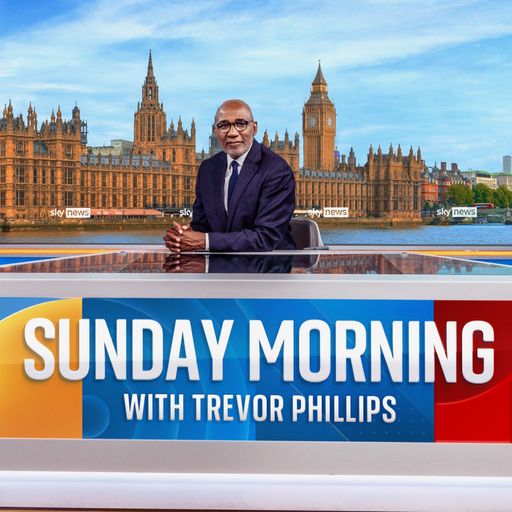
Sunday Morning with Trevor Phillips
Watch live each week on Sunday at 8:30am on Sky channel 501, Freeview 233, Virgin 602, the Sky News website and app or YouTube.
Israel-Gaza latest: Casualties after IDF attack on ambulance
A figure on the left of the party said: “We are looking to secure debates and votes on this, by hook or by crook. We are looking at all potential routes, no stone will be unturned.”
One option is to use an opposition day debate from the Scottish National Party – which backs a ceasefire – which could generate a non-binding vote. Although, Labour could tell its MPs to abstain or refuse to take part.
The SNP see an emergency debate was the most likely avenue, and they could apply to the Speaker for one as early as next Wednesday.
An SNP source said: “Our constituents will be expecting us to have a say and if the government won’t bring forward a vote we will try and do so as soon as the first two days of the King’s Speech debate have ended.”
Another is to use a tactic deployed by Labour and Conservative rebels during Brexit, by triggering an emergency debate, under rules called Standing Order 24. It would have to be allowed by the Speaker.
Nearly 100 MPs from all parties have signed a motion from Labour MP Richard Burgon, which condemns the massacre of Israelis and taking of hostages in the 7 October attacks but also calls for “an immediate de-escalation and cessation of hostilities”.

Shadow education secretary Bridget Phillipson defends Labour’s stance on Middle East
More on this story:
Starmer insists there is ‘unity in Labour’
Two Labour council leaders call for Starmer to resign
The MPs pushing for a vote will consult House of Commons experts next week and think it is most likely to take place later in November, as the start of the month will be dominated by the King’s Speech.
Starmer set out in a speech focused on the Middle East this week that he does not support a ceasefire, which he says would mean “Hamas would be emboldened and start preparing for future violence immediately”.
But so far 16 Labour shadow ministers and aides have tweeted their support for a one, including Jess Phillips, Naz Shah and Imran Hussain – who represent the party on home affairs and business. None of them have been disciplined by the party.
Today, answering questions after a speech in County Durham, Starmer rejected the idea of “great division” within Labour, saying the party was united on wanting to alleviate suffering and get more humanitarian aid in.
Some Labour councillors have resigned their posts, and two council leaders, in Burnley and Pendle, today issued a call for Starmer to resign.
A Labour source said the party would respond to a vote “depending on what the proposition is, which party is behind it and what form it takes.” They added that the rebels or other parties may not secure one, and that “the situation on the ground is not fixed”.
The government, the Labour leadership and other Western allies including the US have called for a “humanitarian pause” to allow aid into Gaza but said Israel has a right to defend itself by attacking Hamas.
Read more: Which countries are calling for a ceasefire?
Click to subscribe to the Sky News Daily wherever you get your podcasts
The Conservative MP for Peterborough, Paul Bristow, was told to resign as a parliamentary aide to a cabinet minister after he called for a ceasefire to “save lives”.
Health minister Maria Caulfield said today: “The trouble I think Sir Keir has is that while he seems to agree with the government, the rest of his party are in complete turmoil on this. At times like this, when it’s such a sensitive issue in the Middle East, you actually do need a governing party that is united.”

A growing rift has emerged in Washington, D.C., between the cryptocurrency industry and labor unions as lawmakers debate whether to ease rules allowing cryptocurrencies in 401(k) retirement accounts.
The dispute centers on proposed market structure legislation that would allow retirement accounts to gain exposure to crypto, a move labor groups say could expose workers to speculative risk. In a letter sent on Wednesday to the US Senate Banking Committee, the American Federation of Teachers argued that cryptocurrencies are too volatile for pension and retirement savings, warning that workers could face significant losses.
The letter drew immediate pushback from crypto investors and industry figures. “The American Federation of Teachers has somehow developed the most logically incoherent, least educated take one could possibly author on the matter of crypto market structure regulation,” a crypto investor said on X.

In response to the letter, Castle Island Ventures partner Sean Judge said the bill would improve oversight and reduce systemic risk, while enabling pension funds to access an asset class that has delivered strong long-term returns.
Consensys attorney Bill Hughes said the AFT’s opposition to the crypto market structure bill was politically motivated, accusing the group of acting as an extension of Democratic lawmakers.

Related: Atkins says SEC has ‘enough authority’ to drive crypto rules forward in 2026
Opposition to crypto in retirement and pension funds mounts
Proponents of allowing crypto in retirement portfolios, on the other hand, argue that it democratizes finance, while trade unions have voiced strong opposition to relaxing current regulations, claiming that crypto is too risky for traditional retirement plans.
“Unregulated, risky currencies and investments are not where we should put pensions and retirement savings. The wild, wild west is not what we need, whether it’s crypto, AI, or social media,” AFT president Randi Weingarten said on Thursday.
The AFT represents 1.8 million teachers and educational professionals in the US and is one of the largest teachers’ unions in the country.
According to Better Markets, a nonprofit and nonpartisan advocacy organization, cryptocurrencies are too volatile for traditional retirement portfolios, and their high volatility can create time-horizon mismatches for pension investors seeking a predictable, low-volatility retirement plan.

In October, the American Federation of Labor and Congress of Industrial Organizations (AFL-CIO) also wrote to Congress opposing provisions within the crypto market structure regulatory bill.
The AFL-CIO, the largest federation of trade unions in the US, wrote that cryptocurrencies are volatile and pose a systemic risk to pension funds and the broader financial system.
Magazine: 13 Christmas gifts that Bitcoin and crypto degens will love


-
 Sports2 years ago
Story injured on diving stop, exits Red Sox game
-
 Sports3 years ago
‘Storybook stuff’: Inside the night Bryce Harper sent the Phillies to the World Series
-
 Sports2 years ago
Game 1 of WS least-watched in recorded history
-
 Sports3 years ago
Button battles heat exhaustion in NASCAR debut
-
 Sports3 years ago
MLB Rank 2023: Ranking baseball’s top 100 players
-
Sports4 years ago
Team Europe easily wins 4th straight Laver Cup
-
 Environment3 years ago
Japan and South Korea have a lot at stake in a free and open South China Sea
-
 Environment1 year ago
Here are the best electric bikes you can buy at every price level in October 2024