

Labour rebels trying to secure divisive Commons vote on Gaza ceasefire ‘by hook or by crook’

Left-wing Labour MPs are looking to secure a vote on a ceasefire “by hook or by crook” in the coming weeks, Sky News has been told.
Sir Keir Starmer‘s party has been split by tensions on the Middle East conflict, with more than a dozen frontbenchers defying the leadership’s stance on the conflict.
But the pressure is set to ratchet up further on the Labour leader from next week, with some in his own party determined to secure a vote which could lead to further divisions.
Sunday Morning with Trevor Phillips
Watch live each week on Sunday at 8:30am on Sky channel 501, Freeview 233, Virgin 602, the Sky News website and app or YouTube.
Israel-Gaza latest: Casualties after IDF attack on ambulance
A figure on the left of the party said: “We are looking to secure debates and votes on this, by hook or by crook. We are looking at all potential routes, no stone will be unturned.”
One option is to use an opposition day debate from the Scottish National Party – which backs a ceasefire – which could generate a non-binding vote. Although, Labour could tell its MPs to abstain or refuse to take part.
The SNP see an emergency debate was the most likely avenue, and they could apply to the Speaker for one as early as next Wednesday.
An SNP source said: “Our constituents will be expecting us to have a say and if the government won’t bring forward a vote we will try and do so as soon as the first two days of the King’s Speech debate have ended.”
Another is to use a tactic deployed by Labour and Conservative rebels during Brexit, by triggering an emergency debate, under rules called Standing Order 24. It would have to be allowed by the Speaker.
Nearly 100 MPs from all parties have signed a motion from Labour MP Richard Burgon, which condemns the massacre of Israelis and taking of hostages in the 7 October attacks but also calls for “an immediate de-escalation and cessation of hostilities”.

Shadow education secretary Bridget Phillipson defends Labour’s stance on Middle East
More on this story:
Starmer insists there is ‘unity in Labour’
Two Labour council leaders call for Starmer to resign
The MPs pushing for a vote will consult House of Commons experts next week and think it is most likely to take place later in November, as the start of the month will be dominated by the King’s Speech.
Starmer set out in a speech focused on the Middle East this week that he does not support a ceasefire, which he says would mean “Hamas would be emboldened and start preparing for future violence immediately”.
But so far 16 Labour shadow ministers and aides have tweeted their support for a one, including Jess Phillips, Naz Shah and Imran Hussain – who represent the party on home affairs and business. None of them have been disciplined by the party.
Today, answering questions after a speech in County Durham, Starmer rejected the idea of “great division” within Labour, saying the party was united on wanting to alleviate suffering and get more humanitarian aid in.
Some Labour councillors have resigned their posts, and two council leaders, in Burnley and Pendle, today issued a call for Starmer to resign.
A Labour source said the party would respond to a vote “depending on what the proposition is, which party is behind it and what form it takes.” They added that the rebels or other parties may not secure one, and that “the situation on the ground is not fixed”.
The government, the Labour leadership and other Western allies including the US have called for a “humanitarian pause” to allow aid into Gaza but said Israel has a right to defend itself by attacking Hamas.
Read more: Which countries are calling for a ceasefire?
Click to subscribe to the Sky News Daily wherever you get your podcasts
The Conservative MP for Peterborough, Paul Bristow, was told to resign as a parliamentary aide to a cabinet minister after he called for a ceasefire to “save lives”.
Health minister Maria Caulfield said today: “The trouble I think Sir Keir has is that while he seems to agree with the government, the rest of his party are in complete turmoil on this. At times like this, when it’s such a sensitive issue in the Middle East, you actually do need a governing party that is united.”
Politics
Angela Rayner calls on MPs to sit ‘through the night’ to get workers’ rights bill through parliament
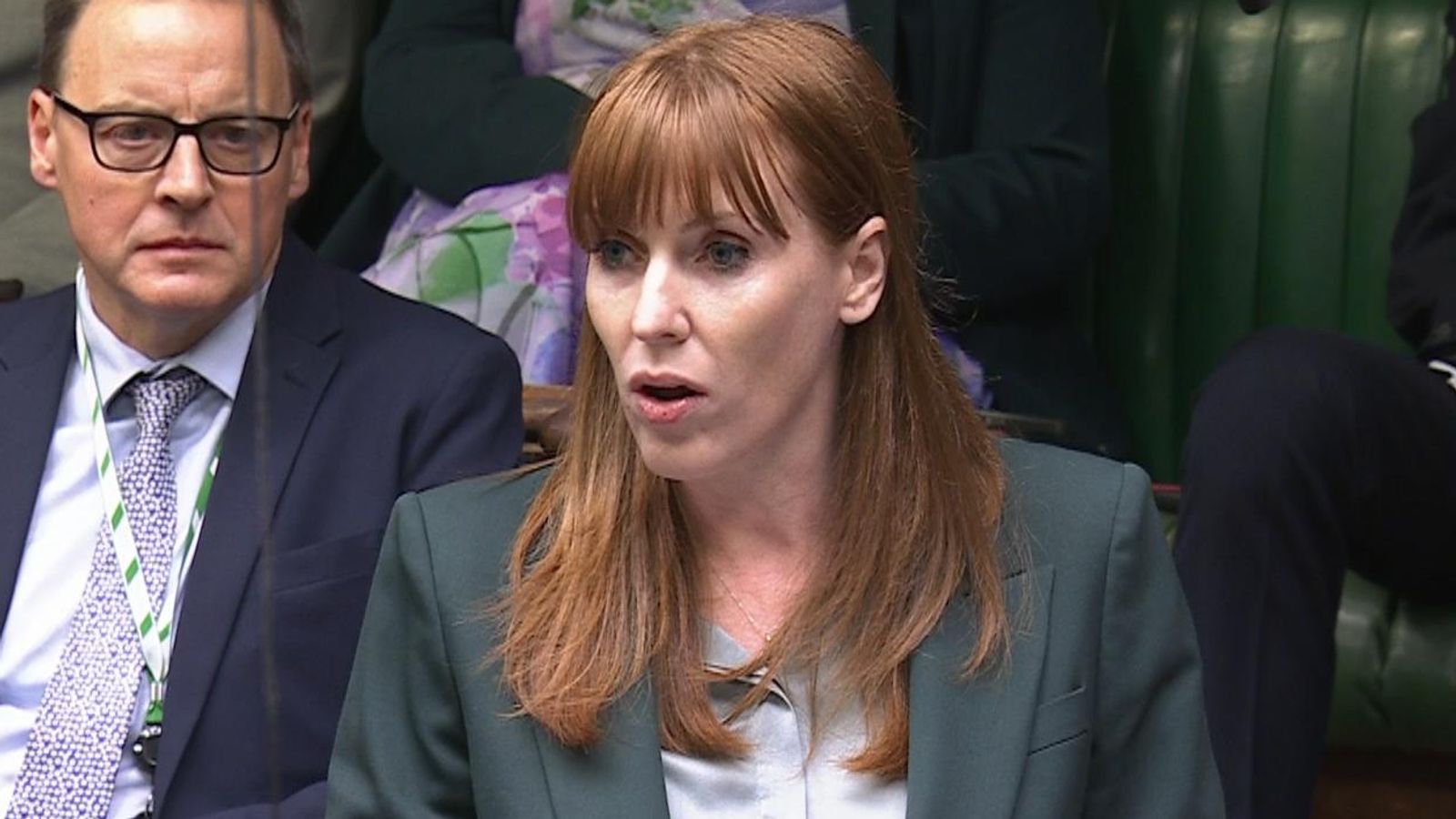

Angela Rayner has issued an angry call to MPs to sit “through the night” to stop hereditary peers delaying her flagship employment rights bill.
In an outburst at the start of the latest “ping pong” between the Lords and Commons, she said: “What’s wrong with protecting people from unfair dismissal?”
The former deputy prime minister hit out at the delaying tactics of the House of Lords, with the clock ticking only days before parliament’s Christmas recess.
The bill now goes back to the Lords on Tuesday, when ministers hope peers will drop their opposition so the bill can receive royal assent by the time parliament rises on Thursday.
Ms Rayner’s attack on hereditary peers followed a government defeat in the Lords by 24 votes last week, just days before Sir Keir Starmer created 25 new Labour peers.
“What message does this send to the British public, when 33 hereditary peers have tried to defeat the government by 24 votes on a manifesto promise on sick pay, for example, which will miss the deadline for April for some of the lowest earners from some of the wealthiest?” she declared.
“Shouldn’t we get on, go through the night if we have to, and get this bill passed?”
And employment minister Kate Dearden told MPs: “We have been in ping pong for far too long, and further delay is not in anyone’s best interest.”
Rayner makes speech on Employment Rights Bill
At the end of an hour-long debate, MPs voted by 311 votes to 96, a majority of 215, to remove a cap on unfair dismissal compensation, overturning a vote in the Lords last week.
In its attempts to get the bill through the Lords, ministers have abandoned day one protection against unfair dismissal and, after a deal with trade unions, replaced it with a six-month qualifying period.
But at the same time the government introduced an 11th hour measure to scrap compensation caps for unfair dismissal, which is currently 52 weeks’ pay or £118,223, whichever is lower.
Read more: Starmer insists budget leaks and leadership speculation did not come from him
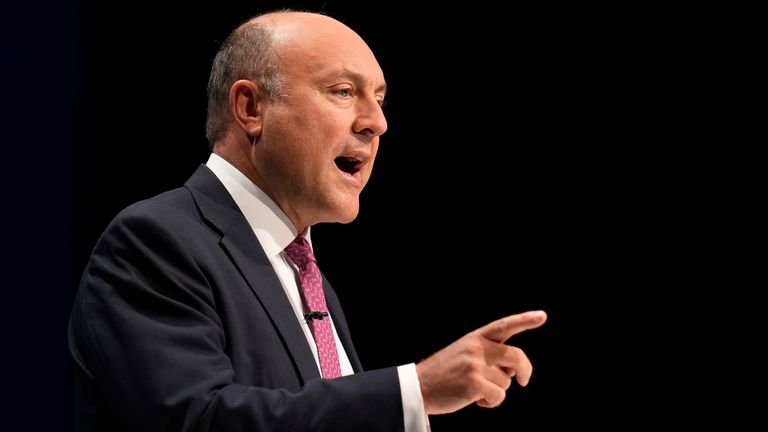
Tory MP Andrew Griffith attacked plans to lift a compensation cap. Pic: PA
Shadow business secretary Andrew Griffith, who has led Tory opposition to the bill, attacked the removal of a cap.
“It wasn’t in the manifesto, it wasn’t in the bill, it wasn’t in the impact assessment,” he protested.
Earlier, in a boost for the government, six business groups urged peers to back down and end the parliamentary “ping pong” between the Commons and the Lords.
The groups, including the Confederation of British Industry (CBI) and the British Chamber of Commerce (BCC), fear the six-month unfair dismissal compromise agreed with the unions could be at risk.
“To avoid losing the six-month qualifying period, we therefore believe that now is the time for parliament to pass the bill,” they urged in a letter to Business Secretary Peter Kyle.
Mr Kyle said “all parties… have made difficult but necessary compromises to bring this bill forward” and urged “everyone” to recognise business groups and trade unions want it passed “without further delay”.

Politics
Specialist teams and online investigators deployed across England and Wales to tackle ‘national emergency’ of violence against women and girls
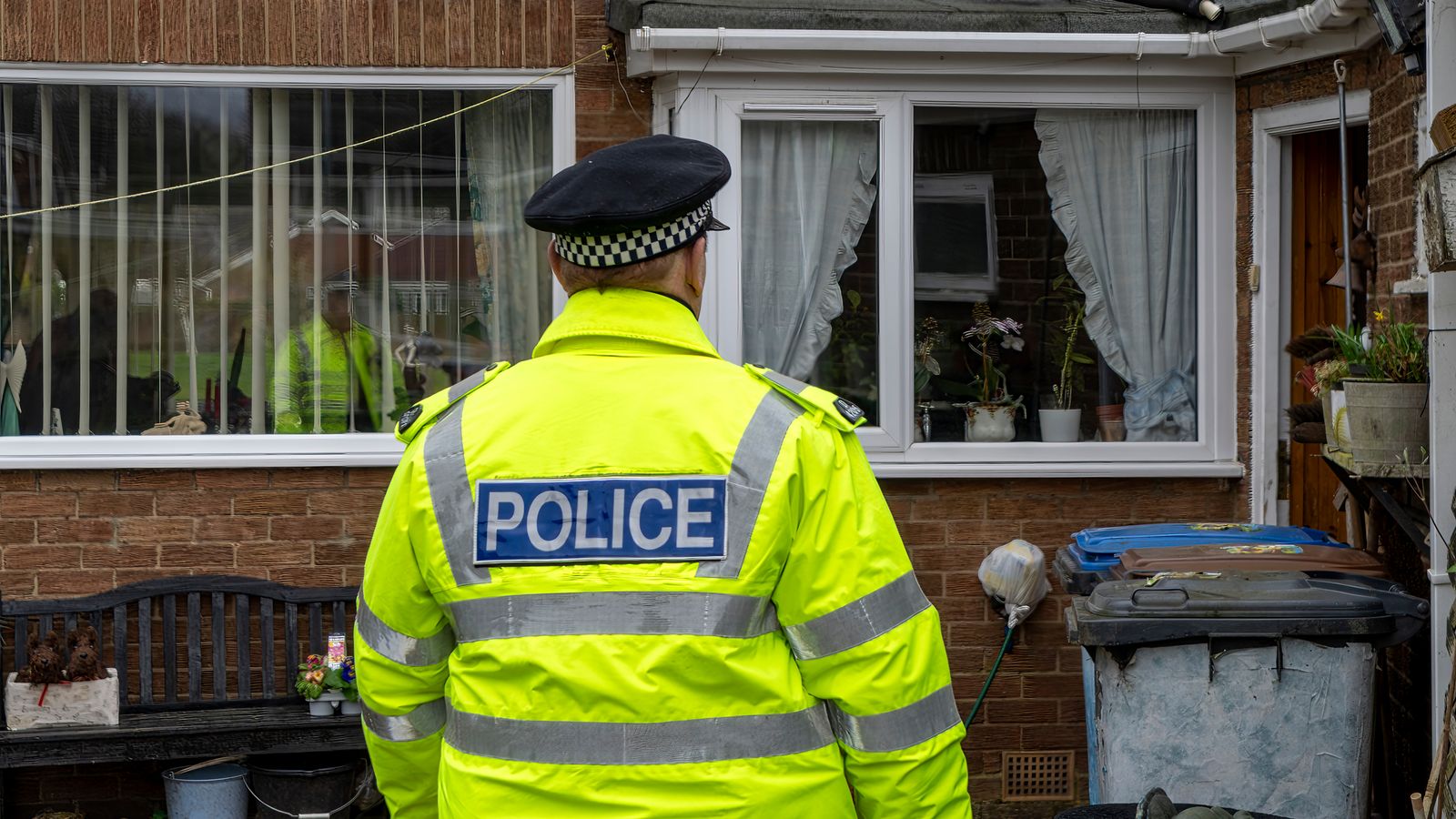
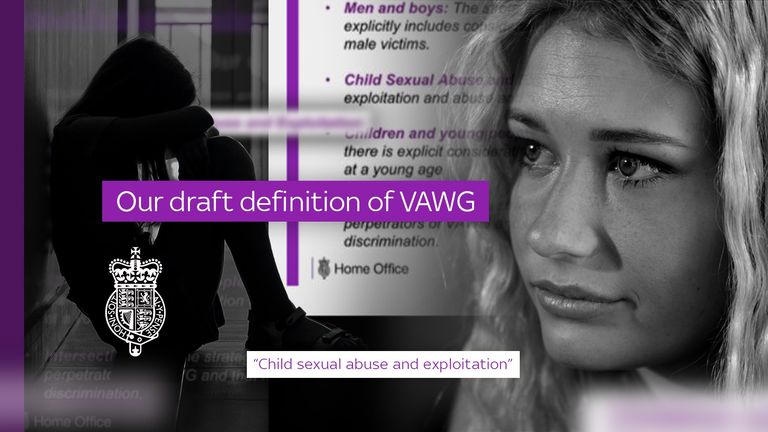
Specialist investigation teams for rape and sexual offences are to be created across England and Wales as the home secretary declares violence against women and girls a “national emergency”.
Shabana Mahmood said the dedicated units will be in place across every force by 2029 as part of Labour’s violence against women and girls (VAWG) strategy due to be launched later this week.
The use of Domestic Abuse Protection Orders (DAPOs), which had been trialled in several areas, will also be rolled out across England and Wales. They are designed to target abusers by imposing curfews, electronic tags and exclusion zones.
The orders cover all forms of domestic abuse, including economic abuse, coercive and controlling behaviour, stalking and ‘honour’-based abuse. Breaching the terms can carry a prison term of up to five years.
Govt ‘thinking again’ on abuse strategy
Nearly £2m will also be spent funding a network of officers to target offenders operating within the online space.
Teams will use covert and intelligence techniques to tackle violence against women and girls via apps and websites.
A similar undercover network funded by the Home Office to examine child sexual abuse has arrested over 1,700 perpetrators.
Abuse is ‘national emergency’
Ms Mahmood said in a statement: “This government has declared violence against women and girls a national emergency.
“For too long, these crimes have been considered a fact of life. That’s not good enough. We will halve it in a decade.
“Today, we announce a range of measures to bear down on abusers, stopping them in their tracks. Rapists, sex offenders and abusers will have nowhere to hide.”
Angiolini Inquiry: Recommendations are ‘not difficult’
The target to halve violence against women and girls in a decade is a Labour manifesto pledge.
The government said the measures build on existing policy, including facial recognition technology to identify offenders, improving protections for stalking victims, making strangulation a criminal offence and establishing domestic abuse specialists in 999 control rooms.
Read more from Sky News:
Demands for violence and abuse reforms
Women still feel unsafe on streets
Minister ‘clarifies’ violence strategy
Labour has ‘failed women’
But the Conservatives said Labour had “failed women” and “broken its promises” by delaying the publication of the violence against women and girls strategy.
Shadow home secretary Chris Philp said that Labour “shrinks from uncomfortable truths, voting against tougher sentences and presiding over falling sex-offender convictions. At every turn, Labour has failed women”.
Home Secretary Shabana Mahmood will be on Sunday Morning with Trevor Phillips on Sky News this morning from 8.30am.
-
 Sports2 years ago
Story injured on diving stop, exits Red Sox game
-
 Sports3 years ago
‘Storybook stuff’: Inside the night Bryce Harper sent the Phillies to the World Series
-
 Sports2 years ago
Game 1 of WS least-watched in recorded history
-
 Sports3 years ago
Button battles heat exhaustion in NASCAR debut
-
 Sports3 years ago
MLB Rank 2023: Ranking baseball’s top 100 players
-
Sports4 years ago
Team Europe easily wins 4th straight Laver Cup
-
 Environment3 years ago
Japan and South Korea have a lot at stake in a free and open South China Sea
-
 Environment1 year ago
Here are the best electric bikes you can buy at every price level in October 2024