

Take Bitcoin profits at $110K, CME tops Binance in BTC futures open interest: Hodler’s Digest, Nov. 5-11


Top Stories This Week
CME overtakes Binance to grab largest share of Bitcoin futures open interest
Bitcoin’s futures market is showing an interesting shift as global derivatives marketplace the Chicago Mercantile Exchange (CME) has surpassed Binance in terms of Bitcoin futures open interest. This change occurred after Bitcoin exceeded the $37,000 mark for the first time in over 18 months.
However, James Seyffart, a research analyst at Bloomberg Intelligence specializing in exchange-traded funds, questioned whether the increasing open interest in Bitcoin futures on CME would address historical concerns of the United States Securities and Exchange Commission regarding the depth of Bitcoin markets and the potential for market manipulation.
“Okay this is interesting… Does this constitute a ‘market of significant size’ now?” Seyffart stated in a post on X (formerly Twitter).
Cryptoqueen’s OneCoin legal chief pleads guilty to fraud
The former head of legal and compliance at OneCoin is looking at a potential 10-year prison term for her involvement in the $4 billion cryptocurrency trading scheme. In Manhattan federal court, the ex-compliance chief of OneCoin, Irinia Dilkinska, pleaded guilty to charges of wire fraud and money laundering.
According to a statement from the U.S. Department of Justice, U.S. District Judge Edgardo Ramos accepted Dilkinska’s guilty plea. She admitted to one count of conspiracy to commit wire fraud and one count of conspiracy to commit money laundering. Each charge carries a maximum sentence of five years in prison.
Dilkinska is scheduled for sentencing on February 14, 2024, facing a potential maximum sentence of 10 years in prison for her role in the OneCoin scheme.
Genesis seeks court’s approval to reduce Three Arrows Capital claim from $1B to $33M
Bankrupt cryptocurrency lender Genesis has asked the court to approve its proposed settlement agreement with the collapsed crypto hedge fund Three Arrows Capital (3AC).
In a recent court document, Genesis stated that 3AC should be given a claim of $33 million against Genesis. This represents 3.3% of the total claims initially made against Genesis, which amounted to $1 billion.
According to Genesis, 3AC’s claims against Genesis were the largest asserted claims in Chapter 11 cases associated with the collapse of the FTX exchange. Genesis stressed that the 3AC debtor was one of Genesis’s largest borrowers from 2020 to 2022, up until the time of its collapse.
SafeMoon CEO bail release goes on hold after Feds cite flight risk
SafeMoon CEO Braden John Karony’s bail release has been delayed by U.S. federal prosecutors, who argue that he may try to leave the country due to his alleged access to funds and connections abroad. The prosecutors expressed concerns that his release could pose a flight risk and be a potential danger to the community.
The delay comes after a New York District Judge, LaShann DeArcy Hall, decided to put a hold on the bail release order issued on Nov. 8 by a Utah Magistrate judge, who had allowed Karony to be released on a $500,000 bail. However, prosecutors contested this decision, claiming that the release order was made “without consideration of the defendant’s substantial financial means and ability to flee,” and they emphasized that his release could be a “continued danger to the community.”
Binance to terminate Russian ruble deposits next week
Binance users in Russia need to take note: They have a little over two months, until Jan. 31, 2024, to withdraw their rubles from the platform. Binance is wrapping up its operations in Russia and plans to stop accepting deposits in Russian rubles from November 15, 2023.
This comes after Binance declared its complete exit from Russia by selling its business to a newly established crypto exchange called CommEX in September 2023. However, there’s been limited information about the details of the deal, including the size of the transaction and the founders of CommEX, causing some controversy.

Winners and Losers

At the end of the week, Bitcoin (BTC) is at $37,249, Ether (ETH) at $2,078 and XRP (XRP) at $0.67. The total market cap is at $1.42 trillion, according to CoinMarketCap.
Among the biggest 100 cryptocurrencies, the top three altcoin gainers of the week were FTX Token (FTT) at 250.48%, Kaspa (KAS) at 67.23% and Cronos (CRO) at 52.20%.
The top three altcoin losers of the week are Maker (MKR) at -3.39%, Tether Gold (XAUt) at -2.60% and PAX Gold (PAXG) at -2.51%.
For more info on crypto prices, make sure to read Cointelegraph’s market analysis.
Read also
Most Memorable Quotations
SEC Chair Gensler cannot continue to abuse the powers of his agency to fulfill a political agenda of driving the new and promising digital asset industry offshore.”
Tom Emmer, United States Republican congressman
Ordinals help to express the core values of Bitcoin in a much more friendly way than Bitcoin, which is too technical or harsh for some people.”
Lugui Tillier, commercial director for Lumx Studios
Binance’s Chief Compliance Officer crudely but succinctly summed up this case when he admitted that Binance was ‘operating as a fking unlicensed securities exchange in the USA bro.’ He was right.”
The United States Securities and Exchange Commission
As we have witnessed with cryptocurrency, heavy-handed constraints have hindered the exploration of potentially revolutionary applications.”
Matthew Putman, CEO and co-founder of Nanotronics
In Web3, it’s not the code that’s king, but the community. Instead of perfecting backend logic, focus on front-end transparency.”
Tiago Serôdio, head of community at Partisia Blockchain
I say, ‘Sorry, we are boring.’ But we are one of the oldest projects. We are very big… We are the one who has the most changes on GitHub, and we have not been down for over 2000 days… Boring sometimes is good.”
Frederik Gregaard, Cardano Foundation CEO
Prediction of the week
Bitcoin ‘Terminal Price’ hints next BTC all-time high is at least $110K
As the price of BTC hovers around its highest levels in the past 18 months, analysts are already speculating about the potential upward trajectory it may take in the upcoming months and years. Bitcoin may next be a “sell” at $110,000 as its new bull cycle plays out, a classic on-chain indicator suggests.
Analyzing its Terminal Price, Look Into Bitcoin creator Philip Swift described its value as a “simple” method of estimating long-term BTC price peaks. Terminal Price is calculated from Bitcoin’s so-called “Transferred Price” — a value derived by dividing “Coin Days Destroyed” by the existing supply. Not every all-time high reaches Terminal Price, but BTC/USD did hit the trendline during its 2017 all-time and initial peak in April 2021. The current all-time high of $69,000, seen in November of that year, fell short.
As Terminal Price increases with time, $110,000 may ultimately end up a conservative target should the next all-time high occur only later in the next cycle.

FUD of the Week
JPEX scandal: Taiwan determines new suspects in alleged fraud — Report
Taiwanese prosecutors are seeking to detain Chang Tung-ying, the chief partner at JPEX’s Taiwan office, on charges of fraud related to the JPEX cryptocurrency exchange. The situation surrounding the collapsed exchange is unfolding, with the Taipei District Prosecutors Office (TDPO) reportedly identifying new suspects. According to a report from local TV channel TVBS News on November 9, the TDPO has requested the custody of Chang Tung-ying over allegations of fraud.
As part of the ongoing JPEX investigation, prosecutors in Taipei searched nine locations and summoned Chang along with three other individuals believed to be involved. Chang and JPEX lecturer Shih Yu-sheng (also known as Shi Yu) are considered suspects in the case for violating the Banking Act and the Money Laundering Control Act.
Crypto exchange CoinSpot reportedly suffers $2M hot wallet hack
Blockchain security firm CertiK indicates that the recent $2.4 million theft from Australian cryptocurrency exchange CoinSpot hot wallet likely occurred due to a “private key compromise.” CoinSpot appears to have experienced a hack, involving the probable compromise of a private key in one of its hot wallets.
Pseudonymous blockchain investigator ZachXBT highlighted two transactions on Nov. 8 that entered the wallet belonging to the alleged hacker. Subsequently, the wallet’s owner transferred the funds to the Bitcoin network via THORChain and Wan Bridge. CertiK stated that the apparent exploit was likely the result of a “probable private key compromise” on at least one of CoinSpot’s hot wallets.
According to Etherscan data, a transaction of 1,262 Ether, valued at $2.4 million at current prices, originated from a recognized CoinSpot wallet and entered the wallet linked to the alleged hacker.
Poloniex exchange suffers $100M exploit, offers 5% bounty
A crypto wallet linked to the digital exchange Poloniex has experienced suspicious outflows, evident on the blockchain explorer Etherscan. Blockchain security experts suspect a breach, resulting in attackers draining up to $100 million in crypto.
On Nov. 10, millions in crypto assets were moved from an account labeled Poloniex 4 on Etherscan. Initially estimated at $60 million, later assessments revealed the loss exceeded $100 million. CertiK, a blockchain security firm, suggests a “private key compromise” as the likely cause and notes that the funds have already been transferred to four externally owned accounts, with some converted into Ether.
Read also
Top Magazine Pieces of the Week
Exclusive: 2 years after John McAfee’s death, widow Janice is broke and needs answers
Two years after John McAfee’s death, his wife, Janice, is still unable to get closure. “All I want is to see his body for myself and know that really happened.”
‘$10K JPGs’ scare away gamers, Animoca’s crypto game streaming plans: Web3 Gamer
Animoca buys Twitch-like platform and Web3 gaming was a major talking point at Binance Blockchain Week.
6 Questions for Lugui Tillier about Bitcoin, Ordinals, and the future of crypto
Lugui Tillier is the commercial director for Lumx Studios, one of the top cryptocurrency firms in Rio de Janeiro — a city with a burgeoning crypto industry.
Subscribe
The most engaging reads in blockchain. Delivered once a
week.


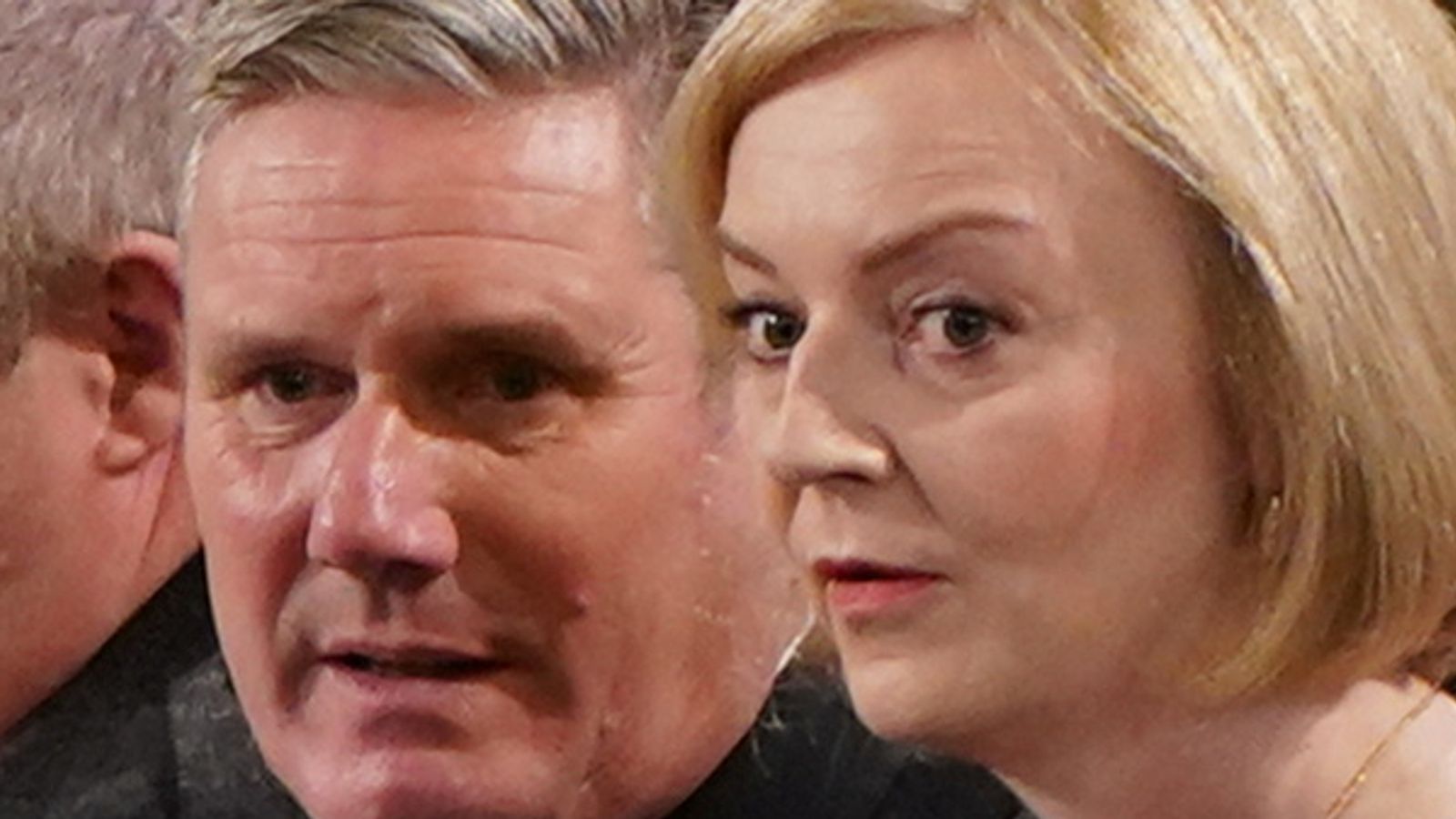
Over a third of people think Rachel Reeves exaggerated economic bad news in the run-up to the budget – twice as many as thought the chancellor was being honest, a new Sky News poll has found.
Some 37% told a YouGov-Sky News poll that Ms Reeves made out things were worse than they really are. This is much higher than the 18% who said she was broadly honest, and the 13% who said things were better than she presented.
This comes in an in-depth look at the public reaction to the budget by YouGov, which suggests widespread disenchantment in the performance of the chancellor.
Just 8% think the budget will leave the country as a whole better off, while 2% think it will leave them and their family better off.
Some 52% think the country will be worse off because of the budget, and 50% think they and their family will be worse off.
This suggests the prime minister and chancellor will struggle to sell last week’s set-piece as one that helps with the cost of living.
Some 20% think the budget worried too much about help for older people and didn’t have enough for younger people, while 23% think the reverse.
The poll found 57% think the chancellor broke Labour’s election promises, while 13% think she did not and 30% are not sure. Some 54% said the budget was unfair, including 16% of Labour voters.
And it arguably gets worse…
This comes as the latest Sky News-Times-YouGov poll showed Labour and the Tories are now neck and neck among voters.
The two parties are tied on 19% each, behind Reform UK on 26%. The Greens are on 16%, while the Liberal Democrats are on 14%.
This is broadly consistent with last week, suggesting the budget has not had a dramatic impact on people’s views.
However, the verdict on Labour’s economic competence has declined further post-budget.
Asked who they would trust with the economy, Labour are now on 10% – lower than Liz Truss, who oversaw the 2022 mini-budget, and also lower than Jeremy Corbyn in the 2019 election.
The Tories come top of the list of parties trusted on the economy on 17%, with Reform UK second on 13%, Greens on 8% and Lib Dems on 5%. Nearly half, 47%, don’t know or say none of them.
Only 57% of current Labour voters say the party would do the best job at managing the economy, falling to 25% among those who voted Labour in the 2024 election.
Some 63% of voters think Ms Reeves is doing a bad job, including 20% of current Labour voters, while just 11% of all voters think she is doing a good job.
A higher proportion – 69% – think Sir Keir Starmer is doing a bad job.

Paul Atkins, chair of the US Securities and Exchange Commission, said that the agency can continue advancing digital asset regulation without legislation from Congress, signaling his expectations for the industry in 2026.
In a CNBC interview released on Tuesday, Atkins said the SEC was providing “technical assistance” as Congress considered legislation for digital asset regulation, likely referring to the market structure bill working its way through the US Senate. Atkins said that although the agency’s operations were impacted by the longest US government shutdown in the country’s history, he continued to make progress on “rules that are focused on helping [the crypto] sector.”
“We have enough authority to drive forward,” said Atkins. “I’m looking forward to having an innovation exemption that we’ve been talking about now. We’ll be able to get that out in a month or so.”

Atkins, whom the US Senate confirmed to chair the SEC in April after his nomination by US President Donald Trump, has taken steps to reduce the number of enforcement actions against crypto companies, including by issuing no-action letters for decentralized physical infrastructure networks.
His actions align with many of the policy directives from the White House under Trump, who has issued several executive orders touching on crypto and blockchain.
Related: Republicans urge action on market structure bill over debanking claims
The SEC chair rang the opening bell at the NYSE on Tuesday, outlining his plans for the agency “on the cusp of America’s 250th anniversary.”
US regulators are still awaiting progress on a market structure bill
Lawmakers on the US Senate Agriculture Committee and the Senate Banking Committee are taking steps to move forward with a digital asset market structure bill, which will outline the regulatory authority of agencies, including the SEC and Commodity Futures Trading Commission, over cryptocurrencies.
Senate Banking Chair Tim Scott said that the committee planned to have the bill ready for markup in December.
Magazine: When privacy and AML laws conflict: Crypto projects’ impossible choice

An official from the Bank of Russia suggested easing restrictions on cryptocurrencies in response to the sweeping sanctions imposed on the country.
According to a Monday report by local news outlet Kommersant, Bank of Russia First Deputy Governor Vladimir Chistyukhin said the regulator is discussing easing regulations for cryptocurrencies. He explicitly linked the rationale for this effort to the sanctions imposed on Russia by Western countries following its invasion of Ukraine in February 2022.
Chistyukhin said that easing the crypto rules is particularly relevant when Russia and Russians are subject to restrictions “on the use of normal currencies for making payments abroad.”
Russia banned the use of cryptocurrencies for payments in the summer of 2020.
Chistyukhin said he expects Russia’s central bank to reach an agreement with the Ministry of Finance on this issue by the end of this month. The central issue being discussed is the removal of the requirement to meet the “super-qualified investor” criteria for buying and selling crypto with actual delivery. The requirement was introduced in late April when Russia’s finance ministry and central bank were launching a crypto exchange.

Related: UK sanctions Kyrgyz banks, $9.3B crypto network tied to Russia
What is a super-qualified investor?
The super-qualified investor classification, created earlier this year, is defined by wealth and income thresholds of over 100 million rubles ($1.3 million) or an annual income of at least 50 million rubles.
This limits access to cryptocurrencies for transactions or investment to only the wealthiest few in Russian society. “We are discussing the feasibility of using ‘superquals’ in the new regulation of crypto assets,” Chistyukhin said, in an apparent shifting approach to the restrictive regulation.
Related: How a Russian national allegedly laundered $530M in crypto via Tether
Russia’s fight against sanctions
Russia has been hit with sweeping Western sanctions for years, and regulators in the United States and Europe have increasingly targeted crypto-based efforts to evade those measures.
In late October, the European Union adopted its 19th sanctions package against Russia, including restrictions on cryptocurrency platforms. This also included sanctions against the A7A5 ruble-backed stablecoin, which EU authorities described as “a prominent tool for financing activities supporting the war of aggression.”
Earlier in October, reports indicated that A7A5 — backed by the Russian ruble but issued in Kyrgyzstan — had become the world’s largest non-US-dollar stablecoin. In August, the US Treasury’s Office of Foreign Assets Control also redesignated cryptocurrency exchange Garantex Europe to its list of sanctioned entities for a second time.
Magazine: When privacy and AML laws conflict: Crypto projects’ impossible choice
-
 Sports2 years ago
Story injured on diving stop, exits Red Sox game
-
 Sports3 years ago
‘Storybook stuff’: Inside the night Bryce Harper sent the Phillies to the World Series
-
 Sports2 years ago
Game 1 of WS least-watched in recorded history
-
 Sports3 years ago
Button battles heat exhaustion in NASCAR debut
-
 Sports3 years ago
MLB Rank 2023: Ranking baseball’s top 100 players
-
Sports4 years ago
Team Europe easily wins 4th straight Laver Cup
-
 Environment3 years ago
Japan and South Korea have a lot at stake in a free and open South China Sea
-
 Environment1 year ago
Here are the best electric bikes you can buy at every price level in October 2024