
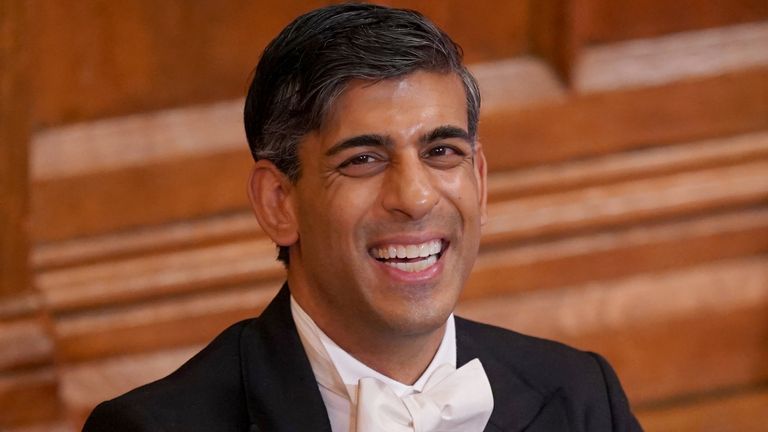
Rishi Sunak is “quick to anger” and a man whose smile is “not always genuine”, according to former cabinet minister Nadine Dorries.
Ms Dorries was a stalwart ally of Boris Johnson, and has continuously criticised Mr Sunak since he took over as leader of the party and government last year.
She claims he – among many things – blocked her ascension to the House of Lords. This has been denied by Downing Street.
Speaking to the Politics Hub with Sophy Ridge, Ms Dorries was asked why she had described Mr Sunak as “sickly nice” in her new book, The Plot.
Explaining what she meant, Ms Dorries said: “If you saw him in his interview with Elon Musk I think you know what I mean.
“There’s a smile [that] is not always genuine – and I’m sure you’ve read many times yourself and heard many times yourself – but he was, he’s quick to anger, and because that mask often slips.”

More on David Cameron
Related Topics:
Please use Chrome browser for a more accessible video player
0:41
Musk: AI will mean ‘no job is needed’
Ms Dorries said she had seen this happening.
Asked when this occurred, she said it was “just an irritability” – adding that it was “very hard to put on an image, isn’t it, all day”.
Advertisement
“It’s very hard to keep that fixed grin and that, you know, that cheerful chappy demeanour all day long when you’re prime minister,” she said.
“It’s like 24 hours a day, so I’m not surprised the mask slips because it’s quite hard to keep up that effort.
“I think that’s part of the problem.”
Asked about the recent reshuffle, Ms Dorries said she did not think it was right to sack Suella Braverman.
She accused Downing Street of lying about not signing off a controversial article authored by the former home secretary in which she accused the police of “playing favourites” with pro-Palestine protesters.
When Ms Dorries was a minister and Mr Johnson was in power, Downing Street came under scrutiny for its statements on partygate and Chris Pincher – the latter event precipitating the collapse of the administration.
Spreaker
This content is provided by Spreaker, which may be using cookies and other technologies.
To show you this content, we need your permission to use cookies.
You can use the buttons below to amend your preferences to enable Spreaker cookies or to allow those cookies just once.
You can change your settings at any time via the Privacy Options.
Unfortunately we have been unable to verify if you have consented to Spreaker cookies.
To view this content you can use the button below to allow Spreaker cookies for this session only.
On Lord David Cameron‘s appointment as foreign secretary, Ms Dorries claimed the job was “created” so Lord Cameron could be put in the House of Lords – something she thinks would not have happened otherwise due to the Greensill lobbying scandal.
Sky News has contacted Number 10 and Lord Cameron for comment on Ms Dorries’s claims.
Watch the interview tonight at 7pm on the Politics Hub with Sophy Ridge
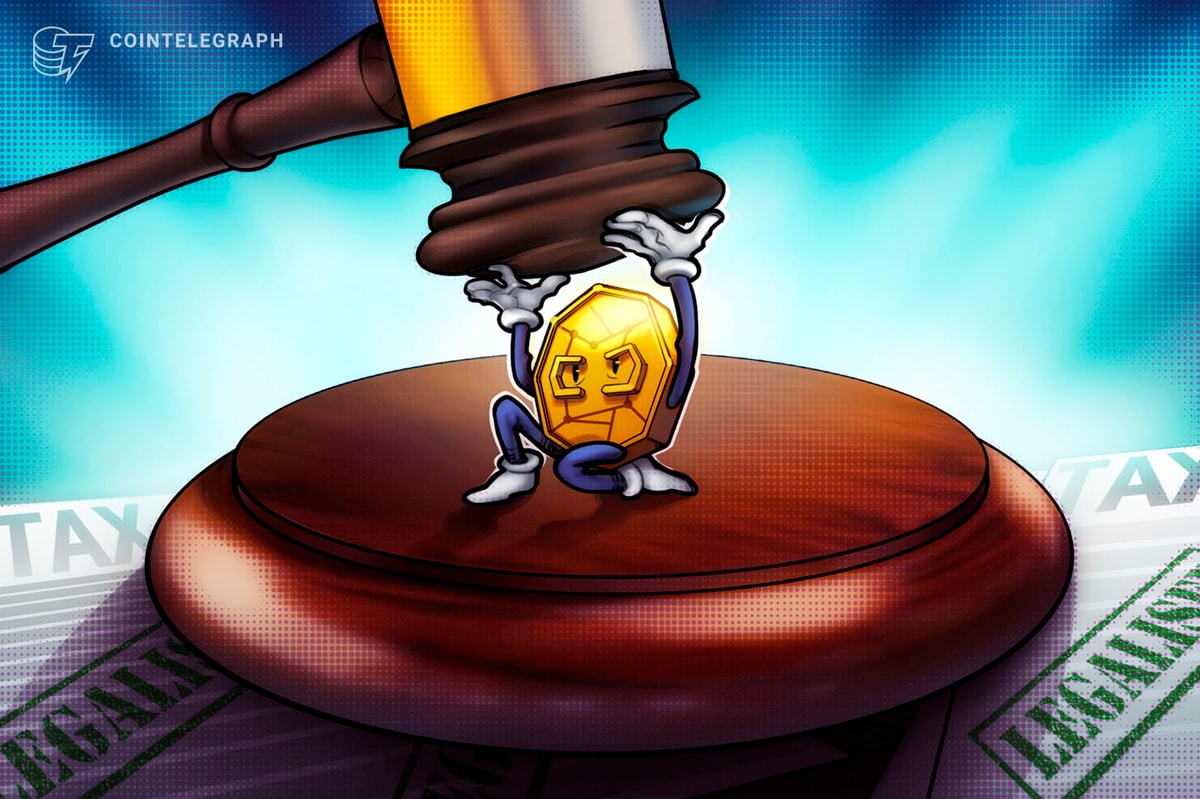
Many crypto industry leaders and users anticipate significant changes in the US regulatory environment over the next 12 months, as various policy changes and legislation begin to take effect.
Although the inauguration of US President Donald Trump in January 2025 did not mean an immediate end to all digital asset regulation, many of the administration’s policies, from dismissing enforcement cases of crypto companies by the Securities and Exchange Commission to signing a stablecoin bill into law, signal apparent differences to previous US presidents and their chosen regulators.
“I expect an increasing number of jurisdictions to establish clear and transparent regulatory frameworks for the crypto industry, which should facilitate broader participation,” Ruslan Lienkha, YouHodler’s chief of markets, said in a statement shared with Cointelegraph. “Consequently, we are likely to see a significant rise in the involvement of banks and other financial institutions in the market in 2026.”
Digital asset market structure
As of late December, the US Senate has yet to vote on legislation to establish clear regulatory guidelines for digital assets.
The initial bill, known as the Digital Asset Market Clarity Act (CLARITY), was passed by the House of Representatives in July. However, lawmakers in the Senate said their versions of the legislation would “build on” the existing bill rather than passing it through the chamber without any changes.
As a result, leadership on the Senate Banking Committee released a Republican-led discussion draft of the bill in July, and the Senate Agriculture Committee announced a bipartisan draft in November. Both bills will need to go through the respective committees before the full chamber can vote on either, or some combination thereof.
The drafts suggested that Congress could grant the Commodity Futures Trading Commission more authority to regulate digital assets. The Securities and Exchange Commission has taken on a more prominent role in overseeing cryptocurrencies, with some notable exceptions.
According to digital asset management company Grayscale, the bill will “facilitate deeper integration between public blockchains and traditional finance, facilitate regulated trading of digital asset securities, and potentially allow for onchain issuance by both startups and mature firms.”
Both agencies have filed enforcement actions and issued rulemaking affecting the industry, but the SEC oversees exchange-traded funds tied to digital assets. The CFTC regulates Bitcoin (BTC) and Ether (ETH) as commodities in digital form.
Implementation of the GENIUS stablecoin act
One of the other pieces of legislation to emerge from a Republican-led US Congress in 2025 was the GENIUS Act, which aimed to establish a regulatory framework for payment stablecoins. Although Trump signed the bill into law in July 2025, it will take effect either 18 months after enactment or 120 days after regulators approve regulations related to implementation, putting the timeline in 2026 or later.
As part of the implementation process, the US Treasury Department opened two rounds of comments for proposed rules related to the GENIUS Act in August and September. The notice of proposed rulemaking could be made public in the first half of 2026, according to some experts.
“As regulatory clarity solidifies, particularly through laws like the GENIUS Act that establish federal stablecoin oversight, banks are increasingly exploring onchain tooling that could transform payments, settlements and liquidity provisioning,” Gracy Chen, CEO of Bitget, said in a statement shared with Cointelegraph. “Should major US banks begin issuing compliant stablecoins or tokenized deposits, we could see significant expansion of global liquidity, faster transaction settlement times, and richer DeFi composability built on regulated infrastructure.”
In addition to the Treasury, other US banking regulators have put forward proposals for stablecoin rules. On Dec. 16, the Federal Deposit Insurance Corporation (FDIC) proposed that subsidiaries of supervised banks could issue payment stablecoins under the criteria passed under GENIUS.
CFTC leadership yet to be named by Trump
In 2025, four out of the five commissioners serving as the CFTC’s leadership stepped down, leaving only Republican Caroline Pham to serve as the acting chair and the agency’s sole commissioner as of December.
Although Trump initially nominated former CFTC Commissioner Brian Quintenz to replace Pham as a Senate-confirmed chair of the agency, the White House pulled him from consideration in September, reportedly in response to pushback from Gemini co-founders Tyler and Cameron Winklevoss, who are both Trump donors and prominent figures in the crypto industry.
As of December, Trump has not publicly announced any potential replacements for the four remaining CFTC commissioner seats, despite many of them being vacant for months.
State-level crypto reserves
In June, Texas Governor Gregg Abbot signed a bill into law creating a state-managed fund that could hold Bitcoin (BTC), making the state the first to establish a crypto reserve. State officials announced in November that the fund held $5 million worth of shares in BlackRock’s spot Bitcoin ETF with plans to invest an additional $5 million directly in BTC, a move that could come in 2026.
Although many lawmakers in other US states proposed similar crypto reserve bills in 2024 and 2025, only legislation in Arizona and New Hampshire was signed into law. Both states could announce BTC or other crypto purchases in the coming year as part of their governments’ treasury strategy.
The International Monetary Fund’s mission chief for El Salvador issued a statement confirming that government authorities were proceeding with negotiations for the sale of the country’s Chivo Bitcoin wallet.
In a Monday statement, the IMF said El Salvador’s government was continuing to discuss its Bitcoin (BTC) project with the fund’s officials, and “negotiations for the sale of the government e-wallet Chivo are well advanced.” The announcement signaled that the government may be preparing to sell some or all of its crypto holdings in the Chivo wallet.
The statement followed a May deal with El Salvador in which the IMF would pay $120 million as part of a 2024 loan agreement for $1.4 billion. As part of the deal, the government would stop acquiring Bitcoin.
It’s unclear whether El Salvador is abiding by the terms of the deal. Though the IMF reported in July that the country’s government had not purchased any BTC since December 2024, El Salvador’s Bitcoin Office continues to announce crypto buys, including 1,090 Bitcoin worth about $100 million in November.
According to the terms of the IMF-El Salvador deal made public, the government would make public sector engagement of BTC-related economic activity “confined,” the private sector’s acceptance of Bitcoin would be voluntary, and it would wind down involvement in the Chivo wallet. Cointelegraph reached out to the IMF for comment but had not received a response at the time of publication.
El Salvador recognized Bitcoin as legal tender in 2021 and began acquiring the cryptocurrency as part of a strategy largely pushed by President Nayib Bukele. According to data provided by the country’s Bitcoin Office, the government held 7,509 Bitcoin as of Monday, worth about $659 million at the time of publication.
‘It’s not stopping,’ says Bukele on Bitcoin buys
Despite the reported deal between the IMF and El Salvador, Bukele said in March that the government would continue its Bitcoin investment strategy, purchasing at least one BTC daily. It’s unclear how the president’s statement could affect the IMF agreement.
Bhutan is using surplus, carbon-free hydropower to mine Bitcoin, converting excess electricity into a liquid digital export rather than curtailing generation.
Mining and custody are handled by the sovereign investment arm, Druk Holding and Investments (DHI), and confined to designated jurisdictions, limiting retail exposure.
Officials describe mined Bitcoin as a foreign-currency liquidity buffer that has already supported government finances.
The central bank permits crypto activity only under a phased, sandbox-style framework linked to Gelephu Mindfulness City, with an emphasis on risk control and transparency.
Bhutan’s pitch to the crypto world is simple: If a country has abundant renewable power and limited domestic demand, it can turn electrons into digital assets.
In practice, the Himalayan kingdom has been quietly doing exactly that: using hydropower to run industrial-scale Bitcoin (BTC) mining and to build a state-backed, values-driven “green digital assets” strategy that officials say can generate hard-currency liquidity, support public spending and help develop a domestic tech workforce.
Step 1: Start with the only natural resource that scales
Bhutan’s energy system is dominated by hydropower, and electricity exports, especially to India, are a core pillar of the economy. Reportedly, Bhutan’s leadership views expanded hydropower capacity as a prerequisite for scaling its “green” crypto ambitions.
The government’s own energy planning documents frame this expansion in large numbers. Bhutan’s National Energy Policy 2025 cites a “techno-economically viable hydropower potential” of 33,000 megawatts (MW), based on the Power System Master Plan 2040, and positions hydropower alongside solar, wind and storage as central to long-term growth.
A World Bank report similarly places Bhutan’s feasible hydropower potential at roughly 33 gigawatts and notes the macroeconomic impact of recent imports of IT equipment linked to crypto mining expansion.
Recent cross-border project announcements underline how tangible the buildout has become. In November 2025, India inaugurated the 1,020-MW Punatsangchhu-II hydropower project and extended a new credit line tied to deeper energy cooperation. Officials also noted that Bhutan’s domestic power demand is around 1,000 MW, with surplus electricity exported.
Step 2: Use surplus hydropower as “computing fuel”
Bhutan’s crypto strategy is spearheaded by Druk Holding and Investments (DHI), the commercial investment arm of the royal government.
In an April 2025 interview with Reuters, DHI CEO Ujjwal Deep Dahal said Bhutan began adding cryptocurrencies to DHI’s portfolio in 2019. He framed Bitcoin mining as a way to increase access to foreign-currency liquidity and create value from surplus hydropower.
Bhutan has used some crypto-related profits to help pay government salaries for the past two years, according to senior officials in Thimphu.
A key industrial lever is the Bitdeer and DHI partnership, announced in May 2023. Bitdeer said the parties planned to launch a closed-end fund of up to $500 million to develop carbon-free digital asset mining operations in Bhutan, leveraging the country’s renewable power and Bitdeer’s mining expertise.
Step 3: Treat Bitcoin like a financial buffer for a seasonal grid
Hydropower systems often face a timing problem: Generation can surge when rivers run high and shrink when flows drop.
In January 2025, Bhutan’s Gelephu Mindfulness City (GMC) project described the country’s approach as a way to monetize surplus summer hydropower via “green Bitcoin,” then convert that value back into electricity or imports when power is tighter. The project quoted DHI’s Dahal as describing Bitcoin “strategically as a battery.”
That “battery” framing matters because it is one of Bhutan’s most consistent arguments for why mining is not merely speculation. Instead, it is positioned as infrastructure-adjacent, turning otherwise curtailed renewable generation into a liquid reserve asset.
Step 4: Keep it sovereign and increasingly regulated
Bhutan’s mining and reserve-building efforts have attracted attention because they are state-linked rather than purely private. In September 2024, blockchain analytics firm Arkham disclosed that it had identified Bhutan government-linked Bitcoin holdings on its platform and characterized those holdings as originating from mining rather than seizures. However, onchain estimates fluctuate with price movements and wallet attribution and should not be treated as audited public accounts.
On the regulatory front, Bhutan’s central bank, the Royal Monetary Authority (RMA), has publicly signaled a controlled approach. In an April 30, 2025, notice titled “RMA’s Regulatory Stance on Cryptocurrency,” the RMA said it would adopt a phased and focused strategy.
The notice stated that crypto mining and exchanges would be permitted only for entities registered with GMC. Participation would also be limited to business partners operating under the GMC framework.
This sandbox-like containment aligns with how GMC is being positioned as a special jurisdiction with its own policy toolkit and a prominent finance and digital assets pillar. That framework includes a proposed blockchain-linked currency concept, “ter,” and a planned fully reserved digital bank, Oro Bank.
Step 5: The “green coin” narrative and the risks involved
Bhutan’s officials explicitly emphasize the climate angle. For example, Dahal has argued that coins mined using Bhutan’s hydropower offset coins mined with fossil energy elsewhere and contribute to the green economy.
But even in a renewables-heavy system, these risks do not disappear:
Volatility and fiscal risk: Bitcoin’s price can swing sharply, and using volatile assets in public finance introduces budgeting risk, even if holdings are built from surplus power rather than taxes.
Transparency: Onchain tracking is not the same as official disclosure. Audited reporting and clear governance matter when reserves are state-linked.
Financial crime and consumer protection: The RMA’s phased stance and the restriction of permitted activity to GMC-registered entities reflect a preference for controlled participation rather than open retail speculation.
Testing a green Bitcoin model
Bhutan’s green Bitcoin economy is not a meme trade; it is a state-directed effort to bolt a new export, digital assets, onto the country’s existing comparative advantage in renewable power. The strategy uses a special jurisdiction, Gelephu Mindfulness City, alongside central bank guardrails to limit spillover risk.
Whether it becomes a durable model will depend less on slogans and more on hydropower expansion, disciplined reserve management and how transparently the state accounts for what it mines, holds and sells.
This article does not contain investment advice or recommendations. Every investment and trading move involves risk, and readers should conduct their own research when making a decision. While we strive to provide accurate and timely information, Cointelegraph does not guarantee the accuracy, completeness, or reliability of any information in this article. This article may contain forward-looking statements that are subject to risks and uncertainties. Cointelegraph will not be liable for any loss or damage arising from your reliance on this information.