

Autumn statement: Public have ‘duty’ to work, says minister – as benefits shake-up looms


There is a “duty on citizens” to work if they are able to, a government minister has said.
Chief secretary to the Treasury, Laura Trott, told Sky News the Conservatives believe “if you can work, as a principle, you should work”, saying the tenet is “the thrust of all our policies”.
Her remarks came ahead of the autumn statement on Wednesday, where the government is expected to announce plans to force those with mental health or mobility problems to find work they can do from home, or risk losing their welfare payments.
Government sources have told Sky News there is a concern a large number of people are currently “written off” and there will be measures in the speech to address that.
Politics live: Whitty to face questions at COVID inquiry
Chancellor Jeremy Hunt is said to be considering a big squeeze on benefits in order to make savings for the public purse.
Over the weekend, he said ministers needed to “take difficult decisions to reform the welfare state”, and he has not ruled out a change in the way the government increases benefits – perhaps using October’s lower inflation figure of 4.6% for the rise, rather than September’s higher number of 6.7%.
Economists said this would equate to a £3bn spending cut, largely impacting households receiving means-tested or disability benefits.
Charities and opposition MPs have appealed to the government not to make the move, saying it would hit the poorest hardest as the cost of living crisis continues to bite.
Currently, around two million working age people are not employed – something Rishi Sunak dubbed a “national scandal” on Monday, claiming it was “not sustainable for the country”.
Asked by Sky News’ Kay Burley if the reports around the welfare shake-up were “uncaring”, Ms Trott said: “I think that if you can work, as a principle, you should work, and that is what the government believes, that’s been the thrust of all of our policies.
“Of course, there should be support for people to help them into work or to help them with issues that they’re facing.
“But ultimately there is a duty on citizens that if they are able to go out to work, that’s what they should do.”
She added that the Department for Work and Pensions – where she was formally a minister was “working very hard to make sure our welfare system is supporting those who need support”.
But, she said: “Those who can work, can contribute, should contribute. And that is the principle that we must keep throughout all of this.”
Politics Hub with Sophy Ridge
Sky News Monday to Thursday at 7pm.
Watch live on Sky channel 501, Freeview 233, Virgin 602, the Sky News website and app or YouTube.
Shadow work and pensions secretary, Liz Kendall, told Sky News said she was a “big supporter of flexible working and working from home”.
But she blamed the government’s lack of support for those with disabilities and mental health conditions for the number of those out of work.
Ms Kendall said: “It’s very interesting to see Rishi Sunak railing against the fact millions of people are out of work due to long-term sickness, saying it’s a scandal they’ve been written off. Well, who’s done that?”
The Labour MP added: “What those people want is access to the talking therapies they need to deal with anxiety and depression.
“They need adaptations at work or at home if they have a disability, and we are seeing huge waits for people to get adaptations – both at home and in the work place.
“We strongly believe in work. But the government has failed to achieve that and instead of railing against the problems that they themselves have created, we need to see a proper plan.”

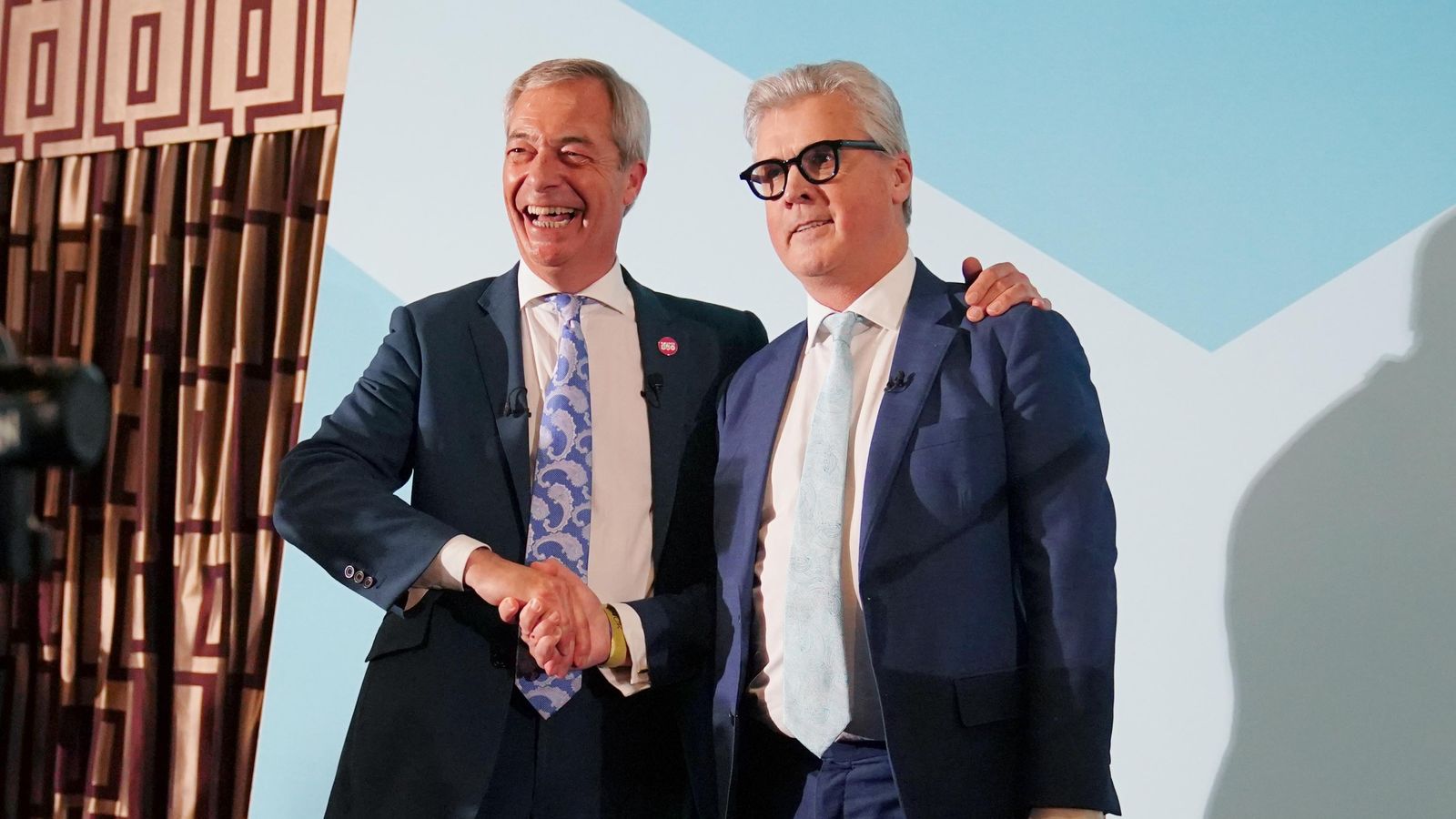
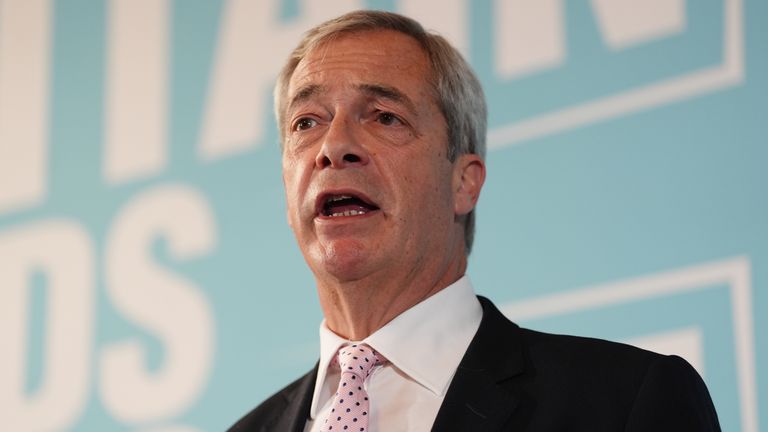
Millionaire Tory donor Malcolm Offord has defected to Reform UK, saying he would be campaigning “tirelessly” to “remove this rotten SNP government”.
Nigel Farage announced the former Conservative life peer’s defection during a rally in the Scottish town of Falkirk, where regular anti-immigration protests have taken place outside the Cladhan Hotel – which is being used to house asylum seekers.
Mr Farage, Reform UK’s leader, said he was “delighted” to welcome Greenock-born Lord Offord to Reform, describing his defection as “a brave and historic act”.
He added: “He will take Reform UK Scotland to a new level.”
During a speech, Lord Offord, who previously donated nearly £150,000 to the Tories, said he would be quitting the Conservative Party and giving up his place in the House of Lords as he prepares to campaign for a seat in Holyrood in May.
The 61-year-old said he wanted to restore Scotland to a “prosperous, happy, healthy country”.
“Scotland needs Reform and Reform is coming to Scotland,” he told the rally.
Read more:
Nigel Farage dismisses school racism claims as ‘banter in a playground’
Farage allegations are deeply shocking – but will they deter voters?
“Today I can announce that I am resigning from the Conservative Party. Today I am joining Reform UK and today I announce my intention to stand for Reform in the Holyrood election in May next year.
“And that means that from today, for the next five months, day and night, I shall be campaigning with all of you tirelessly for two objectives.
“The first objective is to remove this rotten SNP government after 18 years, and the second is to present a positive vision for Scotland inside the UK, to restore Scotland to being a prosperous, proud, healthy and happy country.”
The latest defection comes as Mr Farage finds himself at the centre of allegations of racism dating back to his time in school.
Claims made against Nigel Farage
Sky News reported on Saturday that a former schoolfriend of Mr Farage claimed he sang antisemitic songs to Jewish schoolmates – and had a “big issue with anyone called Patel”.
Jean-Pierre Lihou, 61, was initially friends with the Reform UK leader when he arrived at Dulwich College in the 1970s, at the time when Mr Farage is accused of saying antisemitic and other racist remarks by more than a dozen pupils.
Mr Farage has said he “never directly racially abused anybody” at Dulwich and said there is a “strong political element” to the allegations coming out 49 years later.
Reform’s deputy leader Richard Tice has called the ex-classmates “liars”.
A Reform UK spokesman accused Sky News of “scraping the barrel” and being “desperate to stop us winning the next election”.

The European Commission’s proposal to expand the powers of the European Securities and Markets Authority (ESMA) is raising concerns about the centralization of the bloc’s licensing regime, despite signaling deeper institutional ambitions for its capital markets structure.
On Thursday, the Commission published a package proposing to “direct supervisory competences” for key pieces of market infrastructure, including crypto-asset service providers (CASPs), trading venues and central counterparties to ESMA, Cointelegraph reported.
Concerningly, the ESMA’s jurisdiction would extend to both the supervision and licensing of all European crypto and financial technology (fintech) firms, potentially leading to slower licensing regimes and hindering startup development, according to Faustine Fleuret, head of public affairs at decentralized lending protocol Morpho.
“I am even more concerned that the proposal makes ESMA responsible for both the authorisation and the supervision of CASPs, not only the supervision,” she told Cointelegraph.
The proposal still requires approval from the European Parliament and the Council, which are currently under negotiation.
If adopted, ESMA’s role in overseeing EU capital markets would more closely resemble the centralized framework of the US Securities and Exchange Commission, a concept first proposed by European Central Bank (ECB) President Christine Lagarde in 2023.
Related: Bank of America backs 1%–4% crypto allocation, opens door to Bitcoin ETFs
EU plan to centralize licensing under ESMA creates crypto and fintech slowdown concerns
The proposal to “centralize” this oversight under a single regulatory body seeks to address the differences in national supervisory practices and uneven licensing regimes, but risks slowing down overall crypto industry development, Elisenda Fabrega, general counsel at Brickken asset tokenization platform, told Cointelegraph.
“Without adequate resources, this mandate may become unmanageable, leading to delays or overly cautious assessments that could disproportionately affect smaller or innovative firms.”
“Ultimately, the effectiveness of this reform will depend less on its legal form and more on its institutional execution,” including ESMA’s operational capacity, independence and cooperation “channels” with member states, she said.
Related: Grayscale Chainlink ETF draws $41M on debut, but not ‘blockbuster’

The broader package aims to boost wealth creation for EU citizens by making the bloc’s capital markets more competitive with those of the US.
The US stock market is worth approximately $62 trillion, or 48% of the global equity market, while the EU stock market’s cumulative value sits around $11 trillion, representing 9% of the global share, according to data from Visual Capitalist.
Magazine: EU’s privacy-killing Chat Control bill delayed — but fight isn’t over
-
 Sports2 years ago
Story injured on diving stop, exits Red Sox game
-
 Sports3 years ago
‘Storybook stuff’: Inside the night Bryce Harper sent the Phillies to the World Series
-
 Sports2 years ago
Game 1 of WS least-watched in recorded history
-
 Sports3 years ago
Button battles heat exhaustion in NASCAR debut
-
 Sports3 years ago
MLB Rank 2023: Ranking baseball’s top 100 players
-
Sports4 years ago
Team Europe easily wins 4th straight Laver Cup
-
 Environment3 years ago
Japan and South Korea have a lot at stake in a free and open South China Sea
-
 Environment1 year ago
Here are the best electric bikes you can buy at every price level in October 2024