
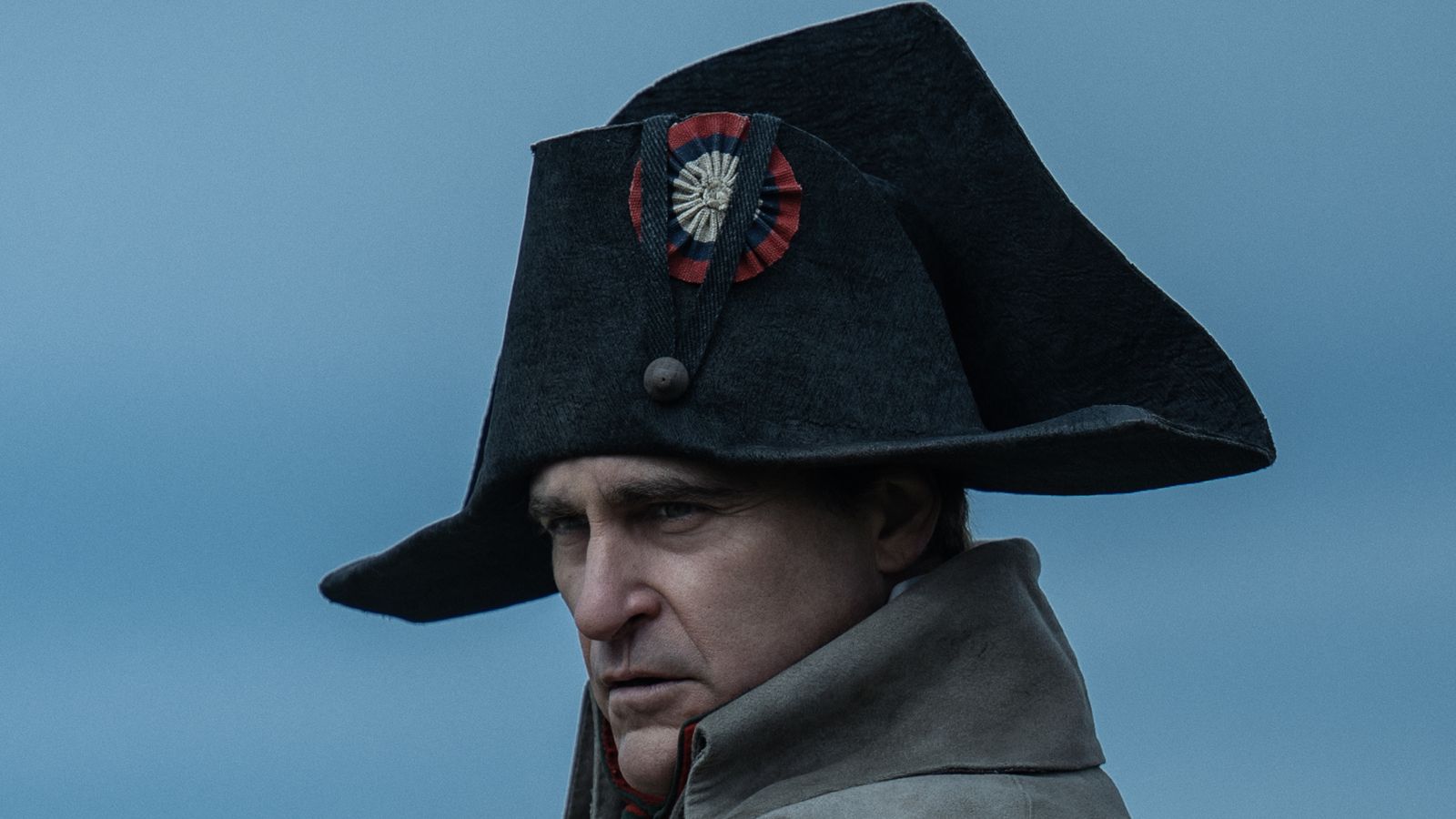
Ridley Scott on Napoleon and bum ache: ‘The truth is the director’s cut is the two-and-a-half-hour version’

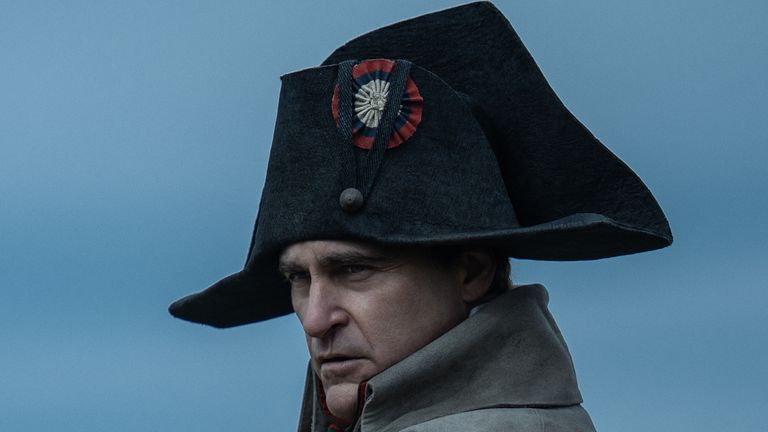
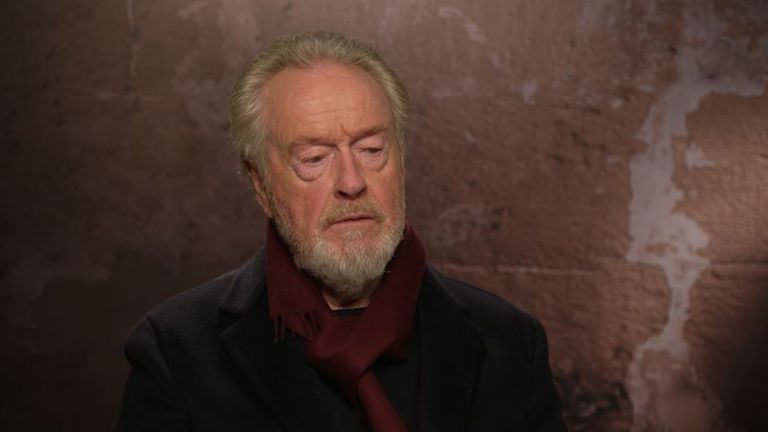
Director Ridley Scott says the real director’s cut of his new film Napoleon is not the three-and-a-half-hour version that comes to Apple TV+ later this year, but the shorter cinema cut, which has an hour shaved off.
Scott tells Sky News: “I think that’s what the director’s cut is – the two and a half hour – that’s the truth of it. Because I learned early on, basically from all the films I’ve done, but also from early days as a commercial maker. Am I communicating and how tight can I be to communicate and say everything I want?”
And it turns out he employs a special technique to ascertain when enough is enough.
Pic: Apple Original Films/Columbia Pictures/ Aidan Monaghan
“I have something that’s called the bum ache factor – you’re sitting there going, ‘Oh God, there’s another hour!’ You got to be really sure that you’re running a three-and-a-half-hour movie that’s actually worthwhile, people get weary.
“When I’m cutting… you’re constantly watching out for ‘Where are we bending and why is it bending?’ Is it because I’m tired or is it because this story’s just going on too long?”
Clocking in at two hours and 38 minutes, the shorter version is far from swift, but there are lots of battles to fit in, including Waterloo, Toulon and Napoleon’s greatest victory, at Austerlitz in 1805.
Scott admits, “longer can be a disaster,” calling it “a natural fault” most directors “wrestle with”.
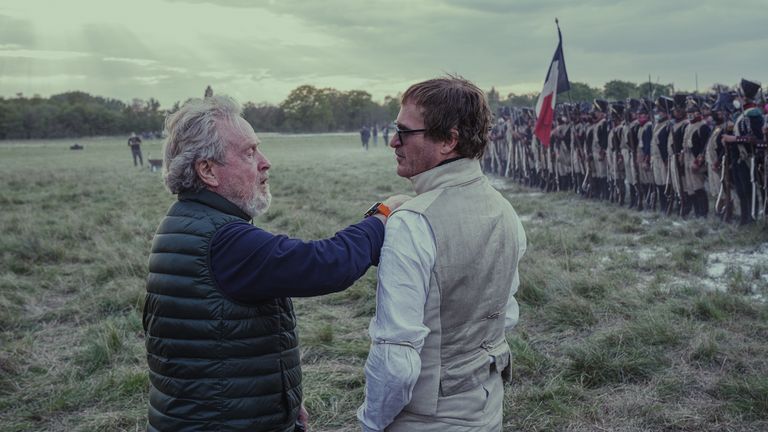
Pic: Apple Original Films/Columbia Pictures/ Aidan Monaghan
Regardless of length, just making the movie is an achievement. Stanley Kubrick, Charlie Chaplin, Steven Spielberg and Baz Luhrmann all saw their dreams to portray Napoleon on the silver screen shot down.
But Scott, as his reputation suggests, is not a man to be defeated. A notoriously forthright filmmaker, he’s also not averse to quizzing his interviewers as they attempt to question him.
Luckily, this reporter appeared to pass the test, correctly answering the question, “Which historic figure can claim the most films made about them?” (Jesus, in case you’re wondering).
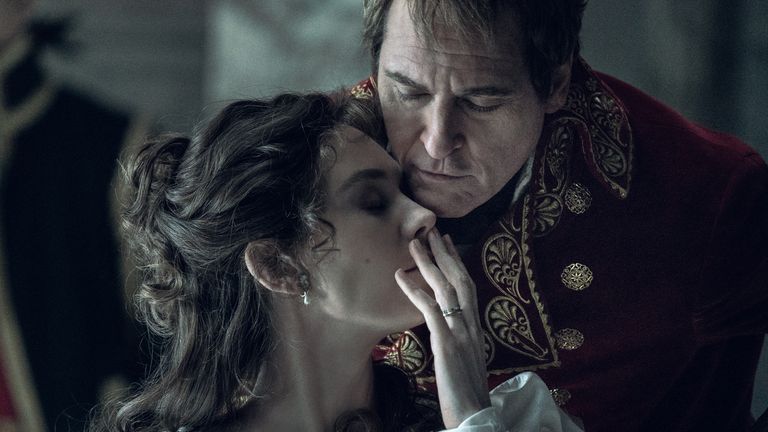
Pic: Apple Original Films/Columbia Pictures/ Aidan Monaghan
Napoleon clocks in at second place, with 10,400 books written about him, one for every week since he died, according to Scott.
On tweaking history: ‘I don’t think it matters’
Of course, there has been a minor fuss about the film’s trifling historical inaccuracies (Napoleon watches Marie Antoinette’s execution and his troops fire upon the Pyramids – neither of which happened in real life), and a few sniffs about lead actor Joaquin Phoenix‘s US accent throughout.
Scott cares not a jot: “If he talked in an Italian accent, people would have criticised me. And if he talked in a French accent, they would have criticised the French. So, it’s best to just go back to what [Joaquin] was.
“If you’re engaged by him, be engaged by him. And I think and I’m fully engaged by anything Joaquin does so I never even question it… I don’t think it matters.”
Speaking Italian when he arrived in France from Corsica, Scott says Napoleon learnt French in just two months.
Click to subscribe to Backstage wherever you get your podcasts
But aside from the debate over how much artistic licence is too much, most UK and US reviews have been positive. The French reaction, however, has been less warm.
‘They look for anything that can find fault’
Scott says he’s far from surprised.
“I had a major premiere in France with a big room of a lot of important people. Their reaction was very, very, very enthusiastic. So, they’re going to look for anything that can find fault, but they always do, I’m used to it.”
Luckily, he’s of the opinion that “there’s only one critic that is worth anything, that’s yourself”.
And whether it’s his inner critic that keeps him working or not, he’s certainly not showing any signs of slowing down.
A prolific worker, South Shield’s born Scott started out in advertising, where he says he made two adverts per week in his heyday.
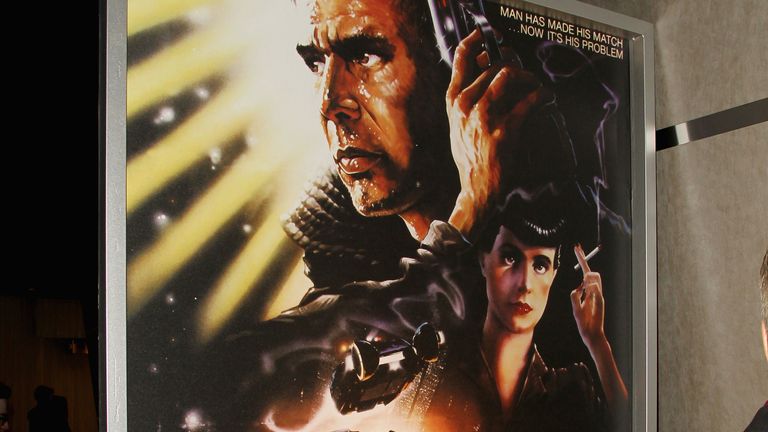
The original 1982 Blade Runner poster
He was nearly 40 when he made his first feature film, and now at 85, has 28 under his belt, including Alien, Blade Runner and Thelma & Louise, all of which have made their mark on popular culture.
He’s also made numerous TV programmes, and now with his deal with Apple TV+ finished a pilot for them called Sinking Springs, about the drug problem in Philadelphia.
‘I feel alive when I’m directing’
Not to be held up by the US actor’s strike, he used the time away from shooting to edit the 90 minutes of Gladiator 2, starring Irish actor Paul Mescal, which was already in the can, and now the actors are back at work he’ll be wrapping it by Christmas.
Gladiator 2 stars Paul Mescal, Pedro Pascal and Denzel Washington
As for his next film, he’s already cast it, written it, and set it up ready to go, as he says, “I’m always in prep – slightly ahead”.
So, at 85, what’s the secret to his impressive productivity?
“I love the energy of it. I feel I’m alive when I’m a shooting director… I just love the stress. You’ve got to embrace stress – if you don’t, don’t do the job.”
As for what gets him up in the morning, he says: “Drive is… You’re born with it or not…I have no criticism for anybody who just wants to take a holiday, holiday is not in my jurisdiction. I mean, three days’ holiday is fine. Then what?”
With Ridley Scott, the “then what” is the question always on his lips, and like the flawed military genius at the heart of his film, action is the answer to conquering the world.
Napoleon is in cinemas now, before streaming on Apple TV+
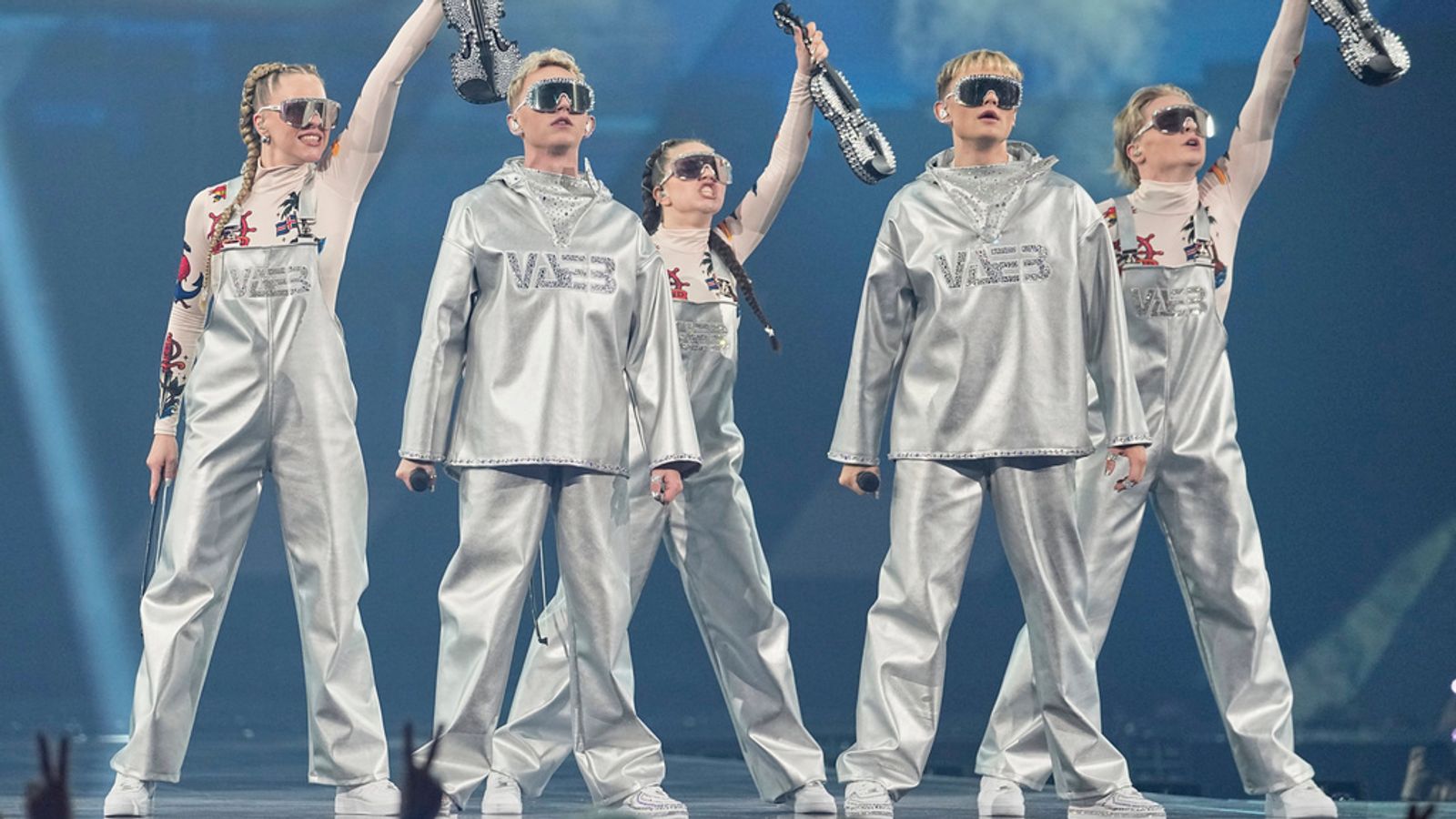
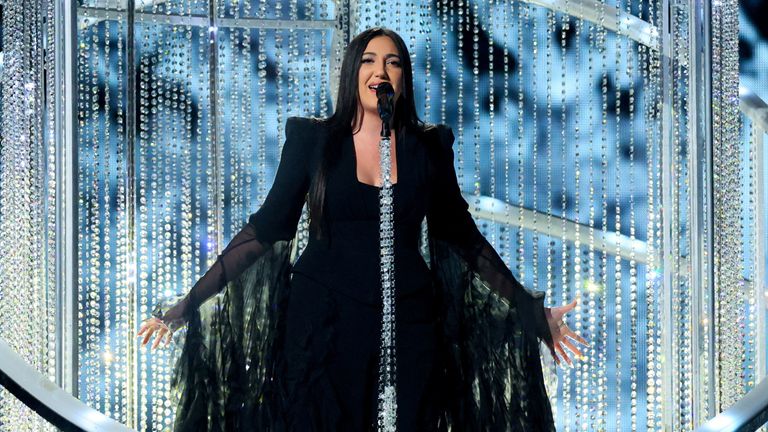
Iceland has announced it is boycotting next year’s Eurovision over Israel’s participation in the competition, saying taking part would “neither be a source of joy nor peace”.
The announcement from Iceland‘s RUV follows withdrawals by broadcasters from the Netherlands, Spain, Ireland and Slovenia.
In a statement, RUV said participation of Israeli national broadcaster KAN had “created disunity” among members of the European Broadcasting Union (EBU), which organises Eurovision, and the general public.
Israel‘s place in the contest was confirmed at the EBU’s general assembly last week.
Yuval Raphael represented Israel at this year’s competition in Switzerland. Pic: Reuters/ Denis Balibouse
The past two events have attracted protests and fan boycotts over Israel’s inclusion amid the country’s military action in Gaza. This year, there were also allegations that voting had been manipulated in favour of their contestant.
After growing criticism, members were asked to vote in a secret ballot last week on whether they were happy with tougher new rules introduced in November, or whether they wanted a second vote on participation for 2026.
The majority agreed the changes were enough, although Sky News understands 11 countries were against accepting these without a further vote.
Dutch broadcaster AVROTROS, Spain’s RTVE, Ireland’s RTE and Slovenia’s RTV immediately issued statements announcing their withdrawal.
Becoming the fifth broadcaster to pull out, RUV made the announcement following a board meeting. It said that while the new rules address many of the concerns it has raised, it believes there are “still doubts” about whether the changes are enough.
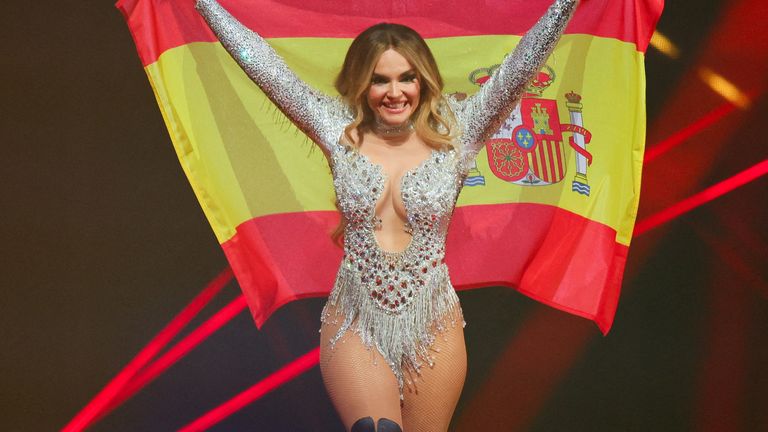
Spain, represented by Melody earlier this year, is among the countries boycotting the event. Pic: REUTERS/Denis Balibouse
Has issue damaged Eurovision?
“RUV has repeadly raised concerns that various Icelandic stakeholders, such as artist associations and the general public, were opposed to participation in the contest,” the statement said. “Furthermore, RUV had requested the EBU to exclude KAN from the contest in accordance to precedents.
“It is a complex matter which has already damaged the contest’s reputation and EBU, emphasising the necessity of a solution for all concerned parties.”
Austria, which will host next year’s show, last week said it was pleased to see Israel allowed to participate. Roland Weissmann, director-general for Austrian broadcaster ORF, said the contest was a “competition for broadcasters, not governments”.
KAN chief executive Golan Yochpaz has said attempts to remove them from the contest could “only be understood as a cultural boycott”.
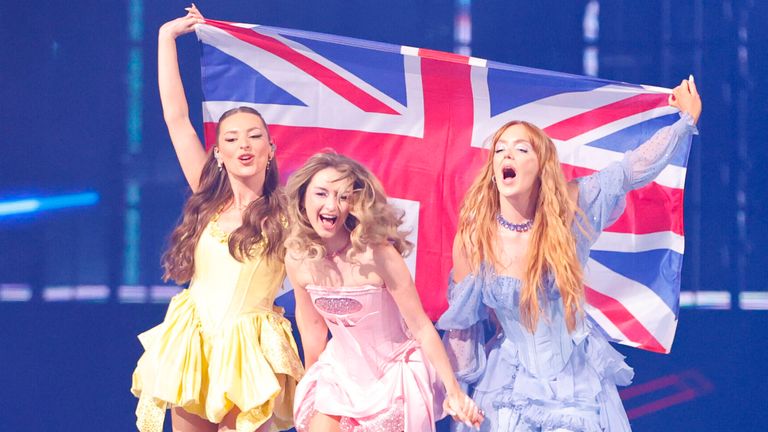
Remember Monday represented the UK in 2025. The BBC has said it supports the EBU vote decision. Pic: MANDOGA MEDIA/picture-alliance/dpa/AP
What have other broadcasters said?
The BBC, which broadcasts Eurovision in the UK, also said it supported the decision.
Earlier on Wednesday, Poland’s TVP confirmed its participation.
In a statement, the broadcaster said it was aware of the scale of the tension surrounding the competition and understood the emotions and concerns raised.
“However, we believe that Eurovision still has a chance to once again become a space filled with music. And only music,” a TVP statement said.
Read more from Sky News:
The teens hoping to outsmart Australia’s social media ban
GCHQ releases Christmas puzzle – can you solve it?
Despite some pressure from the cultural union in Belgium for a boycott, broadcaster RTBF also confirmed its participation last week.
But the walkouts cast a shadow over what is meant to be a celebration of the unifying power of music.
Countries have pulled out or been banned in previous years – most notably Russia in 2022, just days after the invasion of Ukraine – but this is perhap’s Eurovision’s biggest political crisis.
Noa Kirel, who represented Israel in 2023, told Sky News in an interview in October that while the situation now is “very different” from when she took part in May of that year, she believes it should not be about politics and must “focus on the music”.
Today was the deadline for broadcasters to confirm participation. A final list of competing nations will be published early next week, the EBU said.
In response to RUV’s decision, Eurovision director Martin Green said: “We respect the decision of all broadcasters who have chosen not to participate in next year’s Eurovision Song Contest and hope to welcome them back soon…
“We look forward to welcoming around 35 broadcasters and their artists to Vienna next May.”
Entertainment
Why is Warner Bros for sale, what are the controversial bids – and how is Trump involved?
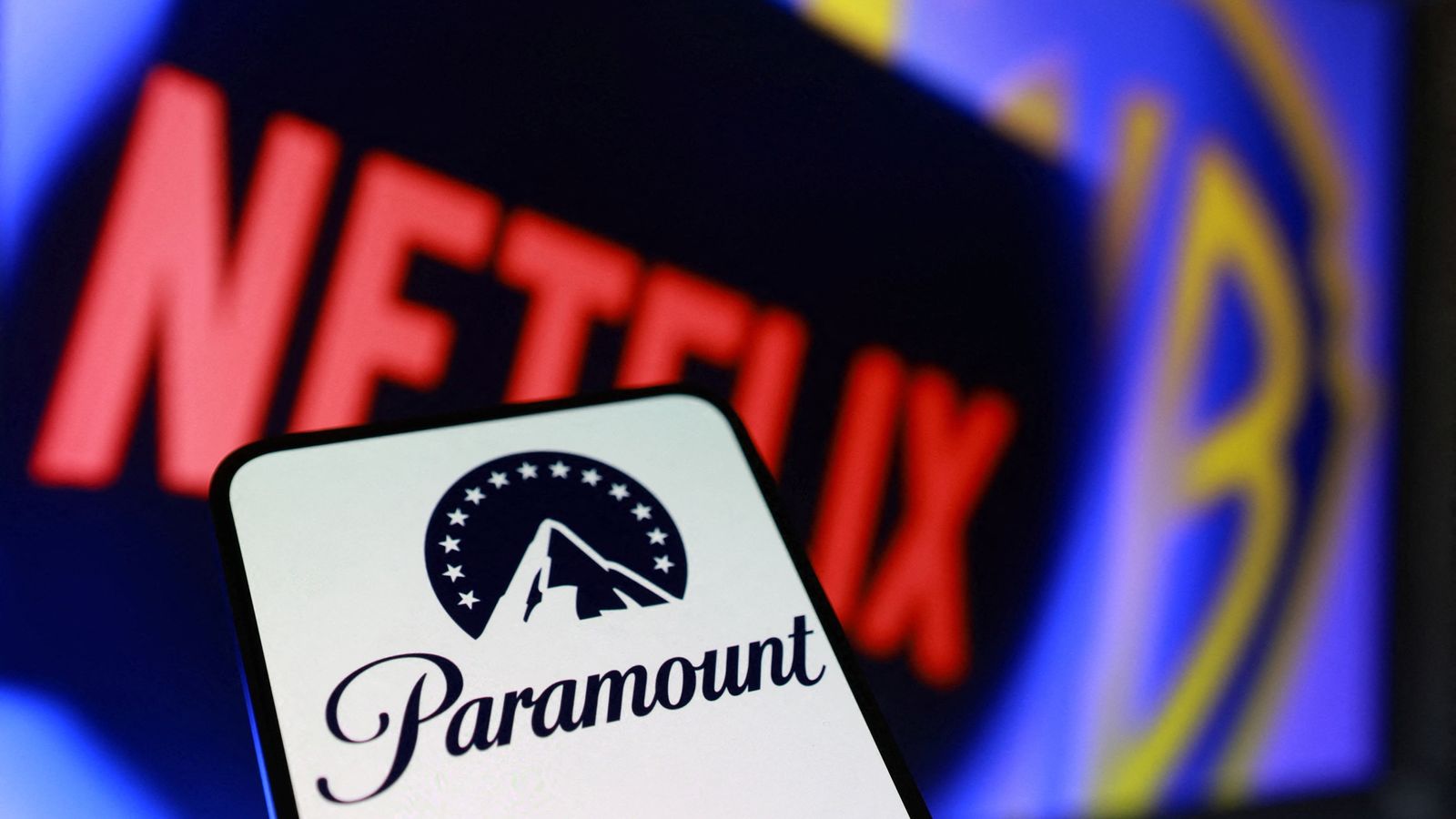
A huge takeover that would rock the entertainment industry looks imminent, with Netflix and Paramount fighting over Warner Bros Discovery (WBD).
Streaming giant Netflix announced it had agreed a $72bn (£54bn) deal for WBD’s film and TV studios on 5 December, only for Paramount to sweep in with a $108.4bn (£81bn) bid several days later.
The takeover saga isn’t far removed from a Hollywood plot; with multi-billionaires negotiating in boardrooms, politicians on all sides expressing their fears for the public and the US president looming large, expected to play a significant role.
“Whichever way this deal goes, it will certainly be one of the biggest media deals in history. It will shake up the established TV and film norms and will have global implications,” Sky News’ US correspondent Martha Kelner said on the Trump 100 podcast.
So what do we know about the bids, why are they controversial – and how is Donald Trump involved?
Why is Warner Bros up for sale?
WBD’s board first announced it was open to selling or partly selling the company in October after a summer of hushed speculation.
Back in June, WBD announced its plan to split into two companies: one for its TV, film studios, and HBO Max streaming services, and one for the Discovery element of the business, primarily comprising legacy TV channels that air cartoons, news, and sports.
It came amid the cable industry’s continued struggles at the hands of streaming services, and CEO David Zaslav suggested splitting into two companies would give WBD’s brands the “sharper focus and strategic flexibility they need to compete most effectively in today’s evolving media landscape”.
The company’s long-term strategic initiatives have also been stifled by its estimated $35bn of debt. This wasn’t helped by the WarnerMedia and Discovery merger in 2022, which led to it becoming Warner Bros Discovery.
WBD’s announced it was open to selling or partly selling the company in October. Pic: iStock
What we know about the bids
The $72bn bid from Netflix is for the first division of the business, which would give it the rights to worldwide hits like the Harry Potter and Game of Thrones franchises – and Warner Bros’ extensive back catalogue of movies.
If the deal were to happen, it would not be finalised until the split is complete, and Discovery Global, including channels like CNN, will not form part of the merger.
Paramount’s $108.4bn offer is what’s known as a hostile bid. This means it went directly to shareholders with a cash offer for the entirety of the company, asking them to reject the deal with Netflix.
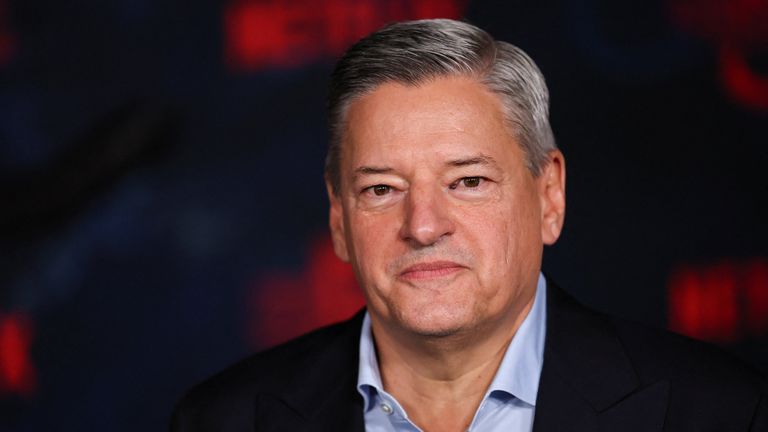
Ted Sarandos, CEO of Netflix. Pic: Reuters
This deal would involve rival US news channels CBS and CNN being brought under the same parent company.
Netflix’s cash and stock deal is valued at $27.75 (£20.80) per Warner share, giving it a total enterprise value of $82.7bn (£62bn), including debt.
But Paramount says its deal will pay $30 (£22.50) cash per share, representing $18bn (£13.5bn) more in cash than its rivals are offering.
Paramount claims to have tried several times to bid for WBD through its board, but said it launched the hostile bid after hearing of Netflix’s offer because the board had “never engaged meaningfully”.
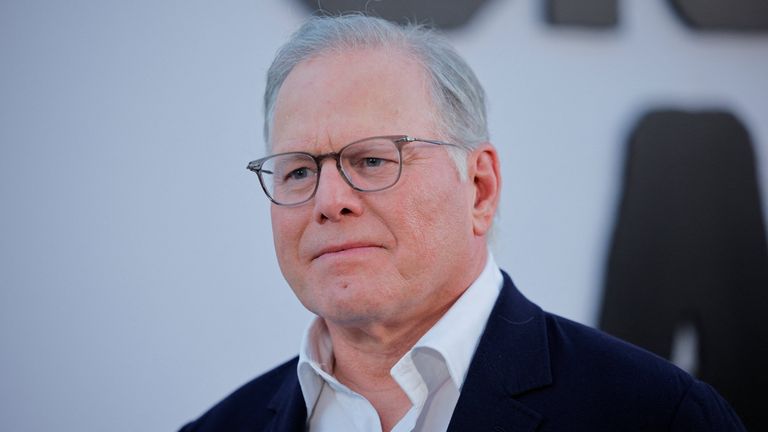
David Zaslav, CEO and president of Warner Bros Discovery. Pic: Reuters
Why are politicians and experts concerned?
The US government will have a big say on who ultimately buys WBD, as Paramount and Netflix will likely face the Department of Justice’s (DOJ) Antitrust Division, a federal agency which scrutinises business deals to ensure fair competition.
Republicans and Democrats have voiced concerns over the potential monopolisation of streaming and the impact it would have on cinemas if Netflix – already the world’s biggest streaming service by market share – were to take over WBD.
Democratic senator Elizabeth Warren said the deal “would create one massive media giant with control of close to half of the streaming market – threatening to force Americans into higher subscription prices and fewer choices over what and how they watch, while putting American workers at risk”.
Similarly, Representative Pramila Jayapal, who co-chairs the House Monopoly Busters Caucus, called the deal a “nightmare,” adding: “It would mean more price hikes, ads, and cookie-cutter content, less creative control for artists, and lower pay for workers.”
Read more:
Netflix could yet get its way in Trump’s America
Netflix’s business model of prioritising streaming over cinemas has caused consternation in Hollywood.
The screen actors union SAG-AFTRA said the merger “raises many serious questions” for actors, while the Directors Guild of America said it also had “concerns”.
Experts suggest there’s less of a concern with the Paramount deal when it comes to a streaming monopoly, because its Paramount+ service is smaller and has less of an international footprint than Netflix.
How is Trump relevant?
After Netflix announced its bid, the president said of its path to regulatory clearance: “I’ll be involved in that decision.”
And while Mr Trump himself will not be directly involved, he appointed those in the DOJ Antitrust Division, and they have the authority to block or challenge takeovers.
However, his potential influence isn’t sitting well with some experts due to his ties with key players on the Paramount side.
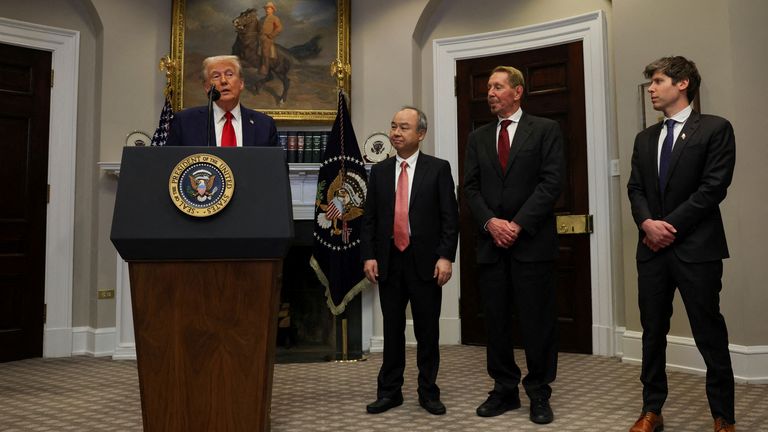
Larry Ellison (centre left) in the White House with Trump. Pic: Reuters
Paramount is run by David Ellison, the son of the Oracle tech billionaire (and world’s second-richest man) Larry Ellison, who is a close ally of Mr Trump.
Additionally, Affinity Partners, an investment firm run by Mr Trump’s son-in-law Jared Kushner, would be investing in the deal.
Also participating would be funds controlled by the governments of three unnamed Persian Gulf countries, widely reported as Saudi Arabia, Abu Dhabi and Qatar – countries the Trump family company has struck deals with this year.
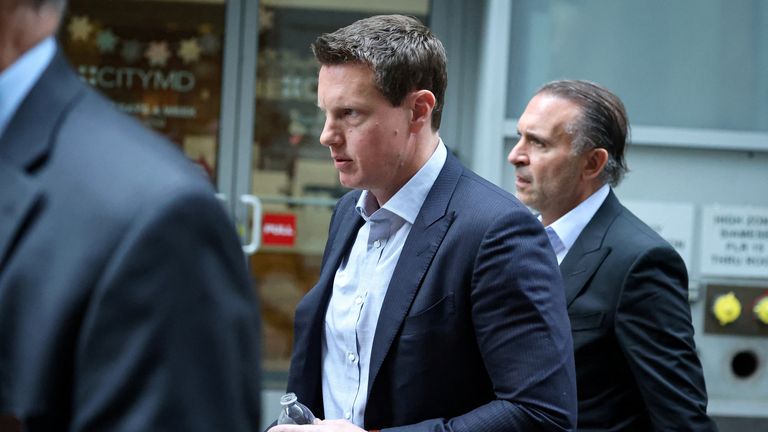
David Ellison, CEO of Paramount Skydance. Pic: Reuters
Critics of the Trump’s administration has accused it of being transactional, with the president known to hold grudges over those who are critical of him, however, Mr Trump told reporters on 8 December that he has not spoken with Mr Kushner about WBD, adding that neither Netflix nor Paramount “are friends of mine”.
John Mayo, an antitrust expert at Georgetown University, suggested the scrutiny by the Antitrust Division would be serious whichever offer is approved by shareholders, and that he thinks experts there will keep partisanship out of their decisions despite the politically charged atmosphere.
What happens next?
WBD must now advise shareholders whether Paramount’s offer constitutes a superior offer by 22 December.
If the company decides that Paramount’s offer is superior, Netflix would have the opportunity to match or beat it.
WBD would have to pay Netflix a termination fee of $2.8bn (£2.10bn) if it decides to scrap the deal.
Shareholders have until 8 January 2026 to vote on Paramount’s offer.
-
 Sports2 years ago
Story injured on diving stop, exits Red Sox game
-
 Sports3 years ago
‘Storybook stuff’: Inside the night Bryce Harper sent the Phillies to the World Series
-
 Sports2 years ago
Game 1 of WS least-watched in recorded history
-
 Sports3 years ago
Button battles heat exhaustion in NASCAR debut
-
 Sports3 years ago
MLB Rank 2023: Ranking baseball’s top 100 players
-
Sports4 years ago
Team Europe easily wins 4th straight Laver Cup
-
 Environment3 years ago
Japan and South Korea have a lot at stake in a free and open South China Sea
-
 Environment1 year ago
Here are the best electric bikes you can buy at every price level in October 2024