
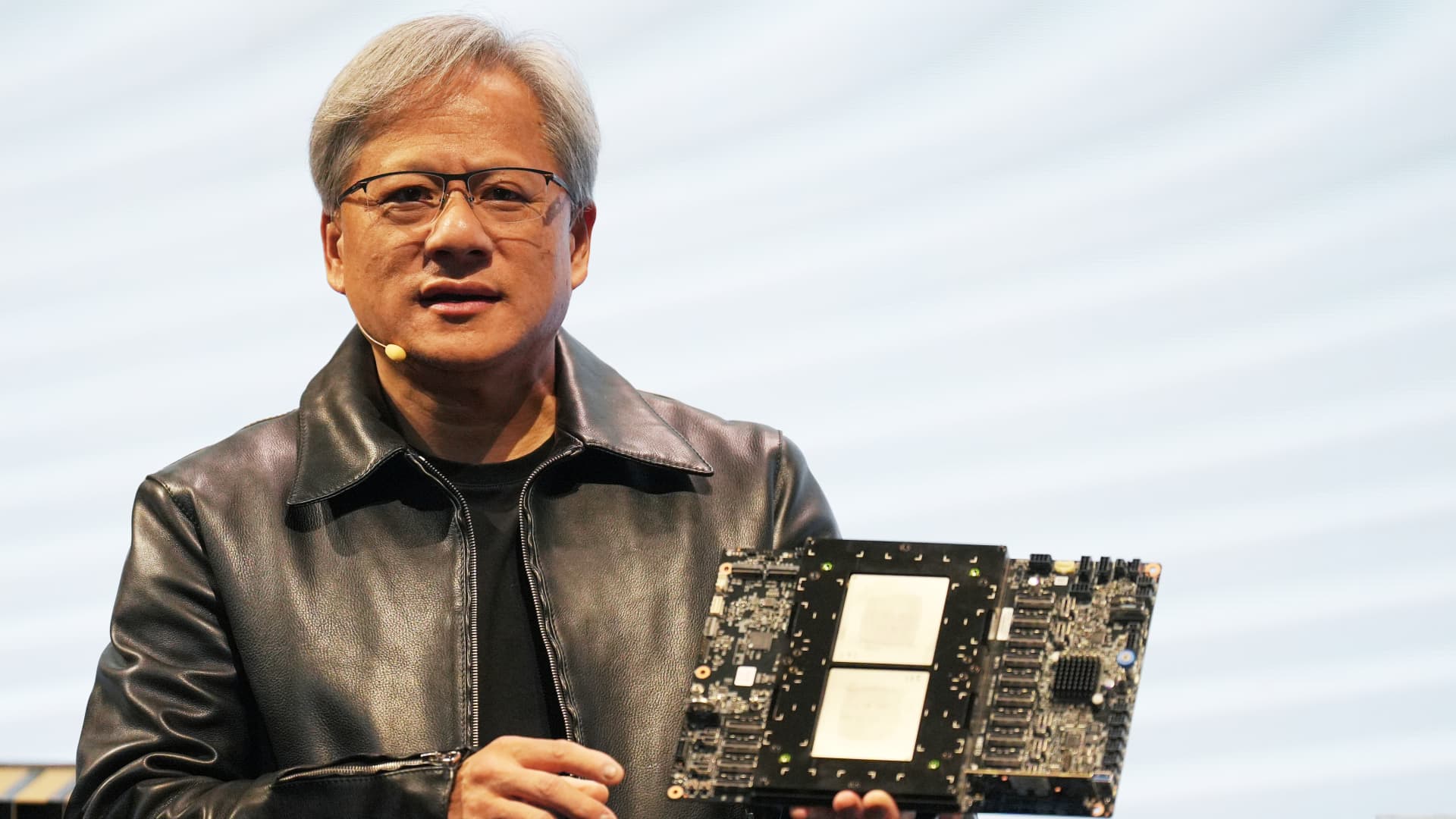
Nvidia shares fall as it reportedly delays China AI chip designed to comply with U.S. export rules


Dado Ruvic | Reuters
Dina Powell McCormick, who was a member of President Donald Trump’s first administration, has resigned from Meta’s board of directors.
Powell McCormick, who previously spent 16 years working at Goldman Sachs, notified Meta of her resignation on Friday, according to a filing with the SEC. The filing did not disclose why McCormick was stepping down from Meta’s board, but said her resignation was effective immediately.
Meta does not plan on replacing her board role, according to a person familiar with the matter who asked not to be named due to confidentiality. Powell McCormick is considering a potential strategic advisory role with Meta, but nothing has been decided, the person said.
Powell McCormick joined Meta’s board in April along with Stripe co-founder and CEO Patrick Collison. Meta CEO Mark Zuckerberg said in a statement at the time that the two executives “bring a lot of experience supporting businesses and entrepreneurs to our board.”
Powell McCormick served as a deputy national security advisor to President Trump during his first stint in office and was also an assistant secretary of state during President George W. Bush’s administration.
She is married to Sen. Dave McCormick, R-Pa, who took office in January.
Powell McCormick is the vice chair, president and head of global client services at BDT & MSD Partners, which formed in 2023 after the merchant bank BDT combined with Michael Dell’s investment firm MSD.
With her departure, Meta now has 14 board members, including UFC CEO Dana White, Broadcom CEO Hock Tan and former Enron executive John Arnold.
WATCH: TikTok signs joint venture to create TikTok USDS Joint Venture.
Technology
Musk’s $56 billion Tesla pay package must be restored as court rules cancellation was too extreme


Elon Musk‘s 2018 CEO pay package from Tesla, worth some $56 billion when it vested, must be restored, the Delaware Supreme Court ruled Friday.
“We reverse the Court of Chancery’s rescission remedy and award $1 in nominal damages,” the judges wrote in their opinion.
In the decision, the Delaware Supreme Court judges said a lower court’s decision to cancel Musk’s 2018 pay plan was too extreme a remedy and that the lower court did not give Tesla a chance to say what a fair compensation ought to be.
The decision on the appeal in this case, known as Tornetta v. Musk, likely ends the yearslong fight over Musk’s record-setting compensation.
Musk’s net worth is currently estimated at around $679.4 billion, according to the Forbes Real Time Billionaires List.
Dorothy Lund, a professor at Columbia Law School, told CNBC that while the Friday opinion may restore the 2018 pay plan for Musk, it leaves the rest of the lower court’s decision unaddressed and intact.
“The court had previously decided that Musk was a controlling shareholder of Tesla and that the Tesla board and he arranged an unfair pay plan for him,” she said. “None of that was reversed in this decision.”
“We are proud to have participated in the historic verdict below, calling to account the Tesla board and its largest stockholder for their breaches of fiduciary duty,” lawyers representing plaintiff Richard J. Tornetta said in an e-mailed statement.
Tesla did not immediately respond to requests for comment.
The Delaware Supreme Court issued the order per curiam with no single judge taking credit for writing the opinion and no dissent noted.
Musk’s 2018 CEO pay package from Tesla, comprised of 12 milestone-based tranches of stock, was unprecedented at the time it was proposed. After it was granted, the pay plan made Musk the wealthiest individual in the world.
Tesla shareholder Tornetta sued Tesla, filing a derivative action in 2018, accusing Musk and the company’s board of a breach of their fiduciary duties.
Delaware’s business-specialized Court of Chancery decided in January 2024 that the pay plan was improperly granted and ordered it to be rescinded.
In her decision, Chancellor Kathaleen McCormick also found that Musk “controlled Tesla,” and that the process leading to the board’s approval of his 2018 pay plan was “deeply flawed.”
Among other things, she found the Tesla board did not disclose all the material information they should have to investors before asking them to vote on and approve the plan.
After the earlier Tornetta ruling, Musk moved Tesla’s site of incorporation out of Delaware, bashed McCormick by name in posts on his social network X, formerly Twitter, where he has tens of millions of followers, and called for other entrepreneurs to reincorporate outside of the state.
Tesla also attempted to “ratify” the 2018 CEO pay plan by holding a second vote with shareholders in 2024.
In November, Tesla shareholders voted to approve an even larger CEO compensation plan for Musk.
The 2025 pay plan consists of 12 tranches of shares to be granted to the CEO if Tesla hits certain milestones over the next decade and is worth about $1 trillion in total. The new plan could also increase Musk’s voting power over the company from around 13% today to around 25%.
Shareholders had also approved a plan to replace Musk’s 2018 CEO pay if the Tornetta decision was upheld on appeal. That plan is now nullified.
As CNBC previously reported, a law firm that currently represents Tesla in this appeal penned a bill to overhaul corporate law in Delaware earlier this year. The bill was passed by the Delaware legislature in March, and if it had applied retroactively, it could have affected the outcome of this case.
Read the Delaware Supreme Court’s ruling here.


-
 Sports2 years ago
Story injured on diving stop, exits Red Sox game
-
 Sports3 years ago
‘Storybook stuff’: Inside the night Bryce Harper sent the Phillies to the World Series
-
 Sports2 years ago
Game 1 of WS least-watched in recorded history
-
 Sports3 years ago
Button battles heat exhaustion in NASCAR debut
-
 Sports3 years ago
MLB Rank 2023: Ranking baseball’s top 100 players
-
Sports4 years ago
Team Europe easily wins 4th straight Laver Cup
-
 Environment3 years ago
Japan and South Korea have a lot at stake in a free and open South China Sea
-
 Environment1 year ago
Here are the best electric bikes you can buy at every price level in October 2024