

America’s latest lower-cost commuter electric motorcycles expand deliveries


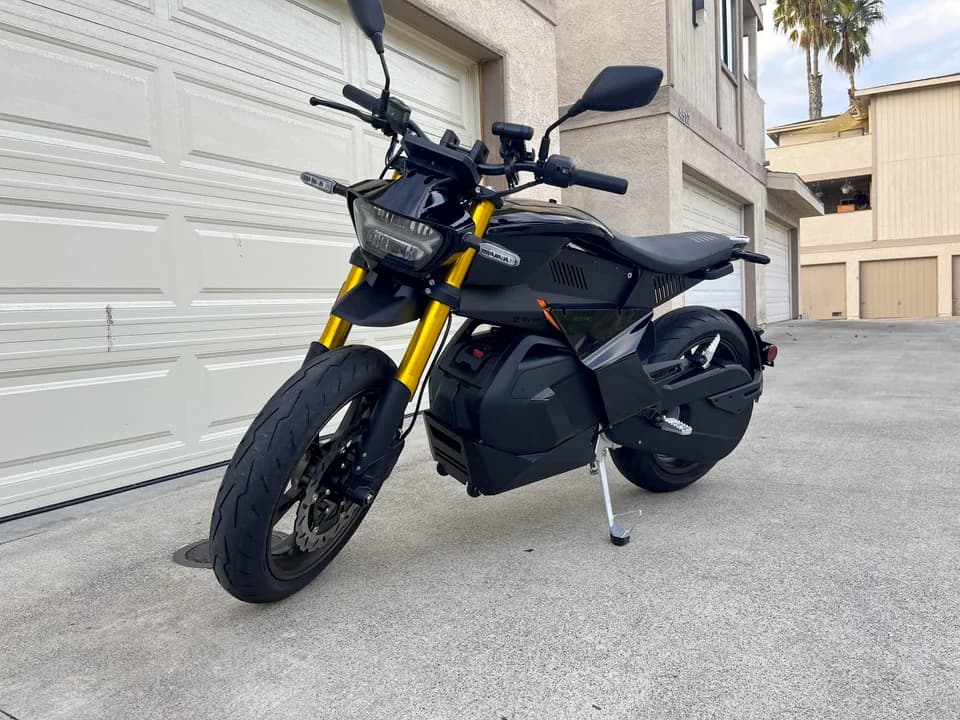
For years, the US electric motorcycle market was dominated by $20,000+ flagship models. While those bikes are still leading the pack, a new wave of lower-cost commuter electric motorcycles has expanded the market’s reach. The latest such bike, the Ryvid Anthem, has recently expanded its deliveries after production began earlier this year. And with a price tag under half of the major flagship electric models, it’s opening the door to more riders than ever before.
After its announcement and unveiling last year, the Ryvid Anthem became one of the most hotly anticipated electric motorcycles in a growing commuter class of middleweight machines.
It featured several innovative features, including the ability to electronically raise and lower the seat by 4″ (10 cm), even while riding. The frame also features innovative folded metal construction that results in a lighter weight and easier-to-produce assembly. At 313 lb (142 kg), the Anthem is considerably lighter than several other electric motorcycles.
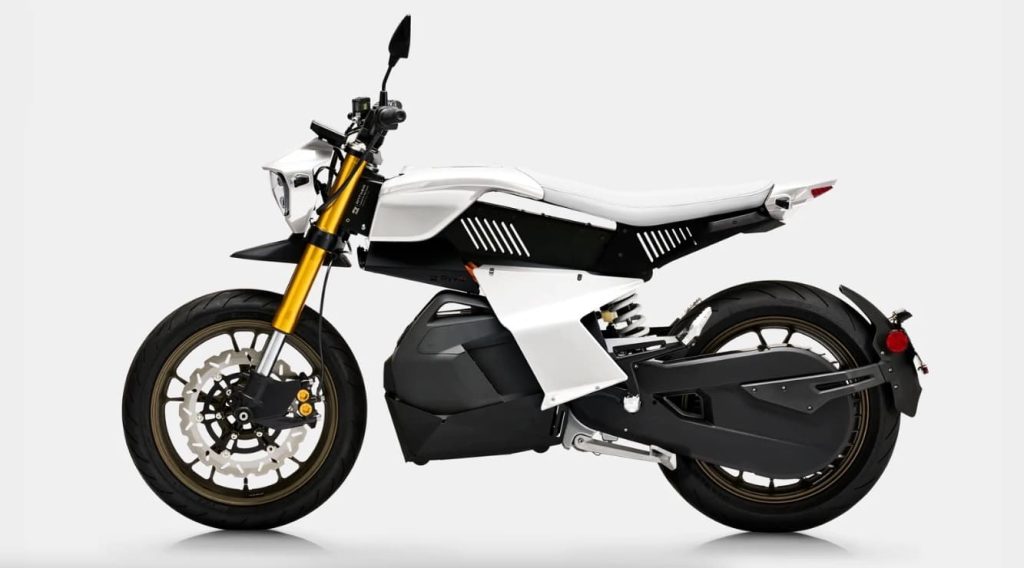
Deliveries of the new motorcycle officially began just a few months ago, and bikes have now been shipped across the US from Florida to Washington. Some California owners have reported that the LA-based Ryvid team personally delivered their bikes.
Now, many of those early reservation holders are beginning to share their experiences with the new bikes.
The Anthem is officially listed as having a top speed of “75+ mph” (121 km/h), and early reviews are confirming that “plus” qualifier is legit.
As one new owner explained on Reddit:
“I was able to get on the freeway and comfortably hit 82 miles an hour with what seemed like a bit more leftover on top. Although sustained highway speeds drain the battery like crazy, which is to be expected.”
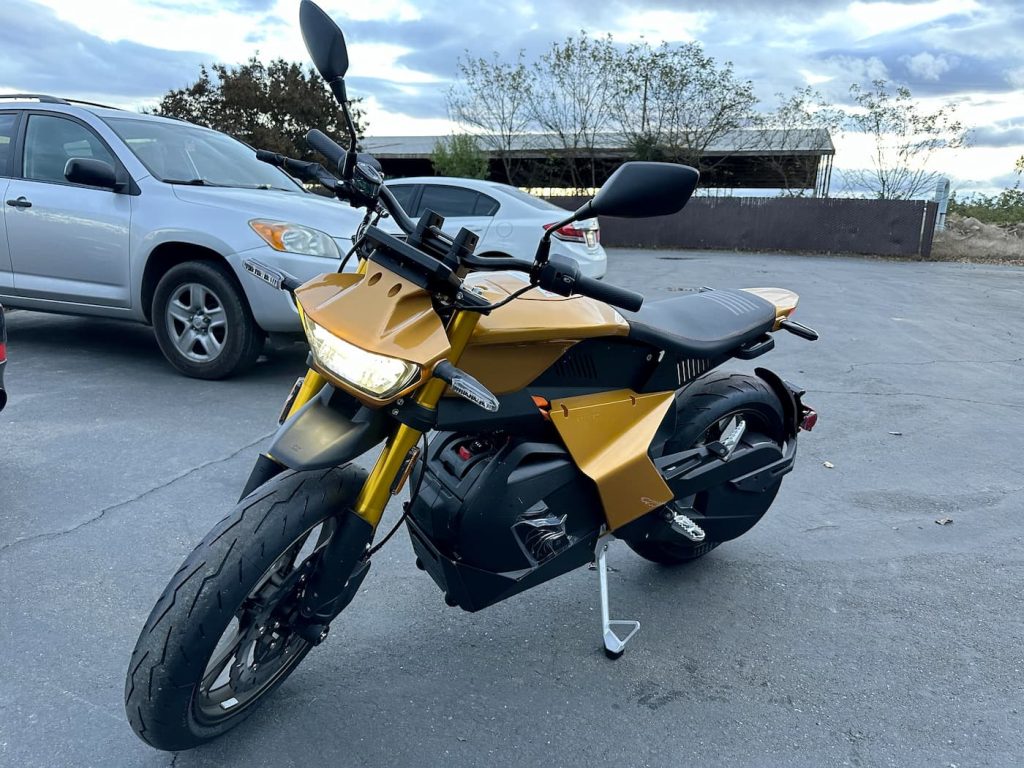
Other riders have commented on the range, indicating that the company’s range estimates based on various speeds have proven to be fairly accurate.
According to Ryvid, the 4.3 kWh battery offers an estimated urban range of around 75 miles (121 km), though various factors such as rider weight and terrain can impact that figure. When ridden at a constant speed of 55 mph (88 km/h), the estimated range drops to around 46 miles (74 km), according to the company. At a faster constant speed of 70 mph, the estimated range is further reduced to around 35 miles (56 km).
That obviously limits the role of the Anthem for largely commuting-style and shorter recreational rides. There are plenty of electric motorcycles designed for touring, but this isn’t one of them. And that appears to match how many of the first customers are reporting their usage, largely as commuter bikes to work and back.

Charging can be done from either a 110VAC or 220VAC source and uses an on-board 3 kW charger included in the battery’s casing. While many riders charge up on a conventional wall outlet in their garage, level 2 public chargers can be used with a J-plug adapter. 220V charging up to 80% capacity takes around 1.25 hours, while a 110V outlet requires around twice as long.
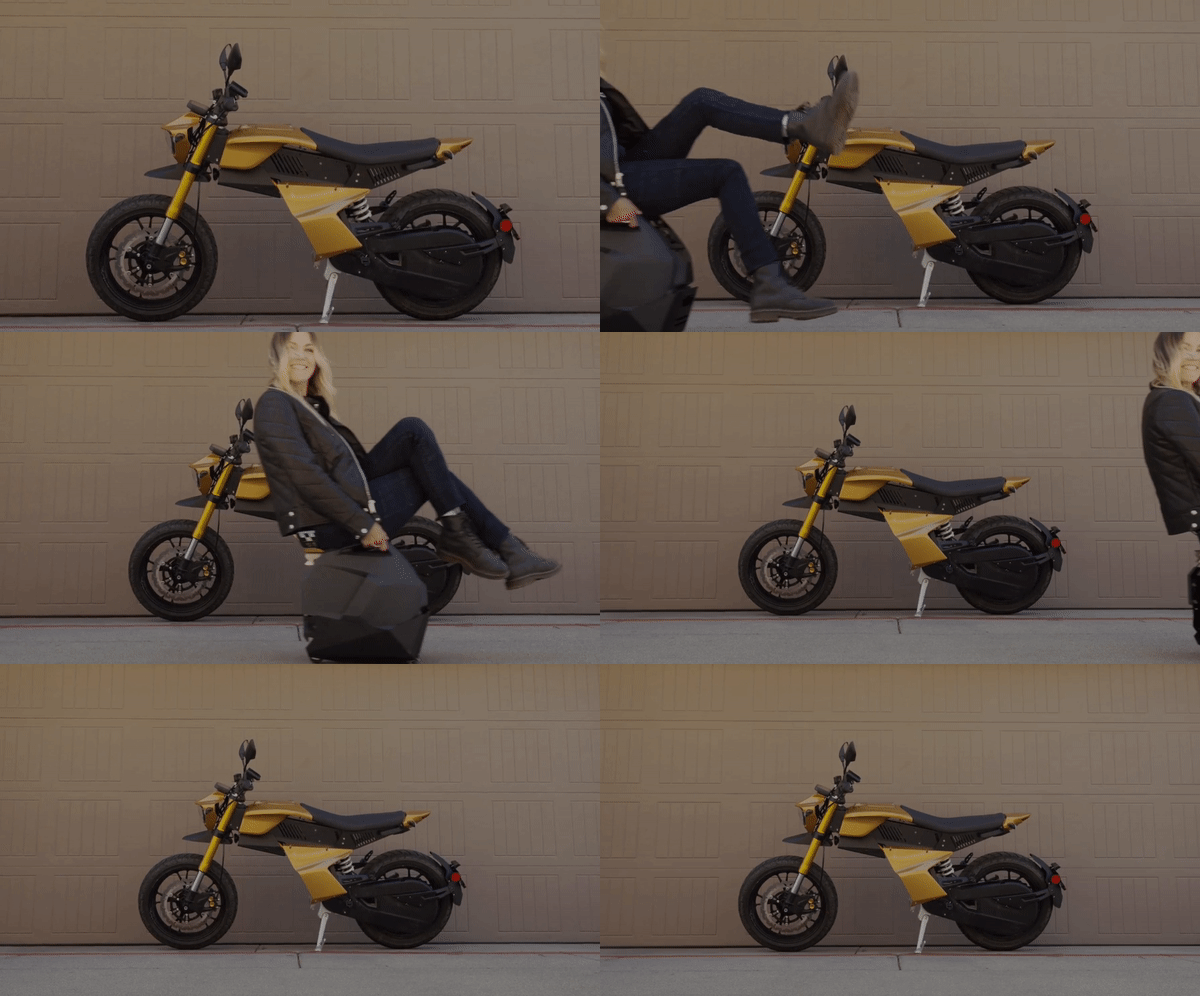
The battery is also removable for charging off of the bike using its built-in charger. That means riders only need an electrical cord to charge at any wall outlet. The battery’s removal process is tool-less, solving a key issue with other motorcycles that featured “removable” batteries that required several tools to access the battery. Wheels under the battery and a fold-out handle allow it to be rolled like a piece of luggage so riders don’t have to carry the 87 lb (39 kg) battery. Theoretically, riders could roll the battery into a coffee shop and charge it under the table while having lunch.
The removal process is also made easier by the battery being leveraged into place, meaning owners don’t have to lift the entire weight of the battery.
Owners can even apparently ride the battery itself, though it unfortunately isn’t powered. Thus, flatland or downhill battery riding is probably the only option for now.
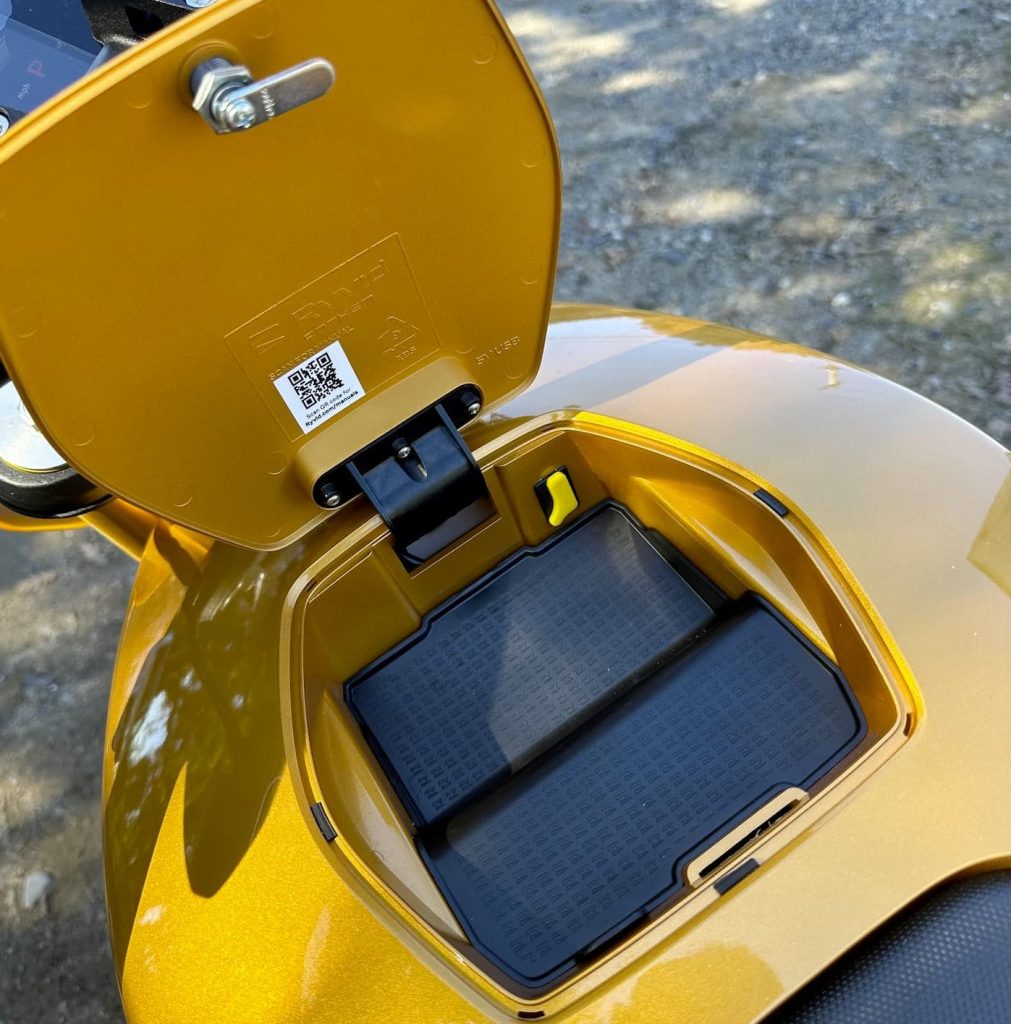
One downside to the bike that several owners have mentioned is the small size of the glovebox. The storage compartment is built into the top of the “tank” area and measures around 5 in x 5 in x 1.5 in (approximately 13 cm x 13 cm x 4 cm). However, it is stair-stepped and has a shallower section. A USB port inside the compartment allows a phone to be recharged, but the storage compartment is smaller than many of today’s large smartphones.
The compartment is said to be large enough for keys or a wallet but not bulkier or longer items.
The storage lid also latches closed with a non-locking mechanism, though some handy riders have found a way to replace it with a keyed lock.
Electrek’s Take
It’s been fun following the Ryvid Anthem’s path from production to deliveries. The bike is US-designed and built (though with several foreign-made parts, like most cars/motorcycles made in the US). Supporting locally made products is important for many people, so this is a very interesting addition to the market.
The bike seems to have a great compromise between performance and cost. At US $7,800, the original launch price was hard to beat in the electric space. Now at US $8,995, it’s a bit of a larger ask but is still several thousand dollars under the price of models from leading companies like Zero and LiveWire.
Sure, you can buy a gasser for less, but that’s not really the point. The Anthem has proved popular among both experienced and new riders, especially thanks to its approachability for riders who don’t have gas bike experience.
I really don’t need another motorcycle, but ooooooh I’m getting dangerously tempted by the Anthem.
FTC: We use income earning auto affiliate links. More.
![Genesis GV90 leaks as breathtaking ultra-luxe SUV with coach doors [Video]](https://i0.wp.com/electrek.co/wp-content/uploads/sites/3/2025/11/Genesis-GV90-leak-coach-doors.jpeg?resize=1200,628&quality=82&strip=all&ssl=1)

Genesis is gearing up to launch the stunning new flagship SUV. Ahead of its official debut, the GV90 leaked during an internal presentation, revealing our first look at the ultra-luxe electric SUV.
Genesis GV90 leak reveals coach doors and more
The GV90 is arriving as the largest, most luxurious Genesis SUV to date. Based on the Neolun Concept, the new flagship SUV will sit above the GV80 as Genesis expands into new segments.
As Genesis calls it, the “ultra-luxe, state-of-the-art SUV” stole the spotlight at the New York Auto Show last March.
It wasn’t the stunning, reductive design inspired by Korea’s moon-shaped porcelain jars or the premium Royal Indigo and Purple silk materials that caught most people’s attention at the event, but the B-pillarless coach doors.
The SUV was showcased with Rolls-Royce-like coach doors, offering a new level of luxury for Genesis. Although we’ve seen the GV90 spotted out in public testing a few times now with coach doors, we wondered if they would make it to the production model.

After the full-size SUV reportedly leaked during an internal presentation, it looks like we’ve found our answer. The Genesis GV90 leak reveals two versions: a standard model and a coach-door model.
The leaked images from our friends at ShortsCar offer our first look at the production version in full. Earlier this month, a GV90 prototype was spotted out in public with the coach doors wide open, providing a sneak peek of the interior.
From what was shown, the cabin will feature a similar layout to the concept, with high-end purple and indigo materials. The GV90 was also caught with an all-black interior, which is expected to be the standard version.
A new video from the folks over at HealerTV offers a closer look at the breathtaking interior ahead of its official debut.
The GV90 appears to retain the gear selector located near the top of the steering wheel from the Neolun concept.
Another report, from TheKoreanCarBlog, confirms the new gear selector after the first interior spy shots surfaced.
From what we’ve seen so far, the GV90 is shaping up to be a near replica of the ultra-luxe Neolun concept. Genesis has yet to announce a launch date for the GV90, but it is expected to make an official debut by the end of the year with sales starting in mid-2026.
Prices and final specs, like driving range, will be revealed closer to launch, but the Genesis GV90 is rumoured to be the first vehicle to ride on Hyundai’s new eM platform.
Hyundai said the new platform will deliver a 50% improvement in range compared to its current E-GMP-based EVs, such as the IONIQ 5. It’s also expected to offer Level 3 autonomous driving as well as other advanced driver assistance system (ADAS) features.


FTC: We use income earning auto affiliate links. More.


Turning cheap daytime solar into electricity you can actually use at night just got a lot cheaper. A new analysis from energy think tank Ember shows that utility-scale battery storage costs have fallen to $65 per megawatt-hour (MWh) as of October 2025 in markets outside China and the US. At that level, pairing solar with batteries to deliver power when it’s needed is now economically viable.
Battery storage costs have fallen dramatically over the past two years, and the decline continues. Following a steep decline in 2024, Ember’s analysis indicates that prices continued to fall sharply again in 2025.
The findings are based on real-world data from recent battery and solar-plus-storage auctions in Italy, Saudi Arabia, and India, as well as interviews with active developers across global markets.
According to Ember, the cost of a whole, grid-connected utility-scale battery storage system for long-duration projects (four hours or more) is now about $125 per kilowatt-hour (kWh) as of October 2025. That figure applies to projects outside China and the US. Core battery equipment delivered from China costs around $75/kWh, while installation and grid connection typically add another $50/kWh.
Those lower upfront costs have pushed down the levelized cost of storage (LCOS) to just $65/MWh. Ember’s calculation reflects real-world assumptions around financing costs, system lifetime, efficiency, and battery degradation.
Cheaper hardware isn’t the only reason storage costs are falling. Longer battery lifetimes, higher efficiencies, and lower financing costs, helped by clearer revenue models such as auctions, have all contributed to the sharp drop in LCOS. Ember has published a live calculator alongside the report, allowing users to estimate LCOS using their own assumptions.

Why this matters comes down to how solar is actually used. Most solar power is generated during the day, so only a portion needs to be stored to make it dispatchable. Ember estimates that if half of daytime solar generation is shifted to nighttime, the $65/MWh storage cost adds about $33/MWh to the cost of solar electricity.
With the global average price of solar at $43/MWh in 2024, adding storage would bring the total cost to about $76/MWh, delivering power in a way that better matches real demand.
As Ember global electricity analyst Kostantsa Rangelova put it, after a 40% drop in battery equipment costs in 2024, the industry is now on track for another major fall in 2025. The economics of battery storage, she said, are “unrecognizable,” and the industry is still adjusting to this new reality.
“Solar is no longer just cheap daytime electricity; now it’s anytime dispatchable electricity. This is a game-changer for countries with fast-growing demand and strong solar resources,” Rangelova added.
Together, solar and battery storage are increasingly emerging as a scalable, secure, and affordable foundation for future power systems.
Read more: EIA: Solar + storage soar as fossil fuels stall through September 2025

If you’re looking to replace your old HVAC equipment, it’s always a good idea to get quotes from a few installers. To make sure you’re finding a trusted, reliable HVAC installer near you that offers competitive pricing on heat pumps, check out EnergySage. EnergySage is a free service that makes it easy for you to get a heat pump. They have pre-vetted heat pump installers competing for your business, ensuring you get high quality solutions. Plus, it’s free to use!
Your personalized heat pump quotes are easy to compare online and you’ll get access to unbiased Energy Advisors to help you every step of the way. Get started here. – *ad
FTC: We use income earning auto affiliate links. More.

In the Electrek Podcast, we discuss the most popular news in the world of sustainable transport and energy. In this week’s episode, we discuss a very telling Tesla Optimus fail, Rivian’s AI/Autonomy day, Mercedes GLB EV, and more.
The show is live every Friday at 4 p.m. ET on Electrek’s YouTube channel.
As a reminder, we’ll have an accompanying post, like this one, on the site with an embedded link to the live stream. Head to the YouTube channel to get your questions and comments in.
After the show ends at around 5 p.m. ET, the video will be archived on YouTube and the audio on all your favorite podcast apps:
We now have a Patreon if you want to help us avoid more ads and invest more in our content. We have some awesome gifts for our Patreons and more coming.
Here are a few of the articles that we will discuss during the podcast:
Here’s the live stream for today’s episode starting at 4:00 p.m. ET (or the video after 5 p.m. ET:
FTC: We use income earning auto affiliate links. More.
-
 Sports2 years ago
Story injured on diving stop, exits Red Sox game
-
 Sports3 years ago
‘Storybook stuff’: Inside the night Bryce Harper sent the Phillies to the World Series
-
 Sports2 years ago
Game 1 of WS least-watched in recorded history
-
 Sports3 years ago
Button battles heat exhaustion in NASCAR debut
-
 Sports3 years ago
MLB Rank 2023: Ranking baseball’s top 100 players
-
Sports4 years ago
Team Europe easily wins 4th straight Laver Cup
-
 Environment3 years ago
Japan and South Korea have a lot at stake in a free and open South China Sea
-
 Environment1 year ago
Here are the best electric bikes you can buy at every price level in October 2024