

Leaks reveal next Harley-Davidson electric motorcycle could go cruiser direction

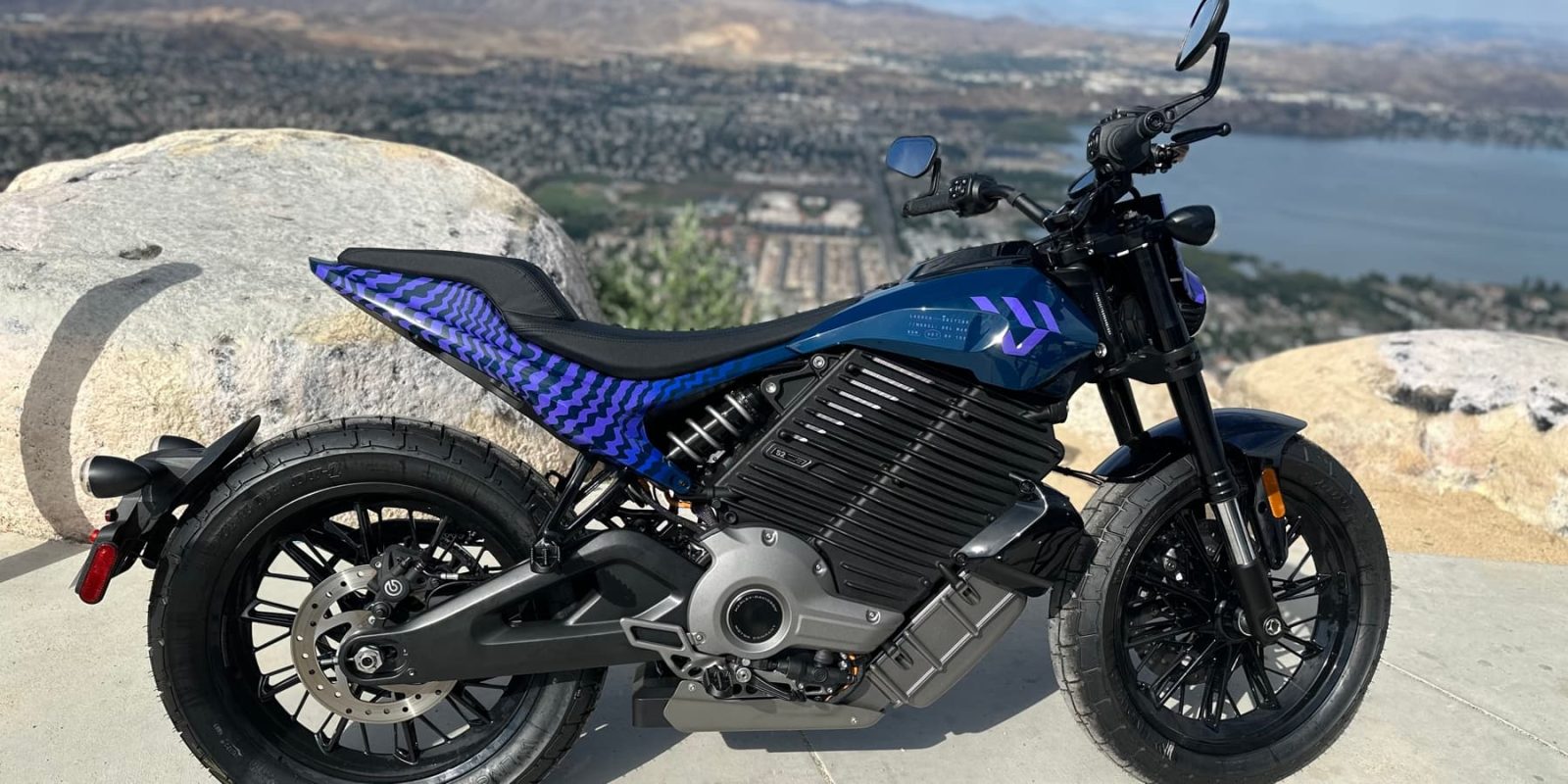
Harley-Davidson’s electric motorcycle brand LiveWire is still up to its riding leathers in its second electric motorcycle model, the LiveWire S2 Del Mar. But even as the company is pushing out deliveries of that bike, new leaked details are already revealing design information about the company’s next model. And it may just be the more comfortable cruiser that so many have been waiting for.
I hear it all the time, “Why aren’t there any electric cruiser motorcycles?”
If there were, it’d make sense for Harley-Davidson to be the one to make it happen. And it’s starting to look like that could be the case.
While naked bikes, often known as roadsters, feature a modestly tucked ride with rear-set foot pegs, cruiser bikes tend to offer a more relaxed ride with lower saddles and more forward-mounted pegs or even platforms. And those just may be features found on the next LiveWire motorcycle.
That info comes to us thanks to some sleuthing by Motorcycle.com’s Dennis Chung, who helped us get our first look at new details regarding a second model built on LiveWire’s Arrow platform.
The Arrow platform was always expected to have a multi-model future. Its design includes a structural battery that allows major hardware to be built around the same platform, resulting in different styles of electric motorcycles that share the same basic guts, i.e., batteries, motors, and controllers.
While the S2 Del Mar that is currently making deliveries is more of a naked street bike with flat tracker roots, new details show that the next model on the platform is likely to draw from a more cruiser-styled heritage.
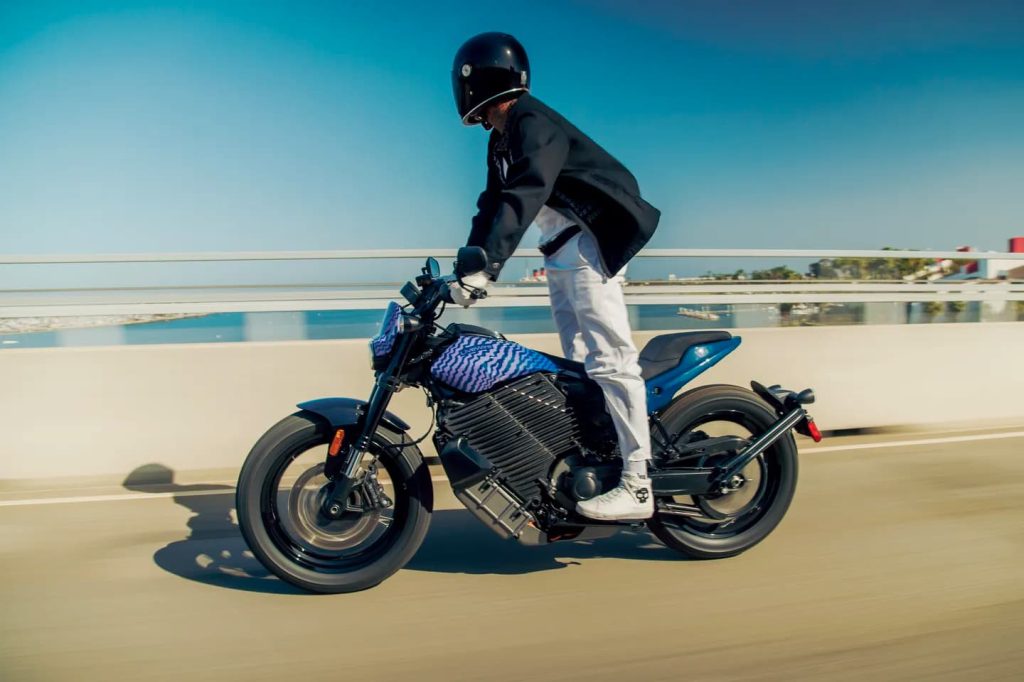
Harley-Davidson filed trademarks for the bike this year that suggest it will be called the S2 Mulholland. Just as the S2 Del Mar bike got its name from the Del Mar Flat Track Races, the S2 Mulholland likely draws inspiration from LA’s famous Mulholland Drive, a curvy road that has become a favorite among local and visiting street riders. I took the original Harley-Davidson LiveWire motorcycle down that very road a few years ago when I first reviewed the bike.
Harley-Davidson has lent credence to that naming theme after it was discovered that the S2 Del Mar’s service manual includes references to another model codified as “S2MH”, while the S2 Del Mar has its own “S2DM” abbreviation in Harley-Davidson’s service manual.
But it would take more than a twisty highway moniker to make LiveWire’s next bike a cruiser. Further hard evidence for a more relaxed ride comes from the bike’s saddle height and wheelbase, both of which have been revealed as part of the Harley’s service manual. The Mulholland’s saddle height of 30.25″ is shorter than the Del Mar’s 30.9″ seat height, though only slightly. It appears to have a differently shaped saddle as well.
The wheelbase of the Mulholland is stretched compared to the Del Mar’s, which could mean a slacker rake angle for the front fork or a longer chassis, allowing a more relaxed riding posture.
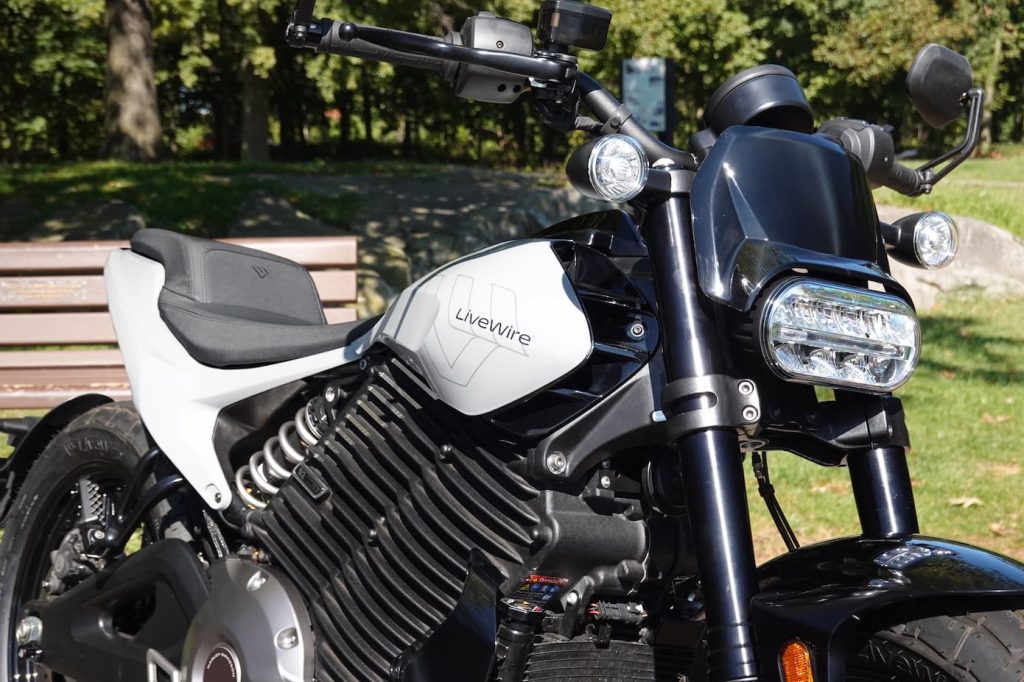
As interesting as a full-on electric cruiser could be, these modifications could also just be minor changes in a bike that may be more structurally similar to the S2 Del Mar. At this point, it is just too soon to tell.
But with a 2024 model year listed for the upcoming “S2MH”, we could learn more details sooner than we think. A 2024 reveal would be likely, so make sure to keep checking back here for updates.
Until then, let’s hear your thoughts. Would you be interested in an electric cruiser motorcycle? Sound off in the comment section below!
FTC: We use income earning auto affiliate links. More.

EV and battery supply chain research specialists Benchmark Mineral Intelligence reports that 2.0 million electric vehicles were sold globally in November 2025, bringing global EV sales to 18.5 million units year-to-date. That’s a 21% increase compared to the same period in 2024.
Europe was the clear growth leader in November, while North America continued to lag following the expiration of US EV tax credits. China, meanwhile, remains the world’s largest EV market by a wide margin.
Europe leads global growth
Europe’s EV market jumped 36% year-over-year in November 2025, with BEV sales up 35% and plug-in hybrid (PHEV) sales rising 39%. That brings Europe’s total EV sales to 3.8 million units for the year so far, up 33% compared to January–November 2024.
France finally returned to year-to-date growth in November, edging up 1% after spending most of 2025 in the red following earlier subsidy cuts. The rebound was led by OEMs such as the Volkswagen Group and Renault, a wider selection of EV models, and France’s “leasing social” program, aimed at helping lower-income households switch to EVs.
Italy also posted a standout month, logging record EV sales of just under 25,000 units in November. The surge followed the launch of a new incentive program designed to replace older ICE vehicles. The program earmarks €597.3 million (about $700 million) in funding for the replacement of around 39,000 gas cars.
The UK expanded access to its full £3,750 ($4,400) EV subsidy by adding five more eligible models: the Nissan Leaf (built in Sunderland, with deliveries starting in early 2026), the MINI Countryman, Renault 4, Renault 5, and Alpine A290.
US market slows after federal tax credit’s premature death
In North America, EV sales in the US did tick up month-over-month in November, following a sharp October drop after federal tax credits expired on September 30, 2025. Brands including Kia (up 30%), Hyundai (up 20%), Honda (up 11%), and Subaru (232 Solterra sales versus just 13 the month before) all saw gains, but overall volumes remain below levels when the federal tax credit was still available.
Policy changes aren’t helping. In early December, Trump formally “reset” US Corporate Average Fuel Economy (CAFE) standards, lowering the required fleetwide average to about 34.5 mpg by 2031. That’s a steep drop from the roughly 50.4 mpg target under the previous rule. Automakers can now meet the standard largely through gas vehicles, reducing pressure to scale BEVs and PHEVs.
Those loosened rules are already reflected in investment decisions, such as Stellantis’ $13 billion plan to expand US production by 50%, with a heavy focus on ICE vehicles. Earlier this year, Trump’s big bill set fines for missing CAFE targets to $0, further weakening the incentive for OEMs to electrify.
That’s some foolish policymaking, considering the world reached peak gas car sales in 2017. The US under Trump will be left behind, just as it will be with its attempts to revive the coal industry.
China still dominates, exports surge
China remains the backbone of global EV sales, even as growth slows. The Chinese market grew 3% year-over-year and 4% month-over-month in November. Year-to-date, EV sales in China are up 19%, with 11.6 million units sold.
One of the biggest headlines out of China is exports. BYD reported a record 131,935 EV exports in November, blowing past its previous high of around 90,000 units set in June. BYD sales in Europe have jumped more than fourfold this year to around 200,000 vehicles, doubled in Southeast Asia, and climbed by more than 50% in South America.
Global snapshot
Global EV sales from January to November 2025 vs January to November 2024, YTD %:
- Global: 18.5 million, +21%
- China: 11.6 million, +19%
- Europe: 3.8 million, +33%
- North America: 1.7 million, -1%
- Rest of World: 1.5 million, +48%
The takeaway: EV demand continues to grow worldwide, but policy support – or the lack thereof – is increasingly shaping where this growth shows up.
“Overall, EV demand remains resilient, supported by expanding model ranges and sustained policy incentives worldwide,” said Rho Motion data manager Charles Lester.
Read more: EV sales *still* have not fallen, cooled, slowed or slumped. Media is lying to you.

If you’re looking to replace your old HVAC equipment, it’s always a good idea to get quotes from a few installers. To make sure you’re finding a trusted, reliable HVAC installer near you that offers competitive pricing on heat pumps, check out EnergySage. EnergySage is a free service that makes it easy for you to get a heat pump. They have pre-vetted heat pump installers competing for your business, ensuring you get high quality solutions. Plus, it’s free to use!
Your personalized heat pump quotes are easy to compare online and you’ll get access to unbiased Energy Advisors to help you every step of the way. Get started here. – *ad


FTC: We use income earning auto affiliate links. More.

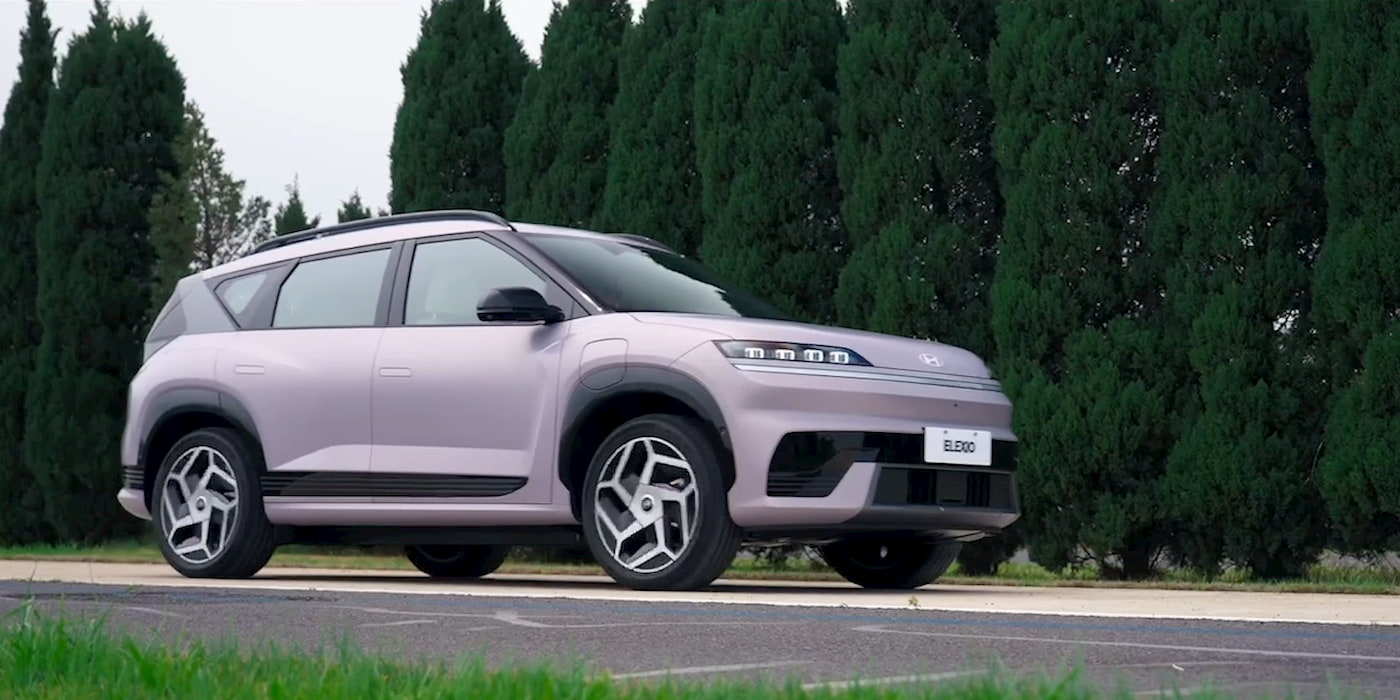
The Elexio is Hyundai’s first electric SUV custom-tailored for the Chinese market, but now it’s headed overseas.
Hyundai is bringing the Elexio electric SUV overseas
Hyundai’s midsize electric SUV was spotted on a carrier truck in Melbourne, Australia, alongside a few of its other vehicles.
Although the Elexio is built by Hyundai’s joint venture with BAIC Motor, Beijing-Hyundai, “tailor-made for Chinese consumers,” we had a feeling it would be sold overseas.
A few months ago, Don Romano, CEO of Hyundai Australia, hinted that the midsize electric SUV could arrive in The Land Down Under. Romano told journalists during an IONIQ 9 launch event that the Elexio’s launch in Australia was “under evaluation,” calling it “a promising vehicle.”
Hyundai confirmed the rumors shortly after, saying the new midsize electric SUV would launch in Australia in early 2026.
According to CarsGuide, the Elexio was caught on a car carrier in Melbourne on Wednesday morning ahead of its official launch.
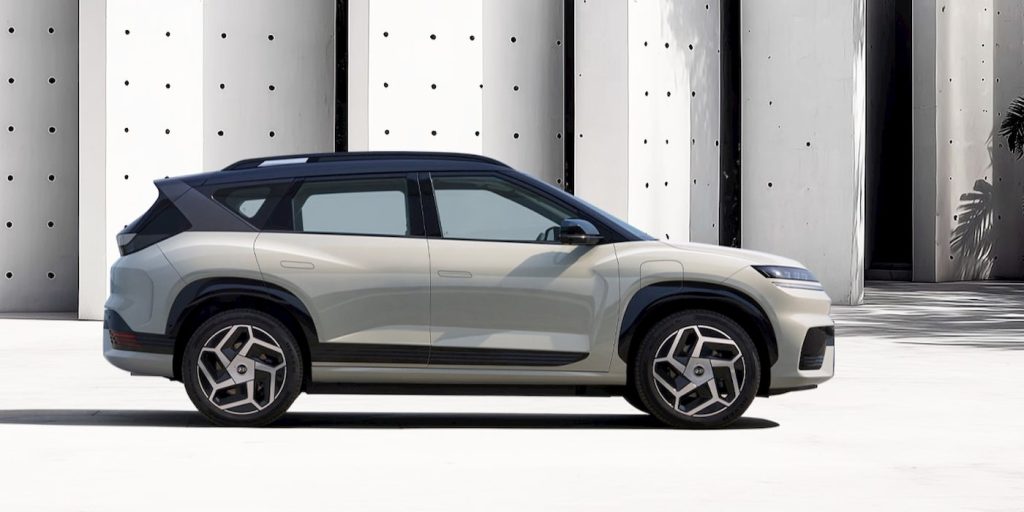
Powered by an 88.1 kWh battery, the Elexio delivers up to nearly 450 miles (722 km) CLTC range. It’s based on the E-GMP platform, which underpins all IONIQ models and Kia’s EV lineup, with single and dual-motor (AWD) powertrain options. The electric SUV can also recharge from 30% to 80% in about 27 minutes.
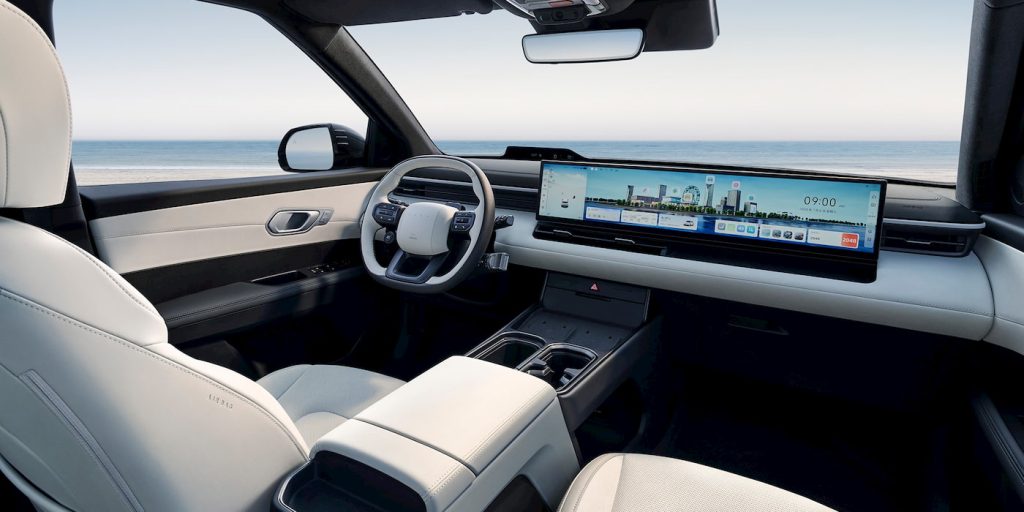
The interior is packed with advanced Chinese tech, including Huawei’s advanced driver-assistance systems (ADAS) and a Qualcomm Snapdragon 8295 chip that powers the massive 27″ 4K widescreen display.
The Elexio is 4,615 mm long, 1,875 mm wide, and 1,698 mm tall, with a wheelbase of 2,750 mm, which is a bit shorter than the Tesla Model Y. It’s closer in size to the BYD Yuan Plus, sold overseas as the Atto 3.
Hyundai’s midsize electric SUV is expected to compete with some of Australia’s top-selling EVs, including the Tesla Model Y and Geely EX5.
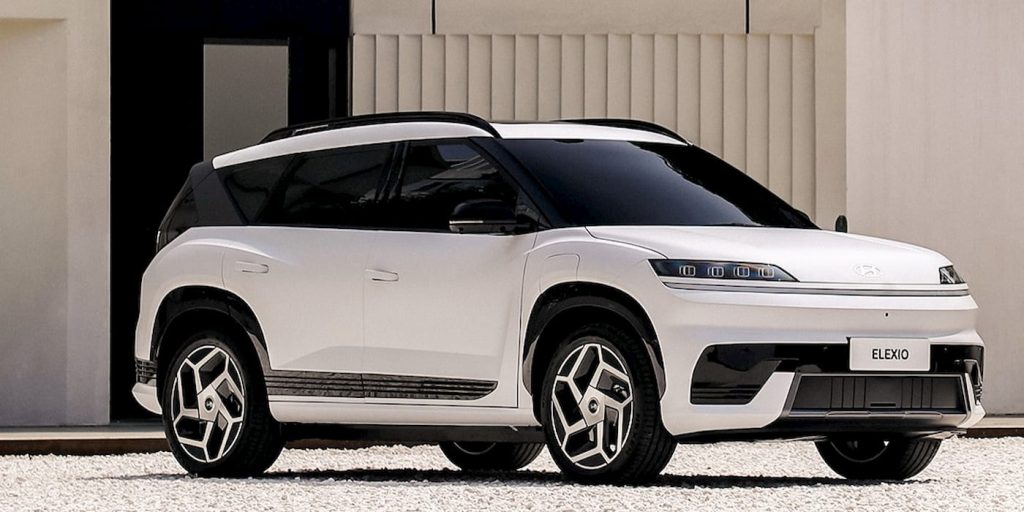
Prices have yet to be announced, but given the IONIQ 5 starts at $76,200 (AUD), before on-road costs, the Elexio should be slightly cheaper.
In China, the Elexio is available in three trims: Fun, Smart, or Tech, with pre-sale prices starting at RMB 119,800 ($16,900).
Although the electric SUV is launching in Australia and possibly other overseas markets like New Zealand, it’s not expected to be a true global vehicle. Hyundai designed it specifically for Chinese buyers, leveraging local tech and design elements.
For those in the US, if you’re looking for a midsize electric SUV, the IONIQ 5 is worth a look with 300+ miles of range, fast charging, and a spacious, tech-filled interior. With leases starting at just $189 a month, the IONIQ 5 is cheaper than most gas-powered cars in its class. You can use our link to find the Hyundai IONIQ 5 models closest to you.
FTC: We use income earning auto affiliate links. More.


Iron-sodium battery makers Inlyte Energy just crossed an important line from lab to grid reality. The company has completed a factory acceptance test of its first field-ready iron-sodium battery energy storage system with reps from a major US utility in attendance.
Iron-sodium battery storage
The test took place at Inlyte’s facility near Derby in the UK, and was witnessed by representatives from Southern Company, one of the largest electric utilities in the US. The goal was to prove the performance and integration readiness of the whole system, which combines sodium metal chloride battery cells with inverters and control electronics. By Inlyte’s account, the system performed as expected and is ready for field deployment.
The energy storage market is growing fast, and utilities are looking beyond lithium‑ion. Iron-sodium battery storage systems are emerging as a compelling alternative to lithium-ion batteries for grid-scale use, as they rely on abundant, low-cost materials and offer strong safety and long-duration performance.
While lithium-ion batteries excel at fast response and short-to-medium-duration storage, iron-sodium systems are better suited for multi-hour to multi-day grid applications where cost, thermal stability, and long service life matter more than energy density.
The global energy storage market is projected to grow from approximately $70 billion in 2025 to over $150 billion by 2030. The US Department of Energy estimates the grid will need more than 225 gigawatts of long‑duration energy storage by 2050.
Inlyte is betting that iron‑sodium batteries can help fill that gap. The system tested in the UK utilizes what the company claims are the world’s largest sodium metal chloride battery cells and modules ever built, each capable of storing more than 300 kilowatt-hours of energy. The chemistry is designed to be lower-cost, safer, and longer-lasting than lithium-ion – key traits for grid-scale storage.
During the factory test, Inlyte’s battery system hit 83% round‑trip efficiency, including auxiliary loads. That puts it in the same range as high-performance lithium-ion systems and well above the roughly 40% to 70% efficiency typical of many other long-duration energy storage technologies. Southern Company’s R&D team observed the test in person, a step that helps clear the way for real‑world deployment.
The commercial plan
Next up: the field. Inlyte says its first energy storage systems will be installed at Southern Company’s Energy Storage Test Site in Wilsonville, Alabama, in early 2026. Those deployments will allow the utility to study how the iron‑sodium batteries perform under real grid conditions.
With technical readiness now demonstrated, Inlyte is turning its focus to US manufacturing. The company plans to finalize a site for its first domestic factory in 2026. To help speed that process, Inlyte has partnered with HORIEN Salt Battery Solutions, the world’s largest producer of sodium metal chloride batteries. HORIEN brings over 25 years of commercial experience across applications like critical power, remote industrial sites, and battery energy storage.
The plan is to combine HORIEN’s manufacturing know‑how with Inlyte’s system integration work to bring sodium‑based grid batteries to the US market. If all goes according to plan, Inlyte expects commercial deliveries of domestically produced systems to begin in 2027.

If you’re looking to replace your old HVAC equipment, it’s always a good idea to get quotes from a few installers. To make sure you’re finding a trusted, reliable HVAC installer near you that offers competitive pricing on heat pumps, check out EnergySage. EnergySage is a free service that makes it easy for you to get a heat pump. They have pre-vetted heat pump installers competing for your business, ensuring you get high quality solutions. Plus, it’s free to use!
Your personalized heat pump quotes are easy to compare online and you’ll get access to unbiased Energy Advisors to help you every step of the way. Get started here. – *ad
FTC: We use income earning auto affiliate links. More.
-
 Sports2 years ago
Story injured on diving stop, exits Red Sox game
-
 Sports3 years ago
‘Storybook stuff’: Inside the night Bryce Harper sent the Phillies to the World Series
-
 Sports2 years ago
Game 1 of WS least-watched in recorded history
-
 Sports3 years ago
Button battles heat exhaustion in NASCAR debut
-
 Sports3 years ago
MLB Rank 2023: Ranking baseball’s top 100 players
-
Sports4 years ago
Team Europe easily wins 4th straight Laver Cup
-
 Environment3 years ago
Japan and South Korea have a lot at stake in a free and open South China Sea
-
 Environment1 year ago
Here are the best electric bikes you can buy at every price level in October 2024