

Ford F-150 Lightning breaks monthly sales record, doubling in November

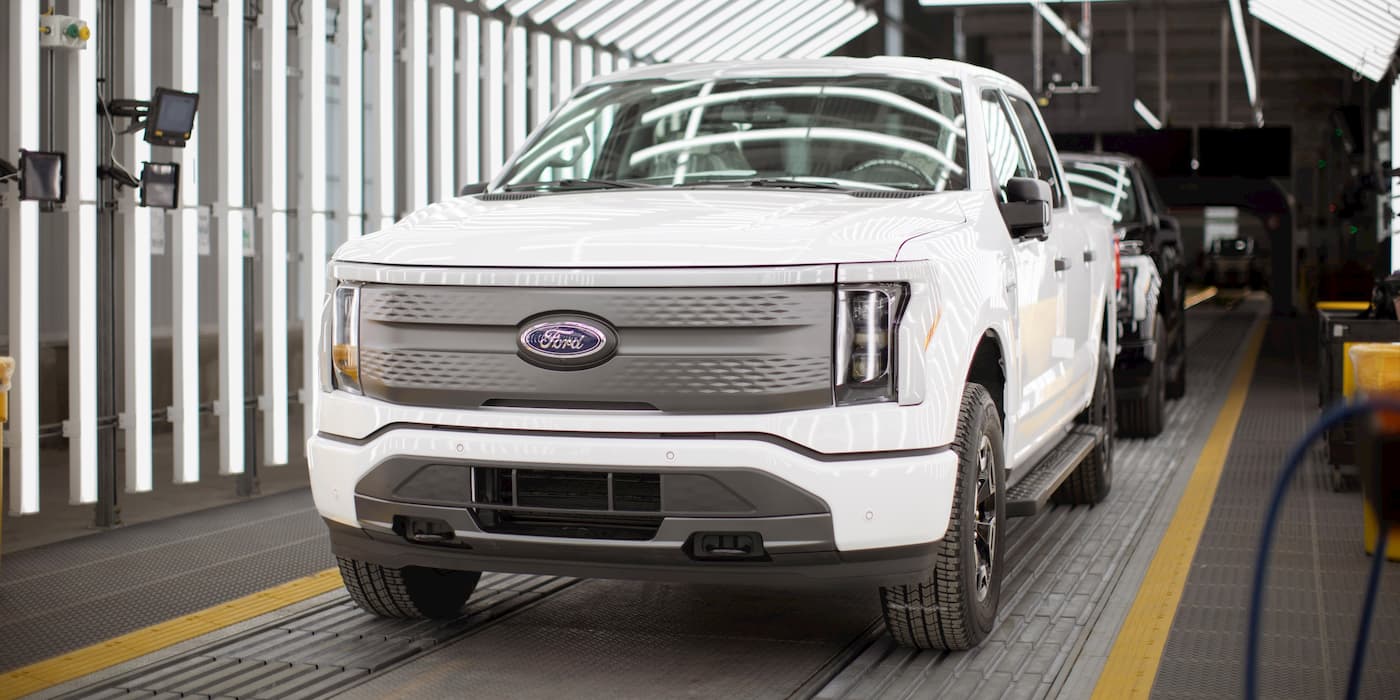
CEO Jim Farley announced the Ford F-150 Lightning had its best-ever sales month, breaking the record in November.
Ford Lightning sets new sales record in November
Farley said the company sold nearly 4,400 electric trucks this past month, an over 100% increase compared to last year.
The uptick comes after Lightning sales fell by 46% in the third quarter. Ford told Electrek in September that “F-150 Lightning production is starting to ramp after a six-week shutdown.”
Ford said it was on track to triple EV pickup production after revamping its Rouge EV plant in Michigan.
In October, Ford sold 3,712 Lightning models, up 52.4% over 2022. The record November sales performance comes despite Ford scaling back on EV investments.
Ford announced last month that it would be “re-timing and resizing some investments,” including at its Michigan EV plant. The plans call for cutting its investment by nearly $1.5 billion and expected jobs to 1,700.
When Ford initially announced plans this February, it called for 2,500 new jobs and 35 GWh annual LFP battery output (starting in 2026). That would be enough to power around 400,000 EVs.
Ford now expects to have around 20 GWh output, over 40% less than initial plans. The plant expects to produce LFP batteries for about 230,000 electric models annually.

The automaker has already delayed its 600,000 EV run rate goal until next summer. It’s also cutting one of three shifts at its Rouge EV facility, where the Lightning is built.
Ford’s chief communications officer, Mark Truby, told reporters that the decision was based on “demand and the expected growth for EVs.” Ford is pushing back around $12 billion in spending on EVs.
Farley said the company will have more EV sales news on Monday. Check back next week for the latest.
Electrek’s Take
Despite setting a record in November, Lightning sales are well below where they should be. And Ford doesn’t seem to upbeat on where they are headed.
The company introduced significant incentives on the Lightning in October, including up to $15,000 off. The deal is good on a lease or purchase.
The shutdown at Ford’s Rouge EV plant was intented to speed up production, not slow it. Ford’s initial plans called for Lightning production to hit 150,000 by mid-2023. That would be about 12,500 a month.
With new competition like Tesla’s Cybertruck launching this week, the path will not get any easier.
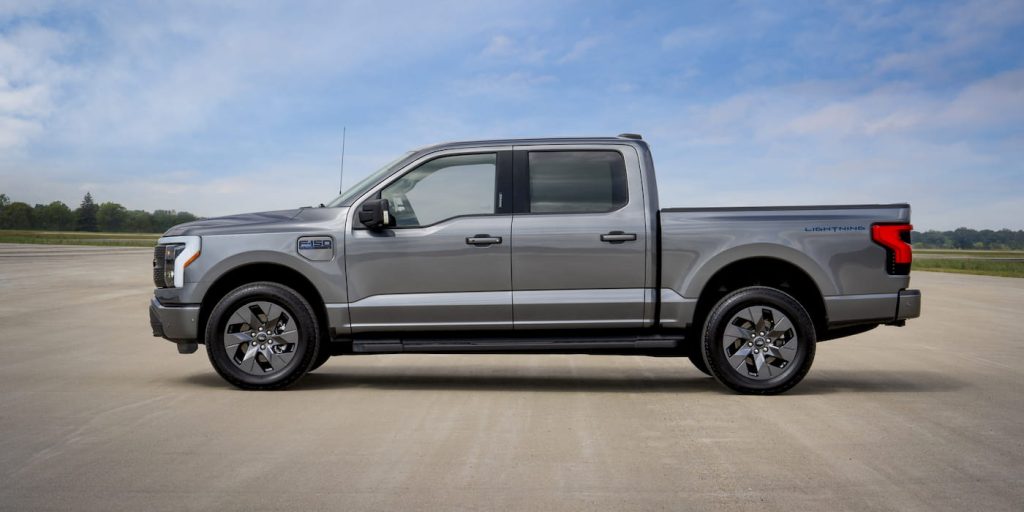
Ford did add a new “Flash” trim (pictured above) to the 2024 Lightning lineup. The new model hits the “sweet spots” with modern features at the right value. It will include an extended range battery (providing up to 320 miles range), an interior loaded with tech, Ford Tow Tech Package, and a heatpump, starting at $69,995.
FTC: We use income earning auto affiliate links. More.
![Genesis GV90 leaks as breathtaking ultra-luxe SUV with coach doors [Video]](https://i0.wp.com/electrek.co/wp-content/uploads/sites/3/2025/11/Genesis-GV90-leak-coach-doors.jpeg?resize=1200,628&quality=82&strip=all&ssl=1)
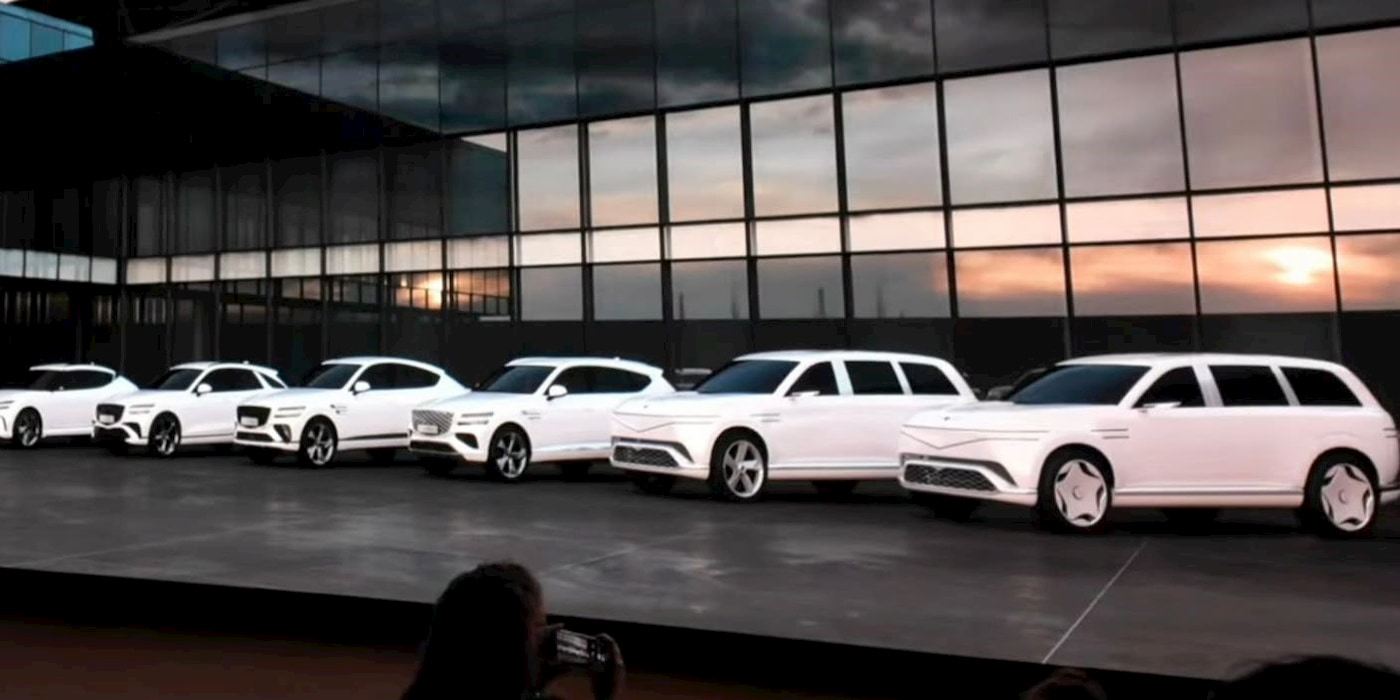
Genesis is gearing up to launch the stunning new flagship SUV. Ahead of its official debut, the GV90 leaked during an internal presentation, revealing our first look at the ultra-luxe electric SUV.
Genesis GV90 leak reveals coach doors and more
The GV90 is arriving as the largest, most luxurious Genesis SUV to date. Based on the Neolun Concept, the new flagship SUV will sit above the GV80 as Genesis expands into new segments.
As Genesis calls it, the “ultra-luxe, state-of-the-art SUV” stole the spotlight at the New York Auto Show last March.
It wasn’t the stunning, reductive design inspired by Korea’s moon-shaped porcelain jars or the premium Royal Indigo and Purple silk materials that caught most people’s attention at the event, but the B-pillarless coach doors.
The SUV was showcased with Rolls-Royce-like coach doors, offering a new level of luxury for Genesis. Although we’ve seen the GV90 spotted out in public testing a few times now with coach doors, we wondered if they would make it to the production model.
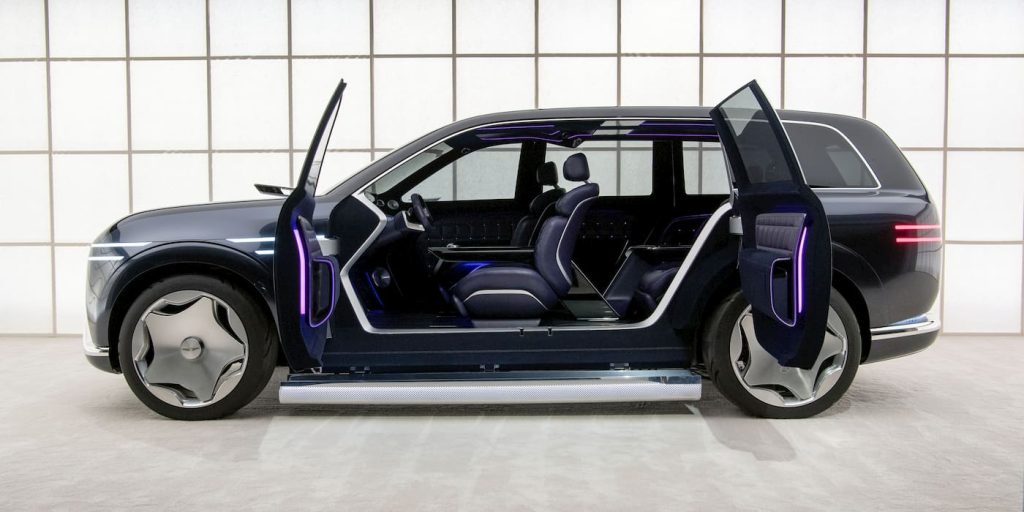
After the full-size SUV reportedly leaked during an internal presentation, it looks like we’ve found our answer. The Genesis GV90 leak reveals two versions: a standard model and a coach-door model.
The leaked images from our friends at ShortsCar offer our first look at the production version in full. Earlier this month, a GV90 prototype was spotted out in public with the coach doors wide open, providing a sneak peek of the interior.
From what was shown, the cabin will feature a similar layout to the concept, with high-end purple and indigo materials. The GV90 was also caught with an all-black interior, which is expected to be the standard version.
A new video from the folks over at HealerTV offers a closer look at the breathtaking interior ahead of its official debut.
The GV90 appears to retain the gear selector located near the top of the steering wheel from the Neolun concept.
Another report, from TheKoreanCarBlog, confirms the new gear selector after the first interior spy shots surfaced.
From what we’ve seen so far, the GV90 is shaping up to be a near replica of the ultra-luxe Neolun concept. Genesis has yet to announce a launch date for the GV90, but it is expected to make an official debut by the end of the year with sales starting in mid-2026.
Prices and final specs, like driving range, will be revealed closer to launch, but the Genesis GV90 is rumoured to be the first vehicle to ride on Hyundai’s new eM platform.
Hyundai said the new platform will deliver a 50% improvement in range compared to its current E-GMP-based EVs, such as the IONIQ 5. It’s also expected to offer Level 3 autonomous driving as well as other advanced driver assistance system (ADAS) features.


FTC: We use income earning auto affiliate links. More.

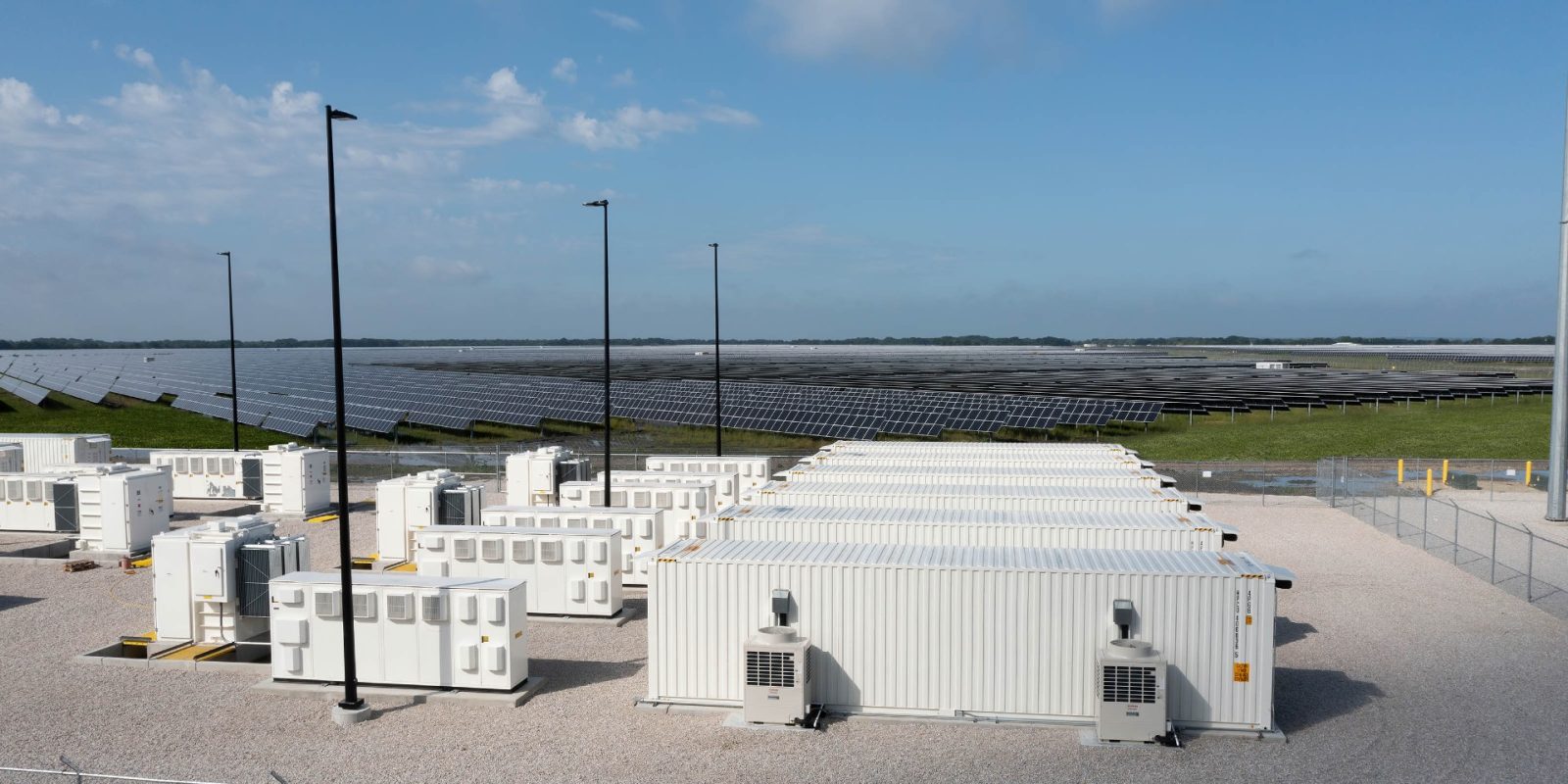
Turning cheap daytime solar into electricity you can actually use at night just got a lot cheaper. A new analysis from energy think tank Ember shows that utility-scale battery storage costs have fallen to $65 per megawatt-hour (MWh) as of October 2025 in markets outside China and the US. At that level, pairing solar with batteries to deliver power when it’s needed is now economically viable.
Battery storage costs have fallen dramatically over the past two years, and the decline continues. Following a steep decline in 2024, Ember’s analysis indicates that prices continued to fall sharply again in 2025.
The findings are based on real-world data from recent battery and solar-plus-storage auctions in Italy, Saudi Arabia, and India, as well as interviews with active developers across global markets.
According to Ember, the cost of a whole, grid-connected utility-scale battery storage system for long-duration projects (four hours or more) is now about $125 per kilowatt-hour (kWh) as of October 2025. That figure applies to projects outside China and the US. Core battery equipment delivered from China costs around $75/kWh, while installation and grid connection typically add another $50/kWh.
Those lower upfront costs have pushed down the levelized cost of storage (LCOS) to just $65/MWh. Ember’s calculation reflects real-world assumptions around financing costs, system lifetime, efficiency, and battery degradation.
Cheaper hardware isn’t the only reason storage costs are falling. Longer battery lifetimes, higher efficiencies, and lower financing costs, helped by clearer revenue models such as auctions, have all contributed to the sharp drop in LCOS. Ember has published a live calculator alongside the report, allowing users to estimate LCOS using their own assumptions.
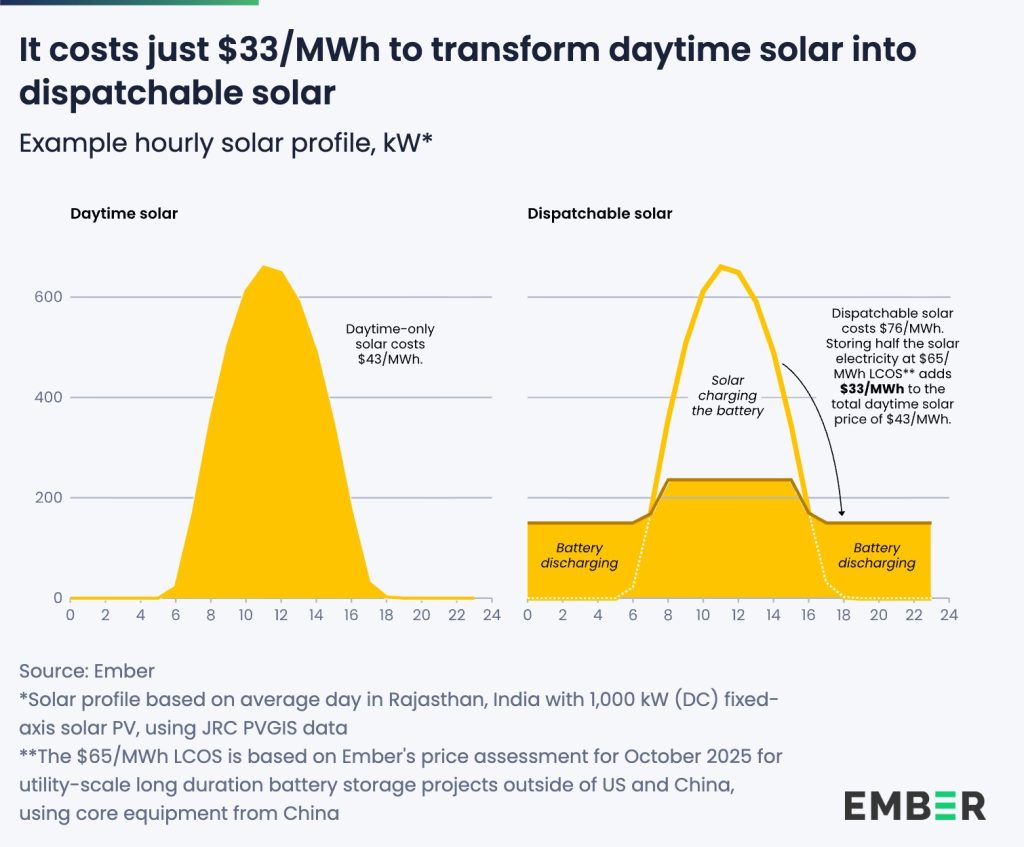
Why this matters comes down to how solar is actually used. Most solar power is generated during the day, so only a portion needs to be stored to make it dispatchable. Ember estimates that if half of daytime solar generation is shifted to nighttime, the $65/MWh storage cost adds about $33/MWh to the cost of solar electricity.
With the global average price of solar at $43/MWh in 2024, adding storage would bring the total cost to about $76/MWh, delivering power in a way that better matches real demand.
As Ember global electricity analyst Kostantsa Rangelova put it, after a 40% drop in battery equipment costs in 2024, the industry is now on track for another major fall in 2025. The economics of battery storage, she said, are “unrecognizable,” and the industry is still adjusting to this new reality.
“Solar is no longer just cheap daytime electricity; now it’s anytime dispatchable electricity. This is a game-changer for countries with fast-growing demand and strong solar resources,” Rangelova added.
Together, solar and battery storage are increasingly emerging as a scalable, secure, and affordable foundation for future power systems.
Read more: EIA: Solar + storage soar as fossil fuels stall through September 2025

If you’re looking to replace your old HVAC equipment, it’s always a good idea to get quotes from a few installers. To make sure you’re finding a trusted, reliable HVAC installer near you that offers competitive pricing on heat pumps, check out EnergySage. EnergySage is a free service that makes it easy for you to get a heat pump. They have pre-vetted heat pump installers competing for your business, ensuring you get high quality solutions. Plus, it’s free to use!
Your personalized heat pump quotes are easy to compare online and you’ll get access to unbiased Energy Advisors to help you every step of the way. Get started here. – *ad
FTC: We use income earning auto affiliate links. More.

In the Electrek Podcast, we discuss the most popular news in the world of sustainable transport and energy. In this week’s episode, we discuss a very telling Tesla Optimus fail, Rivian’s AI/Autonomy day, Mercedes GLB EV, and more.
The show is live every Friday at 4 p.m. ET on Electrek’s YouTube channel.
As a reminder, we’ll have an accompanying post, like this one, on the site with an embedded link to the live stream. Head to the YouTube channel to get your questions and comments in.
After the show ends at around 5 p.m. ET, the video will be archived on YouTube and the audio on all your favorite podcast apps:
We now have a Patreon if you want to help us avoid more ads and invest more in our content. We have some awesome gifts for our Patreons and more coming.
Here are a few of the articles that we will discuss during the podcast:
Here’s the live stream for today’s episode starting at 4:00 p.m. ET (or the video after 5 p.m. ET:
FTC: We use income earning auto affiliate links. More.
-
 Sports2 years ago
Story injured on diving stop, exits Red Sox game
-
 Sports3 years ago
‘Storybook stuff’: Inside the night Bryce Harper sent the Phillies to the World Series
-
 Sports2 years ago
Game 1 of WS least-watched in recorded history
-
 Sports3 years ago
Button battles heat exhaustion in NASCAR debut
-
 Sports3 years ago
MLB Rank 2023: Ranking baseball’s top 100 players
-
Sports4 years ago
Team Europe easily wins 4th straight Laver Cup
-
 Environment3 years ago
Japan and South Korea have a lot at stake in a free and open South China Sea
-
 Environment1 year ago
Here are the best electric bikes you can buy at every price level in October 2024