
Connect with us

Published

on

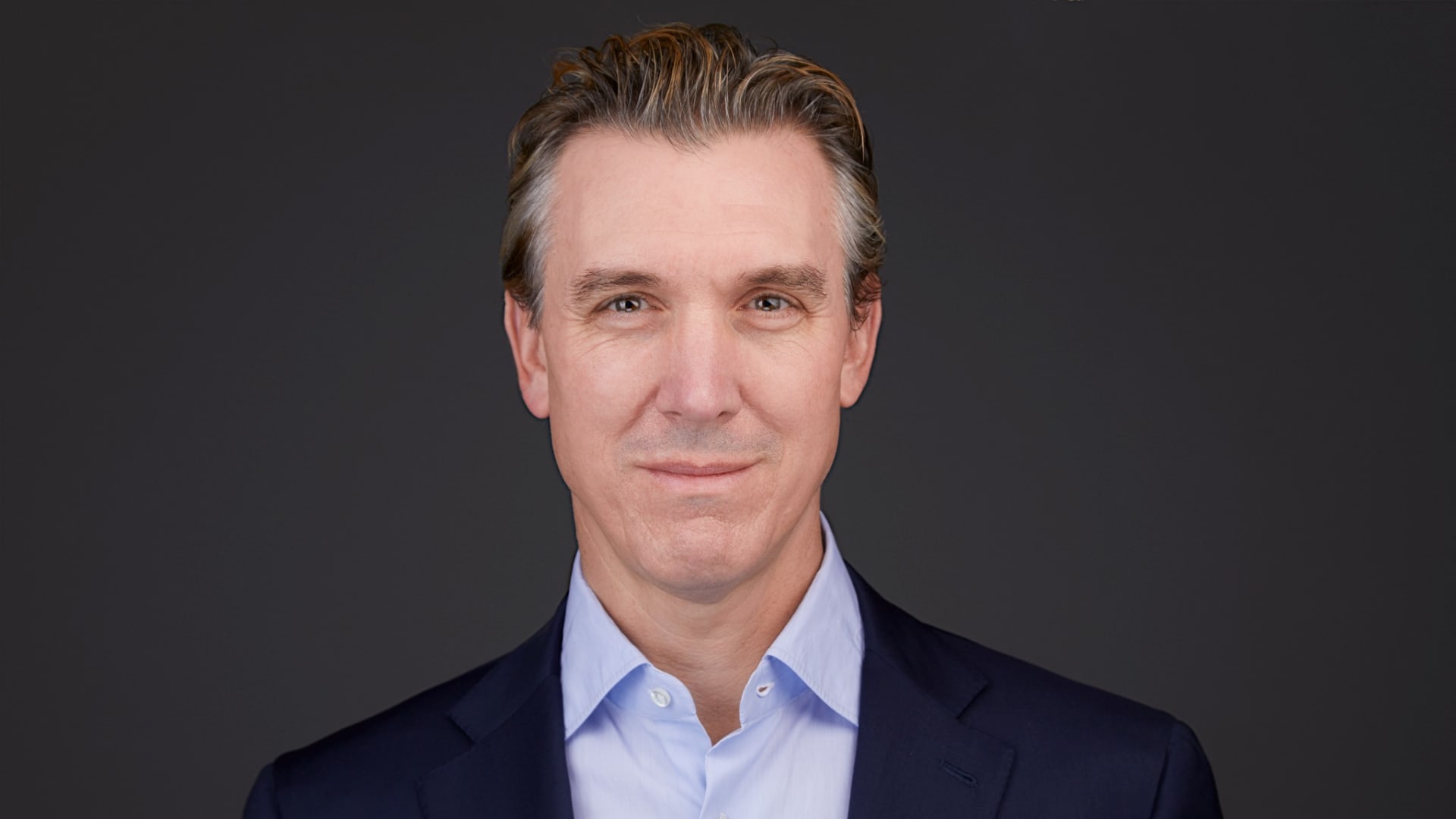
Airbnb Chief Financial Officer Dave Stephenson will transition into a newly created chief business officer role at the company.

Airbnb Chief Financial Officer Dave Stephenson, who helped guide the company through Covid-19 tumult and an initial public offering, will transition into a newly created chief business officer role, Airbnb CEO Brian Chesky said in a Tuesday note to employees viewed by CNBC.

Stephenson’s new position is effective January 2024, the company said. Airbnb’s vice president of finance Ellie Mertz will replace Stephenson as CFO. Mertz’s transition will occur following Airbnb’s quarterly earnings call in February.

Chesky said Stephenson’s new role would also mark an “inflection point” for Airbnb, where the business would begin to focus on growth across existing and new businesses.

“As we expand beyond our core, it will be paramount to have an executive dedicated to our long-term growth plans, and there’s nobody better than Dave to do this,” Chesky wrote in the letter.

“As Chief Business Officer, Dave will be across all aspects of our strategy to expand beyond the core,” Chesky wrote. “This includes driving international expansion, growing global host supply (across existing and new businesses), and leading all business and corporate development activities at Airbnb.”

Stephenson has been with the company since 2018. Before joining Airbnb, Stephenson was finance chief at Amazon’s Worldwide Consumer unit. Stephenson serves on the board of Lyft. Mertz serves on the boards of DoorDash and wholesale marketplace Faire.

Chesky also said that Catherine Powell, a longtime Airbnb executive who previously held various roles at Disney, would initially move into an advisory role before leaving Airbnb “later next year.”

Airbnb was founded in 2007 by Chesky, Nathan Blecharczyk and Joe Gebbia.

— CNBC’s Laura Batchelor contributed to this report.

Don’t miss these stories from CNBC PRO:

Continue Reading

Technology

Musk’s Starlink rival Eutelsat shares plummet 7% after report of SoftBank cutting its stake

Published

on

By

Musk's Starlink rival Eutelsat shares plummet 7% after report of SoftBank cutting its stake

French satellite group Eutelsat, often seen as Europe’s answer to Elon Musk’s Starlink, saw its share price plummet Wednesday following a report that Japanse investor SoftBank cut its stake in the company.

Shares in Eutelsat were last trading 7.8% lower as of 6:00 a.m. ET.

The moves come following a Reuters report that SoftBank has sold 36 million rights, corresponding to around 26 million shares and around half their stake in the satellite operator.

Eutelsat is the owner of the satellite internet provider OneWeb, which it merged with in 2023 in a bid to challenge Starlink’s dominance in the market.

But the French group has struggled to tap into the U.S. company’s market share. Eutelsat currently has more than 600 satellites in orbit compared to Starlink’s over 6,750, according to the companies’ websites.

After soaring more than 600% in early March this year, as Europe scrambled to bolster its tech sovereignty in the wake of the U.S. cutting military support to Ukraine, Eutelsat shares have since dropped more than 70%.

The company is seen as crucial to Europe’s tech sovereignty ambitions. In June the French state led a 1.35 billion euro ($1.57 billion) investment in Eutelsat, becoming its biggest shareholder with a roughly 30% stake.

Tech sovereignty

In November SoftBank said it had sold its entire stake in U.S. chipmaker Nvidia as it looked to free up funds for its investment in OpenAI and other projects.

SoftBank wouldn’t have made the move if it didn’t need to bankroll its next artificial intelligence investments, founder Masayoshi Son said on Monday at an event.

SoftBank founder Masayoshi Son 'was crying' about firm's need to sell Nvidia stake

The Japanese giant’s Eutelsat move mirrors its “aggressive monetisation” across its portfolio, Luke Kehoe, analyst at Ookla, told CNBC.

“With governments and strategic European investors, not SoftBank, now funding the recapitalisation, Eutelsat is becoming less a growth story and more a pillar of Europe’s digital sovereignty infrastructure.”

While Starlink is holding on to its scale advantage and is dominant in retail broadband, Eutelsat is carving out a niche in government, aviation, backhaul and emergency connectivity, said Kehoe.

“The open question is whether that higher-value, B2B-centric positioning can deliver attractive returns once the current wave of capex and recapitalisations is behind it, and whether Europe is willing to keep writing cheques at the scale required to narrow the gap with Starlink.”

Eutelsat and SoftBank have been approached for comment.

Continue Reading

Technology

iPhone 17 will drive record Apple shipments in 2025, IDC says

Published

on

By

iPhone 17 will drive record Apple shipments in 2025, IDC says

Apple’s latest iPhone models are shown on display at its Regent Street, London store on the launch day of the iPhone 17.

Arjun Kharpal | CNBC

Apple will hit a record level of iPhone shipments this year driven by its latest models and a resurgence in its key market of China, research firm IDC has forecast.

The company will ship 247.4 million iPhones in 2025, up just over 6% year-on-year, IDC forecast in a report on Tuesday. That’s more than the 236 million it sold in 2021, when the iPhone 13 was released.

Apple’s predicted surge is “thanks to the phenomenal success of its latest iPhone 17 series,” Nabila Popal, senior research director at IDC, said in a statement, adding that in China, “massive demand for iPhone 17 has significantly accelerated Apple’s performance.”

Shipments are a term used by analysts to refer to the number of devices sent by a vendor to its sales channels like e-commerce partners or stores. They do not directly equate to sales but indicate the demand expected by a company for their products.

When it launched in September, investors saw the iPhone 17 series as a key set of devices for Apple, which was facing increased competition in China and questions about its artificial intelligence strategy, as Android rivals were powering on.

Apple’s shipments are expected to jump 17% year-on-year in China in the fourth quarter, IDC said, leading the research firm to forecast 3% growth in the market this year versus a previous projection of a 1% decline.

In China, local players like Huawei have been taking away market share from Apple.

IDC’s report follows on from Counterpoint Research last week which forecast Apple to ship more smartphones than Samsung in 2025 for the first time in 14 years.

Bloomberg reported last month that Apple could delay the release of the base model of its next device, the iPhone 18, until 2027, which would break its regular cycle of releasing all of its phones in fall each year. IDC said this could mean Apple’s shipments may drop by 4.2% next year.

Continue Reading

Technology

Anthropic reportedly preparing for one of the largest IPOs ever in race with OpenAI: FT

Published

on

By

Anthropic reportedly preparing for one of the largest IPOs ever in race with OpenAI: FT

Nurphoto | Getty Images

Anthropic, the AI startup behind the popular Claude chatbot, is in early talks to launch one of the largest initial public offerings as early as next year, the Financial Times reported Wednesday. 

For the potential IPO, Anthropic has engaged law firm Wilson Sonsini Goodrich & Rosati, which has previously worked on high-profile tech IPOs such as Google, LinkedIn and Lyft, the FT said, citing two sources familiar with the matter.

The start-up, led by chief executive Dario Amodei, was also pursuing a private funding round that could value it above $300 billion, including a $15 billion combined commitment from Microsoft and Nvidia, per the report. 

It added that Anthropic has also discussed a potential IPO with major investment banks, but that sources characterized the discussions as preliminary and informal. 

If true, the news could position Anthropic in a race to market with rival ChatGPT-maker OpenAI, which is also reportedly laying the groundwork for a public offering. The potential listings would also test investors’ appetite for loss-making AI startups amid growing fears of a so-called AI bubble. 

However, an Anthropic spokesperson told the FT: “It’s fairly standard practice for companies operating at our scale and revenue level to effectively operate as if they are publicly traded companies,” adding that no decisions have been made on timing or whether to go public.

CNBC was unable to reach Anthropic and Wilson Sonsini, which has advised Anthropic for a few years, for comment. 

According to one of the FT’s sources, Anthropic has been working through internal preparations for a potential listing, though details were not provided. 

The FT report follows several notable changes at the company of late, including the hiring of former Airbnb executive Krishna Rao, who played a key role in the firm’s 2020 IPO.

CNBC also reported last month that Anthropic was recently valued to the range of $350 billion after receiving investments of up to $5 billion from Microsoft and $10 billion from Nvidia. 

In its race to overtake OpenAI in the AI space, the startup has also been expanding aggressively, recently announcing a $50 billion AI infrastructure build-out with data centers in Texas and New York, and tripling its international workforce.

According to the FT report, investors in the company are enthusiastic about Anthropic’s potential IPO, which could see it “seize the initiative” from OpenAI.

While OpenAI has been rumoured to be considering an IPO, its chief financial officer recently said the company is not pursuing a near-term listing, even as it closed a $6.6 billion share sale at a $500 billion valuation in October.

Continue Reading

Trending





