
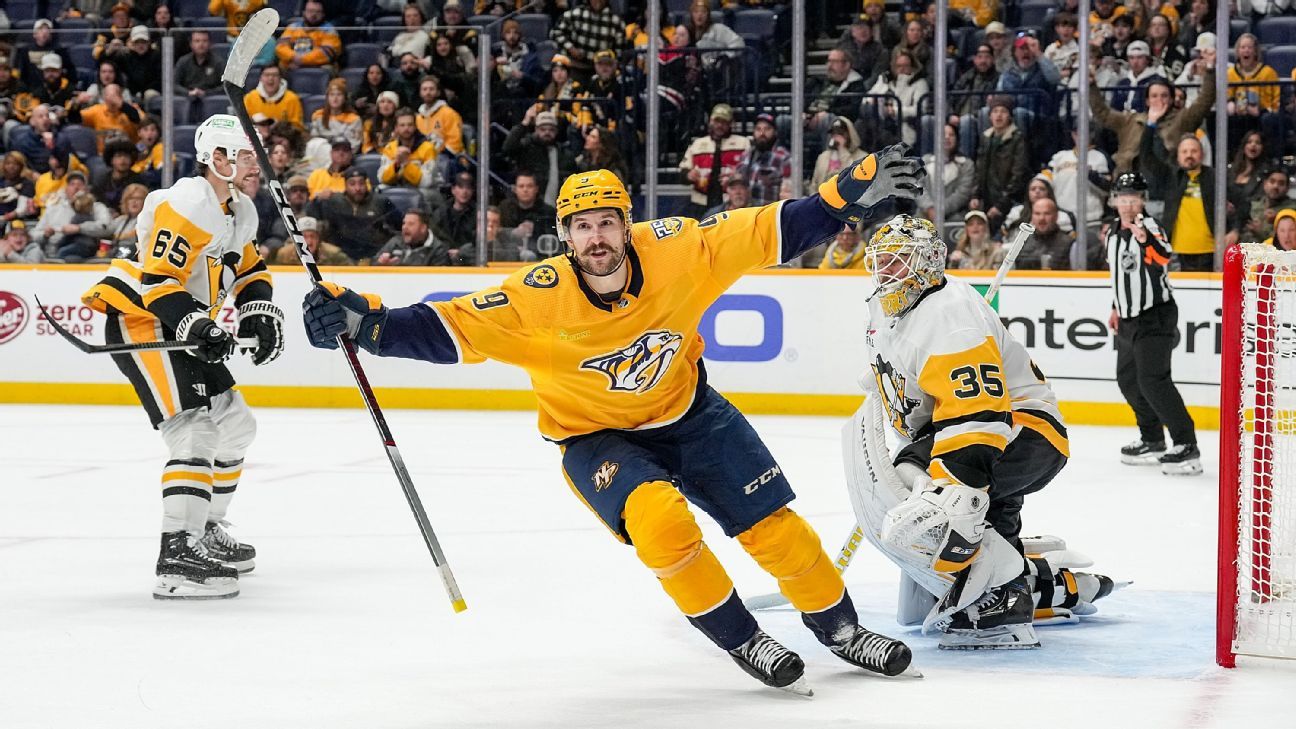
Filip Forsberg on Predators, (not) meeting Messi, NHL All-Star draft, hot chicken, his famous mustache


Filip Forsberg has been a huge reason why the Nashville Predators are knocking on the door for a playoff spot this season under first-year coach Andrew Brunette.
The 29-year-old center has 28 points in 24 games, including a team-leading 13 goals. New general manager Barry Trotz indicated that the Predators were going to be an offensive-oriented team when he hired Brunette. That style has Forsberg on pace for one of the best scoring campaigns of his 12-season NHL career.
Forsberg appeared on ESPN’s “The Drop” this week to chat with Arda Ocal and Greg Wyshynski about a variety of topics, ranging from the NHL to “best on best” tournaments to his ownership of an MLS team to his famous mustache.
New episodes of “The Drop” are available Tuesday and Thursday on all podcasting platforms and video streaming on YouTube. Search for the “NHL on ESPN” channel for the latest edition.
ESPN: When a new coach like Andrew Brunette comes in, how much conversation is there during the offseason between him and the players?
Forsberg: It’s obviously happened before for us, when [Peter] Laviolette took over from Barry Trotz, a handful of years ago. But this one was a little different, obviously, with it happening kind of later in the summer. Like we didn’t really know what was going to happen: if John [Hynes] was going to come back or not. It ended up being a fairly late into the summer decision.
I was here in town when Coach Bruno was announced with the press conference. That was the first time I met him. Then there were just a few conversations over the phone throughout the summer. Just trying to get a little bit of a feel for who he was as a person, but also as a coach. It’s been a good transition.
ESPN: Did you almost have a heart attack when you heard Barry Trotz of all people say that you guys are going to be in an offensive team under Brunette?
Forsberg: I mean, it’s a little change obviously from [Trotz], right? You didn’t know what to expect when he was coming back. But I think the mix of experience that Barry has a coach, but also just in hockey in general, and then bringing in Bruno, who has a ton of experience as a player and has been an assistant coach and briefly a head coach there for the Panthers, I think the mix of the two of them and our style of play in general has been a good combination so far.
ESPN: Another offseason addition was center Ryan O’Reilly. It’s always interesting when you bring in a player that you’re so used to competing against as an opponent, and one with a heck of a reputation after that Stanley Cup win in St. Louis. What are the things you’ve learned about him as a teammate?
Forsberg: Well, I think it’s the small things that you don’t see all the time. Like you said, he was with St. Louis and Colorado for long enough and I felt like we played them 1,000 times a year. He was tough to play against.
But then you see all the work that he puts in every day, working on on those small details before practice. In my opinion, he’s very underrated. Like, I didn’t realize how good he actually is. You knew he was good on faceoffs and he was almost impossible to play against. But then he comes here and you see the offensive upside through all the small things that he does. It’s been really cool. I try to learn as much as a I can from him.
ESPN: There are some big changes to the NHL All-Star Game this season that have been announced, including bringing back the player draft. We’re curious about the player’s perspective on that.
Forsberg: I was actually there the last time they did this. It was my rookie year, so they picked a few rookies to be in the game. Then a couple of guys bailed out last minute, so we got to a part of the actual game part of the All-Star Game, which was great. That was actually the last time they did the draft. Me and Ryan Nugent-Hopkins were able to get those cars. I’m obviously very happy about that. But at the same time, I definitely would have liked to be picked a little bit earlier than [last]. If that happens, I’ll be a pick or two higher at least.
I think it’s cool. It obviously adds a little bit of fun. Lot of goofing around. I mean, [Alex] Ovechkin, we’re sitting there and trying to get that car so hard that time. It was a fun thing to be a part of, for sure.
ESPN: Another big NHL move is the creation of a midseason international tournament that’s scheduled for 2025. It won’t be a World Cup, but it’s expected to feature the U.S. vs. Canada and Sweden vs. Finland. What were your thoughts when you heard about that?
Forsberg: I’m all for it. We need to get some kind of international hockey back with NHL players participating. And I understand the concerns for World Cups, Olympics, all that type of stuff. I know it’s not the easiest thing just to put together. But I do think that we’re currently — us as players, but also the fans out there — are not getting to watch these games.
I remember watching the Olympics and best-on-best hockey growing up. You can’t beat it. Representing your country in those situations is special. I’ve been fortunate. I was in the World Cup, obviously, which was a little different with the Europe team and Team North America, but and then I also played in a couple of world championships. But those are different, too, with no playoff players in there.
I’m all for it. And playing Finland makes it a little bit extra special too.
ESPN: It’s no secret the media loves coming to Nashville to cover games. What’s it like playing in Nashville?
Forsberg: I mean, I see why you people would like it, because there’s a lot of benefits with the building being where it is. You could have a good time within minutes of where the puck is dropped. When the game is ended, you can have a real good time after it.
But for me, it’s the people, ever since I first came here. There’s a saying about Southern hospitality, and that’s something that’s really through the city as a whole. I came here when I was 19, over 10 years ago, and the city really helped me out. At the time, I didn’t really know anything about anything, and lot of people that were really helpful to me early on still keep in touch with me.
ESPN: Look, just because the Professional Hockey Writers Association holds its meetings at Tootsie’s on Broadway doesn’t mean we’re imbibing. Speaking of Nashville food and drink: Are you a hot chicken guy?
Forsberg: I mean, I’m not. I don’t love spicy food, so I can’t say I do [like it]. I don’t know if you guys have seen the new Hattie B’s location, but it’s right across from Bridgestone Arena. It’s a pretty prime location. So next time you guys come, you can fuel up before you get going at Tootsie’s over there.
ESPN: Did you try it? And you’re like, I can’t do this again?
Forsberg: Yeah, I did. And I even did like a 2-out-of-7 on the heat scale. I wasn’t even halfway there. I’ve got some work to do there, for sure.
ESPN: You’re a minority owner of Nashville SC, the city’s Major League Soccer team. What’s that been like?
Forsberg: It’s been crazy, not going to lie. We jumped in about a year ago. This first year has been pretty wild to say the least, obviously with Lionel Messi being the highlight for the whole league. We had Nashville’s league cup run, playing Messi in the finals; it’s just been really cool seeing the whole city embrace soccer.
I love soccer. I’ve done it since I was a kid, obviously being from Europe and soccer is such a big part of everything over there. It’s really cool to see that coming here. Bringing the best player ever is obviously a great marketing decision by David Beckham. Don’t get me wrong. Hopefully we can do something similar here in Nashville at some point, too. But it’s awesome. It’s been a great journey, and I’m really excited about future with it.
ESPN: Did you get to meet Messi?
Forsberg: No, I didn’t. It’s actually funny. We played him in the finals, and I had about 10 guys from the Predators that went. And Yakov Trenin asks me, “Hey, do you think we can get to meet Messi after the game?” He was like dead serious. And I was like, “Nah, I don’t think we have that type of pull here.” And he was like, “OK, no problem.”
I’m hoping I can meet him. The first year, we were learning, kind of getting to know some of the people. But now, the second year, we’re going to take over a little bit more and make some changes. And hopefully we can get in that room with him. That’d be cool.
ESPN: Finally, you’re obviously very well known for the mustache. It’s part of the persona. The Filip Forsberg presentation. How often do people bring it up in Nashville?
Forsberg: I’d say about at least once a day. It’s obviously hard not to. It’s mostly like some random people who will stop you and say like, “Oh, nice mustache.” I think it’s definitely a conversation starter. It’s a topic, a lot of people like it. And yeah, it’s hard to miss, too, I guess. So it’s a little bit of my own fault.
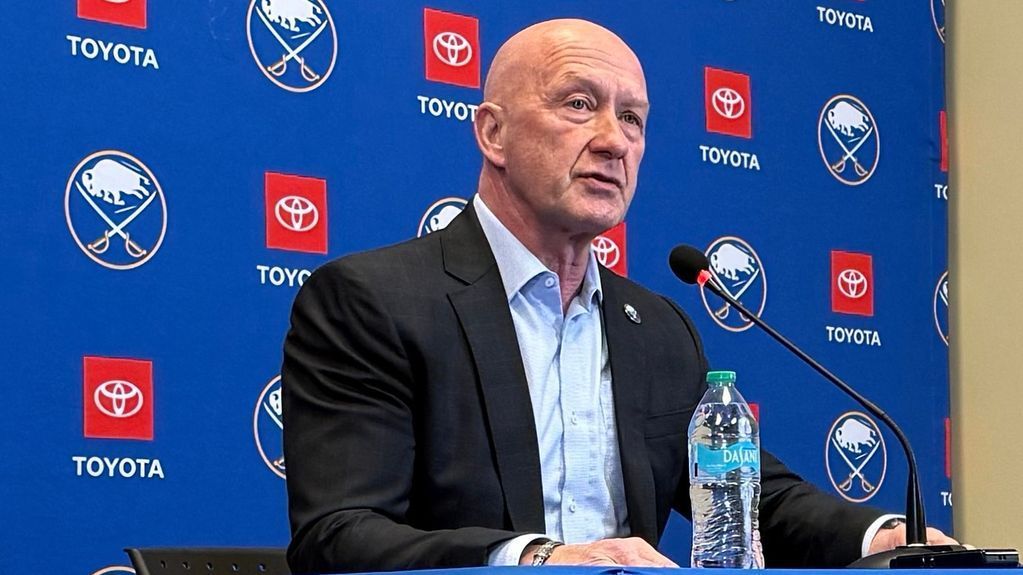
BUFFALO, N.Y. — In his first full day as Sabres general manager, Jarmo Kekalainen pointed to Buffalo’s depth of talent for giving him every reason to believe the team can climb back into playoff contention.
For that to happen, Kekalainen on Tuesday placed an emphasis on building team character and consistency — qualities the Sabres have been criticized for lacking during their NHL-record 14-year playoff drought.
“I think character is the biggest part of talent … and that’s the talent we need to focus on,” said Kekalainen, who initially was hired by Buffalo in May to serve as a senior adviser.
“There’s been games this year where we looked like it was going to be easy, and then we lost because we got outworked. That’s unacceptable,” he added. “That’s going to be something that we’re going to focus on each and every day, because the talent, the skill alone is not going to get you wins.”
Kekalainen’s message was not so much groundbreaking or different from the four GMs who preceded him over the course of Buffalo’s drought. And they include Kevyn Adams, who was fired on Monday after five-plus seasons on the job.
Adams gets credit for rebuilding the team through a youth movement that led to Buffalo parting ways with Jack Eichel (traded to Vegas) and Sam Reinhart (Florida).
Missing during Adams’ tenure was sustained success. After topping out with 91 points in 2022-23, when they missed the playoffs by one win, the Sabres have regressed, finishing with 84 points the next season and 79 last year.
“[Fans] have every right to be frustrated,” Kekalainen said. “[But] we have some really good core pieces here. We’re close. Now we just have to take the next step.”
The 59-year-old from Finland distanced himself from Adams, who a year ago blamed high taxes and cold winters as reasons for having difficulty attracting and retaining talent.
“Winning hockey games is the most important ingredient,” Kekalainen said, drawing on the 11 years he spent as the Columbus Blue Jackets GM. “Everybody wants to play for a winner.”
Kekalainen said he has full authority in overseeing the hockey department and has owner Terry Pegula’s approval to spend to the salary cap limit.
Kekalianen’s observations, as much as his hiring, provide the Sabres a reset in a season they’ve spent yo-yoing between demoralizing skids and encouraging winning stretches.
At 14-14-4, Buffalo opened the day sitting tied for last with the Columbus in the Eastern Conference standings but only six points back of the eighth-place Boston Bruins. And after splitting a six-game road trip, Buffalo is riding its first three-game winning streak of the season.
With the exception of meeting with Kekalainen on Tuesday, players had the past two days off, and resume practice Wednesday, a day before hosting Philadelphia.
Kekalainen didn’t rule out making changes, while backing coach Lindy Ruff by saying: “Lindy’s résumé speaks for itself … And I’ve really enjoyed my time so far with Lindy.” Ruff, the team’s winningest coach, is in the second season of his second stint with Buffalo.
One change on the horizon will have Buffalo moving ahead with two rather than three goalies, though the decision on who will be the odd man out can wait, with Colten Ellis on injured reserve. Ellis, Ukko-Pekka Luukkonen and Alex Lyon must first clear waivers before being demoted.
Kekalainen also placed a priority on resuming negotiations to re-sign top-line forward Alex Tuch, who is in the final year of his contract.
As for other potential changes, Kekalainen said he’s still evaluating. His promotion came after spending last week in Finland to be with his father, who died on Sunday following a lengthy illness.
“This has been quite a roller-coaster of emotions for me this weekend. So I’m just starting today,” he said.
Kekalainen is Buffalo’s 10th general manager, and first with past GM experience since Scotty Bowman held the job from 1979 to 1987. And based on Kekalainen’s track record in Columbus, he brings a no-nonsense approach and is unafraid to make bold moves.
In the summer of 2022, Kekalainen signed the late Johnny Gaudreau in free agency. In 2019, he stood pat by not trading top stars Artemi Panarin, Matt Duchene and Sergei Bobrovsky to keep his roster intact for the playoffs, despite eventually losing all three in free agency that summer.
“Over the last seven months, he’s shown to me that he is capable of leading our organization into the future,” Pegula said while introducing Kekalainen. “He’s made bold moves in the past … and just has a confidence that I believe will help our organization.”
Kekalainen said the one thing he won’t do is cut corners simply to make the playoffs and end the drought.
“I told the players to forget about the 14-years thing that’s kind of hanging around like a black cloud. And I’m going to do the same thing,” he said. “I’m not going to sacrifice the ultimate goal for the sake of making the playoffs and then not having any sustainability for our goal as a team to take the next step.”
-
 Sports2 years ago
Story injured on diving stop, exits Red Sox game
-
 Sports3 years ago
‘Storybook stuff’: Inside the night Bryce Harper sent the Phillies to the World Series
-
 Sports2 years ago
Game 1 of WS least-watched in recorded history
-
 Sports3 years ago
Button battles heat exhaustion in NASCAR debut
-
 Sports3 years ago
MLB Rank 2023: Ranking baseball’s top 100 players
-
Sports4 years ago
Team Europe easily wins 4th straight Laver Cup
-
 Environment3 years ago
Japan and South Korea have a lot at stake in a free and open South China Sea
-
 Environment1 year ago
Here are the best electric bikes you can buy at every price level in October 2024