
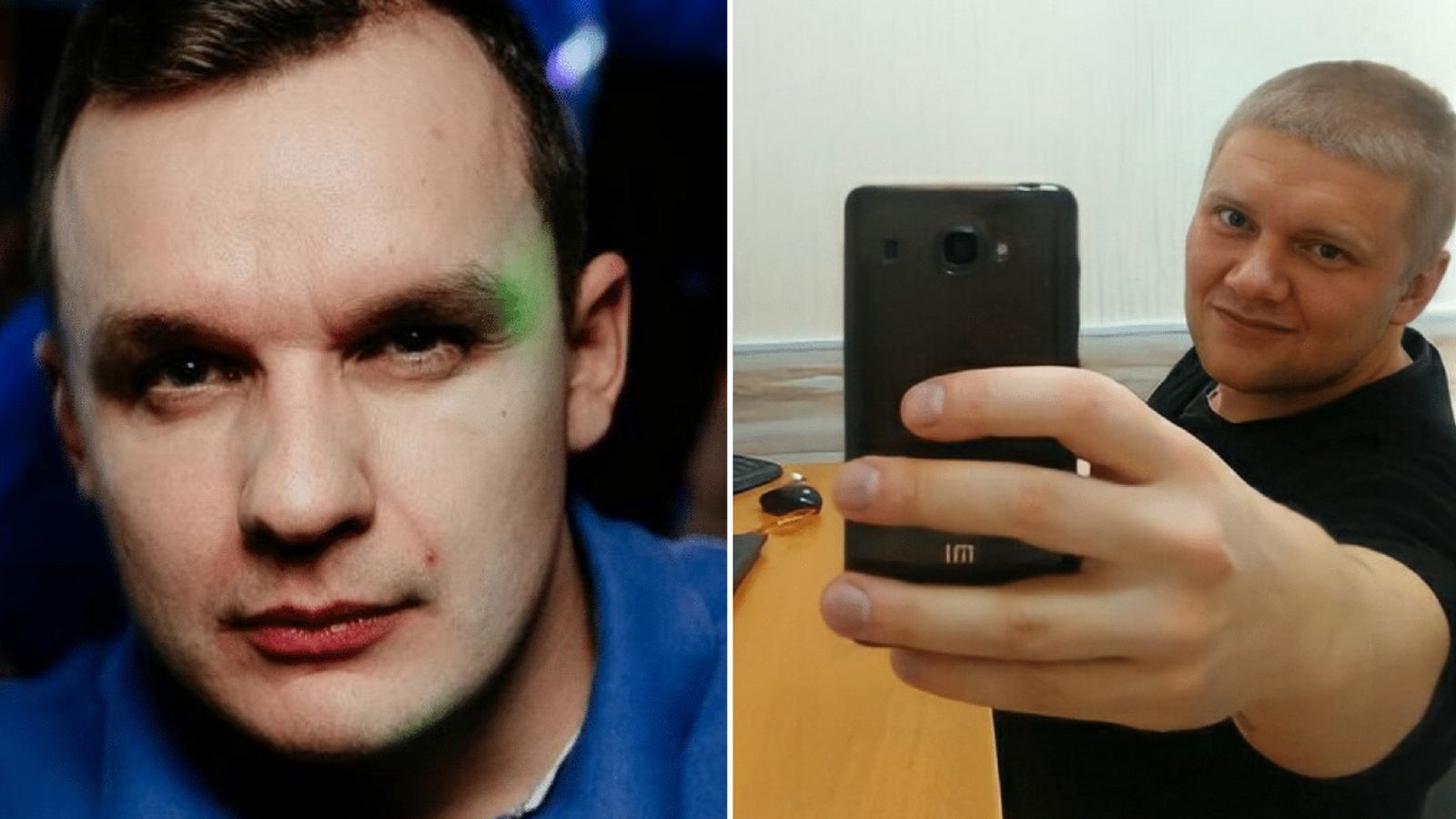
UK and US sanction Russian hackers who used ‘spear-phishing’ to ‘meddle in British politics’
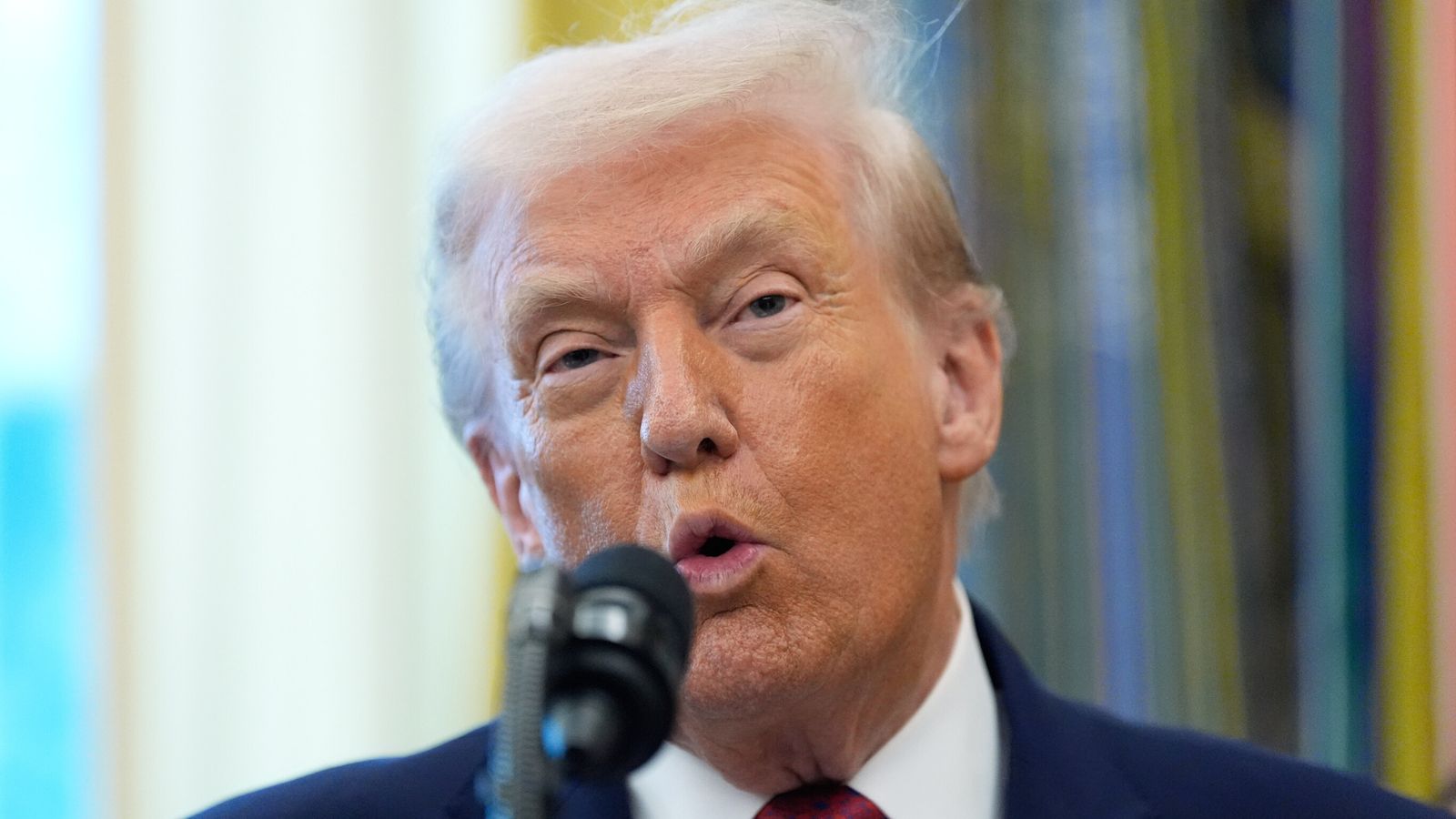
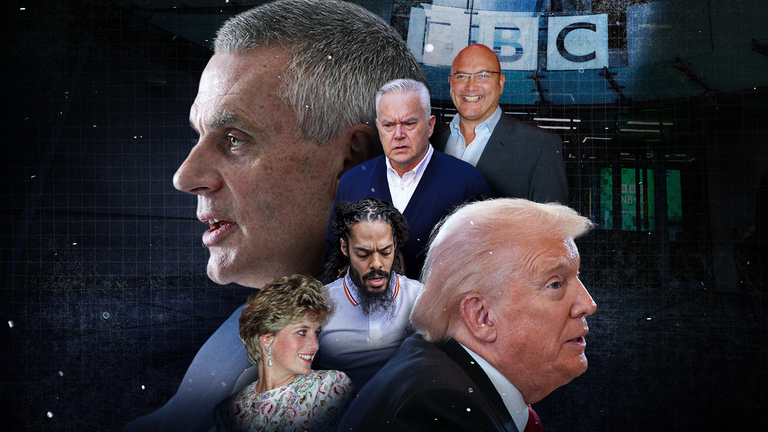
Donald Trump has filed a defamation lawsuit against the BBC, alleging the corporation’s Panorama documentary portrayed him in a “false, defamatory, deceptive, disparaging, inflammatory, and malicious” manner.
The complaint relates to the broadcaster’s editing of a speech he made in 2021 on the day his supporters overran the Capitol building.
Clips were spliced together from sections of the US president‘s speech on January 6 2021 to make it appear he told supporters he was going to walk to the US Capitol with them to “fight like hell”.
It aired in the documentary Trump: A Second Chance?, which was broadcast by the BBC the week before last year’s US election.
The US president is seeking damages of no less than $5bn (£3.7bn).
He has also sued for $5bn for alleged violation of a trade practices law. Both lawsuits have been filed in Florida.
BBC crisis: How did it happen?
‘They put words in my mouth’
Speaking in the Oval Office earlier on Monday, he said: “In a little while, you’ll be seeing I’m suing the BBC for putting words in my mouth.
“Literally, they put words in my mouth. They had me saying things that I never said coming out.”
The scandal erupted earlier this year after a leaked memo highlighted concerns over the way the clips were edited.
After the leak, BBC chair Samir Shah apologised on behalf of the broadcaster over an “error of judgement” and accepted the editing of the 2024 documentary gave “the impression of a direct call for violent action”.
The fallout from the saga led to the resignation of both the BBC director-general Tim Davie and the head of news Deborah Turness.
Earlier, BBC News reported the broadcaster had set out five main arguments in a letter to Mr Trump’s legal team as to why it did not believe there was a basis for a defamation claim.
In November, the BBC officially apologised to the president, adding that it was an “error of judgement” and saying the programme will “not be broadcast again in this form on any BBC platforms”.
A spokesperson said “the BBC sincerely regrets the manner in which the video clip was edited,” but they also added that “we strongly disagree there is a basis for a defamation claim”.
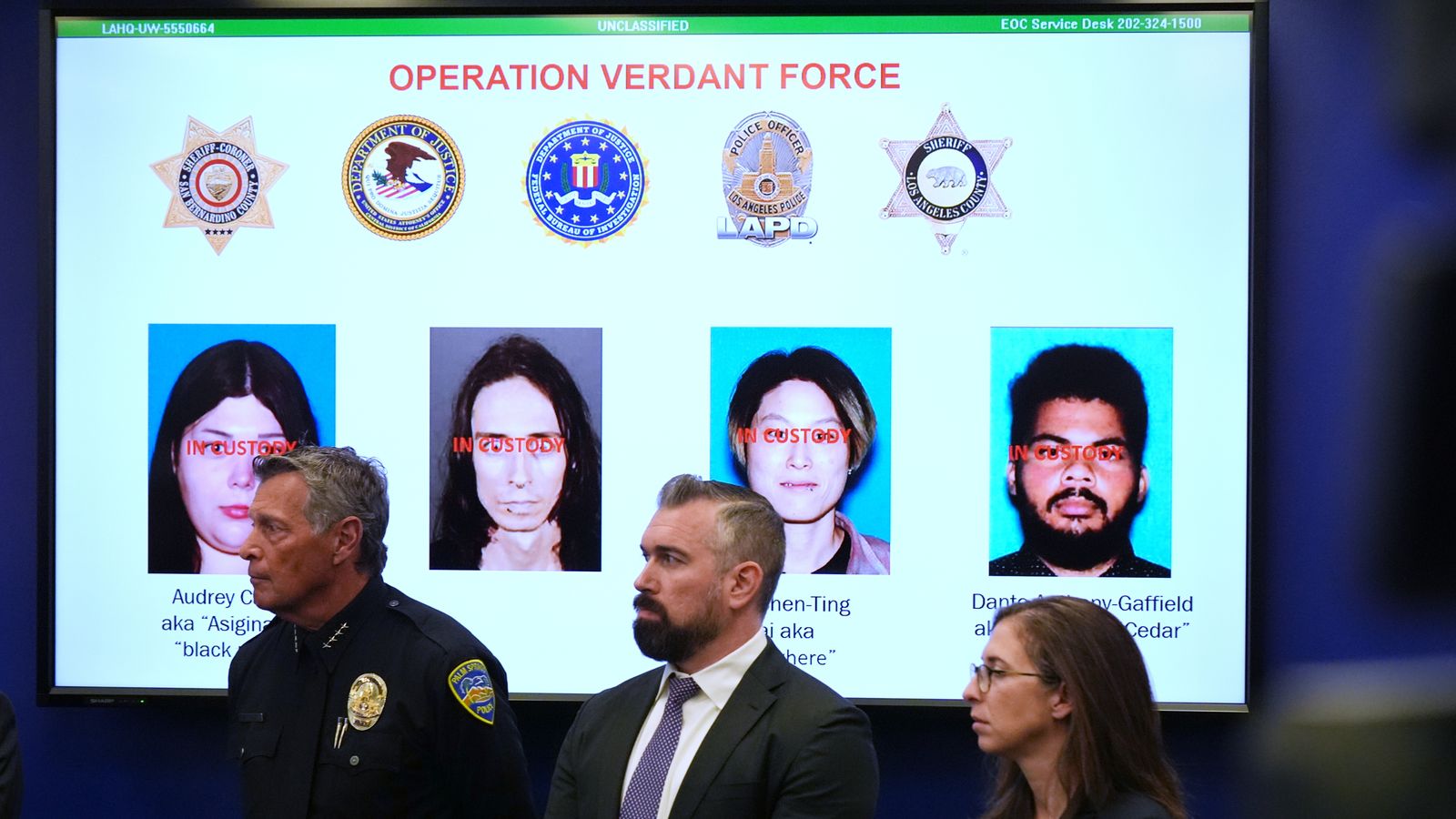
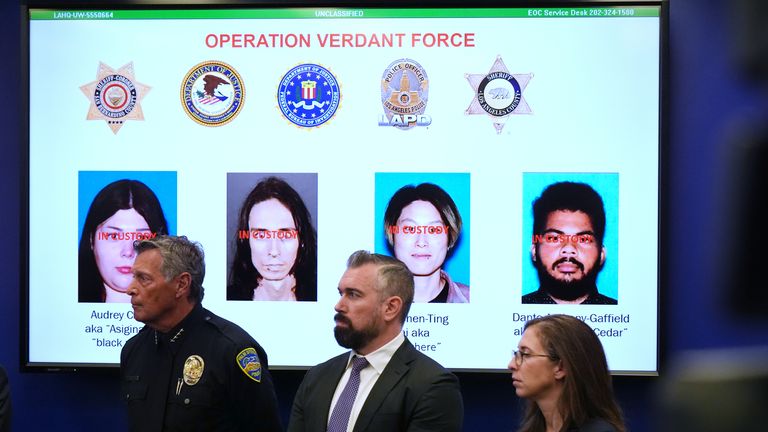
Four people have been charged with plotting New Year’s Eve bomb attacks in California.
Federal authorities in the US said the four are allegedly part of an extremist group which is suspected of planning the attacks in southern California.
The plot consisted of planting explosive devices at five locations targeting two US companies at midnight on New Year’s Eve in the Los Angeles area.
The suspects were arrested last week in Lucerne Valley, a desert city east of Los Angeles.
Photos of suspects of the terror plot are shown on a screen during a press conference. Pic: AP
They are said to be members of an offshoot of a pro-Palestinian, anti-government and anti-capitalist group dubbed the Turtle Island Liberation Front, the complaint said.
As well as the alleged plan against the two companies, the group also planned to target Immigration and Customs Enforcement (ICE) agents and vehicles, attorney general Pam Bondi said.
The four defendants named in the complaint are Audrey Illeene Carroll, Zachary Aaron Page, Dante Gaffield, and Tina Lai.
All four are from the Los Angeles area, according to first assistant US attorney Bill Essayli.
The alleged plot
According to a sworn statement by the complaint, Carroll showed an eight-page handwritten document to a paid confidential source in November, which described a bomb plot.
The document was titled “Operation Midnight”.
Essayli said one of the suspects created a detailed plan that “included step-by-step instructions to build IEDs (improvised explosive device)… and listed multiple targets across Orange County and Los Angeles.”
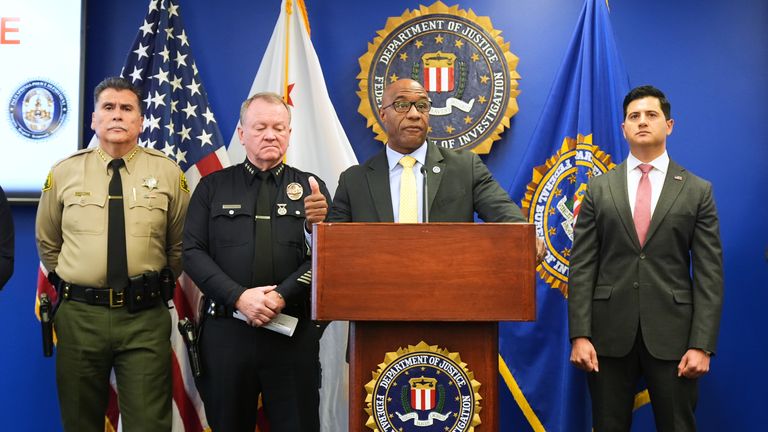
FBI assistant director in charge Akil Davis speaks at a press briefing on the incident. Pic: AP
Carroll and Page are then alleged to have recruited the other two defendants to help them carry out the plan which included acquiring bomb-making materials before constructing and performing test detonations.
Under the plan, the defendants would supposedly have travelled to a remote location in the Mojave Desert on the 12 December to construct and detonate their test explosive devices, the sworn statement alleges.
Evidence photos included in the court documents show a desert campsite with what investigators said were bomb-making materials strewn across plastic folding tables.
The FBI said agents intervened before the defendants could complete their work to assemble a functional explosive device.
This breaking news story is being updated and more details will be published shortly.
Please refresh the page for the latest version.
You can receive breaking news alerts on a smartphone or tablet via the Sky News app. You can also follow us on WhatsApp and subscribe to our YouTube channel to keep up with the latest news.
US
The shock of a shooting will cut deeply – but if anywhere can find hope in the face of despair, Providence can

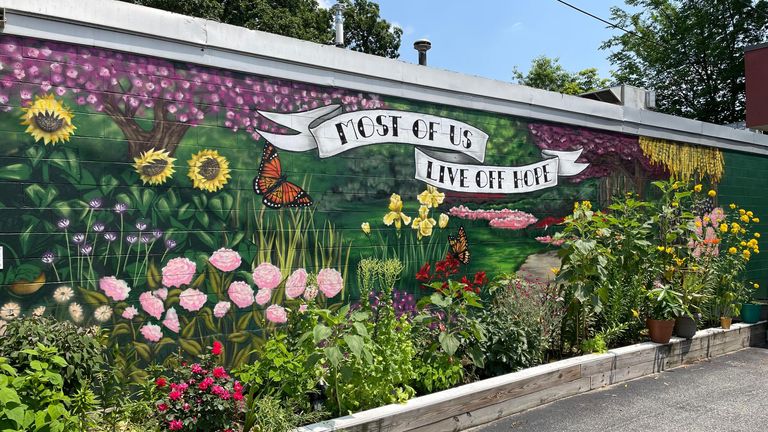
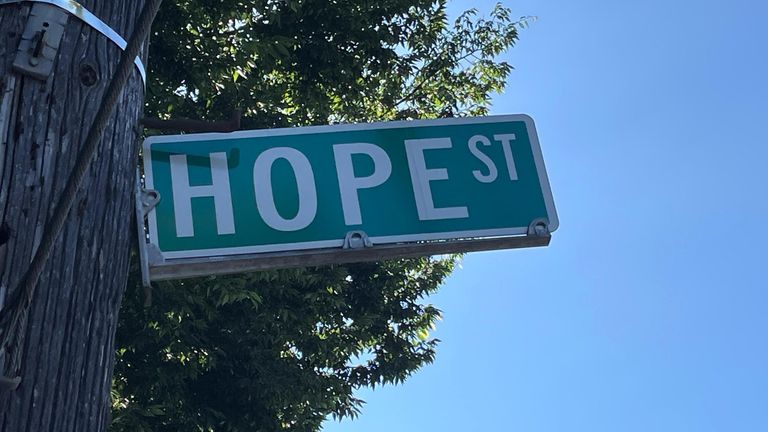
“Most of us live off hope” – the text of a colourful mural, painted on a wall on Hope Street, Providence.
On most days, the neighbourhood around Brown University feels like a place of quiet optimism, swimming against the negative tide.
Hope Street’s mural
The shock of a shooting, that has claimed two lives and left eight others critically wounded, will cut deeply here.
Violence feels not just intrusive but incompatible with the spirit of a place that is governed by thought, not threat.
When the university president said “this is a day we hoped would never come”, she spoke for the whole town.
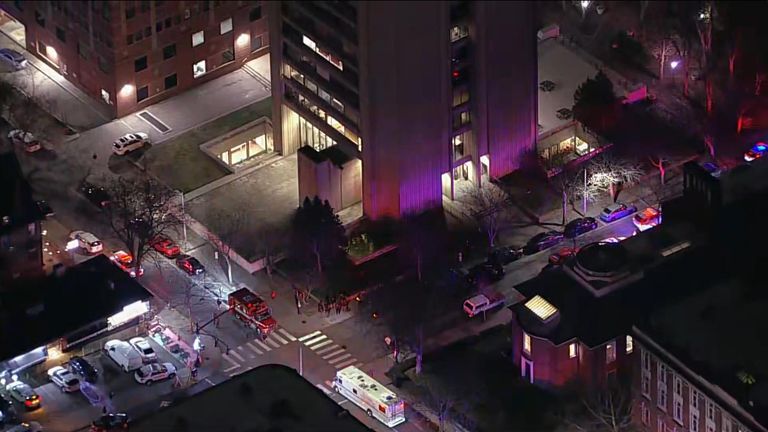
Two students were killed in the attack
Providence, Rhode Island, is a place I know well. My daughter, her husband and their two little girls live there.
It is a college town with a college vibe, the compact campus priding itself on openness – architecturally, intellectually and emotionally.
They rehearse “shelter-in-place” scenarios, as every university does, but they are not experienced at living behind locked doors.
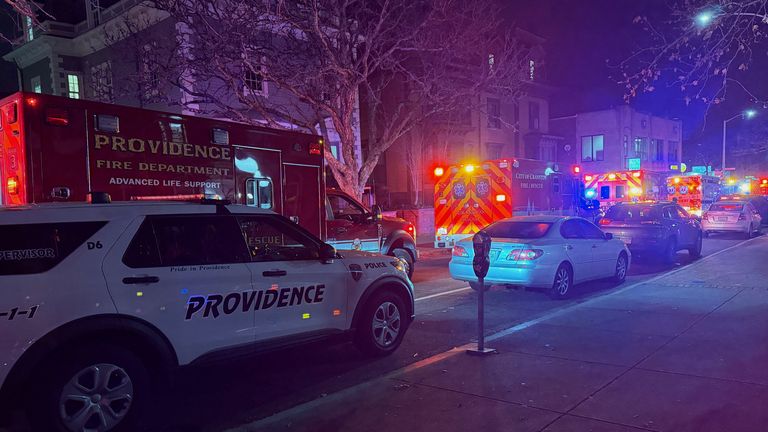
‘Stay inside,’ mayor warns as suspect still at large
Rhode Island, the smallest state, has one of the lowest gun-death rates in America, zero mass shooting events in 2024.
Earlier this year, the state banned the sale and manufacture of assault weapons, but it didn’t include those already owned.
Even in a Democratic, liberal state like Rhode Island, they are struggling to find a solution to America’s gun problem.
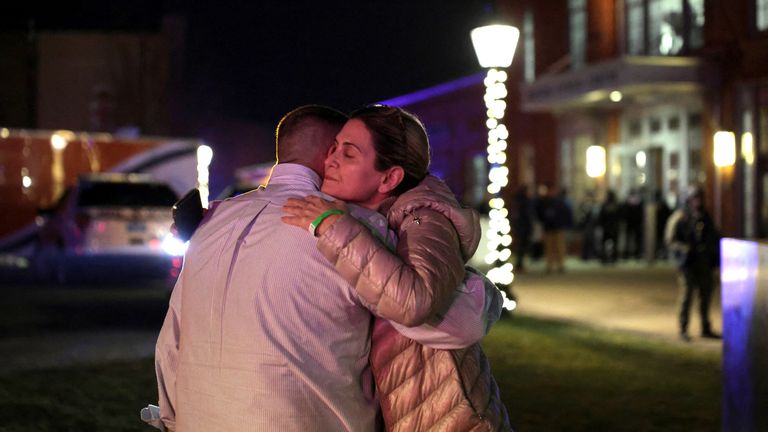
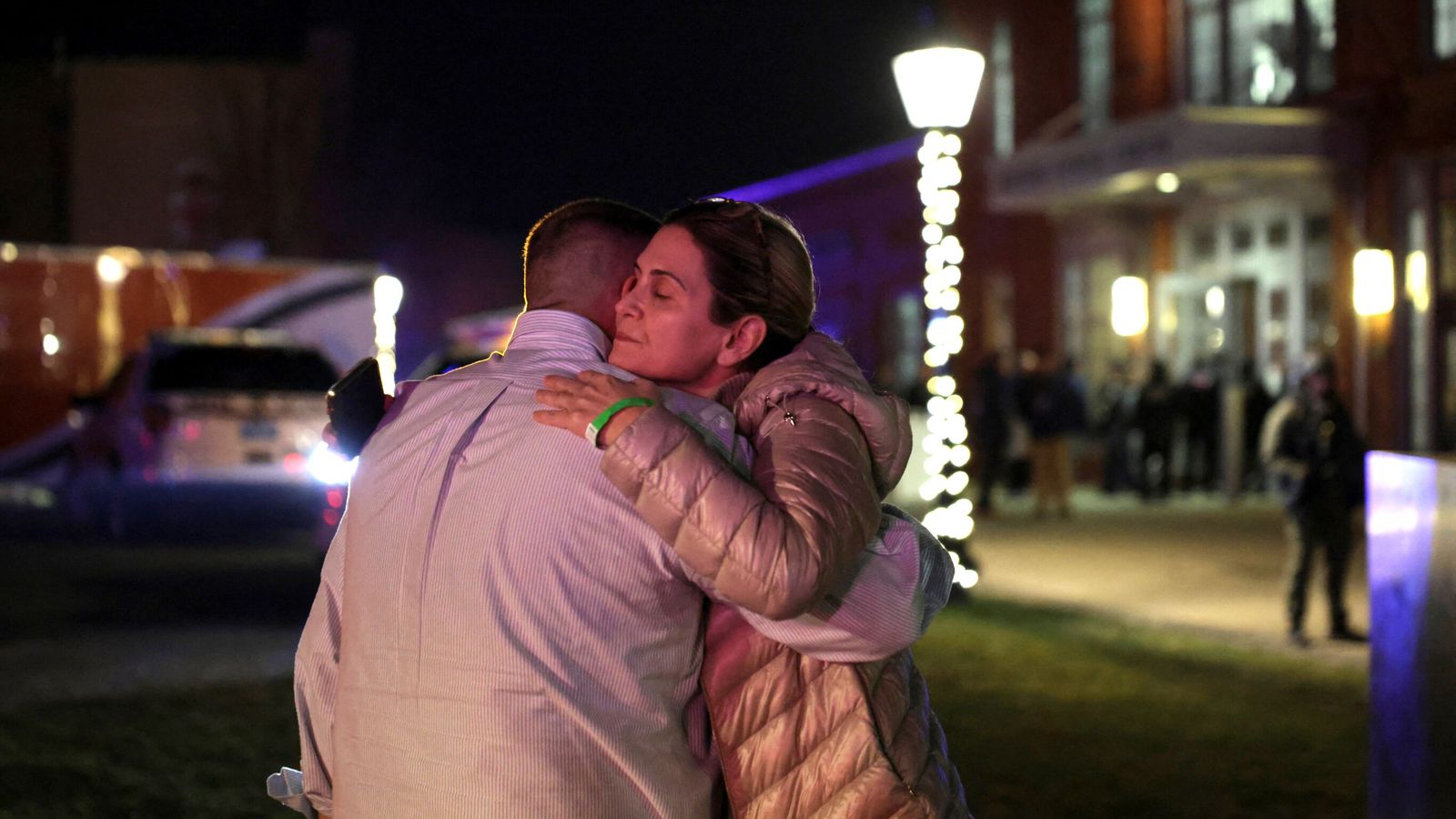
People hug each other outside Brown University in Providence after the shooting. Pic: Reuters
The age-old constitutional right to bear arms continues to trump the most human of all rights – the right to life.
This is a community that assumes safety, not because it is naïve, but because it has grown accustomed to trust.
College Hill rises in gentle brick and ivy, its narrow streets winding past houses with verandas designed for long conversations.
They take place in hushed tones right now, but if anywhere can find its way out of despair, Providence can.
On the historic street along its east side and in the college on the corner, most people live off hope.
-
 Sports2 years ago
Story injured on diving stop, exits Red Sox game
-
 Sports3 years ago
‘Storybook stuff’: Inside the night Bryce Harper sent the Phillies to the World Series
-
 Sports2 years ago
Game 1 of WS least-watched in recorded history
-
 Sports3 years ago
Button battles heat exhaustion in NASCAR debut
-
 Sports3 years ago
MLB Rank 2023: Ranking baseball’s top 100 players
-
Sports4 years ago
Team Europe easily wins 4th straight Laver Cup
-
 Environment3 years ago
Japan and South Korea have a lot at stake in a free and open South China Sea
-
 Environment1 year ago
Here are the best electric bikes you can buy at every price level in October 2024