

From Keir Starmer being showered in glitter to David Cameron’s comeback: 2023’s unexpected political moments

It may seem pretty standard nowadays for chaos to follow wherever politics goes.
But there were a number of unexpected political moments this year that left even the most seasoned Westminster watcher open-mouthed.
We take a look at some of the most surprising incidents from the past 12 months.
Glitter bombing
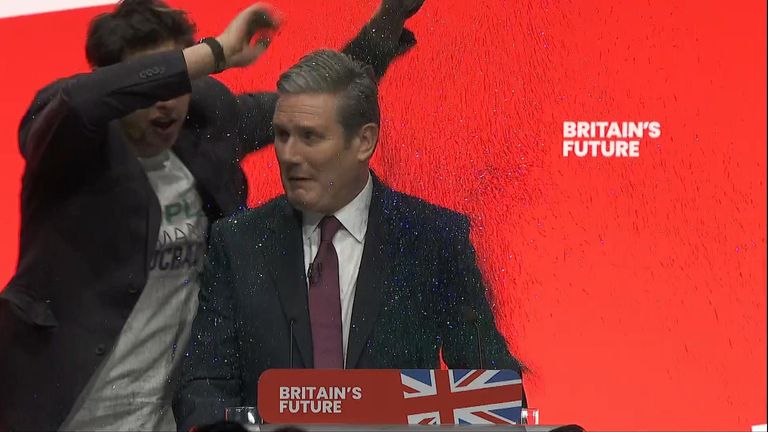
Labour leader covered in glitter by protester
As the end of the Labour’s annual conference drew near and Sir Keir Starmer took to the stage to give his closing speech, he may have been preparing to face a heckle or two.
But the party’s leader probably couldn’t have predicted being showered in glitter by a protester demanding changes to the voting system.
On a serious note, it was quite the breach of security, and being in the room, it felt like an age before his guards tackled the protester to the ground.
But Sir Keir used the incident to his advantage, took off his bedazzled jacket and literally rolled up his sleeves to get on with the job.
The crowd were in the palm of his hand for the rest of his speech.
The Stockton moment
Rude remark heard during PMQs
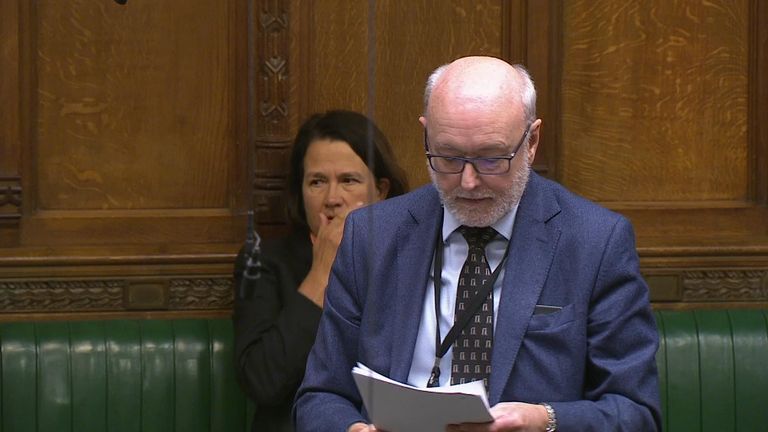
Things often get a little heated during Prime Minister’s Questions in the Commons, but a sweary heckle from the Tory frontbench ended up making headlines.
Labour MP Alex Cunningham had put a question to Rishi Sunak, asking why so many children in his Stockton-on-Tees constituency were living in poverty.
Home Secretary James Cleverly was then heard making a comment, which Mr Cunningham claimed was as follows: “Because it’s a s***hole”.
Cue anger from Labour and northern Tories, and a denial from Mr Cleverly.
However, as the pressure continue to build, a source close to the minister had to fess up, revealing that while Mr Cleverly didn’t slag off Stockton, he did refer to Mr Cunningham as a “s*** MP”.
Greenpeace at Sunak’s house
‘I’m on the roof of the prime minister’s house’
When the prime minister headed off to California for a family holiday – taking in a Taylor Swift show in the process – his manor house in North Yorkshire was getting a make-over.
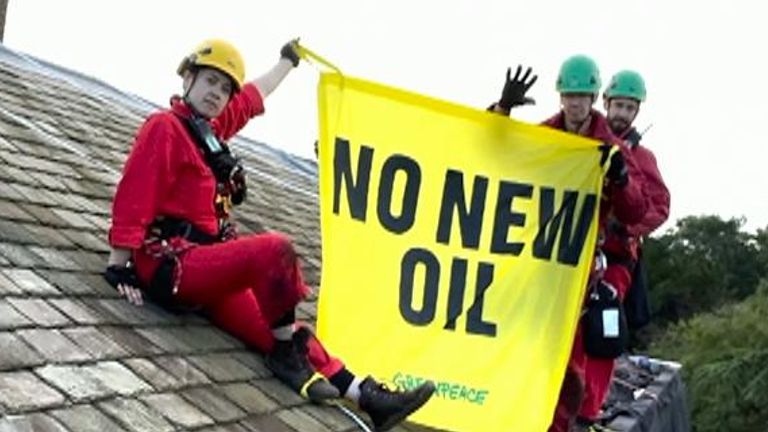
Five activists from Greenpeace climbed onto the roof of his constituency home to stage a protest against the government’s plans to grant more than 100 new licences for oil and gas extraction in the North Sea.
And they made their point by draping the imposing building with black fabric, as if it had been covered in oil.
MPs of all stripes attacked the protesters for targeting Mr Sunak’s home, with an ex-police chief branding it a “major security breach”.
But the group called it a “proportionate response to a disastrous decision” amid a climate crisis – as well as saying they wouldn’t have done it if the prime minister or his family were at home.
Keegan comment
Education secretary watches clip of herself swearing
Another sweary moment makes it onto our list, but this one was slightly more self-congratulatory.
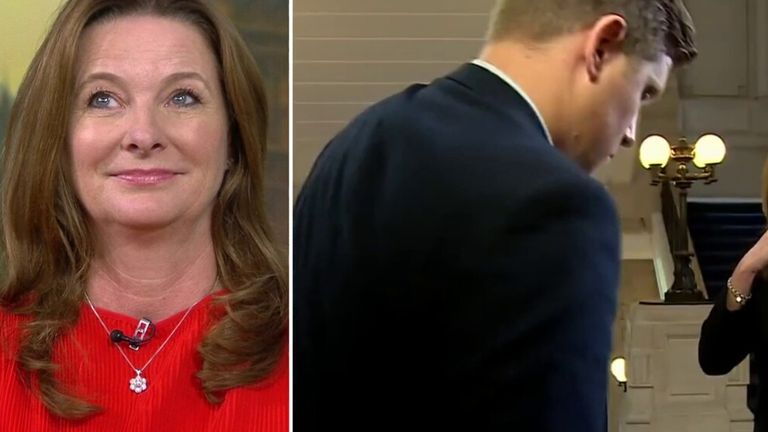
Education Secretary Gillian Keegan found herself in political hot water at the end of the summer holidays after it was revealed over 100 schools had to fully or partially close over concerns about reinforced autoclaved aerated concrete (RAAC).
But it was what she said after an interview on the topic that really got our attention.
Still wearing her mic, Ms Keegan was recorded saying: “Does anyone ever say, ‘you know you’ve done a f****** good job’ because everyone else has sat on their a**** and done nothing?
“No signs of that, no?”
The minister later apologised, but said she was “frustrated with the interviewer” who was “making out it was all my fault”.
Cummings’ COVID comments
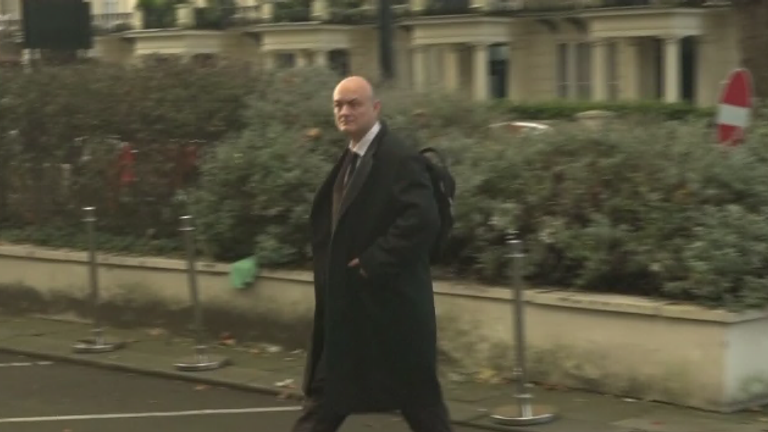
‘How’s your eyesight Mr Cummings?’
While Ms Keegan’s language could be described as colourful, she has nothing on the expletive vocabulary of one particular former adviser.
Onlookers knew the appearance of Dominic Cummings at the COVID inquiry was sure to get spicy, as he has made no secret of his distain for most of the people he worked with in Downing Street.
But no one quite expected it when the well-spoken lawyer at the hearing began to read out Mr Cummings’ most graphic description of ministers from his WhatsApps.
“Useless f***pigs, morons and c****,” he said.
Mr Cummings stood by the remarks, however, telling the inquiry the barbs “understated the position” of “chaos” in Number 10.
The long exit
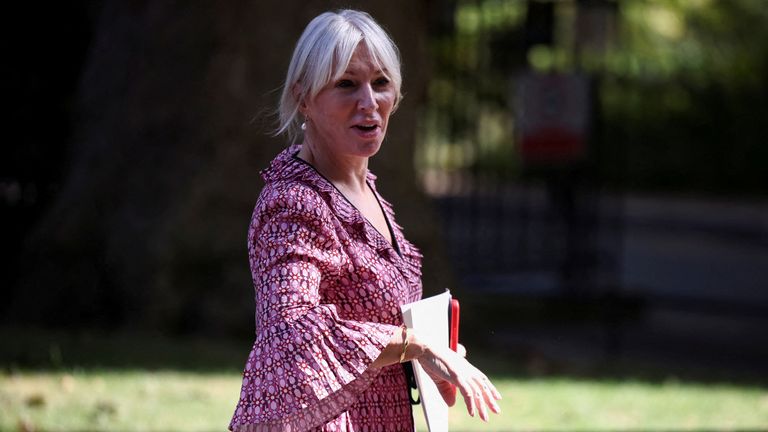
There were quite a few high-profile exits from parliament this year, but perhaps the most remarkable was the drawn-out departure of former culture secretary Nadine Dorries.
The Mid-Bedfordshire MP and close ally of Boris Johnson announced she was quitting the Commons “with immediate effect” soon after the ex-prime minister was found to have lied to the House over lockdown-breaking parties in Downing Street.
But it took her another 81 days to officially resign her post in a letter to Mr Sunak.
So why the long pause? Well, Ms Dorries had been expecting to be elevated to the Lords in Mr Johnson’s resignation honours list, but it didn’t happen.
She has since blamed that on Mr Sunak blocking the move, and said she hung on to investigate what had happened to her peerage.
Ms Dorries remains without one, but has written a book about a plot she believed took place in Westminster against Mr Johnson and his government.
The return of Cameron
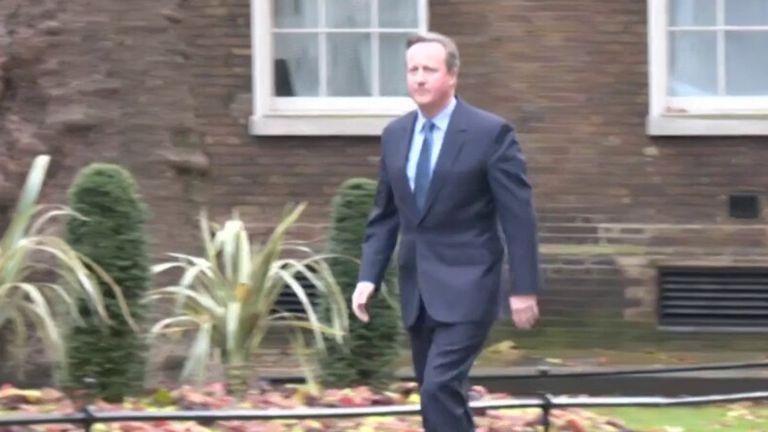
Cameron enters Downing Street
Reshuffle days are always the height of excitement in Westminster, as we wait to see who will be kicked out of their plush offices, and which MPs will be moving in.
But when Mr Sunak’s most recent rejigging of cabinet began, no one expected the suit about to get out of the car.
Former prime minister David – now Lord – Cameron shocked everyone with his appearance on Downing Street, and in the coming hours, he was confirmed as the new foreign secretary.
You can hear the surprise in the voices of Sky News’ Kay Burley and deputy political editor Sam Coates in the video above…
Tech bro duo
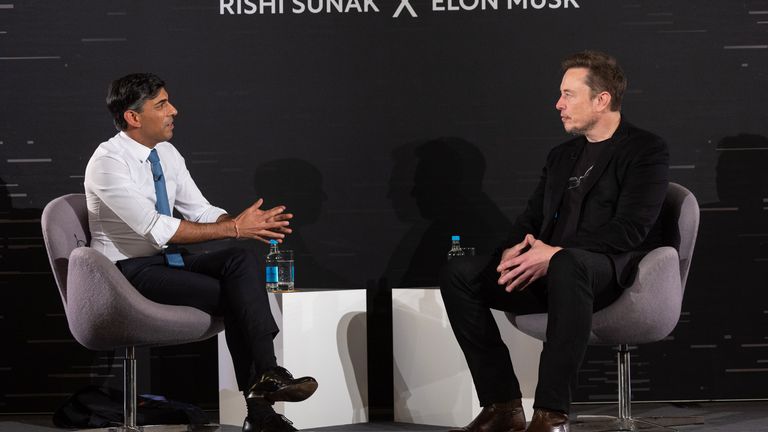
Will AI mean ‘no job is needed’ ?
The word of the year is AI, and as a former Silicon Valley resident, Mr Sunak has tagged himself onto the topic of the moment.
He hosted a summit with experts and politicians from around the world at the famous Bletchley Park to discuss its future.
But a surprise Q&A session back in central London after the main event was the one that drew all the focus.
The prime minister, used to being interviewed himself, instead posed questions to the tech entrepreneur and controversial X owner Elon Musk.
From encouraging people to be more “comfortable failing” through to claiming AI friends may be better than real ones, it was a strange conversation that perhaps may have been better behind closed doors.
But Mr Sunak was keen to laugh along with his jokes and try to show off his own credentials to the world’s most famous tech bro.
Minister suggests wrong kind of rain to blame for floods
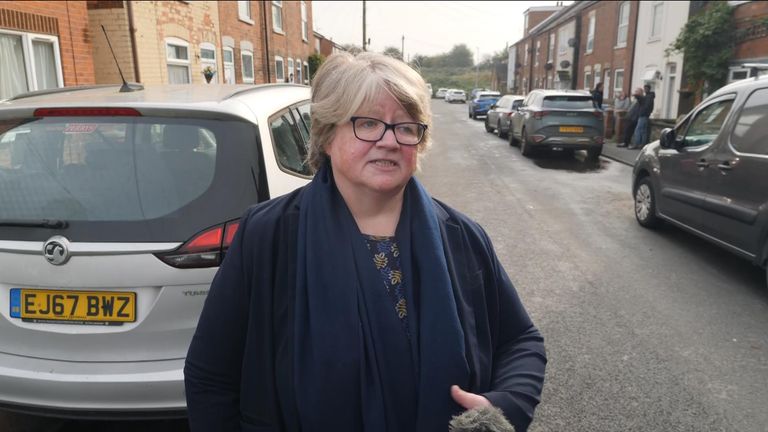
Coffey visits flooded towns
Having fallen from the dizzy heights of deputy prime minister under the short tenure of Liz Truss, Therese Coffey never seemed quite so happy in her role as environment secretary.
But one of her worst days in the gig must have been on a visit to an area of Nottinghamshire hit hard by flooding caused by Storm Babet.
She faced an awkward exchange with local residents whose homes had been ruined by the water, and they didn’t seem convinced by her citing of statistics over how much the government had spent on flood defences.
Appearing before the Environment, Food and Rural Affairs Committee that same week, she suggested the damage from the storm was harder to predict because the rain came in from the east.
She lost her job a matter of weeks later in the aforementioned reshuffle.
Braverman steps on guide dog at Tory conference
The former home secretary has faced some cruel putdowns in the press due to her tough stances on topics like immigration, antisemitism and… homelessness.
But Suella Braverman left the door wide open to being dubbed “Cruella” when she was spotted on the floor of the Conservative Party conference.
A tweet went viral showing her stepping with her high heels onto the tail of a dog – and not just any dog, a guide dog for the blind.
Ms Braverman was later quoted as saying she was unaware she had stepped on the dog’s tail, telling a fringe event: “I was unaware until a few minutes ago – I don’t think any dogs were harmed in the filming of my visit, but let me just issue for the record an apology to all dogs out there.”
Squirrel faux pas
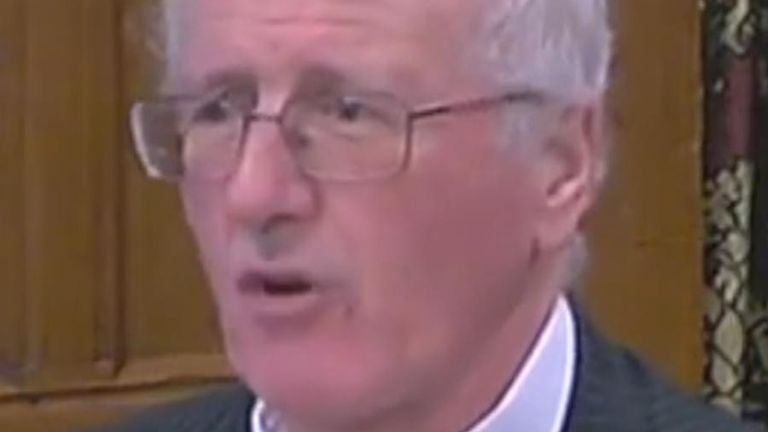
‘Hamas of the squirrel world’
All eyes have been quite rightly focused on the Middle East since the horrific terror attacks on 7 October in Israel, and the conflict in Gaza that has followed.
But while it may have been on the mind of Jim Shannon, he probably should have left it at the door when he took part in a Westminster Hall debate on squirrels.
The DUP MP was telling his colleagues about an organisation in his constituency set up to protect red squirrels, whose numbers have notoriously dwindled due to the impact of their grey cousins.
However, Mr Shannon may have crossed the line when he said: “Grey squirrels are the Hamas of the squirrel world.”
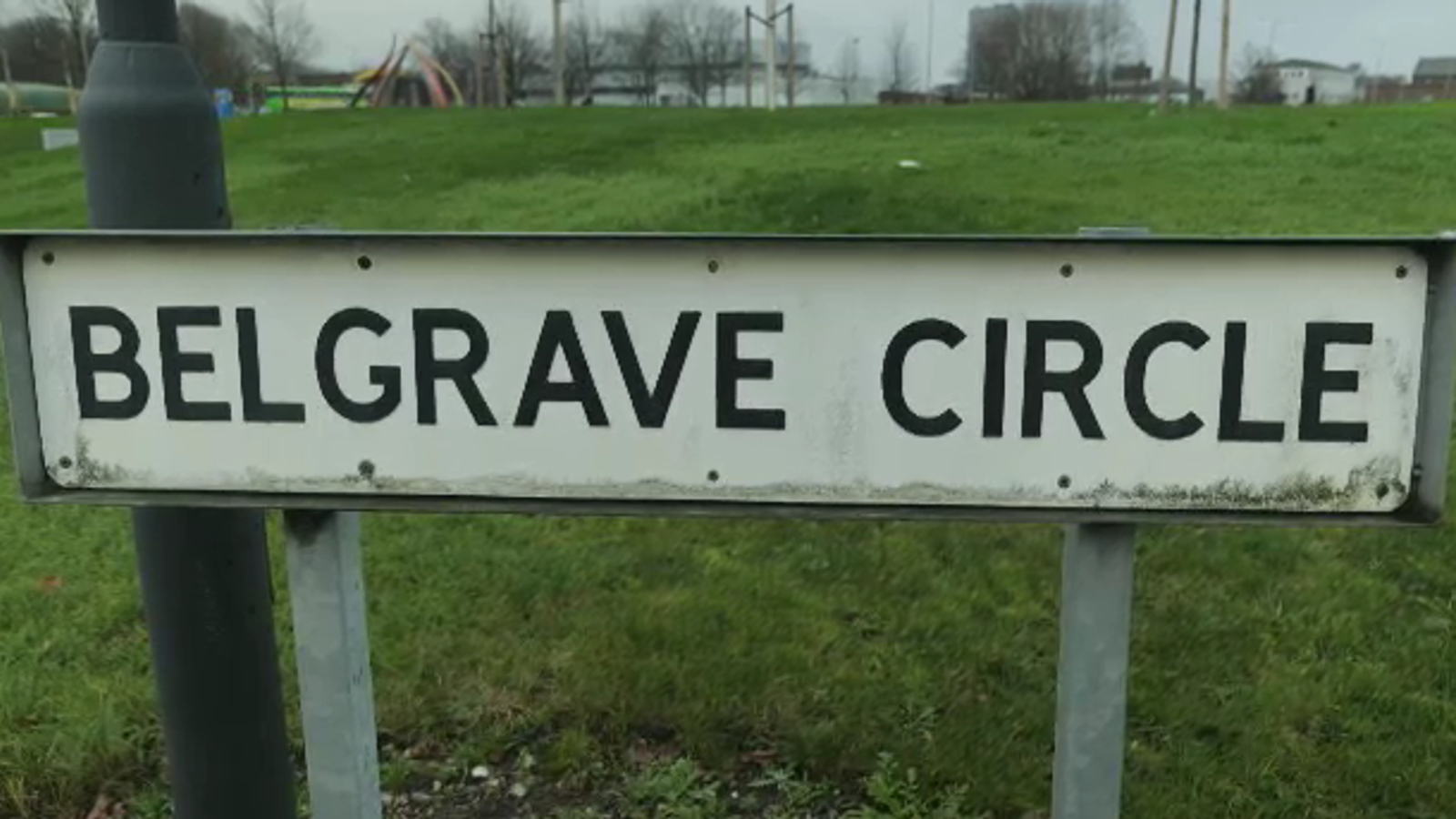
This is a story about a roundabout in Leicester.
It’s not a particularly special roundabout.
But it does tell us something about British politics.
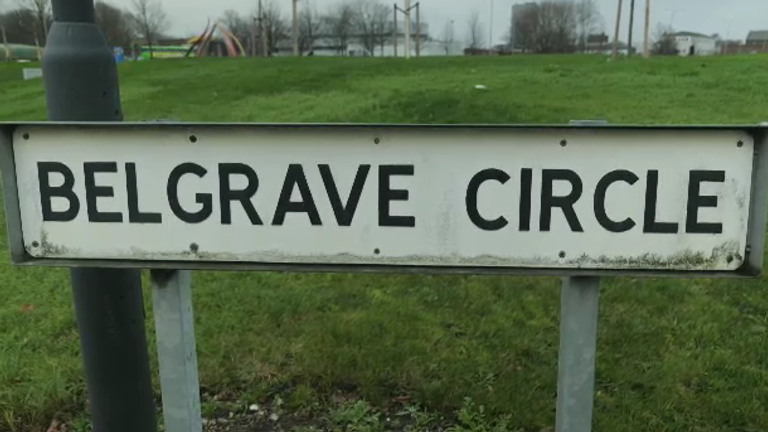
Belgrave Circle, in the north of the city, was opened in March 2015 on the site of an old railway station known locally as “The Gateway to Skegness”.
Later that year, Leicester – along with the rest of the country – went to the polls in the 2015 general election.
The vote saw David Cameron win a majority and Ed Miliband resign as Labour leader.
But around the Belgrave Circle, something different was going on.
Because this is the spot where Leicester‘s three parliamentary constituencies meet, and in 2015 they were all held by Labour MPs who saw their majorities increase.
It’s a different story now.
Stand in the middle of the roundabout and face towards Abbey Park and you’ll see the city’s only remaining Labour seat – that of cabinet minister Liz Kendall.
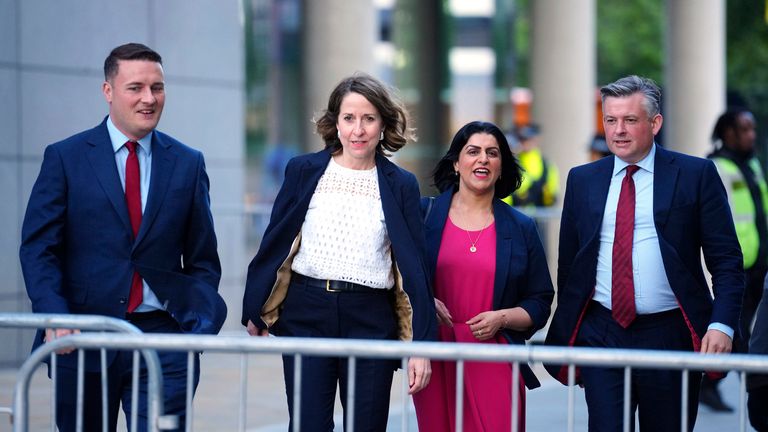
Liz Kendall (left) and Jonathan Ashworth’s (right) constituencies used to meet at Belgrave Circle roundabout until Ashworth lost his seat. Pic: AP
Turn around and face the B&M Home Store, and you’ll find the only place the Conservatives picked up at the last election.
This freak occurrence happened after the Labour vote was split by two independent candidates – both of whom also happened to be former MPs for the city.
Labour saw its vote share cut in half here, and then some.
The Tory vote dropped as well, but not by enough to stop the party coming through the middle and taking the seat by four thousand votes.
But walk to the south of this roundabout and you’ll get to where an independent candidate went one step further.
Local optician Shockat Adam won this seat last year, defeating frontbencher Jonathan Ashworth in a campaign focused mainly on Gaza and events in the Middle East.
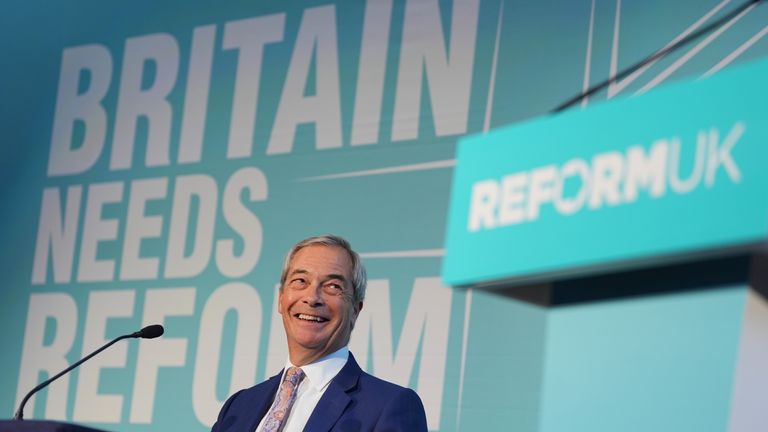
Labour have begun painting themselves as the “bulwark” to Nigel Farage. Pic: PA
What happened on this roundabout last July is no one-off. There’s plenty of evidence to suggest these phenomena could be on the rise around the country.
Since the election, Labour’s vote share has plunged, and its base has fractured as support for insurgent parties on the right and left surges.
A lot of the focus from this has been on Reform UK and how Labour can stop Nigel Farage in traditional ‘red wall’ seats in the midlands and the north.
And yes, Labour is leaking support to Reform on the right. But what’s often not talked about is the greater number of votes its losing on the left.
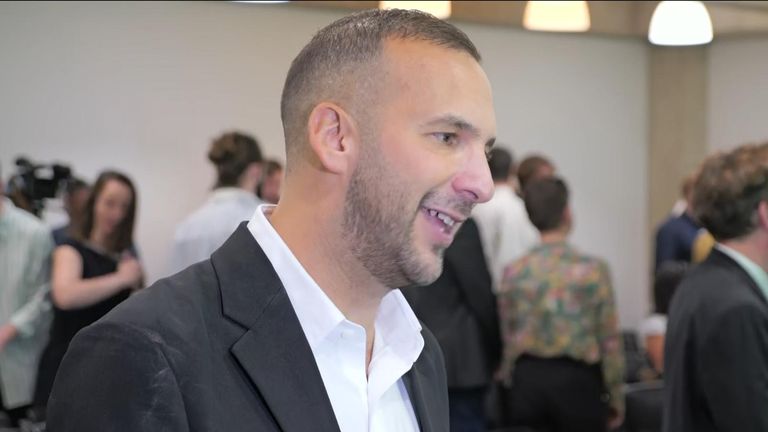
If the Greens do well, it could split the left wing vote, clearing the way for another party to win in a roundabout way
A rejuvenated Green Party under Zack Polanski is chasing Labour close in some polls, while Your Party is attempting to form a separate fighting force straddling ex-Corbynites, independent pro-Gaza candidates and those from the more hard-left tradition.
Come the next election, this could all have far-reaching consequences.
Sky News has ranked all 404 Labour seats according to how at risk they are to these new forces on the left. We created this ‘vulnerability index’ using factors like voting history, population and demographic data.
It shows several cabinet ministers in the top 25 most vulnerable, including Home Secretary Shabana Mahmood in fourth place, Sir Keir Starmer in thirteenth place and Deputy Prime Minister David Lammy in twenty-third place.
All three of these Labour big beasts have seen their majorities cut in the last election by a Green candidate, an independent candidate or a mix of the two.
In Birmingham Ladywood, the total number of votes won by independent and green candidates exceed the number won by the Home Secretary.
That could trigger trouble, given the Greens and Your Party have indicated they may be open to the idea of local “progressive pacts”.
But in the neighbouring constituency of Birmingham Hodge Hill and Solihull North, the result last year shows how an altogether different result could materialise.
Here, Labour’s vote was again split by a left-wing insurgent candidate – this time from George Galloway’s Workers Party.
But the conservative vote was also cut in half by Reform.
If Nigel Farage can unite the right in places like this, he could come through the middle – in much the same way the Tories did in Leicester.
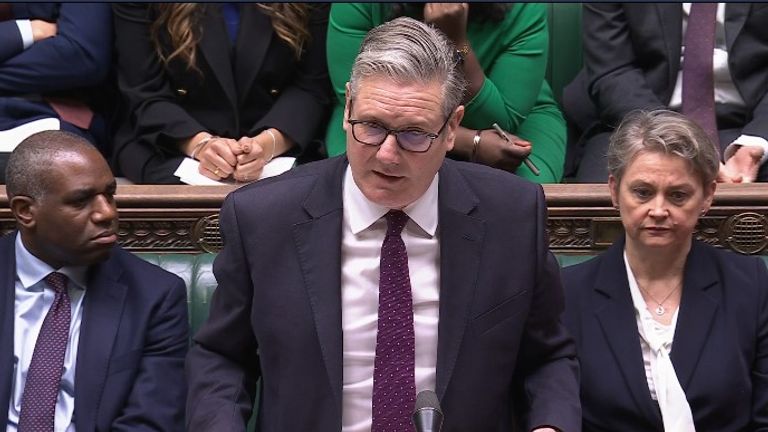
Keir Starmer’s constituency ranks thirteenth on Sky’s vunerability index. David Lammy’s is twenty third.
So how can the government fight back?
Part of the answer, according to senior figures, is attempting to tell a more appealing story about the more overly left-wing chunks of their policy platform – such as the workers rights reforms and rental overhaul.
The hope is these stories may be given more of a hearing in 2026 when (or perhaps more accurately, if) a corner starts to be turned on big domestic priorities like the economy, the NHS and migration.
If that doesn’t happen, the real saving grace for Labour could be tactical voting.
The Greens and Your Party have made it clear that they will plough on with their campaigns against the government, even if it ultimately benefits Reform.
Read more from Sky News:
Australia launches intelligence review
Engineer becomes first wheelchair user in space

If Kemi Badenoch and Nigel Farage split the right wing vote, it may allow Labour, the Liberal Democrats, or another party to come through the middle
What’s less clear is whether left-wingers across the country will.
If they are faced with the prospect of Nigel Farage in Downing Street, could they hold their nose and stick with Labour?
It all begs the question – who is their great enemy: the government or Reform?
Ministers are already trying to emphasise a binary choice when they talk about Labour being the one single “bulwark” to Nigel Farage.
Expect more attempts to mobilise this anti-Reform vote in the years ahead.
But that’s made more difficult by what happened around Leicester’s Belgrave Circle. The same political fracturing that’s dogged the right in years past now being replicated on the left.
Labour’s ability to pick up the electoral pieces may prove decisive in whether what took place on a shabby East Midlands roundabout in July 2024 is recreated across the country in a few years’ time.
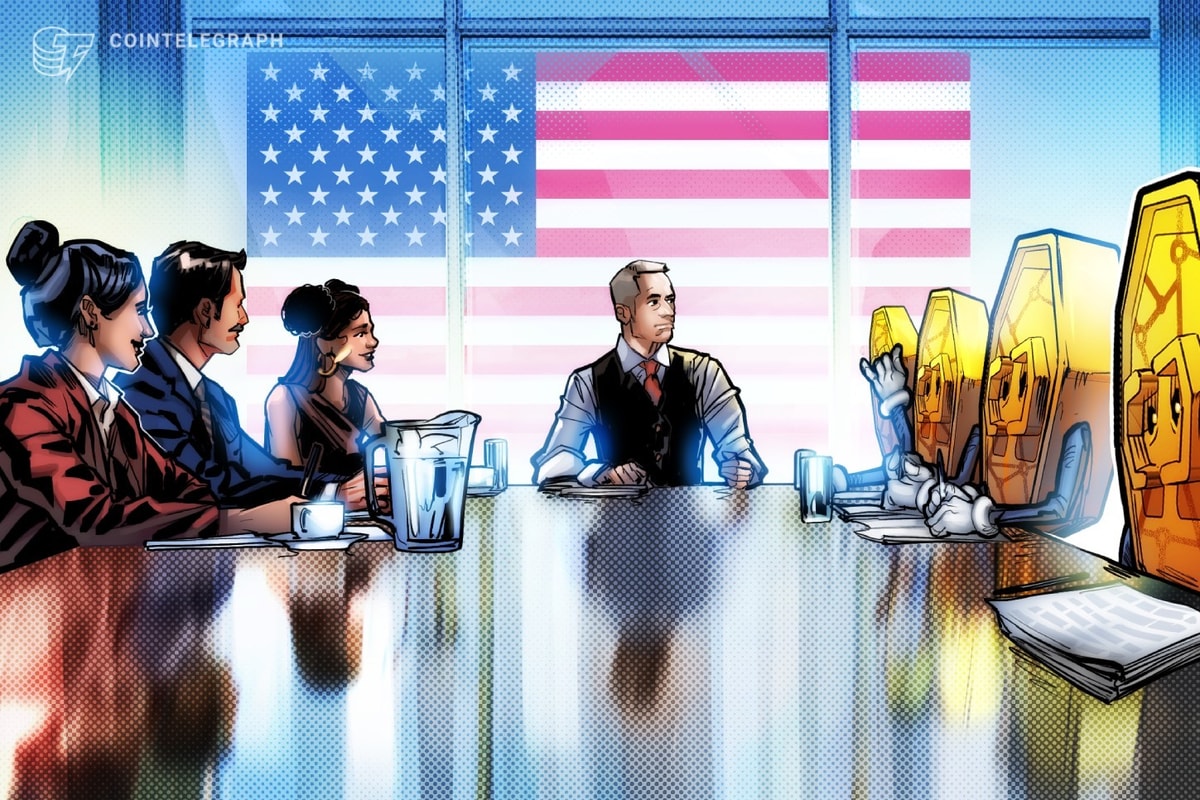

A group of 18 bipartisan US House lawmakers is pushing the country’s tax agency to review its rules on crypto staking taxes before the start of 2026.
In a letter sent to Internal Revenue Service acting commissioner Scott Bessent on Friday, the lawmakers, led by Republican Mike Carey, asked for a review and update guidance on “burdensome” crypto staking tax laws.
“This letter is simply requesting fair tax treatment for digital assets and ending the double taxation of staking rewards is a big step in the right direction,” Carey said.
The letter calls for taxes from staking rewards to be applied at the time of sale, so that “stakers are taxed based on a correct statement of their actual economic gain.”
The lawmakers argued that the current laws, which see stakers taxed upon receiving rewards and again when selling them, are hindering participation in the staking market, when the laws should be designed to support a fundamental part of certain blockchains.
Related: Crypto community ‘very sorry’ over Senator Lummis’ reelection decision
“Millions of Americans own tokens on these networks. Network security — and American leadership — requires those taxpayers to stake those tokens, but today the administrative burden and prospect of over taxation discourages that participation,” the lawmakers wrote.
The letter concludes by asking if there are any administrative barriers to updating the guidance before the end of the year, and asserts that they should be changed to support the current administration’s goal of “strengthening US leadership in digital asset innovation.”
Not the only push for changes to crypto tax rules
On Saturday, House representatives Max Miller and Steven Horsford also introduced a discussion draft aiming to ease the tax obligations on crypto users by exempting small stablecoin transactions from capital gains taxes and offering a deferral option for staking and mining rewards.
In terms of staking, the reps went a slightly different route by opting for a referral option as opposed to a complete change in the current laws.
The proposal outlines that taxpayers would be allowed to elect to defer income recognition on staking or mining rewards for up to five years, rather than being taxed immediately after receiving them.
Magazine: 11 critical moments in Ethereum’s history that made it the No.2 blockchain


The US Federal Reserve is requesting public input on its proposed “payment account,” dubbed a “skinny master account” which fintechs and crypto firms are drawn to as it would allow access to the central bank without needing the typical approvals.
“These new payment accounts would support innovation while keeping the payments system safe,” Fed Governor Christopher Waller said on Friday. In October, Waller recommended that the Fed explore the idea of implementing payment accounts to clear and settle certain transaction activities of eligible financial institutions.
Waller added the Fed is introducing the payment accounts feature to reflect the “rapid developments” in the payments industry that have led to “innovative approaches to banking” and new changes in business models.
“This tailoring could result in lower risk to the payment system and, as a result, requests for payment accounts could generally receive a streamlined review.”
Not all Fed officials agreed with the decision to seek public input, with Governor Michael Barr arguing that it could pose risks if safeguards against money laundering and terrorist financing are not clearly defined, especially for institutions the Fed does not directly supervise.
Several payment-focused crypto firms could be in the running to connect to the Fed’s banking rails, potentially strengthening the bridge between crypto and traditional banking. Among the largest US-based crypto payments companies are Circle, Coinbase, Kraken and Block, Inc.
Inclusion of crypto firms into the Fed’s banking system would mark a significant turnaround for the industry. Crypto companies last year claimed the Biden administration worked to deliberately cut them off from banking services to stifle the industry with what crypto backers have dubbed Operation Chokepoint 2.0.
Waller noted that the Fed has already been experimenting with blockchain-based payment technologies to modernize the US payment system.
Crypto wouldn’t get the same privileges
Payment platforms granted payment accounts, however, won’t receive the same privileges as big banks and Wall Street institutions that currently have master accounts.
Related: US Clarity Act unlikely to be ‘world-shaking’ for Bitcoin’s price: Brandt
Unlike master accounts, the proposed payment accounts would not earn interest, have access to Fed credit, and would be subject to balance caps, among other restrictions.
The comment period to give feedback on the payments account plan will close 45 days after publication in the Federal Register. Waller said last month that the payment account feature is expected to be operational in the fourth quarter of 2026.
Magazine: Bitcoin’s critical level is $82.5K, Ethereum ‘not done yet’: Trade Secrets
-
 Sports2 years ago
Story injured on diving stop, exits Red Sox game
-
 Sports3 years ago
‘Storybook stuff’: Inside the night Bryce Harper sent the Phillies to the World Series
-
 Sports2 years ago
Game 1 of WS least-watched in recorded history
-
 Sports3 years ago
Button battles heat exhaustion in NASCAR debut
-
 Sports3 years ago
MLB Rank 2023: Ranking baseball’s top 100 players
-
Sports4 years ago
Team Europe easily wins 4th straight Laver Cup
-
 Environment3 years ago
Japan and South Korea have a lot at stake in a free and open South China Sea
-
 Environment1 year ago
Here are the best electric bikes you can buy at every price level in October 2024