
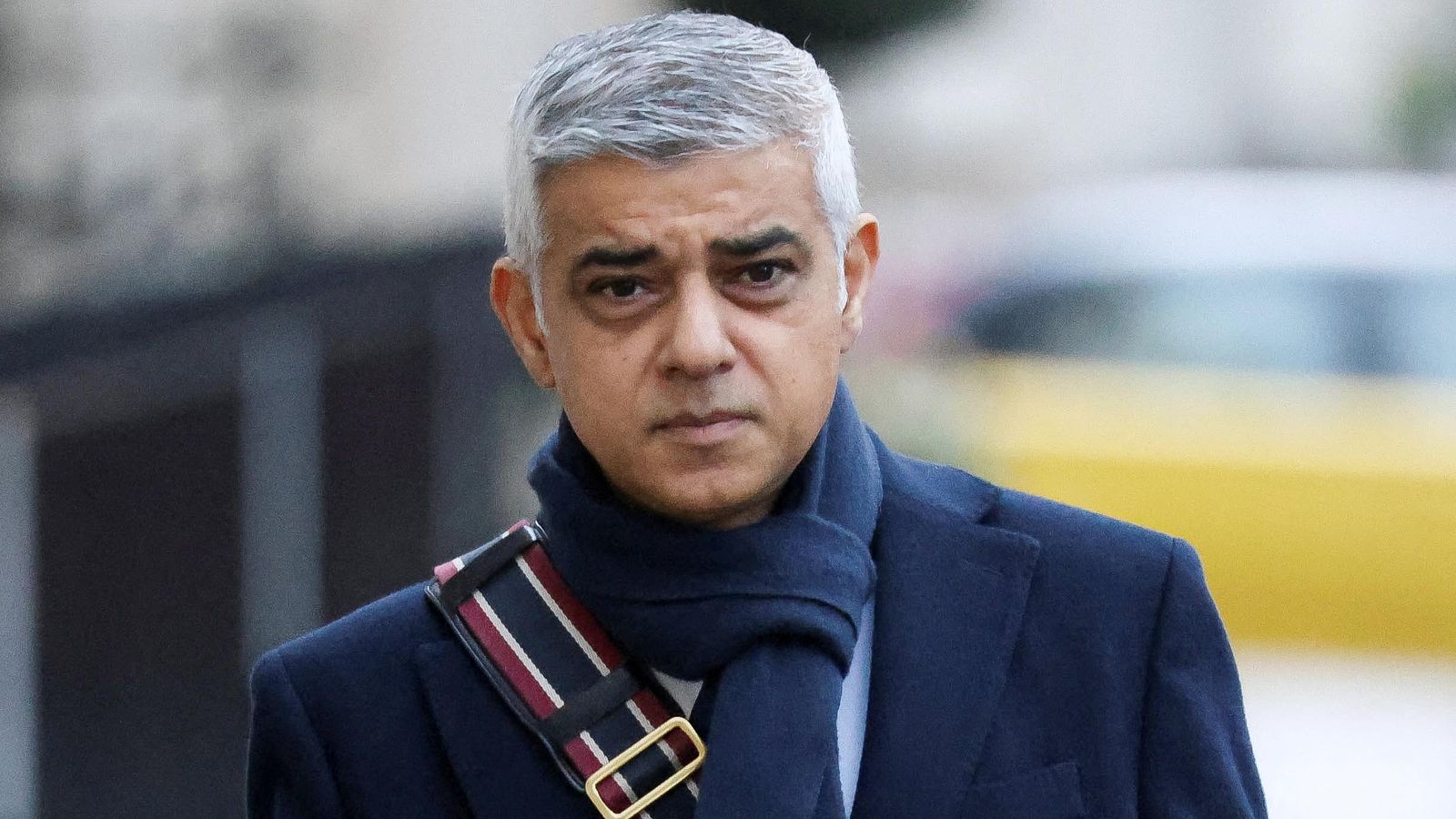
Mayor of London Sadiq Khan backs scheme to send 4x4s to Ukraine in apparent major U-turn

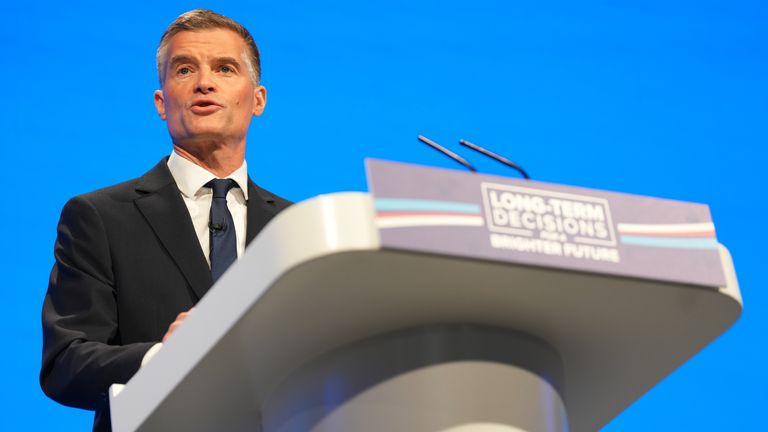
The Mayor of London has pledged his support to send 4x4s to Ukraine that would otherwise be scrapped under the city’s ULEZ scheme.
Sadiq Khan had previously blocked cars that were not ULEZ compliant from being sent to the country, saying he did not believe altering the environmental scheme for exports was possible under current laws.
But now, Mr Khan has asked Transport Secretary Mark Harper to allow Londoners – and others across the UK – to donate suitable vehicles to Ukraine through scrappage schemes.
Under the scheme’s plan, which came into force in August, Londoners with vehicles that fall foul of emission standards can claim up to £2,000 when their non-compliant vehicles are scrapped.
In a letter, jointly sent to Mr Harper by Mr Khan and former defence secretary Ben Wallace, ministers are urged to give motorists “money for taking polluting vehicles off our cities’ streets while providing vital support towards the people of Ukraine”.
“We understand there is a particular requirement for 4×4 vehicles, as well as emergency service vehicles,” it says.
Mr Khan and Mr Wallace said they had reached their conclusion following “conversations with the mayor’s office in Kyiv and other partners.”
It was previously reported by The Telegraph that Kyiv’s mayor, Vitali Klitschko, had written to his London counterpart to suggest the idea as part of the ULEZ scrappage scheme.
“This could be most quickly done by altering the national regulations for the Certificate of Destruction, which is required as proof that a vehicle has been permanently scrapped, to instead enable the export of suitable vehicles to Ukraine via a registered charity or national scheme,” the letter said.
“We recognise that any such change would need cross-departmental co-ordination within government, not least to ensure that any vehicles sent to Ukraine meet their needs.”
Mr Harper has since responded, saying Levelling Up Secretary Michael Gove has written to the mayor “seeking clarity from you on precisely what legal barriers you believe you face”.
He added in the letter that once the further information has been provided, his officials will “of course be ready to support in identifying options to resolve this matter”.

Major tokenization platform Securitize has doubled down on its push to bring tokenized equity to US investors, naming a former PayPal executive as its new general counsel.
Securitize on Tuesday announced the appointment of ex-PayPal executive Jerome Roche, who led the company’s expansion into digital asset projects, including the PayPal USD (PYUSD) stablecoin.
Securitize also said its tokenized securities are already available to US investors, challenging the notion that most issuers prefer to offer such products abroad due to local stock access.
“There’s been a perception that tokenized securities must be offered primarily outside the US, but our experience shows the opposite,” Securitize CEO Carlos Domingo told Cointelegraph.
“Clear regulatory path” for tokenized stocks in the US
According to Securitize, operating real-world asset (RWA) tokenization offerings inside the US regulatory perimeter is “not only possible, but scalable, at institutional quality.”
“We’ve demonstrated that there is a clear regulatory path for issuers to natively tokenize assets for US investors,” Domingo said.
“These are not synthetic representations, or derivatives, but real securities onchain,” the CEO said, adding:
“We operate using SEC-regulated infrastructure, including a registered transfer agent broker-dealer, and fund admin, which allows US investors to access and legally hold tokenized securities in a fully compliant framework.”
Securitize’s optimistic outlook on the US tokenization comes days after the platform obtained regulatory approval to operate as an investment company and a trading ánd settlement system in the European Union on Nov. 26. According to the company, the approval positioned it as one of the first operators for regulated digital securities infrastructure in both the US and EU.

“For the first time, modern ledger technology is giving us the ability to record ownership, settle transactions, and move value in ways that are fundamentally better than the fragmented systems we’ve inherited,” Securitize’s newly appointed general counsel, Roche, said in the announcement.
“Innovation only works when it fits squarely within the guardrails of applicable law,” he added, underscoring Securitize’s global push for regulated tokenized securities.
Related: US Treasurys lead tokenization wave as CoinShares predicts 2026 growth
Securitize’s news is another sign of the US warming to tokenization. On Monday, the Securities and Exchange Commission dropped its investigation into rival tokenization platform Ondo Finance.
Ondo said the decision marks a new chapter for tokenized securities in the US, where they are poised to become a “core part of the capital markets.”
Magazine: When privacy and AML laws conflict: Crypto projects’ impossible choice


Stablecoin issuer Circle has secured regulatory approval to operate as a financial service provider in the Abu Dhabi International Financial Center, deepening its push into the United Arab Emirates.
In an announcement Tuesday, Circle Internet Group said it received a Financial Services Permission license from the Financial Services Regulatory Authority of the Abu Dhabi Global Market (ADGM), the International Financial Centre of Abu Dhabi. This allows the stablecoin issuer to operate as a Money Services Provider in the IFC.
The USDC (USDC) issuer also appointed Saeeda Jaffar as its managing director for Circle Middle East and Africa. The new executive also serves as a senior vice president and group country manager for the Gulf Operation Council at Visa and will be tasked with developing the stablecoin issuer’s regional strategy and partnerships.
Circle co-founder, chairman and CEO Jeremy Allaire said that the relevant regulatory framework “sets a high bar for transparency, risk management, and consumer protection,” adding that those standards are needed if “trusted stablecoins” are going to support payments and finance at scale.

Related: Abu Dhabi Investment Council triples stake in Bitcoin ETF in Q3: Report
Abu Dhabi awards a wave of licenses
The ADGM has recently awarded licenses for financial operations to a wave of crypto companies. Earlier this week, Tether’s USDt (USDT) — the largest stablecoin by circulation and Circle’s top competitor — secured a regulatory milestone in Abu Dhabi’s international financial center, as did Ripple’s dollar-pegged stablecoin Ripple USD at the end of November.
On Monday, crypto exchange Binance was granted three separate licenses from Abu Dhabi’s financial regulator, allowing it to operate its exchange, clearing house and broker-dealer services. This followed its competitor Bybit receiving regulatory approval in the UAE in early October.
Related: HSBC to bring tokenized deposits to US and UAE as stablecoin race heats up
UAE bets on crypto
The Central Bank of the UAE has been actively reviewing its cryptocurrency regulations. In November, it introduced rules for decentralized finance (DeFi) and the broader Web3 industry.
The newly introduced Federal Decree Law No. 6 of 2025 brings DeFi platforms, related services and infrastructure providers under the scope of regulations if they enable payments, exchange, lending, custody, or investment services, with licenses now required. Local crypto lawyer Irina Heaver said that “DeFi projects can no longer avoid regulation by claiming they are just code.”
Heaver told Cointelegraph at the end of 2024 that during that year the country cemented its status as a global crypto hub.
In October 2024, the UAE exempted cryptocurrency transfers and conversions from value-added tax, just a month after Dubai’s digital asset regulator announced stricter rules on crypto marketing. Around the same time, local free economic zone Ras Al Khaimah Digital Assets Oasis was also working to introduce a legal framework for decentralized autonomous organizations.
Local regulators were not shy about enforcing the rules, with Dubai’s Virtual Assets Regulatory Authority cracking down on seven unlicensed crypto businesses, issuing fines and cease-and-desist orders.
Magazine: Review: The Devil Takes Bitcoin, a wild history of Mt. Gox and Silk Road
-
 Sports2 years ago
Story injured on diving stop, exits Red Sox game
-
 Sports3 years ago
‘Storybook stuff’: Inside the night Bryce Harper sent the Phillies to the World Series
-
 Sports2 years ago
Game 1 of WS least-watched in recorded history
-
 Sports3 years ago
Button battles heat exhaustion in NASCAR debut
-
 Sports3 years ago
MLB Rank 2023: Ranking baseball’s top 100 players
-
Sports4 years ago
Team Europe easily wins 4th straight Laver Cup
-
 Environment3 years ago
Japan and South Korea have a lot at stake in a free and open South China Sea
-
 Environment1 year ago
Here are the best electric bikes you can buy at every price level in October 2024