

‘Crap parents’ behind struggling children, Tory MP James Daly claims



Coinbase is taking three US states to court in a bid to lock in federal protection for its planned prediction markets, opening a new front in the battle over whether event contracts are finance or gambling.
The exchange has sued regulators in Connecticut, Illinois, and Michigan, asking federal judges to declare that prediction markets listed on a US Commodity Futures Trading Commission (CFTC)-regulated platform fall under the Commodity Exchange Act (CEA) and the CFTC’s exclusive jurisdiction, not 50 separate state gambling codes.
In a Friday X post, chief legal officer Paul Grewal said Coinbase filed the cases “to confirm what is clear: prediction markets fall squarely under the jurisdiction of the @CFTC, not any individual state gaming regulator (let alone 50).”
Related: Coinbase appoints former UK minister George Osborne to chair advisory council
Coinbase’s federalism challenge to state gambling laws
Coinbase frames the dispute as both a legal and structural question. Court filings argue that if each state can independently decide whether federally supervised prediction markets are illegal gambling, the most restrictive regime would effectively become the national standard, “turning our system of federalism upside down.”
The company also leans hard on the way Congress defined “commodity” in the CEA, noting that lawmakers chose to carve out only a handful of specific underliers, notably onions and “motion‑picture box‑office receipts,” rather than sports or politics.

Grewal draws a clear line between Coinbase’s planned markets and traditional sportsbooks. Casinos and bookmakers, he argues, profit from customer losses and set odds to maximize their winnings. Prediction markets, on the other hand, are neutral matching engines that pair buyers and sellers and are indifferent to price.
Treating both as the same thing, Coinbase says, would not only misread the statute but also smother a federally regulated product that is supposed to live inside the derivatives framework, with CFTC surveillance and position limits.
Related: Coinbase adds stock trading, prediction markets in ‘everything app’ push
Kalshi’s mixed record shows what’s at stake for prediction markets
Kalshi, which already operates as a CFTC‑designated contract market for event contracts, has been testing that theory in court for almost a year. It has sued or been sued in at least six states over whether its sports and event markets are CFTC‑regulated derivatives or unlicensed gambling.
Outcomes so far are mixed. In Nevada and Maryland, judges have held that Kalshi is subject to state gaming oversight despite its CFTC status, while in New Jersey and, more recently, Connecticut, federal courts have granted the company temporary protection from enforcement while they weigh broader injunctions. Massachusetts, meanwhile, has sued to block Kalshi’s sports products, with an injunction decision not expected until early 2026.
With Coinbase now effectively adopting Kalshi’s pre‑emption playbook, the combined docket could force federal courts to answer the core question both firms have been circling. Are US prediction markets going to be treated as regulated financial instruments under the CEA, or as gambling products that live or die under state law?
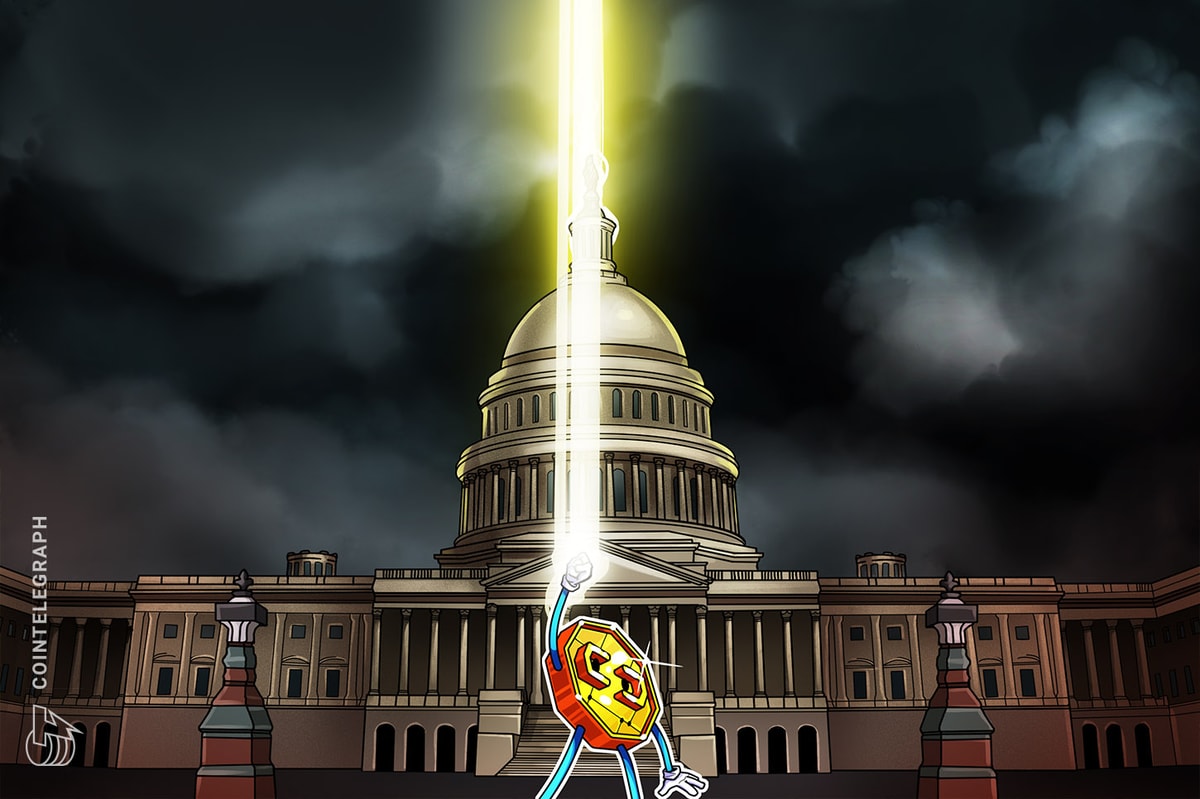

The US Senate has confirmed crypto-friendly lawyer Mike Selig as the new chair of the Commodity Futures Trading Commission and has elevated Travis Hill to chair the Federal Deposit Insurance Corp.
The two confirmations were included in a package of nearly 100 other nominees that the Trump administration had selected for various roles across the government, which passed the Senate in a 53-43 vote on Thursday.
Selig, who has previous experience at the CFTC and the Securities and Exchange Commission, pledged to make crypto a priority when he was nominated in October after he was picked to take over from the previous nominee, Brian Quintenz.
Meanwhile, Hill has already been running the FDIC as the acting chairman and has also expressed a friendly stance toward crypto.
He has also spoken out at Congressional hearings about the alleged debanking of companies due to crypto ties.
The CFTC could soon receive more specific crypto authority, with measures like the bipartisan Senate bill introduced in November, which hopes to shift primary crypto market oversight to the CFTC.
The FDIC is poised to regulate stablecoin issuers and will have a hand in how the crypto industry is banked.
Selig in charge until 2029, Hill until 2030
Selig’s term will expire in April 2029. Once sworn in, he will take over from CFTC acting chair Caroline Pham, who had planned to leave when a new chair was confirmed and join crypto infrastructure provider MoonPay.
Selig will remain as the sole commissioner of the normally five-member commission, after a series of resignations earlier in the year left Pham as the only commissioner still serving on the CFTC.
Related: Former SEC counsel explains what it takes to make RWAs compliant
Hill will lead the agency for the next five years. Martin Gruenberg, the previous Senate-confirmed FDIC chair, resigned in January as part of the outgoing administration of former President Joe Biden.
Industry positive about crypto’s future regulation
The news of crypto-friendly leaders at the helm of two major regulators has been met with positivity in the industry.
Faryar Shirzad, the chief policy officer at crypto exchange Coinbase, said in an X post that Selig’s “experience in crypto and as a federal regulator will ensure that America’s crypto market is governed with fairness, clarity and an abiding commitment to the law.”

Cody Carbone, CEO of crypto industry advocacy group Digital Chamber, said the US Senate’s confirmation of Selig is an exciting new chapter, given “his track record as a member and a lawyer digging into the complex, technical issues around digital assets.”
Magazine: Big questions: Would Bitcoin survive a 10-year power outage?


The US Securities and Exchange Commission has flagged in a lawsuit that third-party Bitcoin mining hosting services can be a securities offering, a position strongly opposed by one industry executive.
The SEC sued the Bitcoin (BTC) mining company VBit and its founder, Danh Vo, in a Delaware federal court on Wednesday, accusing them of fraud and misappropriating around $48 million in investor funds between 2018 and 2022 by selling a greater number of hosting agreements than there were mining rigs.
“VBit’s Hosting Agreements are investment contracts and therefore securities,” the SEC claimed, arguing that VBit’s investment contracts meet the criteria of the securities-defining Howey test.
“Investors who purchased Hosting Agreements did so with the expectation of earning passive income and relied exclusively on VBit’s efforts to earn a profit as the investors did not possess, control, or have agency over the mining rigs they purportedly purchased,” the agency claimed.
The SEC’s claim is a rare hangover from how the agency approached enforcement under the Biden administration, which crypto backers have said lumped most cryptocurrencies and businesses under securities laws.
VBit didn’t follow industry standards, SEC alleges
The SEC claimed that Vo’s Bitcoin mining hosting operation fell far short of standard industry practices, with investors unable to track their rigs, and the company retaining full operational control.
VBit also directed hashrate into a mining pool under its control, which appeared to be a defining factor in the SEC’s classification of VBit’s hosted Bitcoin mining agreement as a security.
In the filing, the SEC said: “The fortunes of each investor were purportedly tied to the fortunes of other investors because every investor’s chance of earning a profit was tied directly to the performance of the greater VBit mining pool, and the more investors recruited into the mining pool, the greater the chances of earning more Bitcoins.”
SEC’s view shouldn’t impact hosted Bitcoin mining industry
Mitchell Askew, the head of Blockware Intelligence, told Cointelegraph that pooling hashrate isn’t industry practice for hosted Bitcoin mining service providers.
Related: Bitcoin miners enter ‘harshest margin environment of all time’
“Hosted Bitcoin mining simply means a client purchases a computer and electricity,” he said. “There’s no pooling of capital, no profit-sharing, and no reliance on a promoter to generate returns. Under the Howey test, that is very clearly not a security.”
“I don’t think this affects the hosted mining industry at all. Legitimate hosted mining has no resemblance to an investment contract, and this theory has no legs to stand on.”
The SEC did not immediately respond to a request for comment.
The SEC’s view that hosted Bitcoin mining can constitute a security is one of the most notable classifications under the Trump administration, which has positioned the SEC to be more supportive of the industry.
Several high-profile crypto investigations that the agency started under the Biden administration have since been dropped, however, many fraud-related lawsuits are ongoing.
Magazine: Big questions: Would Bitcoin survive a 10-year power outage?
-
 Sports2 years ago
Story injured on diving stop, exits Red Sox game
-
 Sports3 years ago
‘Storybook stuff’: Inside the night Bryce Harper sent the Phillies to the World Series
-
 Sports2 years ago
Game 1 of WS least-watched in recorded history
-
 Sports3 years ago
Button battles heat exhaustion in NASCAR debut
-
 Sports3 years ago
MLB Rank 2023: Ranking baseball’s top 100 players
-
Sports4 years ago
Team Europe easily wins 4th straight Laver Cup
-
 Environment3 years ago
Japan and South Korea have a lot at stake in a free and open South China Sea
-
 Environment1 year ago
Here are the best electric bikes you can buy at every price level in October 2024