Connect with us

Published

on

On Wednesday, fourth-place GOP presidential contender Vivek Ramaswamy capped off a month of conspiratorial campaigning by asserting, yet again, that the January 6, 2021, riot inside the Capitol building was an “inside job.”

“There is now clear evidence,” the 38-year-old entrepreneur tweeted, “that there was at the very least entrapment of peaceful protestors, similar to the fake Gretchen Whitmer kidnapping plot & countless other cases. The FBI won’t admit how many undercover officers were in the field on Jan 6, Capitol police on one hand fired rubber bullets & explosives into a peaceful crowd who they then willingly later allowed to enter the Capitol. That doesn’t add up & the actual evidence turns the prior narrative upside down: if the deep state is willing to manufacture an ‘insurrection’ to take down its political opponents, they can do anything. Once you see it, you can’t unsee it.”

The timeline of Ramaswamy’s revelation is certainly curious. Law enforcement use of (a small number of) rubber munitions and flash-bang devices on that day was known in real time, as was the U.S. Capitol Police’s selected removal of barricades in front of some oncoming demonstrators, back when the future presidential candidate was still pinning partial blame for the “disgraceful Capitol riot” on the “downright abhorrent” behavior of former President Donald Trump. The 2020 plot to kidnap Michigan Democratic Gov. Gretchen Whitmer looked “an awful lot like entrapment” by at least January 2022; as of September 2022, Ramaswamy was still decrying the “Grand Old Party of Crybabies” for insisting, despite the “lack of evidence of fraud,” that “the presidential election was stolen.”

The only bit of stated evidence that looks remotely new is an apparent reference to the June 2023 congressional testimony of former FBI Washington Field Office Assistant Director Steven D’Antuono that “a handful” of agency informants were on the scene January 6, and that he wasn’t sure of the overall number. (D’Antuono also testified that the FBI had been instructing its informants to discourage Trump supporters from heading to the Capitol that day, since there were credible fears that his planned “Stop the Steal” rally could turn violent. He also characterized the notion of the feds stoking the protest as being “furthest from the truth.”)

Whatever the import of one or even several handfuls of government agents amid the 884 individuals to date who have been convicted of January 6related crimes, it took a while for Ramaswamy to arrive at “entrapment” as the primary cause. In July 2023, even while beginning to shift blame away from Trump (calling it “unproductive”), the candidate was still pegging as the main culprit “pervasive censorship.” By the end of August, in direct contradiction to his “victimhood mythology” critique of the year before, the candidate was triangulating his January 6 position by saying that had he been in thenVice President Mike Pence’s shoes, he would have somehow made the transfer of presidential power contingent on federal election reforms.

Part of Ramaswamy’s positioning is, in the uncharitable words of National Review Editor in Chief Rich Lowry, “to avoid criticizing Trump at almost all costs.” He has pledged to pardon the 46th president, as well as “all peaceful, nonviolent January 6 protesters who were denied their constitutional due process rights.” He vowed to pull out of the Colorado primary in protest of the state Supreme Court banning Trump from the ballot. He has called Trump an “excellent president,” defended his use of the word vermin, and described his own campaign as “America First 2.0.” When news broke this week that Ramaswamy would not be spending previously planned money on television ads in the early states of Iowa and New Hampshire, Trump wrote on Truth Social that “He will, I am sure, Endorse me.”

Whatever the campaign context, Ramaswamy has been on an “inside job” tear this month, beginning with this rapid-fire volley of Trump-friendly conspiratorial assertion at the December 6 GOP debate:

Why am I the only person on the stage at least who can say that January 6 now does look like it was an inside job, that the government lied to us for 20 years about Saudi Arabia’s involvement in 9/11, that the Great Replacement Theory is not some grand right-wing conspiracy theory but a basic statement of the Democratic Party’s platform, that the 2020 election was indeed stolen by Big Tech, that the 2016 election, the one that Trump won for sure, was also one that was stolen from him by the national security establishment that actually put out the Trump-Russia collusion hoax that they knew was false?

This was followed one week later by a live and contentious CNN town hall, in which moderator Abby Phillip pressed him repeatedly to provide evidence for the provocative “inside job” claim. Amid several condescending remarks along the lines of “I know this is very uncomfortable for you,” the candidate mustered the same three tidbits reiterated in this week’s tweet: that “there were federal law enforcement agents in that field,” that some of the Capitol building’s security guards rolled out the proverbial “red carpet” for the trespassers, and that the Whitmer plot proves January 6 intent:

It’s the same issue, and the same FBIsame even part of the FBI. Three people who were in an alleged plot to kidnap Gretchen Whitmer were acquitted at the end of trial, because it was entrapment. That is, government agents put them up to do something they otherwise wouldn’t have done….FBI agents putting them up to a kidnapping plot that we were told was true, but was entrapment. Same thing with the Capitol Police, people letting them in freely, many of those people then being charged. The government cannot put you up to do something, and then charge you for it. That’s wrong.

The Michigan case, which Reason treated with skepticism from the beginning, has some glaring differences with January 6, and not just that the Capitol Police are not, in fact, the FBI. One was a private, ginned-up conspiracy among a handful of surveilled and infiltrated actors to commit a crime that had zero chance of taking place; the other a planned public event featuring thousands of motivated participants. The centrality of FBI informants to the Whitmer plot was clear from the charging documents onward; but as C.J. Ciaramella pointed out in a feature article posted in September 2022, “no court records in the hundreds of prosecutions of January 6 rioters have mentioned the use of agents provocateurs.”

Could there have been government agents trying to stoke conflict on that chaotic day, only to watch their handiwork spin so horribly out of control that one protester was shot and killed, 114police officers reported injuries, and elected officials were scurried off into safe rooms during what was supposed to be the certification of the presidential election? Absolutely, yes. As Ciaramella wrote, “It’s not an entirely unreasonable suspicion, given the bureau’s history of infiltrating and disrupting political movements.”

But there’s a vast chasm between just asking questions about that day versus making bald factual assertions about a “manufacture[d]” plot to “take down…political opponents.” The latter formulation feeds the very “victimhood mythology,” “sore losing,” and “conservative brand of victimhood” Ramaswamy was decrying just 15 months ago. It contributes to an apocalyptic rhetorical populism for which violence is a logical next step. And it denies agency to the more than 200Trump supporters who, of their own volition, chose to attend the Stop the Steal rally, march to the Capitol, trespass on the grounds (whether by strolling in through a removed barrier or bashing through obstacles), then engage in conduct that led to their criminal conviction of “assaulting, resisting, or impeding officers and/or obstructing officers during a civil disorder.”

You can be suspicious of the FBI, critical of the overly aggressive January 6 prosecutions and sentencing, and of the belief that those convicted of nonviolent crimes from that day shuld not be imprisoned, without embracing an evidence-starved theory of government malfeasance that just so happens to let both Trump and his most violently deluded supporters off the hook. Yet Ramaswamy’s transparent cynicism is arguably a rational (if grotesque) response to political incentives, given that half of Republicans pin blame for January 6 on the left.

“Ramaswamy has sounded as pro-Trump as Trump’s own children, inveighed against an establishment that barely exists, played footsie with conspiracy theories, and courted controversiesboth righteous and stupidto gain the attention of the base of the party,” Lowry wrote. “It’s dispiriting that such a shrewd and self-interested guy thinks this is how you rise within the Republican Party.”

It’s even more dispiriting that he’s probably right.

Continue Reading

Environment

MG begins deliveries of the world’s first mass-produced EV with a semi-solid-state battery

Published

on

By

MG begins deliveries of the world's first mass-produced EV with a semi-solid-state battery

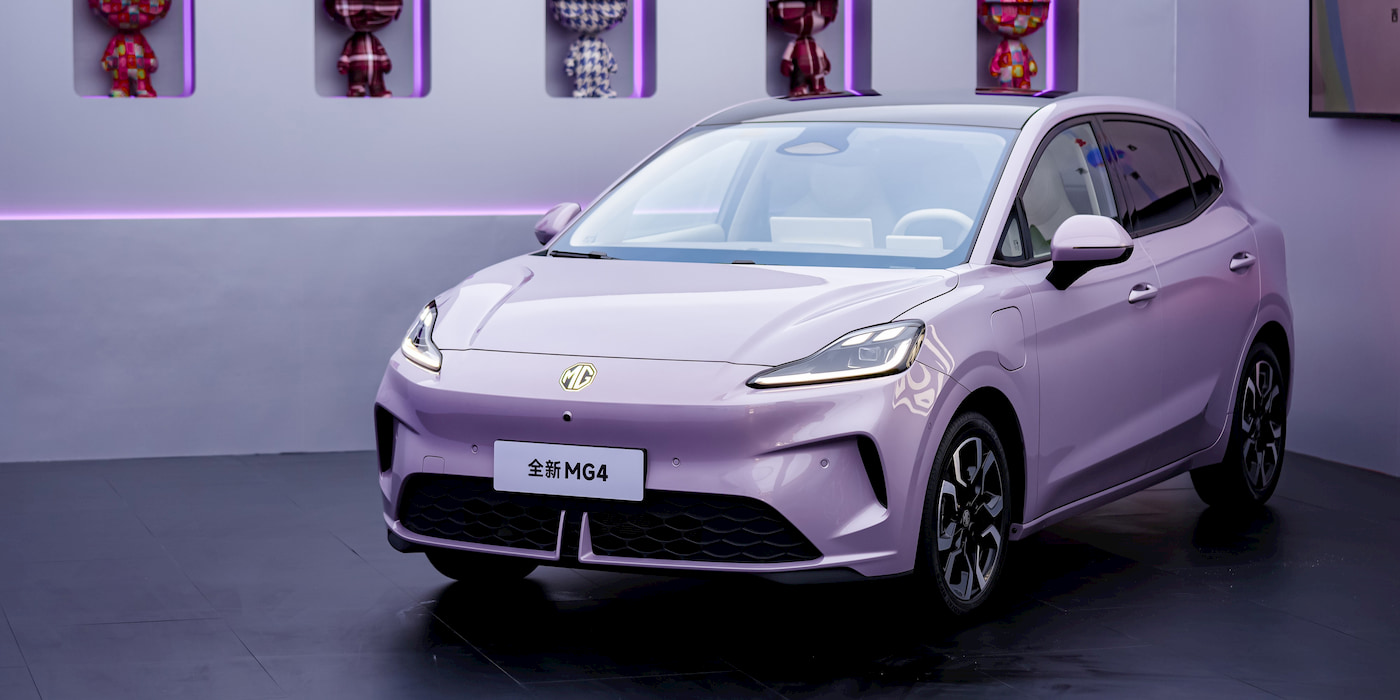
SAIC MG delivered the first MG4 model with a semi-solid-state EV battery in China, starting at under $15,000.

The MG4 is the first EV with a semi-solid-state battery

In August, SAIC MG launched the all-new MG4 at the Chengdu Auto Show, deeming it “the world’s first mass-produced semi-solid-state” electric vehicle.

The new MG4 is available in five different trims: Comfort, Ease, Freedom, Smart, and the semi-solid-state “Secure” edition.

SAIC MG announced on Thursday that it had delivered the first MG4 equipped with the new battery tech. The new MG4 is on sale starting at 68,800 RMB ($9,800), with prices rising to 102,800 yuan ($14,500) for the semi-solid-state battery model.

Advertisement – scroll for more content

It’s available with two lithium iron phosphate (LFP) battery sizes: 42.8 kWh or 53.95 kWh. The three lowest-priced trims are equipped with the smaller (42.8 kWh) battery, providing 437 km (271 miles) CLTC driving range, while the Smart version uses the 53.95 kWh battery, delivering 530 km (330 miles) of range.
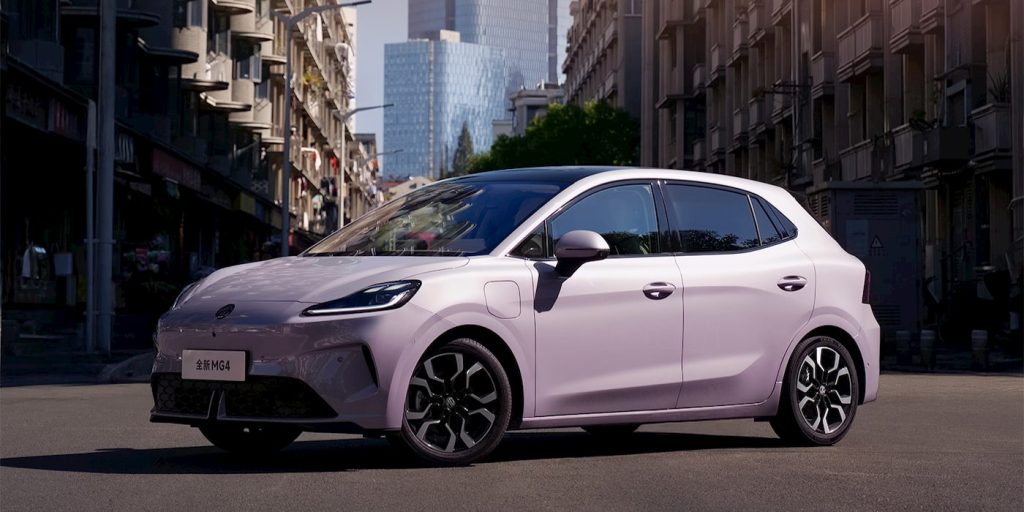
First-EV-semi-solid-state-battery
The new MG4 with a semi-solid-state EV battery (Source: SAIC MG)

Meanwhile, the semi-solid-state variant is powered by a 53.95 kWh semi-solid manganese-based lithium-ion battery, delivering 530 km (330 miles) of CLTC range.

All new MG4 models are powered by a single front-mounted “six-in-one” electric motor with 120 kW (161 hp) and 250 Nm torque. Using DC fast charging, it can recharge from 30% to 80% in 20 minutes.
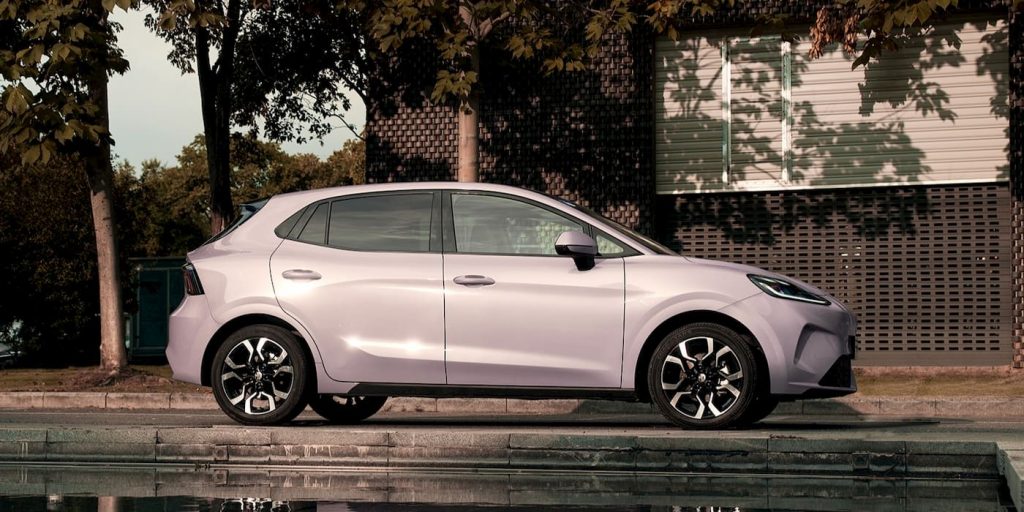
First-EV-semi-solid-state-battery
The new MG4 (Source: SAIC MG)

The electric hatch is 4,395 mm long, 1,842 mm wide, and 1,551 mm tall, with a wheelbase of 2,750 mm. That’s about the size of the BYD Dolphin.

Like most Chinese EVs nowadays, the new MG4 is loaded with modern tech and features. The smart cockpit is powered by a Qualcomm Snapdragon 8155 in-car chip.
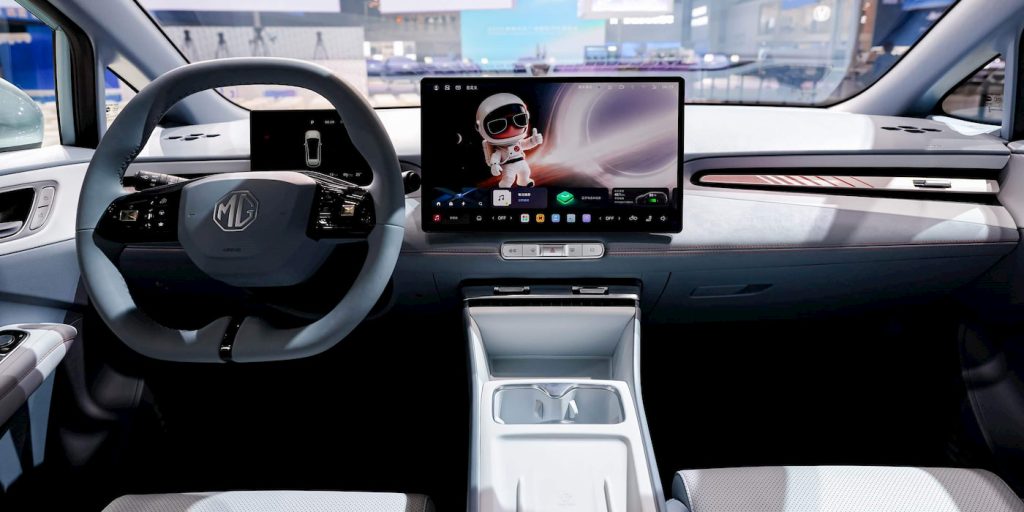
First-EV-semi-solid-state-battery
The interior of the new MG4 with a semi-solid-state battery (Source: SAIC MG)

While the three lower-priced trims feature a 12.8″ central infotainment screen, upgrading to the Smart and semi-solid-state models adds a bigger 15.6″ display with 2.5K resolution.

The company said that by reducing the liquid electrolyte content to just 5%, the semi-solid-state EV battery significantly reduces the risk of combustion and improves the cycle life.

In two recent needle penetration tests, the new battery produced no smoke, no fires, and no explosions after two hours. SAIC MG said it was an industry first, exceeding industry standards by 20%.

SAIC MG delivered over 13,000 new MG4 models in November. It’s also the best-selling independent Chinese car brand overseas, A “beacon of Chinese automotive success,” in the EU and British markets, the company said.

Source: CarNewsChina, SAIC MG

FTC: We use income earning auto affiliate links. More.

Continue Reading

Environment

GM considers former Tesla Autopilot head Sterling Anderson as next CEO, report says

Published

on

By

GM considers former Tesla Autopilot head Sterling Anderson as next CEO, report says

GM CEO Mary Barra is reportedly considering Sterling Anderson, the former head of Tesla Autopilot and co-founder of Aurora, as her potential successor. But first, she is putting him through a “tough test” in his new role as Chief Product Officer.

We reported back in May that GM hired Anderson as its new Chief Product Officer in a surprising move that put a tech executive in charge of the legacy automaker’s entire vehicle development program.

Anderson is well-known in the EV community. He led the Model X program at Tesla and was the director of the Autopilot program during its formative years (2015-2016). He later left to co-found Aurora Innovation, a self-driving startup that has focused heavily on autonomous trucking.

Now, a new report from Bloomberg states that Barra sees Anderson as a frontrunner to replace her when she eventually steps down.

Advertisement – scroll for more content

According to the report, Barra is “gauging” Anderson for the top job by giving him a massive portfolio that serves as a trial by fire. Since joining in June, Anderson has been tasked with overseeing the end-to-end lifecycle of GM’s products, both gas and electric, including the critical integration of hardware and software.

The “test” essentially boils down to whether Anderson can successfully execute Barra’s vision of transforming GM into a tech-first company. This involves untangling the automaker’s software woes and delivering on the promise of “eyes-off” autonomous driving for personal vehicles, a pivot away from the robotaxi-focused strategy of its former Cruise unit.

While Barra, 63, hasn’t announced a retirement date, the pressure is on to find a leader who can navigate the rapid transition to electric and software-defined vehicles. If Anderson passes this “test,” he could become the first outsider with a tech background to lead the 117-year-old automaker.

Electrek’s Take

“Tech background” is not entirely true, but mostly accurate. He has spent a few years at Tesla and then built Aurora; both are in the auto industry, but certainly on the techy side of it. Before that, he spent years at MIT, and the ‘T’ stands for technology.

I’ve only had a few interactions with Sterling, but from what I could tell, he is a smart guy who was among the most realistic about autonomy at Tesla, which is probably why he didn’t last long at the head of the program and went on his own.

He helped build Aurora into a multi-billion-dollar company that is now seen as the leader in autonomous trucking.

GM is starting to build an extensive and impressive EV lineup, but it still has issues committing to high volume due to the political landscape, which, in my opinion, the company itself often lobbied the wrong way.

I think some fresh blood could help.

FTC: We use income earning auto affiliate links. More.
Continue Reading

Environment

House passes bill to ease permits for building out AI infrastructure

Published

on

By

House passes bill to ease permits for building out AI infrastructure

House passes bill that would help advance AI data center buildout

The House of Representatives on Thursday passed a bill aimed at making it easier to get federal permits to build infrastructure for artificial intelligence projects.

The bill, known as the SPEED Act, is backed Big Tech giants such as OpenAI, Micron and Microsoft

The bill cleared the House in a 221-196 vote, overcoming a conservative rebellion that nearly sank the legislation in a procedural vote earlier this week.

The bill now heads to the Senate, where it is likely to be part of a larger conversation around permitting reform. 

The SPEED Act’s proponents argue it is critical to help the U.S. outpace China and other global competitors in the race for AI dominance. 

“The electricity we will need to power AI computing for civilian and military use is a national imperative,” said Rep. Bruce Westerman, R-Ark., the bill’s sponsor and chair of the House Natural Resources Committee. 

The SPEED Act would reform the 1969 National Environmental Policy Act, which mandates federal reviews for projects that would impact the environment.

It would tighten the timelines for NEPA reviews and shrink the statute of limitations for NEPA litigation to 150 days from the current six years. 

Permitting reform has drawn bipartisan support recently as clean energy projects supported by Democrats became ensnared in permitting delays.

Pressure has built on Congress to act as AI has emerged as a key sector and power-hungry data centers have placed an increased strain on the electric grid. 

Read more CNBC politics coverage

The Democratic cosponsor of the bill, Rep. Jared Golden of Maine, said the SPEED Act would allow the U.S. to be “nimble enough to build what we need, when we need it.”

Most Democrats opposed the SPEED Act, however, demanding that any permitting bill overturn President Donald Trump‘s moves to choke renewable energy sources like offshore wind

Democratic resistance was only compounded after GOP leadership inserted language to exempt Trump’s efforts to block renewables from provisions in the SPEED Act that would limit the White House’s ability to arbitrarily yank permits it does not like.

The amendment was added after a standoff on the House floor during a procedural vote, where conservatives opposed to renewable energy demanded concessions for their votes.

“That provision codifies a broken permitting status quo,” said Rep. Scott Peters, D-Calif., who supports permitting reform but opposed the SPEED Act.

“I look forward to working with my colleagues across the aisle in the Senate to craft a bipartisan product that can become law.”

Continue Reading

Trending