


Can it be a coincidence that US planes attacked Syria around the very time the Epstein files were released?
It would be cynical – but then again, it would be how politics works.
The deadline-day release of the Epstein files had White House media management written all over it, unredacted.
Initial searches for Trump’s name within the Department of Justice search function returned nothing, while the presence of former president Bill Clinton, on the other hand, was everywhere.
It is PR strategy 101 – front-load the release of documents with the Democrat stuff and save any possible Trump content for a soft landing sometime between Christmas and New Year.
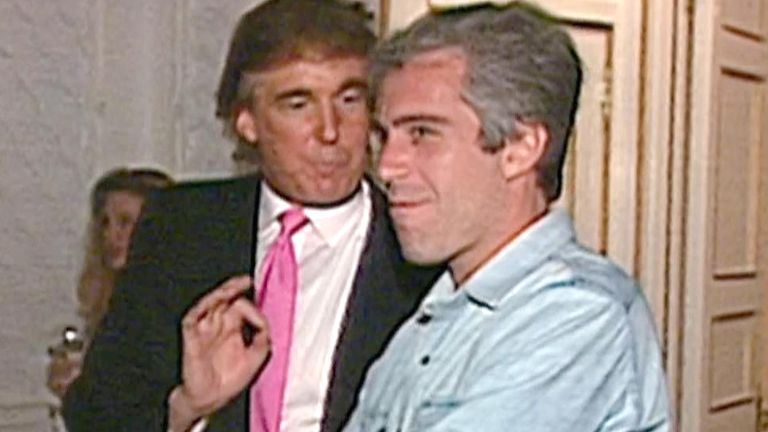
Donald Trump and Jeffrey Epstein. Pic: NBC
Epstein files latest: What we found inside – as critics accuse ‘document dump’ of breaking law
By that time, the public will have softened its focus on the story – it’s what the festive season does.
The presence of celebrity in the latest release might also feather Trump’s bed.
It’s clear that iconic superstars like Mick Jagger and Diana Ross were courted by Epstein as innocents, ignorant of his criminality. To see them in the files cements a narrative of a monster who lured the unsuspecting into his orbit.
We support Jagger and Ross as treasured icons, so we remind ourselves that simply being included in the files doesn’t equate to wrongdoing or knowledge of it. In turn, it shapes an empathy around the predicament that will extend to Trump and, perhaps, the benefit of any doubt.
Of course, not everyone will see it that way – the people who see a cynical exercise in delay and obfuscation, constituting a gross insult to the Epstein survivors at the heart of the story.
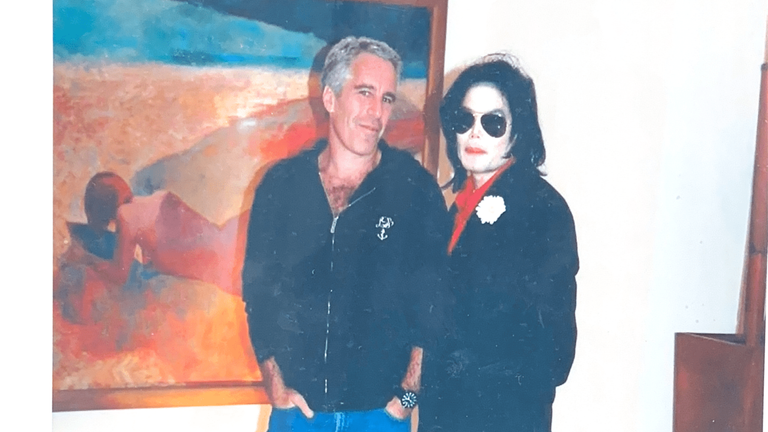
Jeffrey Epstein and Michael Jackson. Pic: US DoJ
Read more:
Mystery text quoting price for ‘girl’ included in new pictures
Trump administration criticised over partial Epstein files release
For all the talk (by the Trump administration) of a tight time scale and a willingness to act transparently, survivors and their supporters point out that Donald Trump could have published all the Epstein files long ago, never mind drip feed them with wide-ranging redactions.
Not to have done so is an affront to them and an attempt to evade accountability.
For all the talk about the release of the files, their significance is undermined by the lack of context. We are shown pictures and documents that reflect the life of a thoroughly unpleasant individual who inflicted suffering on an industrial scale. But with redactions, and without explanations, we are left having to join the dots in an effort to establish criminal behaviour and blame.
It is a level of uncertainty surrounding the Epstein files and a source of dissatisfaction to survivors, for whom justice further delayed is justice further denied.

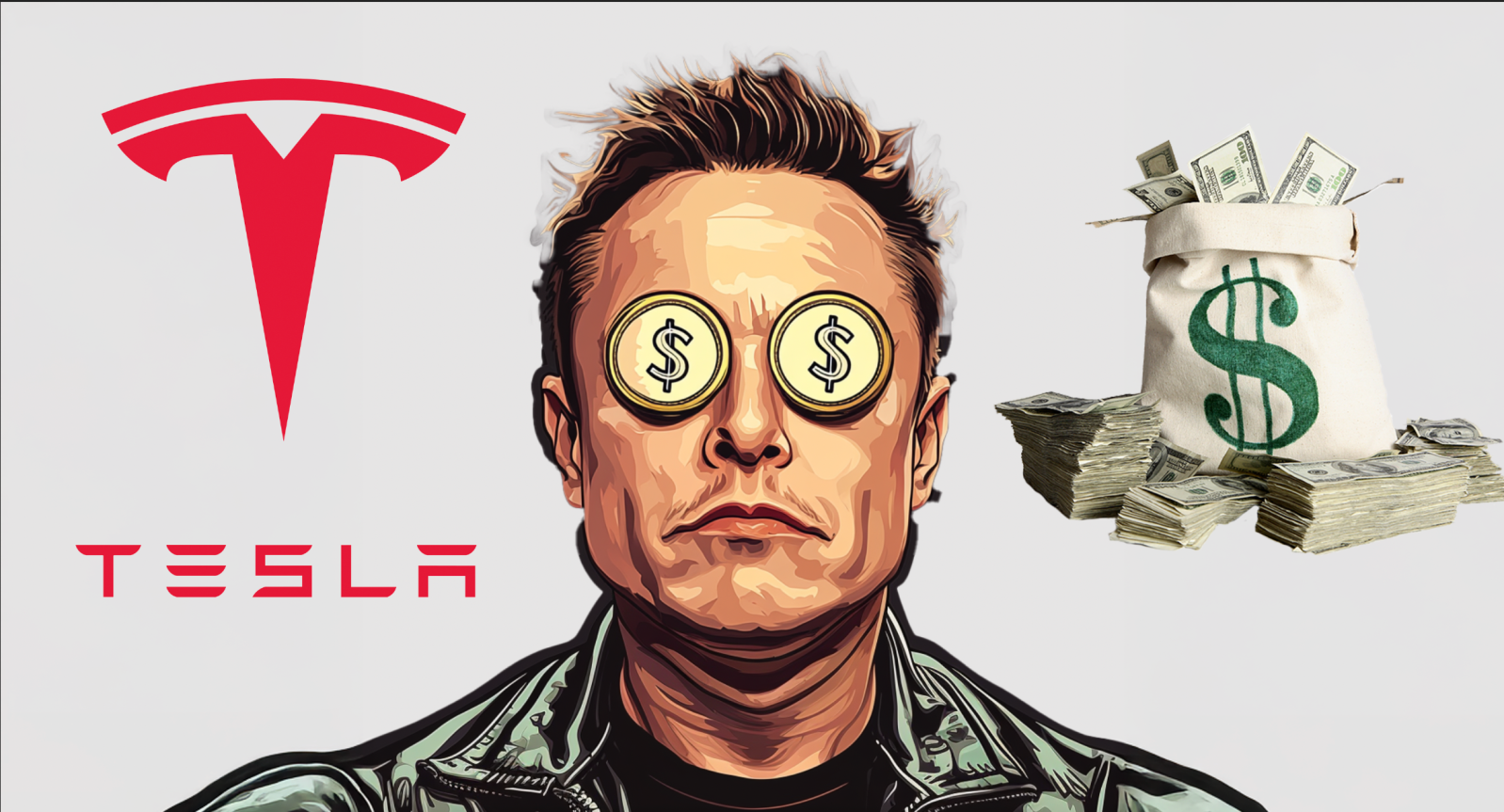
The Delaware Supreme Court made its ruling in the fight over Tesla CEO Elon Musk’s $55 billion pay package from 2018, reversing the Court of Chancery’s decision and reinstating the pay package.
But the Court still penalized Musk $1 plus attorney’s fees due to the award’s unfairness.
The ruling is the latest and likely last step in the long story behind Musk’s excessive pay package, tied to company performance milestones, which was first approved by shareholders in 2018 and worth approximately $55 billion if all milestones were met. At current share prices, the award is worth more like $139 billion.
For a short recap, TSLA shareholders approved a compensation package in 2018 which would award Musk, and dilute all other shareholders by around 8%, if the company reached financial targets the company claimed were difficult to achieve.
That package ended up being subject to a lawsuit, which alleged that Tesla misled investors when campaigning for the compensation package and that the board was too cozy with Musk himself, such that they did his bidding rather than acting in an independent manner.
The Delaware Court of Chancery, where Tesla used to be legally domiciled, found that argument persuasive, and ruled to rescind Musk’s entire pay package.
Delaware has long been known to be one of the most business friendly places for companies to host their legal domiciles. But after the ruling, Musk encouraged companies to leave the state, and moved his own companies out of it as well.
Later, Tesla held another vote on the same package, but Tesla’s captured board used the same misleading tactics in marketing it, and the court did not accept the new vote and again denied Musk’s pay package.
Tesla appealed that decision to bring it to the Delaware Supreme Court.
In the interim, the board gave Musk $26 billion in stock without asking shareholders first, draining the employee stock reserve and giving all of it to Musk. This award was meant to be a partial restoration of the 2018 award, but would be forfeited if the Supreme Court ruled in Musk’s favor.
Finally, TSLA shareholders once again voted for an even more ridiculous pay package last month, awarding Musk with stock worth a potential $1 trillion (and diluting all other shareholders by up to 12%) if all milestones of the award are met.
And one important note: each of these numbers are individually larger than any award ever given to any employee in the history of the world, by at least an order of magnitude, and are targeted towards a man who is currently doing his best to trash the company.
Now this week, we finally got the ruling from the Delaware Supreme Court, and it’s… an interesting one.
Court rules Musk gets his billions, but still has to pay a one dollar penalty (yes, really)
The Delaware Supreme Court ruled late Friday afternoon that the Court of Chancery was wrong in its decision to rescind all of Musk’s pay package, though it still accepted that some sort of penalty (“nominal damages”) is warranted.
It set that penalty in the amount of $1. In addition, the attorneys who sued Tesla (the plaintiffs) will be able to recoup attorneys fees (which will end up amounting in the hundreds of millions).
The court stated that while it may have accepted an argument that Musk should be entitled to part of the package – in recognition of how excessive the final package ended up being – the plaintiffs didn’t actually make that argument. The plaintiffs only offered complete rescission as a remedy, which the court decided was too “extreme.”
The court said that Musk deserves to be compensated for his time, and denied the plaintiffs’ argument that the significant appreciation of his own existing stock should be considered sufficient compensation. It called the decision “inequitable” (though it should be noted that despite this “lack of compensation,” Musk remained the richest man in the world prior to the court’s decision, largely due to the aforementioned stock).
And so, because plaintiffs didn’t make an offer for partial rescission of the pay package, and because the Court of Chancery didn’t itself craft a decision that partially rescinds the package (which it is allowed to do), the Supreme Court had to choose between giving Musk everything or nothing, and it chose to give him everything. Well, minus the attorney’s fees.
Electrek’s Take
I’m not a lawyer, but I did take time to read through the ruling before writing this, and to do my best to figure out the court’s reasoning here.
And, frankly, it seems like an odd decision to me from either perspective.
If Tesla was right all along, then it should be treated like it’s right – don’t hold back attorney’s fees or a $1 penalty saying that the plaintiffs just didn’t ask for the right remedy.
And if plaintiffs are right, then their win shouldn’t be dismissed simply because they didn’t ask for the exact right thing. If the court thinks they’re right but asked for too much, just give them part of what they asked for. If that’s not in the Supreme Court’s purview, then kick the decision back down and ask the Court of Chancery to reconsider and design a proper remedy.
What if Delaware is just spooked?
But maybe the decision isn’t just about what happened in this legal case, and more about Delaware trying to earn back its “pro-business” reputation which led over 2 million businesses to choose the state as their legal home.
That reputation has taken a hit in recent years as Musk has encouraged his ultra-wealthy pals to abandon the state. Despite that Delaware remains the state with the most established business law in the country, Musk moved to Texas hoping that he would be able to benefit from corruption there and push policies that would help him personally and harm shareholder rights – like a new law that bans shareholders from bringing actions like this court case unless they hold billions of dollars in Tesla stock.
Some other companies have also redomiciled, perhaps hoping to benefit from the same corruption Musk sought out.
This has spooked Delaware, and encouraged it to change its laws as a PR exercise to stop companies from leaving.
I wouldn’t be surprised if today’s ruling, beyond the legal rationale, was intended to have the same effect. What’s the big deal about spending $55 billion of Other People’s Money (namely, Tesla shareholders) if it helps Delaware regain its sheen of kowtowing to any corporation that comes its way?
Valuing one bad employee as worth more than all the rest
But past the legal aspects of this, the whole situation around the pay package stinks for just about everyone – employees, shareholders, and humanity as a whole.
There is certainly something “inequitable” about this award, but it’s not what the Supreme Court thinks it is.
Tesla is a company that is driven by its employees – some 120,000 of them. Most of those employees are bright people doing a good job at designing and building good products.
Most of them also don’t actively try to sabotage the company. But one does: Elon Musk.
Musk is bad for Tesla
He’s been an unbelievably bad CEO in recent years, with an unwise entry into politics both in the US and abroad, driven by his twitter addiction. His politics have largely focused on pushing white supremacist nonsense including support for German neo-Nazis and agreeing with a defense of Hitler, and funding and supporting groups that oppose renewable energy and vehicle electrification.
These actions have directly harmed Tesla through loss of expected revenue, and have also reduced the brand’s profile in the public eye. Tesla is now the only EV brand with negative perception, and it’s due to Musk himself. His actions have driven protests against the company, embarrassed owners and pushed many customers away – including business customers.
As a result, Tesla’s sales have been falling both in the US and around the globe in a rising EV market. All told, one study found that he cost Tesla over 1 million sales in the US alone with his braindead political takes. Even his own company had to chide him.
Finally, his actions in the past years have harmed electric vehicles as a whole, and thus been bad for the environment, which is the most important issue facing humanity. Musk has even rhetorically got into climate change denial himself.
Any single one of these actions should be a fireable offense in any normal situation.
And the worst part is, everyone with a brain knew how bad these actions were going to be ahead of time, but this dummy only figured that out last week (anyone want to bet that he’ll actually follow through on that about face? anyone? hello?).
And yet, the pay packages approved for him, improperly marketed by a captured board and voted for by shareholders who were promised vast wealth despite that these packages have and will massively dilute their holdings, value this one bad employee at significantly more than all other Tesla employees combined. And that money is coming out of the pockets of shareholders.
Money taken from shareholders and given to Musk, denying their share in company success
The tens of billions of dollars that will now be channeled to Musk, which he has shown he will use to harm Tesla, come at the cost of value that would have otherwise been created for shareholders and employees who hold shares, by diluting everyone’s holdings in the company.
Tesla could instead have spent its money on stock buybacks or dividends, thus allowing shareholders to enjoy the company’s success (which is the entire point of a public company), but instead it chose to play financial games that channel money from shareholders to the person that is currently acting least in the company’s favor.
So here we have a situation where a man who is causing harm to the company, the mission, the shareholders, and indeed the entire planet, is being valued at more than all of his employees put together and has a court jumping through what it itself deems are “narrow” hoops to uphold an award that is larger than any other employee has received in the history of the world. And regardless of the legal reasoning involved, I just don’t think any of that that is a good idea for anyone.
The 30% federal solar tax credit is ending this year. If you’ve ever considered going solar, now’s the time to act. To make sure you find a trusted, reliable solar installer near you that offers competitive pricing, check out EnergySage, a free service that makes it easy for you to go solar. It has hundreds of pre-vetted solar installers competing for your business, ensuring you get high-quality solutions and save 20-30% compared to going it alone. Plus, it’s free to use, and you won’t get sales calls until you select an installer and share your phone number with them.
Your personalized solar quotes are easy to compare online and you’ll get access to unbiased Energy Advisors to help you every step of the way. Get started here.


FTC: We use income earning auto affiliate links. More.

-
 Sports2 years ago
Story injured on diving stop, exits Red Sox game
-
 Sports3 years ago
‘Storybook stuff’: Inside the night Bryce Harper sent the Phillies to the World Series
-
 Sports2 years ago
Game 1 of WS least-watched in recorded history
-
 Sports3 years ago
Button battles heat exhaustion in NASCAR debut
-
 Sports3 years ago
MLB Rank 2023: Ranking baseball’s top 100 players
-
Sports4 years ago
Team Europe easily wins 4th straight Laver Cup
-
 Environment3 years ago
Japan and South Korea have a lot at stake in a free and open South China Sea
-
 Environment1 year ago
Here are the best electric bikes you can buy at every price level in October 2024